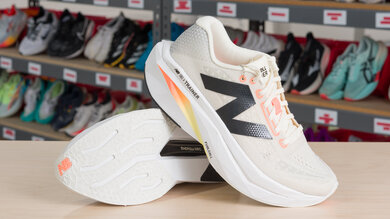
The New Balance FuelCell SuperComp Trainer v3 is a comfortable plated trainer that's a safe choice for runners who prioritise stability and consistency over versatility. The FuelCell foam in the midsole is a blend of EVA and PEBA that offers more in terms of protection than bounce. The midsole also features a carbon plate, which adds some rigidity and contributes to the shoe's overall stability, but the shoe isn't designed for maximum speed. Instead, the mild rocker and wide platform make the third iteration of the SC Trainer a good shoe for steady cruising or progression runs where the pace increases gradually but not dramatically.
Our Verdict
The New Balance FuelCell SuperComp Trainer v3 is a satisfactory shoe for running a marathon. The brand's focus on comfort is evident in the shoe's soft feel and stable ride, but the design isn't streamlined for maximum speed or efficiency.
Carbon plate in midsole.
Wide, stable platform.
Inadequate energy return.
The New Balance FuelCell SuperComp Trainer v3 does alright at shorter races, although it's not a competitive racing shoe, and its poor energy return is the key limiting factor. The weight is normal for a plated trainer, but it's significantly heavier than a proper racing shoe.
Carbon plate in midsole.
Wide, stable platform.
Inadequate energy return.
Wide, stable platform.
Wide, stable platform.
Changelog
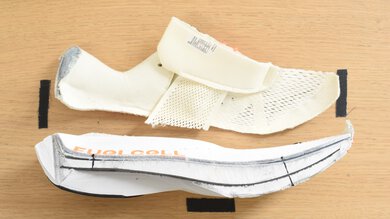
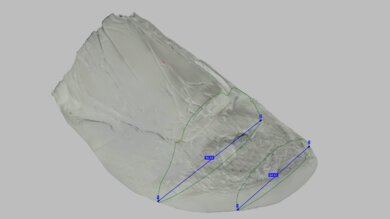
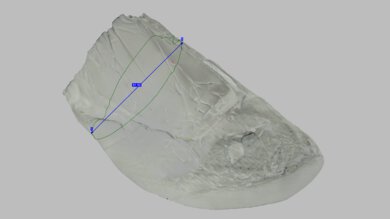
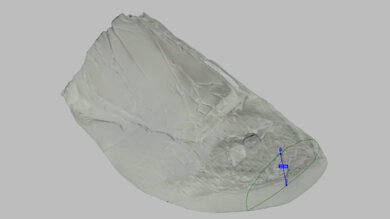
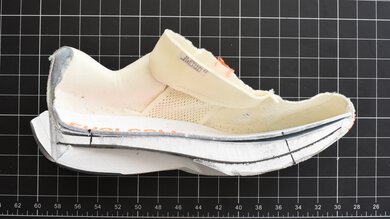
- Updated Jun 30, 2026: We've converted this review to Test Bench 0.13, which identifies the different foams used in the shoe's midsole. We've included a microscopic image of the foam cells to give you an idea of what the microstructure looks like. To read more about the changes, see the changelog.
- Updated Jun 17, 2026: We've converted this review to Test Bench 0.12, which fixes how we measure firmness, a component of the Stability and 5K/10K Racing usages. There may be inconsistencies between the text and the scores for these usages, but the scores should still be considered valid. We've also brought back the Energy Return score and added two new usages: Daily Training and Long Run. To read more about the changes, see the changelog.
-
Updated Jun 09, 2026:
We modified the writing due to the new test bench. We've updated the Responsiveness box text to reflect the new scores and added text to the True To Size box.
- Updated May 26, 2026: We've converted this review to Test Bench 0.11, adding two new rocker measurements to the Design section, and three new responsiveness tests to the Performance section. The Energy Return usage score has been replaced with Responsiveness. Check out the details in our changelog.
- Updated Mar 25, 2026: We've converted this review to Test Bench 0.10, adding a new set of fit tests to the Design section and an overall fit performance usage. Check out the details in our changelog.
- Updated Nov 14, 2025: Review published.
- Updated Nov 04, 2025: Early access published.
- Updated May 21, 2025: Our testers have started testing this product.
- Updated Apr 08, 2025: The product has arrived in our lab, and our testers will start evaluating it soon.
- Updated Apr 02, 2025: We've purchased the product and are waiting for it to arrive in our lab.

We've bought and tested more than 250 running shoes. Every pair purchased with our own money, never supplied or sponsored by brands. Our data-driven tests are designed to go beyond marketing claims, and since every shoe goes through the exact same methodology, you can directly compare results to find the right pair for your needs.
Test Results
Energy Return
Wide, stable platform.
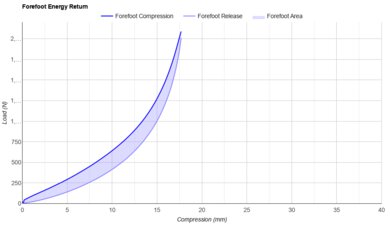
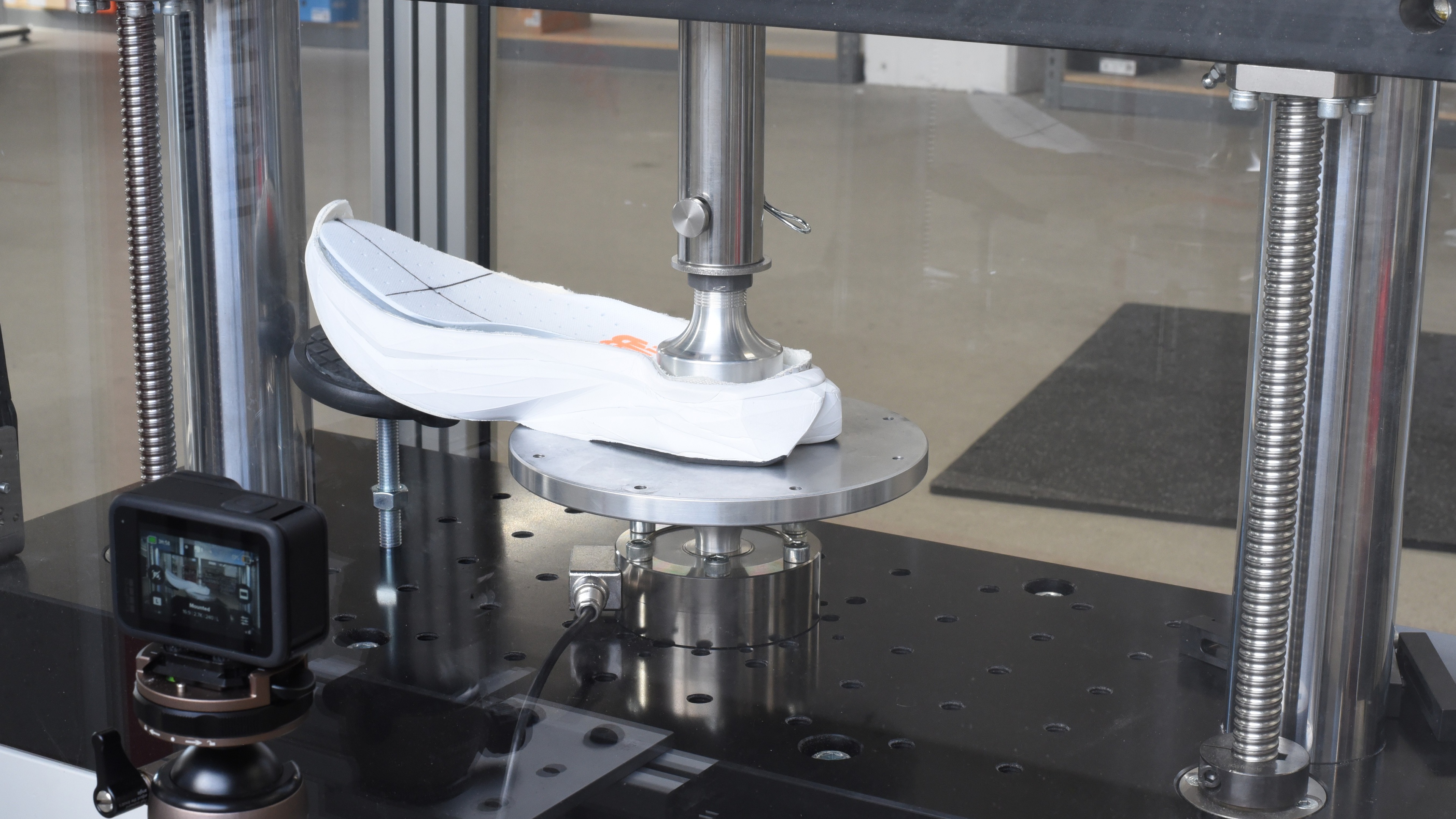
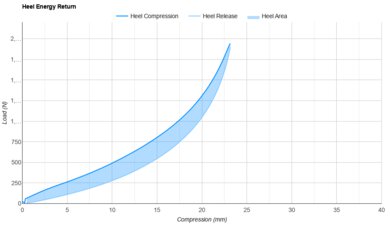
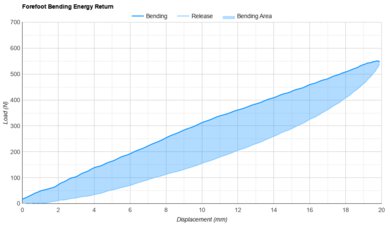
The forefoot of the SuperComp Trainer v3 returns energy better than the heel, but it still lags behind the lively midsoles of plated trainers like the HOKA Mach X 3 or the PUMA Deviate NITRO 3. Runners looking for a lively bounce will be disappointed with the subdued feel at toe-off.
Stability
The New Balance FuelCell SuperComp Trainer v3 has very good lateral stability. Its wide outsole platform provides a secure base, and the firm forefoot allows for strong, stable toe-offs. The full-length carbon fiber plate also provides rigidity throughout the midsole.
Carbon plate in midsole.
Wide, stable platform.
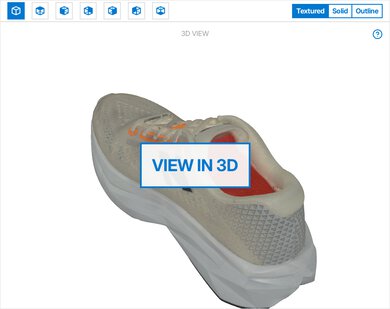
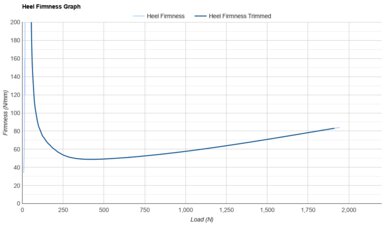
The third version of the SuperComp Trainer lacks the squishiness of previous versions, but the heel is neither particularly soft nor particularly rigid once even moderate force is applied.
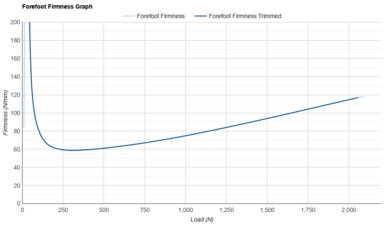
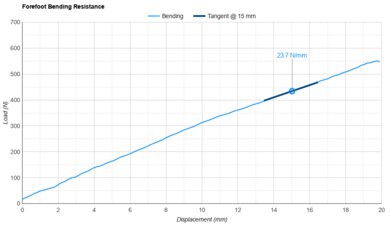
The forefoot of the SuperComp Trainer v3 is on the firmer side, noticeably more rigid than other plated trainers like the HOKA Mach X 3, the Brooks Hyperion Max 3, and the ASICS MAGIC SPEED 4, although not as firm as the PUMA Deviate NITRO 3. This does help to give some snap when pushing off.
Cushioning
The cushioning in the New Balance FuelCell SuperComp Trainer v3 is satisfactory for a range of paces. Both the forefoot and heel have a decent amount of protection, although the forefoot struggles more to absorb the impact of heavier strides.
Balanced cushioning between forefoot and heel.
Wide, stable platform.
Forefoot becomes much harsher under higher impact.
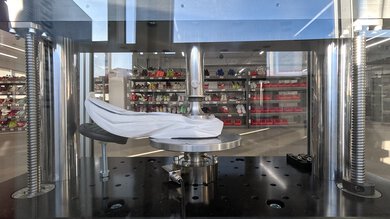
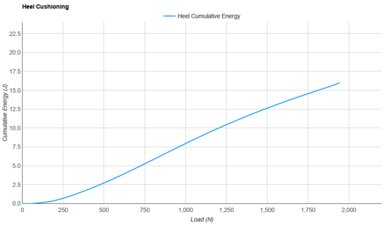
The heel cushioning of the SuperComp Trainer v3 will be satisfactory for most heel strikers, as it holds up decently across different force levels, performing very similarly to the PUMA Deviate NITRO 3 and the Nike Zoom Fly 6.
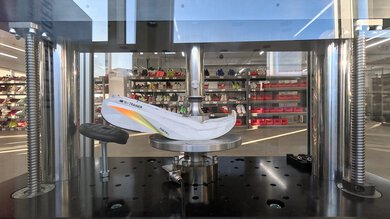
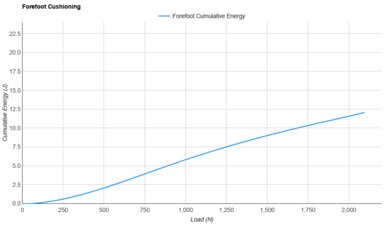
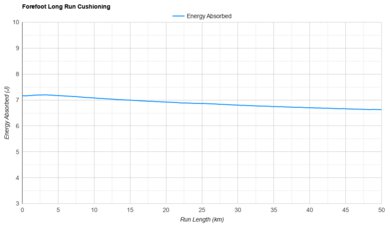
The forefoot cushioning in the SuperComp Trainer v3 holds up well at slower paces or for lighter runners, but becomes progressively less absorbent as more force is applied, a phenomenon also present in the New Balance FuelCell SuperComp Elite v5 and the New Balance FuelCell Rebel v5.
Responsiveness
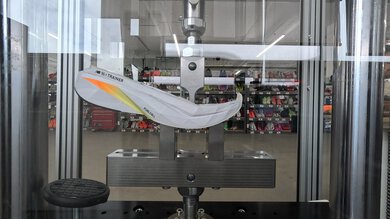
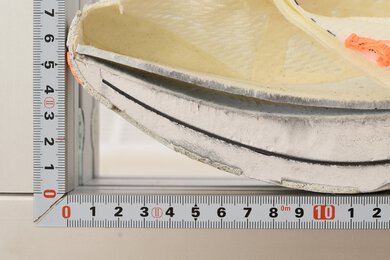
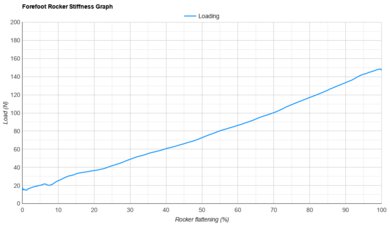
The New Balance FuelCell SuperComp Trainer v3 is decently responsive. Although the brand uses the term "FuelCell" to describe a range of different midsole compounds, the EVA-PEBA blend in this model returns much less energy than others that bear the FuelCell name, resulting in a fairly dull ride. That said, the pronounced rocker, stiffened by a carbon plate, helps maintain consistent forward roll.
Wide, stable platform.
Carbon plate helps rocker hold its shape.
Inadequate energy return.
True To Size
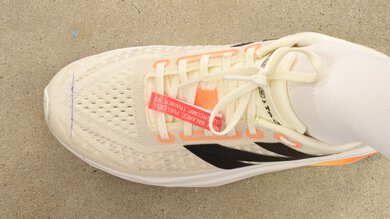
The New Balance FuelCell SuperComp Trainer v3 fits close to true to size. The length is good, but the arch runs narrow, and there's not much vertical volume in the toe box. The shoe is available in a wide version, however.
Wide, stable platform.
Length is true to size.
Narrow arch.
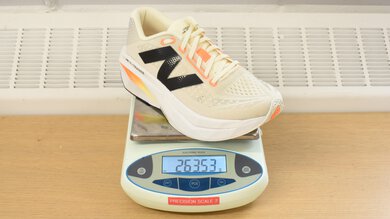
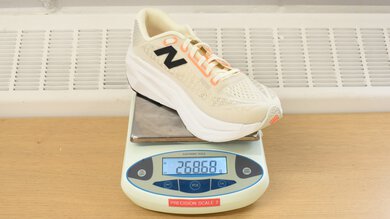
The SuperComp Trainer v3 has put on weight compared to the second version, despite having a lower stack height. It's in the same weight class as the PUMA Deviate NITRO 3 and the HOKA Mach X 3, but it lacks the energy return of those shoes, making the ride feel somewhere between a daily trainer and a super trainer.

Popular Running Shoe Comparisons
The New Balance FuelCell SuperComp Trainer v3 is a plated trainer that positions itself as a shoe for long runs. Like several other product series from New Balance, the SuperComp Trainer seems, for better or worse, to have mellowed out with age. The wild, bouncy fun of the earlier versions of the SuperComp Trainer has been replaced by a firmer, more stable ride that is undoubtedly designed to give the shoe broader appeal, but does sacrifice a bit of what gave it personality. The SuperComp Trainer v3 is in the same category as other plated trainers like the PUMA Deviate NITRO 3, the ASICS MAGIC SPEED 4, and the HOKA Mach X 3, but the blend of EVA and PEBA in the FuelCell midsole lacks the energy return of these competitors. Runners looking to recapture the fun, occasionally chaotic bounce of the original SuperComp Trainer might find the HOKA Skyward X a better replacement for those wild rides.
Within New Balance's FuelCell lineup, the SuperComp Trainer v3 is positioned as a long-run training companion to the New Balance FuelCell SuperComp Elite v5, which is the brand's dedicated racing shoe. On the lighter side of the scale is the New Balance FuelCell Rebel v5, a more nimble daily trainer with a lively, but still very stable design. Rounding out the FuelCell family is the New Balance FuelCell Propel v5, which is a sort of budget version of the SuperComp Trainer, swapping out the carbon plate for a plastic one and offering a bit less cushion.
For more options, check out our recommendations for the best running shoes, as well as the best running shoes for men and the best running shoes for women.
The New Balance FuelCell SuperComp Trainer v3 and the New Balance FuelCell SuperComp Elite v5 are marketed as companion shoes, with the Elite v5 being for races, and the Trainer v3 being, as the name suggests, a shoe for training runs leading up to race day. As befits a racing shoe, the Elite v5 has a more aggressive rocker, much better energy return, and is over 60 g lighter than the Trainer v3. The main advantage of the Trainer v3 is its superior lateral stability, anchored by a wider outsole platform that provides a more solid base than the streamlined Elite v5.
The New Balance SuperComp Rebel is a meaningful refinement over the New Balance FuelCell SuperComp Trainer v3. It's lighter, more cushioned, more energetic, and bouncier, making it more versatile for daily training, long runs, and faster workouts. The Trainer v3 has a full carbon plate and a firmer, more traditional plated-trainer feel, while the Rebel's low-sitting plate allows for a softer, more natural ride. Consider the Trainer v3 if you prefer its firmer feel or can find it for substantially less; otherwise, the Rebel is the better running shoe overall.
The New Balance FuelCell SuperComp Trainer v3 and the Brooks Hyperion Max 3 offer two very different takes on a plated trainer. While the stack height of the SuperComp Trainer has slightly shrunk with each iteration, the Hyperion Max has only grown. The New Balance shoe's lower profile and firmer midsole contribute to an overall more stable ride. What Brooks' shoe sacrifices in stability, it makes up for in speed: with a more aggressive rocker and superior energy return, the Hyperion Max 3 rewards harder efforts while cushioning the blow of each footstrike much better than the SC Trainer v3. That said, the Hyperion Max 3 is a considerably heavier shoe, so it might be less appealing to smaller runners.
The New Balance FuelCell SuperComp Trainer v3 and the HOKA Skyward X are two plated trainers that offer distinctly different experiences underfoot. The SuperComp Trainer v3 strikes a number of compromises to create a smooth, consistent ride. Its midsole is not too soft or too firm, and the very reasonable width-to-stack ratio makes the New Balance shoe very stable. The Skyward X, on the other hand, throws caution to the wind and embraces the wild bounciness that characterised previous versions of the SuperComp Trainer v3. The HOKA shoe has much better energy return and cushioning than the SC Trainer v3, but it's considerably less stable: although the Skyward X sits 12 mm higher, it has a similarly sized platform, which can feel like running on stilts compared to the more grounded New Balance.
The PUMA Deviate NITRO 3 and the New Balance FuelCell SuperComp Trainer v3 are similarly weighted plated trainers, each representing core elements of their respective brands. PUMA's history on the track shows through in the Deviate NITRO 3's narrower fit and firmer forefoot, which gives the shoe a snappy feel that's great for speed work. New Balance's focus on comfort is evident in the smoother, stabler ride and a more cushioned forefoot that makes the SuperComp Trainer v3 feel more suited to steady paces than hard intervals.
Differences Between Sizes And Variants
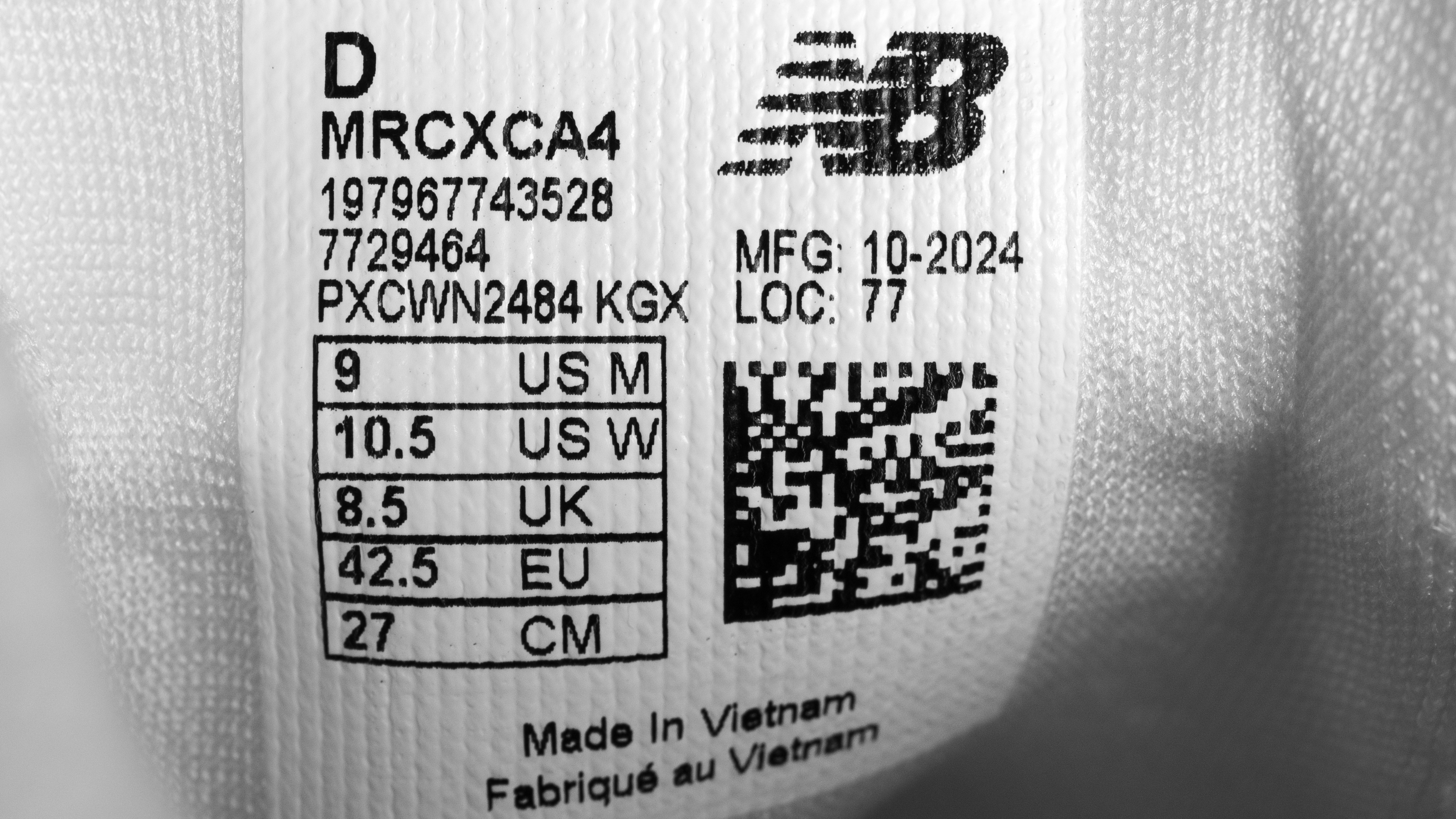
We tested the New Balance FuelCell SuperComp Trainer v3 in men's U.S. size 9, as noted on the label for our pair. The color shown here is Angora/Hot Mango/Black. This model is also available in other colorways depending on your region. Wide versions are available for both men (2E) and women (D). The design section applies only to the exact model we tested, but we expect other size and gender variants to perform similarly.