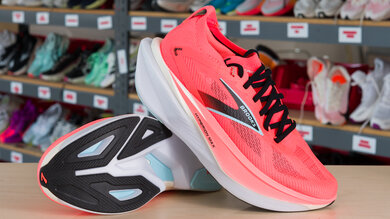
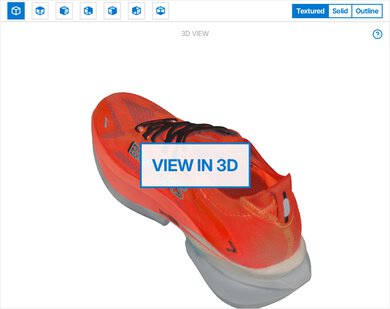
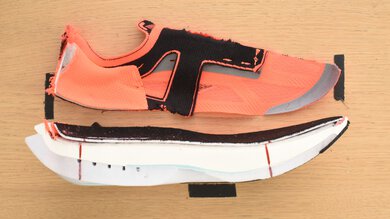
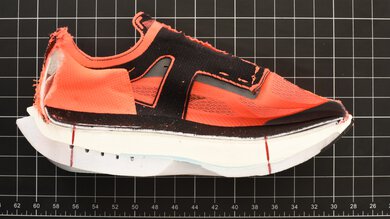
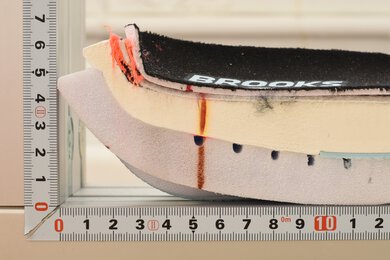
The Brooks Hyperion Max 3 is a maximum-cushioned, plated trainer that brings the brand's Hyperion lineup to new heights, standing almost 9 mm taller than its predecessor, the Brooks Hyperion Max 2. The dual-density midsole includes a top layer of DNA Gold (a 100% PEBA-based compound) and a bottom layer of DNA Flash v2 (a more stable and durable nitrogen-infused EVA foam) sandwiched around a nylon plate. Despite the medial cutout under the midfoot, the shoe is very heavy, especially for a putative super trainer, and will better suit larger runners who can exert enough force to take advantage of the shoe's springiness. With its excellent cushioning, it's a great companion for long runs, too. Where this shoe really shines is in longer tempo intervals and progression runs, as the rockered geometry and substantial midsole turn into a veritable juggernaut that sustains momentum deep into the run.
Our Verdict
The Brooks Hyperion Max 3 is a passable choice for a marathon shoe, although not the most competitive. The outstanding cushioning will help keep your legs protected over long distances, and the aggressive rocker keeps them moving forward even as they tire. That said, the Hyperion Max 3 is too heavy to be considered a racing shoe.
Propulsive geometry keeps legs turning over quickly.
Very heavy shoe.
The Brooks Hyperion Max 3 isn't a bad option for shorter races, but its sheer weight makes it difficult to quickly reach top speed. The rockered geometry will help maintain a good cadence, and the midsole rewards the energy you put into it. However, it simply cannot compete with lighter, streamlined super shoes.
Propulsive geometry keeps legs turning over quickly.
Very heavy shoe.
Changelog
- Updated Jun 22, 2026: We've converted this review to Test Bench 0.12, which fixes how we measure firmness, a component of the Stability and 5K/10K Racing usages. There may be inconsistencies between the text and the scores for these usages, but the scores should still be considered valid. We've also brought back the Energy Return score and added two new usages: Daily Training and Long Run. To read more about the changes, see the changelog.
- Updated Jun 22, 2026: We've converted this review to Test Bench 0.11, adding two new rocker measurements to the Design section, and three new responsiveness tests to the Performance section. The Energy Return usage score has been replaced with Responsiveness. Check out the details in our changelog.
- Updated Apr 29, 2026: We've converted this review to Test Bench 0.10, adding a new set of fit tests to the Design section and an overall fit performance usage. Check out the details in our changelog.
-
Updated Dec 03, 2025:
We updated the Popular Running Shoe Comparisons section to include the recently reviewed Brooks Glycerin Max 2 in Brooks' lineup.
- Updated Nov 20, 2025: We've converted this review to Test Bench 0.9, which adds a Forefoot Long Run Cushioning test to our performance section. Read more in our changelog.
-
Updated Oct 21, 2025:
We've adjusted this review's writing to align with the new test bench, including updates to all usage scores and test boxes for Cushioning, Firmness, and Energy Return. We've updated the side-by-side comparisons with other shoes accordingly.
- Updated Oct 20, 2025: We've converted this review to Test Bench 0.8.2, which updates our methodology for the impact force range used in our compression tests to improve their accuracy. This also affects all usage and performance usage boxes using those compression tests as score components.
- Updated Sep 16, 2025: Review published.
- Updated Sep 02, 2025: Early access published.
- Updated Aug 12, 2025: Our testers have started testing this product.
- Updated Jul 09, 2025: The product has arrived in our lab, and our testers will start evaluating it soon.

We've bought and tested more than 300 running shoes. Every pair purchased with our own money, never supplied or sponsored by brands. Our data-driven tests are designed to go beyond marketing claims, and since every shoe goes through the exact same methodology, you can directly compare results to find the right pair for your needs.
Test Results
Energy Return
Stability
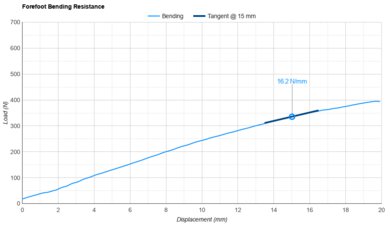
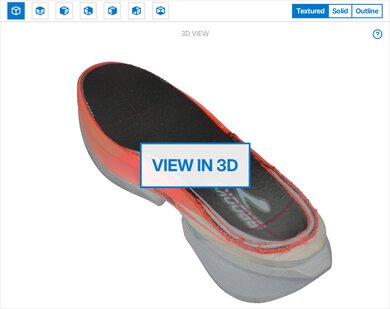
The Brooks Hyperion Max 3 is reasonably stable, but sometimes the ride turns wild. Brooks significantly increased the stack height over the Brooks Hyperion Max 2, but without an equivalent widening of the platform. In fact, the Hyperion Max 3 now features a medial cutout under the midfoot that leaves even less support under the arch, which could be problematic for overpronators.
Medial cutout could cause problems for overpronators.
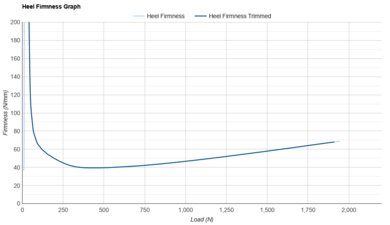
The heel's lack of firmness can cause some uncertainty around tight turns and contribute to an overall feeling of instability if your form starts to break down. Although firmer at lower forces than the super-cushioned HOKA Mach X 2, it's much less firm than a plated trainer like the Nike Zoom Fly 6.
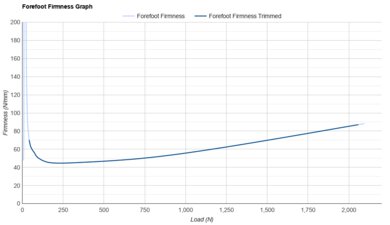
Cushioning
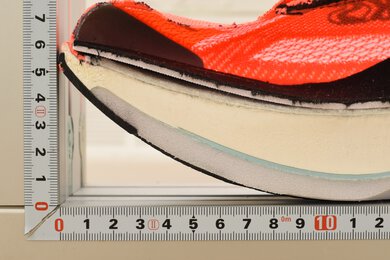
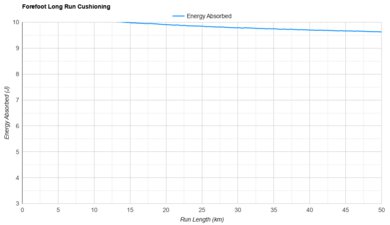
The Brooks Hyperion Max 3 lives up to the 'Max' part of its name with a maximally cushioned midsole that delivers fantastic impact absorption. The combination of DNA Gold and DNA Flash v2 foams creates a protective ride that feels cushy without becoming too mushy.
Dual-density midsole absorbs impact well.
Deep stack of foam underfoot.
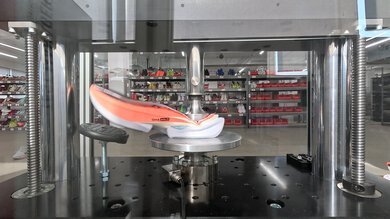
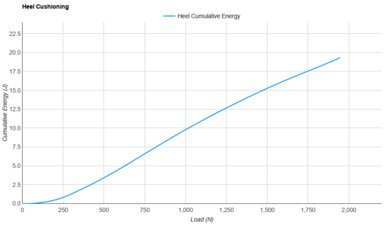
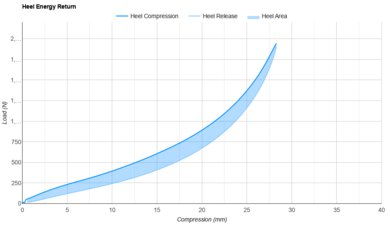
The heel of the Brooks Hyperion Max 3 does an amazing job of absorbing impact. Thanks to the deep stack of cushioning, heel strikers get good protection upon landing. Although it doesn't feel as plush as the Brooks Glycerin Max, it absorbs impact better.
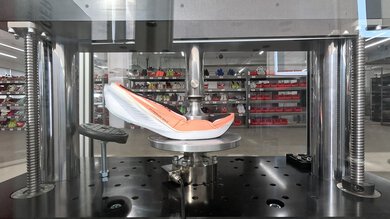
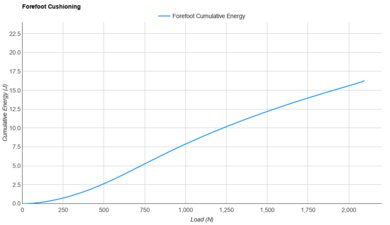
Responsiveness
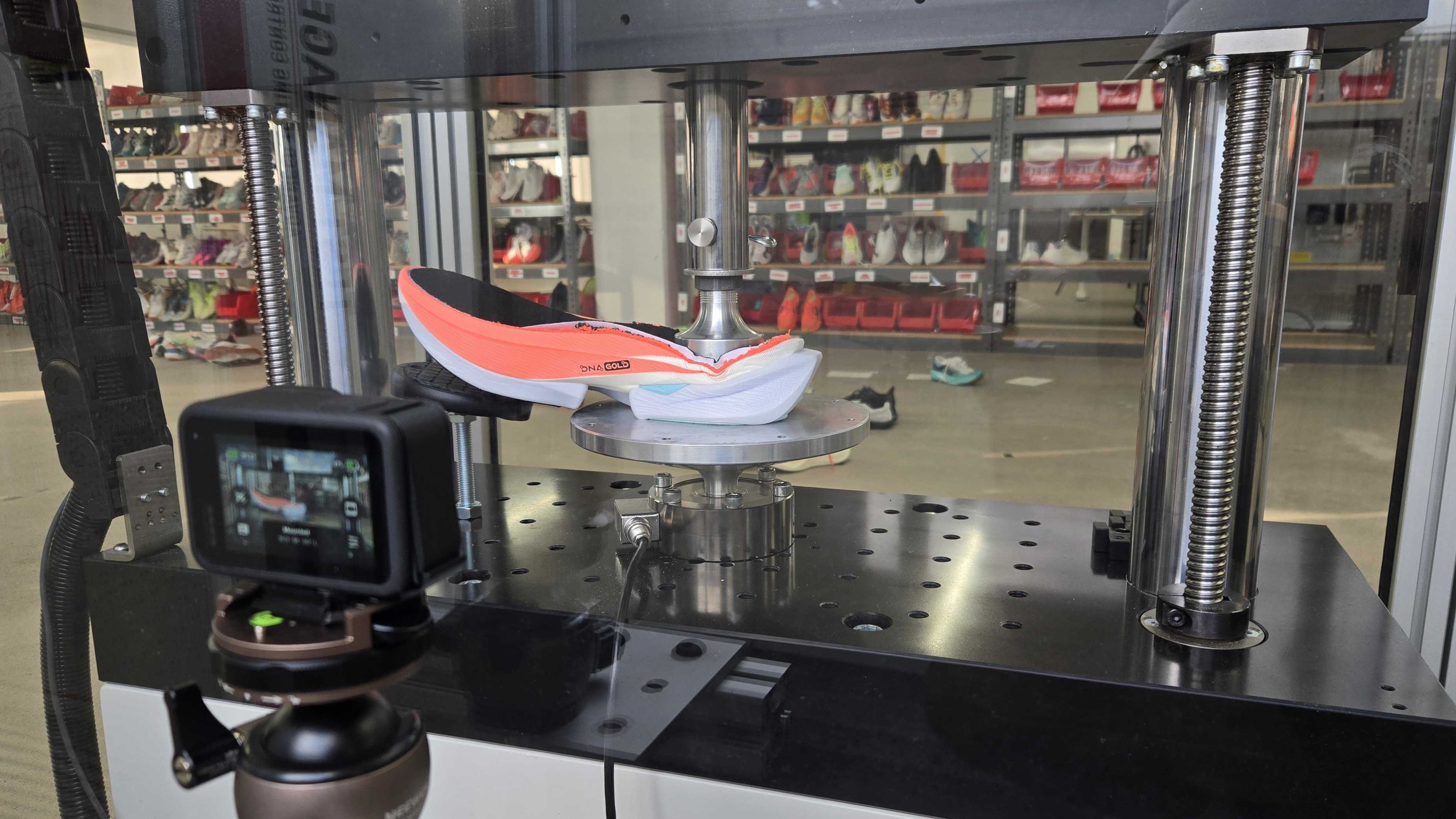
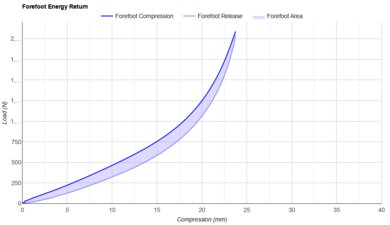
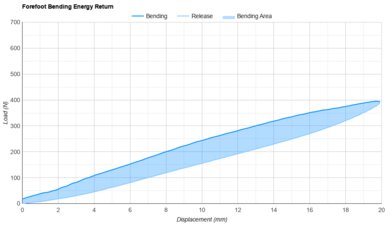
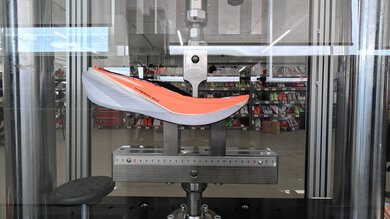
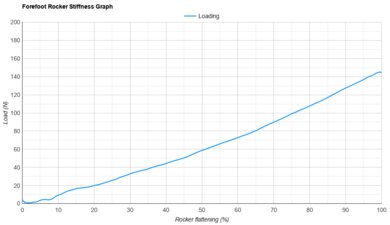
The Brooks Hyperion Max 3 does a good job of returning energy. The PEBA-based DNA Gold foam is tapered to be more prominent in the forefoot, and this combines with the rocker for a very springy ride.
Responsive synergy from dual density foams.
True To Size
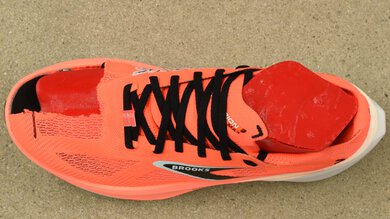
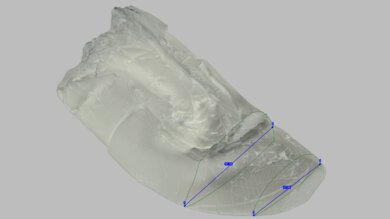
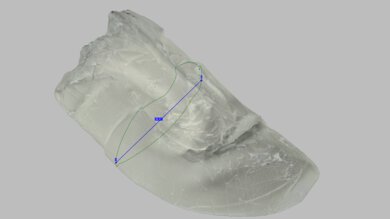
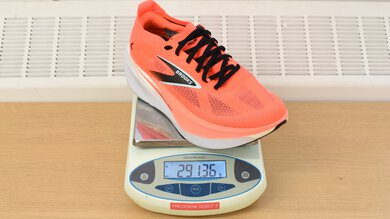
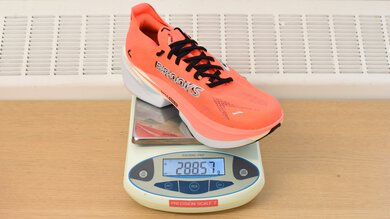
The Brooks Hyperion Max 3 continues the trend of bigger and heavier in the Hyperion Max series, weighing almost 30 g more than its predecessor, the Brooks Hyperion Max 2.
Popular Running Shoe Comparisons
The Brooks Hyperion Max 3 is an interesting shoe that blurs the line between a plated super trainer and a maximalist trainer. It's in the same weight class as big, bouncy monster shoes like the HOKA Skyward X and the adidas Adizero Prime X3 STRUNG. The Max 3's stack height isn't quite as tall as those behemoths, and with its plated midsole and inclusion of PEBA foam, it has many similarities to super trainers like the HOKA Mach X 2 and the Nike Zoom Fly 6, which are similarly designed shoes that can handle both long runs and speed sessions. However, the Max 3 is heavier than these other super trainers and may be a more suitable choice for larger runners. It is also a worthy competitor in longer training sessions to the ASICS NOVABLAST 5 and the ASICS SUPERBLAST 2, despite having a rather different design from those lighter, unplated trainers.
The Hyperion Max 3 occupies an interesting niche within Brooks' overall lineup, which increasingly resembles a downtown skyline with so many new high-stack shoes. It's the most performance-oriented of the Brooks shoes to carry the Max suffix, with a layer of the brand's premium racing foam (DNA Gold). Standing just above it is the Brooks Glycerin Max 2, an even taller and heavier trainer that is built for comfort above all, and is most suitable for easier runs. Sitting slightly lower in the skyline is the Brooks Ghost Max 2, the heaviest of the bunch, but also the most stable. The Hyperion Max 3 is part of a cluster of shoes in the Brooks family to carry the Hyperion name, along with the Brooks Hyperion Elite 5 and the Brooks Hyperion 3. The Hyperion 3 and Hyperion Max 3 serve similar purposes, but the Hyperion Max 3 caters to runners who want more cushioning, while the Hyperion 3 gives a more stable, closer to the ground feel without a plate in the midsole. The Hyperion Elite 5 is Brooks' top-of-the-line racing shoe, with a stripped-down upper and a carbon plate in a full DNA Gold midsole.
For more options, check out our recommendations for the best running shoes, as well as the best long-distance running shoes and the best shoes for running a marathon.
The Brooks Hyperion 3 and the Brooks Hyperion Max 3 share a family, but they're built for different roles within your rotation. The Hyperion 3 is a daily trainer with a DNA Flash v2 midsole, a moderate stack, and a firmer forefoot that works well for everyday miles, light tempos, and runners who prefer a stable, no-nonsense platform. The Hyperion Max 3, by contrast, is heavier, higher stacked, and uses a plastic plate with a bouncier foam package to behave more like a super trainer for structured uptempo work, offering noticeably more cushioning and protection underfoot. In practice, the Hyperion Max 3 outshines the Hyperion 3 in pure bounce, long-run performance, and workout capability, while the Hyperion 3 holds the edge if you care more about lower weight, better stability, and a firmer forefoot for everyday training.
The Brooks Hyperion Max 3 and the ASICS SUPERBLAST 2 offer two different paths to a fast but cushioned trainer. Both have dual-density midsoles, featuring their respective brand's premium foam on top and a firmer carrier foam underneath. The Brooks adds a plastic plate to the midsole, while the ASICS is unplated. Both shoes have a rockered geometry, but the Brooks shoe's rocker is more aggressive and starts propelling forward earlier in the stride pattern. The end result is that the Brooks feels more propulsive and energetic, while the ASICS provides a more stable ride.
The Brooks Glycerin Max and the Brooks Hyperion Max 3 are two max-stacked trainers in Brooks' lineup that serve very different uses. The heavily cushioned Glycerin Max prioritizes comfort over everything and is best used for easy paces and recovery runs. The Hyperion Max 3, with its plated midsole and more aggressive rocker, is meant to go faster and is the much better choice for intervals, progression runs, or any harder efforts.
The Brooks Hyperion Max 3 and HOKA Mach X 3 are both max-cushioned plated trainers that can be used for a variety of workouts. The Brooks is a bigger and bouncier shoe, with both higher energy return and better cushioning. But the added foam also adds weight, making the Brooks over 20g heavier than the HOKA. Smaller runners may prefer the lighter HOKA, as the Brooks requires a decent amount of force to be applied to reap the benefits of its springy midsole.
The Brooks Hyperion Max 3 practically towers over the Brooks Hyperion Max 2, with significantly more cushioning underfoot. It's not just the quantity of foam, but also the quality that has been upgraded: the Hyperion Max 3 features a layer of Brooks' premium DNA Gold foam, resulting in a ride that is both bouncier and more absorbent than the Hyperion Max 2. The upward growth and softer foam of the Hyperion Max 3 don't come without tradeoffs, however: it's both heavier and less stable than its predecessor.
The New Balance FuelCell SuperComp Trainer v3 and the Brooks Hyperion Max 3 offer two very different takes on a plated trainer. While the stack height of the SuperComp Trainer has slightly shrunk with each iteration, the Hyperion Max has only grown. The New Balance shoe's lower profile and firmer midsole contribute to an overall more stable ride. What Brooks' shoe sacrifices in stability, it makes up for in speed: with a more aggressive rocker and superior energy return, the Hyperion Max 3 rewards harder efforts while cushioning the blow of each footstrike much better than the SC Trainer v3. That said, the Hyperion Max 3 is a considerably heavier shoe, so it might be less appealing to smaller runners.
The Brooks Hyperion Max 3 and the ASICS GLIDERIDE MAX have some similarities in design, as maximally cushioned trainers with a plastic plate to stabilise their tall stack heights. Both shoes have a dual-density midsole, but while the Brooks includes a layer of their premium racing foam (DNA Gold) to balance performance and stability, the ASICS combines two different training foams (FF BLAST MAX and FF BLAST PLUS ECO) for increased stability. This, combined with a more aggressive rocker, makes the Brooks a much more lively and propulsive shoe, while the ASICS offers a less springy but more stable ride.
Differences Between Sizes And Variants
We bought and tested the Brooks Hyperion Max 3 in men's US size 9, as noted on the label for our pair. The pair we purchased is the Fiery Coral/Black/Atomizer colorway. The shoe is also available in Coconut/Green Gecko/Pink Clay in both the men's and women's versions, and Coconut/Fiery Coral/Atomizer for women. The shoe is only available in regular widths.
The design section applies only to the exact model we tested, but we expect other size and gender variants to perform similarly.