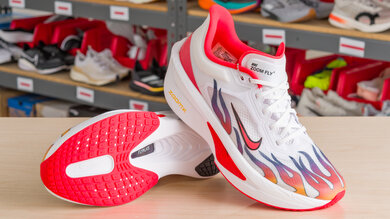
The Nike Zoom Fly 6 is a carbon-plated super trainer for runners who want some race-day tech in a package built for speed training. A tall stack of foam blends a bouncy top layer of ZoomX with a durable carrier foam, all wrapped around a full-length carbon plate to add snappiness through marathon-pace workouts and uptempo runs. The result is a shoe that feels cushioned and efficient enough for your tempo workouts, yet still more durable than pure super shoes. Its extra weight and less energetic midsole mean it won't deliver the explosive pop of the Nike Alphafly 3 or Nike Vaporfly 4, and the snug fit upfront might not suit every foot, but for speed-focused miles, the Zoom Fly 6 is a dependable taste of carbon-plated shoes without the trade-offs of a carbon-plated super shoe.
Our Verdict
Although it's designed as a super trainer rather than a specialist racer, the Nike Zoom Fly 6 holds its own well over the marathon. The tall, bouncy midsole and full-length carbon plate keep forward momentum ticking along, while the cushioning is good enough to dampen impacts later in the race. It won't feel as feather-light, efficient, or protective as Nike's top-tier marathon shoes, but for runners who want race-day geometry in a more training-oriented package, it delivers good long-distance performance.
Good responsiveness overall.
Thin and flexible carbon plate.
Not light enough for maximum race-day efficiency.
The Nike Zoom Fly 6 proves that a super trainer can still work when the pace heats up for shorter races. The firm forefoot and carbon plate help promote a high turnover, giving a surprisingly lively feel once you settle into tempo or threshold speed. It carries more weight than a purpose-built super shoe, and the midsole isn't as responsive, yet its quick toe-off makes it a capable option when you want race-ready turnover without stepping into dedicated carbon rockets.
Thin and flexible carbon plate.
Forefoot is firm and snappy.
Not light enough for maximum race-day efficiency.
Changelog
- Updated Jun 17, 2026: We've converted this review to Test Bench 0.12, which fixes how we measure firmness, a component of the Stability and 5K/10K Racing usages. There may be inconsistencies between the text and the scores for these usages, but the scores should still be considered valid. We've also brought back the Energy Return score and added two new usages: Daily Training and Long Run. To read more about the changes, see the changelog.
-
Updated Apr 30, 2026:
We've updated this review to include text for the new Responsiveness usage box and to add pros and cons for sizing.
- Updated Apr 28, 2026: We've converted this review to Test Bench 0.11, adding two new rocker measurements to the Design section, and three new responsiveness tests to the Performance section. The Energy Return usage score has been replaced with Responsiveness. Check out the details in our changelog.
-
Updated Feb 26, 2026:
We updated the review to include text for the new Fit usage box, which was recently added to our test bench.
- Updated Feb 20, 2026: We've converted this review to Test Bench 0.10, adding a new set of fit tests to the Design section and an overall fit performance usage. Check out the details in our changelog.
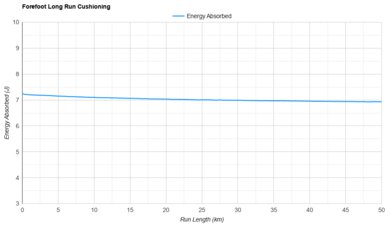
- Updated Oct 28, 2025: We've converted this review to Test Bench 0.9, which adds a Forefoot Long Run Cushioning test to our performance section. Read more in our changelog.
-
Updated Oct 21, 2025:
We've adjusted this review's writing to align with the new test bench, including updates to all usage scores and test boxes for Cushioning, Firmness, and Energy Return.
- Updated Oct 20, 2025: We've converted this review to Test Bench 0.8.2, which updates our methodology for the impact force range used in our compression tests to improve their accuracy. This also affects all usage and performance usage boxes using those compression tests as score components.
-
Updated Jul 30, 2025:
We revised the phrasing in the Cushioning and Marathon Racing box as well as the Heel and Forefoot Cushioning test boxes to better align with the latest test bench scores regarding lateral stability.
- Updated Jul 30, 2025: We've converted this review to Test Bench 0.8.1, which mainly updates the score components for the Marathon Racing and Lateral Stability usage boxes to improve accuracy.
- Updated Jun 17, 2025: Review published.
- Updated Jun 11, 2025: Early access published.
We've bought and tested more than 250 running shoes. Every pair purchased with our own money, never supplied or sponsored by brands. Our data-driven tests are designed to go beyond marketing claims, and since every shoe goes through the exact same methodology, you can directly compare results to find the right pair for your needs.
Test Results
Energy Return
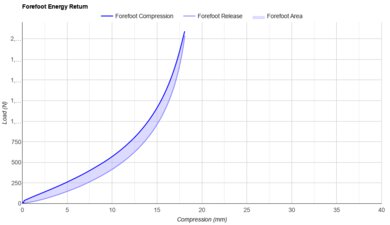
Shift forward, and the story improves: the ZoomX top layer is present in higher quantity in this area, offering a more responsive push-off. It's not as explosive as super shoes like the Nike Alphafly 3, yet there's enough rebound to keep tempo efforts feeling efficient and to add a touch of fun to fartlek surges.
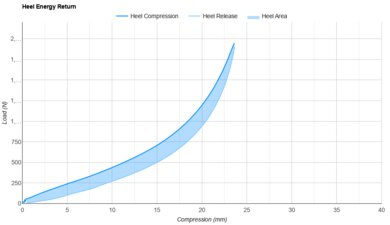
At the heel, the Nike Zoom Fly 6's energy return is subpar. The EVA-rich heel reliably absorbs impact, but it rebounds with limited effectiveness, making the ride feel controlled rather than springy. Heel-dominant runners looking for that bouncy sensation may want more pep.
Stability
The Nike Zoom Fly 6 has good lateral stability, thanks to a broad platform upper and a midsole compound that's on the firmer side, a welcome trait for late-run form breakdown. The firm forefoot keeps the shoe stable up front, and a gusseted tongue locks the foot in place. The tall heel stack is quite wobbly, especially for heel strikers, but for most strike patterns, the shoe stays composed overall, helping you stay efficient as fatigue sets in.
Thin and flexible carbon plate.
Gusseted tongue.
Wide base helps with balance.
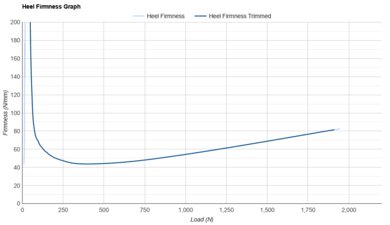
The heel isn't very soft, but it's not super firm either. This balance means it's stiff enough to maintain stability despite the tall platform (without feeling brick-hard either), helping to provide a reasonably forgiving feel.
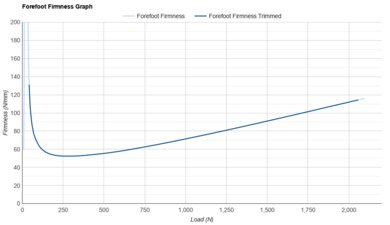
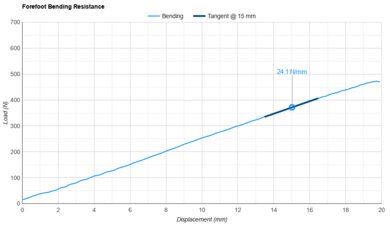
The forefoot is decidedly rigid. That extra firmness creates a reliable lever for toe-off, but it also means the ride can feel a bit unforgiving upfront if you're cruising rather than pushing the pace. Runners who like a firm, snappy platform up front will enjoy the sensation; those who prefer a softer forefoot might find it a bit unrelenting.
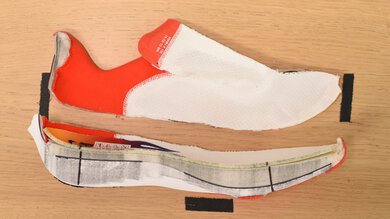
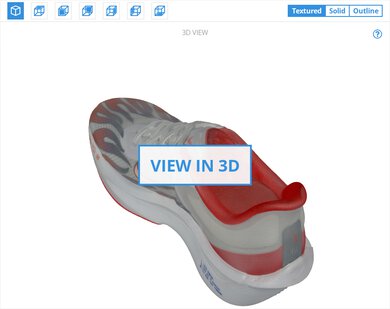
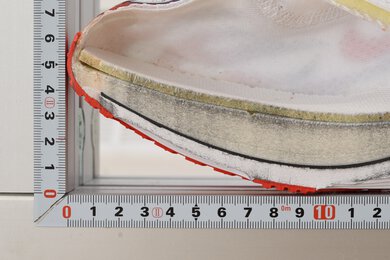
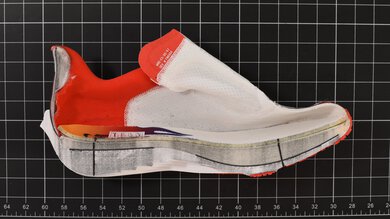
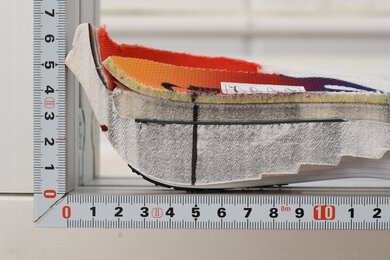
A full-length carbon plate sits sandwiched between two distinct foams: firmer SR-02 in the bottom and bouncier ZoomX in the top section. Because it's built with fewer layers, the plate is thinner and more flexible than the one in Nike's flagship super shoes like the Nike Alphafly 3, giving the ride a less rigid feel while still delivering that distinct plated snap when you roll onto your toes. The thin plate splits the dual-density midsole in a way that changes the ride: the heel, packed with more SR-02 foam, delivers plush landings even though the plate sits close to the foot, while the forefoot, rich in springy ZoomX, offers a noticeably livelier pop, giving the shoe two distinct personalities from back to front.
Cushioning
The Nike Zoom Fly 6 has decent underfoot protection. The heel offers satisfactory shock absorption over long miles, while the forefoot's cushioning feels slightly less substantial yet still protective enough to somewhat mute the road feel. The ride will feel comfortable for most types of steady efforts, though athletes who crave a plush, floating sensation might wish for more give upfront.
Decent heel cushioning.
The forefoot isn't as protective.
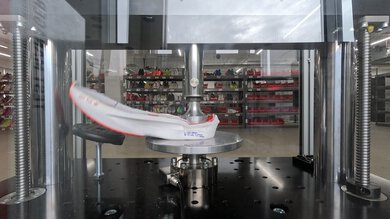
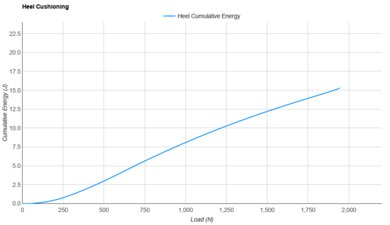
Heel underfoot protection is decent. The thicker dose of SR-02 foam absorbs pounding with ease, making runs feel forgiving even when fatigue sets in, especially for heel strikers.
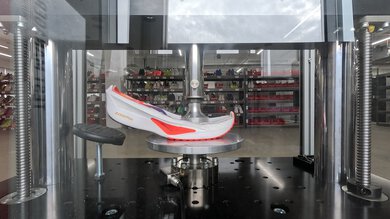
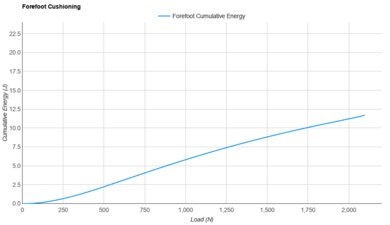
The forefoot cushioning is satisfactory in this model. There's still enough padding for most sessions, but the lower stack height also means the midsole doesn't absorb quite as much force from impacts as the heel. Runners who land on their forefoot will notice it most, especially when they dial up the pace and apply more force.
Responsiveness
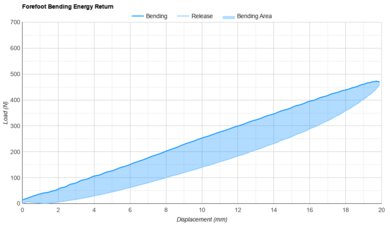
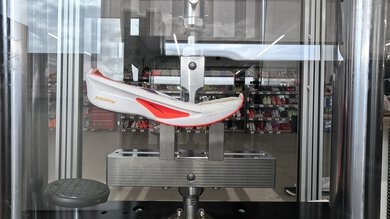
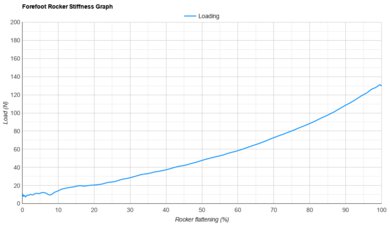
The Nike Zoom Fly 6 has good responsiveness, and its midsole delivers a respectable pop, especially at the front of the shoe. Push the pace, and there's enough rebound to keep turnover lively, yet the heel feels comparatively flat. The midsole rocker starts fairly early, and the stiff carbon plate helps it keep its shape, but the angle of the rocker isn't that steep. That means you'll get a nice roll through your stride, and a bit of snap at toe-off.
Good responsiveness overall.
Good bounciness towards forefoot.
Early but gentle rocker.
Energy return is disappointing in the heel.
True To Size
The Nike Zoom Fly 6 has a performance-oriented fit, with a tapered toe box designed to keep the forefoot locked down. The result is a snug, secure fit, but this could be restrictive for wider feet or runners who want more toe splay. The length is just right, so you can stick to your usual size.
Length is true to size.
Fit could be too snug around arch for wide feet.
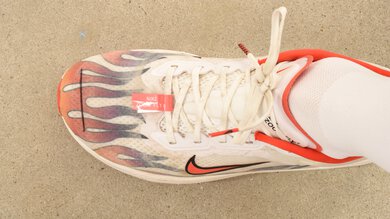
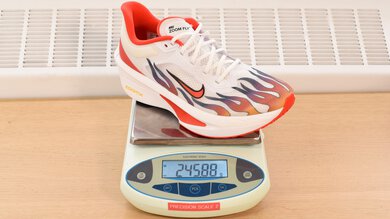
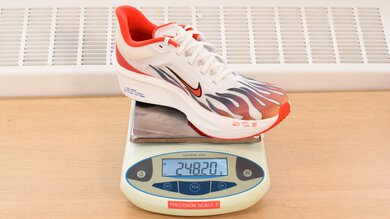
True to the super trainer brief, the Zoom Fly 6 lands in a middle ground: lighter than most daily trainers yet clearly heavier than pure racers. On foot, it feels trim enough to pick up the pace, but you're still aware of the extra weight compared to the Nike Alphafly 3. It's worth noting that some other super trainers, like the Saucony Endorphin Speed 4, are a bit lighter.
Popular Running Shoe Comparisons
The Nike Zoom Fly 6 sits in the super trainer space, between daily trainers and race-day super shoes, attempting to deliver a taste of elite-level geometry and propulsion in a more approachable training package. On paper, it offers a compelling mix: a high stack, rockered profile, and a full-length carbon plate—all inspired by the Alphafly and Vaporfly lines—but paired with a more durable SR-02 carrier foam for longevity. In practice, the Zoom Fly 6 manages to handle surging long runs, tempo efforts, and marathon-pace work fairly well, offering a rockered flow and a decent pop. For runners who want one shoe to cover the bulk of their training—and even racing in a pinch—it can be a valid choice. However, it comes with trade-offs: not nearly as efficient as full ZoomX-based race shoes like the Nike Alphafly 3, and not ideal either for easier-paced efforts like the Nike Vomero 18. Even compared to other super trainers like the adidas Adizero Boston 13, it's not as bouncy and has a less accommodating fit.
In today's market, where many runners use true super shoes for speed workouts and race simulations, the Zoom Fly 6 lands in a space that feels a bit narrow. A case can be made that most runners would benefit more in terms of performance by jumping straight into a super shoe like the Alphafly 3. That said, the added durability and less aggressive geometry make it more practical and approachable than racing shoes for those new to plated footwear or just looking to add a dedicated interval shoe to their rotation.
For more options, check out our recommendations for the best running shoes, as well as the best running shoes for men and the best running shoes for women. If you're after shoes that are specialized for all types of long runs, look towards our recommendations for the best long-distance running shoes.
The Nike Zoom Fly 6 and the Nike Alphafly 3 share visual similarities and core components, but they serve very different purposes. The Alphafly 3 is Nike's flagship marathon racer, built for maximum efficiency and propulsion with Zoom Air pods, a full ZoomX midsole, and a lighter overall weight. It’s designed to feel explosive and energetic at race pace, offering a uniquely spring-loaded forefoot that shines in long-distance racing. In contrast, the Zoom Fly 6 is a more accessible, training-focused take on that formula, featuring only a thin top layer of ZoomX over a firmer SR-02 carrier foam, resulting in a more muted and less responsive ride. It's also noticeably heavier and better suited for steady long runs or marathon-pace workouts. While the Alphafly 3 feels refined and race-ready, the Zoom Fly 6 is more durable and a safer introduction to plated shoes, especially for runners not yet ready to jump into a super shoe racer. That said, the gap in performance is significant—if you're chasing personal bests on race day, the Alphafly 3 is in a different class altogether.
The Nike Zoom Fly 6 and Nike Vaporfly 4 may share some DNA, but they're best suited to different running. The Vaporfly 4 is a lighter, more nimble super shoe and, with its PEBA-based Zoom X foam and carbon plate, thrives on race day, making it great for runners hunting PRs over distances from 5K to the half-marathon. The Zoom Fly 6, on the other hand, is the more versatile, training-oriented option. Think of it as a more approachable alternative to a race-day super shoe: it still has a carbon plate, but it's sandwiched between a layer of PEBA-based Zoom X foam on top, and an EVA-based foam beneath, offering more support but less pop than the Vaporfly 4 over short distances. That said, it's still plenty efficient and excels at tempo runs and intervals, and can even hold its own in half- to full-marathon racing. If the Vaporfly is the dedicated, short-distance, speed-focused super shoe, then the Zoom Fly 6 is the more versatile super trainer.
The Nike Streakfly 2 and the Nike Zoom Fly 6 both live in Nike's performance range but take very different approaches. The Streakfly 2 is a featherweight, low-to-the-ground option designed for short-distance racing and fast workouts, excelling in short efforts up to 10K with its aggressive geometry and firm, direct feel. It delivers unmatched efficiency and lightness at those distances but offers little in terms of cushioning, durability, or versatility. The Zoom Fly 6, on the other hand, is Nike's carbon-plated super trainer built for repeated use in training. It carries more cushioning, better durability, and a more structured platform that makes it suitable for intervals, race-pace long runs, and everyday speed work. While not as energetic or efficient as a true super shoe, it provides an approachable plated ride that holds up for a wide variety of training scenarios.
The adidas Adizero Evo SL and Nike Zoom Fly 6 are two popular performance trainers from major brands, but they approach speed very differently. The Nike is a carbon-plated super trainer with a firmer, more traditional propulsive feel, relying on its geometry and plate to create a structured toe-off, with a denser forefoot that feels less bouncy and less cushioned overall. The adidas is an uptempo trainer with a small plastic shank and a higher stack, which makes it feel lighter and more energetic underfoot. It also fits more true to size through the arch, whereas the Nike feels noticeably narrower there. Over longer distances, the adidas tends to hold up better thanks to its superior cushioning.
The adidas Adizero Boston 13 and the Nike Zoom Fly 6 are both super trainers from two of the biggest names in the game. Despite its higher stack, the Zoom Fly 6 is actually a bit lighter, delivering a plusher, softer underfoot feel thanks to a ZoomX top layer over SR-02 foam and a full-length carbon plate. It excels in steady efforts where cushioning and smooth transitions take priority. The Boston 13, by contrast, brings a firmer, more grounded ride with ENERGYRODS and a dual-foam setup that's more energetic and snappy, especially during faster paces. It also offers a more accommodating fit for those with wider feet, particularly through the midfoot and forefoot. If you're after a firmer, snappy platform, turn to the adidas. But if plush cushioning and a higher stack are what you want for your workouts, the Nike has you covered with a more forgiving, softer ride that's still bouncy.
The Nike Zoom Fly 6 and the Nike Vaporfly 3 both draw from the same performance playbook but serve very different roles in a runner's rotation. The Vaporfly 3 is a true racing shoe, designed to be as light, efficient, and propulsive as possible. It uses a full ZoomX midsole with an aggressive plate setup to deliver an explosive toe-off, ideal for shorter race events. It's lighter, softer underfoot, and much more energetic than the Zoom Fly 6—built purely for speed and race-day efficiency. The Zoom Fly 6, by contrast, is Nike's super trainer, a more durable and approachable alternative for interval training. While it shares some design DNA with the Vaporfly, it uses a thinner top layer of ZoomX over a firmer SR-02 foam, which dulls the responsiveness considerably. It's also heavier and doesn't offer the same bounce or snap. However, it's more forgiving, more stable, and built to last, making it a reasonable option for long runs, tempo sessions, or runners who want to get used to plated geometry without jumping into a full-on racer.
The Nike Zoom Fly 6 and the Saucony Endorphin Speed 4 are both positioned as super trainers, designed to bridge the gap between daily trainers and race-day shoes. The Nike features a higher stack and full-length carbon plate, paired with a thin ZoomX top layer over firmer SR-02 foam, delivering a rockered, stable ride with decent cushioning. In contrast, the Saucony uses a plastic plate and PWRRUN PB foam, resulting in a ride that feels more energetic and responsive, but also less protective, especially under the heel. While both shoes can handle steady runs, up-tempo workouts, and occasional racing, the Saucony is lighter, bouncier, and better suited for runners who want a livelier, more grounded underfoot feel.
Differences Between Sizes And Variants
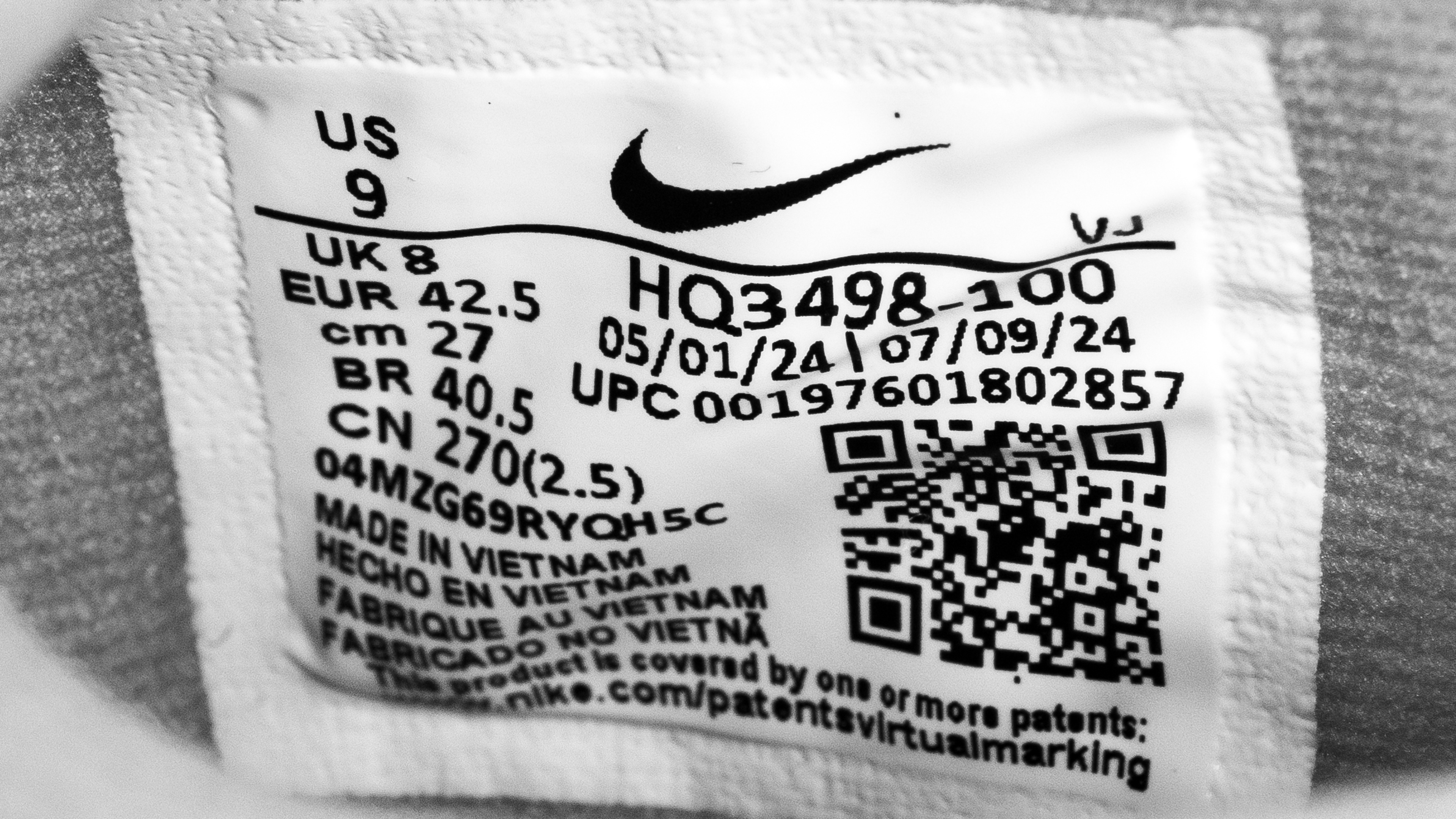
We tested the Nike Zoom Fly 6 in men's US size 9, as noted on the label for our pair. The color shown here is White/Black/University Red/Habanero Red, also known as the Ekiden or Flames edition. This model is also available in other colorways, such as Bright Crimson/Lime Blast/Mint Foam/Cave Purple and White/Pure Platinum/Obsidian Mist/Gridiron. There's also a Jakob Ingebrigtsen edition in Medium Ash/Summit White/Light Silver/Metallic Gold Grain, named after the Norwegian middle-distance star. The design section applies only to the exact model we tested, but we expect other size and gender variants to perform similarly.