
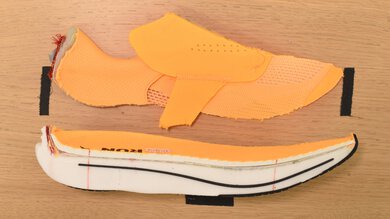
The PUMA Deviate NITRO 3 is a carbon-plated trainer. Like its predecessor, its midsole is fitted with a bottom layer of PUMA's nitrogen-infused NITROFOAM and a top layer of the same TPU-based NITROFOAM ELITE found in the performance-oriented PUMA Deviate NITRO Elite 3. In between the two foams is a carbon fiber PWRPLATE to add some stability and stiffness, with PUMAGRIP rubber on the outsole for grip. Overall, it makes for a highly versatile trainer, whether you're using it for daily runs or up-tempo workouts.
Our Verdict
The PUMA Deviate NITRO 3 is decent for marathon racing, though it's primarily intended for training. This shows in its weight, which isn't quite light enough for competitive racing, and its slightly muted energy return compared to dedicated racers. On the upside, the shoe is decently cushioned, and its plate helps maintain some stability during longer efforts when form begins to break down. That said, the narrow arch can be problematic during longer runs, as the fit can be quite tight after the foot begins to swell.
Carbon fiber plate.
Energy return is just okay.
On the heavier side for racing.
Narrow outsole, especially in the arch.
The PUMA Deviate NITRO 3 performs well at shorter distances and makes a good budget 5K/10K race option. Its very firm forefoot, aided by its carbon fiber plate, allows for energetic toe-offs. That said, the midsole's energy return is lacking, and it's a bit too heavy for high-performance racing.
Firm forefoot.
Carbon fiber plate.
Energy return is just okay.
On the heavier side for racing.
Changelog
- Updated Mar 25, 2026: We've converted this review to Test Bench 0.10, adding a new set of fit tests to the Design section and an overall fit performance usage. Check out the details in our changelog.
- Updated Feb 09, 2026: We've converted this review to Test Bench 0.9, which adds a Forefoot Long Run Cushioning test to our performance section. Read more in our changelog.
-
Updated Oct 22, 2025:
We updated the Pros & Cons, Energy Return, Cushioning, 5K/10K Racing, Heel Energy Return, Heel Cushioning, Forefoot Cushioning, Heel Firmness, Forefoot Firmness, and Forefoot Energy Return boxes to align with the latest test bench.
- Updated Oct 20, 2025: We've converted this review to Test Bench 0.8.2, which updates our methodology for the impact force range used in our compression tests to improve their accuracy. This also affects all usage and performance usage boxes using those compression tests as score components.
-
Updated Aug 21, 2025:
We mentioned the recently reviewed PUMA Magnify NITRO 3 and added a comparison in the Popular Running Shoe Comparisons section.
-
Updated Jul 30, 2025:
We revised the phrasing in the Cushioning, Heel Cushioning, Forefoot Cushioning, Marathon Racing, and Lateral Stability boxes to reflect the changes in the latest test bench.
- Updated Jul 30, 2025: We've converted this review to Test Bench 0.8.1, which mainly updates the score components for the Marathon Racing and Lateral Stability usage boxes to improve accuracy.
-
Updated May 14, 2025:
We updated the Compared To Other Running Shoes box to mention the PUMA Fast-R NITRO Elite 3 in the PUMA lineup.
- Updated Apr 02, 2025: Converted to Test Bench 0.8.
- Updated Apr 02, 2025: Review published.

We've bought and tested more than 250 running shoes. Every pair purchased with our own money, never supplied or sponsored by brands. Our data-driven tests are designed to go beyond marketing claims, and since every shoe goes through the exact same methodology, you can directly compare results to find the right pair for your needs.
Test Results
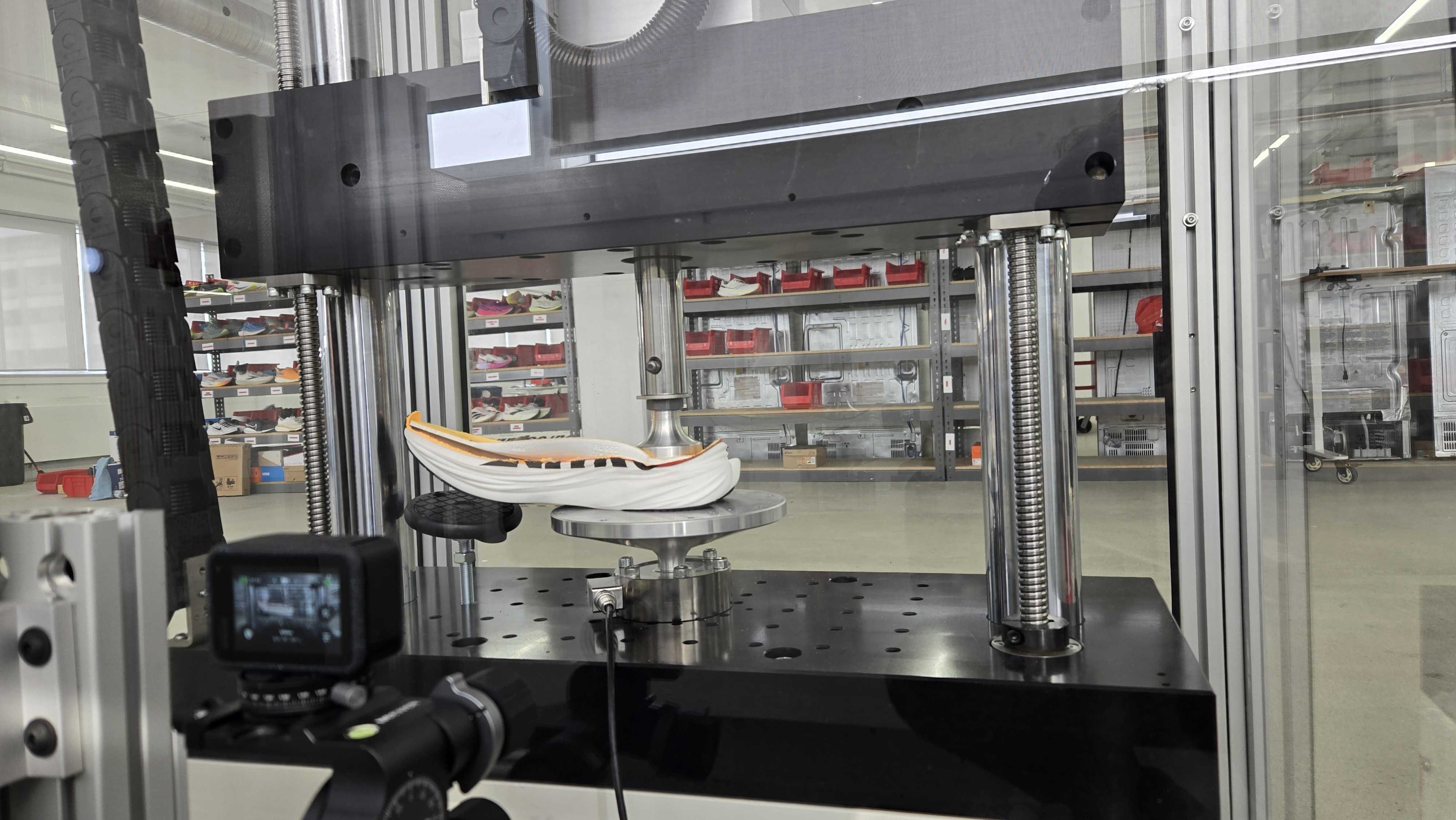
Energy Return
The PUMA Deviate NITRO 3 has acceptable energy return. The forefoot has a fair bit of bounce, but the heel isn't very bouncy, which doesn't help for efficient transitions.
Heel energy return helps with transitions.
Energy return is just okay.
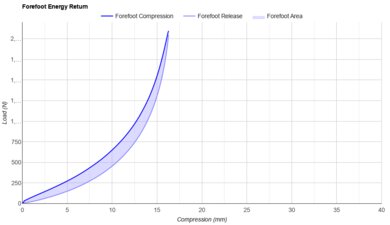
The forefoot has better energy return. Overall, the foam, combined with the carbon plate, allows for fairly springy toe-offs, but it still lacks the propulsive, energetic feel of high-performance options.
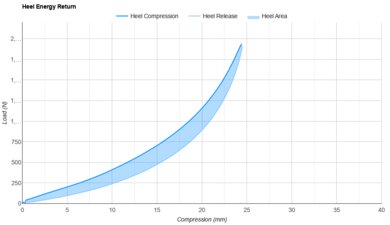
The shoe returns a disappointing amount of energy in the heel. It's not very bouncy, so the ride isn't as dynamic as you get with super shoes like the PUMA Deviate NITRO Elite 3.
Cushioning
The PUMA Deviate NITRO 3 is reasonably cushioned. Its heel is decent at absorbing impacts, creating a plush landing. However, the forefoot isn't quite as protective.
Not a very protective shoe overall.
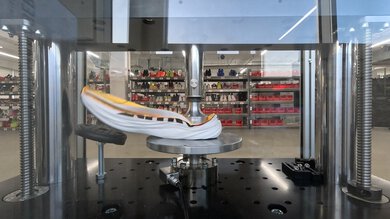
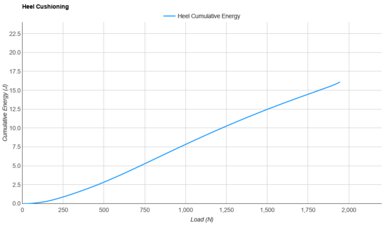
The heel is relatively well-cushioned. While not the most cushioned, it's quite plush, where it does a great job of absorbing impact and providing a soft landing for heel strikers.
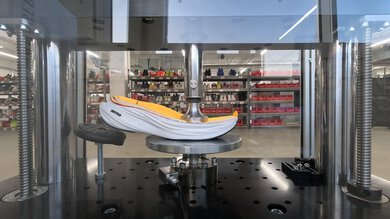
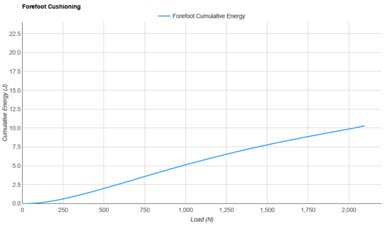
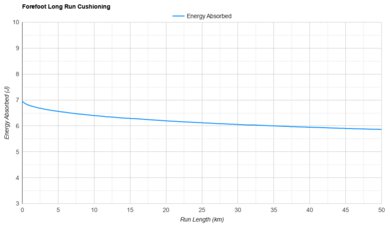
The PUMA Deviate NITRO 3 has acceptable forefoot cushioning. It doesn't provide the most underfoot protection, especially compared to more cushioned alternatives like the HOKA Mach X 2, but it's forgiving enough to prevent overly harsh landings in the forefoot for shorter, easier sessions, provided you don't apply a huge amount of force when hitting the ground.
Lateral Stability
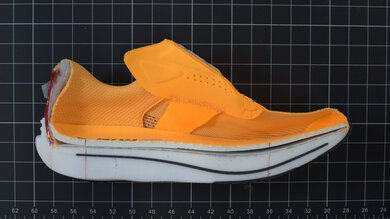
The PUMA Deviate NITRO 3 has decent lateral stability. Its engineered upper and semi-gusseted tongue ensure good lockdown. Also, while it has a relatively high stack and soft heel, the carbon plate adds some stability to the midsole. However, it doesn't have the widest platform, and its arch is especially narrow, which can be a problem when the foot swells during longer runs.
Carbon fiber plate.
Good lockdown thanks to gusseted tongue and upper.
Narrow outsole, especially in the arch.
Heel feels quite soft.
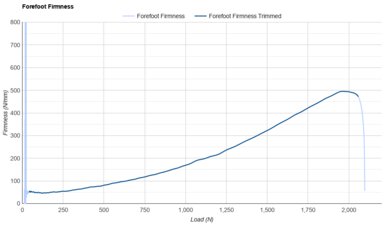
The forefoot, on the other hand, is firm. The carbon fiber plate adds some stiffness here, making the shoe a good fit for those who prefer snappier, more controlled toe-offs, especially at higher intensities. However, it may feel overly rigid to those who are used to a softer forefoot.
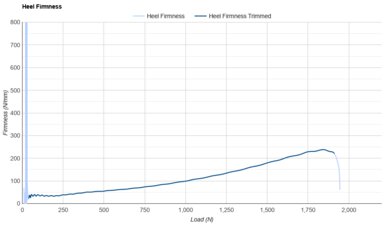
The heel isn't especially firm, so it lacks some stability for heel strikers and heavier runners, especially. That said, overall, it's about on par with other plated trainers like the Saucony Endorphin Speed 4.
True To Size
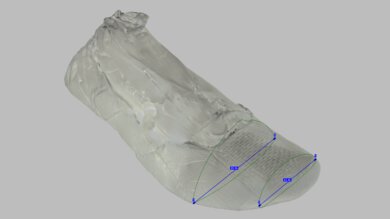
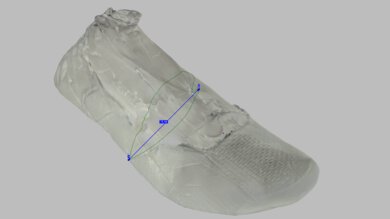
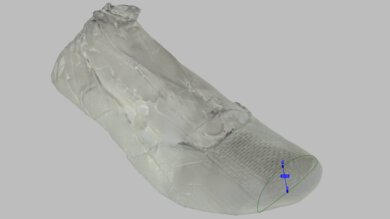
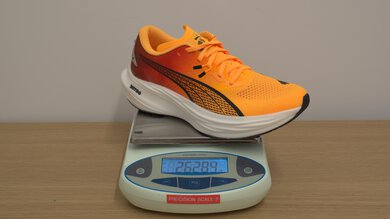
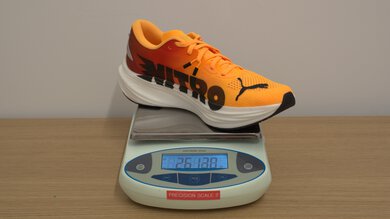
The PUMA Deviate NITRO 3 is on the heavier side. It won't weigh you down too much for daily training needs, but feels noticeably heavier than alternatives like the Saucony Endorphin Speed 4 or the adidas Adizero Evo SL.
Popular Running Shoe Comparisons
The PUMA Deviate NITRO 3 is designed to be the training partner for the race-day-oriented PUMA Deviate NITRO Elite 3. It sits above the entry-level PUMA Velocity NITRO 3 and the daily workhorse PUMA Magnify NITRO 3, with more premium features, including a layer of ELITE foam and a carbon fiber plate. That carbon plate makes it stand out among other super trainers that opt for plastic or nylon plates, like the Saucony Endorphin Speed 4. However, it's held back by its weight and somewhat limited stability, particularly in the heel. Lighter options like the adidas Adizero Evo SL offer even more bounce despite lacking a plate, while more cushioned alternatives like the HOKA Mach X 2 provide more underfoot protection. Still, if the fit is right for you, the NITRO 3 is a versatile trainer that's especially well-suited to steady miles and workouts. If you're looking for a top-of-the-line lightweight super shoe for race day, check out the PUMA Fast-R NITRO Elite 3.
Check out the best running shoes we've tested for more options.
The PUMA Deviate NITRO 4 and PUMA Deviate NITRO 3 are two iterations of the same super trainer, but the newer version does a better job defining itself as the faster, more performance-focused option. The Deviate NITRO 4 is lighter, feels more energetic underfoot, and pairs its moderate drop with a snappier forefoot, making it better suited to workouts and even shorter races. The PUMA Deviate NITRO 3, by comparison, sits a bit higher and feels more protective, giving it a slightly more cushioned character. If you want the more efficient plated trainer, the Deviate NITRO 4 makes more sense, but if you prefer a bit more buffer and protection underfoot, the Deviate NITRO 3 still has its appeal.
The ASICS NOVABLAST 5 and the PUMA Deviate NITRO 3 are both high-stack cushioned trainers that perform similarly despite some key differences. They both return a similar amount of energy, but the ASICS offers a more cushioned ride, making it a better choice for longer efforts and for those seeking plush comfort. The PUMA, however, feels more controlled, with a carbon fiber plate and firmer foam.
The PUMA Velocity Nitro 4 and PUMA Deviate Nitro 3 serve different roles in the German brand's lineup. The Velocity Nitro 4 is an unplated daily trainer: light and built on a lower and more traditional platform. It actually uses the more energetic midsole compound of the two, giving it a lively rebound. The Deviate Nitro 3, by contrast, is a full carbon-plated super trainer with a higher stack and more structure, which also unfortunately makes it noticeably heavier. Ride-wise, both shoes end up offering similar overall cushioning underfoot, but the plate and geometry give the Deviate a more performance-oriented feel suited for workouts and long uptempo runs, while the Velocity remains the better choice for relaxed daily mileage, easy days, and runners who prefer a more pliable ride without the rigidity of a plate.
The Saucony Endorphin Pro 4 and the PUMA Deviate NITRO 3 both offer a similar level of cushioning, but they serve slightly different purposes. The Puma is a super trainer with a carbon plate, making it great for high-performance training, while the Saucony is a versatile super shoe primarily built for race day. Despite their similarities in cushioning, the Saucony is the better option for most runners since it is lighter, more stable, and more energetic, providing a snappier, race-ready feel. The Puma, while still capable of fast efforts, leans more toward durability and daily versatility rather than outright speed.
The Saucony Endorphin Speed 4 and the PUMA Deviate NITRO 3 are both plated super trainers, but they offer different rides. The PUMA is a higher-stack shoe, with a steeper heel-to-toe drop and more absorbent heel cushioning, making it a better fit for heel strikers. The Saucony, on the other hand, is notably lighter and more responsive, making it more efficient for speedwork despite using a nylon plate rather than a carbon fiber plate like the PUMA.
The PUMA Deviate NITRO Elite 3 and the PUMA Deviate NITRO 3 cater to different types of runs despite their shared lineup. The Deviate NITRO 3 is a versatile tempo trainer, well-suited for daily miles and structured workouts, and features a firmer ride. In contrast, the Deviate NITRO Elite 3 is lighter, snappier, and more race-tuned, thanks to its full-length NITROFOAM ELITE midsole and more aggressive geometry. It's built for race-day speed, offering a more responsive and energetic feel with each stride. While the NITRO 3 can handle a variety of paces and is better for training durability, the Elite 3 is clearly the more performance-oriented option.
The PUMA MagMax NITRO and PUMA Deviate NITRO 3 occupy largely different ends of the spectrum of run types, with only some overlap. The MagMax is primarily intended for casual, everyday runs, with some variation in pace. The Deviate NITRO 3 is built for faster tempo and interval workouts, so the only overlapping use case for these two shoes would be strides or fartleks. Even there, the experience these two shoes provide is quite different: where the MagMax is soft, the Deviate NITRO 3 is snappy. While the MagMax attains stability through a wide platform, the Deviate NITRO 3 puts a carbon plate in a much narrower midsole. The two shoes are thus good training companions for runners who like PUMA's fit and ground feel.
The PUMA Deviate NITRO 3 and Brooks Hyperion Max 2 are both plated super trainers built to handle faster training sessions. The Puma has a carbon plate, which is superior for racing short distances. This plate offers a stiffer, more aggressive feel. The Hyperion Max 2, meanwhile, uses a nylon plate—less aggressive but paired with a midsole that provides greater energy return, offering a bouncier ride.
The PUMA Deviate NITRO 3 and the New Balance FuelCell SuperComp Trainer v3 are similarly weighted plated trainers, each representing core elements of their respective brands. PUMA's history on the track shows through in the Deviate NITRO 3's narrower fit and firmer forefoot, which gives the shoe a snappy feel that's great for speed work. New Balance's focus on comfort is evident in the smoother, stabler ride and a more cushioned forefoot that makes the SuperComp Trainer v3 feel more suited to steady paces than hard intervals.
Differences Between Sizes And Variants
We bought and tested the PUMA Deviate NITRO 3 in men's US size 9. The model we bought is the FADE edition, which comes in a unique Sun Stream/Sunset Glow/White colorway that features a gradient design. Here's the label for our pair.

The shoe also comes in standard colorways like PUMA Black/PUMA White, Eucalyptus/Fizzy Apple, PUMA White/Feather Gray/PUMA Silver, Blue Crystal/PUMA Black, PUMA Black/Sun Stream, Cool Weather/Yellow Alert, Lapis Lazuli/Sunset Glow, Pure Magenta/Yellow Alert/PUMA White, Pale Plum/Midnight Plum/Sun Stream, and more, depending on the region and gender of the shoe.
In addition, there are a few collab variants that feature unique colors and designs, like the PUMA x ALEX TOUSSAINT edition and the PUMA x SAYSKY edition. Finally, PUMA also sells a Winterized variant that features a water-repellent coating and lace cover.
You can buy this shoe in standard or wide width.