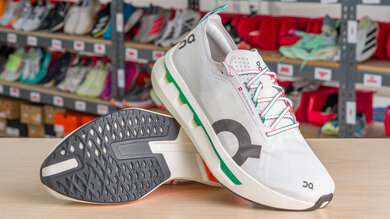
The On Cloudboom Zone is a PEBA-based uptempo trainer positioned as the everyday companion to the On Cloudboom Strike racer. It's marketed as a versatile trainer, with "99" stamped on the heel pull tab to imply it can cover 99% of a runner's mileage, but in practice, it feels in its zone (no pun intended) for faster work such as tempo runs, and the 99% claim is mostly marketing. Unlike plated super trainers that actively propel you forward, this shoe requires more input from the runner's legs to get the most out of it. That can make workouts feel more demanding, but for some runners, that direct connection and reliance on effort rather than mechanical assistance is exactly what they're looking for. It departs from On's usual combination of CloudTec pods and a Speedboard, instead relying on the premium midsole itself for compression and rebound, with only a small plastic shank in the midfoot to add light structure. This makes it more flexible and natural underfoot than a plated shoe, with a lower-to-the-ground, firmer ride that feels more connected, perfect for uptempo mileage.
The Cloudboom Zone fills the gap between daily trainers and super shoes, but it does so differently than plated super trainers, offering an unplated alternative that feels refreshing, especially for high-mileage runners looking for a break from the stiffness of carbon plates.
Our Verdict
The On Cloudboom Zone isn't made for marathon racing. Its cushioning is too thin to keep legs protected over long distances, and it lacks the responsiveness of plated super shoes built for 26.2 miles. While its lightweight build and bouncy forefoot help it feel lively early on, it simply doesn't offer the protection or efficiency needed for marathon racing.
Very stable overall.
The midsole is moderately responsive and returns quite a bit of energy.
Not a plush, protective shoe.
Not as light as super shoes.
The On Cloudboom Zone is a satisfactory shoe for shorter races. Its firmer forefoot, relatively low weight, and direct feel give it a fast, connected ride that works well at 5K and 10K intensity. That said, it doesn't have a carbon plate, and while the midsole is somewhat bouncy, it doesn't match the energy return of true racing models. Overall, it works better as a versatile option for interval sessions with the flexibility to double as an occasional race shoe.
Foam is quite firm, especially in the forefoot.
The midsole is moderately responsive and returns quite a bit of energy.
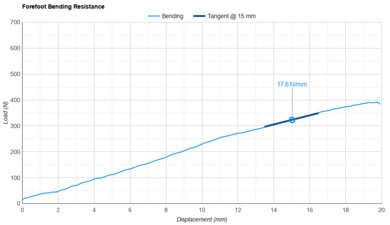
Partial plastic shank adds some stiffness to the midsole.
Not as light as super shoes.
Changelog
- Updated Jun 17, 2026: We've converted this review to Test Bench 0.12, which fixes how we measure firmness, a component of the Stability and 5K/10K Racing usages. There may be inconsistencies between the text and the scores for these usages, but the scores should still be considered valid. We've also brought back the Energy Return score and added two new usages: Daily Training and Long Run. To read more about the changes, see the changelog.
-
Updated May 13, 2026:
We've updated this review to add text to the True To Size box and to update the language in the Responsiveness box in line with Test Bench 0.11. We also tweaked phrasing in some side-by-side comparisons and pros and cons for consistency.
- Updated May 05, 2026: We've converted this review to Test Bench 0.11, adding two new rocker measurements to the Design section, and three new responsiveness tests to the Performance section. The Energy Return usage score has been replaced with Responsiveness. Check out the details in our changelog.
- Updated Apr 29, 2026: We've converted this review to Test Bench 0.10, adding a new set of fit tests to the Design section and an overall fit performance usage. Check out the details in our changelog.
-
Updated Apr 17, 2026:
We mentioned the latest iteration of the On Cloudmonster Hyper as a point of reference in the Popular Running Shoe Comparisons section of the review.
- Updated Apr 13, 2026: We've converted this review to Test Bench 0.9, which adds a Forefoot Long Run Cushioning test to our performance section. Read more in our changelog.
-
Updated Jan 07, 2026:
We've updated the popular comparisons section to include a comparison to the recently reviewed On Cloudboom Max.
-
Updated Oct 24, 2025:
We updated the Pros & Cons, Cushioning, 5K/10K Racing, Heel Energy Return, Heel Cushioning, Forefoot Cushioning, Heel Firmness, Forefoot Firmness, and Forefoot Energy Return boxes to align with the latest test bench and revised the side-by-side comparisons to keep the review accurate.
- Updated Oct 20, 2025: We've converted this review to Test Bench 0.8.2, which updates our methodology for the impact force range used in our compression tests to improve their accuracy. This also affects all usage and performance usage boxes using those compression tests as score components.
- Updated Sep 03, 2025: Review published.
- Updated Aug 25, 2025: Early access published.
- Updated Apr 23, 2025: Our testers have started testing this product.
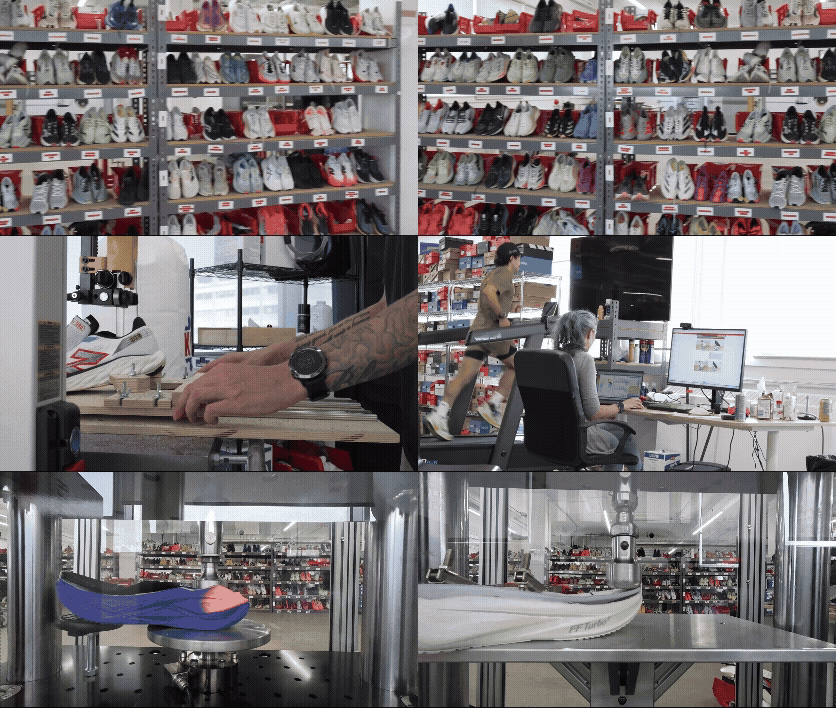
We've bought and tested more than 250 running shoes. Every pair purchased with our own money, never supplied or sponsored by brands. Our data-driven tests are designed to go beyond marketing claims, and since every shoe goes through the exact same methodology, you can directly compare results to find the right pair for your needs.
Test Results
Energy Return
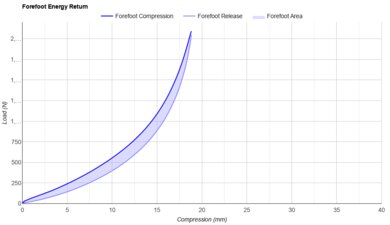
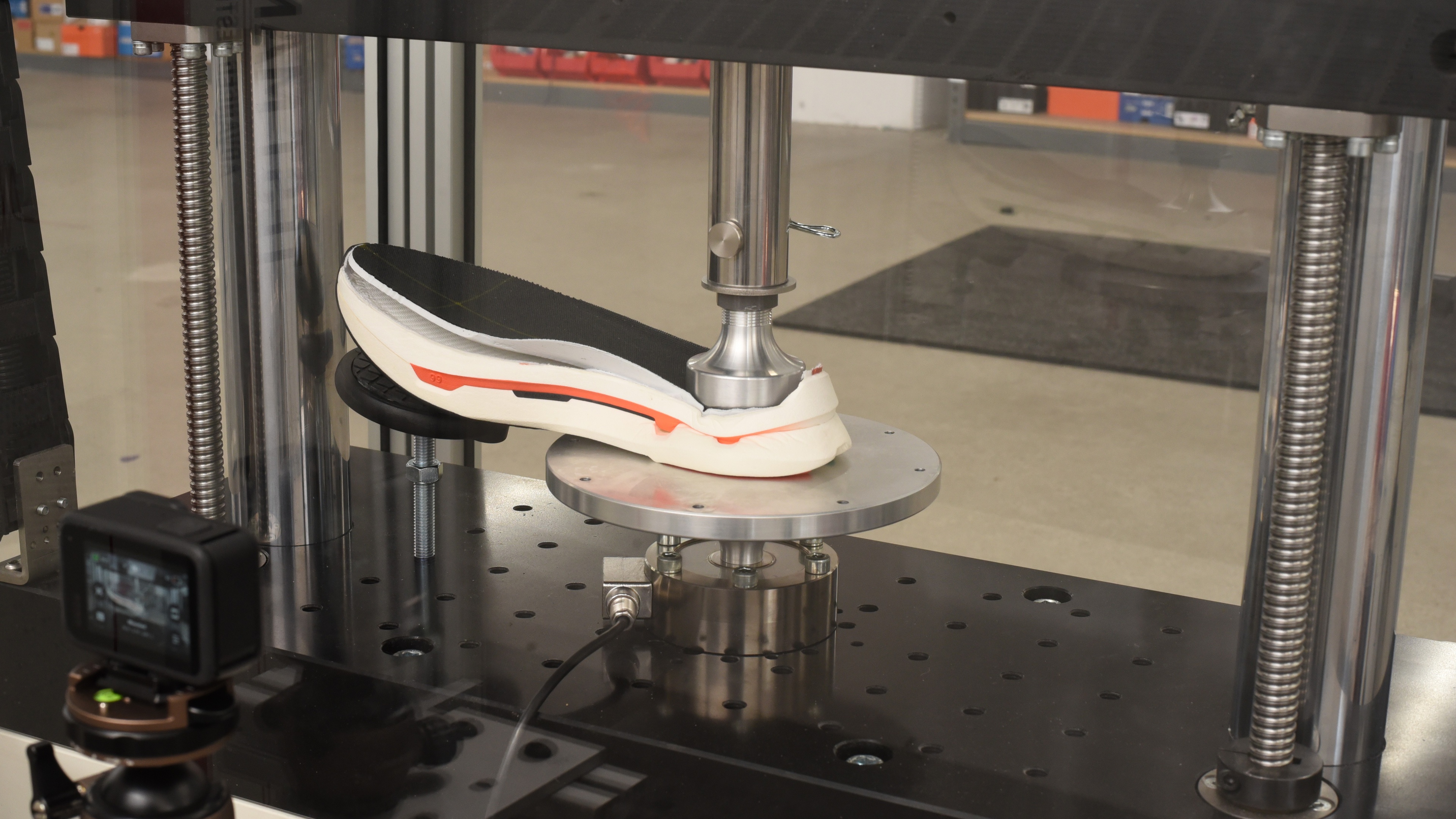
The forefoot delivers slightly better energy return than the heel. Push-offs are smooth and direct, though the lack of a plate means it doesn't feel as snappy as plated shoes do. It's energetic enough for uptempo mileage but not super propulsive.
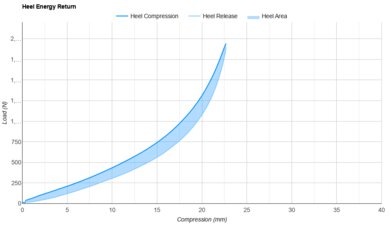
Heel energy return is satisfactory but not exceptional. The foam compresses smoothly and delivers a consistent rebound, though it doesn't provide the punch of super shoes. Runners landing farther back on the shoe will still notice a touch of help, but it does little in terms of actual propulsion.
Stability
The On Cloudboom Zone has very good lateral stability. Its firmer midsole, broad platform, and supportive geometry make it secure when cornering or maintaining form late in a run. Compared to many soft, high-stack trainers, it feels planted and predictable, which will appeal to runners who want confidence at pace without sacrificing control.
Very stable overall.
Foam is quite firm, especially in the forefoot.
Partial plastic shank adds some stiffness to the midsole.
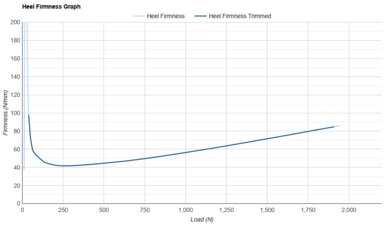
The heel feels firm and supportive. It resists compression well under load, which helps maintain stability and control during landings, more so than in the adidas Adizero Evo SL. However, the trade-off is that comfort is a bit sacrificed, particularly for runners who rely heavily on heel striking.
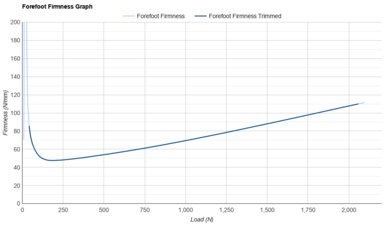
The forefoot is very firm and holds its shape even under high pressure. This adds a stable, planted sensation on toe-off and helps the shoe feel predictable when running fast. The flip side is reduced softness, making it less forgiving on longer runs or for runners who prefer a more cushioned forefoot feel. Those folks should instead opt for a protective but bouncy plated super trainer like the HOKA Mach X 2.
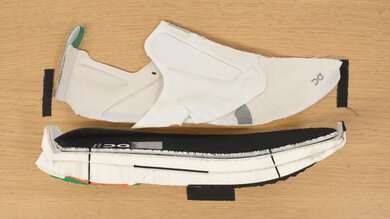
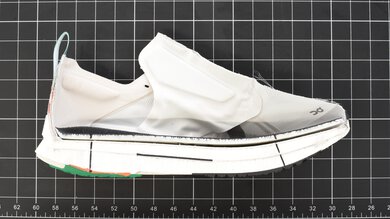
Across the midfoot the shoe uses a very small, thin plastic shank. It's similar in concept to the piece found in the adidas Adizero Evo SL, another unplated uptempo trainer, but On's shank is less large. In the Evo SL the shank helps to stabilize the soft Lightstrike Pro foam and holds the shoe together, whereas the PEBA foam in the Cloudboom Zone is already quite firm, so the functional impact here is less evident.
Cushioning
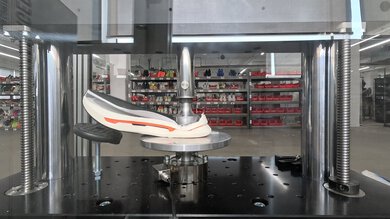
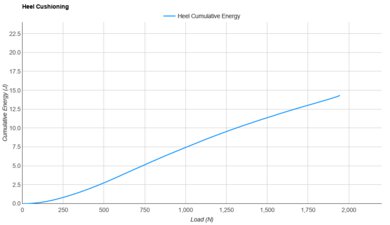
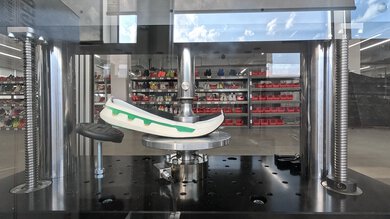
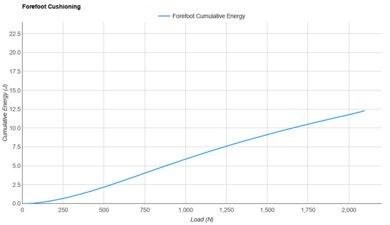
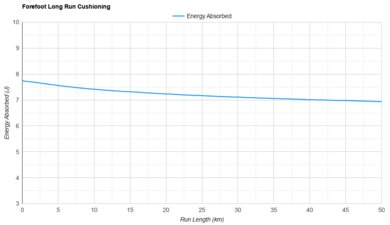
The On Cloudboom Zone has decent cushioning. Both the heel and forefoot feel noticeably harsher at faster paces than most modern performance trainers, and protection is limited over long distances. While this lower stack and firmer ride contribute to stability and ground connection, it won't satisfy runners who prioritize plush comfort or impact absorption during longer runs.
Not a plush, protective shoe.
Responsiveness
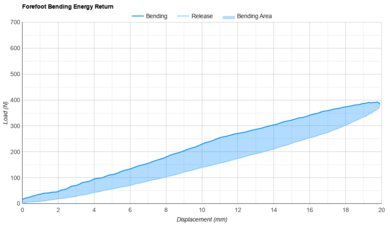
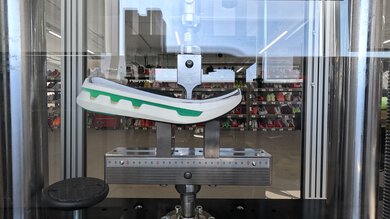
The On Cloudboom Zone's responsiveness is good for a training shoe, but not standout. The PEBA midsole provides a lively response, but doesn't match the explosive rebound of plated super shoes. That said, it still gives enough spring to make workouts and shorter races feel efficient and engaging.
The midsole is moderately responsive and returns quite a bit of energy.
Not an overly bouncy experience.
True To Size
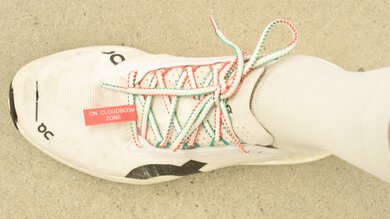
The On Cloudboom Zone is a superb fit overall, and the length runs true to size. The forefoot width is pretty standard, and there's enough room through the arch. The toe box may be slightly low for taller toes, but it's unlikely to cause issues for most runners.
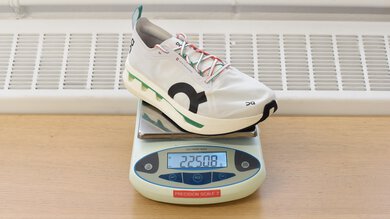
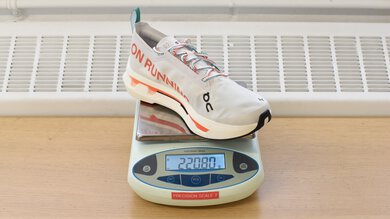
The On Cloudboom Zone is quite lightweight for a training-oriented shoe. At this weight class, it feels nimble and responsive, especially compared to plated super trainers that often come in heavier due to added structure. Its lower mass helps the shoe transition well for workouts that mix different paces.
Popular Running Shoe Comparisons
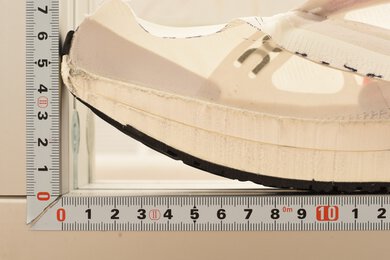
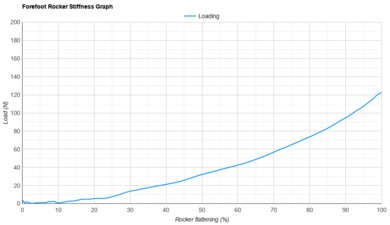
The On Cloudboom Zone is a lightweight uptempo trainer built for speed sessions and structured workouts, making it a natural training counterpart to the On Cloudboom Strike racing shoe. It uses a single slab of Helion HF PEBA foam, which gives it a responsive, snappy feel without the stiffness of a carbon plate. The ride sits lower to the ground than many modern PEBA trainers and feels best at faster paces, where the forefoot engages and provides a smooth turnover. At slower speeds or on easy runs, the midfoot can feel a bit empty, and the subtle rocker does not offer as much assistance, limiting its versatility. The Cloudboom Zone is light, responsive, and offers enough protection for different footstrikes and distances, but it lacks the snap of plated super trainers like the Saucony Endorphin Speed 4 or adidas Adizero Boston 13. It makes the most sense for runners who want a lively, lightweight On shoe for intervals and tempo runs, and it fills that role well.
However, it remains a niche option, since most runners will get more value from a plated trainer or super shoe that can handle workouts and double as a race-day choice, offering broader versatility. The adidas Adizero Evo SL fills a very similar function as an unplated uptempo trainer, but is more energetic and bouncier. Within On's lineup, the Cloudboom Zone slots in as the true uptempo trainer, sitting between the everyday cushioning of the On Cloudmonster 3 Hyper, the middle-of-the-pack On Cloudboom Max marathon shoe, and the more aggressive, race-ready Cloudboom Strike. Compared to the Hyper, it feels lower, snappier, and more workout-focused, while the Strike remains the sharper race option.
For additional options, check out our recommendations for the best running shoes, the best long-distance running shoes, and the best shoes for running a marathon.
The On Cloudboom Zone and the adidas Adizero Evo SL are both unplated uptempo trainers designed to give runners a lightweight option for faster workouts, but they approach that goal differently. The Cloudboom Zone uses a PEBA-based foam, delivering a direct, grounded feel with some snap through the forefoot, though the midfoot can feel a bit flat and the overall ride less energetic than the adidas. The Evo SL, on the other hand, relies on full-length Lightstrike Pro and feels noticeably bouncier, livelier, and more fun to run in. Both are best suited for intervals, tempos, and track sessions rather than long, easy runs, but the On offers a more structured, much more stable ride, whereas the adidas is the more responsive, protective choice.
The HOKA Mach 6 and the On Cloudboom Zone are both lightweight, unplated trainers built for uptempo runs and intervals, but they deliver different sensations underfoot. The Cloudboom Zone is slightly lighter and uses a plastic shank to add some stiffness, paired with a firmer midsole that feels more energetic but also less forgiving. While neither shoe is highly protective, the HOKA feels a bit more cushioned overall, especially in the forefoot.
The ASICS SUPERBLAST 2 and the On Cloudboom Zone are both unplated uptempo trainers aimed at interval sessions and faster training, but they offer very different experiences. The Cloudboom Zone is lighter and a touch more energetic, with a direct, close-to-the-ground feel that makes it sharp and snappy at pace, though also quite firm and not very forgiving for longer efforts. The SUPERBLAST, while still relatively firm, feels a lot more cushioned and protective overall, offering more stack and a smoother rocker that softens the ride without dulling turnover. The trade-off is that it carries more weight and less ground feel, but it ends up being more versatile across different sessions.
The On Cloudboom Zone and the On Cloudboom Strike share a middle name but are built for very different purposes. The Zone is an unplated training shoe that shines in interval sessions and faster workouts, offering a lightweight, firm, and direct ride with enough snap for short efforts. The Strike, by contrast, is On's top-tier carbon-plated super shoe, much more energetic and significantly more cushioned, with geometry and foam optimized for efficiency over long distances and racing. The Zone makes sense as a workout companion within the same ecosystem, but if you are chasing maximum performance and race-day efficiency, the Strike is the clear choice.
The On Cloudboom Zone and On Cloudboom Max are two boisterously named, ambitiously marketed, but ultimately limited-use case shoes. On claims the Zone is a versatile trainer that can handle 99 percent of a runner's mileage, but in practice, its lightweight build, partial plastic shank, and subtle rocker make it more suited to uptempo workouts. Similarly, On markets the Cloudboom Max as an elite-level super shoe, but its bulky construction that prioritises stability over speed makes it more suitable for middle-of-the-pack runners aiming for a 4-hour marathon.
Differences Between Sizes And Variants
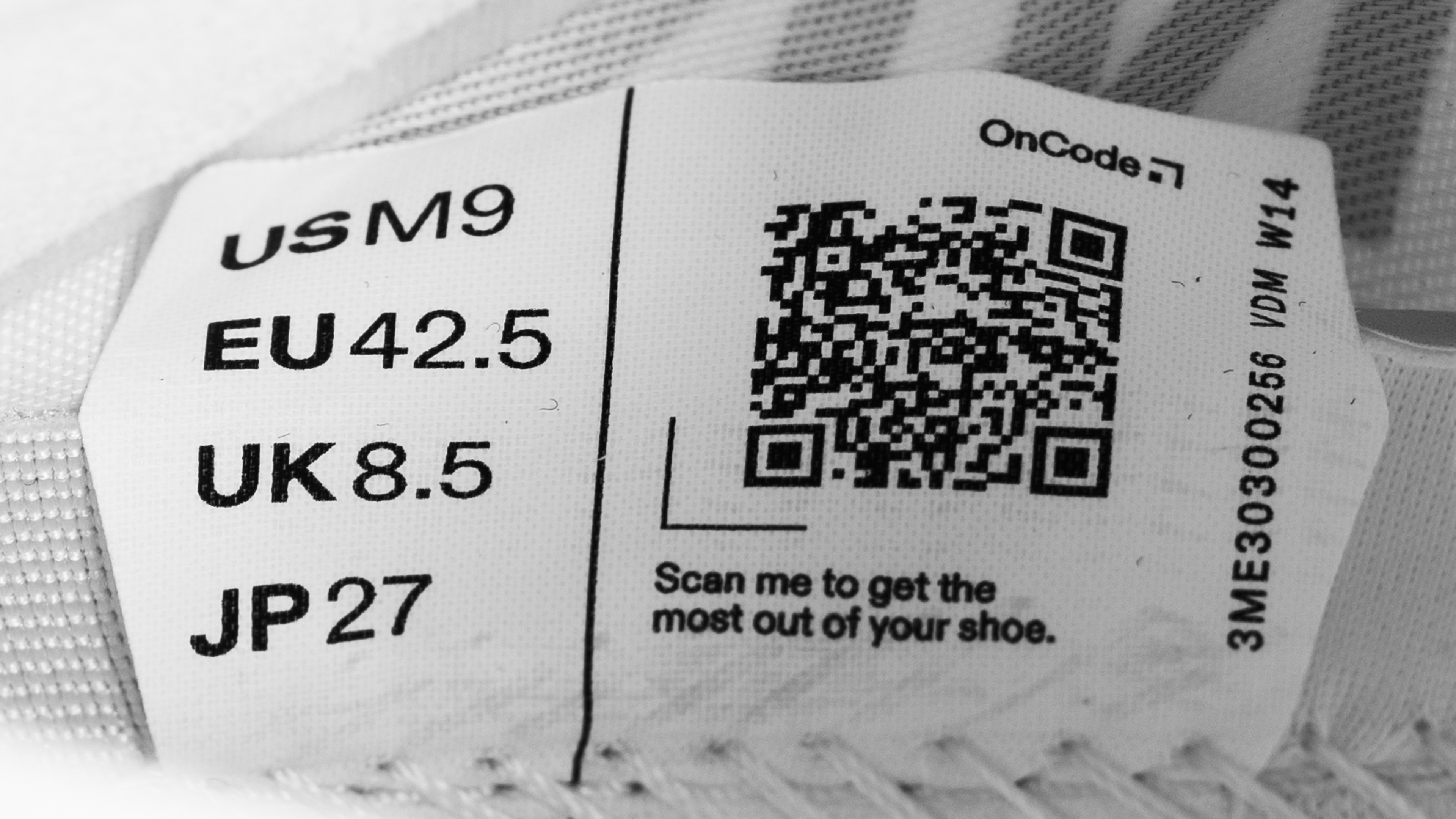
We bought and tested the On Cloudboom Zone in men's US size 9, as noted on the label for our pair. The pair we purchased is the White/Flame colorway. At the time of testing, this is the only color available, and the shoe isn't offered in wide or narrow widths. The design section applies only to the exact pair we tested, but we expect other sizes to perform similarly.