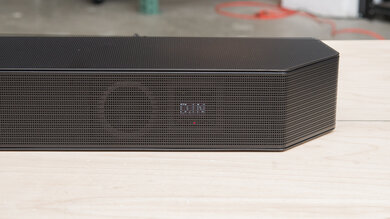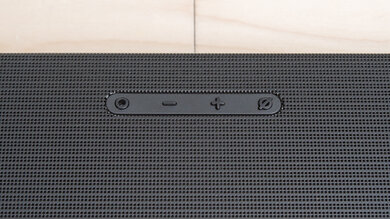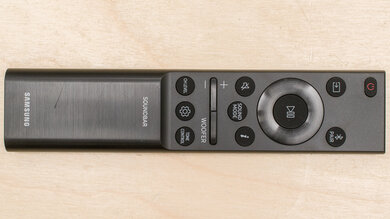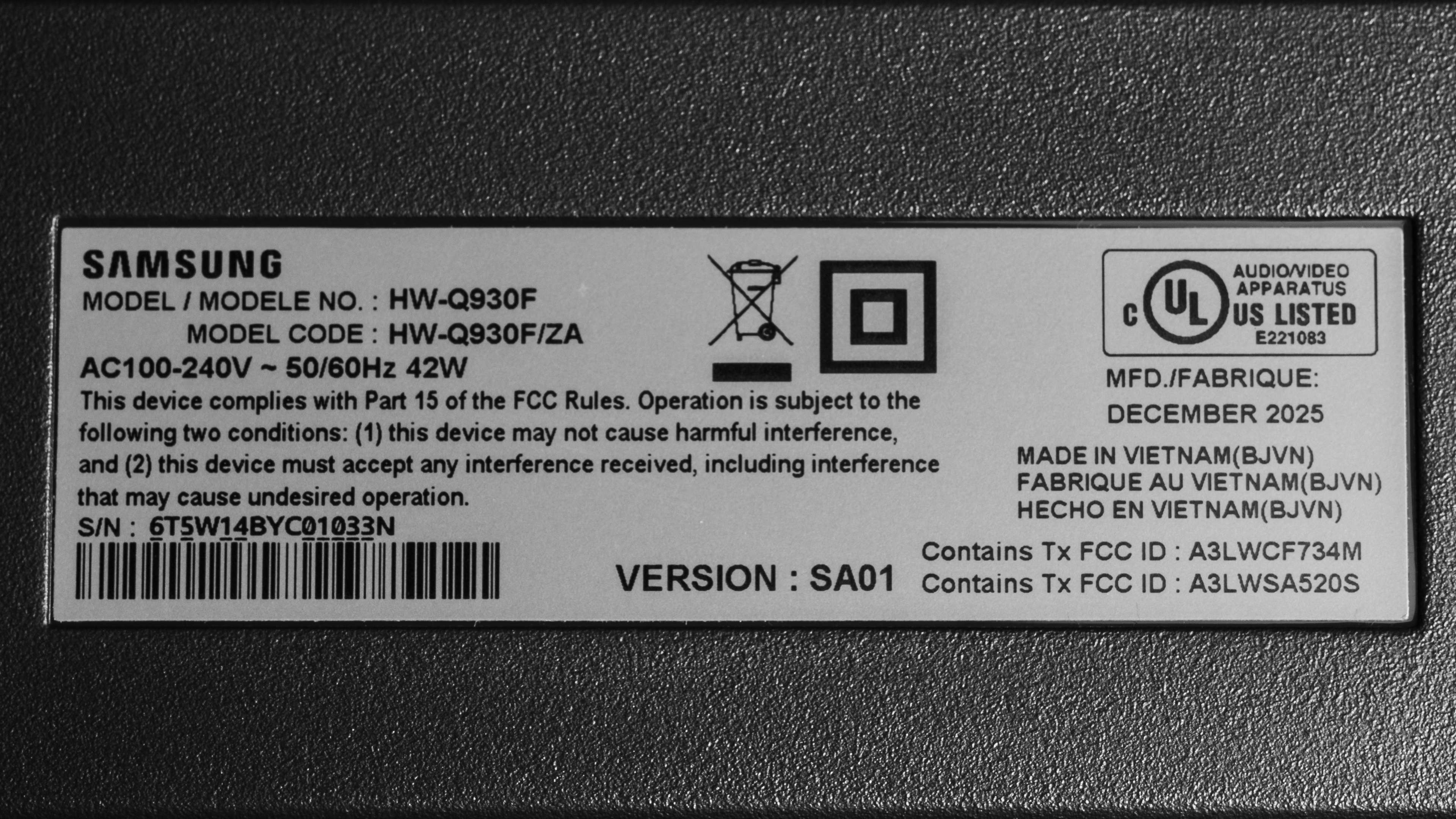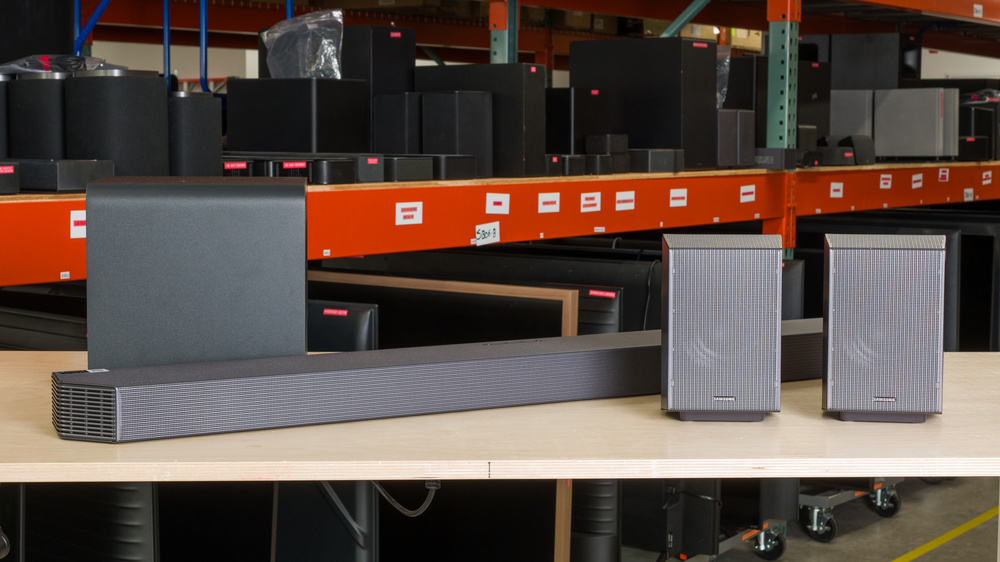
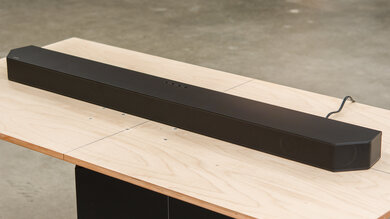
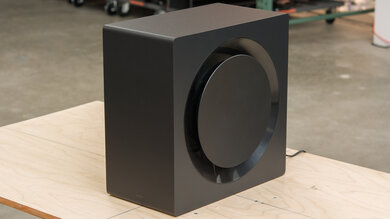
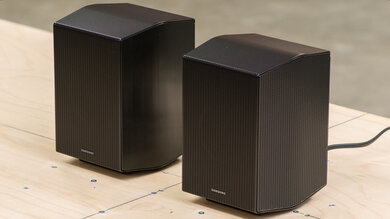
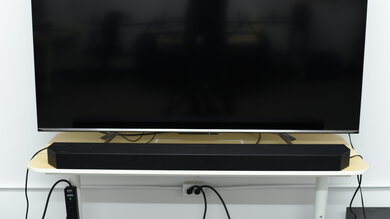
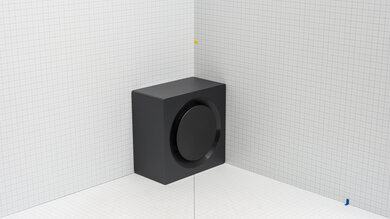
The Samsung HW-Q930F is a premium 2025 Q-Series soundbar aimed at buyers who want a complete surround sound system without paying for the flagship HW-Q990F. It's a fairly similar proposition to the older Samsung HW-Q930D, but offers a redesigned, more compact subwoofer. Unlike more affordable models like the Samsung HW-Q800F, the HW-Q930F comes with dedicated rear speakers, but its lack of 4k @ 120Hz passthrough may make it less convenient for gamers with multiple devices.
Our Verdict
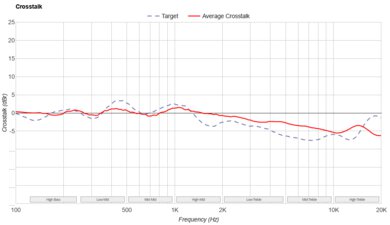
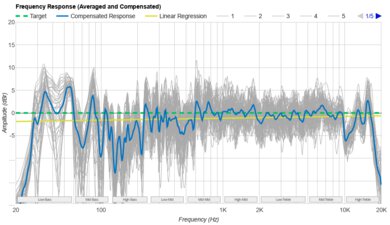
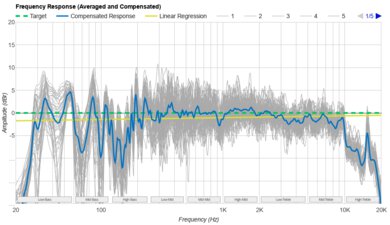
The Samsung Q930F is great for mixed usage. Its balanced default tuning keeps music sounding detailed and dialogue clear, while the compact subwoofer ensures basslines have plenty of punch. The dedicated rear speakers create an immersive experience with surround sound content, and the bar gets loud enough to fill most living rooms without much compression at normal listening levels. However, the stereo soundstage isn't perfect, with a noticeable loss of focus as sounds move through the center. Its up-firing drivers also create a sense of height with Atmos content, though it's not precise enough to easily localize overhead effects like helicopters. It's also limited to 4k/60Hz passthrough, so gamers wanting 4k/120Hz will need to connect their consoles directly to the TV. Still, there's plenty of room for customization, including room correction, various sound modes, and a seven-band EQ in Standard mode.
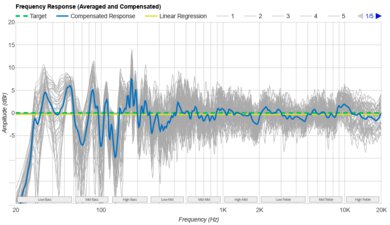
Balanced sound with punchy bass and clear vocals.
Immersive surround sound from the included rear speakers.
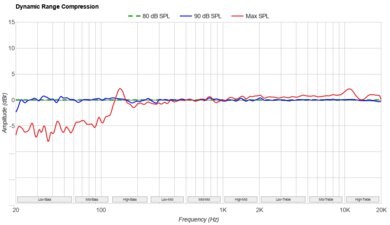
Gets loud with little compression at normal listening volumes.
Extensive sound customization options, including room correction and a seven-band EQ.
Stereo soundstage lacks precise tracking through the center.
Deepest bass lacks some rumble and impact.
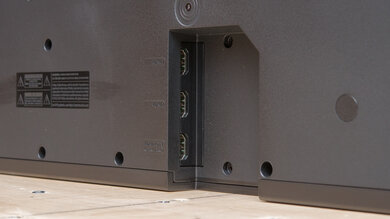
4k video passthrough is limited to 60Hz.
The Samsung Q Series Soundbar HW-Q930F is impressive for dialogue and TV shows. Its balanced mid-range and dedicated center channel reproduce voices clearly and naturally, so you'll be able to hear what's being said in everything from quiet conversations to busy action scenes. Dialogue also remains clear when you turn up the volume. If you're struggling to hear speech, there are various dialogue enhancement options that help bring voices forward. Adaptive Sound emphasizes dialogue, and Night Mode reduces the impact of loud sounds when you're catching up on a show late at night.
Balanced sound with punchy bass and clear vocals.
Clear, natural dialogue from the dedicated center channel.
Gets loud with little compression at normal listening volumes.
Extensive sound customization options, including room correction and a seven-band EQ.
Deepest bass lacks some rumble and impact.
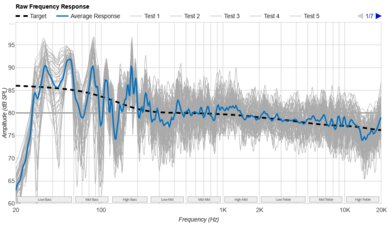
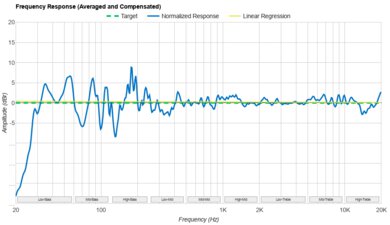
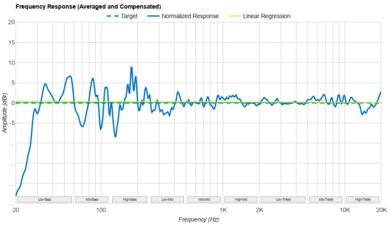
The Samsung HWQ930F is great for music. Its balanced default tuning delivers punchy, controlled bass that gives kick drums and basslines plenty of weight without muddying vocals. The mid-range is clear and detailed, although higher-pitched instruments like violins can sometimes sound a little bright at times. The subwoofer also struggles to reproduce the very deepest bass notes with clarity. Its stereo soundstage extends slightly beyond the bar, but sounds lose some focus as they move through the center, making instrument placement less precise. Still, there's enough volume to fill most living rooms, with little compression at typical listening levels. You can also tailor the sound using room correction, different sound modes, and a seven-band EQ in Standard mode.
Balanced sound with punchy bass and clear vocals.
Gets loud with little compression at normal listening volumes.
Extensive sound customization options, including room correction and a seven-band EQ.
Deepest bass lacks some rumble and impact.
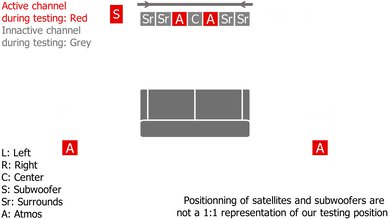
The Samsung Q930F is impressive for movies. Its punchy bass and strong dynamics reproduce explosions and other impacts with plenty of weight, while its balanced mid-range and dedicated center channel keep dialogue clear through busy action scenes. The included rear speakers create an immersive surround experience, so passing vehicles and other environmental effects really sound like they're coming from behind you. Its four up-firing drivers also add a convincing sense of height with Atmos content, although overhead movement isn't particularly precise, especially when sounds travel from the front of the room to the rear. The subwoofer also lacks some rumble in the deepest bass, so particularly dramatic effects won't get the same rumble you could expect with a larger sub. Still, the bar supports a comprehensive range of audio formats, including Dolby Atmos and DTS, and offers room correction and several sound modes to customize your experience.
Balanced sound with punchy bass and clear vocals.
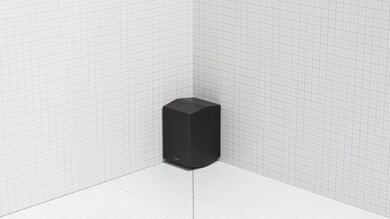
Immersive surround sound from the included rear speakers.
Gets loud with little compression at normal listening volumes.
Extensive sound customization options, including room correction and a seven-band EQ.
Stereo soundstage lacks precise tracking through the center.
Overhead effects aren't precisely localized with Atmos content.
Deepest bass lacks some rumble and impact.
Check Price
Popular Soundbar Comparisons
The Samsung HW-Q930F soundbar sits between the more stripped-back Samsung HW-Q800F and the flagship Samsung HW-Q990F in the brand's 2025 lineup. Its dedicated rear speakers make it a more complete surround system than the Q800F, while the Q990F offers deeper bass, a more cohesive stereo soundstage, and 4k/120Hz HDMI passthrough. The HW-Q930F offers similar sound and features to its predecessor, the Samsung HW-Q930D, but has a much sleeker and more compact subwoofer. Looking outside Samsung, the JBL Bar 1300XMK2 is a compelling alternative with detachable, battery-powered rear speakers, greater volume headroom, and more HDMI inputs. However, its much larger subwoofer takes up more space, and its surround sound is less evenly balanced than the Q930F's.
If you want to see how other bars on the market stack up, check out the best soundbars, the best soundbars with a subwoofer, and the best soundbars for movies.
The Samsung HW-Q990F is a worthwhile step up from the Samsung HW-Q930F if you want deeper, more precise bass, better stereo imaging (especially for objects passing from left to right across the center), and broader gaming connectivity options. The 990F also has additional surround channels, a second HDMI In port, and support for 4k @ 120Hz passthrough, while the Q930F is limited to 4k @ 60Hz. That said, both include dedicated rear speakers and four up-firing drivers, along with comprehensive audio-format support and extensive sound customization. Neither delivers particularly precise overhead localization, so the subjective difference with Atmos content isn't as substantial as the extra channels might suggest.
The Samsung HW-Q930F and Samsung HW-Q930D are very similar soundbars, with the same 9.1.4-channel configuration, dedicated rear speakers, and comprehensive audio-format support. The Q930F's biggest practical improvement over its predecessor is its much smaller subwoofer, which is easier to accommodate in your living room while still delivering similar bass extension. However, the older Q930D has a more cohesive stereo soundstage, with better focus through the center. Their surround and dialogue performance is broadly comparable, and both lack 4k/120Hz passthrough. Interestingly, the Q930D also supports G-SYNC passthrough, which the newer model lacks. If you have room for the older subwoofer, there's little reason to upgrade.
The Samsung HW-Q930F is a better choice for movies than the Samsung HW-Q800F, primarily because of its dedicated rear speakers. The Q800F relies on side-firing drivers to simulate surround sound, while the Q930F reproduces effects from behind your listening position. Its additional up-firing drivers also help create a more immersive experience with Atmos content, although overhead effects still aren't very precise. Both have balanced tuning, clear dialogue, similarly compact subwoofers, and extensive sound customization options. Both soundbars are limited to 4k/60Hz passthrough.
The JBL Bar 1300XMK2 offers some practical advantages over the Samsung HW-Q930F, particularly for those prioritizing flexibility in their setup. Its detachable, battery-powered rear speakers don't need permanent power connections, although they last just under five hours before needing a recharge. The JBL also gets considerably louder with less compression, delivers deeper bass from its much larger subwoofer, and has a more cohesive stereo soundstage. However, the Samsung's surround channels are more evenly balanced, and its audio latency is lower. The JBL also offers three HDMI inputs compared to the Samsung's single input, though neither supports 4k @ 120Hz passthrough. So if you prefer permanently installed rear speakers and a compact subwoofer, the Samsung is the more manageable option.
Test Results
for pictures & test results
for videos & test results

for videos & test results