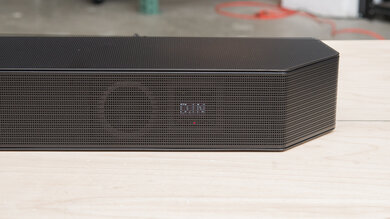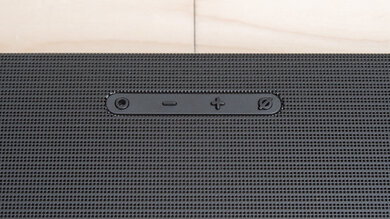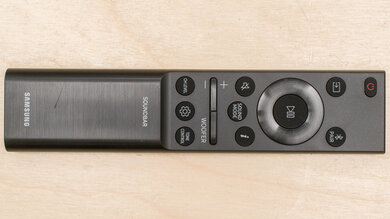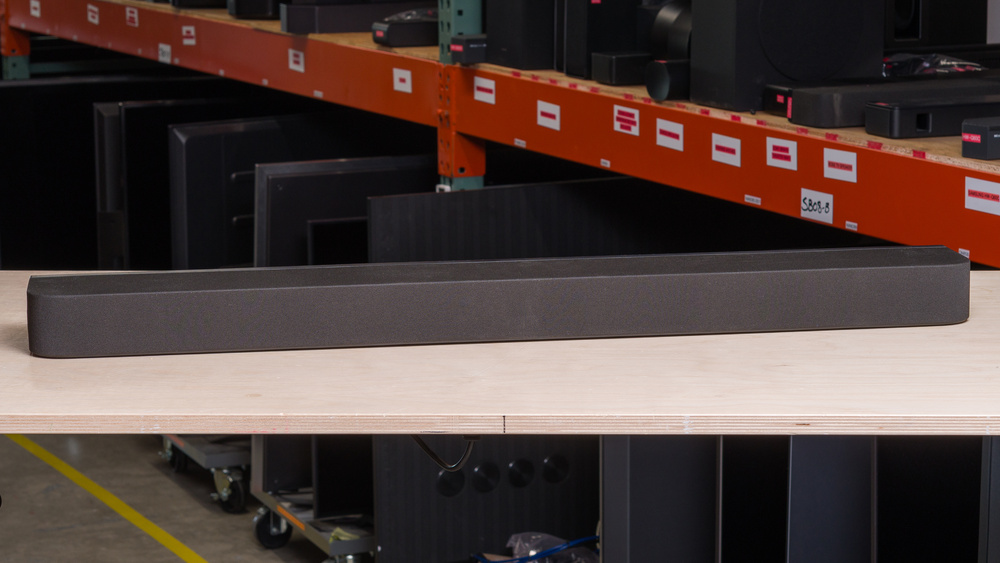
The Sony BRAVIA Theater Bar 7 is a compact, standalone soundbar. As with other models within the Sony BRAVIA Theater Bar lineup, it comes with some features that are only accessible when paired with a compatible Sony BRAVIA TV, like the dialogue-enhancing Voice Zoom 3, and BRAVIA Connect for streamlined setup. Still, even if you aren't a BRAVIA TV owner, the soundbar's small frame, extensive format compatibility, and comprehensive video passthrough possibilities make it an attractive proposition for smaller living rooms.
Our Verdict
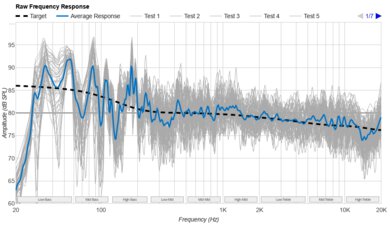
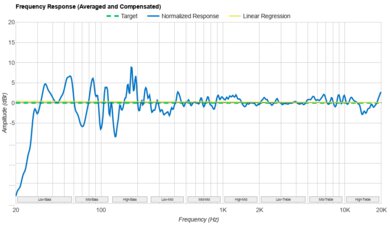
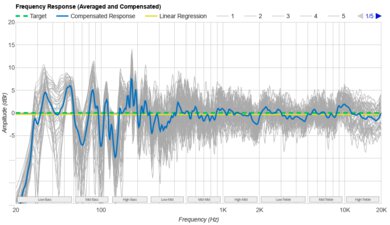
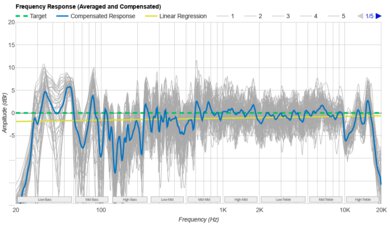
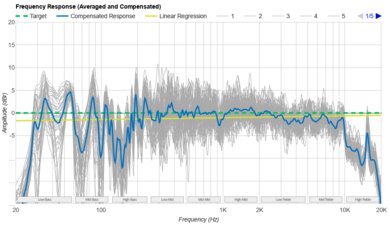
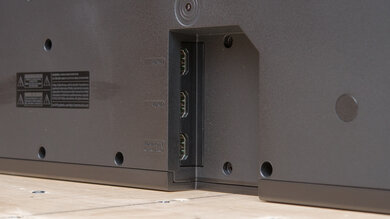
The Sony BRAVIA Theater Bar 7 is decent for mixed usage. It supports all major audio formats, including object-based formats like Dolby Atmos and DTS:X, and even supports 4k and 8k video passthrough via its HDMI In port (with 120Hz and 60Hz refresh rates, respectively). Gamers will appreciate the ability to use the bar as a hub between a display and a console, as well as the uniformly low latency across different audio formats and connection types. As with most standalone soundbars, it lacks some low-bass presence, boosting the high-bass range to compensate for this, and it has to virtualize surround-channel content in lieu of discrete rear speakers. As a result, its performance with action flicks and high-octane thrillers lacks some immersiveness, but this is an expected trade-off given its size and channel configuration.
4k @ 120Hz video passthrough via HDMI In port.
Room calibration feature.
Gets loud for a small soundbar.
Lacks low-bass output.
Lack of height with Atmos content.
Stereo soundstage isn't very wide.
The Sony BRAVIA Theater Bar 7 is very good for dialogue and TV shows. While its small size and lack of a dedicated subwoofer result in a lack of low bass, it's capable of outputting a balanced mid-range, making for a detailed presentation of speech and dialogue. This is complemented by the discrete center channel, which helps pinpoint voices within the sound field. While there's no graphic EQ and presets for more granular tweaks, there is a voice enhancement sound mode, and BRAVIA TV owners can take advantage of the Voice Zoom 3 feature, which enlists the TV speakers to bolster dialogue.
Extensive audio format support.
Room calibration feature.
Stereo soundstage isn't very wide.
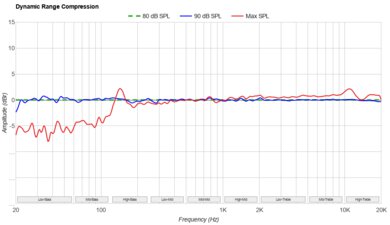
The Sony BRAVIA Theater Bar 7 is satisfactory for music. The lack of a dedicated subwoofer means that dub basslines and big room house kicks lack boom and rumble, though there's a boost applied to the high-bass range that lets you hear their attack. The stereo soundstage isn't very wide, however, only extending as far as the extremities of the bar (which isn't very wide), and audio objects panned to wide left or right can sound quite recessed. Still, it can get very loud for its size without compressing much (save for at its absolute peak volume). While Sound Field Optimization adapts the sound to the acoustics of your space, it also up-mixes content in a way that can cause voices and instruments to sound veiled. Disabling the feature results in a more natural rendering of stereo recordings, though you lose out on room calibration. There aren't many features available to adjust the sound manually, either, with no graphic EQ or presets, and only a handful of sound modes to choose from.
Room calibration feature.
Gets loud for a small soundbar.
Lacks low-bass output.
Stereo soundstage isn't very wide.
The Sony BRAVIA Theater Bar 7 is okay for movies. Despite its comprehensive audio format support, which includes Dolby Atmos, its lack of a dedicated sub and rear speakers means it struggles with Atmos movies. Action blockbusters are hampered by the bar's inability to do justice to sub-bass rumbles from toppling buildings, and the two height drivers struggle to convey a convincing sense of verticality. Similarly, with 5.1 content, the bar virtualizes the surround channels to compensate for the lack of rear speakers, resulting in a lack of immersiveness with surround sound content. Still, for a small bar, it can get quite loud, and the discrete center channel makes for nuanced and natural-sounding dialogue. Sadly, there's not much in the way of sound adjustment features, with just a handful of sound modes and no graphic EQ or presets.
Extensive audio format support.
Gets loud for a small soundbar.
Lacks low-bass output.
Lack of height with Atmos content.
Check Price
Differences Between Sizes And Variants
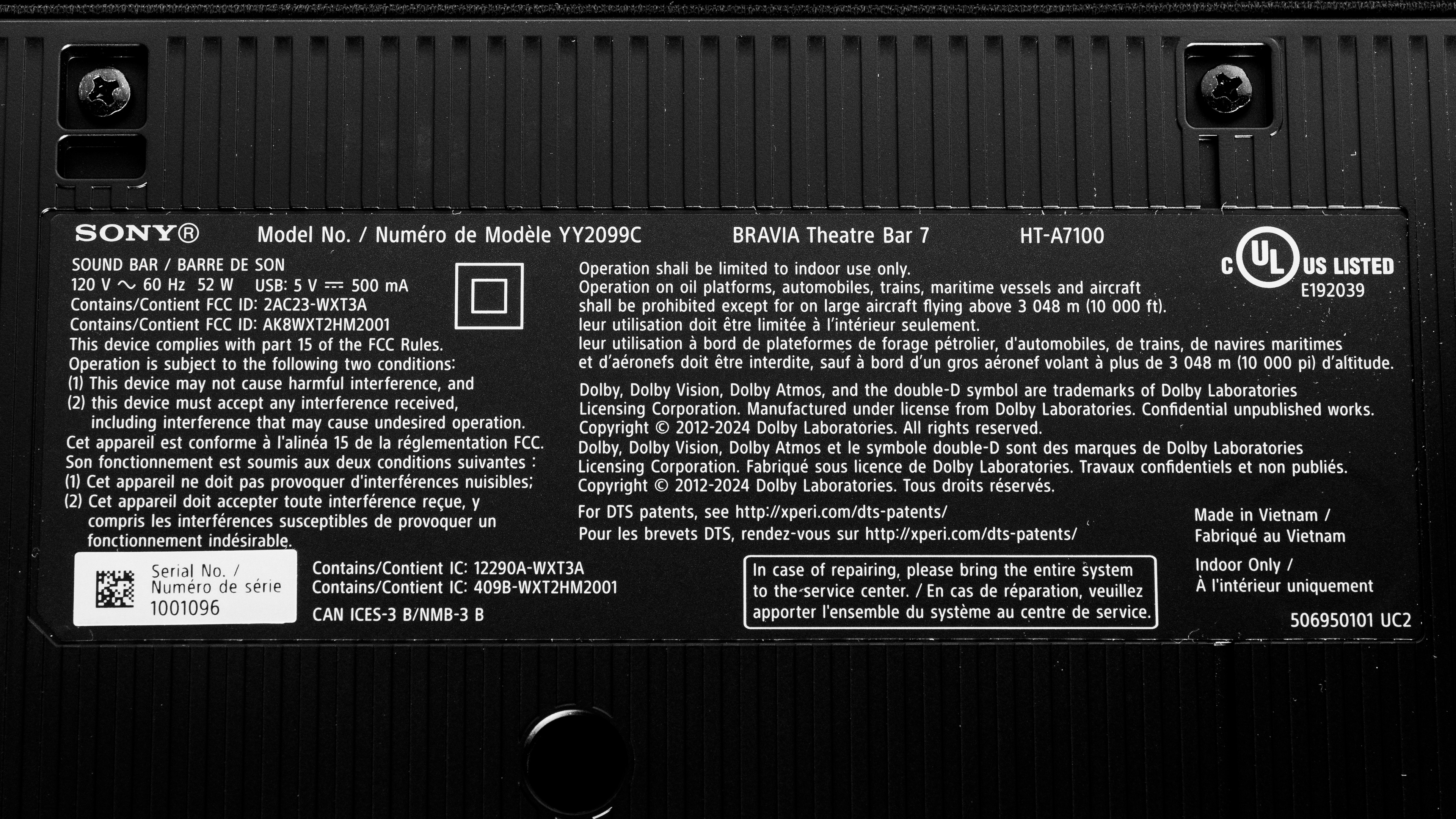
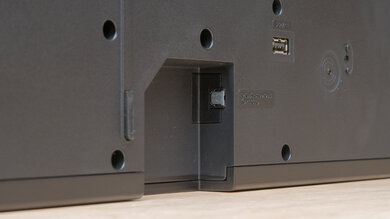
The Sony BRAVIA Theater Bar 7 comes in just one color variant: 'Black,' and we took a photo of our unit's label.
If you encounter another variant of this bar, please let us know in the comments, and we'll update our review.
Popular Soundbar Comparisons
The Sony Theater Bar 7 sits between the larger Sony BRAVIA Theater Bar 8 and the slightly more compact Sony BRAVIA Theater Bar 6, which comes with a dedicated subwoofer. It's best suited for those who are looking to upgrade on TV speakers but lack the space required for a subwoofer and rear speakers. Its small form factor comes with some trade-offs, as it lacks the sub-bass output and Atmos performance required to bring high-octane action flicks to life. Those looking for a bit more bass-range oomph are better off going for the Theater Bar 6, with its discrete sub, though you'll lose out on HDMI passthrough capabilities and volume in the process. None of the bars in the BRAVIA Theater Bar lineup feature particularly extensive sound customization options either, so it's worth looking into the Samsung HW-S60D if features like a graphic EQ and presets are important to you. The Samsung has a wider stereo soundstage and voice assistant support, too, though it can't get quite as loud as the Sony.
If you're looking for alternatives, take a look at our picks for the best small soundbars, the best Dolby Atmos soundbars, and the best all-in-one soundbars.
The Sony BRAVIA Theater Bar 8 has a slightly larger form factor than the Sony BRAVIA Theater Bar 7. While this makes the former less suitable for smaller living spaces and compact TV stands, there's not much else to split them in terms of performance. Both bars have a similar frequency response that boosts the high bass to compensate for the lack of low-bass presence, while keeping the mid-range and highs quite balanced. They also rely on virtualization when it comes to 5.1 content, and their respective up-firing drivers struggle to create a sense of height, detracting from their immersiveness with these content types. With similar video passthrough capabilities, soundstage performances, and center channels, the only other factor separating them is the Theater Bar 7's lower latency across all connections and formats. If this, and its more compact size, don't matter to you, you're better off going with what's priced most competitively.
The Sonos Arc Ultra is better for most use cases than the Sony BRAVIA Theater Bar 7. While both are standalone bars, Sonos' flagship bar features a built-in sub that helps the frequency response extend lower, plus it has a wider soundstage, better dynamics, and even better immersion with 5.1 content. Both can be expanded into larger configurations with other products within their respective product ecosystems: the Sony can be connected to select BRAVIA TVs, wireless subs, and satellites, while the Sonos is compatible with a host of other Sonos home theater products. Given the Sonos' superior performance and build quality, the Sony's main selling point is its HDMI In port. It can pass through 4k video signals @ 120Hz, making it a more ideal choice for soundtracking gaming sessions while keeping latency low. It's also available at a lower price point than the Sonos, making it a less expensive upgrade to TV speakers.
The Sonos Beam (Gen 2) and the Sony BRAVIA Theater Bar 7 are both compact, standalone soundbars at competitive price points. Choosing between them might come down to your choice of TV and whether you want to hook up your bar to a gaming console. While neither bar takes up much space in your living room, the Sonos is particularly diminutive in size. Still, its stereo soundstage is a lot wider than the Sony's, and its default frequency response is more balanced. While both bars can play back 5.1 and Atmos content, neither does so particularly convincingly, as the lack of a dedicated sub and surrounds limits immersiveness. The Sony can be expanded with extra components within the BRAVIA Theater bar line, plus it features video passthrough capabilities via its HDMI In port. That said, if you own other Sonos products or an older TV with an optical port, the Sonos will be a better choice when it comes to compatibility and ecosystem integration.
The Samsung HW-S60D and the Sony BRAVIA Theater Bar 7 are all-in-one soundbars with slightly different strengths. Neither bar can output much low bass, but both boost the high bass to compensate for this. The Samsung has a wider stereo soundstage and a more balanced frequency response overall, and it comes with some limited voice assistant support. It's also compatible with older displays via its optical port and has wider potential for customization via the graphic EQ and presets. Still, the Sony is a better choice for future-proofing your setup: it features two up-firing drivers for creating verticality with Atmos content, as well as 4k @ 120Hz video passthrough via its HDMI In port. It can also get a fair bit louder than the Samsung, though there's quite a bit of compression if you reach max volume.
Test Results
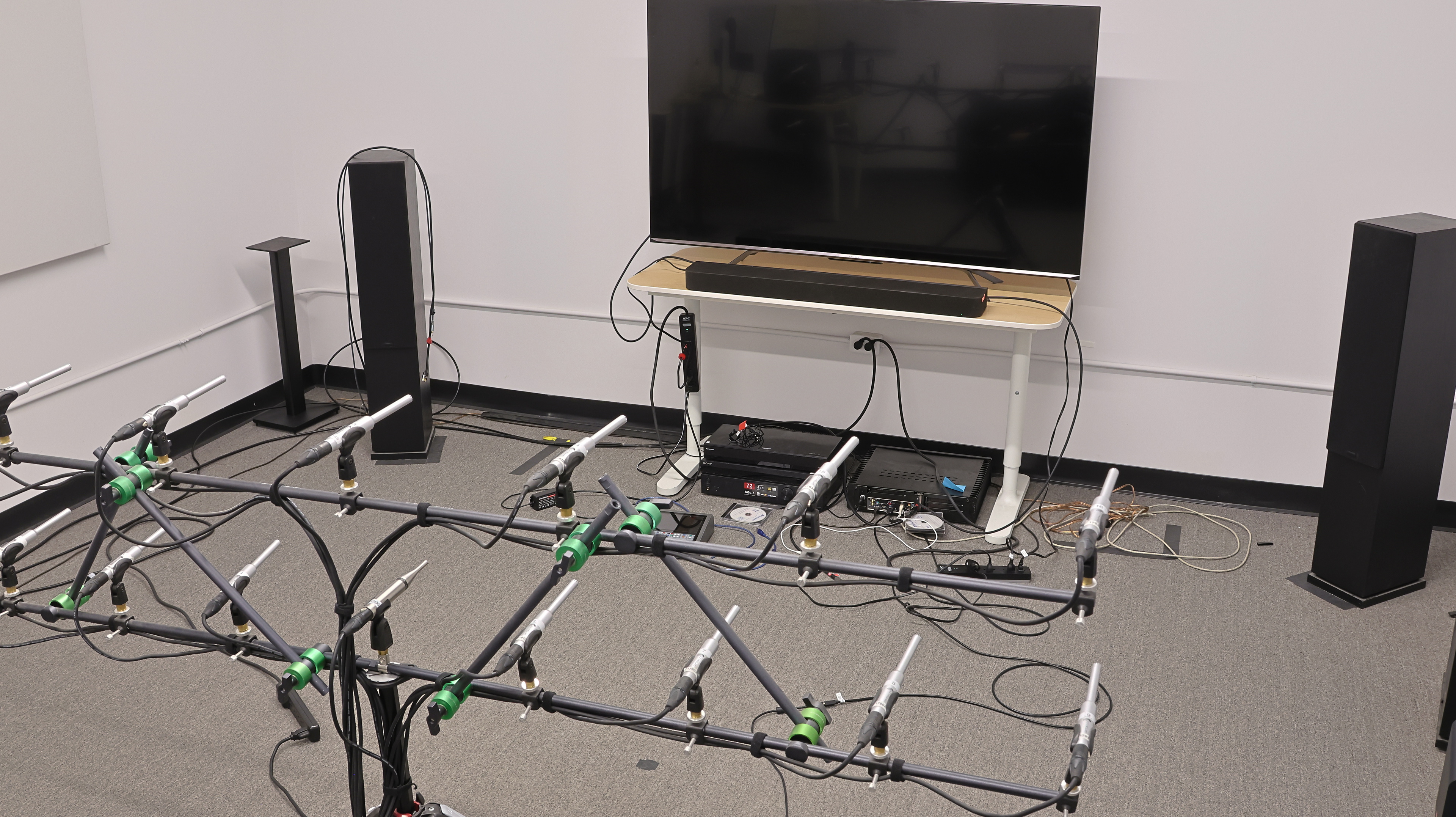
for pictures & test results
for pictures & test results
for videos & test results

for videos & test results