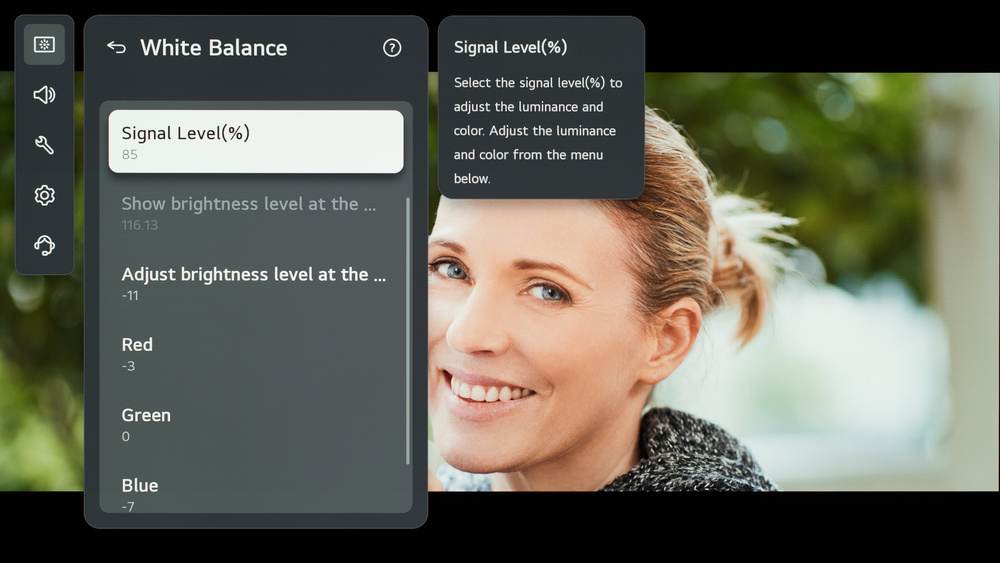
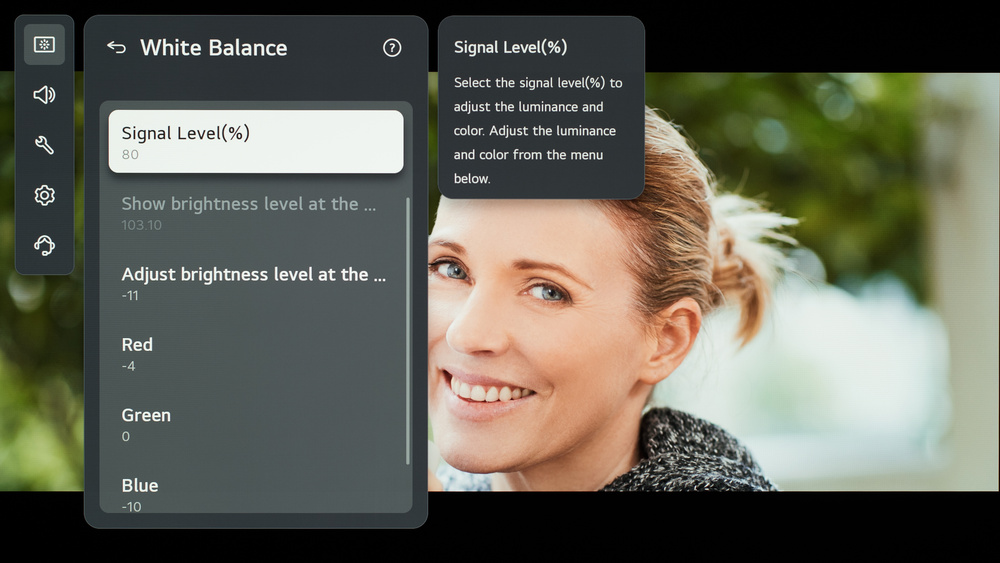
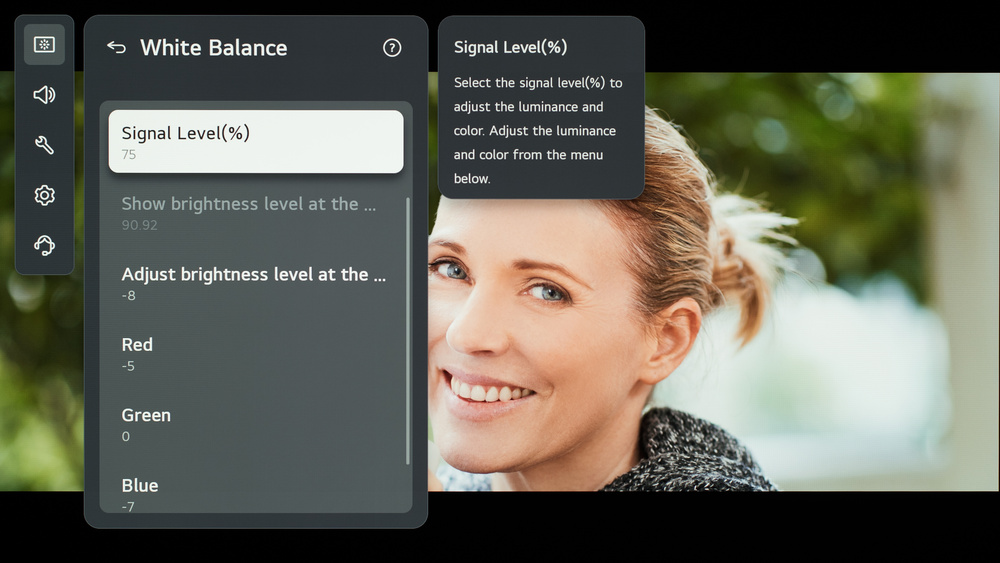
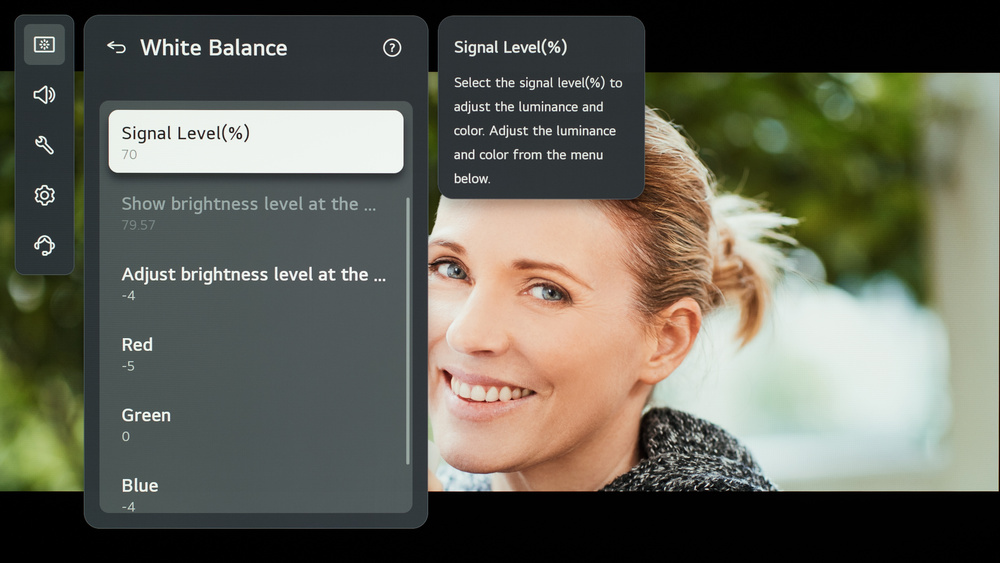
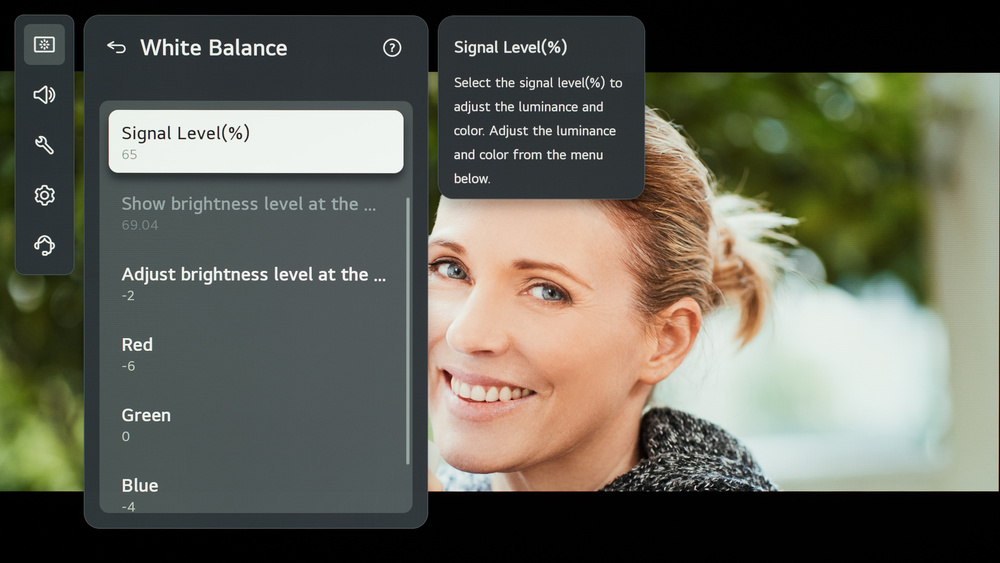
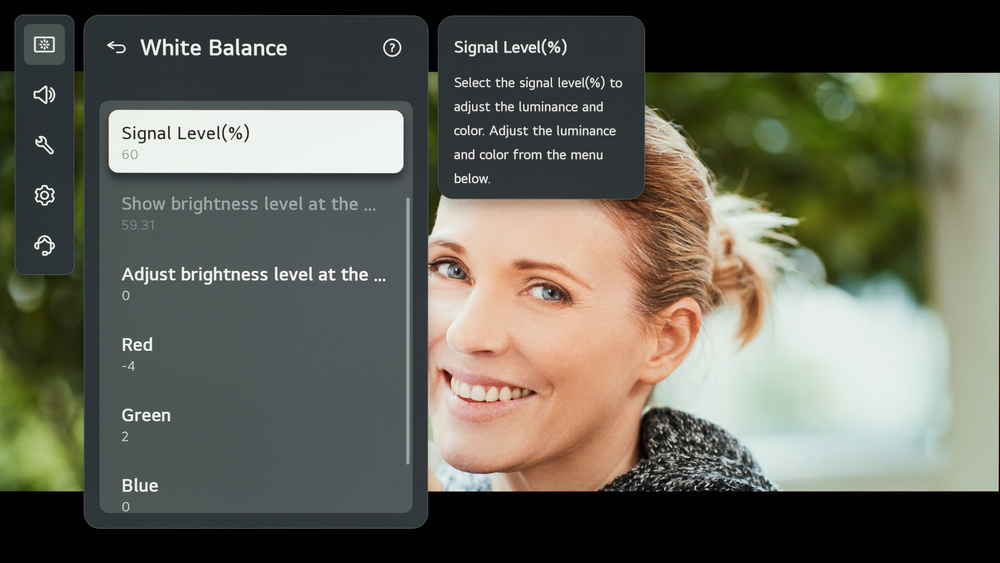
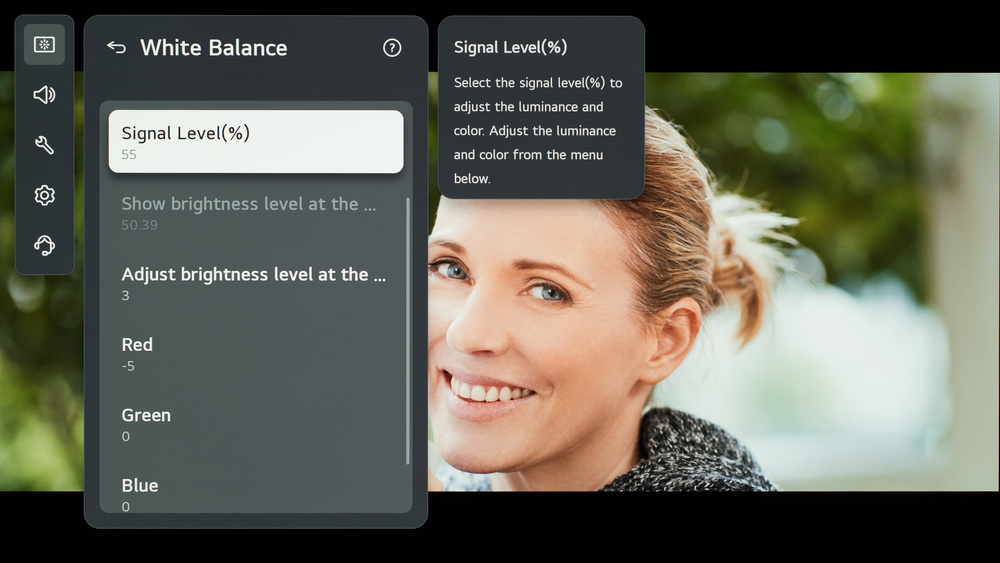
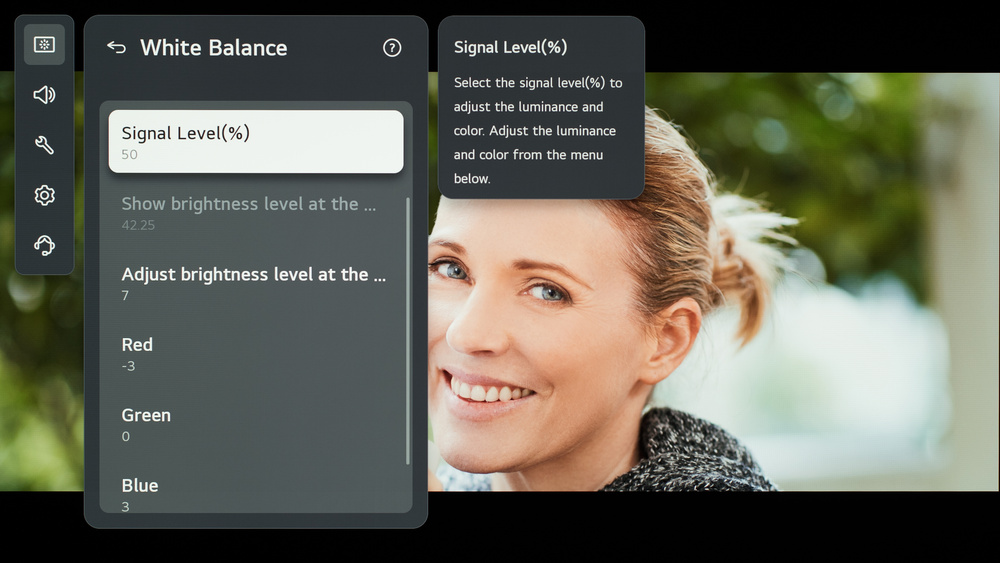
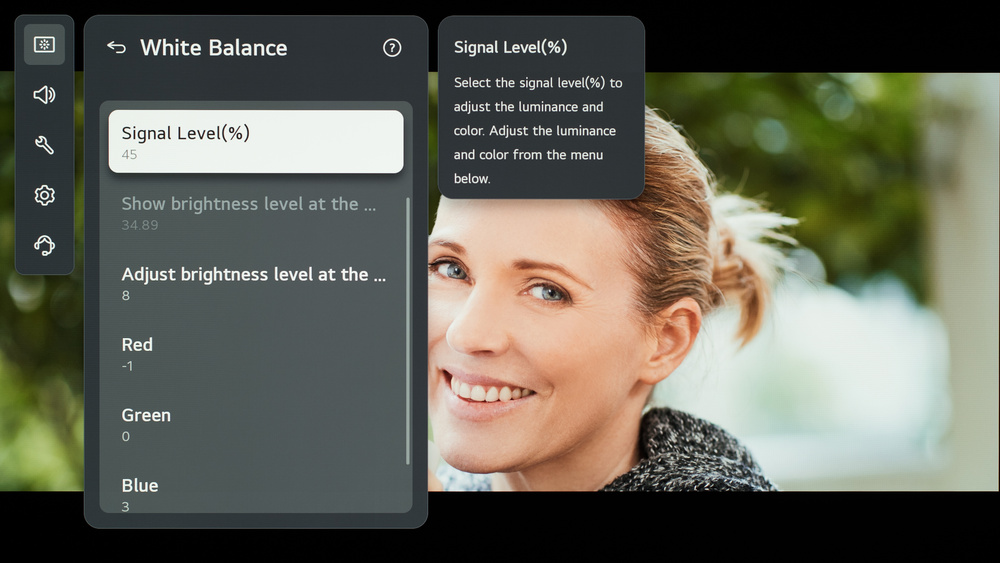
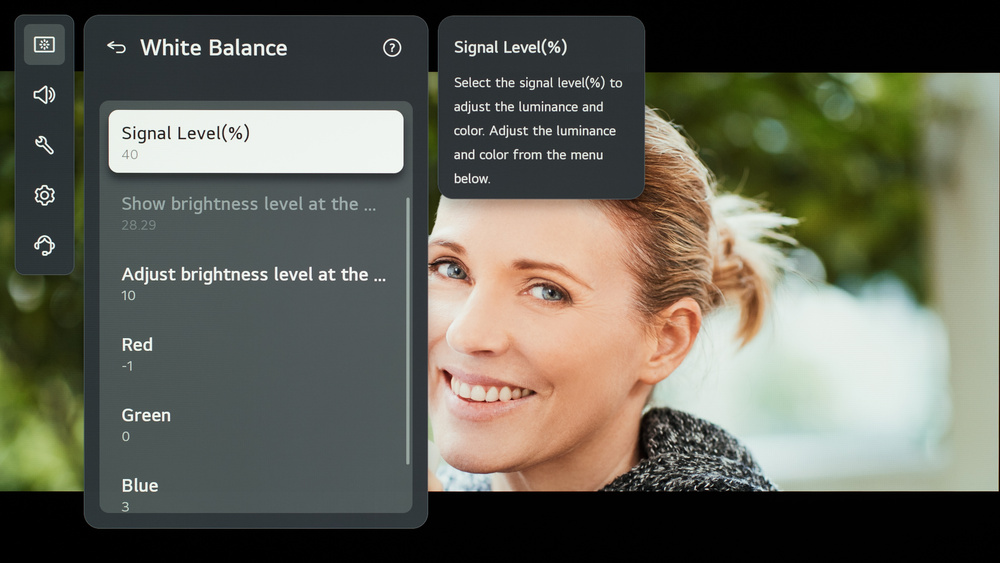
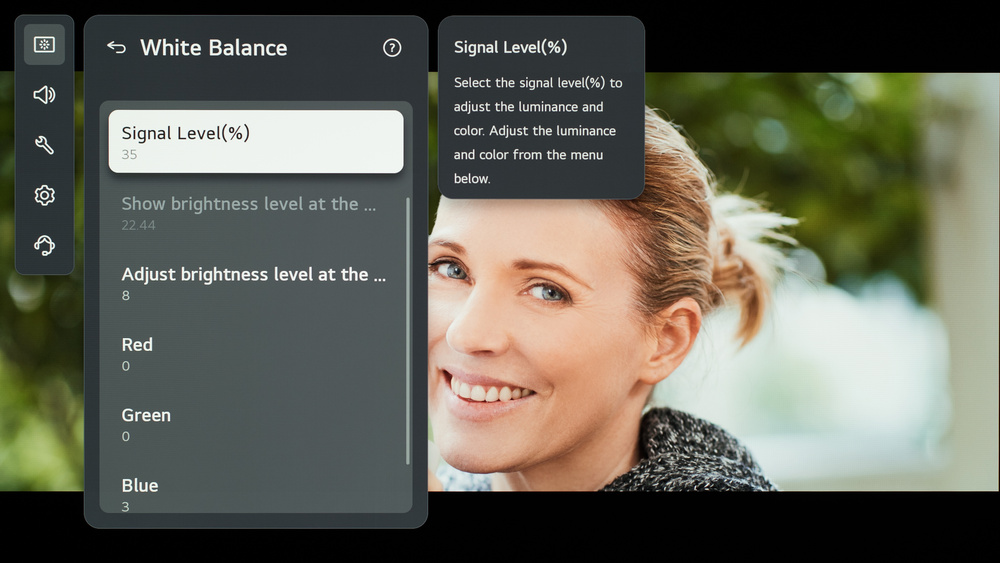
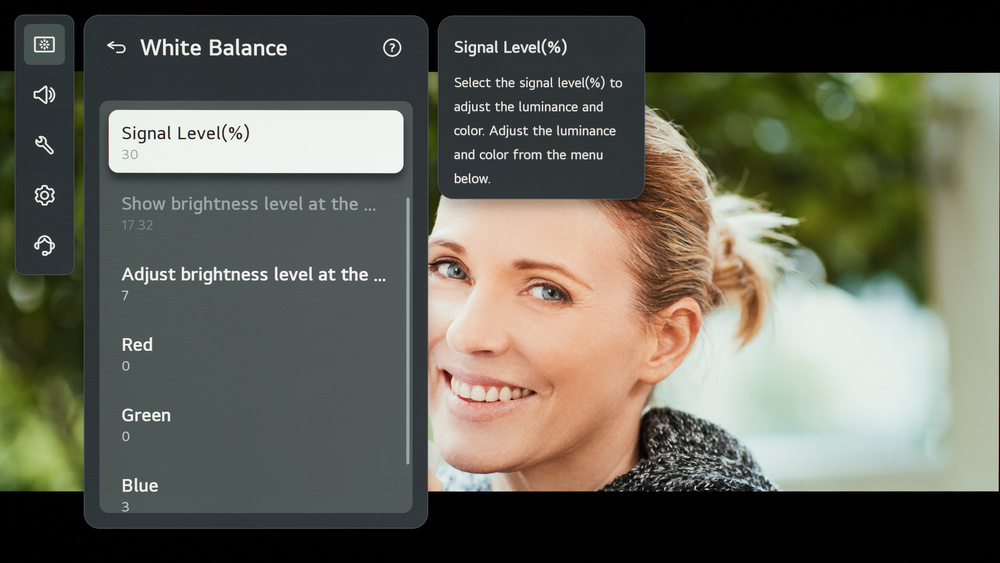
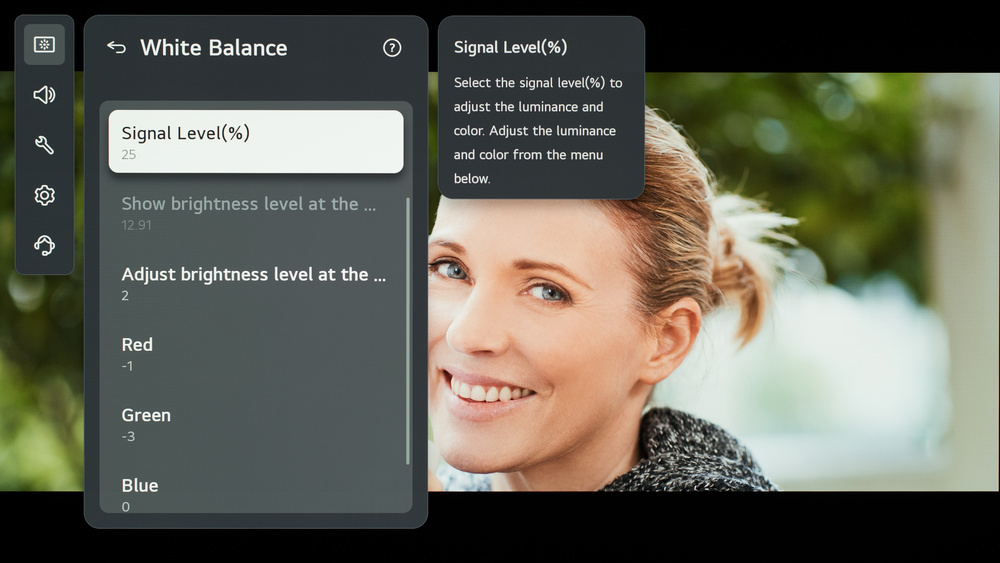
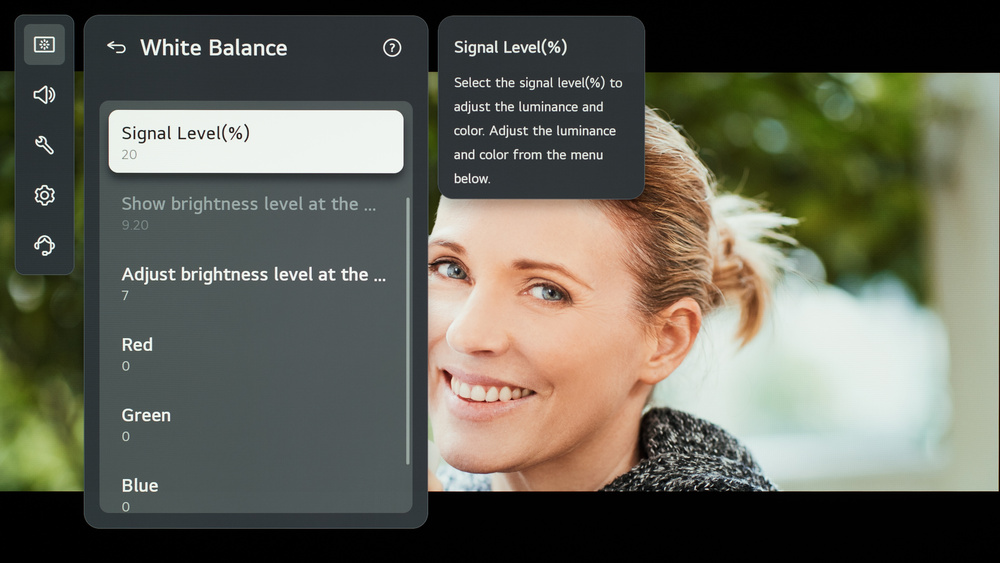
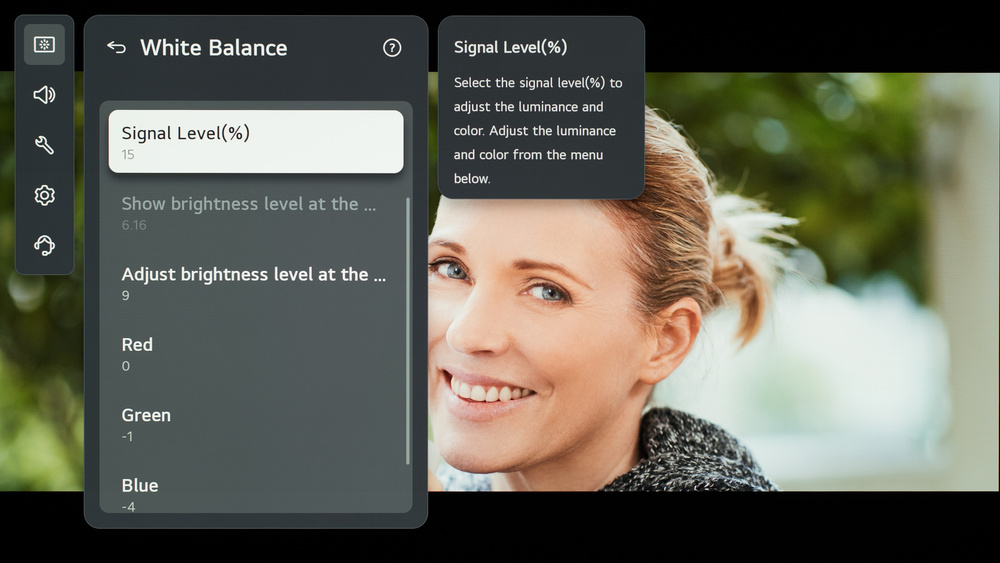
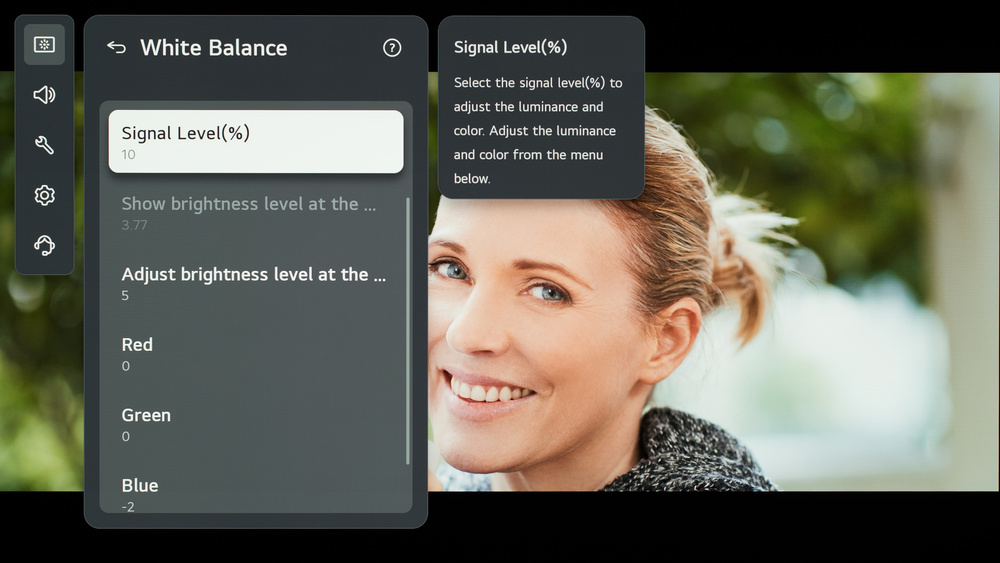
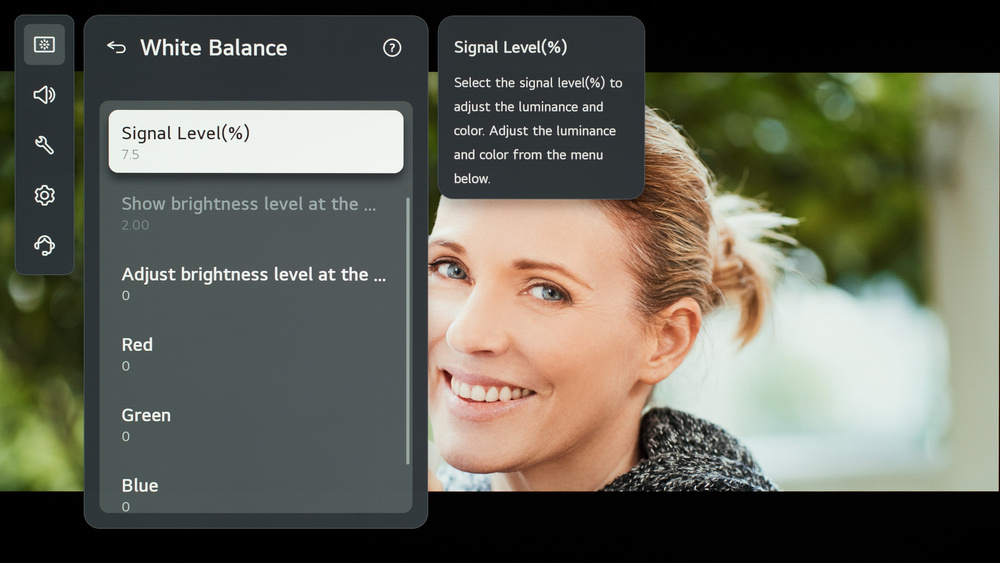
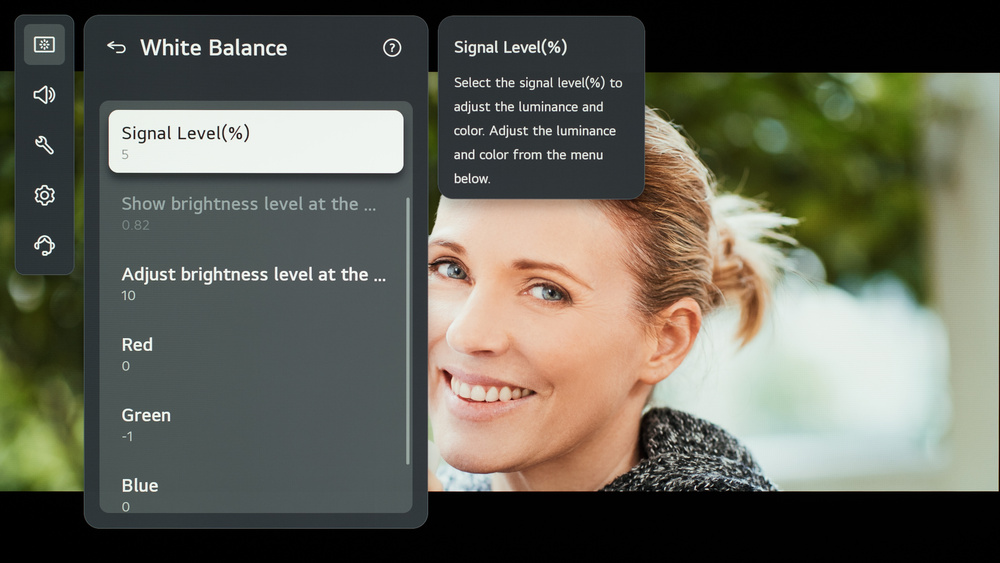
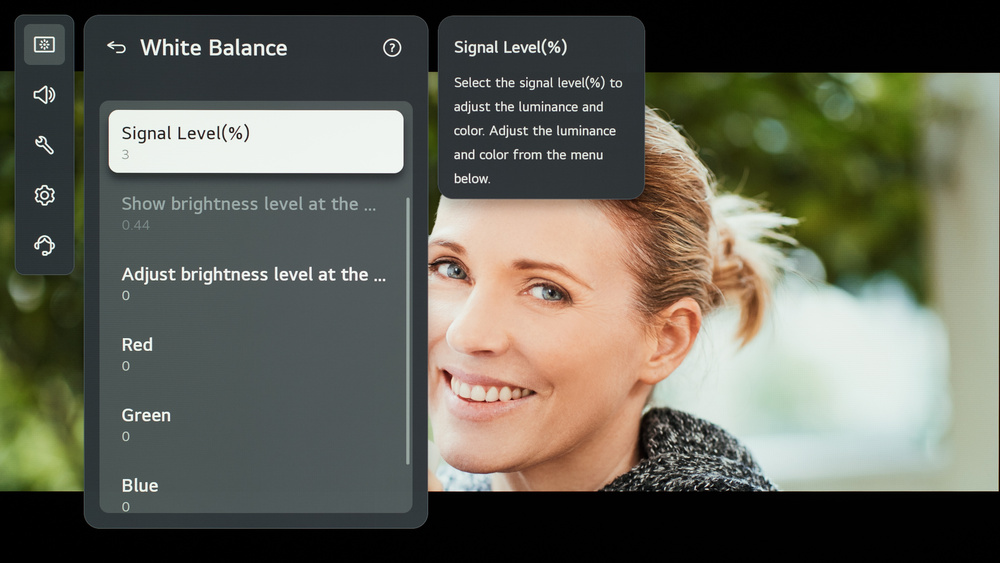
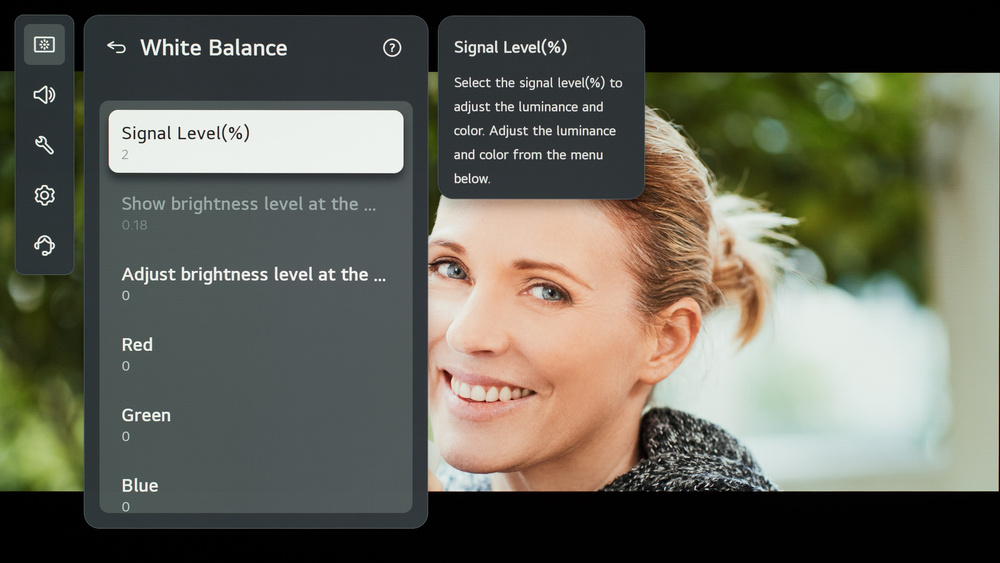
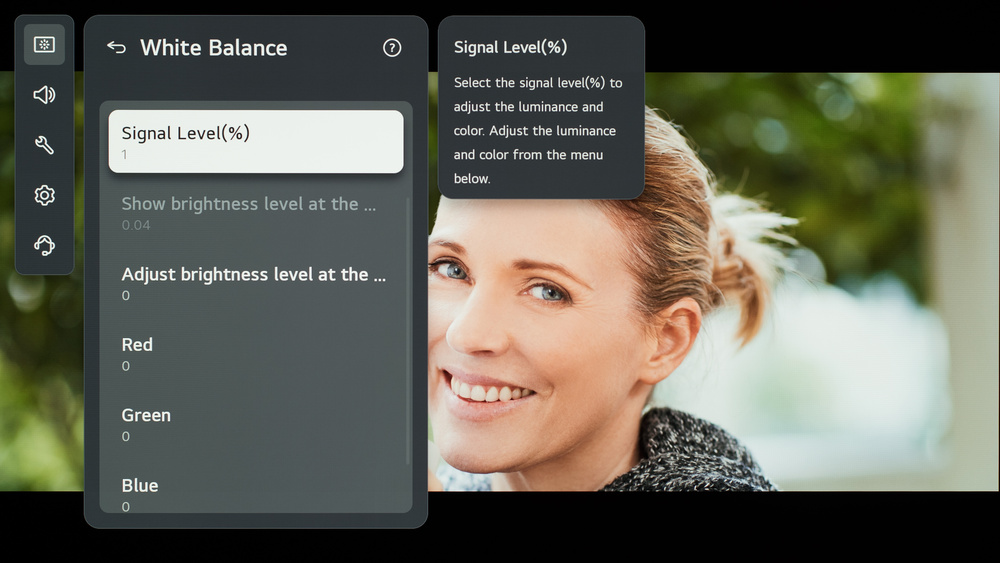
We used the following calibration settings to test the 65-inch LG G6 OLED, but they're also valid for the 55, 77, and 83-inch models. These settings are meant to provide a starting point; they're not meant to be copied 1:1. They provide the most accurate image in a moderately lit room, but you should adjust them to match your personal preferences and viewing conditions.
SDR
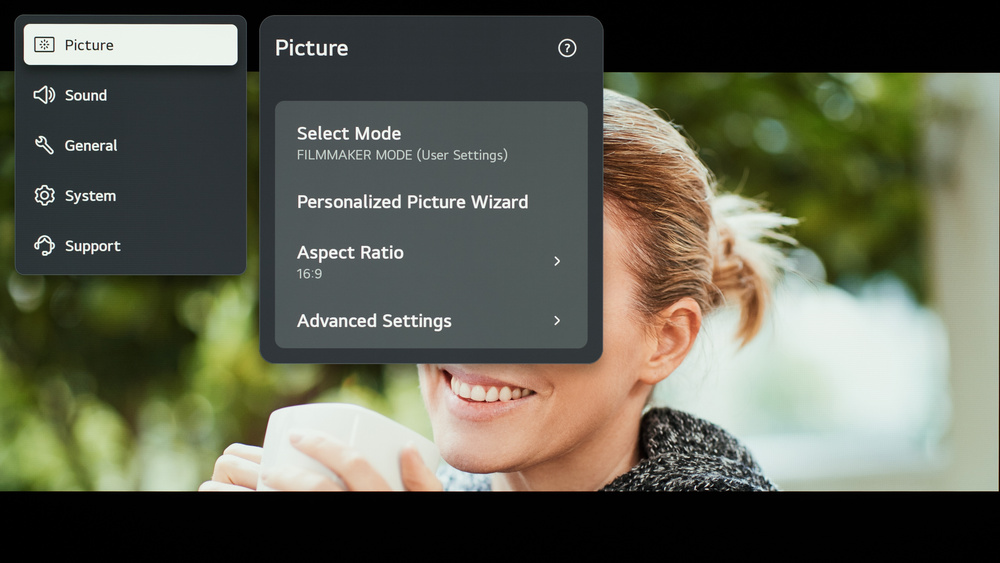
Below are the settings we used to calibrate the LG G6 in SDR. We chose the Filmmaker Mode picture preset, as it delivers the most accurate image out of the box. All other picture quality settings were left at their defaults.
- Picture Mode: FILMMAKER
- Contrast: 95
- Black Level: 50
- Gamma: 2.2
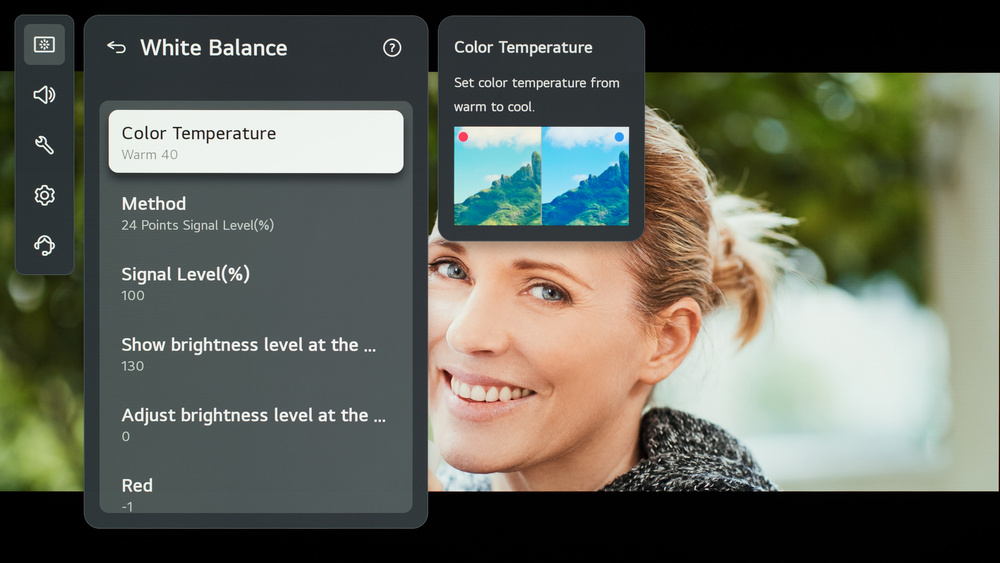
- Color Temperature: Warm 40
Brightness - Accuracy Preferred
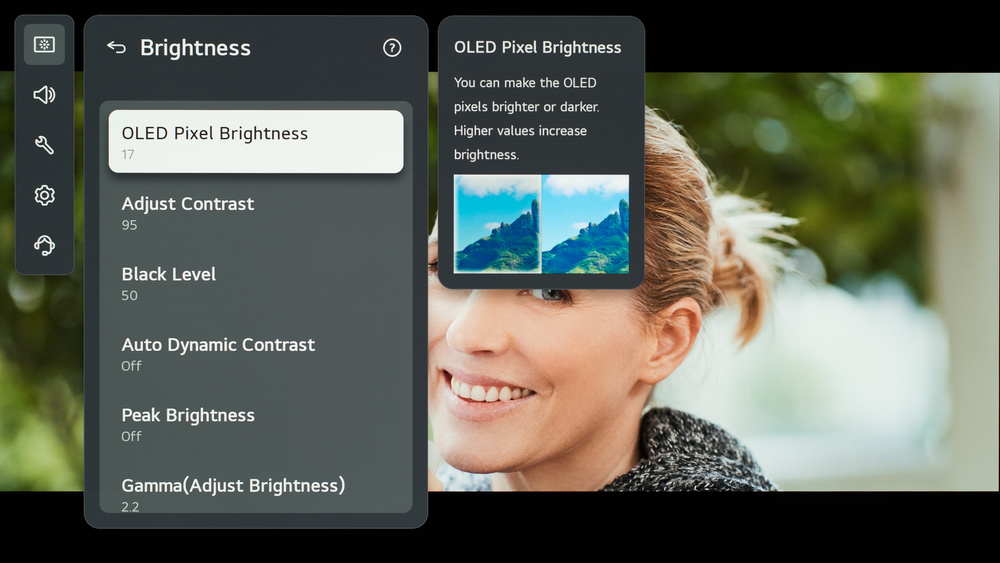
The settings that control the backlight should be adjusted in SDR depending on your viewing conditions. These settings deliver the most accurate image in a completely dark room.
- OLED Pixel Brightness: 3 (100 nits)
- OLED Pixel Brightness: 17 (200 nits)
- Peak Brightness: Off
Brightness - Brightness Preferred
If you prefer a brighter image, set Peak Brightness to 'High', and adjust the OLED Pixel Brightness setting as needed.
- OLED Pixel Brightness: 100 (adjust as needed)
- Peak Brightness: High
HDR
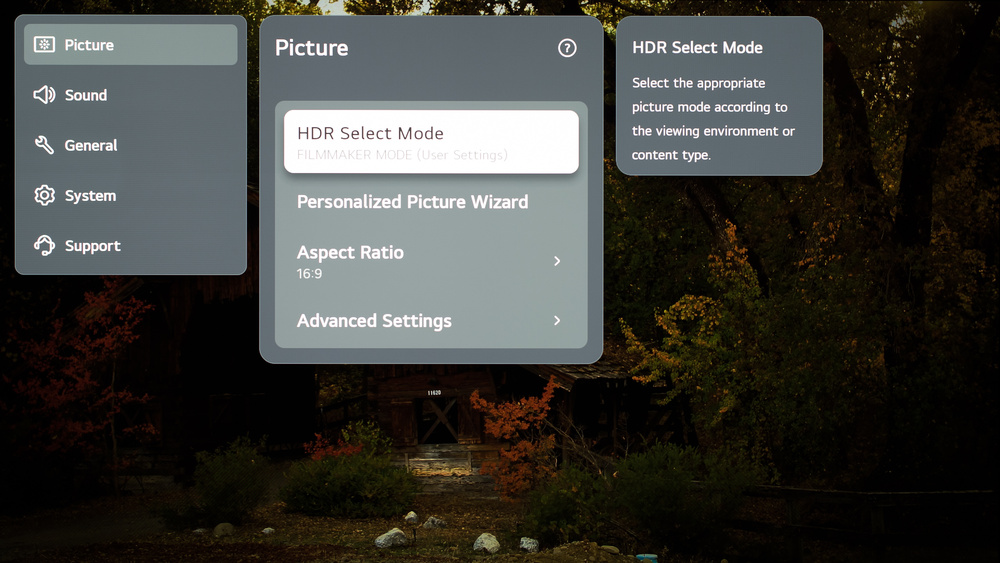
HDR is automatically enabled for native apps. Once you start playing HDR content, some of the settings change automatically. All other picture quality settings were left at their defaults.
- Picture Mode: FILMMAKER
- Contrast: 100
Brightness - Accuracy Preferred
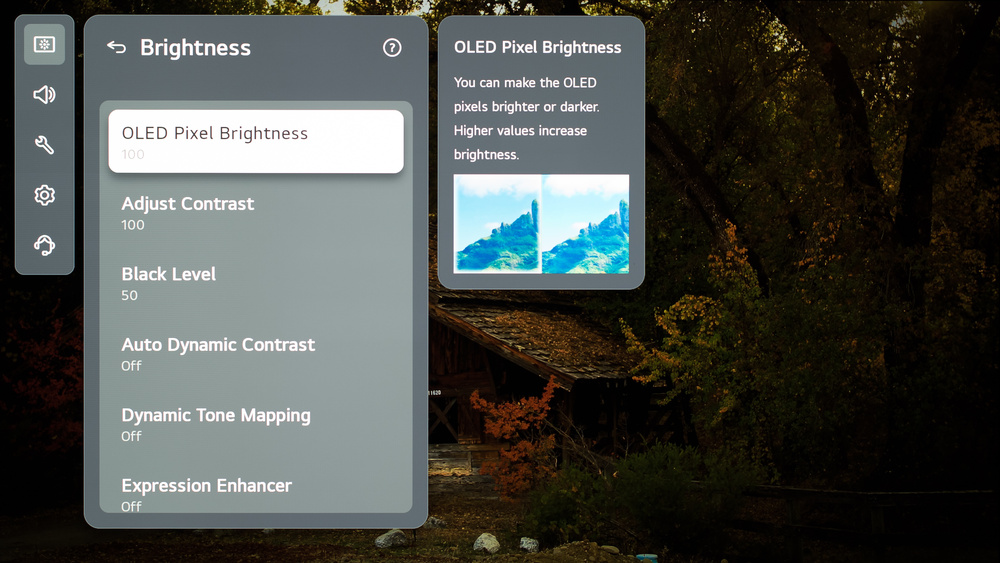
Below are the settings we used for HDR10 in a dark room. These settings deliver the most accurate image, but also limit how bright the TV can get.
- OLED Pixel Brightness: 100
- Peak Brightness: High
- Dynamic Tone Mapping: Off
- Expression Enhancer: Off
Brightness - Brightness Preferred
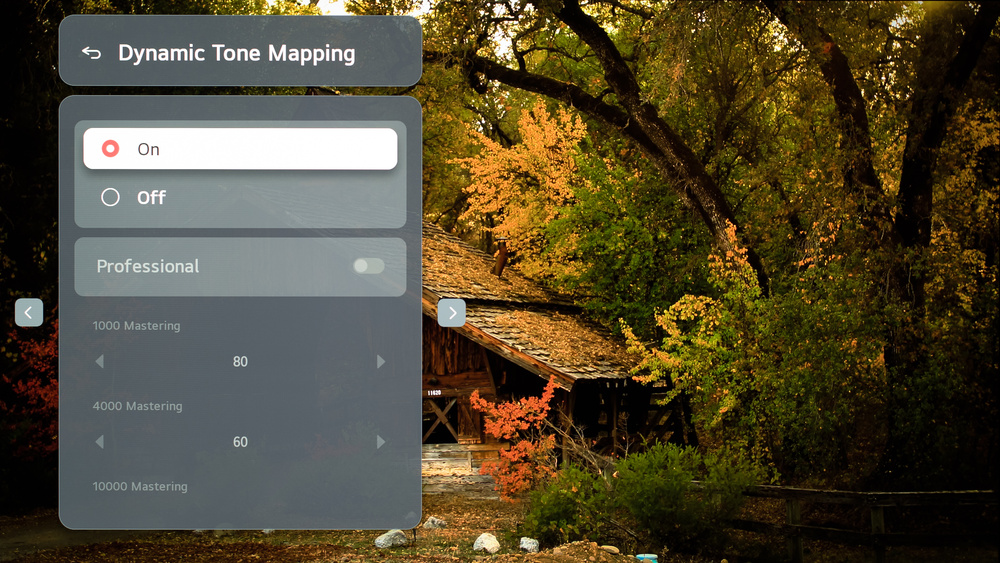
If you prefer a brighter image, you can enable Dynamic Tone Mapping and adjust the Expression Enhancer setting. This increases the peak brightness of the TV by boosting highlights brighter than they should be.
- OLED Pixel Brightness: 100
- Peak Brightness: High
- Dynamic Tone Mapping: On
- Expression Enhancer: Brightness
HDR White Balance
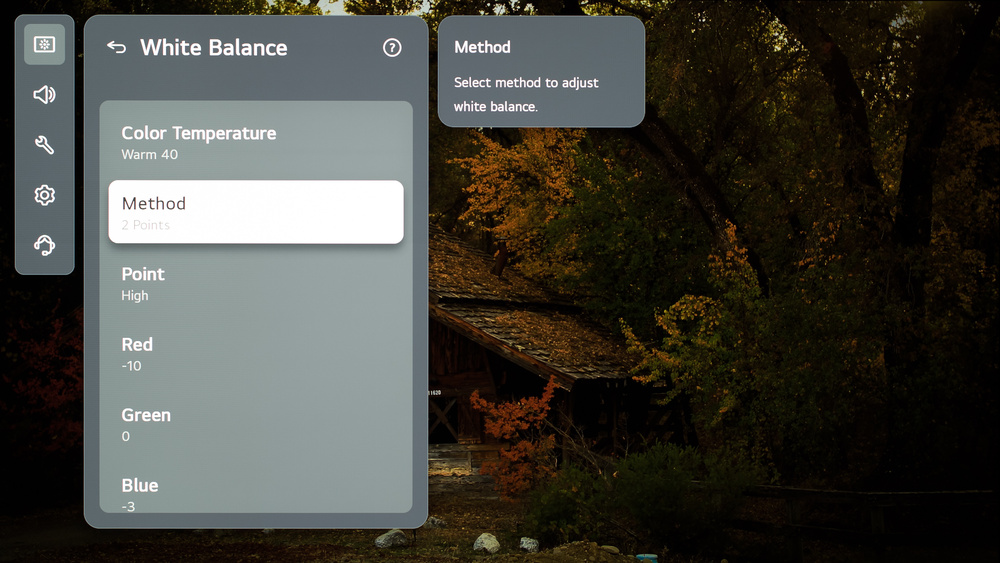
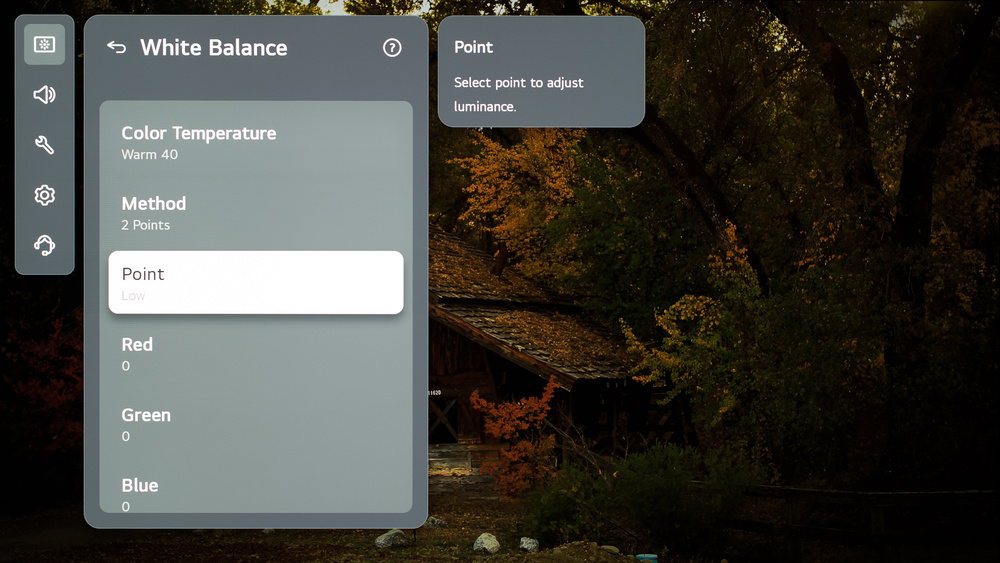
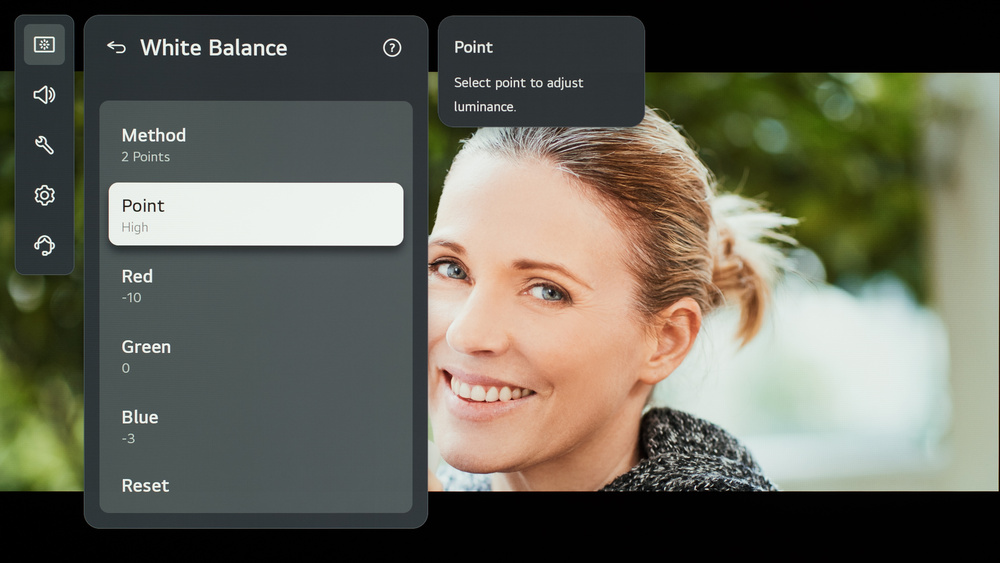
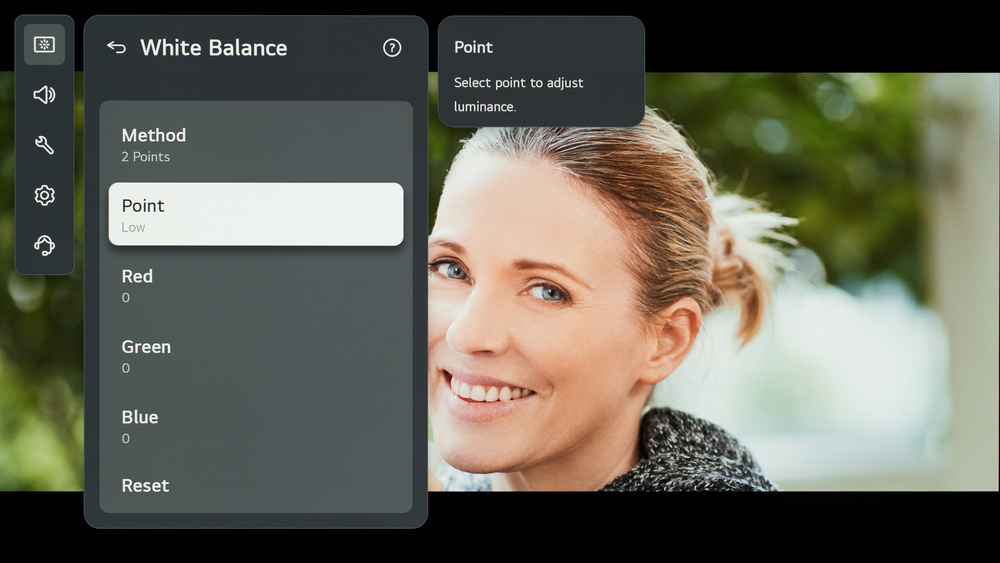
The following are the results of calibrating the white balance of our unit to 6500K in HDR using the 2-point method. These settings are provided for reference only and shouldn't be copied as the calibration values vary per individual unit. If you want to try them, you'll need to enter all values shown, as all of them are active at the same time. If you have worse picture quality, simply reset them to the default values.
Gaming
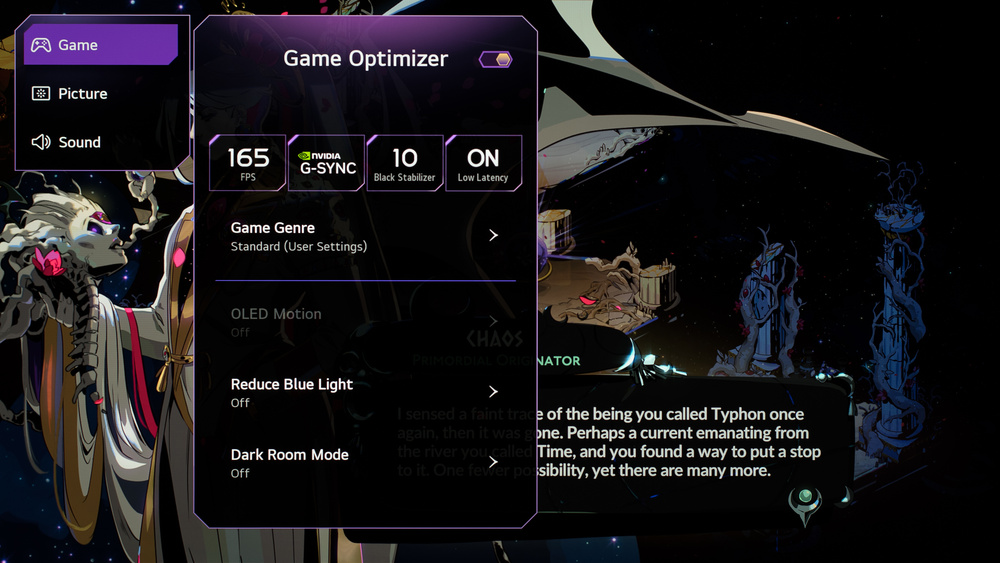
When you start gaming, you can either switch to the 'Game Optimizer' Picture Mode or toggle the separate Game Optimizer setting to get the lowest input lag and enable advanced gaming features, including the game bar. No other changes to picture quality settings are needed. You can toggle ALLM and VRR support from the Game Bar menu. With ALLM enabled the TV will automatically switch to Game Optimizer when you start playing a game.
Motion & Processing
Below are the settings we used for most of our motion and processing tests. Motion and processing can be subjective, so you should adjust these settings to your personal preferences. You might also need to adjust these settings depending on the source and specific content.
Judder
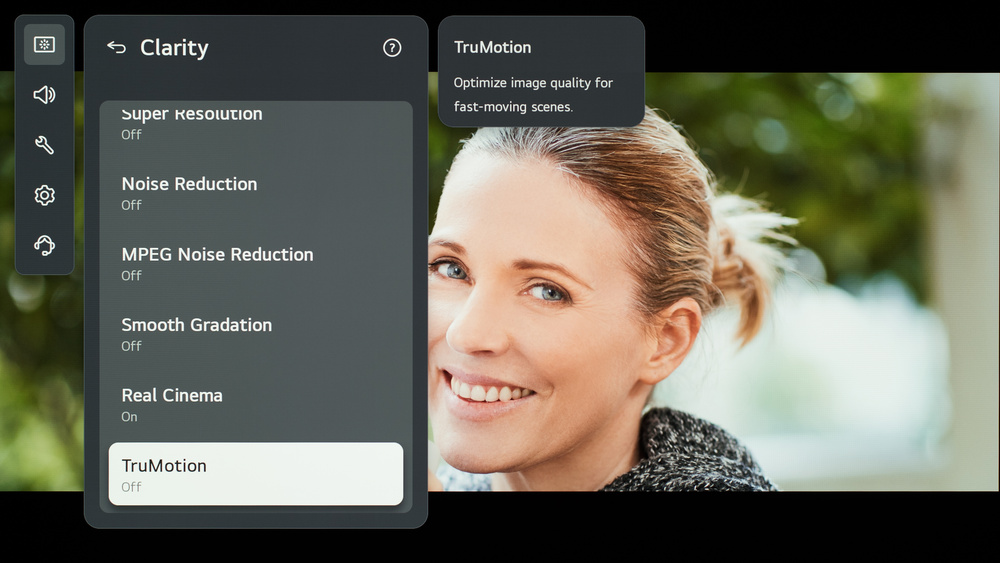
To remove judder on this TV, enable the Real Cinema setting. Note that enabling Quick Media Switching on this TV results in judder when watching 24p content sent from a 60p source like a cable box or older streaming stick.
Stutter Reduction Via Interpolation
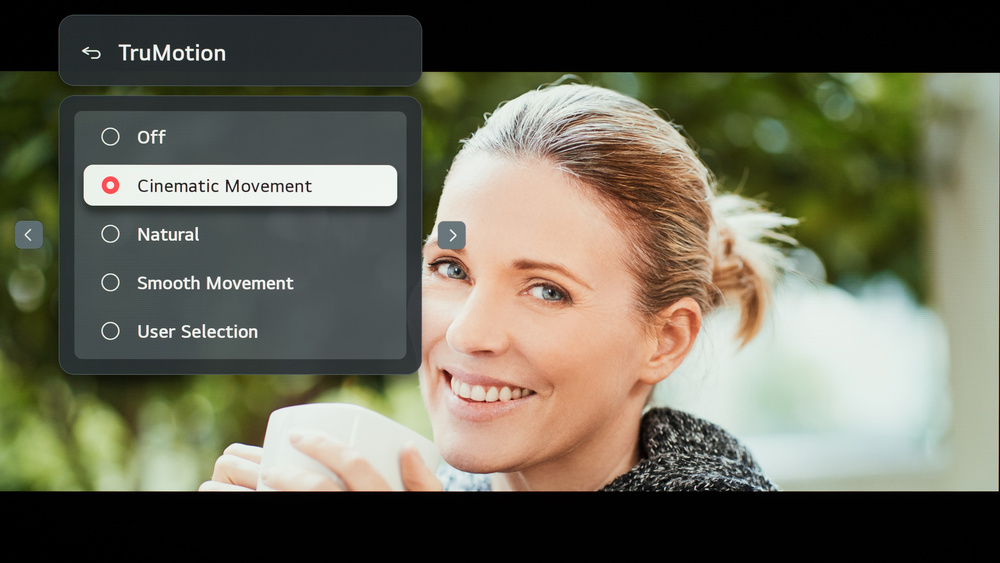
Setting TruMotion to 'Cinematic Movement' outputs a framerate equivalent to 30fps, which helps to reduce stutter in 24fps content.
White Balance Settings
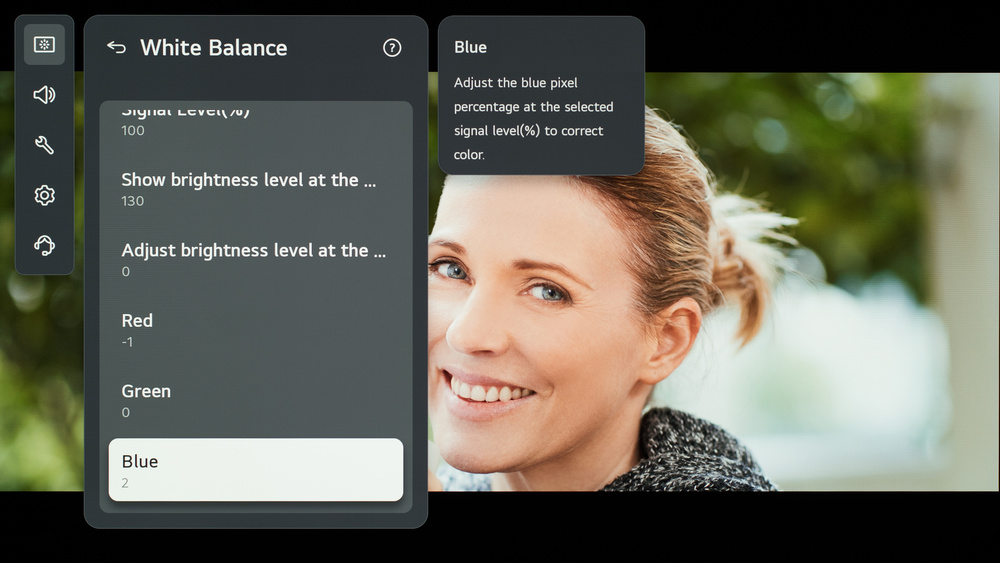
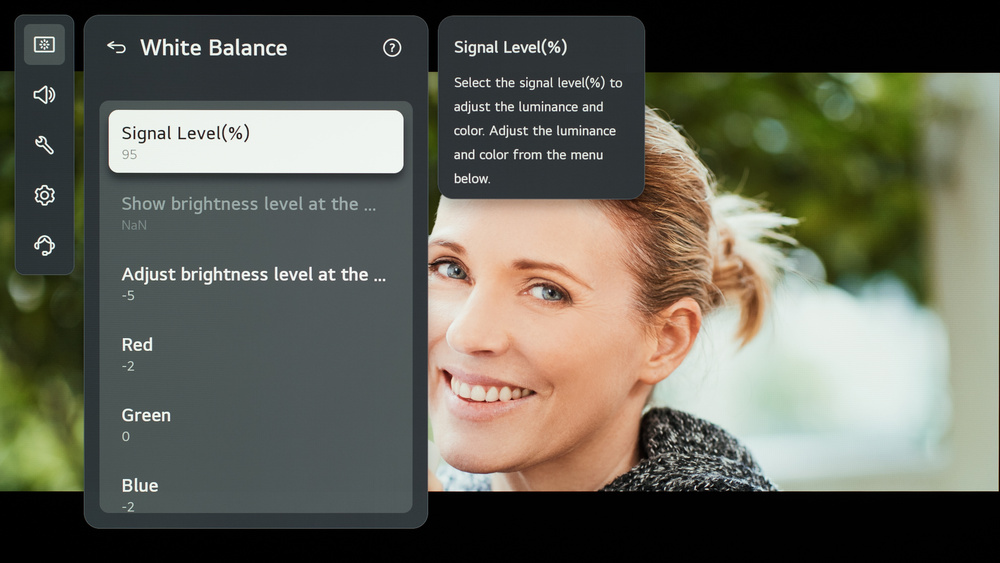
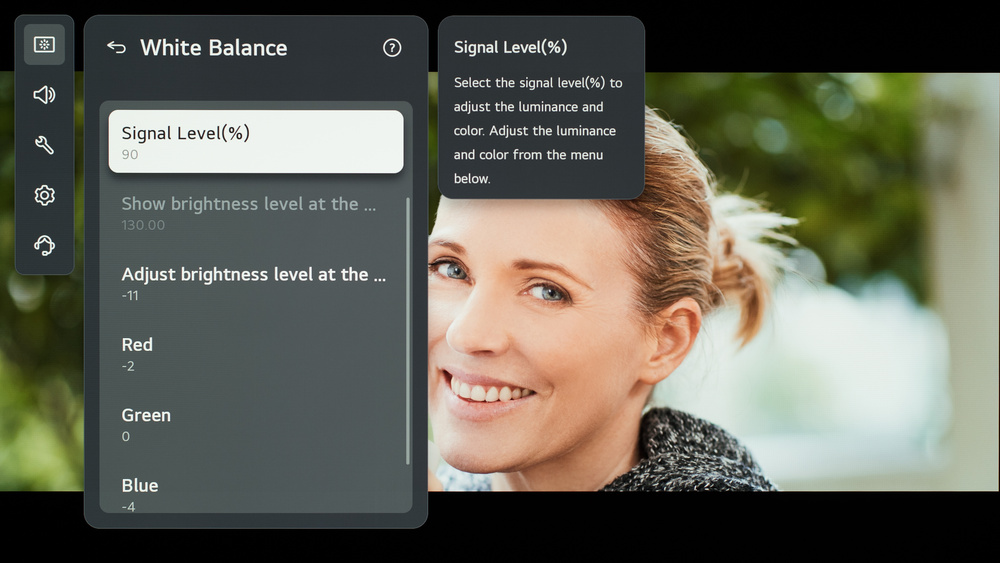
The following are the results of the white balance and colorspace calibration in SDR on our unit. They are provided for reference and should not be copied, as the calibration values vary per individual unit, even for the same model and size as the TV we reviewed, due to manufacturing tolerances. If you want to try them, you will need to enter all the values shown, as all of them are active at the same time. If you end up with worse picture quality, simply reset them to the default values.