The DJI Pocket 2 is a handheld camera aimed at vloggers, replacing the DJI Osmo Pocket. Like its predecessor, it has a built-in three-axis gimbal that offers exceptional image and video stabilization. It's also lightweight and portable, and it comes with a lot of frame rate options. It can record and playback video at up to 60 fps in 4k and FHD, and it has an added high-speed recording setting in FHD that can record 120 fps and 240 fps video for slow-motion playback. That said, its overall video quality is just okay, and it tends to get quite hot during use, especially when shooting in 4k.
Our Verdict
The DJI Pocket 2 isn't intended for photography but can take travel snapshots in a pinch. It's incredibly portable, making it easy to take on the go, and it has a very good battery life, though this can vary with real-world conditions. Its built-in gimbal also does an incredible job of smoothing out camera shake. That said, its image quality is just okay, and it has a fixed focal length and aperture, giving you less flexibility to compose different shots.
- Exceptional image stabilization.
- Lightweight and portable.
- Not water-resistant.
- Fixed focal length and aperture.
The DJI Pocket 2 isn't intended for landscape photography.
The DJI Pocket 2 isn't intended for sport and wildlife photography. It lacks any form of continuous shooting or burst photography mode. It also has a fixed focal length, so you can't zoom in on far-away subjects.
The DJI Pocket 2 can shoot photos in RAW format, but we don't test action cameras for RAW image quality.
The DJI Pocket 2 isn't bad for vlogging. It's incredibly portable and comes with a built-in three-axis stabilized gimbal to reduce almost all camera shake when recording 4k or FHD video. You can use its screen for Live View to monitor yourself and ensure you stay in frame, but the screen is quite small. You can also connect your phone to use as a larger screen, but we haven't tested this feature.
- Exceptional image stabilization.
- Lightweight and portable.
- Video quality is just okay.
- Fixed focal length and aperture.
The DJI Pocket 2 is okay for studio video, though it isn't intended for this use. Its overall video quality is alright. It also has an easy-to-use menu with a useful DJI Mimo companion app. Its autofocus system does an excellent job of tracking moving subjects, including an intelligent tracking feature that can automatically follow your subject. Unfortunately, the camera by itself lacks inputs and outputs aside from a USB-C port, although you can buy additional accessories to suit your needs or buy the 'Creator Combo' bundle that includes a 'Do-It-All Handle' with additional ports and wireless connectivity.
- Exceptional image stabilization.
- Lightweight and portable.
- Video quality is just okay.
- Fixed focal length and aperture.
The DJI Pocket 2 is good for action video. It has remarkable video stabilization performance thanks to its built-in gimbal, although it makes it harder to mount on a helmet or chest rig for first-person POV action video. It supports 4k video up to 60 fps and FHD video up to 240 fps, but it can only playback 120 fps and 240 fps video in slow-motion. However, it's not water-resistant, although we don't currently test for that. Its overall video quality is also just okay.
- Exceptional image stabilization.
- Lightweight and portable.
- Slow motion mode with 120 and 240 fps video capture.
- Video quality is just okay.
- Not water-resistant.
Changelog
- Updated Jan 29, 2024: Added text to the 'Raw Photo Performance' verdict box and updated existing verdict boxes for clarity and accuracy.
- Updated Jan 29, 2024: Converted to Test Bench 0.12.1.
- Updated Mar 22, 2023: Added a link to the DJI Action 2 in the '4k Video Frame Rate' box.
- Updated Dec 21, 2022: Converted to Test Bench 0.12.
Check Price
Differences Between Sizes And Variants
The DJI Pocket 2 comes in two color variants: 'Classic Black' and 'Sunset White'. You can purchase the 'Classic Black' version on its own or as part of the 'Creator Combo', which comes with several additional accessories to help content creators. Meanwhile, the 'Sunset White' variant is only available to purchase as part of the 'Exclusive Combo', which comes with the 'Do-It-All Handle' and 'Sling Strap'. We tested the 'Classic Black' variant, but we expect the other variants to perform similarly overall.
| Model | Color | Additional Accessories |
|---|---|---|
| DJI Pocket 2 | Classic Black | |
| DJI Pocket 2 Creator Combo | Classic Black | Do-It-All Handle, Wireless Microphone Transmitter, Micro Tripod, Wide-Angle Lens |
| DJI Pocket 2 Exclusive Combo | Sunset White | Do-It-All Handle and Sling Strap |
If you come across a different variant or your DJI Pocket 2 doesn't correspond to our review, let us know in the discussions, and we'll update the review.
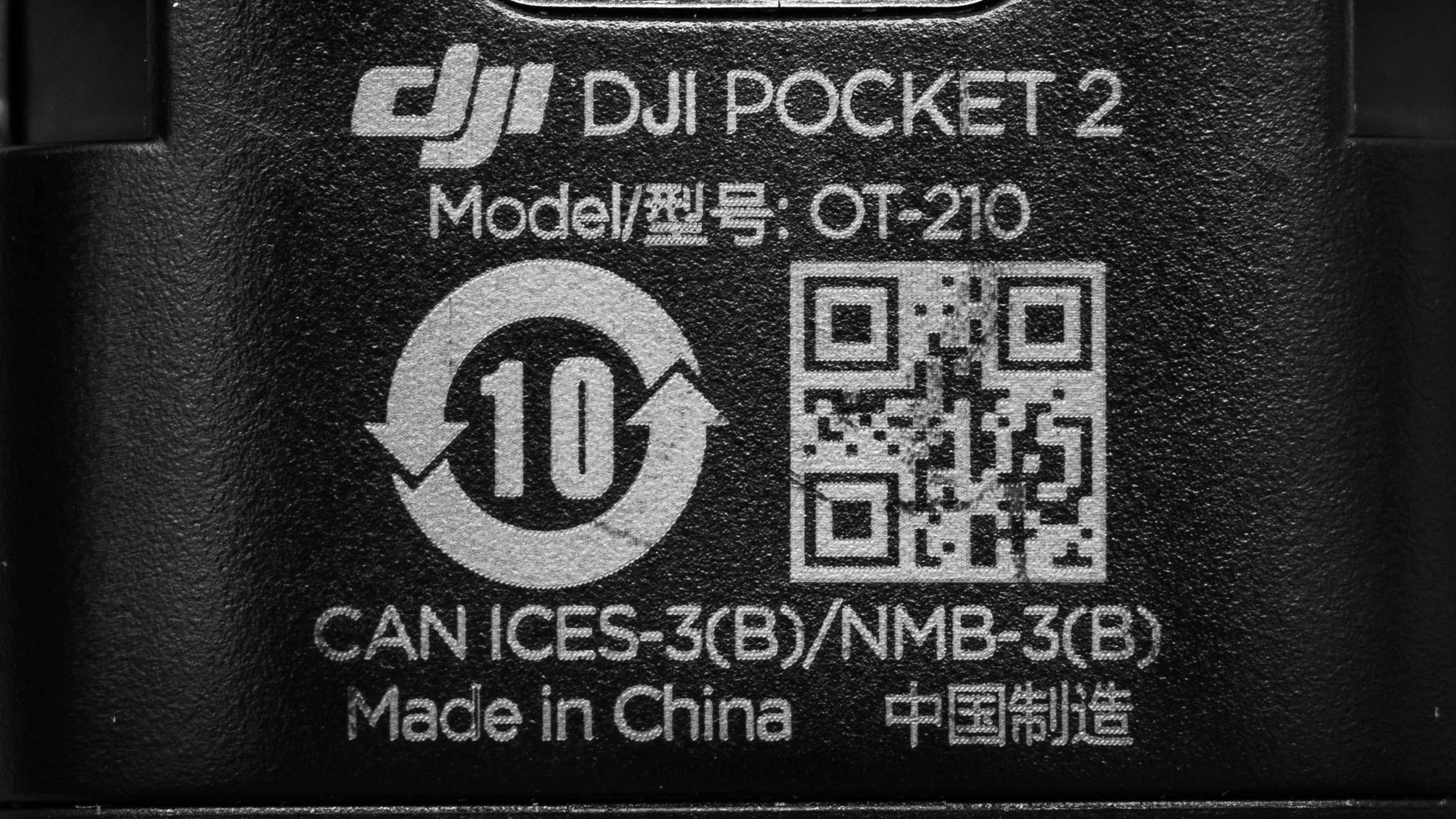
You can see our unit's label here.
Popular Camera Comparisons
The DJI Action 2 and the DJI Pocket 2 both have innovative designs, but they're suited to different uses. The Pocket 2 is meant to be used handheld and has a built-in gimbal that allows you to capture incredibly stable footage. Meanwhile, the Action 2 has a very portable, modular design that makes it very easy to mount to drones or action video rigs. Both cameras overheat quickly, but the Action 2 gets a lot hotter. The Action 2 also has a much shorter battery life.
The DJI Osmo Action and the DJI Pocket 2 are very different cameras. The Osmo Action is a more typical action camera, while the Pocket 2 is a unique camera with a built-in gimbal for stabilized handheld shooting and vlogging. The Pocket 2 has a slightly larger sensor, which gives it better image and video quality, particularly in low light. However, the Osmo Action is more versatile for action video because it's waterproof, and you can mount it onto any number of accessories and objects, like helmets and chest rigs.
While they're both pretty niche cameras, the DJI Pocket 2 is better overall than the Insta360 GO 2. The DJI is more capable, with 4k video, a built-in handheld gimbal, and a tracking feature. It also has a better battery life, although it's less portable than the Insta360, and you can't mount it in tight spots for POV footage.
Test Results
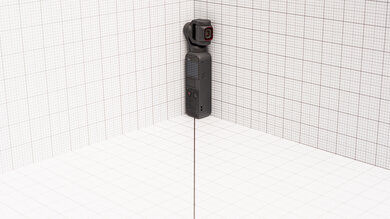
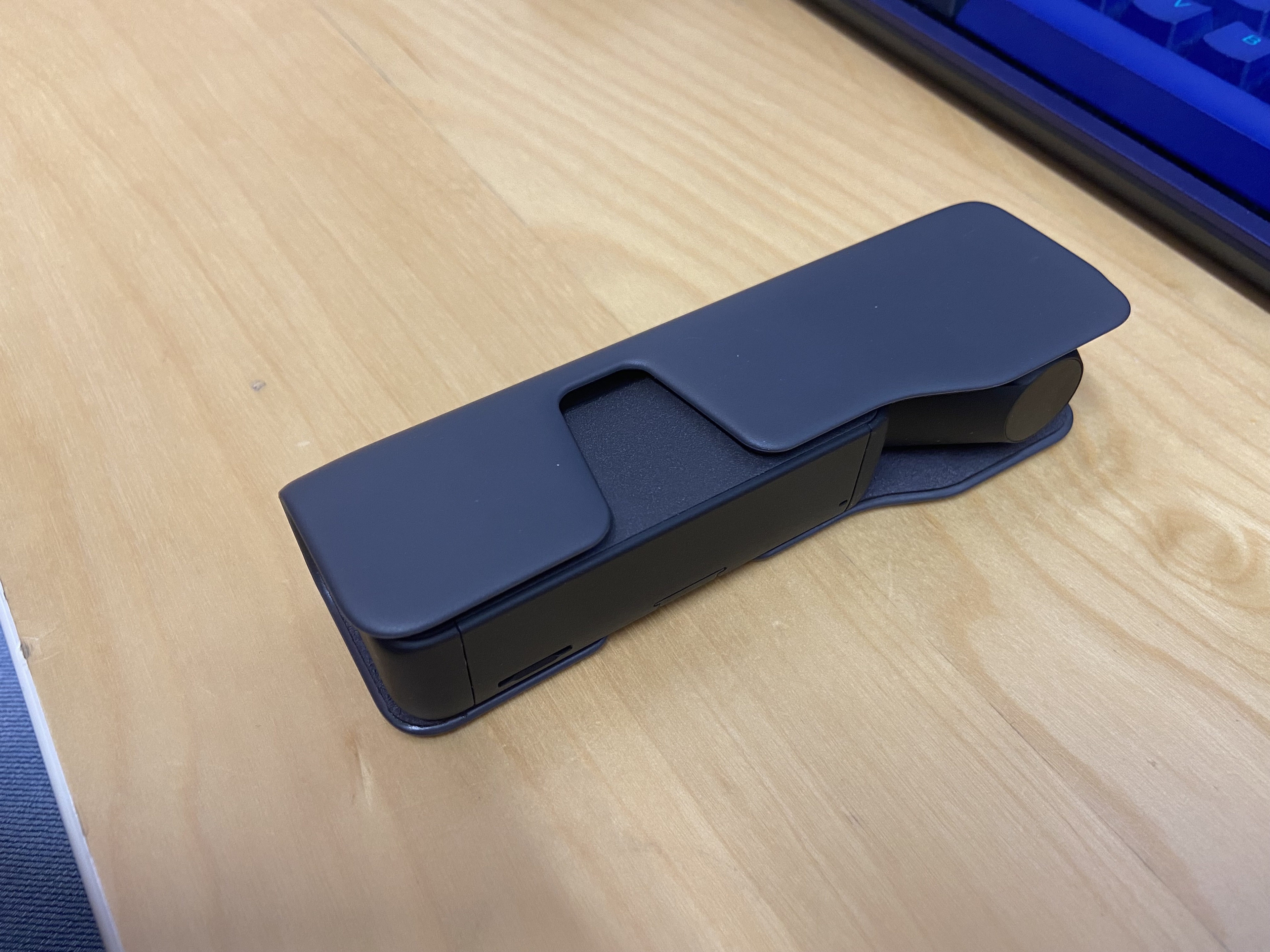
When stored in its case, the camera measures:
- Height: 13.38 cm
- Width: 4.56 cm
- Depth: 2.98 cm
- Volume: 181.8
- Weight: 0.154 kg
- Weight With Lens: 0.154 kg
If you want something even more portable, check out the Insta360 GO 2.
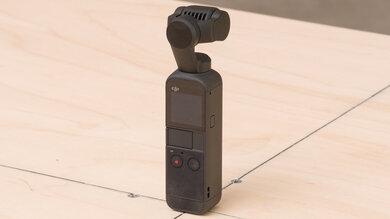
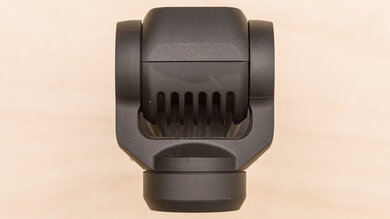
- Body is plastic
- Camera head rotates inward when turned off to protect the lens
- Gimbal mechanism feels solid and well-designed
- No input covers
- Two control buttons offer good physical feedback
- Comes with a protective cover for the accessory port
- Comes with a protective case for transporting the camera, though it can't be used while in the case
- Base accessory includes tripod mount

- DJI Pocket 2 camera
- Camera base
- Tripod base
- Protective case
- 2x case bumper
- Stickers
- Wrist strap
- Mini Control Stick
- Universal port cover
- USB-C adapter
- Lightning adapter
- USB-A to USB-C cable
- Quick Start guide

- Small, lightweight design makes it easy to carry around
- Boxy, narrow shape may be awkward to hold for those with larger hands
- No dedicated handgrip, though the front of its body has a rougher texture that provides a more secure hold
- Rubberized thumb rest near buttons
- Only two buttons means that camera operation relies heavily on multi-tap inputs and swipes, so there's a learning curve, but once you get used to it, operation is fairly simple, and switching between modes and settings is relatively quick
- Small screen can be hard to see and makes it difficult to adjust settings when in 'Pro' mode
- You can't set the camera down on a flat surface when it's turned on, as it starts vibrating and doesn't feel particularly steady on its base
- Comes with a 'Mini Control Stick' accessory that lets you manually control the movement of the camera head and zoom
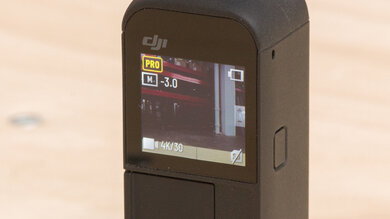

- You can access various configuration menus by swiping on the screen in different directons
- For example, swiping down gives you access to the settings menu, while swiping up gives you access to the shooting settings
- Dedicated menus for general settings, video and image configuration options, and gimbal movement, as well as a 'Pro' menu that allows you to adjust file formats, shutter speed, ISO, audio recording volume, and white balance
- Your smartphone can be used as an external screen after downloading the camera's companion app and using the included smartphone adapter, which makes it easier to sort through the many sub-menus, though we don't currently test for this
- Limited guide mode to explain some of the more advanced features, as well as a tutorial for the different gimbal modes

Note: The camera splits long recordings into sequential clips of 6 minutes and 48 seconds. Note also that it gets very hot with prolonged use, especially when recording in 4k.
Note: We had to deviate from our usual methodology for this test because of the camera's fixed focal length and aperture, so the results may not be comparable with other cameras we've tested.
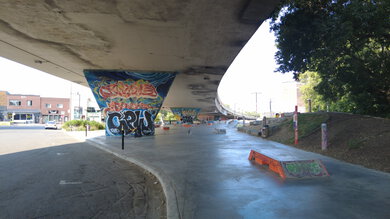
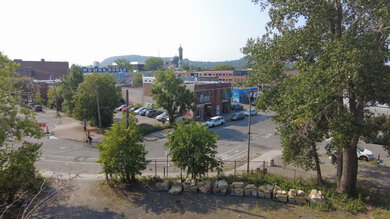
Note: The camera has three gimbal modes that each make use of the three-axis stabilization to different effect:
- FPV: All three axes follow the handle, giving you less stabilization but more freedom to rotate, tilt, and angle the camera.
- Follow: Locks the 'Roll' axis to create an always-level horizon.
- Tilt lock: Locks the 'Roll' and 'Tilt' axes, leaving the 'Pan' axis to follow the handle, so the horizon and angle both stay level, preventing the camera head from tilting up or down.
You can also unlock all three axes by double-tapping on a particular subject to follow that subject automatically. When you press and hold the function button, the camera will lock its gimbal position. Finally, there's an additional 'Motion Lapse' setting within the 'Time Lapse' mode, in which the camera can follow a pre-set motion path while shooting a time-lapse video.
The camera can also record video in 2.7k resolution.
If you want a camera that can record 4k at 120 fps, consider the DJI Action 2.
Note: We had to deviate from our usual methodology for this test, so the results may not be comparable with other cameras we've tested. Note also that face tracking is not available when shooting in 4k at 60 fps.
The DJI Pocket 2 has an active tracking feature that lets it lock onto a subject and track them automatically. You can see that in action here.

Note: 120 fps and 240 fps are only available in the camera's 'Slow-Mo' video mode. This mode only allows for playback in slow motion at 30 fps. This camera also has an HDR video mode, which gives you the option to shoot at either 24 fps or 30 fps. However, it incurs 1.74x crop.
Note: We had to deviate from our usual methodology for this test, so the results may not be comparable with other cameras we've tested.
The DJI Pocket 2 has an active tracking feature that lets it lock onto a subject and track them automatically. You can see that in action here.

Note: We had to deviate from our usual methodology for this test, so the results may not be comparable with other cameras we've tested.
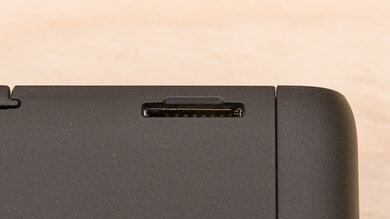


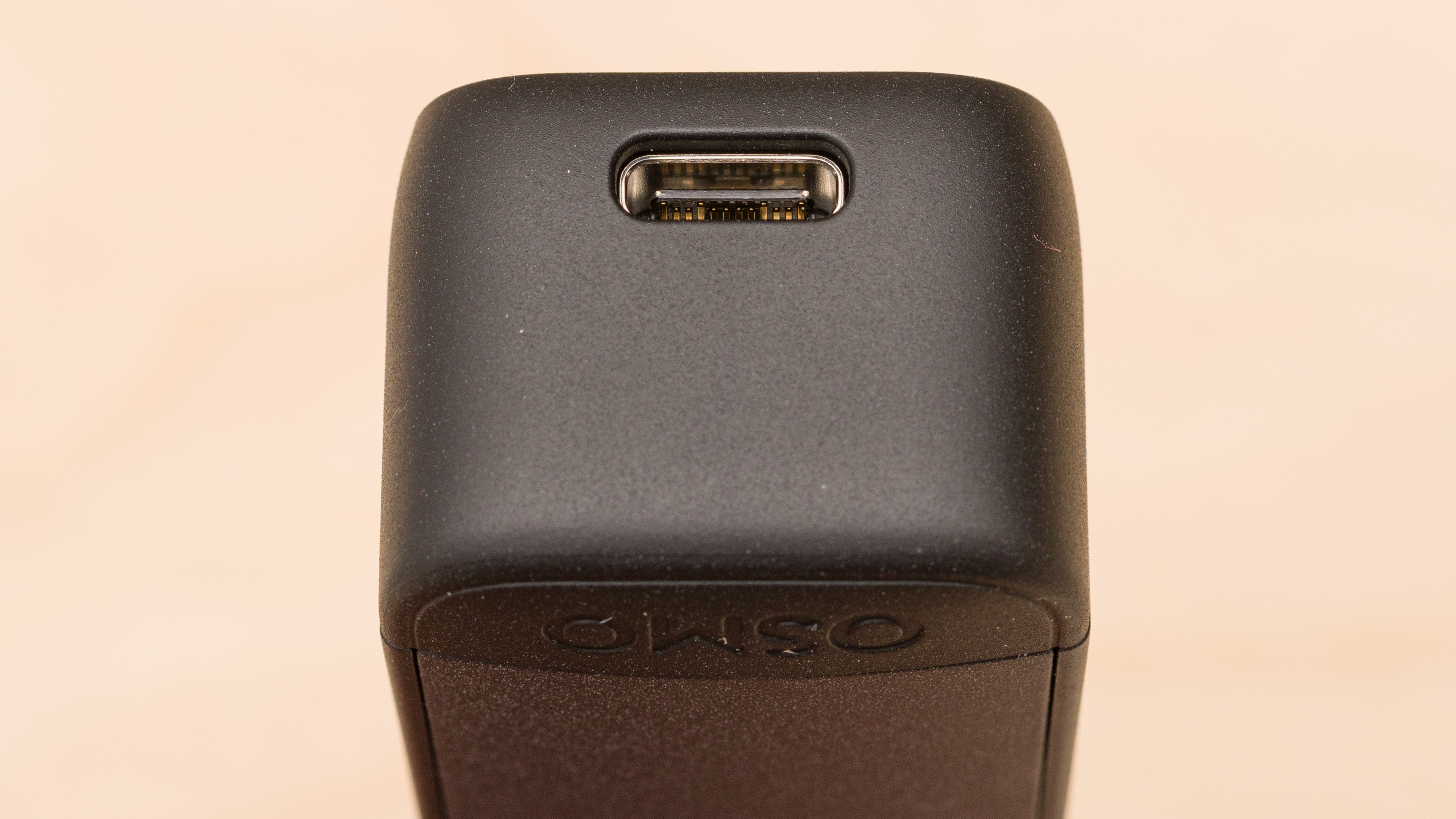
You can see the USB-C port here.