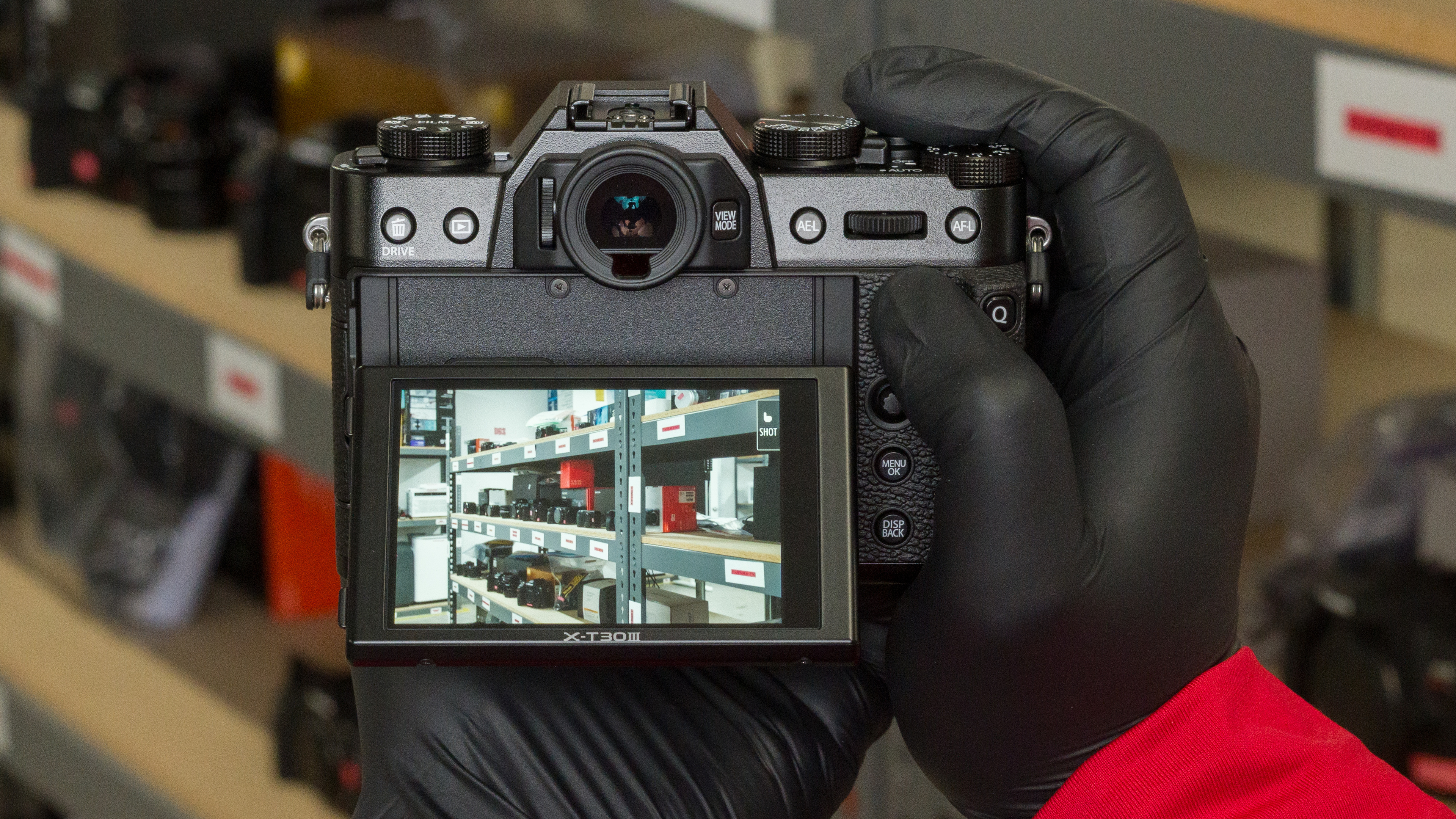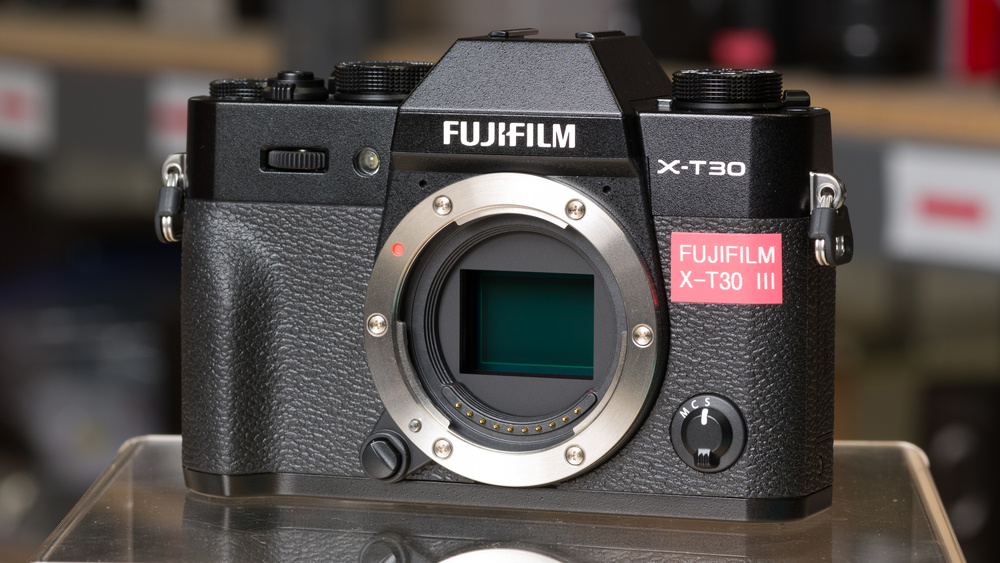
The Fujifilm X-T30 III is a compact APS-C mirrorless camera with a classic, dial-based design, and it's a more affordable alternative to the Fujifilm X-T50. On the outside, it looks almost exactly like the Fujifilm X-T30 II, but it brings in the internal improvements from the Fujifilm X-M5. The most visible change is on the top plate, where a Film Simulation dial replaces the drive mode dial. It gives you direct access to Fujifilm's color profiles, and three custom positions let you save your own settings. Most of the upgrades happen inside. It retains its predecessor's 26.1-megapixel X-Trans CMOS 4 sensor, but pairs it with the newer X-Processor 5 to enable automatic subject detection for animals, birds, and vehicles.
Video sees several practical upgrades: the camera now records 10-bit 4:2:2 footage internally for better color grading without using an external recorder, along with 4k recording at 60 fps for smoother motion capture. It also adds a 6.2k open-gate mode for easier cropping into horizontal or vertical formats, and F-Log2 support for wider dynamic range. It still doesn't have in-body image stabilization, though, and its screen tilts instead of flipping out to the side.
Our Verdict
The Fujifilm X-T30 III is a very good choice for travel photography. Its compact, lightweight body slips easily into a small bag, and the Film Simulation dial lets you quickly change the look of your photos on the go. Its sensor captures an excellent dynamic range, which helps preserve detail in bright skies and shaded areas, and it controls noise reasonably well at higher ISO settings. The tilting screen makes waist-level shots easier, though you can't see it when taking self-portraits. The built-in flash is small, but it can come in handy indoors. However, the small grip isn't comfortable for larger hands, and the body isn't weather-sealed. There's also no in-body stabilization, so you need a lens with optical stabilization for sharp handheld shots at slow shutter speeds. Battery life is only okay, so bring a spare for long days out.
Compact, lightweight body.
Excellent dynamic range in photos.
Sensor captures lots of fine detail.
Small grip isn't comfortable for larger hands.
Power drain even when plugged-in to an external power source.
The Fujifilm X-T30 III does a very good job with landscape photography. Its 26.1-megapixel sensor resolves plenty of fine detail. Its excellent dynamic range also preserves detail in both the bright and dark areas of high-contrast scenes. The compact body is easy to carry on long hikes, and the tilting screen makes it easier to frame low-angle shots. Keep in mind that it isn't weather-sealed, so you need to protect it from rain or dust.
Compact, lightweight body.
Excellent dynamic range in photos.
Sensor captures lots of fine detail.
Small grip isn't comfortable for larger hands.
Power drain even when plugged-in to an external power source.
The Fujifilm X-T30 III is decent for sports and wildlife photography. Its electronic shutter shoots at up to 30 fps with a slight crop, or 20 fps using the full sensor. A pre-shot mode also saves up to a second of frames before you fully press the shutter button, and the AI-based subject detection recognizes animals, birds, and several types of vehicles. Unfortunately, the tracking autofocus often loses moving subjects, so many of your shots end up out of focus. On top of that, the RAW buffer fills quickly and takes a while to clear, limiting how often you can shoot long bursts. The single center focus point is much more reliable if your subject moves in a predictable path.
Excellent dynamic range in photos.
Sensor captures lots of fine detail.
Fast bursts of up to 30 fps with the electronic shutter.
Reliable autofocus with a single focus point.
Small grip isn't comfortable for larger hands.
Tracking autofocus in photos is unreliable.
Small RAW buffer that's slow to clear.
Power drain even when plugged-in to an external power source.
The Fujifilm X-T30 III is good for vlogging, but only if you can make do without a front-facing display. It's light enough to hold at arm's length for long periods, and its face tracking keeps you in focus as you move around the frame. Video quality is outstanding, with internal 10-bit 4:2:2 recording, and a digital stabilization feature smooths out shaky handheld footage at the cost of a crop, which can make framing trickier at arm's length. However, as mentioned above, the screen only tilts up and down, so you can't see yourself while you film. The microphone input uses a 2.5mm jack, so most external mics need an adapter. Rolling shutter is also pronounced in 4k, so fast camera movements can cause straight lines to appear slanted or skewed
Compact, lightweight body.
Internal 10-bit 4:2:2 recording with F-Log2.
6.2k open gate video recording.
Outstanding video dynamic range.
Dependable face tracking in video.
No overheating issues during long recordings.
Records 4k at up to 60 fps and 1080p video at up to 240 fps.
Screen doesn't flip around to face you.
2.5mm mic input needs an adapter for most microphones.
Rolling shutter is quite noticeable in 4k.
Power drain even when plugged-in to an external power source.
The Fujifilm X-T30 III is outstanding for studio video. It records 10-bit 4:2:2 footage internally, including a 6.2K open-gate mode that captures the full sensor area, and it supports F-Log, F-Log2, and HLG. Its video dynamic range is outstanding, giving you plenty of room to grade your footage. The camera didn't overheat during our testing, even though it displayed a warning after around an hour. There's also no time limit on recordings. You can also send RAW video over HDMI to a compatible external recorder. That said, powering the camera over USB-C only slows down battery drain instead of stopping it, and it uses a smaller micro HDMI port.
Internal 10-bit 4:2:2 recording with F-Log2.
6.2k open gate video recording.
Outstanding video dynamic range.
Dependable face tracking in video.
No overheating issues during long recordings.
Records 4k at up to 60 fps and 1080p video at up to 240 fps.
2.5mm mic input needs an adapter for most microphones.
Rolling shutter is quite noticeable in 4k.
Power drain even when plugged-in to an external power source.
The Fujifilm X-T30 III isn't designed for action video. It isn't rugged or waterproof, and you can't mount it on a helmet or handlebars like a dedicated action camera. It also lacks in-body stabilization, and its digital stabilization adds a crop. Rolling shutter is a major issue in 4k, so fast motion and quick pans look heavily skewed. On the upside, it records 1080p video at up to 240 fps for slow-motion clips, and 4k at up to 60 fps with a slight crop.
Records 4k at up to 60 fps and 1080p video at up to 240 fps.
Not designed for action cam mounting.
Rolling shutter is quite noticeable in 4k.
Power drain even when plugged-in to an external power source.
The Fujifilm X-T30 III delivers very good RAW image quality. Its sensor captures excellent dynamic range, so your photos keep detail in both bright highlights and deep shadows. It also resolves fine detail quite well, leaving you some room to crop. Noise handling is decent, but grain becomes more noticeable as you raise the ISO in low-light conditions, as with other APS-C cameras.
Excellent dynamic range in photos.
Sensor captures lots of fine detail.
Relatively noisy at higher ISOs.
Power drain even when plugged-in to an external power source.
Performance Usages
Check Price
Differences Between Sizes And Variants
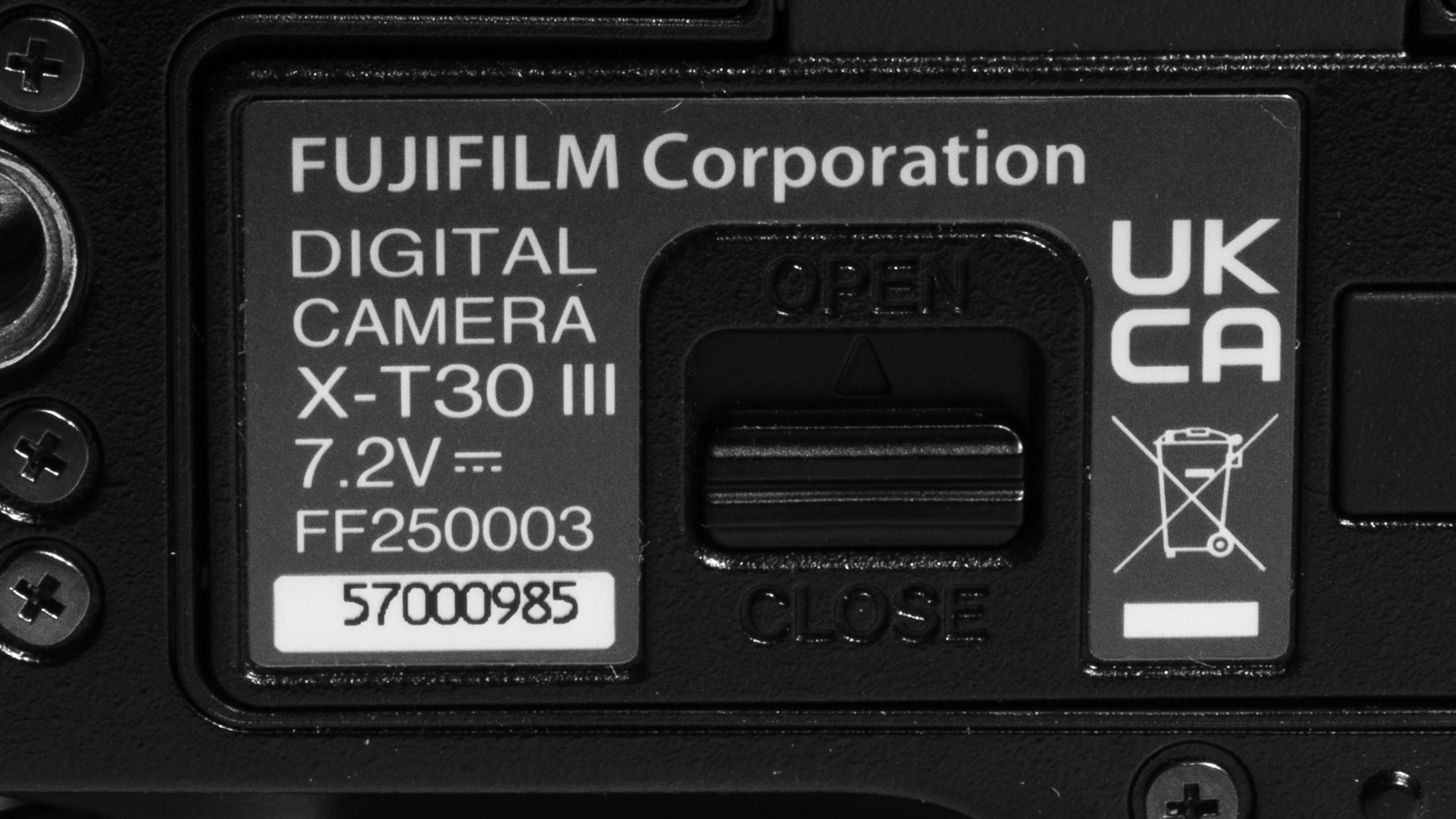
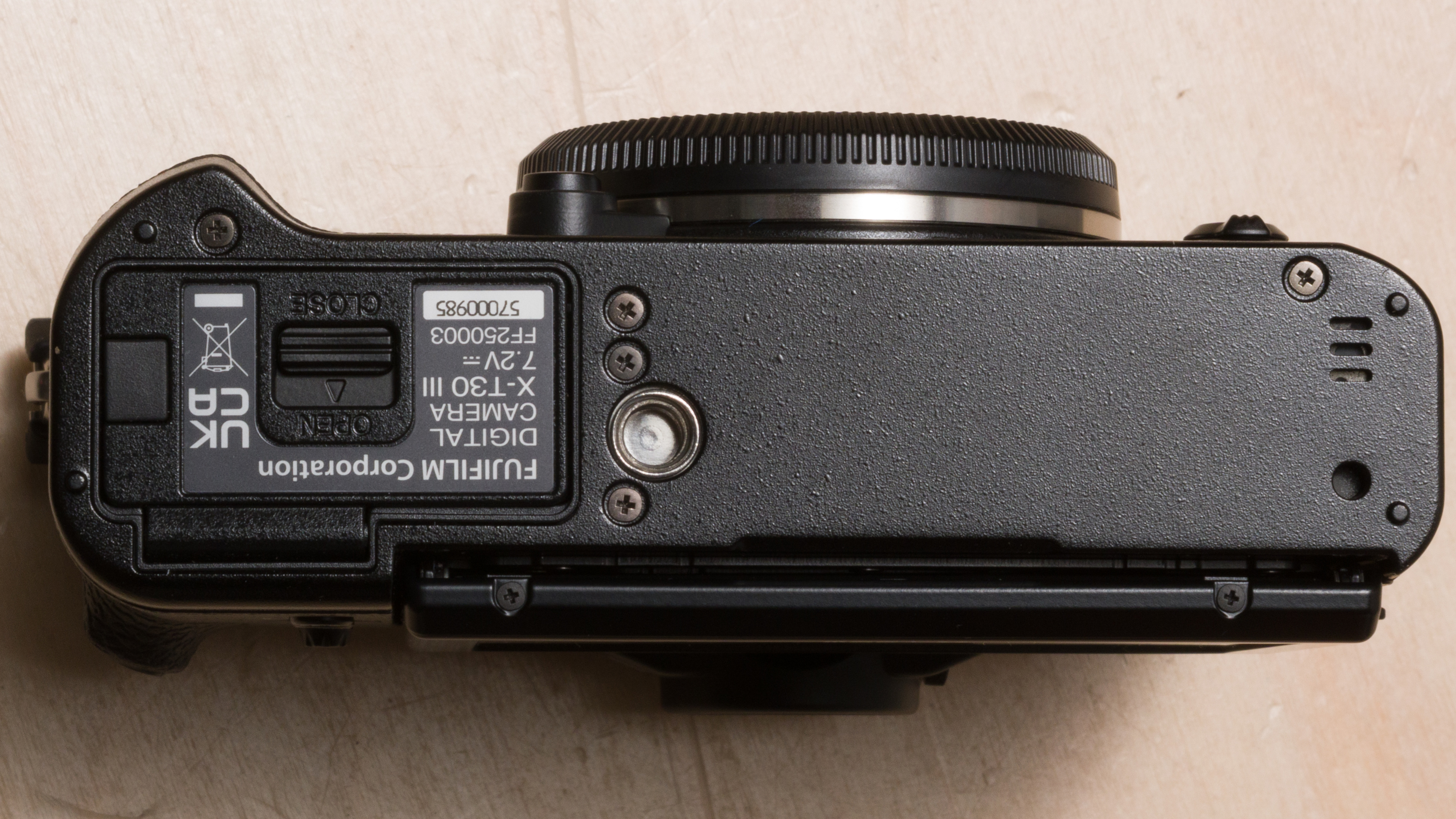
The Fujifilm X-T30 III comes in three colors: 'Black,' 'Silver,' and 'Charcoal Silver.' We tested the 'Black' model, which we bought as a body-only. Depending on the retailer, you can also buy it in a kit with the Fujifilm XC 13-33mm F3.5-6.3 OIS lens. Here's our unit's label.
Popular Camera Comparisons
The Fujifilm X-T30 III is a compact APS-C camera for photographers who want a hands-on, classic shooting experience without carrying a large body. Its dedicated dials and new Film Simulation dial let you change your settings and your look without digging through menus, and its sensor captures excellent dynamic range. It's also a surprisingly capable video camera for its size. It records 10-bit 4:2:2 footage internally, including 6.2k open gate, and its video dynamic range is outstanding. Compared to its predecessor, the Fujifilm X-T30 II, this is an upgrade in almost every area, especially video.
Its main competition comes from other compact APS-C cameras, like the Nikon Z 50II and the Sony α6700. Both rivals have fully articulated screens that flip around to face you, and both track moving subjects in photos far more reliably. The Sony also adds in-body stabilization, a weather-sealed body, and much longer battery life, though all this comes with an added cost. On the other hand, the Fujifilm is smaller and lighter than either one, records higher-resolution 6.2k open-gate video, and lasts longer than the Nikon on a charge.
Within Fujifilm's own lineup, the Fujifilm X-T50 is the step-up option, with a higher-resolution sensor and in-body stabilization. The Fujifilm X-M5, meanwhile, trades the viewfinder for an even smaller, vlogging-friendly body with a fully articulated screen better suited for video. Overall, if you want a small, stylish camera with direct controls, impressive video capabilities, and Fujifilm's signature color profile, the X-T30 III is a well-rounded choice for the price.
For more options, see our recommendations for the best cameras for YouTube, the best travel cameras, and the best cameras under $1,000.
The Fujifilm X-T30 III is an upgrade over the Fujifilm X-T30 II in most areas, especially for video. The two cameras share the same body and 26.1-megapixel sensor. However, the III's newer processor adds AI subject detection, and its tracking autofocus in photos is more reliable, though it still isn't great. It also shoots faster bursts with its electronic shutter, has a deeper RAW buffer, and captures wider dynamic range in photos. For video, the III adds internal 10-bit 4:2:2 recording, 6.2k open gate, 4k at 60 fps, and F-Log2. Unlike the II, which overheated several times, the III didn't overheat during our testing, and it lasted longer when recording video. That said, the II has a higher CIPA battery rating for photos. If you switch drive modes often, its dedicated drive dial is quicker to use than the III's 'Drive' button.
The Fujifilm X-M5 and the Fujifilm X-T30 III use the same sensor and processor, but they suit different users. The X-M5 is smaller, lighter, and slightly cheaper, and its fully articulated screen flips around to face you, which makes it a better fit for vlogging. It also has three built-in microphones with directional settings, and its tracking autofocus in photos is more reliable in our tests. However, the X-T30 III has an electronic viewfinder and a built-in flash, and the X-M5 has neither. The X-T30 III's screen is sharper and brighter, too. For video, it tracks objects more consistently, lasts much longer on a charge, and didn't overheat during our testing.
The Fujifilm X-T5 is a better camera for photography than the Fujifilm X-T30 III, but it's larger, heavier, and costs considerably more. Its 40.2-megapixel sensor captures more fine detail, and it adds in-body image stabilization and a weather-sealed body. It tracks moving subjects more reliably, shoots faster bursts with its mechanical shutter, and lasts much longer on a charge. The X-T5 is more comfortable to shoot with, too, thanks to its sharper viewfinder and soft rubber eyecup. Its dual UHS-II card slots sit on the side, so you can swap cards on a tripod, and it shows less rolling shutter in video. On the other hand, the X-T30 III shoots faster bursts with its electronic shutter and has a deeper RAW buffer. It captures a wider dynamic range in video, and its 1080p autofocus is more consistent. It also has a built-in flash and a Film Simulation dial, neither of which the X-T5 has.
The Sony α6700 is a better overall camera than the Fujifilm X-T30 III. The Sony's tracking autofocus in photos is far more reliable, and it has in-body image stabilization, a weather-sealed body, and much longer battery life. Its larger grip is more comfortable to hold, and its fully articulated screen is better for vlogging. In video, it records 4k at up to 120 fps, though with a significant crop. However, the Fujifilm is more compact and lighter, and it has a built-in flash. It also captures a wider dynamic range in video, offers a 6.2k open gate mode, and shoots faster bursts with its electronic shutter.
Test Results
The Fujifilm X-T30 III is very portabile, especially for an APS-C camera. It's light enough to carry around all day without weighing you down, and its slim body slides easily into a small camera bag. If you want something even more compact, the Fujifilm X-M5 is smaller, though it doesn't have a viewfinder.
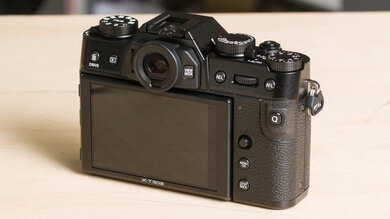
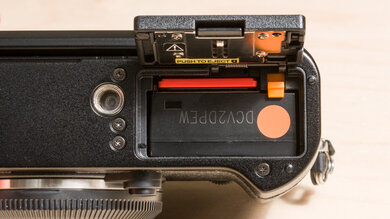
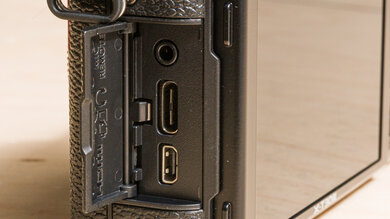
The Fujifilm X-T30 III has great build quality. Its buttons and dials feel sturdy and offer good tactile feedback, and the tilting screen and pop-up flash mechanisms are solid, too. Overall, the metal-and-plastic body feels robust and is nearly identical to the Fujifilm X-T30 II's. A hinged locking door protects the battery and SD card compartment underneath, while a hinged flap covers the ports on the side. However, the camera isn't weather-sealed, and the shoulder-strap mounts can rattle audibly if you move while recording video.
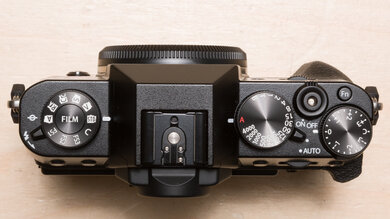
The Fujifilm X-T30 III keeps a classic Fujifilm dial-based layout. The biggest change is on the left side of the top plate, where a Film Simulation dial replaces the drive mode dial. It lets you switch between Fujifilm's color profiles without opening the menu. Three custom positions, labeled 'FS1' to 'FS3,' let you save your own recipes, with settings like grain effect, color tone, and highlights. To change drive modes, you now use the 'Drive' button on the back, which doubles as the delete button.
On the right side, there's a shutter speed dial, an exposure compensation dial, and an 'Auto' mode lever that lets the camera choose your settings for you. By default, the front command dial adjusts ISO, while the rear dial also controls shutter speed. A focus mode selector on the front lets you switch between single autofocus, continuous autofocus, and manual focus.
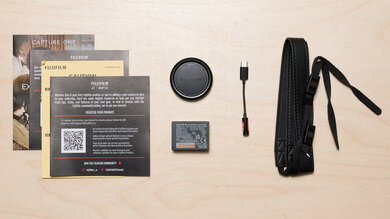
- Sensor cap
- Shoulder strap
- 1x Fujifilm NP-W126S battery
- Headphone adapter
- User documentation
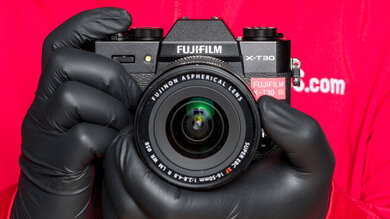
The Fujifilm X-T30 III has mediocre ergonomics. On the plus side, its dedicated dials make it easy to adjust your shutter speed, aperture, and ISO. You can also reach every button on the back with your thumb, except for the 'Drive' button, and the tilting screen helps when you shoot from hip level. The grip has a nice, textured, rubbery finish, and the thumb rest provides a good enough hold.
However, the grip is small, so it isn't comfortable for larger hands, and the shoulder strap clips get in the way of your fingers. The 'Q' button is in an awkward spot, too. It needs very little pressure, so it's easy to press by accident when you're simply holding the camera. The SD card also sits inside the battery compartment on the bottom, so you can't swap cards while the camera is on a tripod.
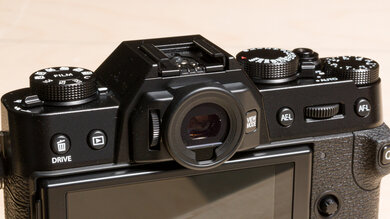
The Fujifilm X-T30 III's viewfinder is high quality, but it can be uncomfortable to use. It barely protrudes from the body, and the eyecup is made of hard plastic rather than soft rubber. On the upside, the OLED panel gives you a clear view of your subject.
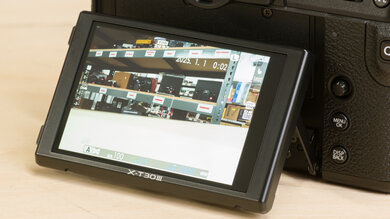
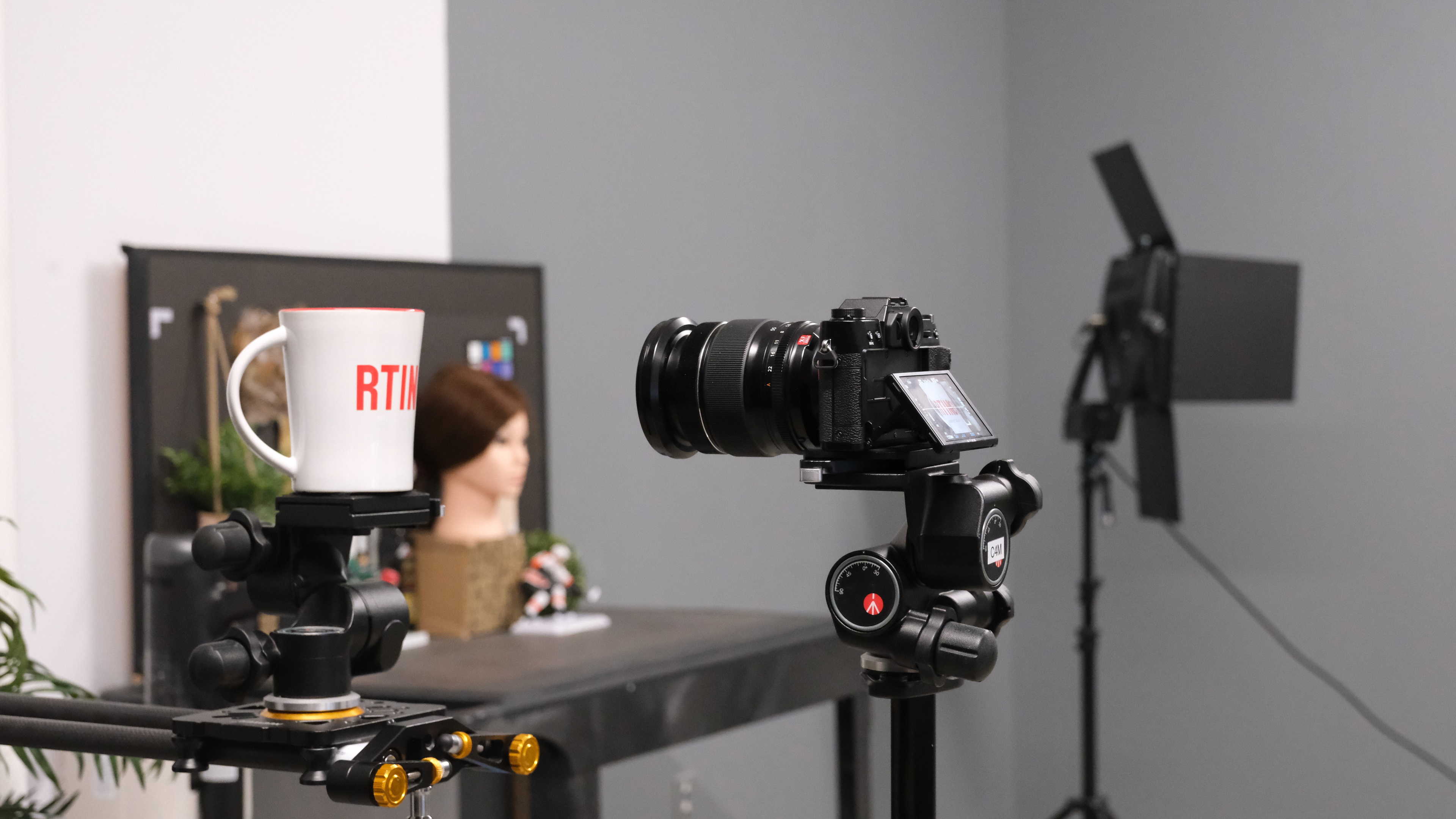
The screen is decent. It tilts up and down, which helps when you're shooting from high or low angles, but it doesn't flip around to face you. It's sharp and gets bright enough to use outdoors in most conditions. Touch functions are limited; you can use the touchscreen to select your focus point, take a photo, and change a few AF settings, but you can't navigate the menus with it.
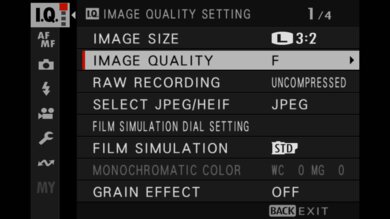
The menu system is great. It uses separate menus for photos and video, so you only see the settings that matter for what you're shooting. It's simple to use once you get past the learning curve, though some tabs have so many options that finding a setting takes a fair bit of scrolling. You can also pin your most-used settings in a customizable menu. A basic guide mode explains some of the more technical settings. The camera also works with Fujifilm's XApp, which lets you transfer photos to your phone and control the camera remotely.
The Fujifilm X-T30 III uses a 26.1-megapixel X-Trans CMOS 4 sensor with a backside-illuminated design, the same one found in the Fujifilm X-T30 II. It's now paired with the X-Processor 5, which enables the camera's AI subject detection. You can shoot 14-bit RAW files and save processed images as 10-bit HEIF files instead of JPEGs. The camera also includes 20 Film Simulation modes, including newer ones like REALA ACE and Nostalgic Neg.
The Fujifilm X-T30 III has okay battery life. It uses Fujifilm's NP-W126S battery and is CIPA-rated for 315 shots per charge in its 'Normal' performance mode. Switching to 'Economy' mode stretches that to 425 shots with the screen or 380 with the viewfinder. CIPA ratings don't always reflect real-world use, so your results depend on how you shoot.
For video, the camera recorded 4k footage continuously for well over an hour on a single charge. You can charge the battery over USB-C, but there's no charger in the box. You can also power the camera over USB-C while recording, but it doesn't draw enough power to keep the battery level steady. Even when it's plugged into a 100W charger, the battery drains slowly, so it only buys you a bit of extra recording time.
The Fujifilm X-T30 III has okay shooting speeds with the mechanical shutter, but e-shutter performance shows a noticeable improvement. Its electronic shutter reaches 30 fps with a 1.25x crop, or 20 fps without one. A pre-shot mode also saves frames for up to 1 second right before you fully press the shutter button, so you're less likely to miss a sudden moment. That said, since the sensor isn't stacked, fast-moving subjects can look more distorted with the electronic shutter.
You can shoot JPEGs indefinitely without filling the buffer. RAW is another story, as the small buffer fills up quickly during bursts and takes a while to empty. The SD card slot also tops out at UHS-I speeds.
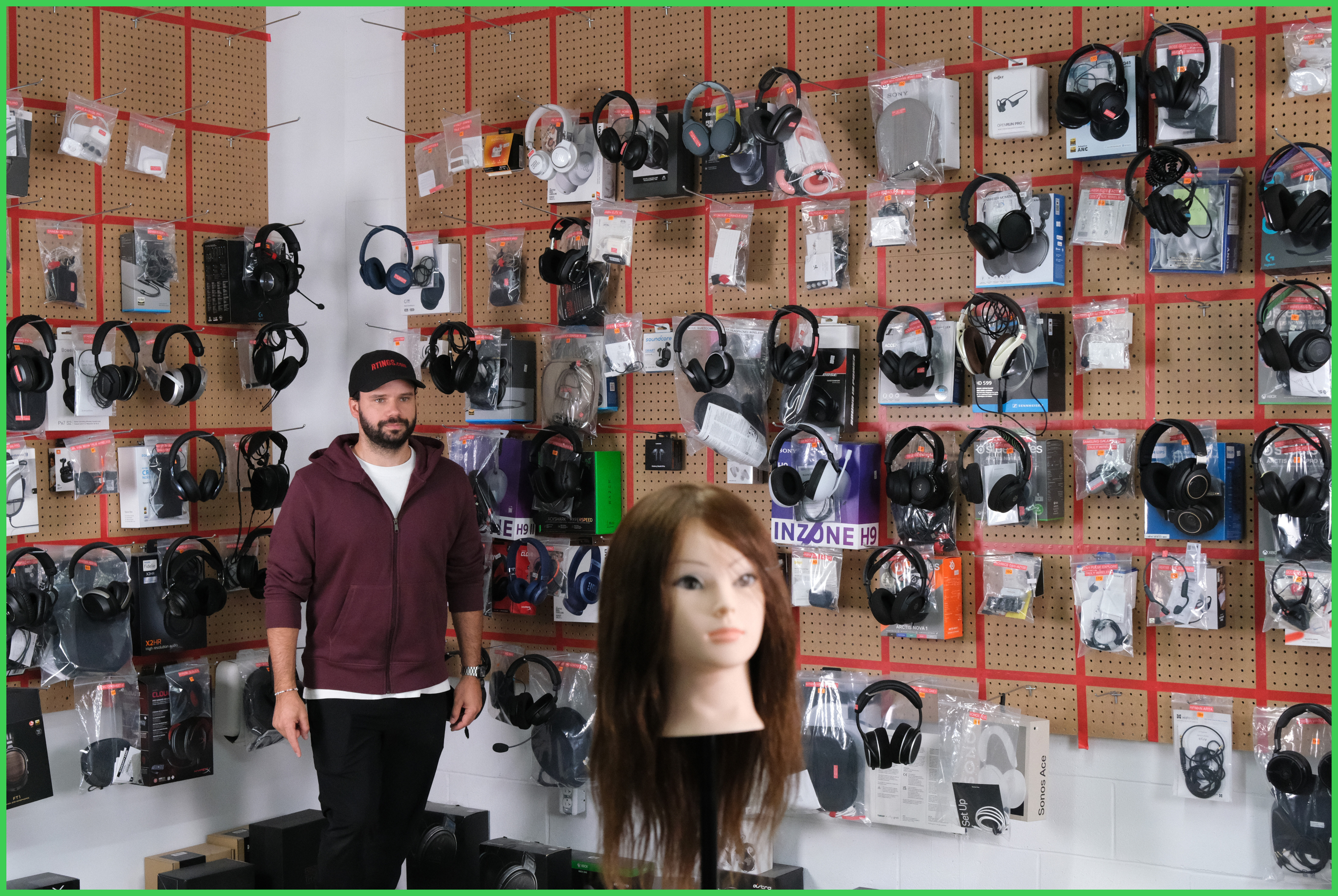
The tracking autofocus in photos is poor. The X-Processor 5 adds AI subject detection for animals, birds, cars, motorcycles, bikes, airplanes, and trains, while face and eye detection for people is a separate setting. Even so, the camera has a hard time keeping a moving subject in focus and performed noticeably worse than the Fujifilm X-M5 in our tests, despite sharing the sensor and processor combo. Only a small share of our test shots came out perfectly sharp, and many were completely unusable. It's better suited to slower or more predictable subjects.
Center-point autofocus is outstanding. When you skip tracking and keep your subject on a single focus point, nearly every shot is usable, and most are perfectly sharp. It isn't flawless, though. The camera lost focus a few times during our test, and with the shutter set to prioritize focus, the burst rate slowed at those moments.
Image stabilization is excellent when you use a lens with optical stabilization. The camera doesn't have in-body stabilization, so it relies entirely on the lens, and its digital stabilization only works for video. With the Fujifilm XF 18-55mm F2.8-4 R OIS lens, you can get sharp handheld photos at very slow shutter speeds. Your results depend on the lens you use, your focal length, and how steady your hands are. With an unstabilized lens, you need faster shutter speeds or a tripod.
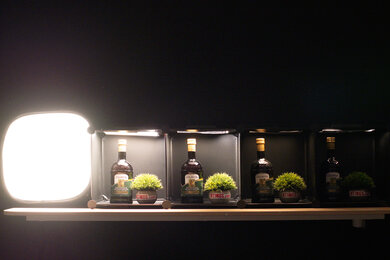
The Fujifilm X-T30 III has excellent dynamic range. At base ISO, it captures a wide range of highlight and shadow detail, which helps in high-contrast scenes like a bright sky over a shaded street. It also holds onto detail well as you raise the ISO. Despite using the same sensor, it outperforms the Fujifilm X-T30 II at every setting we tested.
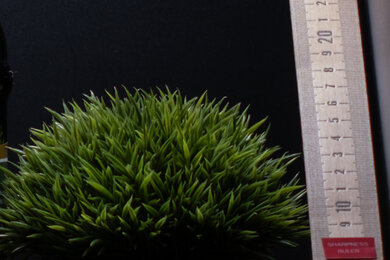
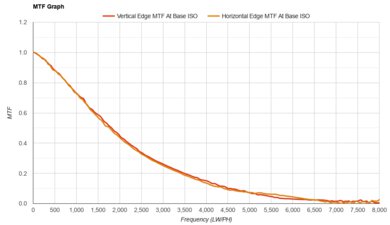
RAW photo sharpness is great. You have some room to crop in during editing, since the 26.1-megapixel sensor resolves plenty of fine detail and keeps your photos crisp. Its resolution only becomes a limitation when you crop heavily or zoom in closely on your images.

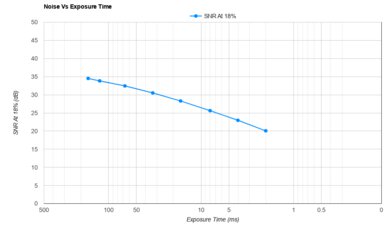
Noise handling is decent, on par with the better APS-C performers. Photos look clean in bright conditions, but grain becomes more visible at faster shutter speeds and higher ISO settings, like when you shoot indoors or at night. It performs on par with other APS-C cameras in its class, but it can't match full-frame models in low light.
The Fujifilm X-T30 III packs an impressive set of video features into its small body. Its 6.2k open-gate mode records the full 3:2 area of the sensor at up to 30 fps. That lets you crop the same clip into both horizontal and vertical formats. You get F-Log, F-Log2, and HLG profiles.
Internal recording is outstanding. The camera captures 10-bit 4:2:2 video, giving you plenty of color information to work with when grading. It didn't overheat during our testing, and there's no recording time limit. A temperature warning appeared after about an hour of continuous 4k recording, but the battery died before the camera shut down.
The 4k rolling shutter performance is poor. Quick pans and fast-moving subjects cause pronounced skewing of vertical lines, which is more noticeable in handheld footage.
Even with the bit rate set to 200Mbps, our test video only hit 136Mbps, which was unexpected.
Rolling shutter is okay in 1080p. Quick pans and fast-moving subjects still show some skew, though the effect is milder than in 4k.
Video dynamic range is outstanding. Recording in F-Log2, the Fujifilm X-T30 III captures a wide range of highlight and shadow detail, even with a strict noise threshold. It handles high-contrast scenes well and gives you ample latitude to recover detail and color grade your footage.
Tested settings:
- Resolution: 4k
- Video Format: MOV, H.265, Long GOP, 4:2:2, 10-bit, 200Mbps
- Frame Rate: 30 fps
- Log Format: F-Log2