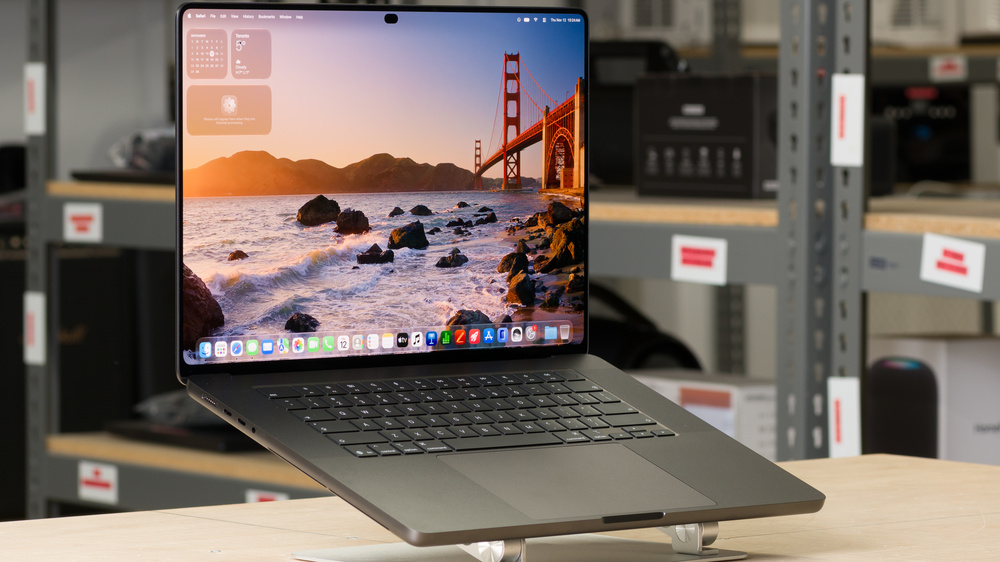
The Apple MacBook Pro with PROLED XDR Display (M5, 2026) is a premium laptop for creative and professional work, and it's the first MacBook with a touchscreen. It sits above the regular MacBook Pro in Apple's lineup and uses the same M5 Pro and M5 Max chips, but it replaces the Mini LED screen with an OLED display.
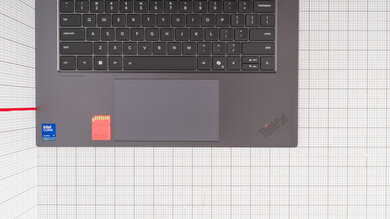
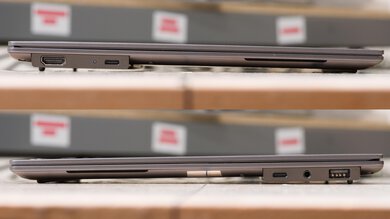
It comes in 14-inch and 16-inch sizes. The 16-inch model has a 16.3-inch, 3472 x 2266 display with thinner bezels than the regular 16-inch MacBook Pro. Both sizes have a variable refresh rate of up to 120Hz, a choice of standard glossy or nano-texture glass, and a Dynamic Island at the top of the screen instead of a notch. Other features include Wi-Fi 7, Bluetooth 6.0, a fingerprint sensor, a 1080p webcam, and a light-up Apple logo on the lid. Ports comprise three USB-C/Thunderbolt 5s, an HDMI 2.1, a full-size SD card reader, a headphone jack, and a MagSafe charging port.
Our Verdict
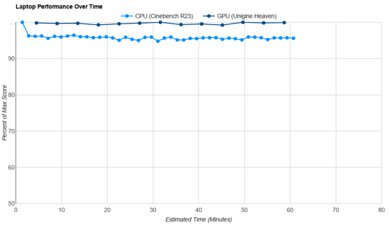
The Apple MacBook Pro with PROLED XDR Display is good for gaming, as long as your games run on macOS. Our M5 Pro configuration delivers high frame rates in CPU-intensive games like Civilization VII and in well-optimized titles like Resident Evil 4. However, demanding games like Cyberpunk 2077 and Assassin's Creed Shadows run at low frame rates, especially with ray tracing turned on. The M5 Max options have 32 or 40 GPU cores instead of 20 for more graphics power. The 120Hz OLED display shows motion smoothly, and performance stays stable over long sessions, though the fans get loud.
120Hz OLED touchscreen with perfect blacks.
High frame rates in CPU-intensive and well-optimized games.
Minimal throttling under load.
Low frame rates in demanding games, especially with ray tracing.
Limited number of games with macOS support.
Fans get loud under heavy loads.
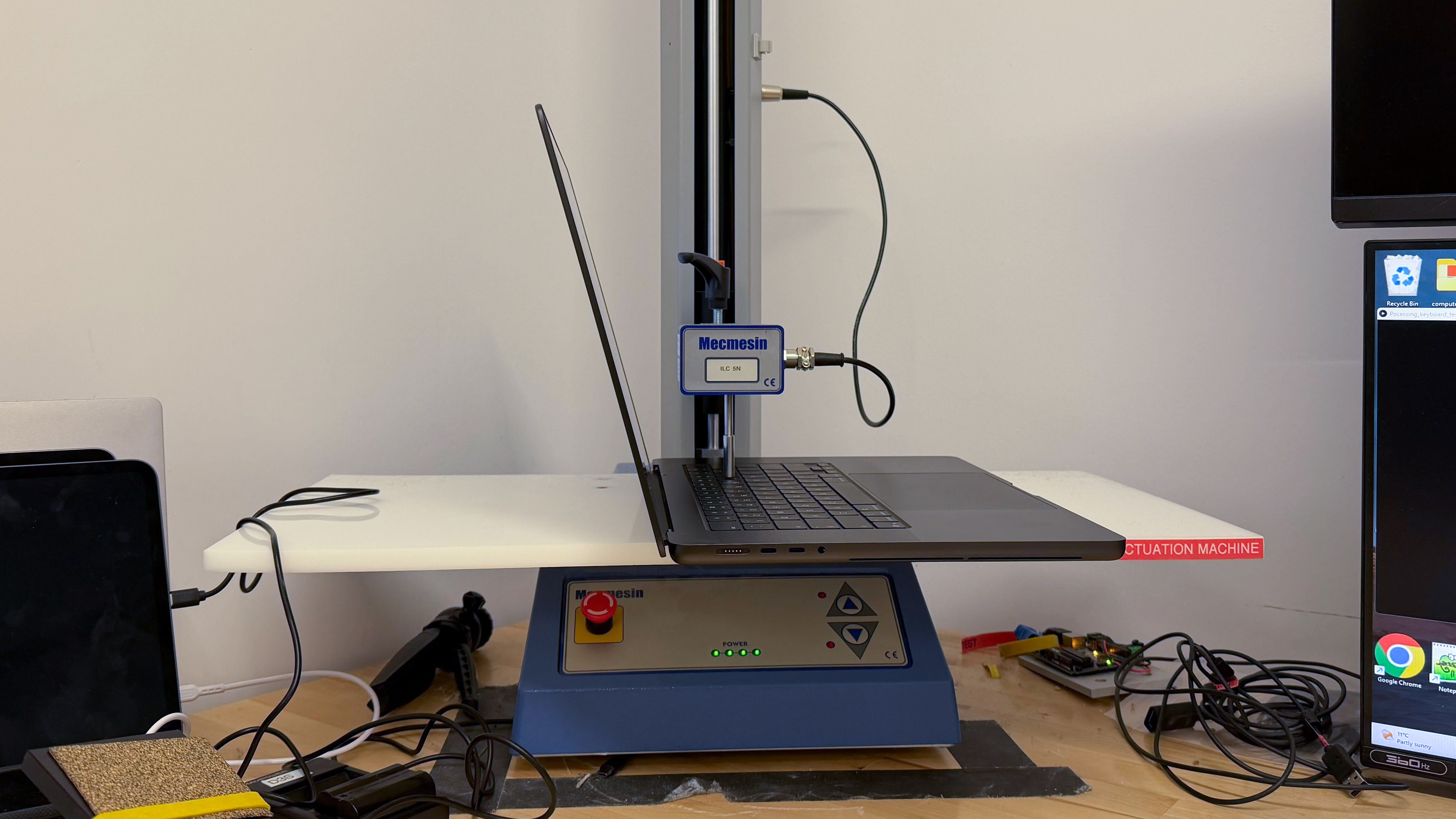
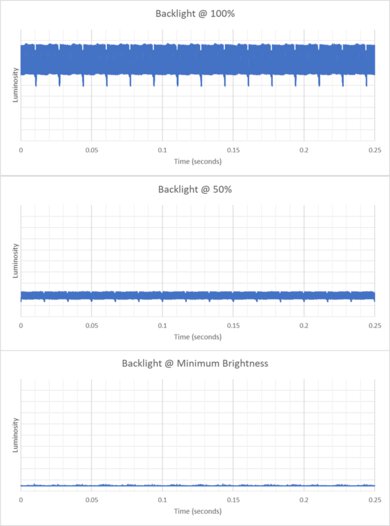
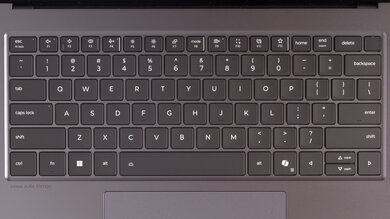
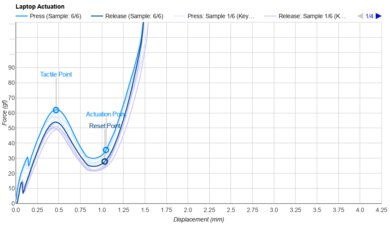
The Apple MacBook Pro with PROLED XDR Display is great for school and work. Our 16-inch unit lasts about 18 hours of light web browsing, enough for a full day of classes or meetings, and it's much lighter than the regular 16-inch MacBook Pro. The sharp OLED display gets bright enough for well-lit rooms, handles reflections well, and lets you tap and scroll directly on the screen. You also get a comfortable keyboard, a large and accurate haptic touchpad, and an outstanding webcam for video calls. If you want something easier to carry, the 14-inch model weighs about 3 lbs, though it has a smaller battery. The main downsides are the keyboard's short key travel and the display's low-frequency flicker, which can bother people who are sensitive to it.
120Hz OLED touchscreen with perfect blacks.
Battery lasts a full day of light use.
Exceptional build quality.
Large, accurate haptic touchpad.
Outstanding 1080p webcam and clear microphone.
Wide port selection, including HDMI and an SD card reader.
Short key travel won't suit everyone.
Display flicker might bother some.
RAM and storage aren't upgradeable.
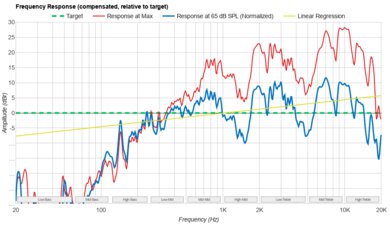
The Apple MacBook Pro with PROLED XDR Display is great for media consumption. Its OLED display turns off individual pixels to produce perfect blacks, so dark scenes look deep, without the blooming around bright objects you get on the Mini LED MacBook Pro. It's sharp and colorful, gets bright enough for well-lit rooms, and gets very dim for nighttime viewing. Our unit lasts over 15 hours of video playback, and the fans stay silent during light use. The speakers produce deep bass and sound very good. The display also flickers at a low frequency, which can bother people who are sensitive to flicker.
120Hz OLED touchscreen with perfect blacks.
Exceptional build quality.
Battery lasts over 15 hours of video playback.
Speakers produce deep bass.
Display flicker might bother some.
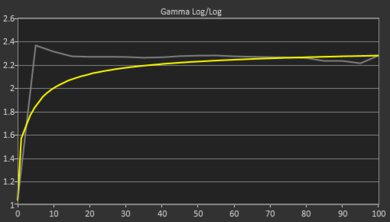
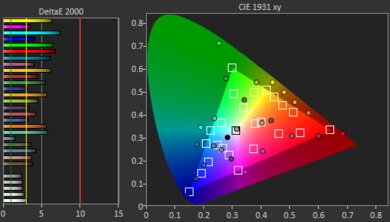
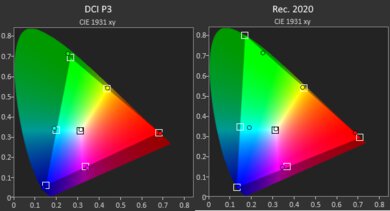
The Apple MacBook Pro with PROLED XDR Display is good for heavy workloads, but the chip you choose makes a big difference. Our M5 Pro unit has excellent CPU performance for programming, photo editing, and CPU rendering, and it keeps nearly all of that performance during long tasks. Its 20-core GPU is the limiting factor: it's fine for photo editing and video editing in compatible apps, but complex 3D rendering and other GPU-heavy work push it hard. The M5 Max options, with 32 or 40 GPU cores and more memory bandwidth, suit that kind of work better. The sharp display covers nearly all of DCI-P3 and is very accurate. Memory and storage aren't upgradeable, so choose enough of both when you buy it.
Minimal throttling under load.
Wide port selection, including HDMI and an SD card reader.
M5 Pro and M5 Max chips handle demanding creative work.
Display covers nearly all of the DCI-P3 color space.
Fans get loud under heavy loads.
RAM and storage aren't upgradeable.
M5 Pro's integrated GPU struggles with complex 3D work.
The Apple MacBook Pro with PROLED XDR Display has outstanding battery life. Our 16-inch M5 Pro unit lasts about 18 hours of light web browsing and over 15 hours of video playback, so you can leave the charger at home for a full day of light work. Demanding tasks drain it much faster, and it lasts just under two hours while gaming. The 14-inch model has a smaller 72.6Wh battery instead of 100Wh, and Apple rates both sizes for slightly shorter runtimes with the M5 Max.
Battery lasts a full day of light use.
Battery lasts over 15 hours of video playback.
The Apple MacBook Pro with PROLED XDR Display has outstanding build quality. Its aluminum chassis barely flexes when you twist or press on it, the parts fit together without gaps, and the finish resists fingerprints and fingernail scratches. The hinge holds the screen steady while you type, yet still lets you open the lid with one finger.
Exceptional build quality.
Smooth, stable hinge that opens with one finger.
The Apple MacBook Pro with PROLED XDR Display has okay graphics performance with the M5 Pro chip. Its integrated 20-core GPU handles photo editing, video editing in compatible apps, and lighter games well, and it barely slows down during long sessions. Demanding games and complex 3D rendering are a different story, especially with ray tracing. If graphics work matters to you, the M5 Max options have 32 or 40 GPU cores, while the 14-inch model's entry M5 Pro has 16.
Minimal throttling under load.
Low frame rates in demanding games, especially with ray tracing.
M5 Pro's integrated GPU struggles with complex 3D work.
The Apple MacBook Pro with PROLED XDR Display delivers excellent processing performance. The 18-core M5 Pro CPU in our unit easily handles programming, photo editing, and multi-core tasks like CPU rendering, and it holds its performance during long workloads. The M5 Max options use the same 18-core CPU, while the 14-inch model's entry M5 Pro has 15 cores. The trade-off is fan noise when you push the processor hard.
Minimal throttling under load.
M5 Pro and M5 Max chips handle demanding creative work.
Fans get loud under heavy loads.
Performance Usages
Check Price
Differences Between Sizes And Variants
We bought and tested the 16-inch Apple MacBook Pro with PROLED XDR Display (M5, 2026) in Space Black, with a standard glossy display, an M5 Pro chip with an 18-core CPU and a 20-core GPU, 24GB of RAM, and a 1TB SSD. You can choose the screen size, display finish, chip, memory, storage, and color.
| Component | 14-inch | 16-inch |
|---|---|---|
| Display | 14.2" OLED, 3024 x 1986, up to 120Hz | 16.3" OLED, 3472 x 2266, up to 120Hz |
| Display finish | Standard glossy or nano-texture | Standard glossy or nano-texture |
| Chip | M5 Pro: 15-core CPU, 16-core GPU; M5 Pro: 18-core CPU, 20-core GPU; M5 Max: 18-core CPU, 32-core or 40-core GPU | M5 Pro: 18-core CPU, 20-core GPU; M5 Max: 18-core CPU, 32-core or 40-core GPU |
| Memory | 24GB or 48GB (15-core M5 Pro); 24GB, 48GB, or 64GB (18-core M5 Pro); 36GB (32-core GPU M5 Max); 48GB, 64GB, or 128GB (40-core GPU M5 Max) | 24GB, 48GB, or 64GB (M5 Pro); 36GB (32-core GPU M5 Max); 48GB, 64GB, or 128GB (40-core GPU M5 Max) |
| Storage | 1TB, 2TB, or 4TB (M5 Pro); 2TB, 4TB, 8TB, or 16TB (M5 Max) | 1TB, 2TB, or 4TB (M5 Pro); 2TB, 4TB, 8TB, or 16TB (M5 Max) |
| Battery | 72.6Wh | 100Wh |
| Included adapter | 70W (15-core M5 Pro) or 96W (other chips) | 140W |
| Color | Silver or Space Black | Silver or Space Black |
Our performance and battery results apply to the M5 Pro configuration, and our reflection results apply to the standard glossy display. If you come across another variant, let us know in the comments.
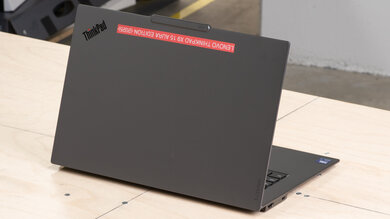
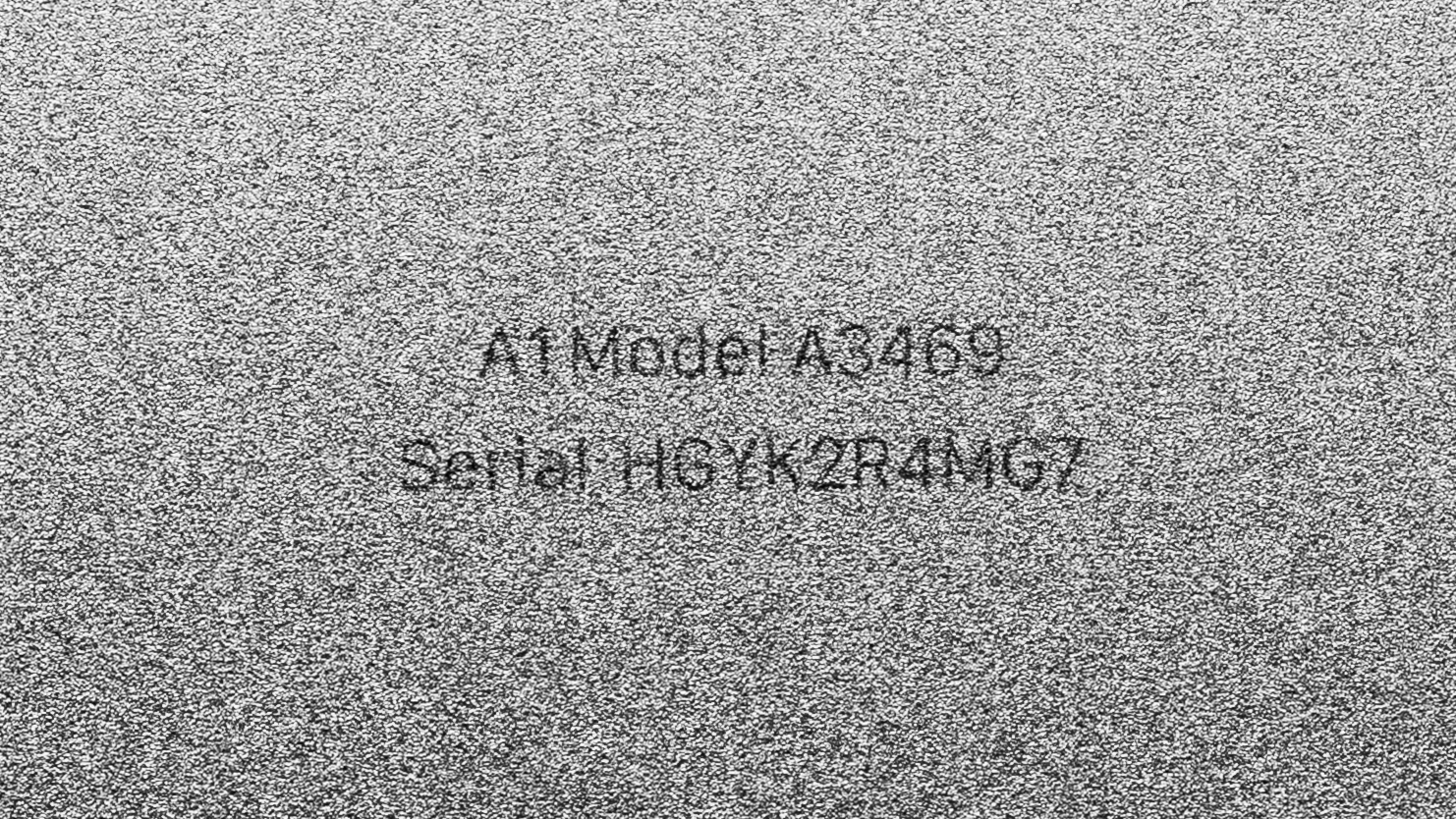
You can see a photo of our unit's label here.
Popular Laptop Comparisons
The Apple MacBook Pro with PROLED XDR Display is Apple's flagship laptop. It shares its M5 Pro and M5 Max chips, ports, and long battery life with the regular MacBook Pro, but adds an OLED touchscreen and a lighter chassis. The MacBook Pro with the Mini LED display was already one of the best laptops on the market, and the PROLED version simply adds an even better display. More broadly, the MacBook's biggest strength is pairing high performance with long battery life. Our M5 Pro unit lasts about 18 hours of web browsing, while Windows laptops with powerful processors and dedicated graphics, like the Lenovo Legion Pro 7i Gen 10 16 (2026) and the ASUS ProArt P16 H7606 (2024), last about five. It's also exceptionally well built, and in SDR, its OLED display gets brighter than OLED rivals like the Dell XPS 14 (2026).
Overall, if you like macOS and you're willing to fork over the dough, the MacBook Pro with PROLED XDR Display is one of the best laptops you can buy.
For more options, see our recommendations for the best workstation laptops, the best laptops for video editing, and the best laptops for photo editing.
The Apple MacBook Pro with PROLED XDR Display (M5, 2026) and the Apple MacBook Pro 16 (M5, 2026) have the same SoC options and ports, but different displays. The 16-inch PROLED model's OLED touchscreen produces perfect blacks without the blooming you see around bright objects on the Mini LED panel, and you can tap and scroll directly on the screen. It's also much lighter to carry. The regular MacBook Pro 16 gets brighter with SDR content, and its display flickers at a much higher frequency, so it's the better choice if you're sensitive to flicker. Its speakers also get louder. Note that our tested units have different chips: an M5 Pro in the PROLED model and an M5 Max in the MacBook Pro 16, so their performance results aren't a like-for-like comparison.
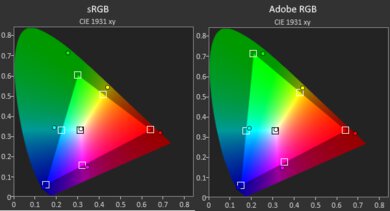
The Apple MacBook Pro with PROLED XDR Display (M5, 2026) and the Apple MacBook Pro 14 (M5, 2025) differ mainly in their displays. The PROLED model's OLED screen produces perfect blacks without blooming around bright objects, supports touch, and covers the full Adobe RGB color space in its Adobe RGB preset, which helps with photo and print work. The regular 14-inch model's Mini LED display gets brighter in SDR and flickers at a much higher frequency, so it's the better choice if you're sensitive to flicker. Otherwise, the PROLED model offers more powerful M5 Pro and M5 Max chips in 14-inch and 16-inch sizes, while the regular model has the base M5 and stays quieter under heavy loads.
The Apple MacBook Pro with PROLED XDR Display (M5, 2026) and the Dell XPS 14 (2026) are premium laptops with OLED touchscreens. The 16-inch MacBook lasts much longer on a charge, and it has much stronger processing and graphics performance. Its display also gets much brighter, and it has more ports, including HDMI and an SD card reader. The Dell is smaller and lighter, runs Windows, stays quieter under load, and has a higher-resolution 4K webcam. Both displays flicker, but the Dell's flickers at a lower frequency. If you want a MacBook closer in size to the XPS 14, the PROLED model also comes in a 14-inch size.
The Apple MacBook Pro with PROLED XDR Display (M5, 2026) and the Apple MacBook Air 13 (M5, 2026) are built for different workloads. The MacBook Pro has more powerful chip options with active cooling for long, demanding tasks, and its 120Hz OLED touchscreen shows perfect blacks, while the Air has a 60Hz IPS display without touch. The Pro also lasts much longer on a charge, produces deeper bass, and has more ports, including HDMI and an SD card reader. The MacBook Air is lighter and thinner, and its fanless design is completely silent, which makes it a better fit for everyday productivity and travel.
Test Results
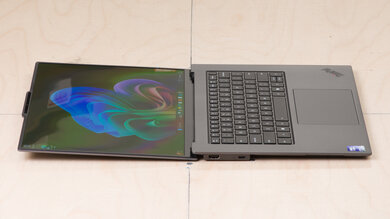
for pictures & test results
for pictures & test results
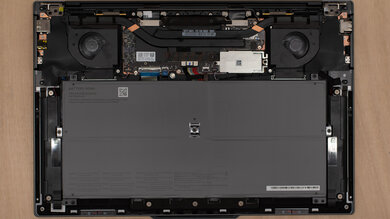
for pictures & test results

for pictures & test results

for pictures & test results
for pictures & test results
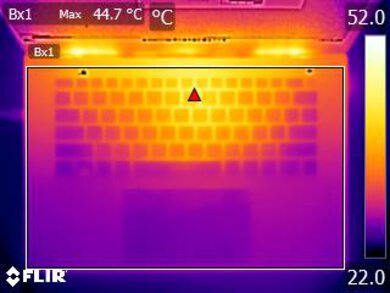
for pictures & test results