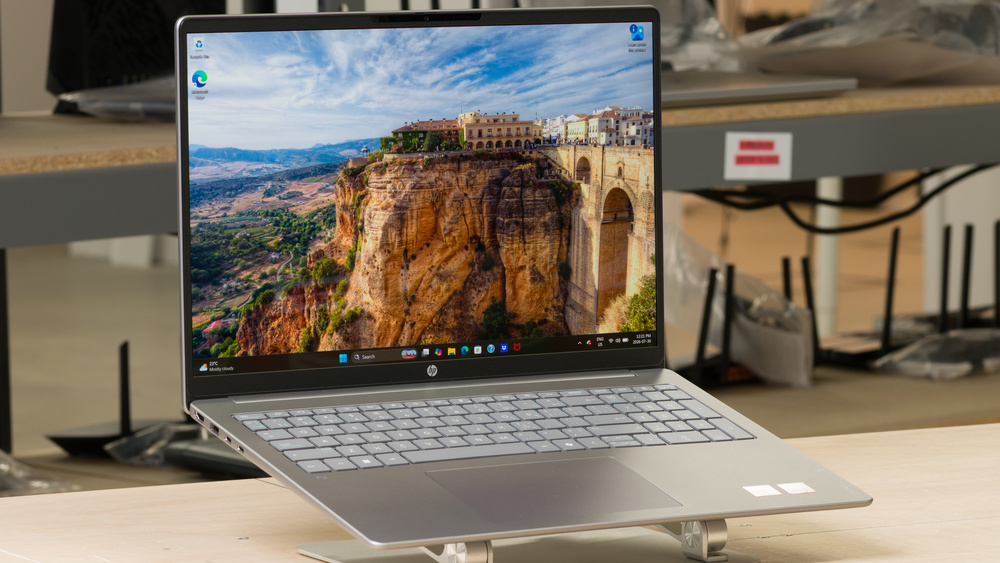
The HP OmniBook 5 16 (2026) is a mid-range Windows laptop. It's available in a wide variety of hardware configurations, including Intel, AMD, and ARM-based Snapdragon processors, as well as 8GB to 32GB of RAM. The significant differences between configurations make it better understood as a family of laptops rather than a single unit. Our configuration uses an AMD Ryzen AI 5 430 processor with integrated Radeon 840M graphics, 16GB of DDR5 memory, and a 512GB SSD. It has a 16-inch 1920x1200 OLED display, but you can also get it with an IPS panel. The memory, SSD, battery, and wireless adapter are replaceable on our unit, though some configurations use soldered memory.
Our Verdict
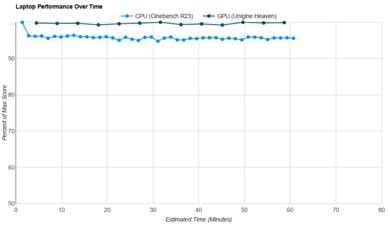
The HP OmniBook 5 16 (2026) isn't well-suited for gaming. The Radeon 840M integrated graphics in our unit can handle simple, older, and well-optimized games, but demanding titles generally require low settings and resolution. On the positive side, performance remains stable during extended gaming sessions, and the keyboard doesn't get excessively hot. Higher-end configurations with Radeon 860M or 880M graphics should provide noticeably better gaming performance, especially when paired with a Ryzen AI 7 or 9 processor. The optional 120Hz display can also deliver smoother motion in games that run at sufficiently high frame rates. However, there are no dedicated GPU options, so even the fastest configuration isn't a substitute for a proper gaming laptop.
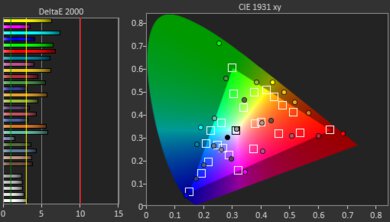
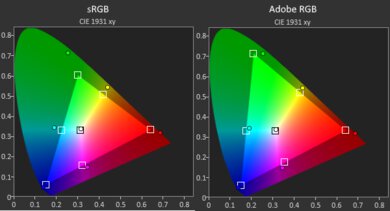
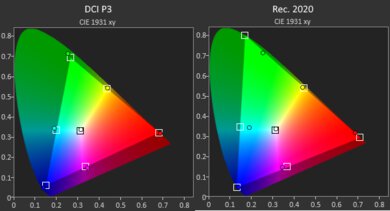
OLED display produces deep blacks and vibrant colors.
Doesn't get excessively hot or loud under load.
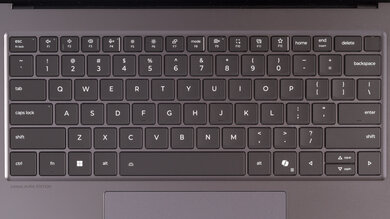
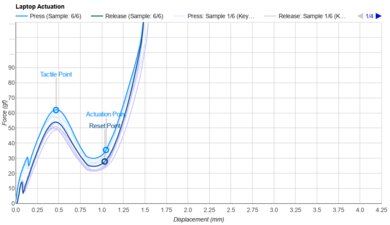
Comfortable keyboard.
Display struggles with direct reflections.
Integrated GPU is too slow for demanding games, with no dedicated GPU option.
Weak CPU performance in CPU-intensive games, although there are CPU options.
Display is limited to 60Hz.
The HP OmniBook 5 16 (2026) is good for school and work. Our Ryzen AI 5 430 configuration feels responsive during everyday tasks like web browsing, document editing, and moderate multitasking, although its four-core CPU is slower in heavily multithreaded workloads. Configurations with a higher-tier Ryzen AI 7 or 9 or Intel Core Ultra 7 or 9 processor should be better for demanding multitasking, programming, and other CPU-intensive work, particularly when paired with 24GB or 32GB of RAM. Our unit has excellent battery life, a comfortable keyboard, a responsive touchpad, a good webcam, and a wide selection of ports. It's also reasonably portable for a 16-inch laptop. However, the glossy display's modest brightness can make it difficult to see in well-lit environments.
Relatively light for a 16-inch laptop.
Battery lasts over 12 hours of light web browsing.
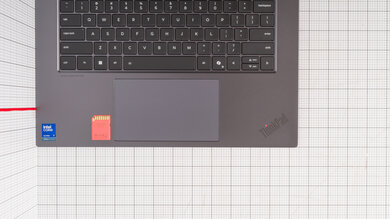
Comfortable keyboard and responsive touchpad.
Useful port selection.
Doesn't get excessively hot or loud under load.
Comfortable keyboard.
Great build quality, stable hinge.
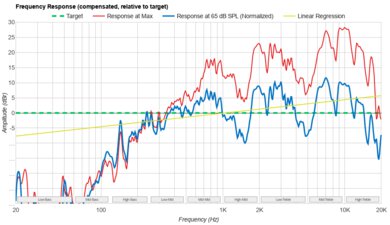
Speakers don't get very loud and lack bass.
Display struggles with direct reflections.
Four-core processor is limited for demanding workloads, although faster options are available.
The HP OmniBook 5 16 (2026) is decent for media consumption. Our unit's 16-inch OLED display produces deep blacks and vibrant colors, while its battery lasts over 15 hours during video playback, which is outstanding. However, its 1920x1200 resolution only looks reasonably sharp at this screen size, and the glossy finish struggles with direct reflections. The speakers also sound thin and don't get very loud. Display quality varies significantly between configurations. The 2.8k 120Hz OLED option will provide a sharper, smoother image. The 400-nit, 100% sRGB IPS panel is another reasonable option, but it won't produce the OLED displays' perfect blacks. The entry-level IPS panels have a much narrower color gamut, so content will look less vibrant.
OLED display produces deep blacks and vibrant colors.
Battery lasts around 15 hours of video playback, which is outstanding.
Relatively light for a 16-inch laptop.
Speakers don't get very loud and lack bass.
Display struggles with direct reflections.
The HP OmniBook 5 16 (2026) is inadequate for heavy workloads. Our unit's Ryzen AI 5 430 processor and 16GB of RAM can handle lighter programming, photo editing, and video projects, but its four-core CPU is slow in heavily multithreaded workloads like rendering and compiling. Higher-tier configurations with a Ryzen AI 7 or 9 or Intel Core Ultra 7 or 9 processor are better suited for demanding multitasking and CPU-intensive work, particularly with 24GB or 32GB of RAM. That said, every configuration uses integrated graphics. Options with Radeon 860M or 880M graphics will perform better than our Radeon 840M, but no configuration is ideal for heavily GPU-accelerated workloads like professional 3D rendering, complex CAD, or machine learning.
Useful port selection.
Doesn't get excessively hot or loud under load.
Four-core processor is limited for demanding workloads, although faster options are available.
Integrated GPU is unsuitable for professional 3D work.
The HP OmniBook 5 16 (2026) has truly outstanding battery life. It lasts well over a full workday or school day, whether you're doing light tasks like web browsing or watching a video. It also has remarkable battery life when you're gaming.
Battery lasts around 15 hours of video playback, which is outstanding.
Battery lasts over 12 hours of light web browsing.
The HP OmniBook 5 16 (2026) has great build quality. The construction blends aluminum and plastic, offering a generally sturdy feel. The panels align well, the hinge is stable, and the surface resists fingerprints and scratches. Yet the display shows noticeable flex when the lid is open or closed, and the keyboard deck has slight give.
Great build quality, stable hinge.
The HP OmniBook 5 16 (2026) with the Radeon 840M GPU we tested has graphics performance suitable for everyday tasks and light creative work, but it requires low settings for graphically intensive games and still won't run smoothly. The Radeon 780M and 880M iGPUs are the most powerful options available on this laptop, and are better suited for light gaming and more demanding creative work, but are still considerably slower than a discrete GPU.
Integrated GPU is too slow for demanding games, with no dedicated GPU option.
Integrated GPU is unsuitable for professional 3D work.
The HP OmniBook 5 16 (2026)'s processing performance varies widely depending on which processor you configure. The AMD Ryzen AI 5 430 in our unit provides good responsiveness for general productivity and light multitasking, but it can struggle with heavily threaded workloads like rendering, compiling code, and large video exports. Higher-end CPUs like the Ryzen AI 9 and Intel Core Ultra 9 are better suited for CPU-intensive work, and the Snapdragon model is targeted at long battery life and general productivity tasks.
Four-core processor is limited for demanding workloads, although faster options are available.
Weak CPU performance in CPU-intensive games, although there are CPU options.
Performance Usages
Changelog
- Updated Oct 08, 2026: We've updated this review to Test Bench 1.0! This update adds several new verdict scores to the review, so it's easier to make a buying decision. Read the changelog for a full list of changes.
- Updated Aug 26, 2026: Review published.
- Updated Aug 24, 2026: Early access published.
- Updated Aug 12, 2026: Our testers have started testing this product.
Check Price
Differences Between Sizes And Variants
The HP OmniBook 5 16 laptop is available in a wide range of configurations. The unit we tested belongs to the 16z-cg000 model family. It has an AMD Ryzen AI 5 430 processor with integrated Radeon 840M graphics, 16GB of DDR5-5600 memory in a single-channel configuration, a 512GB SSD, and a 16-inch 1920x1200 OLED display. Our unit is Meteor Silver.
HP uses the OmniBook 5 16 name for several internal model families. As a result, the chassis, battery capacity, ports, wireless adapter, and memory upgradeability can vary. The options below cover the unique components offered through HP's U.S. store as of August 2026, including customizable models and fixed retail configurations. Our configuration is highlighted in bold. Check HP's current OmniBook 5 16 listings, as availability may change.
SCREEN
- 16" IPS 1920x1200 (300 cd/m², 62.5% sRGB), with and without a touchscreen.
- 16" IPS 1920x1200 (400 cd/m², 100% sRGB)
- 16" OLED 1920x1200 (300 cd/m², 100% DCI-P3), with and without a touchscreen.
- 16" OLED 1920x1200 (300 cd/m², 95% DCI-P3; Snapdragon non-touch models)
- 16" OLED 2880x1800, up to 120Hz (500 cd/m² SDR, 1,100 cd/m² HDR, 100% DCI-P3)
CPU
- Intel Core 5 120U
- Intel Core 7 150U
- Intel Core 5 320
- Intel Core 7 350
- Intel Core Ultra 5 325
- Intel Core Ultra 7 355
- Intel Core Ultra 9 386H
- Qualcomm Snapdragon X X1-26-100
- Qualcomm Snapdragon X Plus X1P-42-100
- AMD Ryzen 5 230
- AMD Ryzen 7 250
- AMD Ryzen AI 5 330
- AMD Ryzen AI 5 430
- AMD Ryzen AI 7 445
- AMD Ryzen AI 9 465
GPU
All configurations use integrated graphics; there are no dedicated GPU options.
- Intel Graphics
- Qualcomm Adreno GPU
- AMD Radeon 760M
- AMD Radeon 780M
- AMD Radeon 820M
- AMD Radeon 840M
- AMD Radeon 880M
MEMORY
- 8GB DDR5-5200 or DDR5-5600
- 12GB DDR5-5200 or DDR5-5600
- 16GB DDR5-5600 (1×16GB)
- 16GB DDR5-5200 or DDR5-5600 (2×8GB)
- 16GB LPDDR5x onboard
- 24GB DDR5-5600 (1×24GB or 2×12GB)
- 32GB DDR5-5200 or DDR5-5600 (1×32GB)
- 32GB LPDDR5x onboard
STORAGE
- 256GB M.2 PCIe NVMe SSD
- 512GB M.2 PCIe NVMe SSD
- 1TB M.2 PCIe NVMe SSD
Depending on the configuration, HP uses PCIe Gen 4 or Gen 5 drives.
BATTERY
- Four-cell 68Wh lithium-ion polymer
- Three-cell 59Wh lithium-ion polymer
COLOR
- Glacier Silver
- Meteor Silver
- Starlit Blue
- Sahara Silver
Not every option listed above can be combined. Processor, display, memory, storage, and color availability depend on the internal model family and whether the laptop is a customizable or fixed retail configuration.
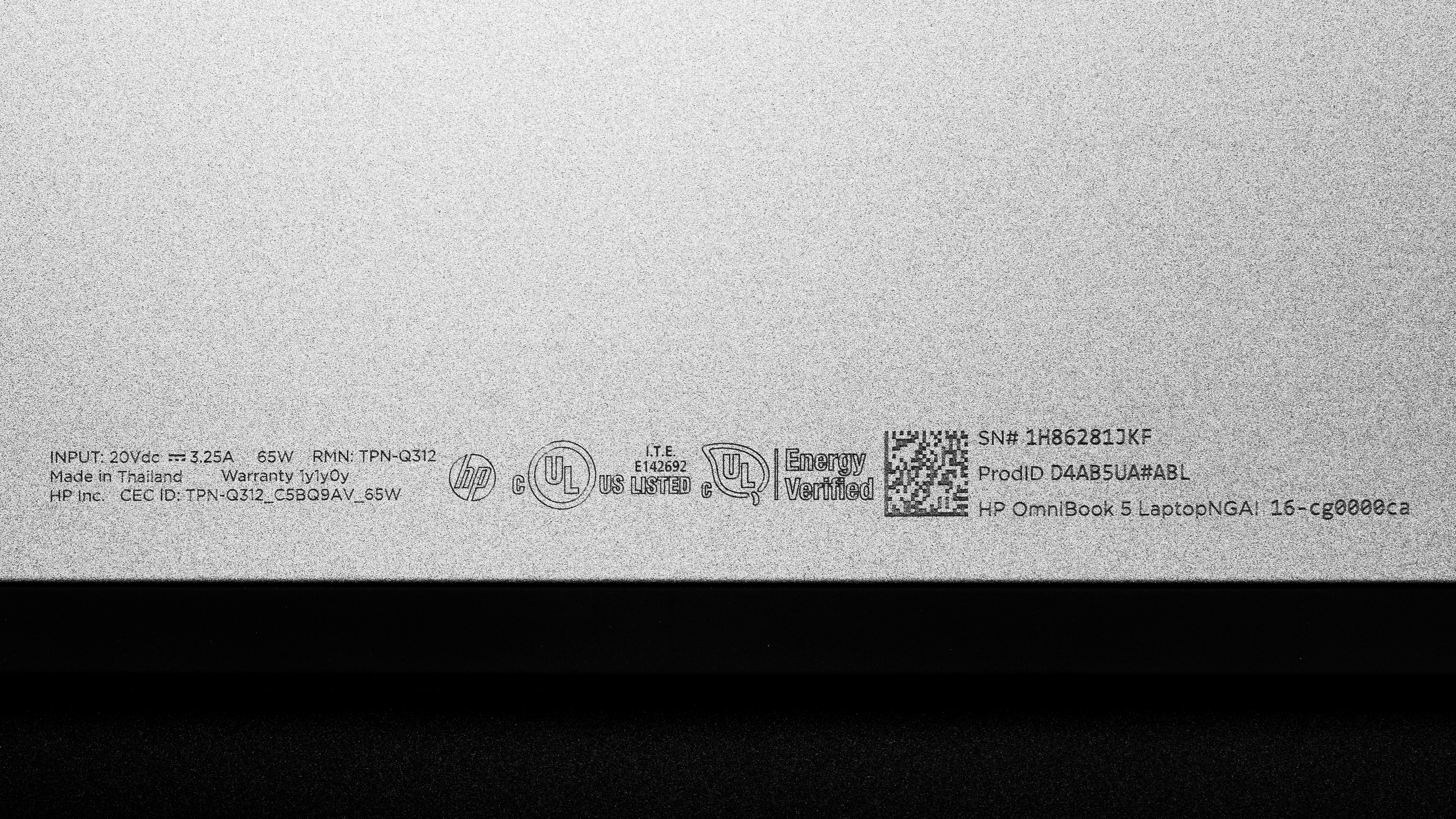
You can see a photo of our unit's label here.
Popular Laptop Comparisons
The HP OmniBook 5 16 is a good mid-range Windows laptop. Its main strengths are its outstanding battery life, relatively portable design for a 16-inch laptop, comfortable keyboard, large and responsive touchpad, and broad port selection. Our configuration's 16-inch OLED display is another highlight, delivering a colorful image with deep blacks. The Ryzen AI 5 430 and 16GB of memory provide a responsive experience for general productivity, though the processor is less impressive in demanding workloads.
At its price point, though, it runs into the Apple MacBook Air 13 (M4, 2025). The Apple laptop's screen is smaller and lacks the HP model's OLED panel, but it still looks sharp, bright, and colorful in most content. More importantly, Apple's M4 processor outpaces the Ryzen AI 5 430 by a large margin, and the newer Apple MacBook Air 13 (M5, 2026) model widens that performance gap further. The MacBooks also have better build quality, a superior touchpad and speakers, and a more polished overall user experience. If you're comfortable using macOS, the MacBook Air is the better laptop for most people.
That said, the OmniBook remains a solid choice if you specifically want Windows, prefer a larger OLED display, or need its wider port selection. Its replaceable memory, SSD, battery, and wireless adapter also make our configuration easier to upgrade and repair than the MacBooks. You could also opt for the smaller HP OmniBook 3 14 (2025) if you're looking for a cheaper and smaller basic productivity machine, at the cost of lower performance and worse battery life. Nevertheless, the HP OmniBook 5 16 (2026) offers a compelling combination of usability, battery life, and display quality.
For more options, check out our recommendations for the best budget laptops, the best laptops for college, and the best Windows laptops.
The HP OmniBook 5 16 (2026) and HP OmniBook 3 14 (2025) are broad product families, so their performance and features depend heavily on the configuration. The OmniBook 5 is the larger, higher-tier model. It provides more display space, includes a numpad, and is available with OLED panels and more powerful processors. Its battery also lasts longer, especially when watching videos. Its higher-end configurations are better suited for heavy multitasking and CPU-intensive workloads. The OmniBook 3 is smaller and easier to carry, and most of its configurations are intended primarily for general productivity. Higher-end OmniBook 3 configurations can handle more demanding multitasking and some CPU-heavy workloads, but the series has a lower overall performance ceiling. Neither product is available with dedicated graphics.
The ASUS Zenbook A14 UX3407 (2025) and HP OmniBook 5 16 (2026) take very different approaches. The ASUS is a lightweight 14-inch ultraportable with a fixed OLED display and a relatively simple selection of Qualcomm Snapdragon processors. All its configurations are ARM-based, so some older or specialized Windows applications, games, and peripherals may not work properly. The HP is considerably larger and heavier but provides more screen space, a numpad, and a slightly wider port selection. It's also far more configurable, with Intel and AMD x86 processors, ARM-based Qualcomm options, multiple IPS and OLED displays, and varying levels of memory upgradeability. This makes the HP more adaptable to different workloads, while the ASUS offers a more travel-friendly experience.
The Lenovo ThinkPad X1 Carbon Gen 14 Aura Edition (2026) is better for frequent travel and business use, while the HP OmniBook 5 16 (2026) is better if you want a larger screen at a lower price. The ThinkPad is considerably lighter, feels more premium, and has better speakers, a superior webcam, and a microphone. It also offers optional cellular connectivity and Thunderbolt 4 ports. The HP provides more room for multitasking and a keyboard with a numpad, plus replaceable RAM on some configurations. Both offer IPS and OLED displays and processors capable of demanding productivity work, so performance depends on the configuration.
The Acer Swift Go 14 (2024) and HP OmniBook 5 16 (2026) are Windows productivity laptops with different priorities. The Acer is a more compact, portable 14-inch model with a limited selection of Intel Core Ultra processors, and all configurations have soldered memory. The HP is larger and less portable, but provides more screen space and a keyboard with a numpad. It also has a much broader range of submodels, including Intel, AMD, and Qualcomm processors, as well as both soldered and replaceable memory. This gives you more freedom to prioritize performance, battery life, or upgradeability, but makes choosing a configuration considerably more complicated.
Test Results
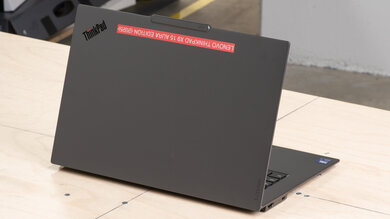
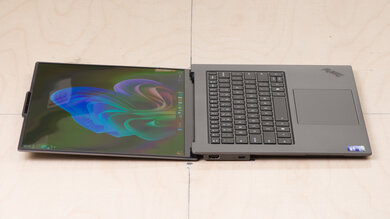
for pictures & test results
for pictures & test results
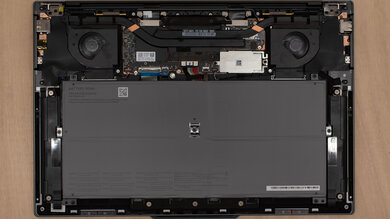
for pictures & test results



for pictures & test results

for pictures & test results
for pictures & test results
for pictures & test results