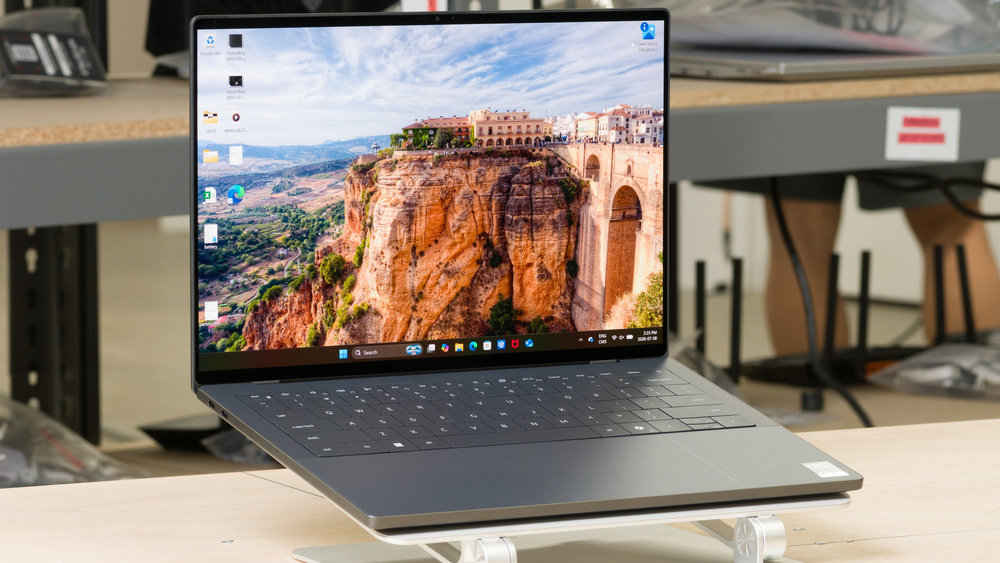
The Dell XPS 14 (2026) is a premium 14-inch Windows laptop in Dell's wider XPS lineup. Compared to the last model in the series, the Dell XPS 14 (2024) has a thinner, lighter aluminum body, a physical function row, better battery efficiency, and a higher-resolution webcam, although it no longer has discrete GPU options. It's available in several configurations, with Intel Core Ultra Series 3 CPUs and integrated Intel or Intel Arc graphics. You can also configure it with 16GB to 64GB of soldered RAM, 512GB to 4TB of SSD storage, and either an IPS FHD+ or a 2.8k OLED touchscreen.
See our unit's specifications and more details on the available configuration options in the Differences Between Variants section
Our Verdict
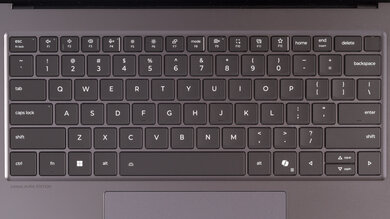
The Dell XPS 14 (2026) is great for general productivity. It has superb build quality, with a lightweight but very sturdy aluminum body, and its battery lasts through a typical school or workday. It's available with a lower-resolution IPS display or a higher-resolution OLED display with touchscreen support, which provides a more vibrant, higher-contrast picture. The keyboard is well-spaced and provides a satisfying typing experience, while the fairly large glass touchpad feels responsive. It also has an outstanding 4K webcam for calls and meetings. Unfortunately, apart from an audio jack, its port selection is limited to three USB-C/Thunderbolt 4 ports, so you may need a dock or adapter to connect certain peripherals.
OLED display configuration is is sharp and vibrant.
Superb build quality; thin and lightweight chassis.
Superb high-resolution webcam.
Has a row of physical function row keys.
Keyboard has adjustable backlighting.
Battery lasts up to ~11 hours of light use or ~8 media playback.
No USB-A or HDMI ports.
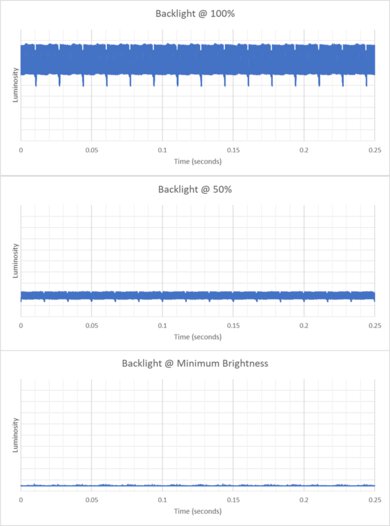
OLED display flicker may bother sensitive users.
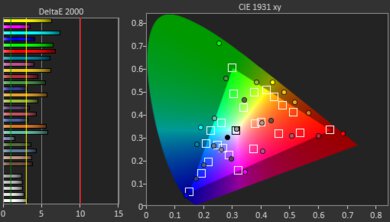
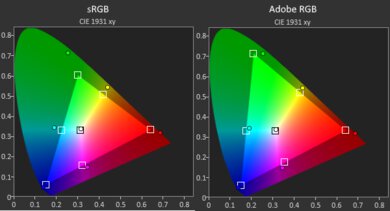
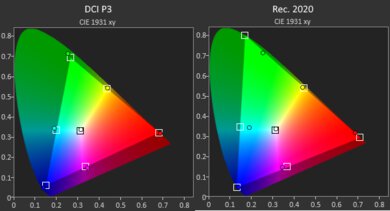
The Dell XPS 14 (2026) is superb for media consumption. It has a very sturdy yet thin and portable chassis. The OLED display we tested produces a much sharper and more vibrant image than the lower-resolution IPS option, with perfect blacks, fast response times, and touch support, making it the more appealing choice for most people. The IPS display is likely a little brighter but otherwise less vibrant, with worse contrast and likely slower response times. Battery life is also great for an OLED laptop of this size, providing about eight hours of continuous video playback between charges. The speakers sound quite good and get impressively loud. Unfortunately, the display's color accuracy is only satisfactory out of the box. This may not matter for casual viewing, but it means some content won't appear exactly as its creator intended.
OLED display configuration is is sharp and vibrant.
Superb build quality; thin and lightweight chassis.
Battery lasts up to ~11 hours of light use or ~8 media playback.
Good speakers and a 3.5mm audio jack.
IPS display configuration isn't ideal for dark room viewing.
OLED display flicker may bother sensitive users.
The Dell XPS 14 (2026) isn't designed for gaming. It isn't available with discrete GPU options, but the Intel Arc B390 graphics in higher-end configurations can handle some moderately demanding titles at lower resolutions and settings, as well as less graphically demanding games, retro titles, and indies. However, modern, graphically intensive games will require low settings and upscaling, and some still won't run smoothly.
Has full VRR support.
OLED display configuration is is sharp and vibrant.
Keyboard has adjustable backlighting.
Unsuitable for new, more graphically demanding games.
Soldered RAM.
No USB-A or HDMI ports.
No discrete GPU options.
IPS display configuration has slow response time.
OLED display flicker may bother sensitive users.
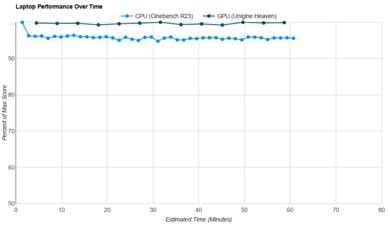
The Dell XPS 14 (2026) is passable as a workstation, though its performance depends largely on the configuration you choose. Its main weakness is the lack of discrete GPU options. That said, the higher-end configuration we tested performs reasonably well for multitasking and creative work, and its integrated Intel Arc B390 graphics are surprisingly capable. However, it isn't primarily intended for GPU-heavy workloads, and its CPU performance can decline significantly over time under sustained load.
Superb high-resolution webcam.
Display is suitable for color-critical work but may need calibration for accuracy.
Has a row of physical function row keys.
Soldered RAM.
No USB-A or HDMI ports.
No discrete GPU options.
OLED display flicker may bother sensitive users.
CPU performance can suffer significantly over time under heavy, sustained workloads.
Changelog
-
Updated Sep 08, 2026:
We corrected an error regarding the laptop's variable refresh rate support. Both display configurations support VRR, and we've updated the Refresh Rate section and Pros and Cons to accurately reflect this.
-
Updated Sep 04, 2026:
We've added a link to the LG gram Pro 2-in-1 16 (2026) in the Brightness section.
-
Updated Aug 28, 2026:
We've added a link to the newly reviewed MacBook Air 13 (M5, 2026) in the battery section of the review.
-
Updated Aug 11, 2026:
We've added a link to the Dell XPS 13 (2026) in the Portability section.
Check Price
Differences Between Sizes And Variants
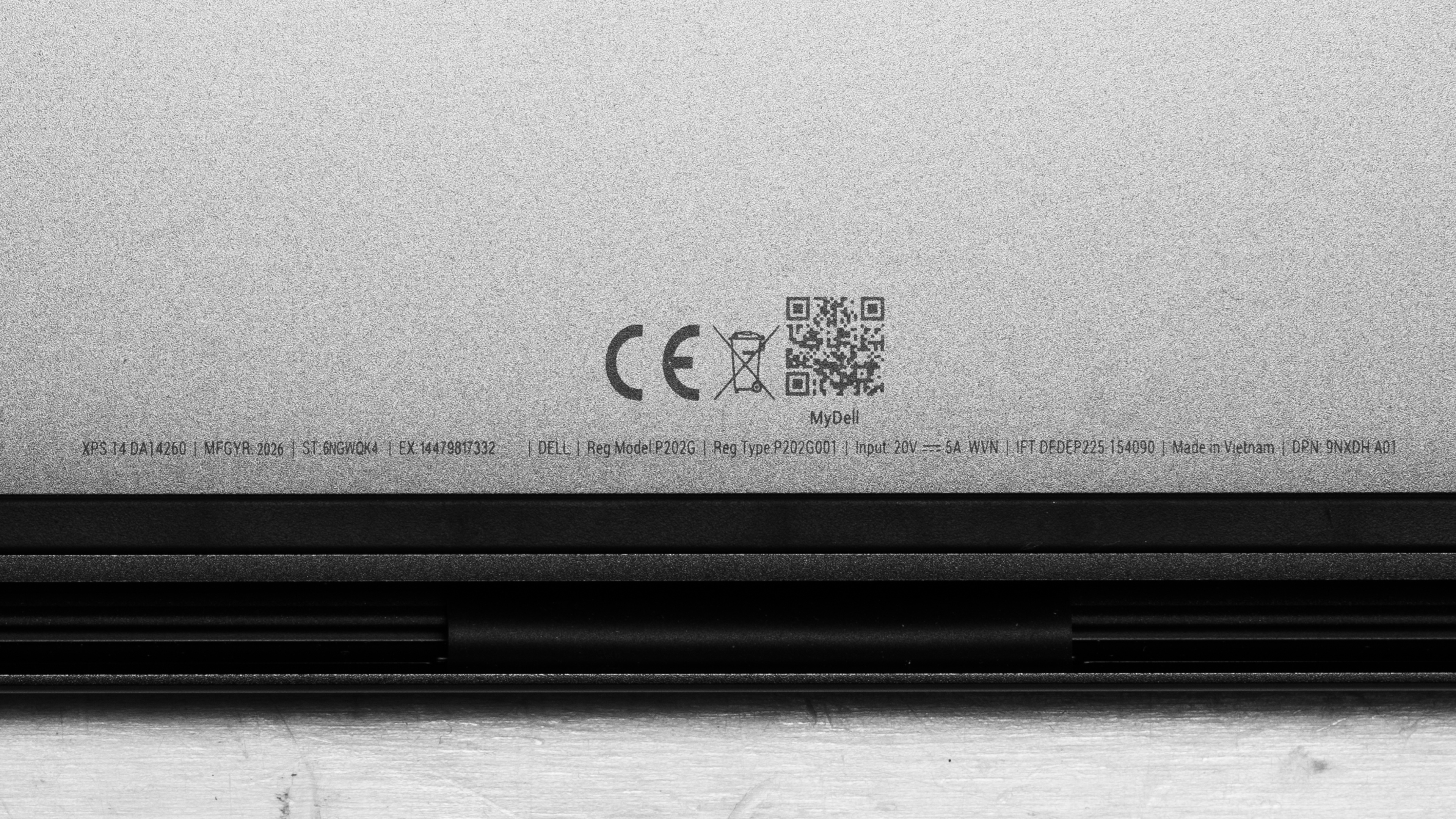
The Dell XPS 14 (2026) we tested has an Intel Core Ultra X7 Processor 358H, Integrated Intel Arc B390, 32 GB of RAM, 1 TB SSD storage, and a 14" Touch 2.8K (2880x1800) OLED display. See a photo of our unit's label.
We've listed configuration options as of August 2026 below, with our configuration highlighted. We also recommend checking Dell's configurator to explore the available options, as they may change with time.
SCREEN
- 14.0" IPS 1920 × 1200 1–120Hz (non-touch, 500 cd/m², 100% sRGB)
- 14.0" OLED 2880 × 1800 20–120Hz (touchscreen, 400 cd/m², 100% DCI-P3)
CPU
- Intel Core Ultra 5 325 (8 cores, 8 threads, up to 4.5 GHz, 12MB cache)
- Intel Core Ultra 7 355 (8 cores, 8 threads, up to 4.7 GHz, 12MB cache)
- Intel Core Ultra X7 358H (16 cores, 16 threads, up to 4.8 GHz, 18MB cache)
- Intel Core Ultra X9 388H (16 cores, 16 threads, up to 5.1 GHz, 18MB cache)
GPU
- Intel Graphics (integrated)
- Intel Arc B390 Graphics (integrated)
MEMORY
- 16GB LPDDR5x 7467MT/s
- 32GB LPDDR5x 9600MT/s
- 64GB LPDDR5x 9600MT/s
OPERATING SYSTEM
- Windows
- Ubuntu Linux
STORAGE
- 512GB M.2 PCIe NVMe SSD
- 1TB M.2 PCIe NVMe SSD
- 2TB M.2 PCIe NVMe SSD
- 4TB M.2 PCIe NVMe SSD
COLOR
- Storm
Popular Laptop Comparisons
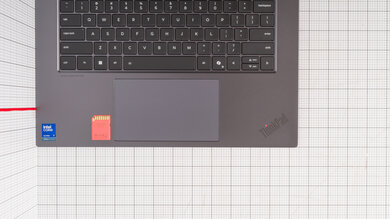
The Dell XPS 14 (2026) revives Dell's XPS branding after the company briefly retired it in 2025. Compared to its last XPS-branded model, the Dell XPS 14 (2024), the new Dell XPS 14 (2026) has a smaller, lighter aluminum body, a higher-resolution webcam, and better battery efficiency thanks to its new Panther Lake processors. Notably, it restores physical function keys, which the 2024 model replaced with touch-sensitive controls. Dell also added markings along the touchpad's borders to indicate its usable surface, which addresses a major criticism of the 2024 design.
Unlike the 2024 XPS 14, the 2026 model isn't available with a discrete GPU. The previous model's optional RTX 4050 made it better suited to creative work in GPU-heavy programs that benefit from NVIDIA-specific features like CUDA. However, the Intel Arc B390 graphics available in higher-end 2026 configurations are surprisingly capable for integrated graphics and may approach the previous model's low-powered RTX 4050 in certain games. That said, this model is designed with more emphasis on portability, battery efficiency, and everyday productivity rather than any sustained GPU performance.
If you don't mind a somewhat larger option, the Lenovo ThinkPad X9 15 Aura Edition (2025) is a Windows alternative with similarly premium construction, a 120Hz OLED display, and excellent battery life. It also has a wider port selection. However, its low-power Intel processors and integrated graphics are best suited to general productivity, while the XPS offers somewhat more performance and configuration headroom. Alternatively, if you're open to considering options in the macOS ecosystem, the Apple MacBook Pro 14 (M5, 2025) is a more performance-oriented competitor. It has a vibrant 120Hz Mini LED display, even better build quality, a wider port selection, and a more premium feel overall. It also performs better in most workloads and maintains its performance more consistently under sustained load.
For more recommendations, see our picks for the best laptops, the best Windows laptops, and the best 13-14 Inch laptops.
The Apple MacBook Pro 14 (M5, 2025) and the Dell XPS 14 (2026) are premium laptops with 120Hz displays. The Dell is slightly thinner and lighter. It offers a choice between an IPS or an OLED touchscreen, a higher-resolution webcam, and up to 64 GB of RAM. While Dell's build quality is superb, the Apple's is a bit better. It also has longer battery life, a wider selection of ports, and a brighter Mini LED display that's more color-accurate out of the box. Additionally, it performs better in most workloads and maintains its performance more consistently under sustained loads. Otherwise, the remaining difference is the operating system: the Dell is available with Windows or Ubuntu, while the Apple runs macOS, which is a meaningful consideration depending on the software you need and any existing ecosystem familiarity you have.
The Apple MacBook Air 13 (M5, 2026) and the Dell XPS 14 (2026) are premium ultraportables designed for general productivity and light creative work. The MacBook Air has a significantly longer battery life, a more color-accurate display out of the box, and a silent fanless design; it also maintains its performance more consistently during sustained workloads. The Dell offers more configuration flexibility, including up to 64GB of RAM and a 2.8k 120Hz OLED touchscreen that produces deeper blacks and smoother motion than the MacBook Air's 60Hz IPS panel. It also has a higher-resolution 4K webcam and a third USB-C/Thunderbolt 4 port. Neither is ideal for demanding GPU-heavy work, so the choice largely comes down to display preferences, application compatibility, and whether you prefer macOS or Windows.
Despite both carrying XPS branding, the Dell XPS 14 (2026) and Dell XPS 13 (2026) have quite different designs and target different uses. The XPS 14 feels slightly more premium, has somewhat better build quality, and is available in a wider range of more powerful configurations better suited for heavier productivity, content creation, and light gaming. It's also available with either an IPS or OLED display. Comparatively, the XPS 13 is designed primarily for lighter productivity and everyday browsing and is only available with an IPS display. Both are quite lightweight and portable, but the XPS 13 has a smaller display and overall footprint, and it's noticeably lighter.
The Dell XPS 14 (2026) is a newer model in the same lineup as the Dell XPS 14 (2024). The 2026 model has a significantly redesigned chassis that's lighter, smaller, and thinner, with better build quality overall. It also reintroduces a physical function row and adds markings along the glass touchpad to indicate its usable area, addressing two major criticisms of the 2024 model. The 2026 model also has a much higher-resolution webcam and more battery-efficient Panther Lake CPU options. However, it no longer offers a discrete GPU configuration.
Test Results
for pictures & test results
for pictures & test results
for pictures & test results





for pictures & test results
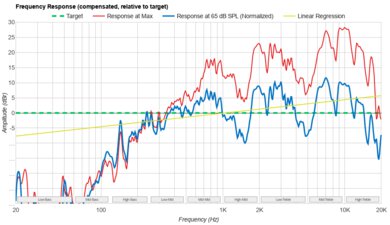
for videos & test results

for pictures & test results
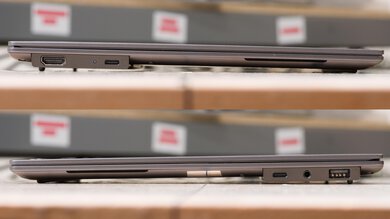
for pictures & test results
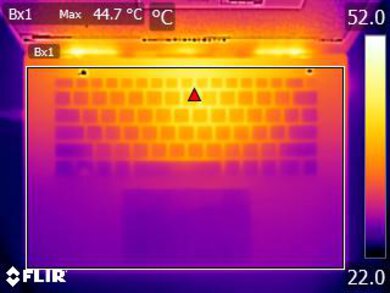
for pictures & test results