If you're shopping for a new mattress, you've likely discovered that there are three main types to choose from: foam, innerspring, or hybrid. The first two seem relatively straightforward, but you might be wondering—what is a hybrid mattress? Well, the simple answer is that it's a mattress that contains both foam and springs. To be more specific, at RTINGS.com, we define a hybrid mattress as one with more than 2" of foam on top of a spring support layer. Of course, there's a lot more to hybrid mattresses than a simple definition. Keep reading to discover what goes into a hybrid mattress and what to look out for while shopping!
What Is A Hybrid Mattress?
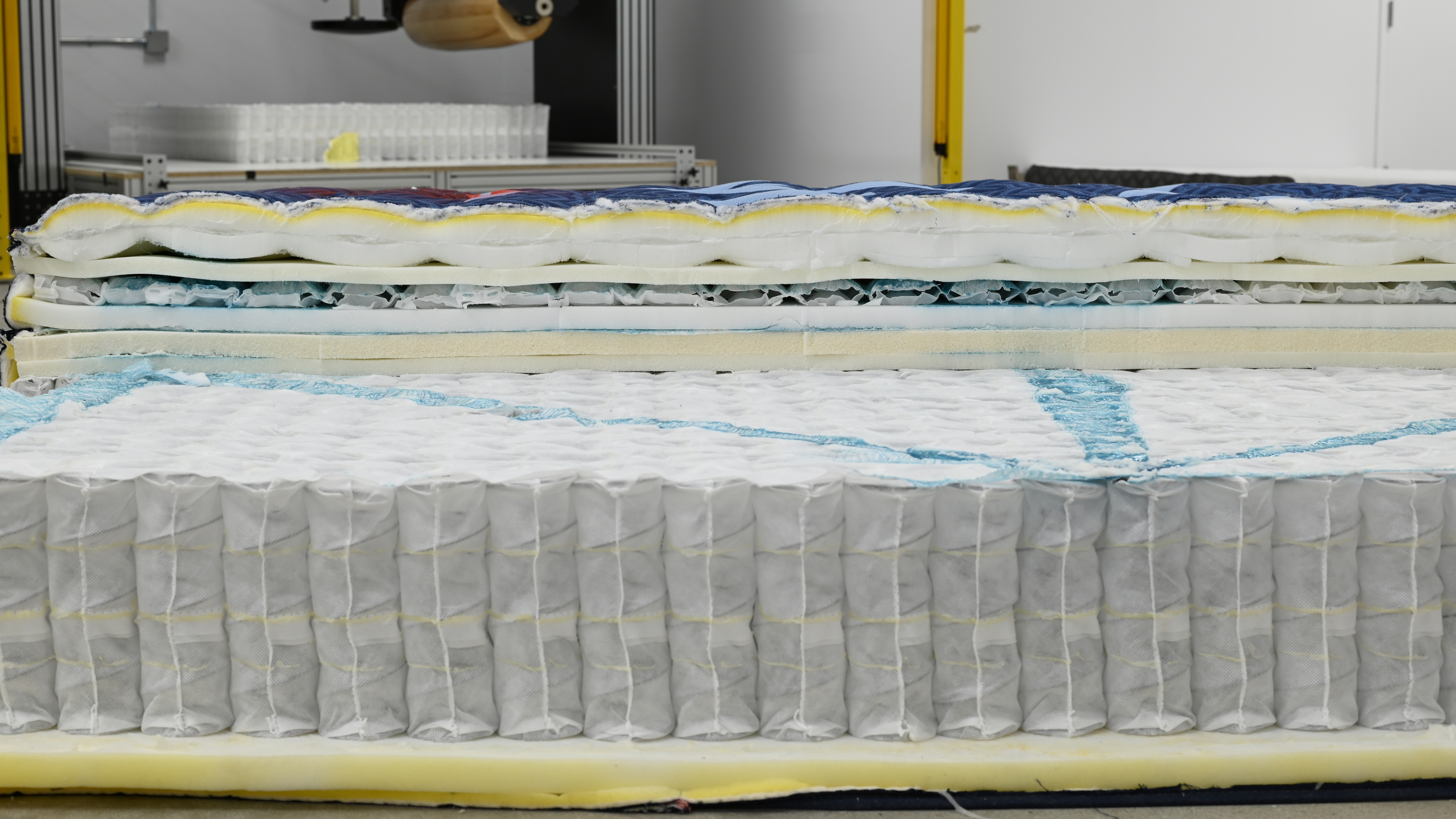
A hybrid mattress is made from a combination of materials, mainly foam and springs, layered to produce a mattress with the benefits of both traditional innerspring and all-foam mattresses.
What Are The Different Layers In A Hybrid Mattress?
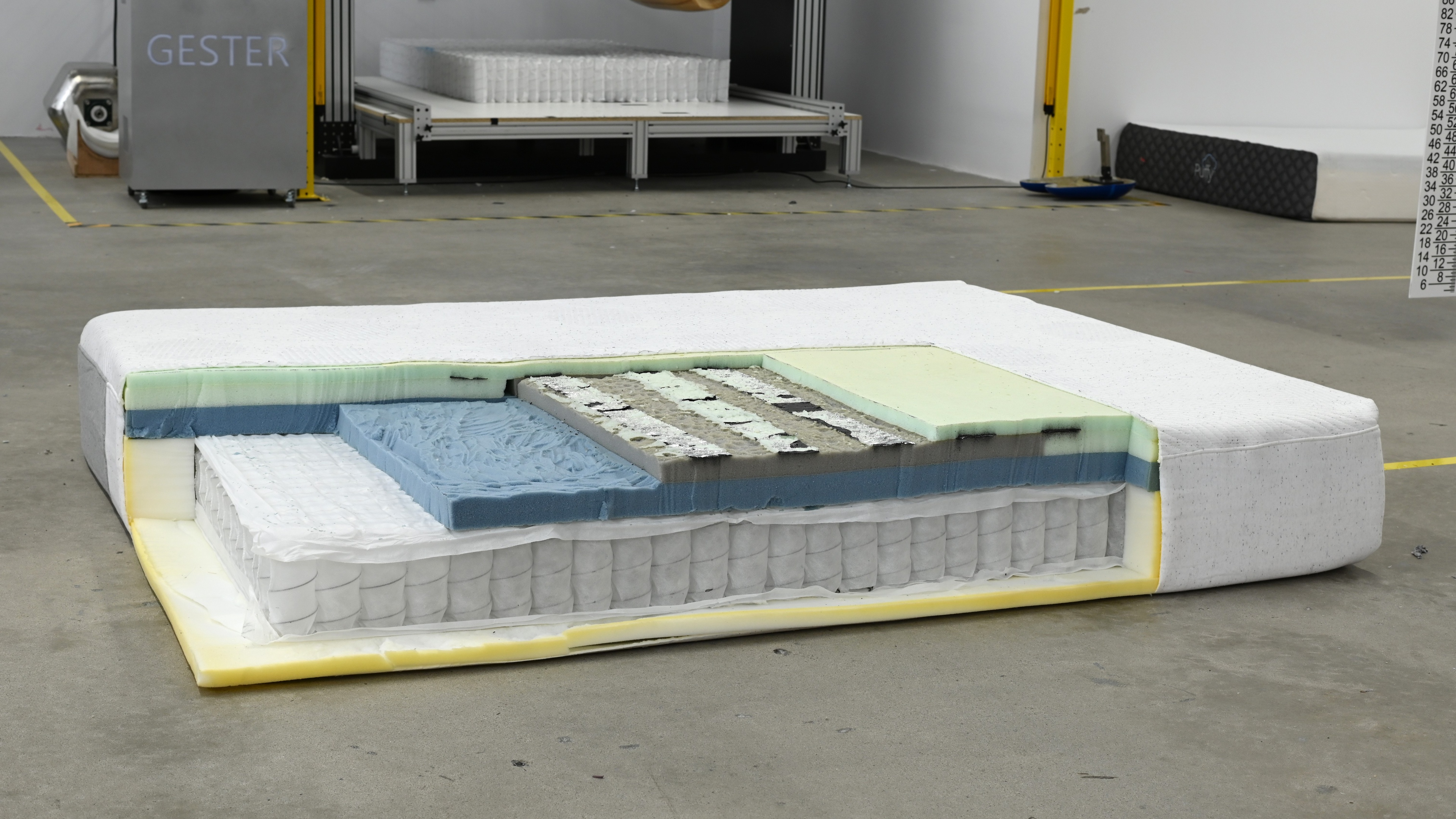
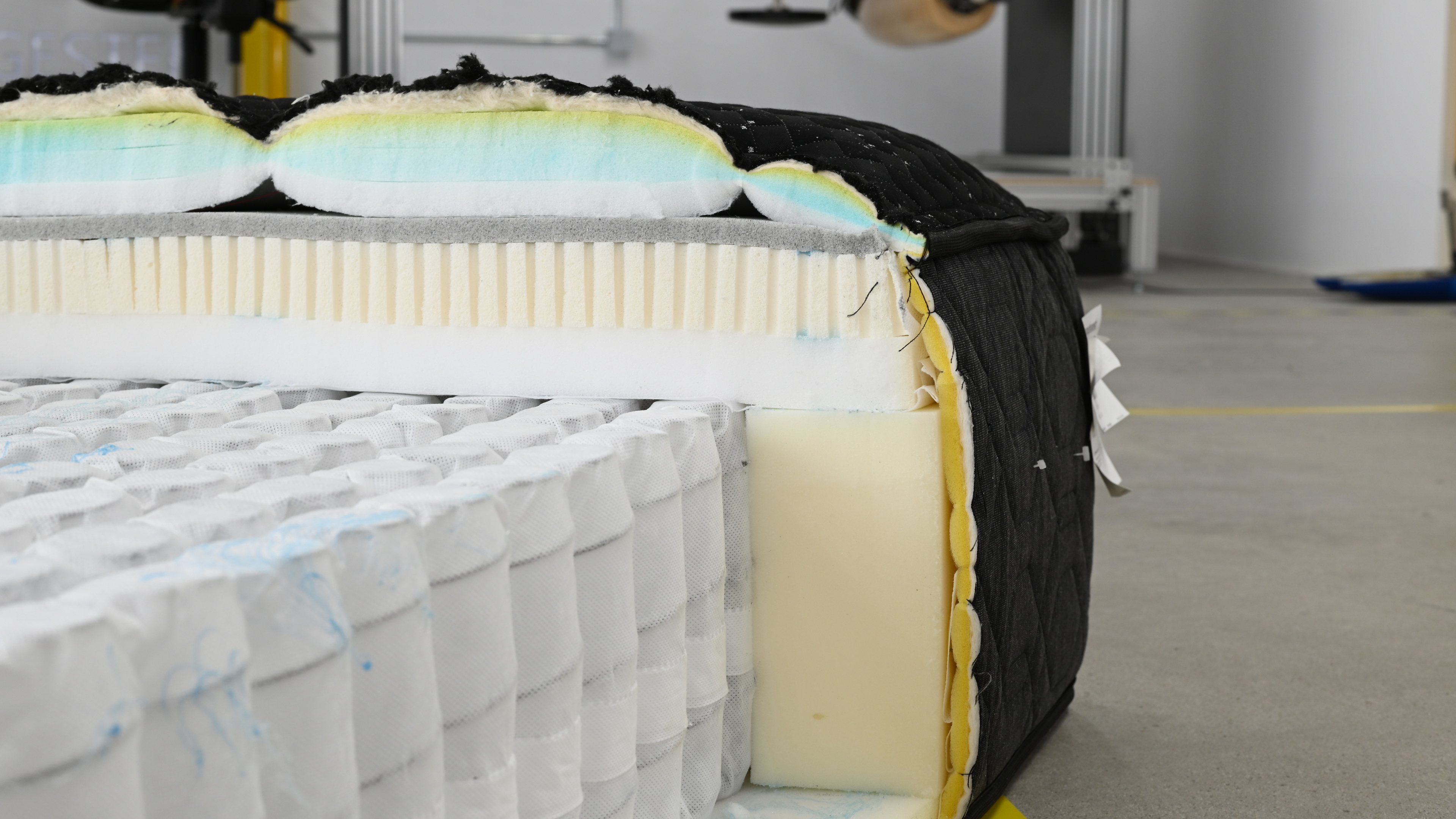
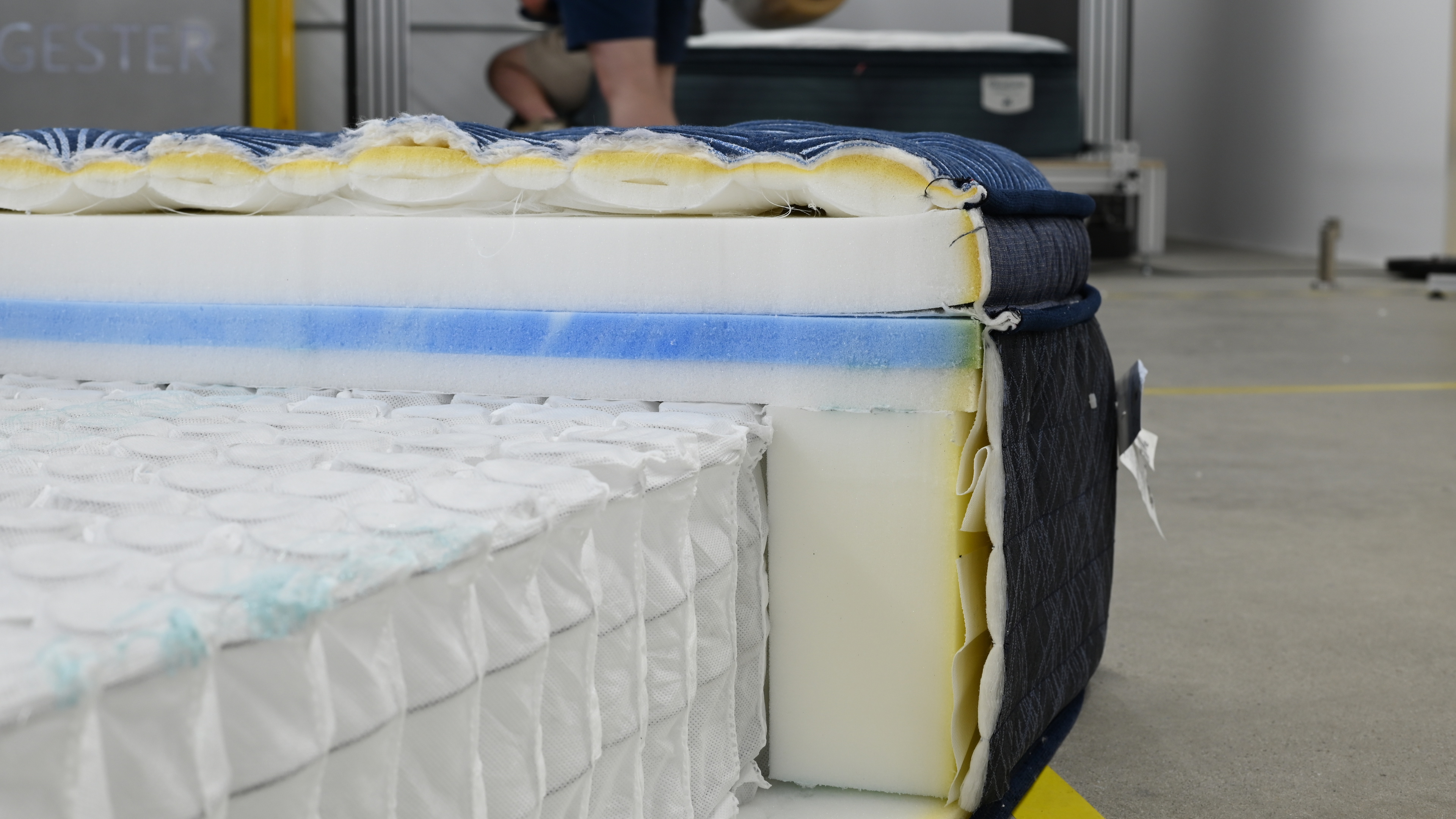
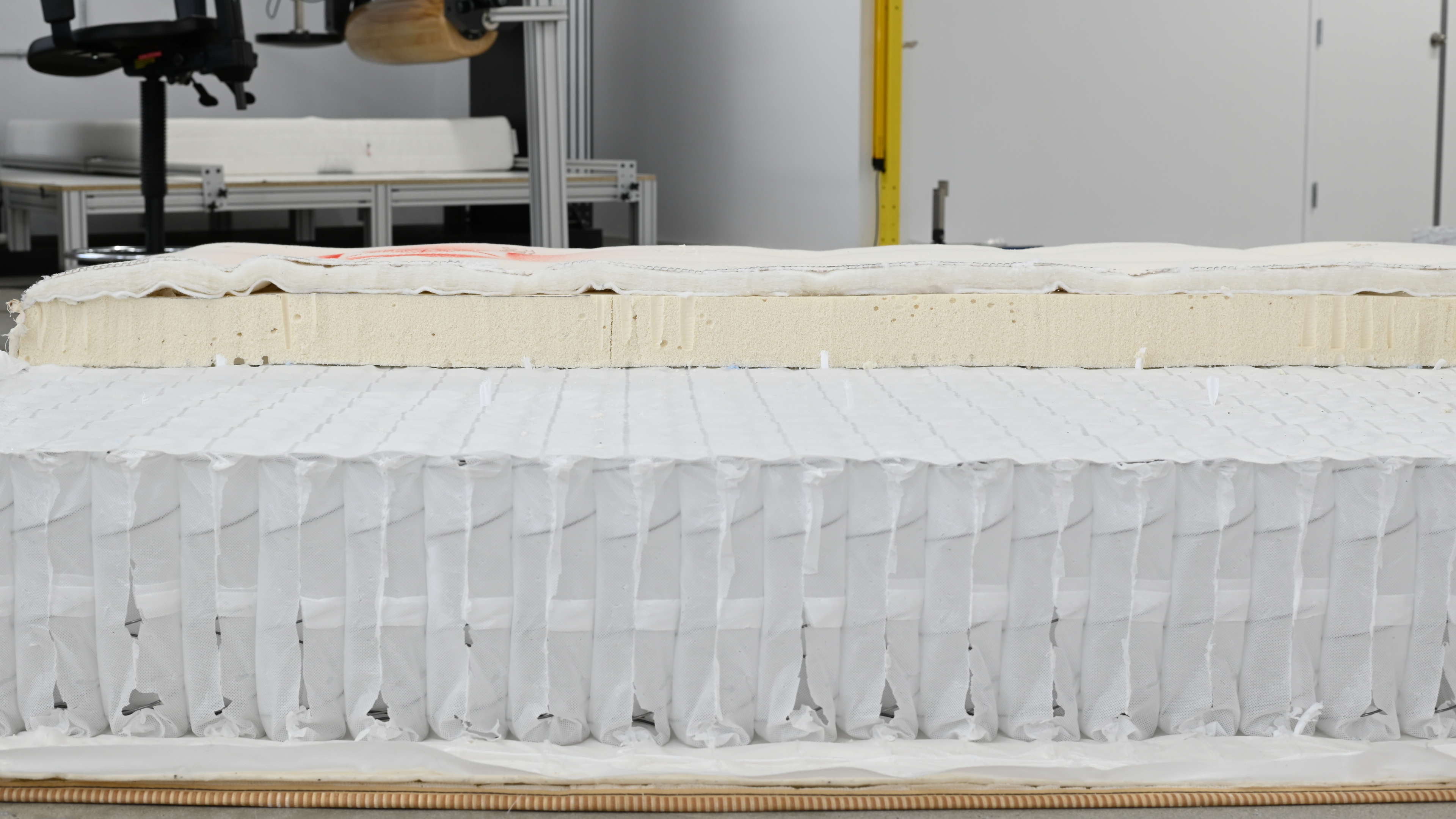
Starting from the bottom, most hybrid mattresses have three main layers: a support layer, a transition layer, and a comfort layer. Typically, the support layer is made of pocket coils, the transition layer is made of polyfoam, and the comfort layer is made of foam, though it can also include micro coils. Of course, with such a wide variety of options on the market, you'll find variations on this design. Some models have a quilted top above the comfort layer, others include both an upper and lower comfort layer, and you may see options that omit the transition layer altogether.
The comfort layer provides cushioning, pressure relief, and support for the recessed parts of your body that don't sink into the mattress. The support layer provides a foundation for the heavier parts of your body that reach past the comfort layer, keeping your spine aligned as you sleep. Between these layers, you can usually find a transition layer. This layer adds stability and acts as a buffer between the comfort and support layers, preventing you from 'bottoming out' if you fully compress the comfort materials.
 |
 |
Hybrid mattresses harness the benefits of the different types of material they use. Since, unlike other types of mattresses, they use both springs and foam, you can feel the benefits of both materials in the end product. The biggest example of this is the balance of pressure relief and support that a hybrid can provide. Put simply, springs offer more robust support than foam, and foam tends to offer better pressure relief and cushioning than springs. If these elements are combined to good effect, you can get the best of both worlds in one mattress.
What Materials Are Used In A Hybrid Mattress?
 |
 |
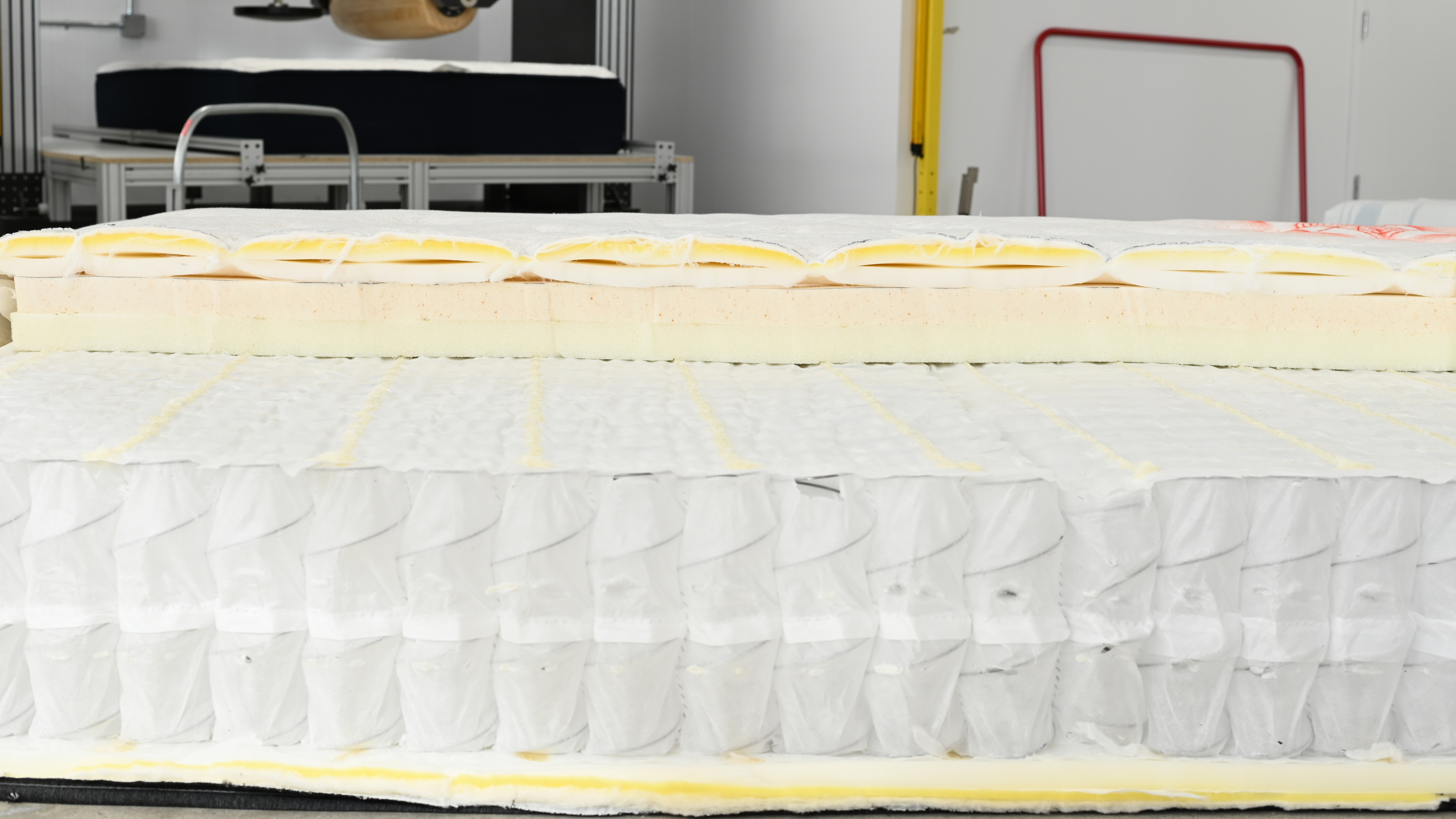 |
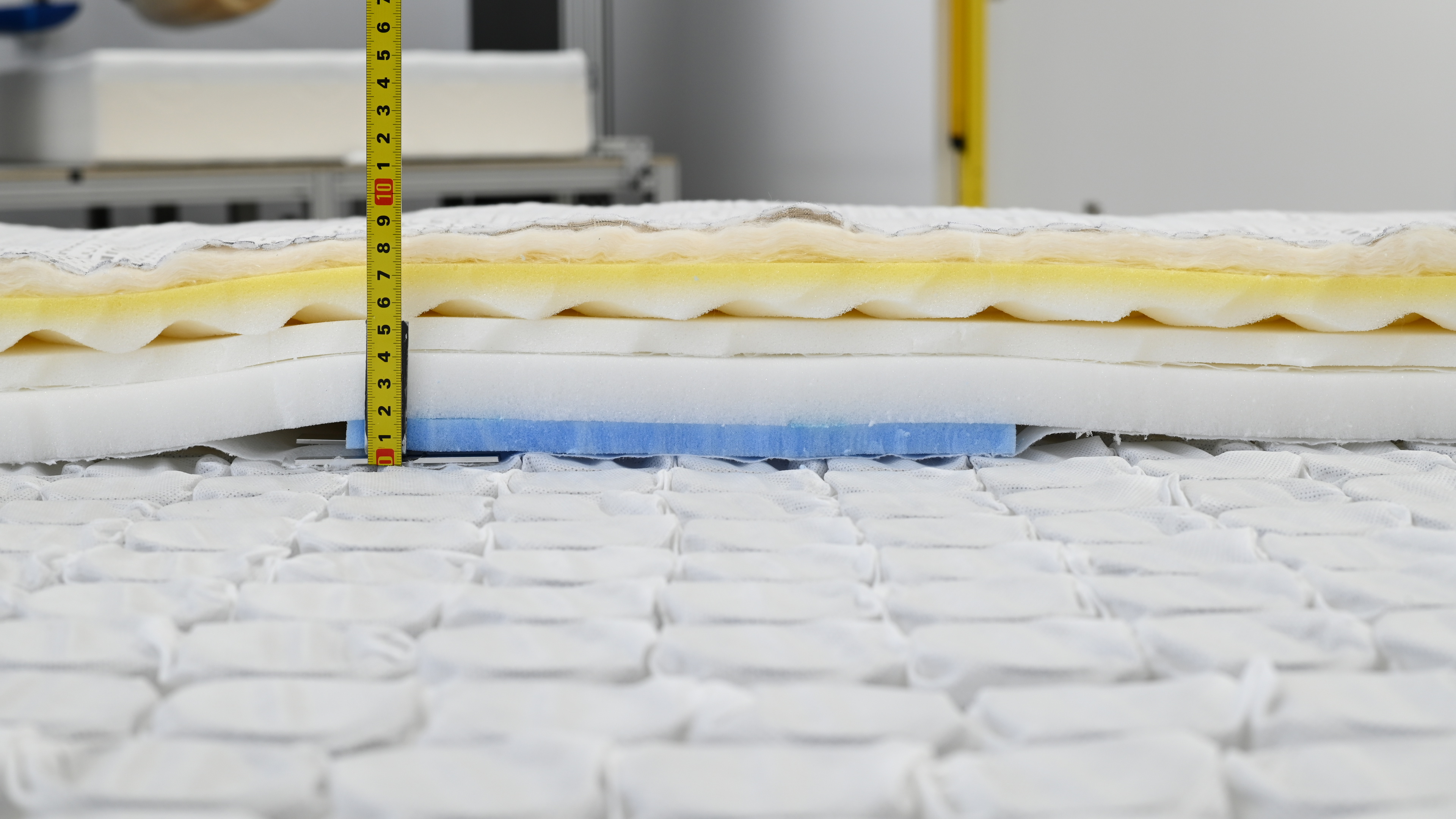
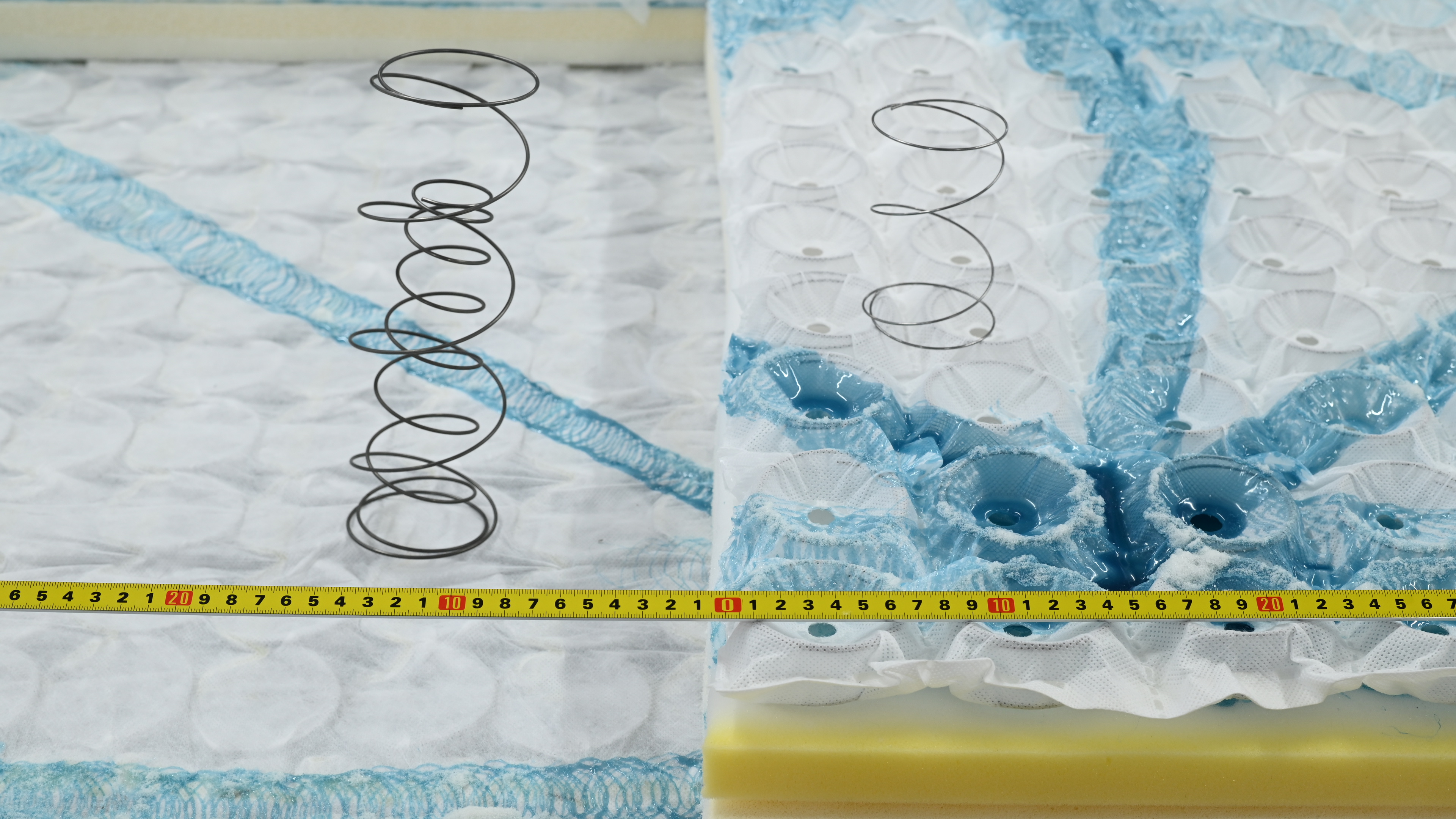
As mentioned, hybrid mattresses mainly use a combination of foam and springs. However, they can also include fiberfill in a quilted top, materials intended for cooling, and other specialty materials.
What Kind Of Foam Is Used In A Hybrid Mattress?
Three main types of foam are used in mattress construction: polyfoam, memory foam, and latex foam. Within these categories, you can find various types and densities, which are used for different purposes and to different effects.
| Polyfoam | Memory Foam | Latex |
| Polyfoam, short for polyurethane foam, is a very common type of foam in mattress construction. It's usually used as a comfort or transition layer in a hybrid mattress, though it's sometimes also used below the springs to add stability. While it can have a range of properties, it tends to be a good choice for people who prefer a fairly responsive or bouncy mattress with light contouring. | Memory foam, originally created by NASA to cushion test pilots, is a type of polyurethane foam with viscoelastic properties, meaning that it's both viscous (slow-moving) and elastic (able to stretch then return to its original shape). It's commonly used as a comfort layer and is a good choice for people who prefer close contouring and low responsiveness. | Latex is a natural material derived from rubber tree sap. It's considered more durable than polyfoam or memory foam and, like polyfoam, can be used in various layers of a mattress. Highly responsive, latex foam offers a lot of bounce and can be quite contouring depending on the type. It's a good choice for people who prefer foam but want a bouncy, buoyant-feeling mattress. |
What Kind Of Springs Are Used In A Hybrid Mattress?
There are a few different types of springs used in mattresses generally, but only three are commonly used in hybrid mattresses: pocket coils, micro coils, and continuous coils.
| Pocket Coils | Micro Coils | Continuous Coils |
| Pocket coils are springs individually wrapped in fabric. Since they aren't connected like continuous coils, they can be compressed independently of one another. This allows for better contouring, less motion transfer, and more specialized support for various parts of the body. Pocket coils make up the support layer in most hybrid mattresses. | Micro coils are small, flexible springs sometimes used in mattresses' comfort layers. Like pocket coils, they're typically individually encased in fabric, so they have similar benefits. They contour the body fairly closely and help avoid motion transfer. | Continuous coils are less common in hybrid mattresses. They're made of one long wire formed into loose coils. The coils are connected by helical (spiral) wires, which keep the coils in place. Compared to pocket coils, they allow much more motion transfer since all the coils are connected. |
What To Consider When Buying A Hybrid Mattress
If you're shopping for a new mattress, you may want to check out our complete mattress buying guide. Since we've covered the process in detail there, here are a few quick things to remember. You can see scores for these aspects in our mattress reviews or simply use this section as a quick guide when shopping in stores.
Firmness
This is a crucial consideration when buying any mattress. Which firmness level you prefer will depend on your sleeping position (or combination of sleeping positions), size, and personal preference.
Lighter people tend to perceive mattresses as firmer because they don't compress the materials as much. On the other hand, heavier people usually find mattresses feel a bit plusher since they compress the comfort layers more.
Regardless of your sleeping position, the main goal is to find something that supports the parts of your body that sink more deeply into the mattress so your spine stays aligned. If you sleep on your back, you should look for a mattress on the firmer end that will support your lumbar area. Similarly, stomach sleepers need a firm mattress to support the abdomen. On the other hand, side sleepers should look for something softer, as a plusher mattress allows the hips and shoulders to sink further down.
Like all mattresses, hybrids can come in a variety of firmness levels. If you're looking for a firmer mattress, try one with a dense layer of lower-gauge coils. If you prefer something softer, look for a thicker layer of soft foam.
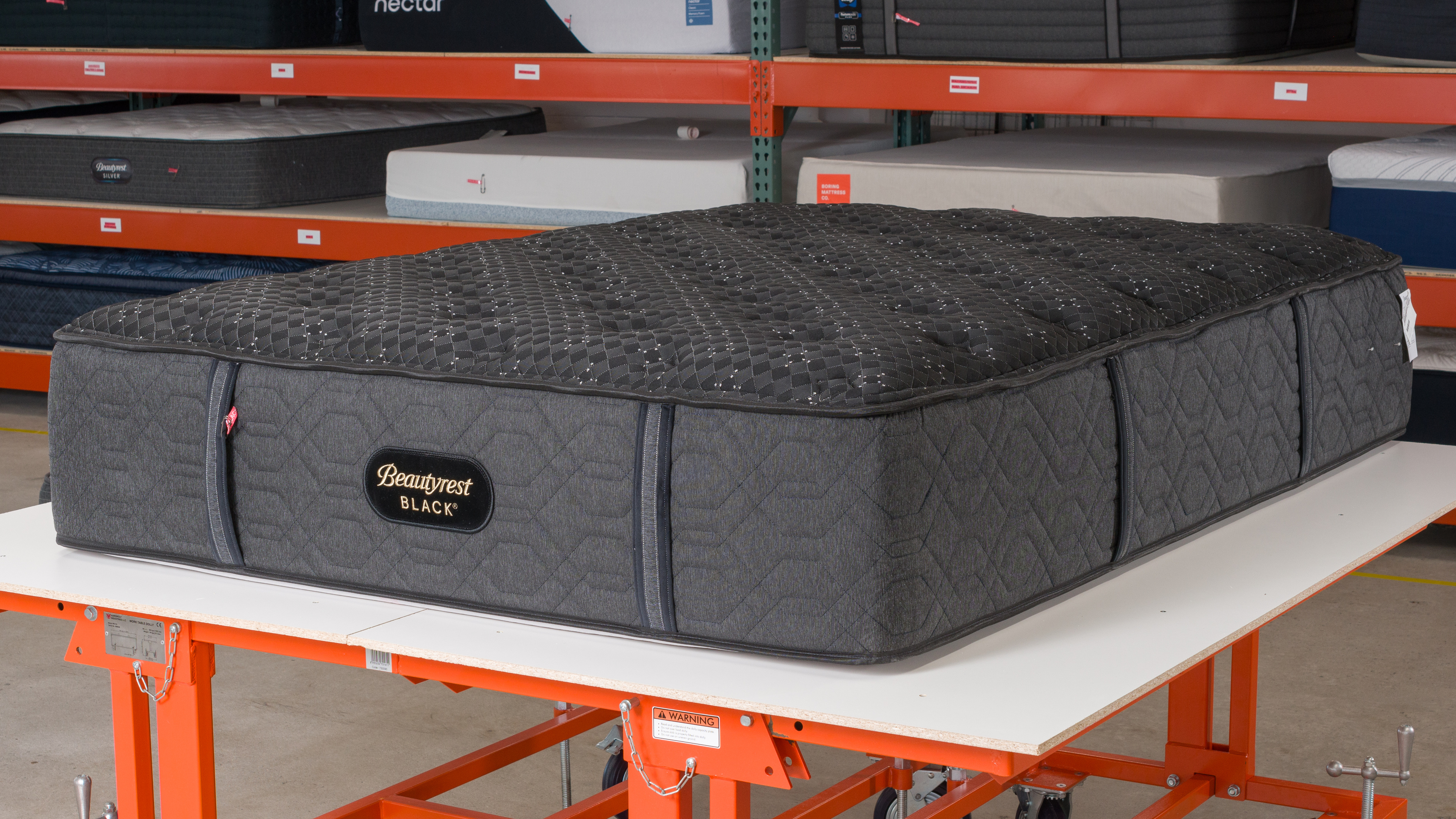
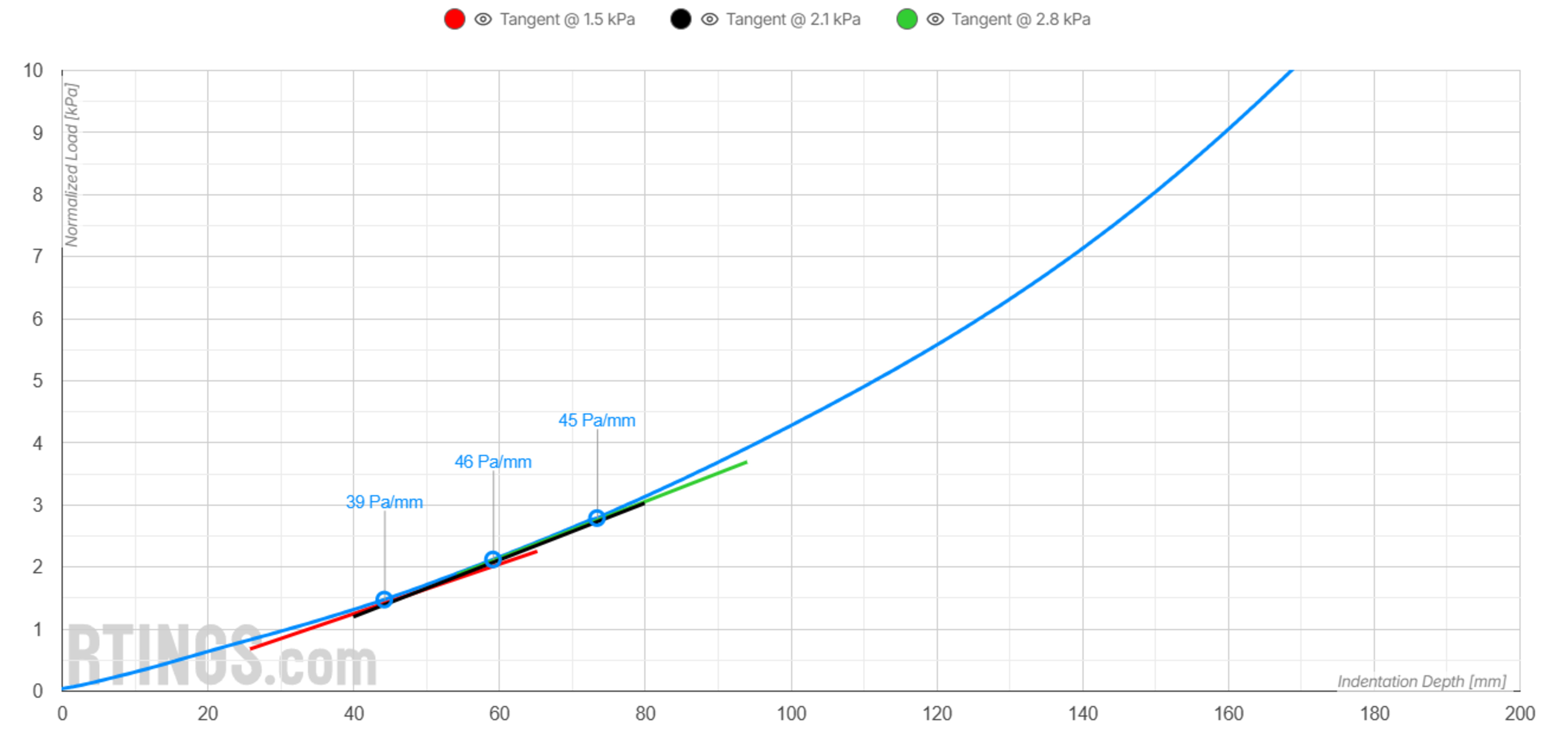
The Beautyrest Black contains foam with soft and medium firmnesses, as well as a layer of 12-gauge pocket springs that aren't particularly dense. This configuration gives the mattress a medium level of firmness, as you can see in the graph below.
Edge Support
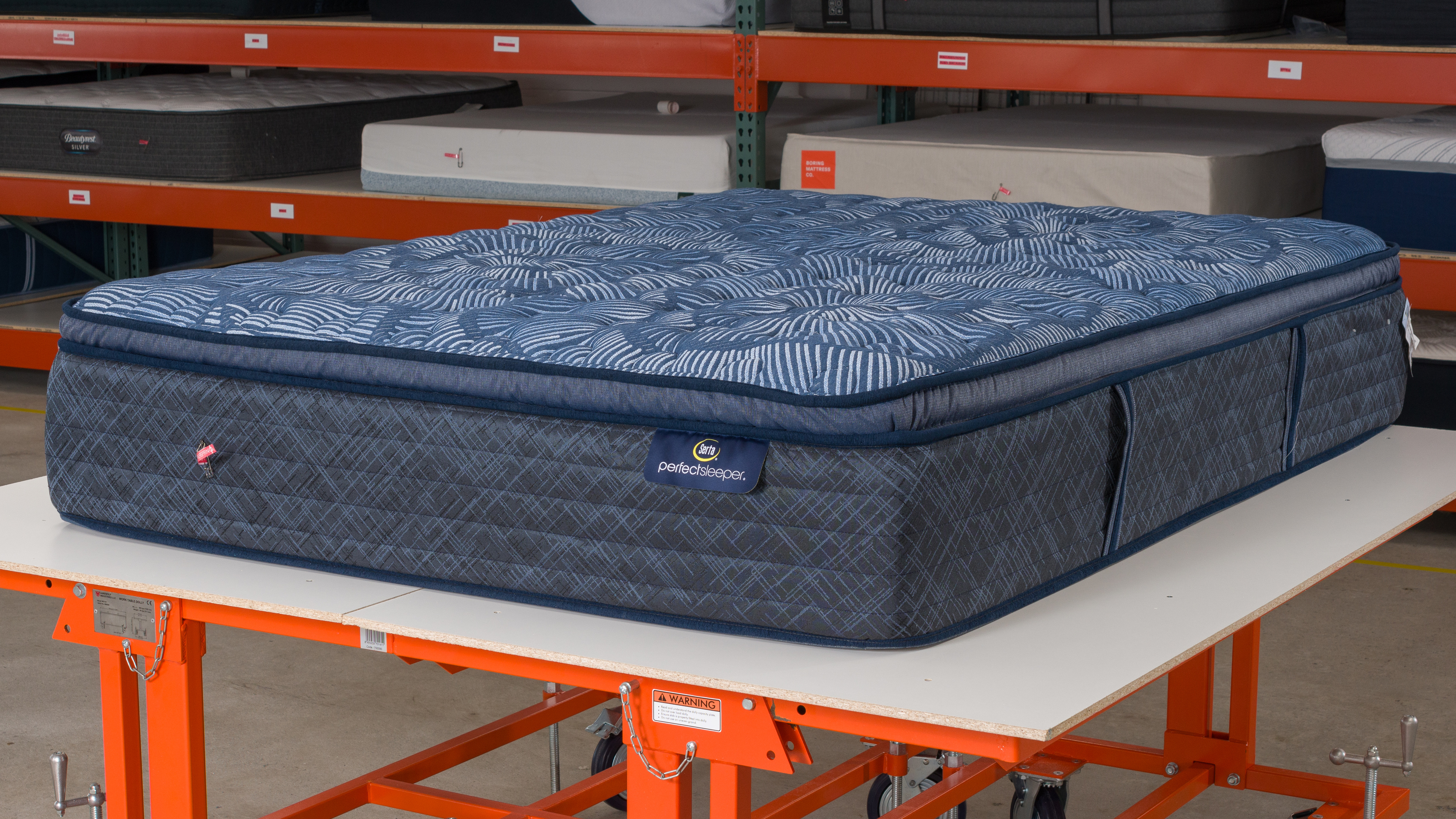
Edge support matters for several reasons. Good edge support makes it easier to get in and out of bed, especially for people with mobility issues. It also makes it possible to sleep near the edge without feeling like you're going to slip off, extending the useable sleeping surface and generally making the mattress more comfortable.
The way a hybrid mattress performs for edge support largely depends on whether it contains an additional edge component and whether that component is foam or springs. Springs offer firmer support, so they also tend to offer good edge support when included in the border, though polyfoam can also perform well.
The Serta Perfect Sleeper Innerspring, a hybrid mattress despite its name, contains a thick portion of polyfoam built into its edges, which gives the mattress excellent edge support.
Motion Isolation & Dissipation
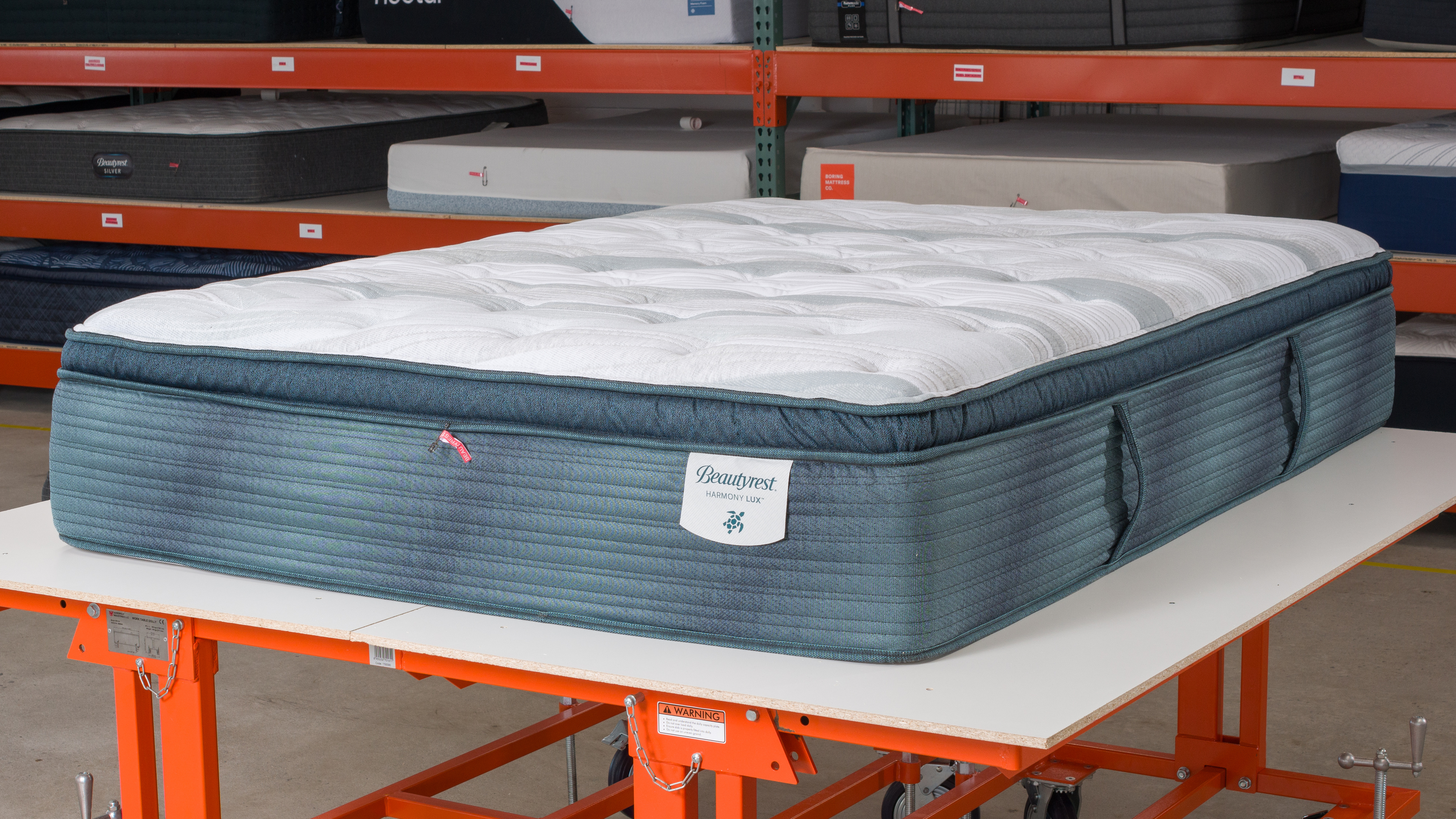
Motion isolation and dissipation are most important to consider if you share a bed. Whether it's a sleeping partner who tosses and turns, a pet who wants to play in the middle of the night, or children who like to wake you up by jumping on the bed, good motion isolation can help you get a good night's sleep or simply minimize disturbances.
Hybrid mattresses are mixed in terms of motion isolation. The layer of springs tends to make them perform worse than foam mattresses in this regard, but the typical inclusion of pocket springs means they perform better than innerspring options.
If you're looking for a hybrid with good motion isolation, consider one with memory foam.
While the Beautyrest Harmony Lux contains polyfoam in its upper comfort layer, its lower comfort layer is made of memory foam, which helps give this mattress its great motion isolation.
Responsiveness
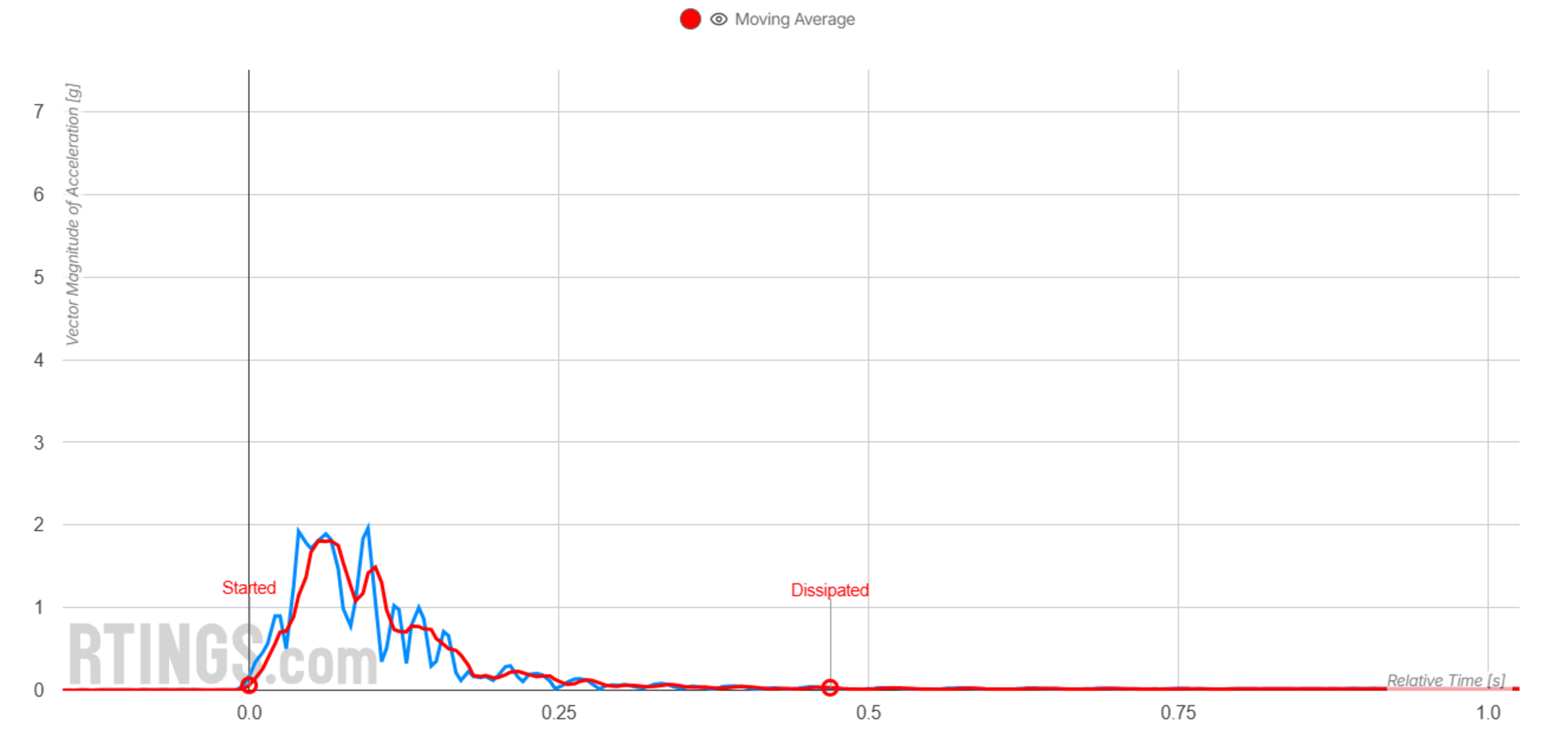
Responsiveness is about how quickly a mattress responds to movement, and whether you like the feeling of a highly responsive mattress or not is very subjective. This aspect often comes into play when we talk about memory foam, which responds very slowly to movement. Some people enjoy the feeling of being hugged by memory foam, while others perceive it as a sensation of being stuck or constrained. Your tendency to toss and turn, change sleeping positions often, or sleep in one position throughout the night will also impact your preference for a responsive mattress.
The combination of foam and springs in a hybrid mattress offer a compromise when it comes to responsiveness. While foam can be quite responsive, springs inherently respond more quickly to movement. This can make it easier to move around or change sleeping positions on a mattress that contains springs, even if they're under a few layers of foam.
If you're looking for a responsive mattress, avoid memory foam and look for polyfoam layers with quick response times, or consider latex, which is naturally very responsive. That said, whether you prefer a highly responsive mattress or not comes down to preference—if you're a fan of memory foam, you may prefer a less responsive option.
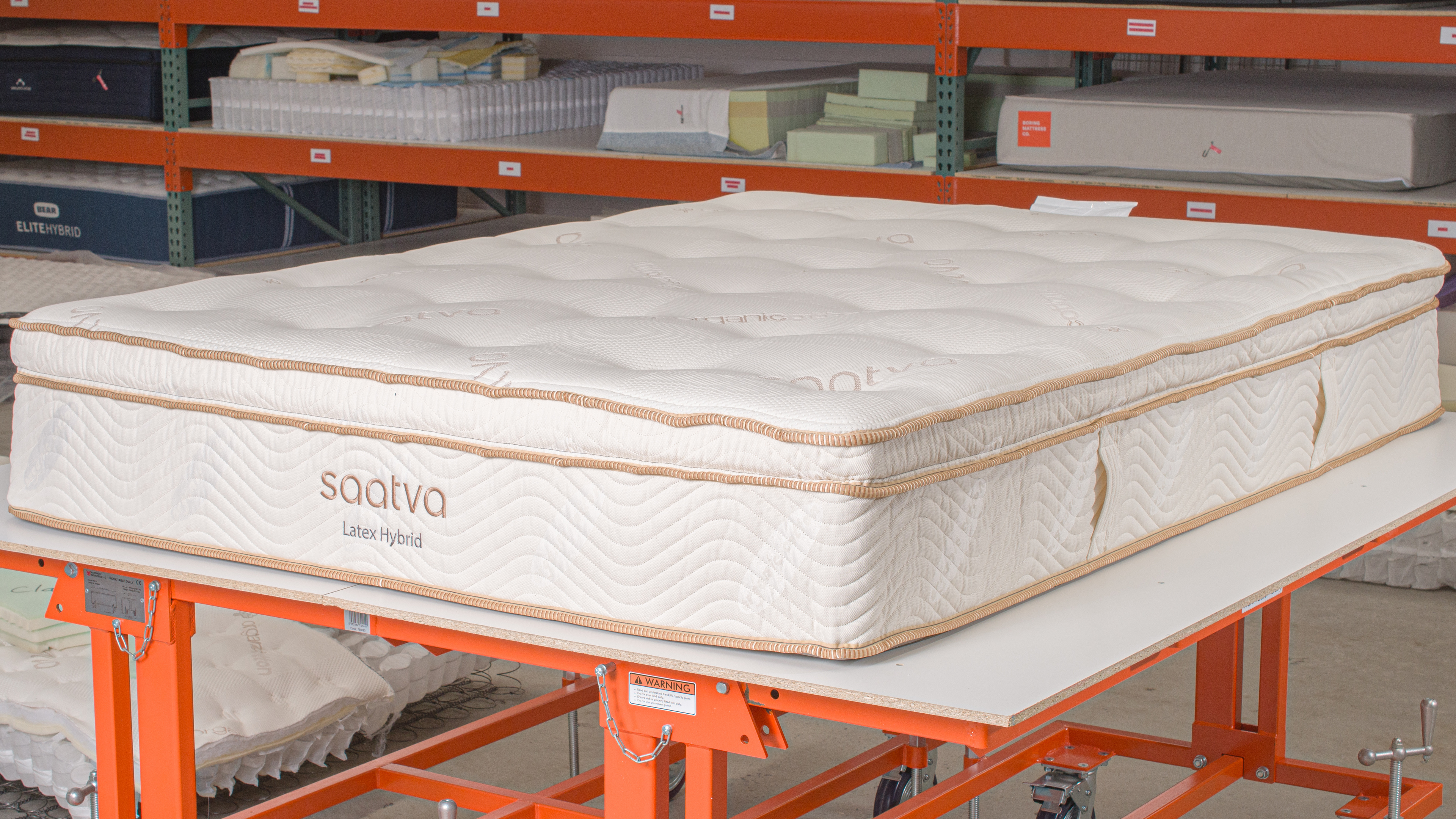
The Saatva Latex Hybrid uses latex for its upper comfort foam, which is very responsive.
Cooling
If you sleep hot, sleep with someone else who does, or live in a hot climate, cooling is likely a priority for you. Luckily, hybrid mattresses can be a good choice for cooling since the spring layer allows more airflow than a foam layer. Of course, not all hybrid mattresses are built the same when it comes to cooling. The materials, construction, and addition of specialized cooling materials can make a big difference in performance.
Since hybrids have a spring layer, they allow more airflow than a model completely made of foam. This allows more heat to dissipate throughout the night, leaving you cooler overall.
If cooling is a priority for you, consider an option without memory foam, which tends to trap heat; try latex, which is naturally cooling, or look for other cooling features that may be advertised by the manufacturer, like a cooling cover.
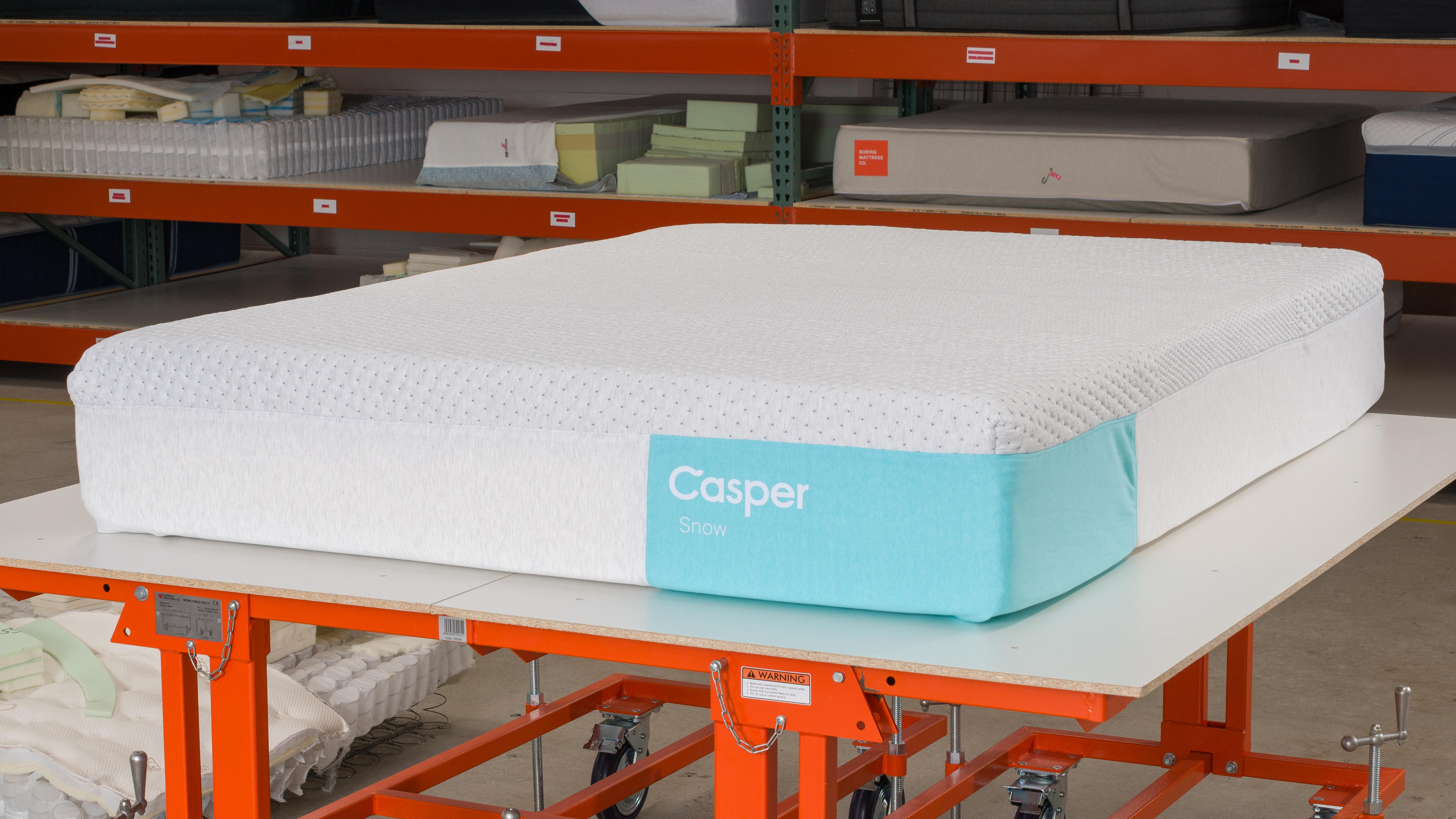
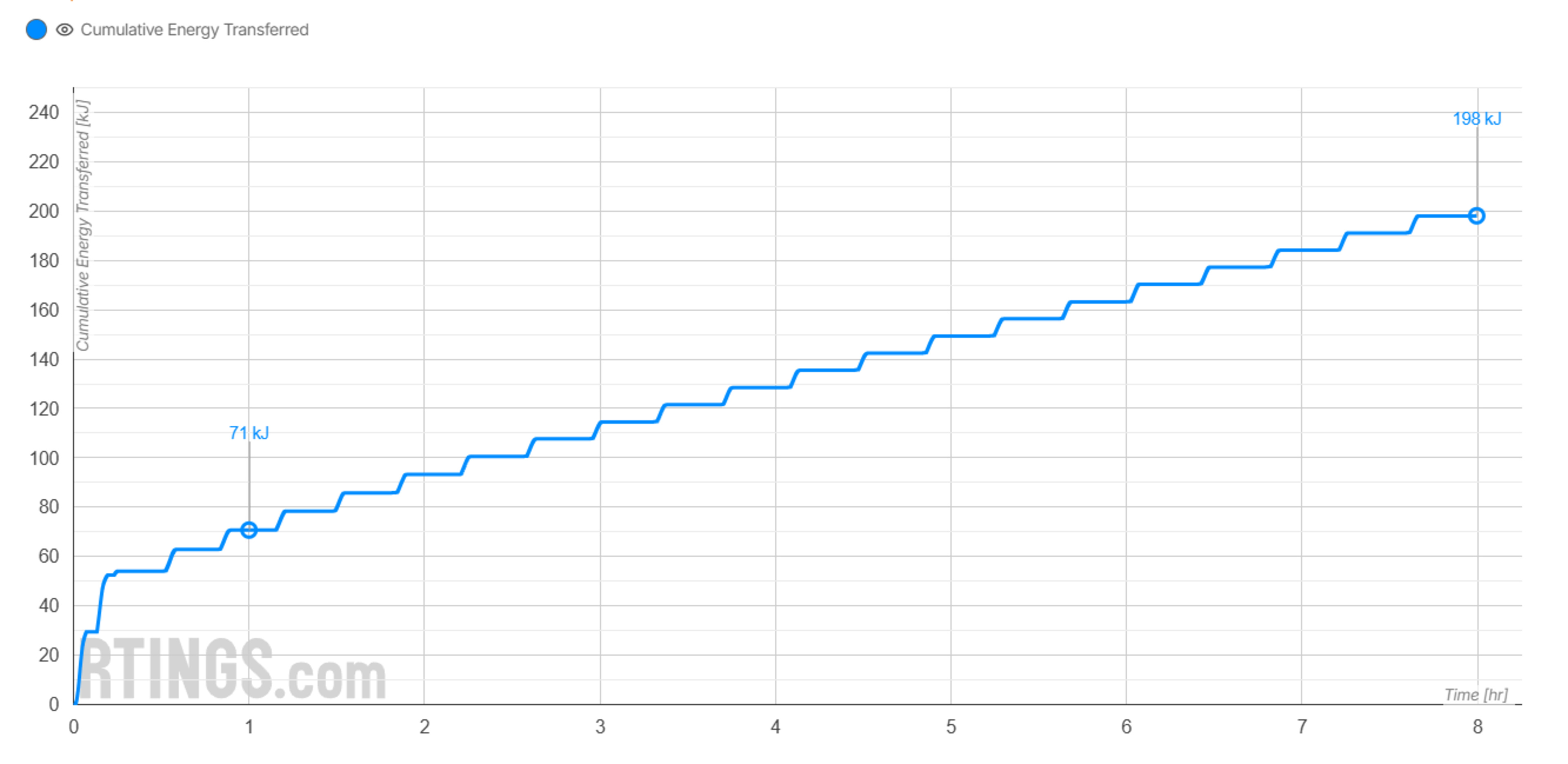
While the Casper Snow actually contains two layers of memory foam, it's still very cooling. The airy spring layer combined with the manufacturer's additional cooling technologies likely explains its excellent cooling performance. It dissipates a lot of heat both during the first hour of sleep and throughout the night, making it an ideal fit for people who tend to get hot while they're falling asleep or who often wake up overheated.
Conclusion: Who Is A Hybrid Mattress Best For?
Hybrid mattresses use various materials and come in a range of firmness levels. They're marketed towards people with back pain, plus-sized individuals, people who sleep hot, eco-conscious consumers, and even athletes. While some of these claims may or may not hold up, there are hybrid mattresses available that suit a wide range of consumers.
Thanks to their balance of cushioning and support, hybrids can suit back, stomach, and side sleepers, depending on the firmness level. This construction also makes them a good choice for combination sleepers who switch positions throughout the night. This versatility, combined with decent motion isolation, makes them a good choice for couples, especially when each partner has a different sleep style. Finally, they're a good choice for hot sleepers since the spring layer helps dissipate heat.
They also tend to be quite expensive and heavy, so if you're shopping on a budget or need to move your new mattress without help, you may want to consider another type.
Should I Use A Box Spring With A Hybrid Mattress?
No, you shouldn't use a box spring with a hybrid mattress. As the name suggests, box springs are big wooden boxes filled with springs and covered with fabric. They're meant to sit directly under a mattress of the same size to add support and increase airflow, thus prolonging the life of a traditional mattress. Hybrid mattresses, however, are built differently than the typically lighter and more flexible mattresses of the past. Their heavy builds require a solid, sturdy foundation instead. Most sources recommend a platform bed, mattress foundation, or wooden slats as a base for hybrid mattresses. Some hybrids are also compatible with adjustable beds. Be sure to check with your mattress manufacturer, as your warranty may specify that you must use a particular type of bed base.
Should I Flip A Hybrid Mattress?
No, you shouldn't flip a hybrid mattress. Since hybrids are constructed in layers, with the firmer support layers on the bottom and softer comfort layers on top, flipping them would invert this design, leaving you with a very uncomfortable sleep (and most likely a voided warranty). Most sources, however, recommend rotating your mattress every three months, so the area where your head usually is moves to the foot of the bed. This helps prolong the life of your mattress.
How Much Does A Hybrid Mattress Cost?
Prices for hybrid mattresses vary significantly. You can find models for as little as $150 USD and as much as $5,000 USD or even more. Typically, however, they're priced in the $1,000-$3,000 USD range. A more expensive mattress isn't necessarily better; choosing an option that fits your sleeping style, body type, and preferences is more important.
How Long Will A Hybrid Mattress Last?
Most sources agree that a hybrid mattress should last between seven and ten years, but this isn't always the case. Materials, construction, quality control, and how you use a mattress can all significantly impact its lifespan.