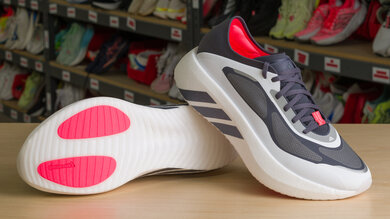
The adidas Hyperboost Run is a very good daily trainer for runners who want one well-cushioned shoe for everyday miles and long runs. It's the less expensive, lower-stacked sibling of the max-cushioned adidas Hyperboost Edge. Both shoes feature the same foam, which provides great cushioning and energy return, but the Hyperboost Run's lower stack height makes it more stable. The shoe has the versatility to handle all kinds of training runs, but it's a bit too heavy for racing, and the thick upper doesn't breathe especially well, so it can get uncomfortable in hot or humid weather.
| ✅ Buy If: | ❌ Skip If: |
|---|---|
| You want one lively, cushioned shoe for most of your weekly miles. | Your feet get sweaty very easily. |
| You want a bouncy ride that still feels stable underfoot. | You want a lightweight shoe for racing. |
Our Verdict
The adidas Hyperboost Run is a good marathon option if you're aiming to finish comfortably rather than set a PB. Its impressive cushioning holds up well over the marathon distance, and the lively foam returns enough energy to help you hold a steady race pace. However, it's heavier than a dedicated racing shoe, and it doesn't have the responsive push-off of a carbon-plated racer.
Lively foam returns a lot of energy.
Deep cushioning protects your legs over long distances.
Too heavy to feel efficient at race pace.
The adidas Hyperboost Run is an okay choice for 5K and 10K racing. The energetic foam helps when you pick up the pace, but the shoe is too heavy to feel efficient at fast paces, and the midsole feels too soft when you're pushing hard.
Lively foam returns a lot of energy.
Too heavy to feel efficient at race pace.
Soft forefoot dulls push-offs.
The adidas Hyperboost Run is a good shoe for long runs. Its cushioning protects your legs and maintains its shock absorption well over long distances. The stable platform also helps keep your stride steady as you tire, and the energetic foam helps you sustain momentum. The shoe can start to feel heavy on tired legs, though.
Deep cushioning protects your legs over long distances.
Firm heel keeps the ride steady.
The adidas Hyperboost Run is a very good daily trainer. It combines great cushioning and lively energy return with a steady, predictable ride that makes it a reliable everyday companion. The thick upper is well padded, but not very breathable, so it might be less comfortable if you live in a hot climate.
Lively foam returns a lot of energy.
Firm heel keeps the ride steady.
Changelog
- Updated Nov 10, 2026: Review published.
- Updated Nov 03, 2026: Early access published.
- Updated Oct 26, 2026: Our testers have started testing this product.
- Updated Oct 22, 2026: The product has arrived in our lab, and our testers will start evaluating it soon.
- Updated Oct 02, 2026: We've purchased the product and are waiting for it to arrive in our lab.

We've bought and tested more than 300 running shoes. Every pair purchased with our own money, never supplied or sponsored by brands. Our data-driven tests are designed to go beyond marketing claims, and since every shoe goes through the exact same methodology, you can directly compare results to find the right pair for your needs.
Test Results
Design


The adidas Hyperboost Run weighs virtually the same as the adidas Hyperboost Edge, despite having a lower stack height. It's a comfortable weight for an everyday trainer.


The midsole uses adidas' PEBA-based Hyperboost Pro foam, the same compound found in the adidas Hyperboost Edge. It's efficient both at absorbing impact and returning energy.

The adidas Hyperboost Run uses standard flat laces with a moderate amount of stretch. Unlike the Hyperboost Edge, this shoe features an extra eyelet so you can tie a heel-lace lock.
Energy Return
The adidas Hyperboost Run has great energy return. Both the heel and forefoot give back a lot of the energy you put into them, so the ride feels lively and efficient at a range of paces.
Lively foam returns a lot of energy.

The forefoot is nearly as lively, adding a noticeable rebound at toe-off, although it's well behind the adidas Adizero Evo SL.

The heel returns a lot of energy, so heel landings feel lively and help carry you into the next stride. It's significantly more energetic than the ASICS NOVABLAST 6.
Stability
The adidas Hyperboost Run has good stability. The heel is firm enough to keep heel landings steady, and the wide platform provides a steady base throughout your stride. The forefoot is softer, though, and feels less stable as you push off.
Firm heel keeps the ride steady.
Soft forefoot dulls push-offs.

The forefoot is softer, so it gives under load and feels less solid when you push off hard.


Cushioning
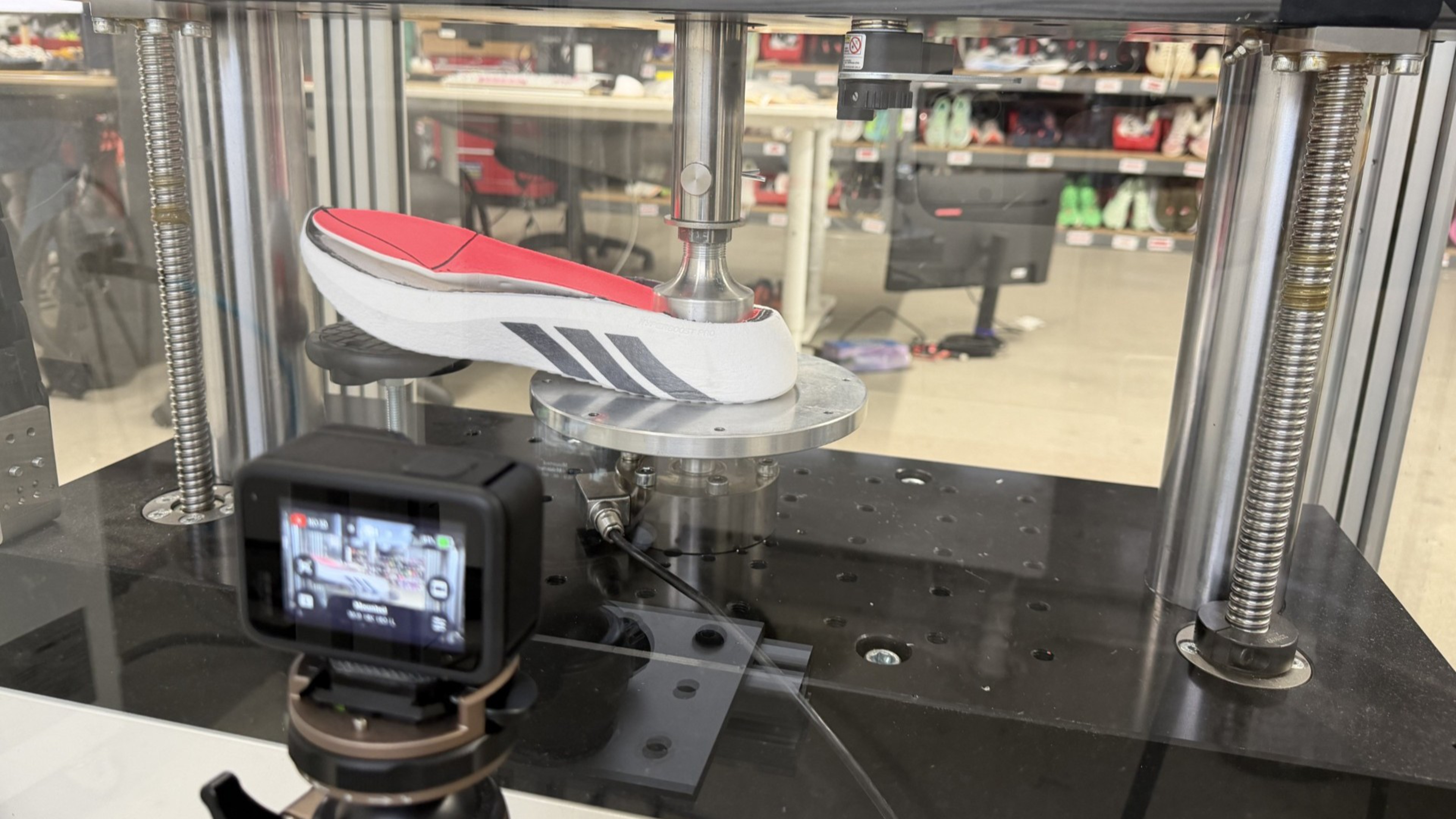
The adidas Hyperboost Run has great cushioning. The heel does an excellent job absorbing the most forceful impacts, so this is a great shoe for heavier heel strikers. Forefoot strikers also get amazing impact protection, and although the cushioning loses some of its plushness as the miles add up, it still does a good job over long distances.
Deep cushioning protects your legs over long distances.


The heel absorbs impact impressively well, even on harder landings. At lower force levels, it's less absorbent than the ASICS NOVABLAST 6, but at higher force levels, the Hyperboost Run is more protective, making it a good shoe for heavy heel strikers.


The forefoot has excellent impact absorption, and lighter runners will barely feel the impact of the road. The cushioning is better than the higher-stacked ASICS NOVABLAST 6.

The forefoot loses a lot of its absorbency in the first 10K of a run, and becomes increasingly compressed through 20K. The adidas Hyperboost Edge is much better for long run cushioning.
Wet & Warm Weather
The adidas Hyperboost Run does okay in wet and warm weather. It doesn't absorb much water, so it doesn't get too heavy or waterlogged in the rain, but it still takes a very long time to dry. It's also not very breathable, so your feet will get quite hot on warm days.
Absorbs little water when running in the rain.
Upper is not that breathable.
Takes over a day to fully dry after getting soaked.


The upper only lets a moderate amount of air through, so your feet might get very sweaty on long runs or hot days. Compared to the adidas Adizero Evo SL, it's much less breathable.


Bounciness
The adidas Hyperboost Run has decent bounciness. The midsole doesn't sink in especially deep, but it returns most of the energy from each landing, so there's a noticeable spring without a mushy feel.
Lively foam returns a lot of energy.


Snappiness
The adidas Hyperboost Run has a fair amount of snappiness. The forefoot resists bending decently and returns a fair amount of energy as it unbends, but the soft forefoot foam takes some of the snap out of toe-offs.
Forefoot resists bending for a solid push-off.
Soft forefoot dulls push-offs.


The forefoot does a satisfactory job resisting bending, giving you a decent lever for pushing off.


Roll
The adidas Hyperboost Run has a decent roll-through stride. The forefoot rocker gives you a bit of a nudge forward at toe-off, but the heel bevel is more subtle, so heel strikers get less help from landing to midstance.
Forefoot rocker helps roll you forward.
Heel rocker is too flat to help heel strikers roll smoothly.

The rocker holds its shape decently well under load, though it starts to flatten when you push off hard, limiting how smooth the ride feels at faster paces.

The adidas Hyperboost Run sits lower to the ground than the adidas Hyperboost Edge, which contributes to its stability. The moderate heel-to-toe drop can accommodate most foot strike patterns.

True To Size
The adidas Hyperboost Run fits true to size, so most runners can stick to their usual size. The length is spot on, and there's plenty of room across the forefoot and through the arch. The toe box sits a little low, though, and there's no wide version.
Length is true to size.
Roomy forefoot and arch.
Low toe box can press on tall toes.


Popular Running Shoe Comparisons
The adidas Hyperboost Run is a lively, well-cushioned trainer that offers a lower-stacked alternative to the adidas Hyperboost Edge. Both shoes use the same bouncy, protective foam and weigh virtually the same, but heavier runners or those who land with more force might prefer the more deeply cushioned Hyperboost Edge. If you want the same well-balanced combination of cushioning, energy return, and stability, but with a more breathable upper, check out the Saucony Endorphin Azura. If you're less concerned with stability and you want a lighter, more responsive shoe, get the adidas Adizero Evo SL.
For more options from the three stripes, check out our recommendations for the best adidas running shoes. If you're looking for more cushioning, see our recommendations for the best cushioned running shoes. If you're open to other brands, see our picks for the best running shoes overall.
The adidas Hyperboost Edge is the better-cushioned sibling of the adidas Hyperboost Run. Both shoes are about the same weight, but the Edge's taller stack allows it to absorb more impact, so runners who land with a lot of force will be better protected. Conversely, the lower stack of the Run makes it more stable, so it's the better choice for runners who prioritize a steady ride. The Edge has a higher retail price, so runners who don't need as much cushioning will be fine with the Run.
The adidas Adizero Evo SL is a lighter, livelier shoe than the adidas Hyperboost Run. Both shoes have great energy return and cushioning, although the Evo SL has the advantage in the former, and Hyperboost Run has the advantage in the latter. If you're concerned about stability, though, the Hyperboost Run is the much safer choice.
The Dynafish Xiaonian is a lighter, better cushioned shoe than the adidas Hyperboost Run. The Dynafish also has a much more breathable upper, which keeps it comfortable in hotter temperatures. But the firmer midsole and lower stack of the adidas shoe makes it more stable and secure.
The adidas Hyperboost Run is a bouncier, better-cushioned shoe than the cheaper, similarly named adidas Boost Run. Both shoes have great energy return, and can handle faster workouts, but the Hyperboost Run is a much better shoe if you plan on doing long runs, thanks to its more advanced cushioning. But if most of your runs are under 10K, the Boost Run's lower price tag makes it a sensible choice.
Differences Between Sizes And Variants
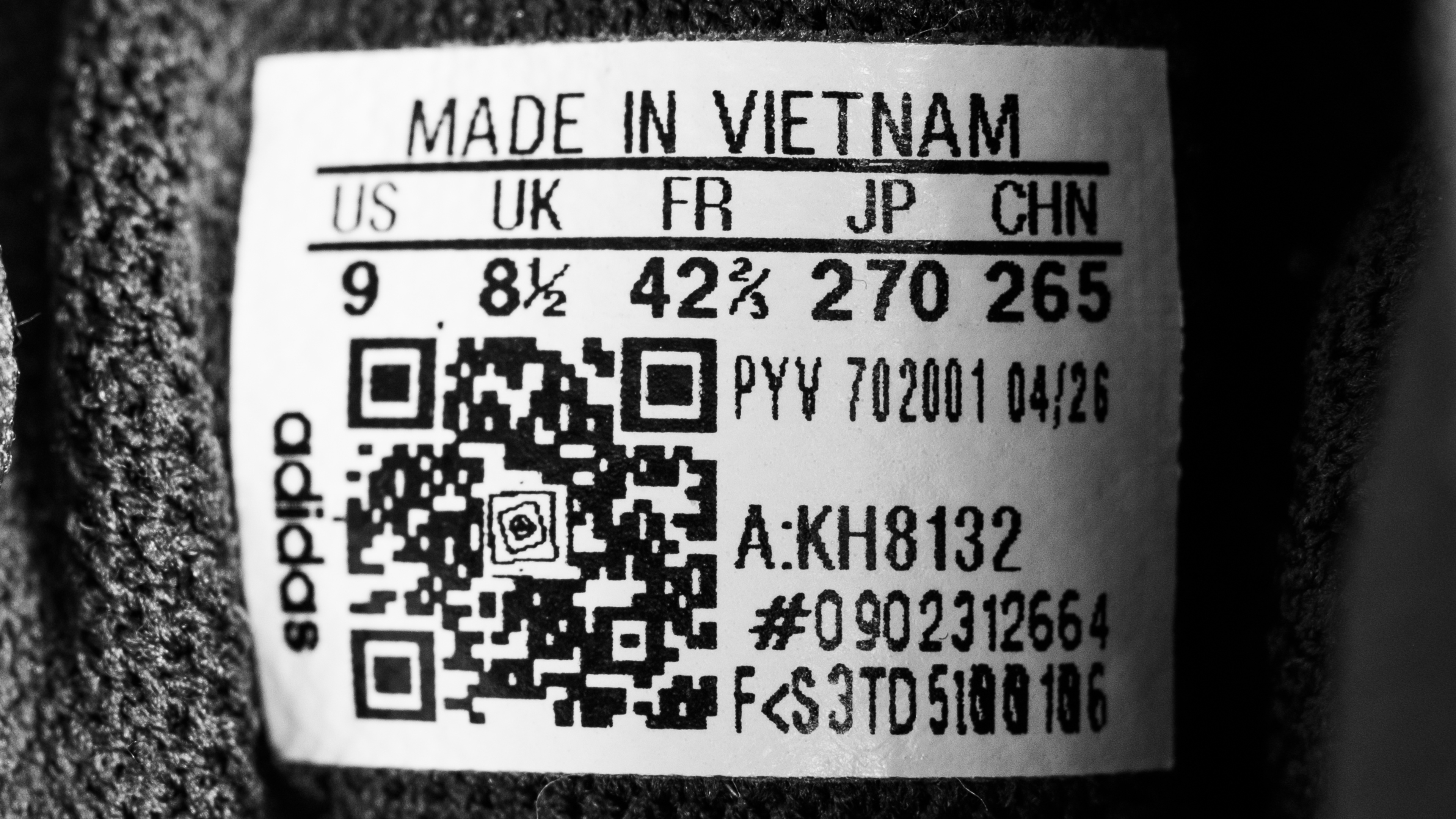
We bought and tested the adidas Hyperboost Run in a men's U.S. size 9, as noted on the label for our pair. The pair we purchased is the Cloud White / Aurora Onix / Solar Turbo colorway, with additional color options expected to release in the near future, depending on the region. Both the men's and women's versions are only available in a standard width. The design section applies only to the exact model we tested, but we expect other sizes to perform similarly.