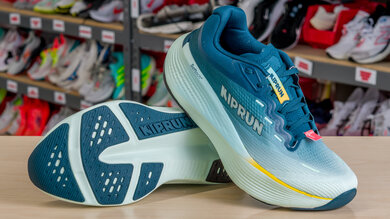
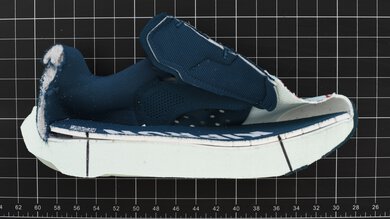
The Kiprun Kipride Max is a premium trainer from Decathlon's in-house running brand, built for easy miles, long runs, and daily training. Compared with the Kiprun KS900 2, which the brand marketed as a cushioned road shoe but which underdelivered in that area, this version feels like a grand slam. It has a much more serious MFoam+ midsole made from an EVA and PEBA-based blend, giving it plenty of underfoot protection and making it much better suited to longer distances. The padded upper also adds to its comfort-first feel, while the broad platform and straightforward geometry help keep the shoe steady and predictable. It's a genuinely cushioned daily trainer for runners who want a plush but stable shoe for logging regular mileage, with enough refinement to move well beyond the entry-level image often associated with Decathlon and hold its own against most premium trainers on the market.
Our Verdict
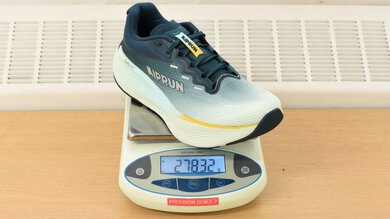
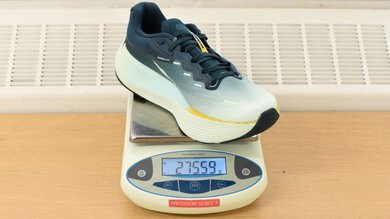
The Kiprun Kipride Max isn't designed as a race-day super shoe. That said, its excellent cushioning, very tall stack, and stable platform give it the protection needed for marathon-length efforts, especially for runners who prioritize comfort over speed. However, its heavier build, moderate energy return, and lack of a plate keep it from feeling efficient, aggressive, or propulsive, so it works more as a protective long-run shoe that can survive a marathon than as a true marathon racing option.
Tall stack height.
Stable platform.
Substantial weight.
Limited energy return for faster efforts.
No plate.
The Kiprun Kipride Max isn't a good fit for short-distance racing. Its forefoot has some structure, which helps keep transitions from feeling overly mushy, but the shoe is too heavy and not energetic enough to feel quick for 5K and 10K efforts. It can handle occasional strides during regular training, but runners looking for a snappy, aggressive, or race-focused ride will want something lighter and more responsive.
Substantial weight.
Limited energy return for faster efforts.
No plate.
Changelog
-
Updated Jul 07, 2026:
We've updated the Popular Comparisons section to include a link to the newly reviewed Kiprun Kipstorm Challenger.
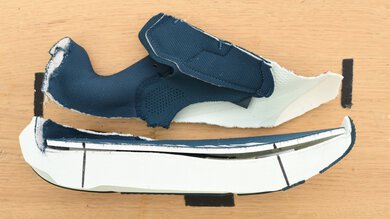
- Updated Jul 03, 2026: We've converted this review to Test Bench 0.13, which identifies the different foams used in the shoe's midsole. We've included a microscopic image of the foam cells to give you an idea of what the microstructure looks like. To read more about the changes, see the changelog.
- Updated Jun 22, 2026: We've converted this review to Test Bench 0.12, which fixes how we measure firmness, a component of the Stability and 5K/10K Racing usages. There may be inconsistencies between the text and the scores for these usages, but the scores should still be considered valid. We've also brought back the Energy Return score and added two new usages: Daily Training and Long Run. To read more about the changes, see the changelog.
- Updated Jun 22, 2026: We've converted this review to Test Bench 0.11, adding two new rocker measurements to the Design section, and three new responsiveness tests to the Performance section. The Energy Return usage score has been replaced with Responsiveness. Check out the details in our changelog.
- Updated May 14, 2026: Review published.
- Updated May 08, 2026: Early access published.
- Updated Apr 07, 2026: Our testers have started testing this product.
- Updated Apr 02, 2026: The product has arrived in our lab, and our testers will start evaluating it soon.
- Updated Mar 30, 2026: We've purchased the product and are waiting for it to arrive in our lab.

We've bought and tested more than 250 running shoes. Every pair purchased with our own money, never supplied or sponsored by brands. Our data-driven tests are designed to go beyond marketing claims, and since every shoe goes through the exact same methodology, you can directly compare results to find the right pair for your needs.
Test Results
Energy Return
Stability
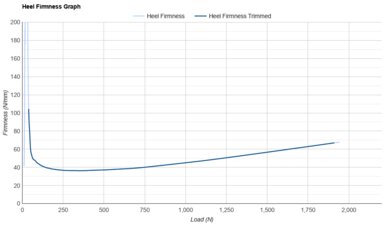
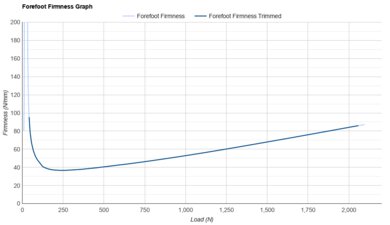
The Kiprun Kipride Max provides good lateral stability for a tall cushioned trainer. Its wide outsole, broad platform, and secure gusseted tongue help counterbalance the high stack, making the shoe feel relatively steady. That said, the heel is on the softer side, which can make landings feel less planted than in firmer shoes, but the overall geometry is still stable enough for most neutral runners.
Stable platform.
Wide outsole helps counterbalance the high stack.
Softer heel can feel less planted when landing.
Cushioning
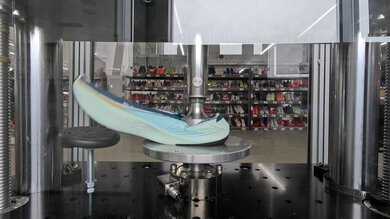
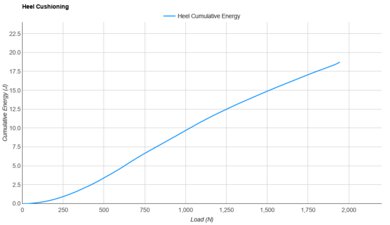
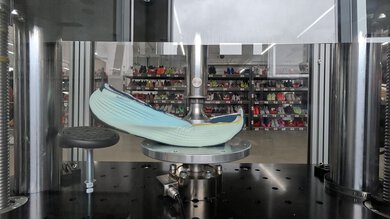
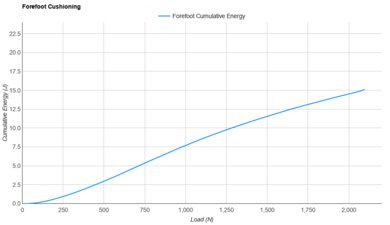
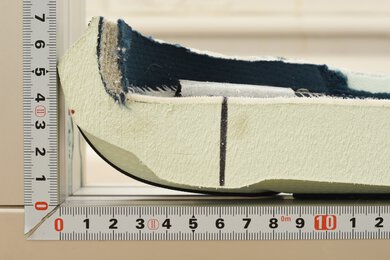
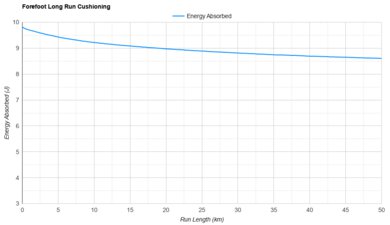
The Kiprun Kipride Max delivers excellent underfoot protection. Its tall midsole provides a highly cushioned feel in both the heel and forefoot. The MFoam+ midsole absorbs impacts really well, making it well-suited for daily mileage, recovery runs, and long runs where protection matters most.
Excellent underfoot protection.
Tall stack height.
Responsiveness
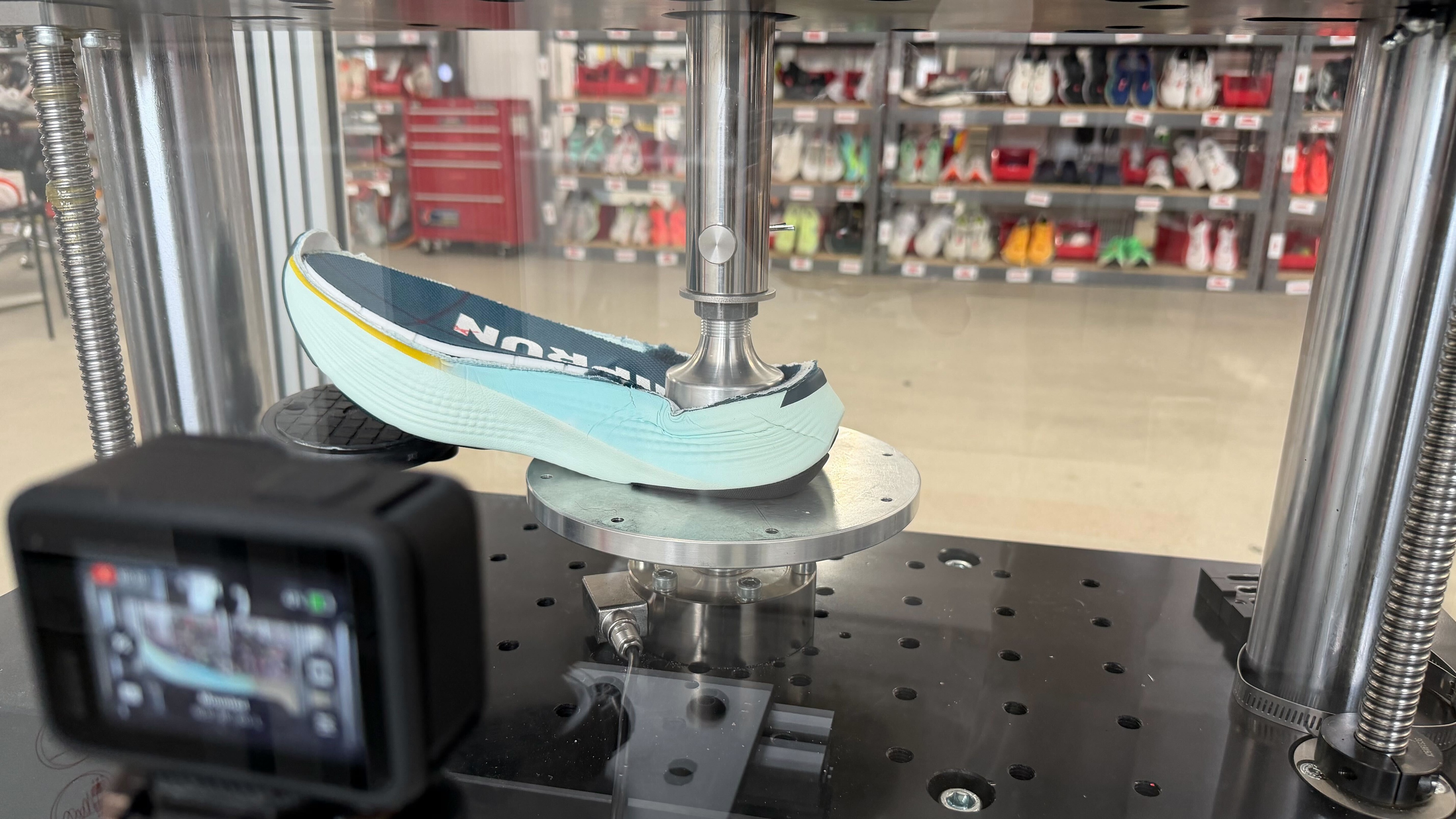
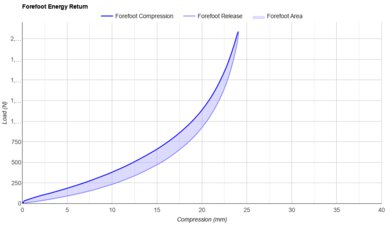
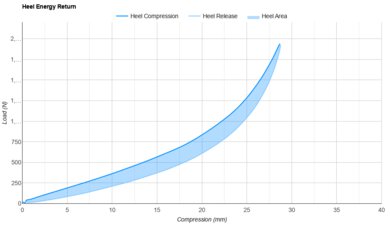
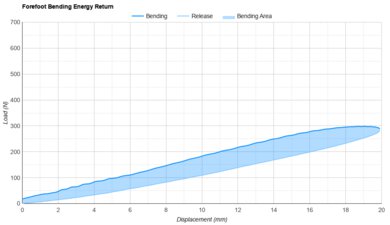
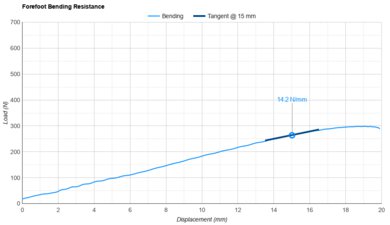
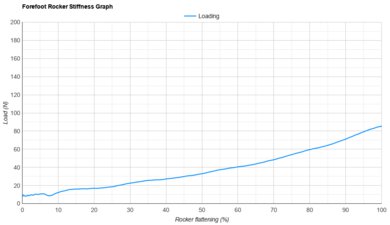
The Kiprun Kipride Max has fair energy return for a cushioned daily trainer. The forefoot feels livelier than the heel, so the shoe has some rebound when rolling forward, but it doesn't deliver the explosive or propulsive sensation of real performance-oriented trainers. This gives it a comfortable, mildly bouncy ride that works well for everyday mileage.
Limited energy return for faster efforts.
True To Size
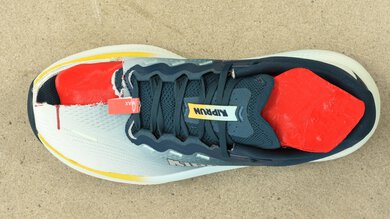
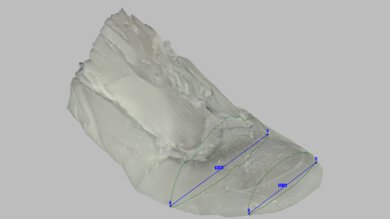
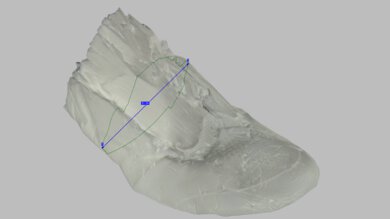
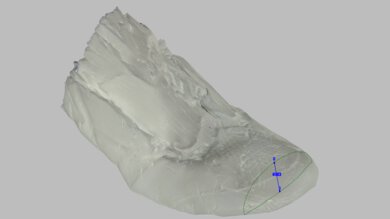
The Kiprun Kipride Max fits true to size in length and has a roomy forefoot width, so most runners can choose their usual size. However, the arch area is quite tight, and there's not a lot of vertical space at the forefoot, which can make the fit less accommodating overall.
True-to-size length.
Roomy forefoot width.
Tight through the arch.
Low forefoot volume.

Popular Running Shoe Comparisons
The Kiprun Kipride Max is a premium daily trainer built around protection, comfort, and recovery miles. In the broader market, it delivers surprisingly better underfoot protection and overall performance than other popular cushioned trainers like the PUMA MagMax NITRO 2, the ASICS GEL-NIMBUS 28, and the HOKA Bondi 9, while typically retailing well below them in price, which makes it a great shoe for relaxed miles at a very competitive value. Those alternatives can still make sense when discounted, but at regular price, the Kipride Max is the logical choice if you want a highly cushioned daily trainer.
Within Kiprun's growing road lineup, the Kiprun KS900 2 is the simpler cushioned trainer with more ground feel, while the standard Kipride (non-max) offers a lower-stack alternative for runners who don't want as much foam underfoot. Above the Kipride Max, the plated Kipstorm models are geared toward faster running, with the appropriately named Kiprun Kipstorm Tempo, shockingly, covering tempo efforts. The Kiprun Kipstorm Elite replaces the Kiprun KD900X LD+ as the brand's most accessible racing shoe, and the Kiprun Kipstorm Challenger replaces the KD900X.2 to become the most versatile racing shoe.
For more options, check out our recommendations for the best running shoes, as well as the best long-distance running shoes and the best shoes for running a marathon.
The Kiprun Kipride Max and Nike Vomero Plus both use high-stack platforms, though the Nike sits slightly higher and delivers a noticeably bouncier ride. That makes it a more viable option for uptempo efforts, while the Kirpun will feel more at home at relaxed paces. The Kiprun's midsole absorbs a bit more impact overall, and that advantage becomes even more noticeable as distances increase, helping it feel more protective deep into long runs. The Kiprun is also a bit more stable, so it's the best choice if you're looking for a more planted feel when you land.
The Kiprun Kipride Max and HOKA Clifton 10 are two daily trainers with similar weight and stack, but they feel better suited to different distances. The Kiprun is more cushioned at step-in and retains that cushioning more effectively as the miles build, making it the stronger option for longer runs. The HOKA offers a good level of stability with more ground feel and a more straightforward ride, which works especially well for shorter, easy miles.
The Kiprun Kipride Max and PUMA MagMax NITRO 2 are both cushioned shoes with midsoles that absorb a similar amount of energy. That said, the Kiprun is the more stable option and gives a stronger sense of bounce, even if it still stays fairly controlled rather than wildly energetic. Meanwhile, the PUMA delivers a similarly protective ride, but with a less planted feel and a more straightforward max-cushion character. The MagMax is also a little bit lighter than the Kiprun, despite its higher stack.
The Kiprun Kipride Max and Kiprun KS900 2 are both daily trainers, but the Kipride Max is the more capable and more premium option. The KS900 2 is a simpler, no-frills trainer with a more stable platform, but it isn’t bouncy at all, and its cushioning feels a lot less protective, especially when runs get longer. The Kipride Max has a more substantial stack and more effective cushioning, with a PEBA and EVA-based midsole that adds a bit of bounce, making it the more well-executed shoe overall.
Differences Between Sizes And Variants
We bought and tested the Kiprun Kipride Max in men's US size 9, and here's the label for our pair. The pair we purchased is the Teal Blue/Light Jade/Honey colorway, but you can also buy the shoe in other colors, such as Pale Grey/Fluo Flame Orange/Fluo Sunflower, depending on the region. This shoe isn't available in wide widths. The design section applies only to the exact model we tested, but we expect other size and gender variants to perform similarly.