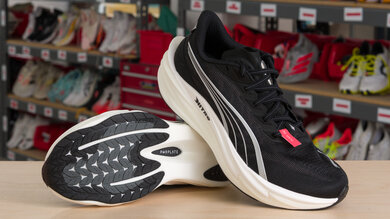
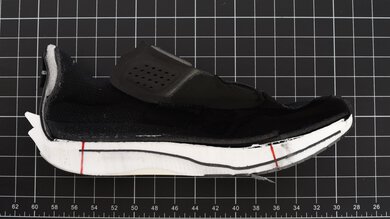
The PUMA Deviate NITRO 4 is a plated trainer geared toward workouts, faster training, and even shorter races. It uses a dual-density midsole with a softer, PEBA-based top layer and a firmer bottom layer, with PUMA's carbon-composite PWRPLATE sandwiched between them for added stiffness and stability. A generous layer of PUMAGRIP rubber covers the outsole for great traction, while the updated upper feels breathable and performance-oriented. Overall, it has a lower drop, a lighter build, and a bouncier ride than the previous PUMA Deviate NITRO 3, further reinforcing the shoe's speed-focused identity.
Our Verdict
The PUMA Deviate NITRO 4 has the plated design and liveliness underfoot feel to handle faster efforts efficiently, but it isn't especially well-built for the demands of long-distance racing. Its stack is more moderate than that of modern marathon super shoes, so it doesn't provide the same deep, protective buffer over long miles, and it also isn't light enough to feel truly optimized for the distance. As a result, it makes more sense as a faster training shoe than as a top marathon pick.
Carbon-composite plate adds stiffness.
Good forefoot bounce.
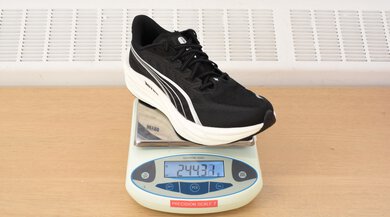
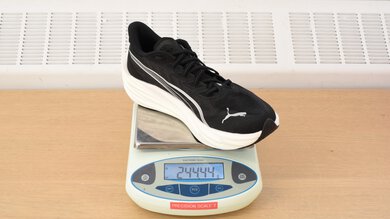
On the heavier side for racing.
Not a very protective shoe overall.
The PUMA Deviate NITRO 4 is a good option for 5K and 10K racing. Its firm forefoot gives it a snappy, efficient toe-off, and its midsole is bouncy enough if you maintain a high turnover and apply a lot of force into the midsole. That said, it still doesn't feel as lightweight and propulsive as a more specialized short-distance racer. Also, unlike the top super shoes, the plate is made of carbon-composite, so it works best for runners who want a fast shoe that remains controlled and approachable.
Firm forefoot.
Carbon-composite plate adds stiffness.
On the heavier side for racing.
Changelog
- Updated Sep 15, 2026: We've converted this review to Test Bench 0.12, which fixes how we measure firmness, a component of the Stability and 5K/10K Racing usages. There may be inconsistencies between the text and the scores for these usages, but the scores should still be considered valid. We've also brought back the Energy Return score and added two new usages: Daily Training and Long Run. To read more about the changes, see the changelog.
- Updated Sep 11, 2026: We've converted this review to Test Bench 0.11, adding two new rocker measurements to the Design section, and three new responsiveness tests to the Performance section. The Energy Return usage score has been replaced with Responsiveness. Check out the details in our changelog.
-
Updated Jun 09, 2026:
We've updated the Popular Comparisons section to include a link to the newly reviewed Skechers Aero Razor.
- Updated Apr 29, 2026: We've converted this review to Test Bench 0.10, adding a new set of fit tests to the Design section and an overall fit performance usage. Check out the details in our changelog.
- Updated Mar 17, 2026: Review published.
- Updated Mar 09, 2026: Early access published.
- Updated Feb 16, 2026: Our testers have started testing this product.
- Updated Feb 04, 2026: The product has arrived in our lab, and our testers will start evaluating it soon.
- Updated Feb 03, 2026: We've purchased the product and are waiting for it to arrive in our lab.

We've bought and tested more than 250 running shoes. Every pair purchased with our own money, never supplied or sponsored by brands. Our data-driven tests are designed to go beyond marketing claims, and since every shoe goes through the exact same methodology, you can directly compare results to find the right pair for your needs.
Test Results
Energy Return


Stability
The PUMA Deviate NITRO 4 is stable, thanks to its relatively firm platform, broad base, and moderate stack that help it stay impressively steady for a plated speed trainer. The carbon-composite plate also helps stabilize the midsole foam. That predictability and extra control are especially welcome during longer workouts or faster runs when form starts to fade.
Carbon-composite plate adds stiffness.
Secure lockdown from the semi-gusseted tongue.


Cushioning
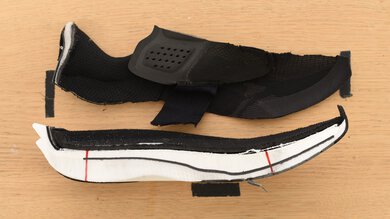
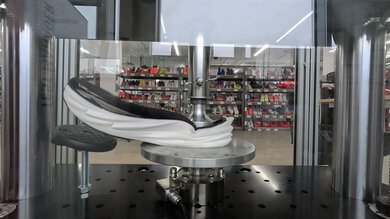
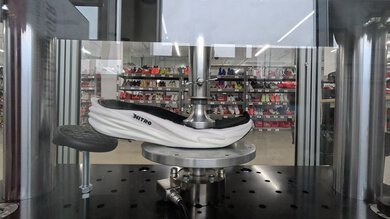
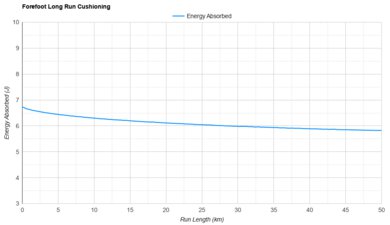
The PUMA Deviate NITRO 4 has okay cushioning. Its dual-layer midsole compresses enough to take the edge off daily miles and faster workouts, but it doesn't absorb impact especially well over longer efforts. As a result, it feels better suited to steady runs and training sessions than to runners looking for a soft, highly protective shoe for long, easy mileage.
Good cushioning at low forces.
Not a very protective shoe overall.


Responsiveness
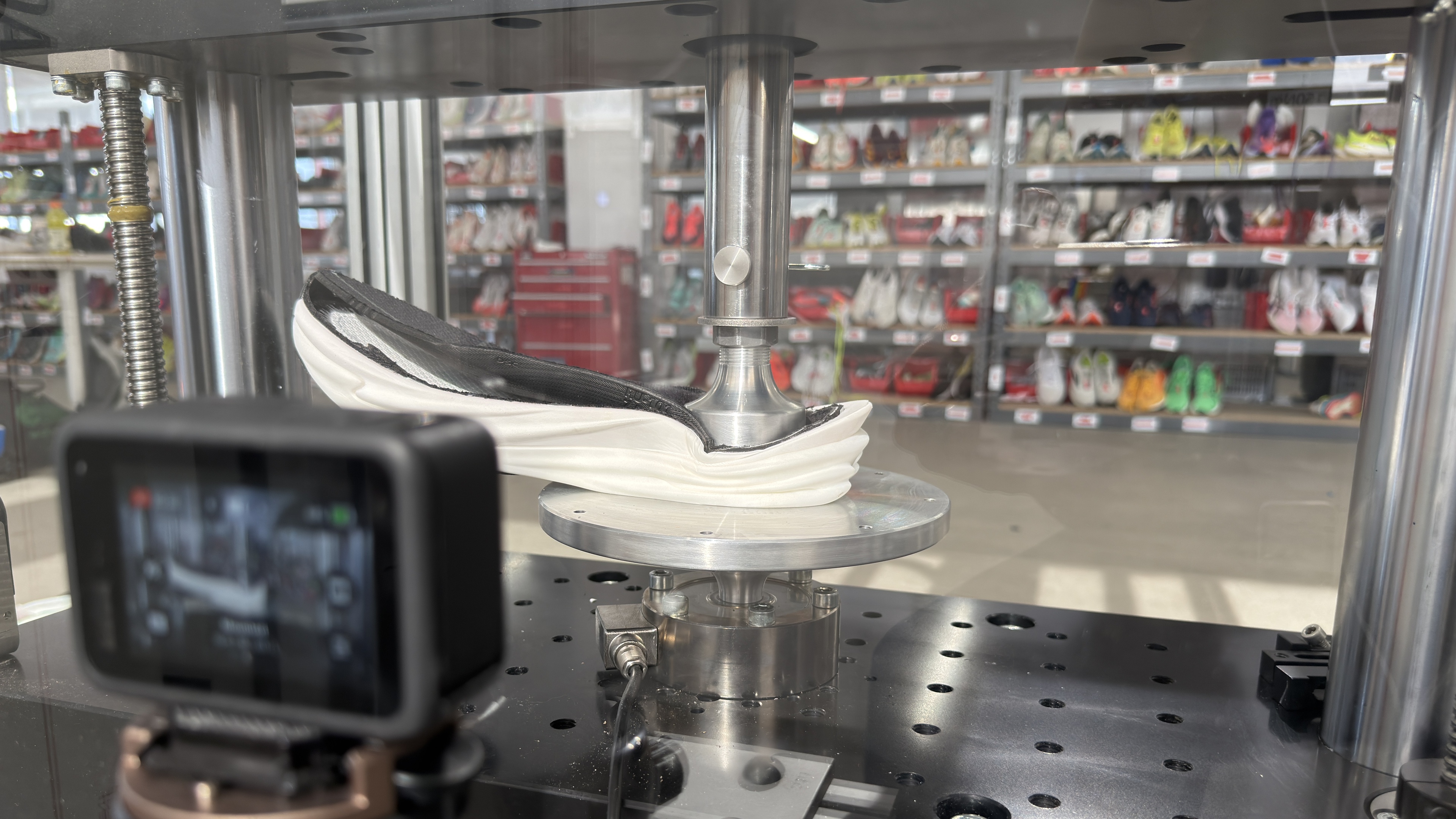
The PUMA Deviate NITRO 4 has decent overall energy return, with more bounce up front than in the heel. It feels most energetic when you're loading the forefoot with significant force and picking up the pace, which fits its role as a workout shoe well. Heel strikers still get some rebound, but it won't directly help propel you forward.
Good forefoot bounce.
The heel is lacking a bit of bounce.


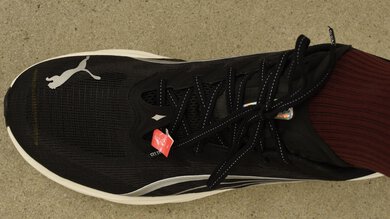
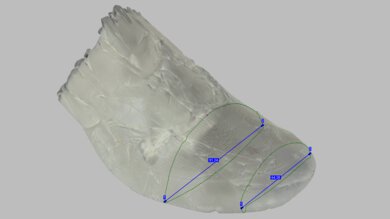
True To Size

Popular Running Shoe Comparisons
The PUMA Deviate NITRO 4 is a plated trainer that sits in the middle of the current super trainer category. It's built for runners who want a controlled, speed-focused shoe for tempo runs, track sessions, and even some shorter races, but it isn't the best fit for those looking for the lightest or bounciest option in this class. Compared with the previous PUMA Deviate NITRO 3, it moves in the right direction, getting lighter and a bit livelier than before, but the super trainer category has already become defined by models that feel both lighter and even more bouncy, like the Saucony Endorphin Speed 5 or Skechers Aero Razor, and even unplated options like the ASICS MEGABLAST. In some ways, the update feels a bit too little, too late. That said, the Deviate is still lighter than the HOKA Mach X 3 and adidas Adizero Boston 13, so it lands more in the middle of the pack. Still, the firm forefoot gives it a crisp, efficient toe-off that will please runners looking for a speed trainer but who dislike overly plush, sloppy shoes.
Within PUMA's performance lineup, the Deviate NITRO 4 is the plated training option. The brand also offers an unplated uptempo trainer, the PUMA Deviate Pure NITRO. Meanwhile, the PUMA Deviate NITRO Elite 4 is its alter ego super shoe, intended primarily for racing, with a full-carbon plate and a lighter build, while the PUMA Fast-R NITRO Elite 3 is the brand's most cutting-edge racing model.
If you're looking for more options, take a look at our recommendations for the best running shoes, the best long-distance running shoes, and the best shoes for running a marathon.
The PUMA Deviate NITRO 4 and Saucony Endorphin Speed 5 are both plated super trainers with a similar stack height, but they have a few key differences. The PUMA leans more into a snappier forefoot feel, using its carbon-composite plate to produce a direct toe-off that feels especially rewarding when you're running at a fast cadence and loading the front of the shoe. The Saucony takes a slightly more forgiving approach, pairing a bouncier, more protective midsole with a plastic plate that feels a bit less aggressive, while its broader footprint also makes it the more stable option overall.
The PUMA Deviate NITRO Elite 4 and PUMA Deviate NITRO 4 are closely related but serve different roles. The Deviate NITRO Elite 4 is the full super shoe, using a carbon plate with a lighter build, more energetic foam, and more cushioning, but it is also less stable as a result. The Deviate NITRO 4 is the plated trainer, making trade-offs across those same areas with slightly less cushioning, less energy return, and a bit more weight, but a more stable platform overall. It’s still performance-oriented enough for workouts, fast paces, and even racing if you’re not chasing elite times. However, if you can splurge, the Elite makes more sense because it can cover both workouts and race day without the same performance compromise, aside from the usual trade-off of using a more expensive super shoe more quickly.
The PUMA Deviate NITRO 4 and PUMA Deviate NITRO 3 are two iterations of the same super trainer, but the newer version does a better job defining itself as the faster, more performance-focused option. The Deviate NITRO 4 is lighter, feels more energetic underfoot, and pairs its moderate drop with a snappier forefoot, making it better suited to workouts and even shorter races. The PUMA Deviate NITRO 3, by comparison, sits a bit higher and feels more protective, giving it a slightly more cushioned character. If you want the more efficient plated trainer, the Deviate NITRO 4 makes more sense, but if you prefer a bit more buffer and protection underfoot, the Deviate NITRO 3 still has its appeal.
The PUMA Deviate NITRO 4 and PUMA Fast-R NITRO Elite 3 occupy very different places in PUMA's lineup. The Fast-R is substantially lighter and far more race-focused, with considerably better rebound and a more aggressive transition through toe-off. The Deviate NITRO 4 is more stable and much better suited to regular training while still handling faster workouts well. Get the Fast-R for racing; get the Deviate NITRO 4 if you want one plated shoe for training and faster efforts.
The Skechers Aero Razor and PUMA Deviate NITRO 4 are both plated trainers built with faster running in mind, but they feel different underfoot. The Skechers is much lighter, lower, and more cushioned, with a plastic plate and aggressive rocker that make it feel quick and easy to turn over. The PUMA is heavier and firmer, with a 3/4-length plastic plate and a more stable platform, and requires runners to work harder for their rewards.
Differences Between Sizes And Variants
We tested the PUMA Deviate NITRO 4 in men's U.S. size 9, as noted on the label for our pair. The color shown here is PUMA Black/PUMA White/PUMA Silver. Other color options for this shoe exist, depending on the region, so you can also find it in colorways like Vibrant Silver/Lux or Lime Baltic Sea Blue/Fresh Water. This model is also available in a HYROX edition, with a PUMA White/Electric Orchid/Pure Pink colorway. Wide versions are available for both men and women, which is rare for performance-oriented shoes. The design section applies only to the exact model we tested, but we expect other sizes and gender variants to perform similarly.