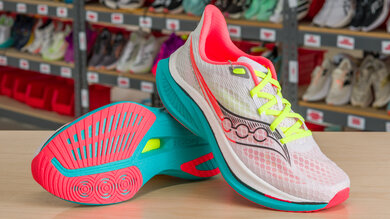
The Saucony Endorphin Speed 5 is a lightweight, nylon-plated speed trainer built for tempo runs, workouts, and occasional racing. Its energetic midsole, stable platform, and accommodating fit make it versatile enough for faster sessions and steady mileage. However, its flexible rocker and limited forefoot protection make it less suitable for runners seeking an aggressive racer or a plush shoe for longer efforts. Overall, it suits runners who prefer a natural-feeling plated shoe over maximum cushioning or top-end propulsion.
| ✅ Buy If: | ❌ Skip If: |
|
|
Our Verdict
The Saucony Endorphin Speed 5 performs decently well for marathon racing, especially for runners seeking a lightweight option with a more natural feel. Its energetic midsole and stable platform are a plus, but it doesn't offer as much cushioning or bounce as top-tier marathon super shoes. The midsole lacks protection for longer efforts, and while the ride feels efficient, the weight is still above true super shoes, which slightly limits its suitability for runners looking to run a marathon efficiently. Still, it's a good choice for those who prefer a snappier, lower-stack feel rather than a soft, max-cushioned ride.
The midsole is very energetic.
Nylon plate adds stiffness and stability.
Stable design overall.
Lacking a bit of protection for longer or harder efforts, especially upfront.
Not as light as a true super shoe.
The Saucony Endorphin Speed 5 is a decent choice for 5K and 10K racing. Its energetic midsole and good snappiness help it handle faster paces, and it's reasonably light for a plated trainer. However, it isn't as light or propulsive as a true super shoe, so it isn't the best option for runners chasing a personal best. It's better suited to runners who want one shoe for both workouts and occasional races.
The midsole is very energetic.
Forefoot rebounds efficiently at toe-off.
Not as light as a true super shoe.
The Saucony Endorphin Speed 5 is decent for long runs, especially progression runs or other sessions with faster segments. Its strong energy return and stable platform help you hold pace as fatigue sets in. However, its mediocre forefoot cushioning and easily flattened rocker can make longer efforts feel harsh, so it's less suited to relaxed, high-mileage cruising.
The midsole is very energetic.
Stable design overall.
Lacking a bit of protection for longer or harder efforts, especially upfront.
Rocker flattens easily under load.
The Saucony Endorphin Speed 5 is adequate for daily training, but it's better suited to workout days and steady runs than easy recovery mileage. Its energetic midsole, stable platform, and fairly light build make it versatile across a range of paces. However, the firm forefoot can feel harsh on higher-mileage days, while the plated construction feels less natural during slower recovery runs. The flexible rocker also doesn't create an especially smooth or propulsive transition.
The midsole is very energetic.
Stable design overall.
Lacking a bit of protection for longer or harder efforts, especially upfront.
Firm ride isn’t ideal for easy recovery mileage.
Changelog
- Updated Sep 17, 2026: We've converted this review to Test Bench 0.15, which replaces Responsiveness with three specific performance usages: Bounciness, Snappiness, and Roll. To read more about the changes, see the changelog.
- Updated Aug 27, 2026: We've converted this review to Test Bench 0.14, which adds new lace-specific results. We've included a close-up photo of the laces, as well as details including lace type, width, thickness, and stretch. To read more about the changes, see the changelog.
- Updated Aug 26, 2026: We've converted this review to Test Bench 0.13, which identifies the different foams used in the shoe's midsole. We've included a microscopic image of the foam cells to give you an idea of what the microstructure looks like. To read more about the changes, see the changelog.
- Updated Aug 24, 2026: We've converted this review to Test Bench 0.12, which fixes how we measure firmness, a component of the Stability and 5K/10K Racing usages. There may be inconsistencies between the text and the scores for these usages, but the scores should still be considered valid. We've also brought back the Energy Return score and added two new usages: Daily Training and Long Run. To read more about the changes, see the changelog.
- Updated Jun 30, 2026: We've converted this review to Test Bench 0.11, adding two new rocker measurements to the Design section, and three new responsiveness tests to the Performance section. The Energy Return usage score has been replaced with Responsiveness. Check out the details in our changelog.
-
Updated Jun 09, 2026:
We've updated the Popular Comparisons section to include a link to the newly reviewed Skechers Aero Razor.
-
Updated Feb 26, 2026:
We updated the Popular Running Shoe Comparisons section of the review to include the most recent iteration of the Saucony Endorphin Pro.
-
Updated Feb 24, 2026:
We updated the Popular Running Shoe Comparisons section to mention the newly released Saucony Endorphin Azura in Saucony's lineup.
-
Updated Feb 16, 2026:
We updated the review to include text for the full set of new fit tests and the corresponding usage box, which were recently added to our test bench.
- Updated Feb 16, 2026: We've converted this review to Test Bench 0.10, adding a new set of fit tests to the Design section and an overall fit performance usage. Check out the details in our changelog.
- Updated Oct 28, 2025: We've converted this review to Test Bench 0.9, which adds a Forefoot Long Run Cushioning test to our performance section. Read more in our changelog.
-
Updated Oct 21, 2025:
We've adjusted this review's writing to align with the new test bench, including updates to all usage scores and test boxes for Cushioning, Firmness, and Energy Return.
- Updated Oct 20, 2025: We've converted this review to Test Bench 0.8.2, which updates our methodology for the impact force range used in our compression tests to improve their accuracy. This also affects all usage and performance usage boxes using those compression tests as score components.
-
Updated Aug 04, 2025:
We updated the Marathon Racing box to ensure the text remains in line with the latest test bench scores, especially regarding the amount of protection of the shoe.
- Updated Aug 01, 2025: We've converted this review to Test Bench 0.8.1, which mainly updates the score components for the Marathon Racing and Lateral Stability usage boxes to improve accuracy.
- Updated Jul 04, 2025: Review published.
- Updated Jun 30, 2025: Early access published.
- Updated Jun 19, 2025: Our testers have started testing this product.
- Updated Jun 16, 2025: The product has arrived in our lab, and our testers will start evaluating it soon.
- Updated Jun 06, 2025: We've purchased the product and are waiting for it to arrive in our lab.
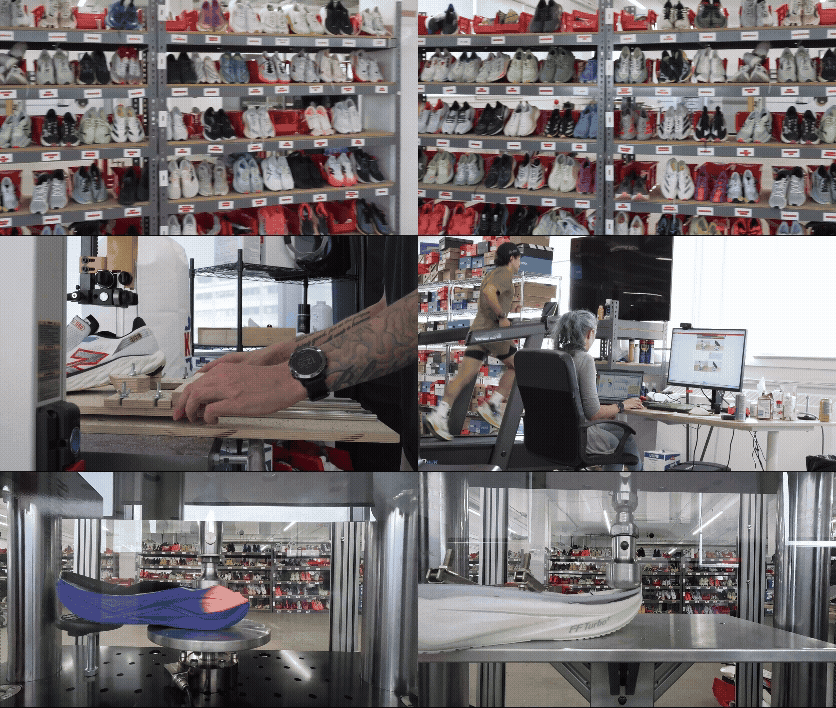
We've bought and tested more than 250 running shoes. Every pair purchased with our own money, never supplied or sponsored by brands. Our data-driven tests are designed to go beyond marketing claims, and since every shoe goes through the exact same methodology, you can directly compare results to find the right pair for your needs.
Test Results
Energy Return
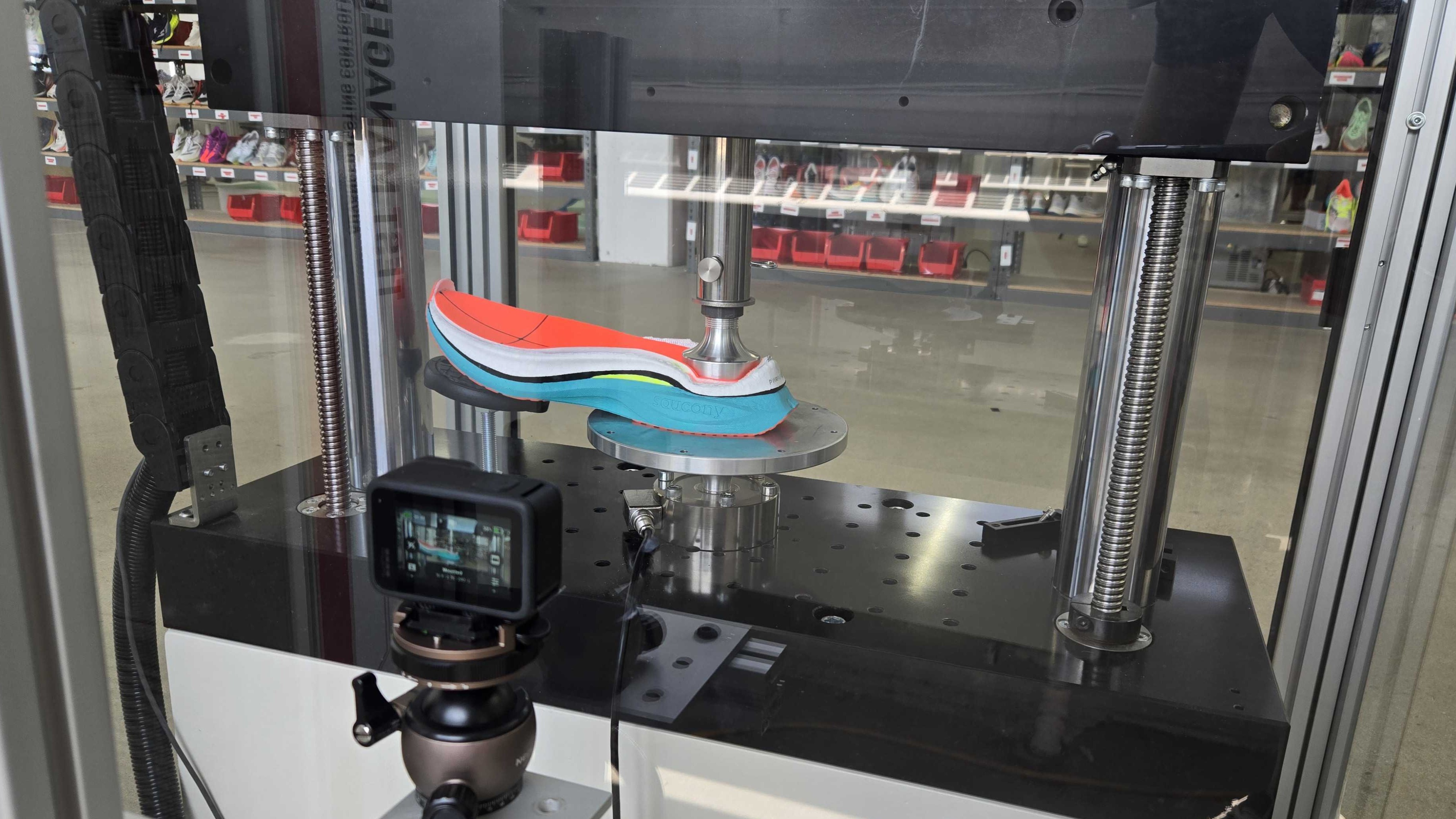
The Saucony Endorphin Speed 5 has impressive energy return. Its foam rebounds efficiently at both the heel and forefoot, adding a lively, dynamic sensation underfoot regardless of where you land. This consistent rebound adds some fun to the ride across a range of paces.
The midsole is very energetic.

This shoe offers impressive energy return at the forefoot, with a springy, responsive feel that makes it well-suited for strides and tempo runs. The PWRRUN PB midsole gives it a lively toe-off when driven from the front.

The Saucony Endorphin Speed 5 delivers great energy return in the heel, helping heel strikers maintain momentum. It doesn't feel quite as explosive as modern super foams, but there's a satisfying rebound when transitioning from the rear foot, especially during faster strides.
Stability
The Saucony Endorphin Speed 5 offers surprisingly great lateral stability for a lightweight, performance-oriented shoe. The wide base and nylon plate contribute to a secure platform. It's not a stability shoe by design, but it feels well-balanced and reliable when your form starts to fade or when fatigue sets in late in a run. Runners who prefer a more connected feel to the ground will appreciate this stability.
Nylon plate adds stiffness and stability.
Wide outsole base.
Foam is on the firm side overall.
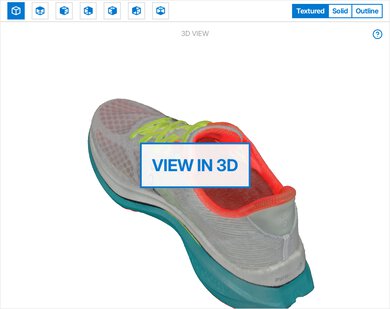
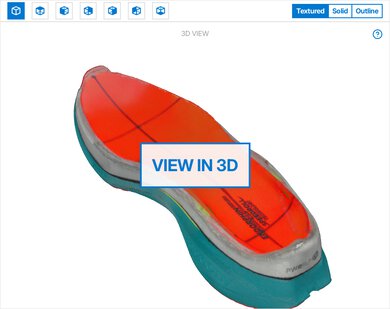
Please note that the green areas visible in the image aren't part of the shoe but are artifacts from the 3D scan.

The heel is quite firm, helping with stability as it provides a steady base to land on during the initial contact.

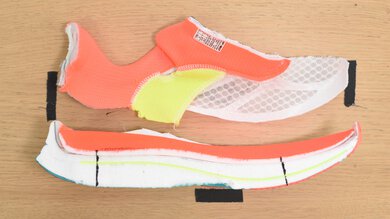
This model has a firm and snappy forefoot, which is customary for shoes using Saucony's Speedroll technology. This helps maintain forward momentum and creates a responsive toe-off when loading the front of the shoe. It delivers excellent ground feel and control, making it a strong choice for runners who want a more connected, stable ride at faster paces. That said, the firmness might feel harsh for those who prefer a softer landing or a more forgiving experience in the forefoot.
Cushioning
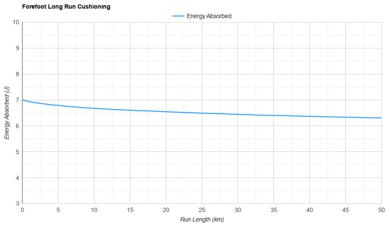
The Saucony Endorphin Speed 5 offers adequate cushioning overall. It may not suit runners who prefer plush landings or need extra protection for longer runs. There's enough underfoot to avoid bottoming out during short efforts, but the midsole compound doesn't compress as much as newer premium foams on the market. The result is a ride that works for short efforts but may feel harsh on longer runs.
Reasonably well cushioned.
Lacking a bit of protection for longer or harder efforts, especially upfront.
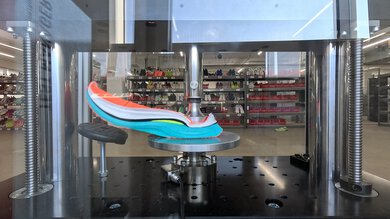

The Saucony Endorphin Speed 5 provides decent heel cushioning, especially under harder impacts. The platform absorbs shock well at higher forces and feels stable underfoot for heel strikers. Still, the overall cushioning feels a bit thin or harsh compared to more cushioned speed trainers such as the HOKA Mach X 2.
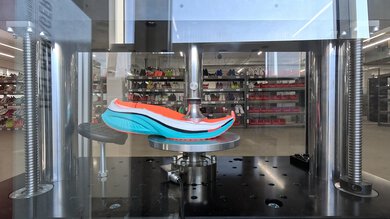

The Saucony Endorphin Speed 5 performs reasonably well when absorbing lower-impact forefoot landings, but it's less forgiving when pushed hard. At higher forces, the forefoot compresses quickly and can start to feel harsh, especially for runners who land heavily up front or use it for longer sessions. It's suitable for tempo work but may feel too thin for long runs, where you can get that flattening-out feel.
Bounciness
The Saucony Endorphin Speed 5 has adequate bounciness. Its foam returns energy efficiently but doesn't compress very deeply underfoot, so the ride feels firmer and more direct than soft or springy. There's still enough rebound to add some liveliness, especially at faster paces, but runners seeking a highly compressive, trampoline-like sensation won't find it here.
The midsole is very energetic.


Snappiness
The Saucony Endorphin Speed 5 has good snappiness. Its nylon plate provides enough bending stiffness for a quick toe-off, and the forefoot returns a good amount of energy as it flexes. Since the nylon plate is more flexible than the stiffer carbon plates used in super shoes, the ride feels more natural, though it also lacks their sharp, explosive snap.
Nylon plate adds stiffness and stability.
Forefoot rebounds efficiently at toe-off.
Rocker flattens easily under load.
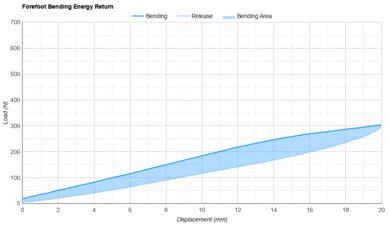
Forefoot bending energy return is good. The plastic plate and energetic foam help the shoe spring back after flexing, adding a noticeable snap at toe-off.
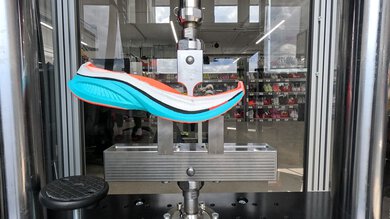
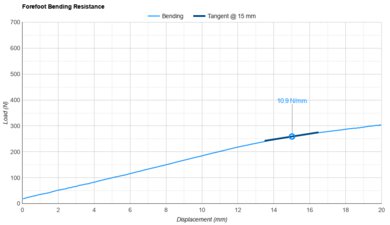
This model has adequate forefoot bending stiffness. Its plastic plate adds noticeable structure for a quicker toe-off, but it remains more flexible and natural than a stiffer carbon-plated shoe like the Saucony Endorphin Pro 5.
Roll
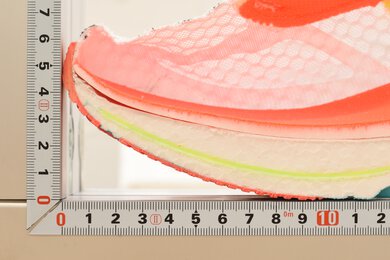
The Saucony Endorphin Speed 5 has a mediocre forward roll. Its heel and forefoot rockers are well shaped, but the forefoot flattens easily under load, making toe-off less effortless than the geometry suggests. Don't expect it to tip you forward as readily as a super shoe.
Pronounced heel rocker helps roll you onto midstance.
Rocker flattens easily under load.
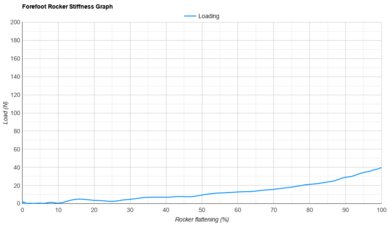
The rocker is very flexible and flattens easily under load. As a result, it doesn't roll you forward as effectively as its initial geometry suggests.
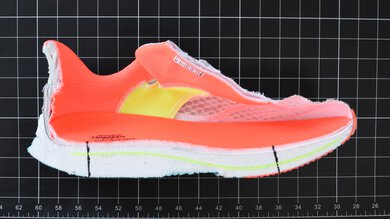
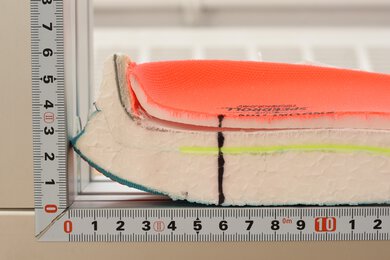
This shoe features a moderately high stack in the heel, but its lower forefoot stack shifts the geometry toward a steeper drop than the previous version. This reduces the shoe's rocker effectiveness during toe-off compared to earlier models. As a result, it feels less aggressive when picking up the pace, especially for forefoot strikers. This lower stacked forefoot also means the shoe has a greater chance of flattening out after long distances because there's less foam to protect your foot from the road.
True To Size
The Saucony Endorphin Speed 5 delivers a remarkably true-to-size fit all around, which is especially impressive for a performance-oriented super trainer. The length feels spot-on, and the forefoot is comfortably roomy in both width and height, avoiding that tapered, restrictive sensation you often get in speed-focused shoes. The arch also fits true to size, making the overall shape more accommodating for wider feet or runners who prioritize comfort over a race-tight wrap. The trade-off is that this more relaxed fit can feel a little less locked in when you really pick up the pace, especially if you prefer a snug fit.
Remarkably true-to-size overall.
Good length.
Relaxed, roomy fit that's uncommon for super trainers.
Can feel a bit less dialed-in at faster paces for runners who like a snug fit.
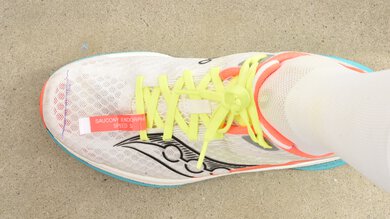
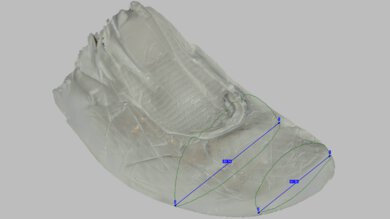
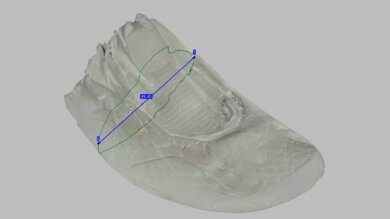
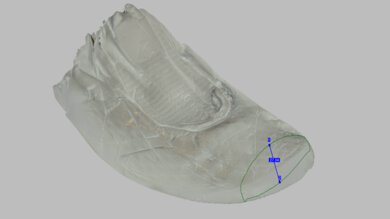
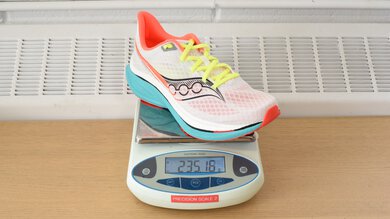
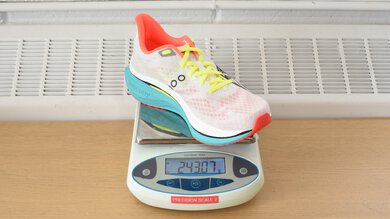
The Saucony Endorphin Speed 5 feels quite light on foot, enough for fast efforts, but it's not among the lightest shoes on the market either. While its weight is appropriate for a plated speed trainer, it doesn't match the featherweight feel of stripped-down super shoes like the PUMA Fast-R NITRO Elite 3 or unplated uptempo trainers like the adidas Adizero Evo SL. It strikes a good balance between features and lightness, but runners prioritizing the lowest possible weight for top-end speed might find it a touch bulky.
This model offers a roomier fit than the Endorphin Speed 4, with added volume through the forefoot and a longer, wider platform overall. This makes it more accommodating for wide-footed runners or those prioritizing comfort over lockdown. However, the looser fit may not be ideal for those who prefer a snug, performance-oriented feel, as it can make the shoe feel less dialed in at faster paces.

This shoe uses PWRRUN PB, Saucony's premium PEBA foam, which is also found in the Saucony Endorphin Pro 5. The exact composition may differ slightly between models. It's designed to combine low weight with strong energy return.

Popular Running Shoe Comparisons
The Saucony Endorphin Speed 5 is a nylon-plated speed trainer designed for tempo runs and faster efforts. It delivers a snappy yet forgiving ride that's easier to handle than most carbon-plated alternatives. The geometry is smooth and efficient, and the moderate stack height offers decent protection for shorter sessions. However, in a market increasingly dominated by bouncier, more cushioned options, the Speed 5 feels like a throwback to an earlier era. The ride can be quite harsh for long distances, and the foam simply doesn't have the pop of newer top formulations. That said, it's lightweight, well-built, and delivers consistent performance that will feel immediately familiar to fans of the Speed 3.
Other popular super trainers include the Hoka Mach X 2 and adidas Adizero Boston 13. This is a good choice for runners looking for a traditional plated trainer: light and versatile without feeling overbuilt. Even shoes like the Skechers Aero Razor now offer more cushioning and better long-distance protection at a much lower weight, though the Endorphin Speed 5 remains the more responsive and stable option for shorter speedwork. It can still serve as a one-shoe solution for workouts and racing, especially for those who prefer something more approachable than a carbon-plated super shoe, but it's no longer a disruptive force. Today, many runners have the luxury of doing workouts in super shoes like the Nike Vaporfly 4, which are more energetic and help leave the legs fresher the next day. This considerably narrows the Speed's appeal unless you want a dedicated, grounded, traditional shoe for faster training sessions.
The Speed 5 checks the super trainer box within Saucony's Endorphin lineup. There's also the Saucony Endorphin Azura, a versatile unplated trainer. For super shoes, this brand has the Saucony Endorphin Pro 5 and the more aggressive Saucony Endorphin Elite 3. For more options, check out our recommendations for the best running shoes, as well as the best running shoes for men and the best running shoes for women.
The Saucony Endorphin Speed 5 and Saucony Endorphin Azura are both part of the same family, but they play different roles. The Speed 5 is a plated trainer that uses a plastic plate to create a more stable, propulsive sensation, which works especially well for interval sessions and faster efforts. It's also a touch lighter, but it feels less cushioned overall, with a firmer forefoot that can make it less appealing for slower running and more naturally suited to faster efforts where you want a snappy toe-off. The Azura is a versatile unplated trainer that shifts toward a higher-stacked, softer-tuned ride that blends bounce with more cushioning, making it feel easier to use across a wider spread of paces and distances.
The PUMA Deviate NITRO 4 and Saucony Endorphin Speed 5 are both plated super trainers with a similar stack height, but they have a few key differences. The PUMA leans more into a snappier forefoot feel, using its carbon-composite plate to produce a direct toe-off that feels especially rewarding when you're running at a fast cadence and loading the front of the shoe. The Saucony takes a slightly more forgiving approach, pairing a bouncier, more protective midsole with a plastic plate that feels a bit less aggressive, while its broader footprint also makes it the more stable option overall.
The adidas Adizero Evo SL and Saucony Endorphin Speed 5 both deliver a lively, modern bounce underfoot, but they suit slightly different runners. The adidas is an unplated uptempo trainer that feels lighter on foot and maintains more consistent cushioning as runs get longer, with a midsole that absorbs impact well while still returning energy efficiently. The Saucony is a plated super trainer that feels more structured and inherently more stable, but slightly less cushioned overall. While neither shoe is truly plush, the adidas feels a touch more forgiving over extended efforts, whereas the Saucony leans into its plate-driven snap and guidance.
The Saucony Endorphin Speed 5 and Saucony Endorphin Pro 4 may share a family, but they serve different purposes within the Endorphin lineup. The Pro 4 is a race-day super shoe built for peak performance with a carbon plate, a higher stack height, and a more propulsive, energetic ride. It's noticeably lighter and more aggressive, with a snug, performance-oriented fit optimized for race conditions. The Speed 5, by contrast, is a plated super trainer. It's slightly lower to the ground and uses a nylon plate instead of carbon, offering more flexibility. The fit is also roomier, making it more comfortable and accommodating for runners who don't want an ultra-tight upper. If you're chasing a personal best and want maximum efficiency on race day, the Endorphin Pro 4 is the clear choice. But for runners who prefer something more approachable that can double for uptempo workouts and racing, the Speed 5 remains a solid alternative with a gentler feel and broader fit.
The Saucony Endorphin Speed 5 and Saucony Endorphin Pro 5 bear the same family name, but they're not quite in the same category. The Endorphin Pro 5 is the race-day super shoe, featuring a full carbon plate and a higher stack that make it feel more purpose-built for peak performance, and it comes in noticeably lighter to maximize efficiency. The Endorphin Speed 5 is the plated super trainer of the pair, sitting slightly lower and using a nylon plate instead of carbon, which adds flexibility and makes it more forgiving for everyday workouts.
The Saucony Endorphin Speed 5 and the adidas Adizero Boston 13 are both plated speed trainers designed for uptempo efforts, but they differ notably in execution. The Saucony uses a softer PWRRUN PB foam paired with a nylon plate, resulting in a slightly more protective ride that allows you to do faster work. The Saucony is lightweight, flexible, and more accessible for runners who want plated performance without the rigidity of carbon. The adidas shoe, on the other hand, features adidas' carbon ENERGYRODS embedded in a firmer dual-density midsole, delivering a snappier, more aggressive feel. It's a shoe that rewards precise mechanics at faster paces, especially for runners who prefer a grounded, firm platform and don't mind a little stiffness underfoot.
The Saucony Endorphin Speed 5 and Saucony Endorphin Speed 4 may look similar on paper, but they differ meaningfully. The Speed 5 is slightly softer than its predecessor, but not dramatically so, especially in the forefoot, which remains relatively stiff when toeing off. That's partly due to the new geometry: the Speed 5 has a slightly lower stack and higher drop, so it feels a bit more traditional than in the Speed 4. One notable update is the removal of the pronounced heel flare, which now allows for smoother heel landings and transitions. The Speed 5 also fits differently. It has more room through the forefoot and a wider platform, making it more comfortable for wider-footed runners or those prioritizing step-in comfort. However, the looser fit may feel less locked-in for those seeking a snug performance feel during fast sessions.
The ANTA C202 7 and the Saucony Endorphin Speed 5 are both super trainers with a similar drop, but they emphasize different aspects of performance. The ANTA is lighter and more cushioned, giving it a slightly more protective feel underfoot for longer sessions. The Saucony leans more toward energy return and forefoot snap, with a bouncier midsole and a broader platform, making it feel more stable overall. Also, the ANTA has a tighter arch, while the Saucony offers a more accommodating midfoot, making it the better choice if you have a wider arch.
The Saucony Endorphin Speed 5 and the HOKA Mach X 2 both target the speed training space but take very different approaches. The Saucony leans into a more traditional feel: moderate stack height, nylon plate, and a firmer, snappier ride that offers a strong sense of ground contact. It's ideal for efficient runners with a higher cadence who prefer a bouncy midsole that rewards quick turnover and precision. The HOKA, on the other hand, is much higher stacked and more cushioned, with a softer, more forgiving midsole and a nylon plate embedded in a thicker geometry. The midsole isn't as energetic as the Saucony but delivers a smooth, propulsive, and cushioned experience, especially over longer efforts. Both shoes weigh about the same, but the ride character couldn't be more different.
Differences Between Sizes And Variants
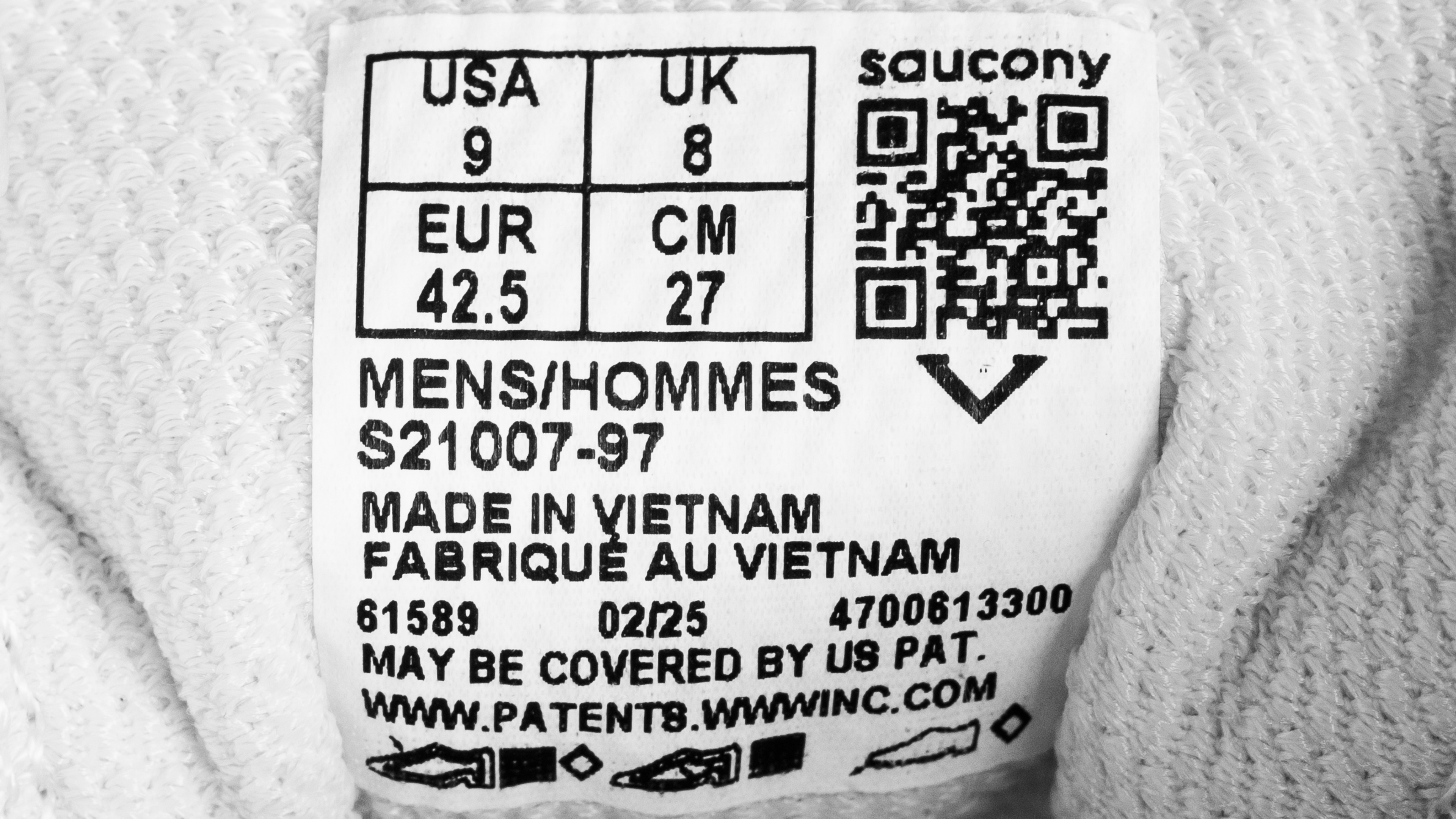
We tested the Saucony Endorphin Speed 5 in men's US size 9, as viewable on the label for our pair. The color shown here is White | Mutant. This model is also available in other colorways, such as Black | VO2, Black | White, Citron | Lapis, White | Gum, and Coral | Salmon. No wide versions are currently offered for this shoe. The design section applies only to the exact model we tested, but we expect other sizes and gender variants to perform similarly.