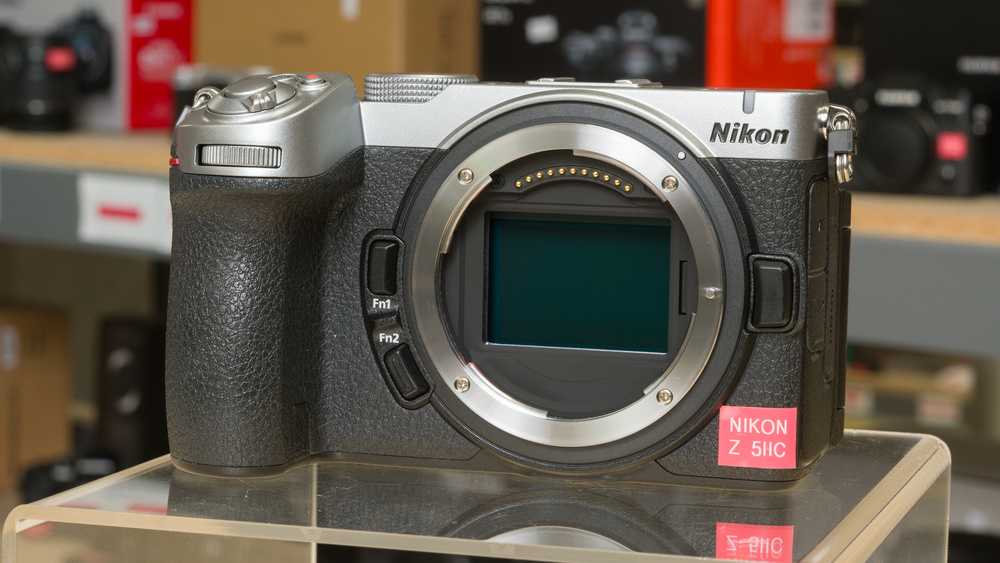
The Nikon Z 5IIC is a full-frame mirrorless camera aimed at casual photographers, content creators, and first-time camera buyers. It's a smaller, more affordable alternative to the Nikon Z 5II, and Nikon says the 'C' in its name stands for 'casual.' Inside, it has the same 24.5-megapixel backside-illuminated sensor and EXPEED 7 processor as its sibling. In-body image stabilization, subject-detection autofocus, and a mechanical shutter carry over as well. The most noticeable difference is that the 5IIC doesn't include an electronic viewfinder, which gives the camera a flat-topped design, so you compose every shot on the fully articulated touchscreen. It also drops the second card slot and the autofocus joystick. In return, Nikon adds scene modes to the mode dial to help beginners get started, as well as a video recording light. On the video side, it records 4k at up to 60 fps, 10-bit Log footage, and 12-bit RAW video internally. That puts it up against other full-frame cameras without a viewfinder, like the Panasonic LUMIX S9.
Our Verdict
The Nikon Z 5IIC is good for travel photography. Its full-frame sensor captures sharp photos with outstanding dynamic range, and in-body image stabilization helps you shoot handheld when the light drops. The weather-sealed body feels sturdy, the grip is comfortable for all hand sizes, and battery life is great. However, it's bulky and heavy for a camera without a viewfinder, so it takes up a fair amount of room in your bag and can be a bit cumbersome to carry all day long. The screen is your only way to frame shots, and it's dim, which makes it hard to see in bright sunlight.
Sharp RAW photos with outstanding dynamic range.
Sturdy, weather-sealed body.
In-body image stabilization.
Comfortable grip for all hand sizes.
Great battery life, with USB-C charging and power delivery.
No viewfinder.
Dim, low-resolution screen that can be hard to see in bright sunlight.
Bulky and heavy for a camera without a viewfinder.
Inconsistent tracking autofocus in photos.
The Nikon Z 5IIC is great for landscape photography. Its sensor captures an outstanding dynamic range, so both a bright sky and a shaded foreground retain detail, and its photos look sharp. Nikon seals the body against dust and moisture, and the fully articulated screen makes low-angle and tripod shots easier to compose. That said, there's no viewfinder, and the dim screen is hard to see under direct sun. It's also on the heavy side for long hikes.
Sharp RAW photos with outstanding dynamic range.
Sturdy, weather-sealed body.
Fully articulated touchscreen.
No viewfinder.
Dim, low-resolution screen that can be hard to see in bright sunlight.
Bulky and heavy for a camera without a viewfinder.
The Nikon Z 5IIC is great for sports and wildlife photography, with one clear weakness. Its electronic shutter fires JPEG bursts at up to 30 fps. A pre-capture function also buffers up to a second of action before you fully press the shutter button. The mechanical shutter reaches 14 fps, and the buffer clears instantly after a burst. The body is weather-sealed, and its rubberized grip gives you a secure hold. However, its tracking autofocus was inconsistent in our tests, and it sometimes lost moving subjects against a busy background. There's no viewfinder to help you follow fast action in bright light, and you only get one card slot.
Sturdy, weather-sealed body.
Comfortable grip for all hand sizes.
No viewfinder.
Inconsistent tracking autofocus in photos.
Single SD card slot.
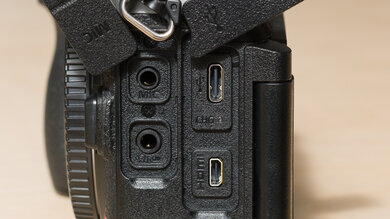
The Nikon Z 5IIC is good for vlogging. You can turn its fully articulated screen toward you to check your framing, and face tracking holds focus on you while you walk and talk. In-body image stabilization steadies handheld footage, a recording light confirms that you're rolling, and you get both microphone and headphone jacks. The battery lasts a long time in video, too. On the other hand, the camera is heavy and relatively large to hold at arm's length. Quick pans in 4k also show very noticeable rolling shutter. Recording 4k at 60 fps crops the frame by 1.5x, making it harder to fit yourself into the shot.
Sturdy, weather-sealed body.
In-body image stabilization.
Fully articulated touchscreen.
Outstanding autofocus in video.
Microphone and headphone jacks, plus a recording light.
Great battery life, with USB-C charging and power delivery.
Dim, low-resolution screen that can be hard to see in bright sunlight.
Bulky and heavy for a camera without a viewfinder.
Very noticeable rolling shutter in 4k.
4k at 60 fps adds a 1.5x crop.
The Nikon Z 5IIC is outstanding for studio video. It records 12-bit RAW video internally, along with 10-bit H.265 footage in N-Log or HLG, and its video dynamic range is excellent. Its autofocus reliably keeps faces and objects sharp. For longer shoots, the battery lasts about two hours in 4k, clips can run for up to 125 minutes, and you can power the camera over USB-C. You get microphone and headphone jacks as well. However, H.265 recording tops out at 4:2:0 chroma sampling, which leaves less color data for heavy grading. The camera overheated once during our 4k recording test, and it has a small micro HDMI port and a single card slot, which isn't ideal.
Fully articulated touchscreen.
Outstanding autofocus in video.
Internal 12-bit RAW and 10-bit Log video recording.
Excellent video dynamic range.
Microphone and headphone jacks, plus a recording light.
Great battery life, with USB-C charging and power delivery.
Single SD card slot.
H.265 recording limited to 4:2:0 chroma sampling.
Overheated during a long 4k recording.
The Nikon Z 5IIC isn't suitable for action video, since it isn't designed for it. It's too big and heavy to mount on a helmet or handlebars. Weather sealing protects it from dust and moisture, but it can't handle drops or submersion like a dedicated action camera. Rolling shutter is very noticeable in 4k, so fast pans and quick movements look skewed, and 4k tops out at 60 fps with a 1.5x crop.
In-body image stabilization.
Records 1080p at up to 120 fps without a crop.
Bulky and heavy for a camera without a viewfinder.
Very noticeable rolling shutter in 4k.
4k at 60 fps adds a 1.5x crop.
Not designed for action cam mounting.
The Nikon Z 5IIC has excellent RAW image quality. Its dynamic range is outstanding, so you can recover a lot of highlight and shadow detail when you edit. Photos look sharp, with enough resolution for moderate crops, and noise stays well controlled in dim light.
Sharp RAW photos with outstanding dynamic range.
Performance Usages
Check Price
Differences Between Sizes And Variants
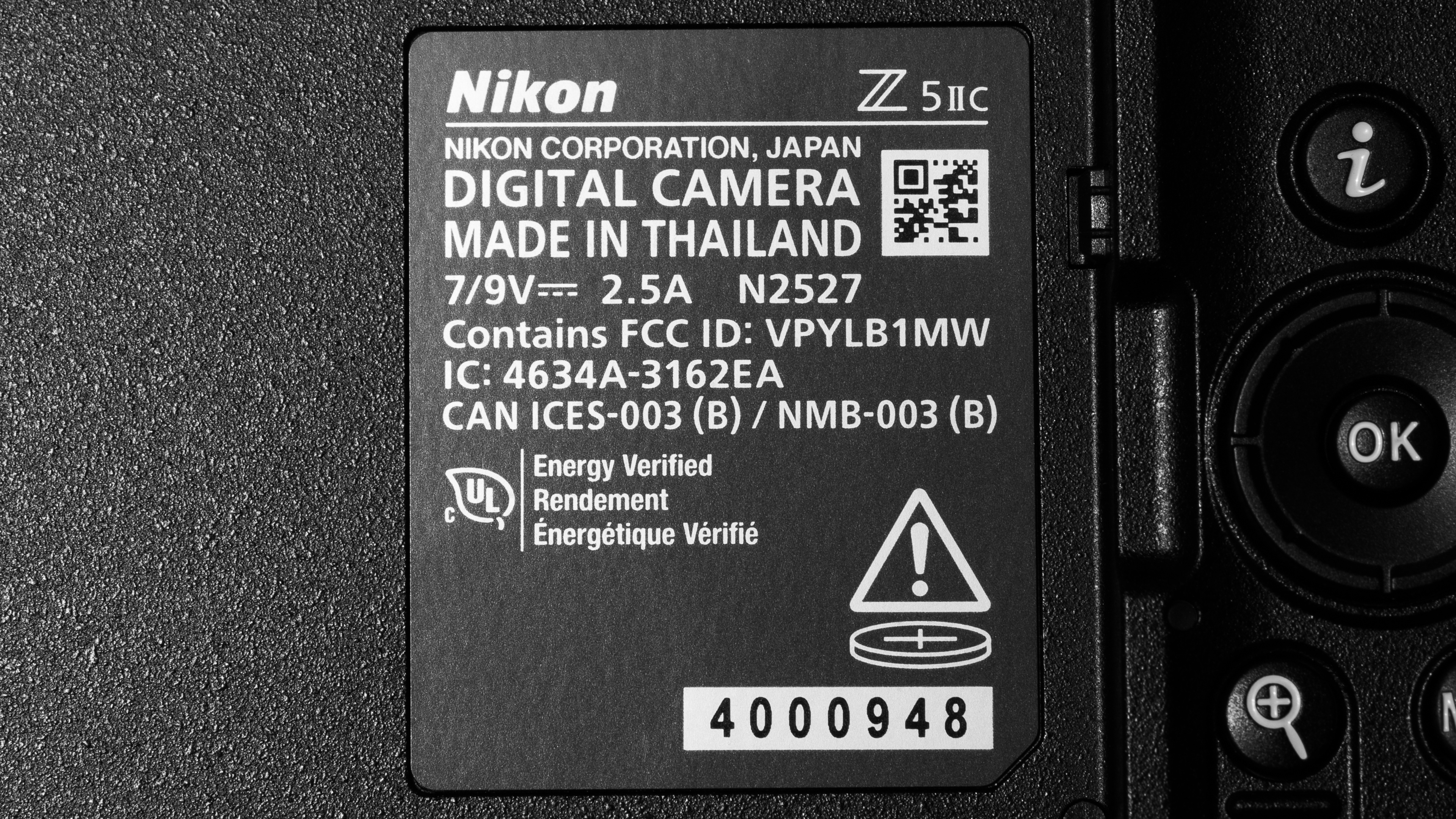
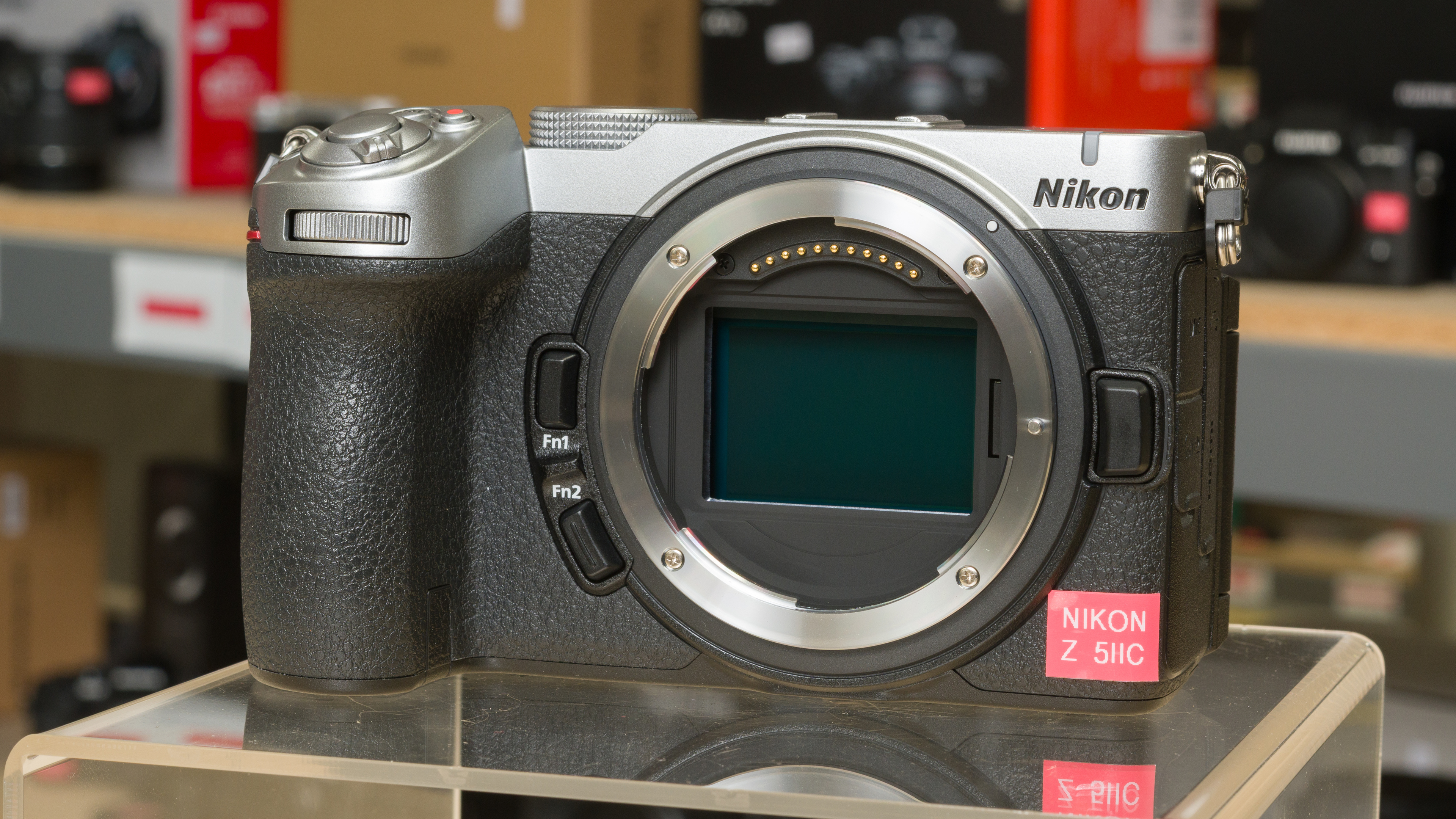
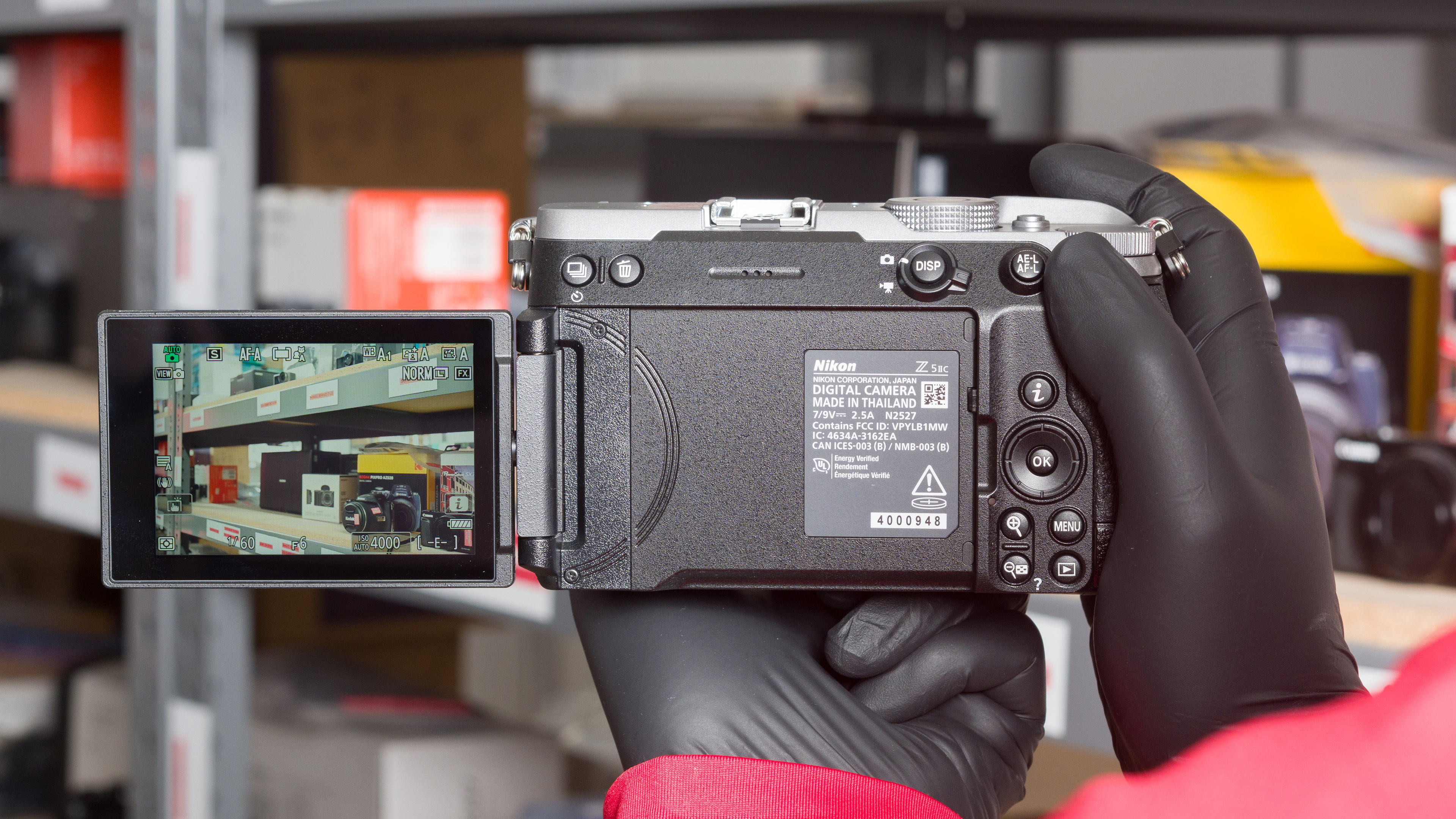
The Nikon Z 5IIC comes in two colors: 'Black' and 'Silver.' We bought the 'Silver' version without a lens. Its top plate is silver, while the rest of the body is black. Retailers also sell the camera in kits with the NIKKOR Z 24-50mm f/4-6.3, the NIKKOR Z 26mm f/2.8, or the NIKKOR Z 24-105mm f/4-7.1. Here's our unit's label.
We should also mention that the Z 5IIC is mostly the same as the slightly more expensive Nikon Z 5II, with the same sensor, processor, and video features. However, it drops the viewfinder, the autofocus joystick, and the second SD card slot, and its screen is dimmer and lower-resolution. In exchange, it's shorter, lighter, and cheaper, and it adds scene modes and a recording light.
Popular Camera Comparisons
The Nikon Z 5IIC is a full-frame camera for casual photographers and content creators who compose on a screen and don't want to pay for a viewfinder. It uses the same sensor as the Nikon Z 5II, so you get excellent image quality in a shorter, lighter, and cheaper body. It's a capable video camera as well, with internal 12-bit RAW recording, N-Log, and outstanding video autofocus. That said, removing the viewfinder doesn't make it as compact as its rivals. Its dim, low-resolution screen is hard to use in bright sunlight, and its tracking autofocus in photos was more inconsistent than expected in our testing.
Its closest rival is the Panasonic LUMIX S9, another full-frame camera without a viewfinder. The Panasonic is smaller, lighter, and cheaper. The Nikon counters with a mechanical shutter, a hot shoe, a headphone jack, weather sealing, and a far more comfortable grip, which make up for the increased size. The Sony α7C II is a more portable full-frame option with a small viewfinder and more reliable autofocus, though it costs considerably more. If portability matters most, APS-C models like the Sony α6700 and the Fujifilm X-M5 are easier to carry, and so are their lenses. Overall, the Z 5IIC makes the most sense if you rarely use a viewfinder, but still don't mind carrying a bigger camera. It gives you full-frame image quality and advanced video tools for less than the Z 5II costs. If you often shoot in bright sunlight or need a second card slot, the Z 5II is worth the extra money.
For more options, check out our recommendations for the best video cameras, the best vlogging cameras, or the best Nikon cameras.
The Nikon Z 5II and the Nikon Z 5IIC share the same sensor, processor, and video features, but the Z 5II is the more complete camera. It adds a sharp electronic viewfinder, a brighter and higher-resolution screen, a joystick for moving your focus point, and a second SD card slot. For photos, image quality is nearly identical between the two. However, the Z 5II's autofocus was more consistent in our tests, though we tested the Z 5IIC on its launch firmware, which might help explain the discrepancy. For video, the two perform about the same, but only the Z 5IIC has a recording light. It's also shorter, lighter, and cheaper, and its scene modes help beginners get started. If you always compose on the screen, the Z 5IIC saves you money. Otherwise, the Z 5II has some interesting additions.
The Nikon ZR is a video-centric alternative to the Nikon Z 5IIC, and it costs more. Neither camera has a viewfinder, and they weigh about the same. However, the ZR's boxy body is more compact, and its 4-inch screen is larger, sharper, and much brighter. For photos, the ZR shoots faster RAW bursts, and its autofocus is far more reliable. It has no mechanical shutter, though. The Z 5IIC has one, along with a deeper grip. For video, the ZR is far ahead. It records 6k RAW in three formats, 10-bit 4:2:2 footage, and 32-bit float audio. It shoots uncropped 4k at 60 fps, shows much less rolling shutter thanks to its partially stacked sensor, and didn't overheat in our testing. The Z 5IIC still records 12-bit RAW and N-Log footage internally, so it covers the essentials for less money.
The Sony α6700 and the Nikon Z 5IIC cost about the same, but the Sony uses a smaller APS-C sensor. That makes the Sony and its lenses lighter and easier to carry, and it has an electronic viewfinder. For photos, the Sony's autofocus is far more reliable, and Sony rates its battery for more shots. The Nikon's full-frame sensor captures wider dynamic range with less noise, though. Its electronic shutter shoots much faster bursts, and its RAW buffer is far deeper. For video, the Sony records 10-bit 4:2:2 footage internally and doesn't crop 4k at 60 fps. It offers 4k at up to 120 fps with a crop and 1080p at up to 240 fps, and its 4k footage shows less rolling shutter. The Nikon counters with internal 12-bit RAW recording, and its Log footage keeps far more usable dynamic range.
The Nikon Z 5IIC is a step up from the Nikon Z 50II, though it costs more. Both use the same processor and menus, but the Z 5IIC has a larger full-frame sensor, in-body image stabilization, and a weather-sealed body. For photos, the Z 5IIC takes sharper images with less noise, and its mechanical shutter shoots faster bursts. Nikon rates its battery for many more shots, too. The Z 50II has an electronic viewfinder and a built-in flash, though, and its autofocus was slightly more consistent in our tests. For video, the two are close. Both record 10-bit N-Log footage, crop 4k at 60 fps, and show similar rolling shutter in 4k. The Z 5IIC adds internal 12-bit RAW recording and lasts more than twice as long on a charge. However, the Z 50II didn't overheat in our testing.
Test Results
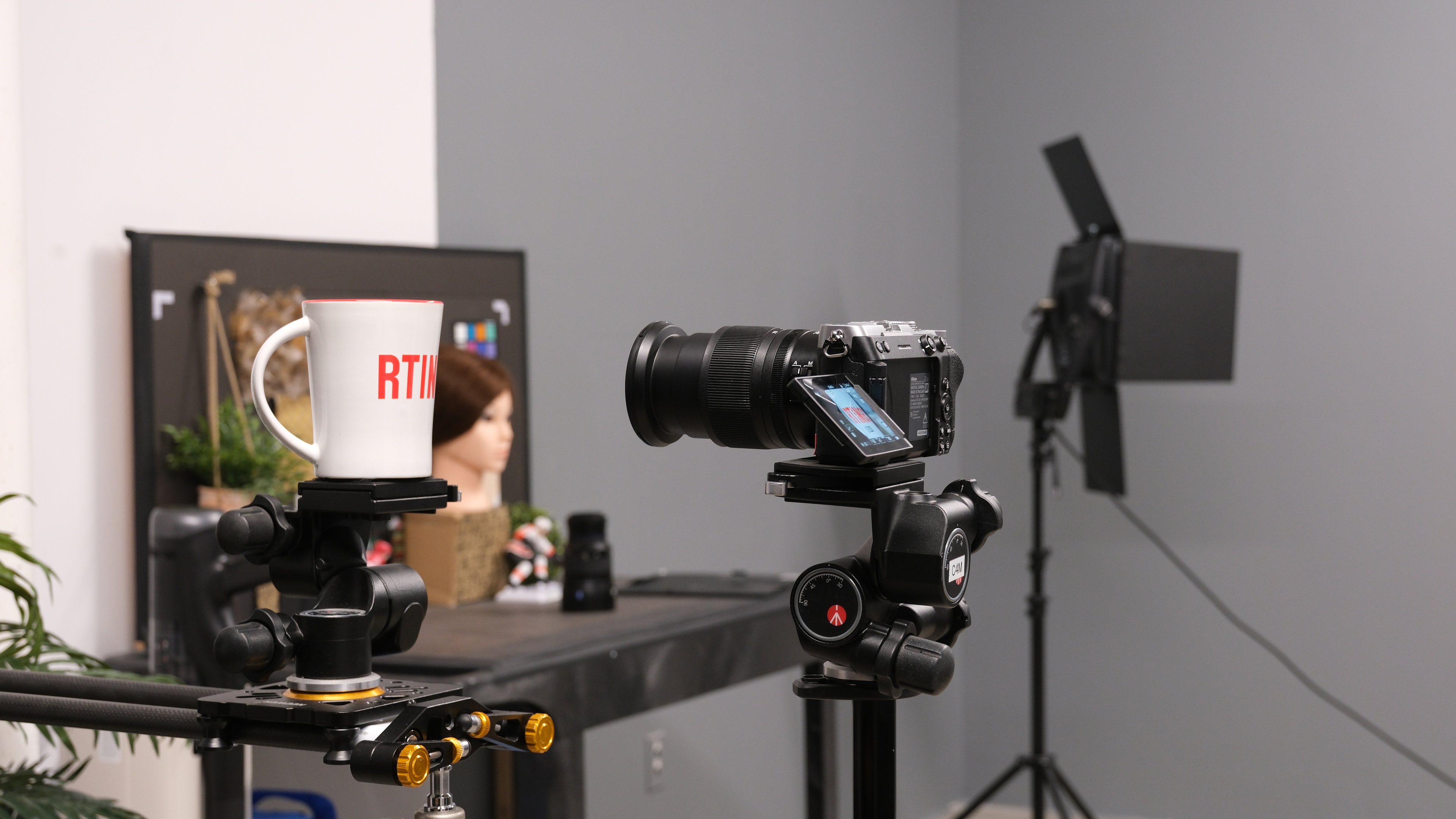
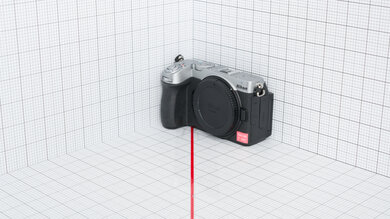
The Nikon Z 5IIC has disappointing portability. With no viewfinder hump, it's shorter and lighter than most full-frame hybrids, so it slides into a bag more easily. It's still a wide, deep camera with a large grip, though, and full-frame lenses add even more bulk, so it's not the easiest to carry around.
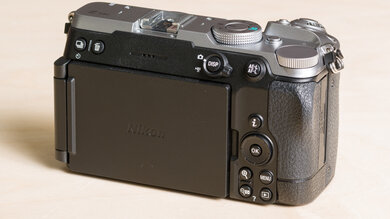
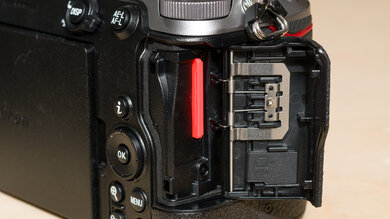
The Nikon Z 5IIC has excellent build quality that's virtually identical to the Nikon Z 5II. Its body uses magnesium alloy and feels sturdy, and a textured, rubbery coating covers the grip, the thumb rest, and the front of the camera. Nikon also seals it against dust and moisture. Separate hinged doors lock over the battery and the memory card, and sturdy rubber flaps protect the ports. The command dials are sturdy with good feedback, and the screen's hinge feels solid. However, the buttons only offer okay feedback, and the directional pad on the back is stiff. The screen doesn't sit perfectly flat against the body, either, so it can get in the way of the pad's left side. Finally, the strap attaches to loose rings instead of fixed lugs, so it can rattle and add noise to your videos if you're not careful.
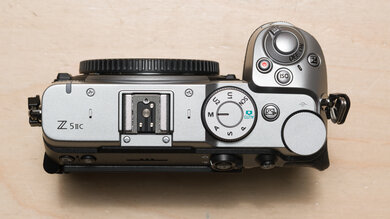
The Nikon Z 5IIC has a flat-topped body with a large grip. Its mode dial includes a scene mode position, which is a first for a full-frame Nikon camera. You can choose from 15 scenes, like portraits, sunsets, or close-ups, and the camera adjusts its settings to match. Next to the dial, a dedicated button gives you quick access to the camera's color profiles. On the back, a switch toggles between photo and video modes, and the drive mode button sits in the top-left corner.
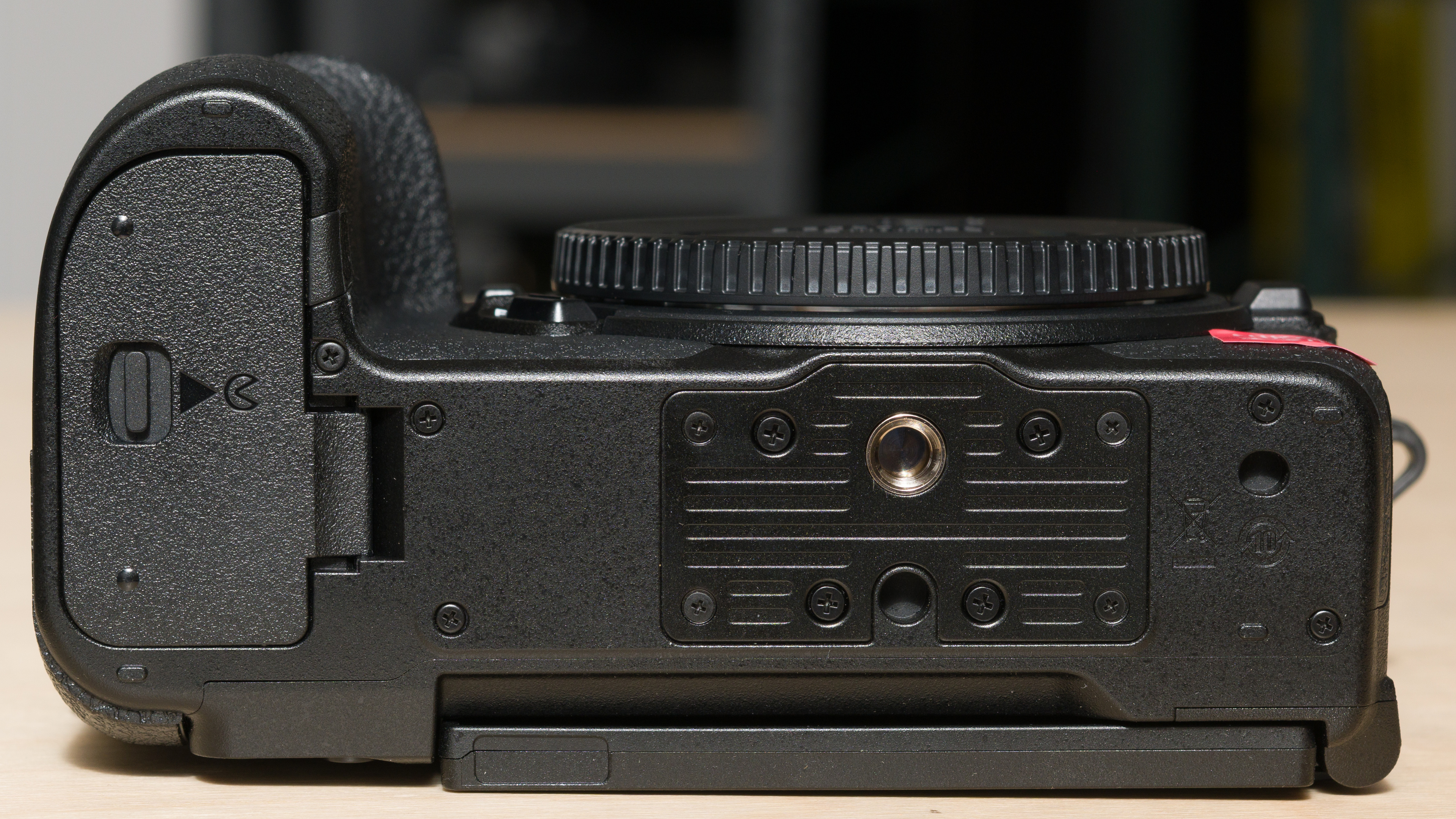
By default in manual mode, the front command dial sets the aperture, while the rear one controls shutter speed. Two customizable buttons sit on the front of the body, and a recording light shows when the camera is filming. The top plate has a hot shoe for an external flash or other accessories, and its cover comes in the box. The camera doesn't have a built-in flash. Here's a look at the underside of the camera.
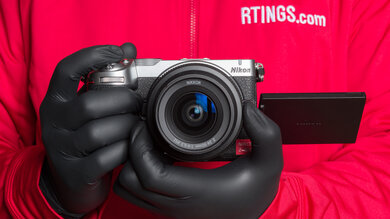
The Nikon Z 5IIC has great ergonomics. The rubber on the grip keeps the camera secure in your hand, and your fingers have ample space next to the lens, so it suits all hand sizes. The thumb rest on the back is roomy, too, which keeps you from accidentally pressing buttons. Exposure changes are quick, thanks to the two command dials and an ISO button that sits on top of the grip. Every control is within reach of one hand, except for the drive mode button in the top-left corner.
However, a few omissions make the camera less convenient to use. There's no joystick, so you move your focus point and navigate menus with the touchscreen or the directional pad. Without a viewfinder, composing in bright sunlight is harder, and the low-resolution screen makes it tricky to judge manual focus.
The Nikon Z 5IIC doesn't have a viewfinder, so you compose every shot on the screen.
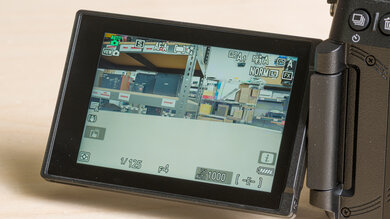
The Nikon Z 5IIC has an excellent screen overall, mostly thanks to its versatile hinge. It swings out to the side and rotates, which helps with high- and low-angle shots, and it turns forward when you film yourself. Touch controls work everywhere, including the menus, the shooting display, and playback. However, the panel isn't very sharp, and it doesn't get as bright as the screens on most of its rivals, including the Nikon Z 5II. That makes it harder to see in direct sunlight, which matters more here, since there's no viewfinder to fall back on.
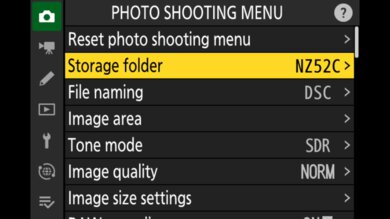
The menu system is excellent. It's well organized and easy to navigate with either the touchscreen or the directional pad. When you reopen the menu, it returns to the last option you visited, which saves a lot of scrolling when you fine-tune a setting. On most cameras, you start over from the first item in the list. A customizable 'i' menu keeps your most-used settings one button press away, and a built-in guide explains what many options do.
With so many options, some functions, like the focus and video assist tools, take time to find at first. They're easy to get back to once you know the layout, though. The camera pairs with the Nikon SnapBridge app, which handles photo transfers and remote control from your phone. You can download extra color presets to the camera and back up your photos over Wi-Fi.
Inside the Nikon Z 5IIC is the same 24.5-megapixel full-frame BSI CMOS sensor as in the Nikon Z 5II, paired with the EXPEED 7 processor. A backside-illuminated (BSI) design places the sensor's wiring behind its light-sensitive layer, which helps it gather more light in dim conditions.
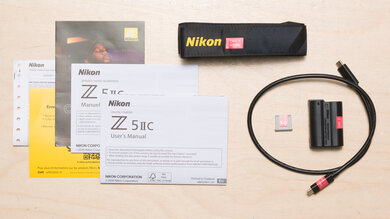
Battery life is great on the Nikon Z 5IIC. Nikon rates it for about 350 shots per charge, or 390 with the energy-saving mode turned on. These CIPA figures are best for comparing cameras, since your own results depend on how you shoot. In video, it lasted nearly two hours of continuous 4k recording in our test. The battery charges over USB-C, and the same port can keep the camera running while you record. There's a USB-C cable in the box, but no power adapter.
The Nikon Z 5IIC has excellent shooting speeds. With the mechanical shutter, it shoots at up to 14 fps in its 'Continuous H (extended)' mode. That top rate applies to JPEG files, and RAW bursts reach about 11 fps. For faster action, the 'C30' mode uses the electronic shutter to capture 30 fps bursts, but it only saves JPEGs. You can pair that mode with a pre-capture function that records up to a second of action before you fully press the shutter button. There's a low-speed continuous mode as well, and you can set it anywhere from 1 to 7 fps.
Bursts stop after 200 frames, whether you shoot RAW or JPEG. The buffer clears instantly, though, so you can start a new burst right away.

Photo tracking autofocus is okay. The Nikon Z 5IIC can automatically detect people, animals, birds, vehicles, airplanes and even fish. In our testing, its performance was inconsistent. The camera kept up with our subject in some runs, but in others, the busy background confused its subject detection, and it lost focus. About half of the shots were perfectly sharp, and roughly eight in ten were at least usable. The burst rate also slowed down in most runs, since we set the camera to prioritize focus over shooting speed. We expected tracking results similar to the Nikon Z 5II, since the two cameras share the same sensor and processor, but the Z 5IIC fell short. Its early firmware may be the cause, as we tested it on version 1.00. We will update the review if new firmware improves performance.

Autofocus is good when you turn off tracking and rely on one focus point, but it still shows some inconsistency. About three-quarters of our test shots were perfectly sharp, and close to nine in ten were usable, which is below what we achieved with the Nikon Z 5II. As in the tracking test, the burst rate slowed down in most runs while the camera prioritized focus.
Image stabilization is great. Nikon rates the in-body system for up to 7.5 stops of correction. In our test, we got sharp handheld photos down to 1/8s using the NIKKOR Z 24-70mm f/4 S, a lens without optical stabilization. That's slow enough to shoot static scenes in dim light without raising the ISO as much. How slow you can go depends on your lens, the focal length, and your technique.
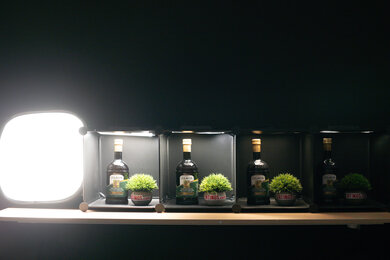
The Nikon Z 5IIC has outstanding dynamic range. Its sensor records a very wide range of tones at base ISO. High-contrast scenes like a sunset or a backlit portrait keep detail in both the highlights and the shadows. That leaves plenty of room to brighten shadows or pull back highlights when you edit. Its range narrows as shutter speeds get faster and the ISO climbs, but it stays wide enough for scenes with strong contrast in dimmer light.
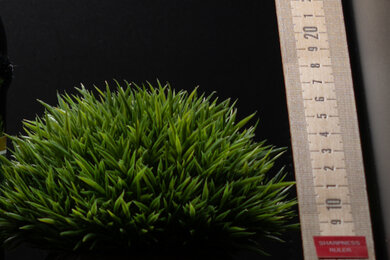
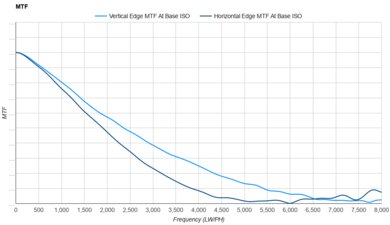
The Nikon Z 5IIC takes excellent, sharp photos. Fine details like hair, foliage, and fabric look clear, and its 24.5 megapixels leave room for moderate crops.

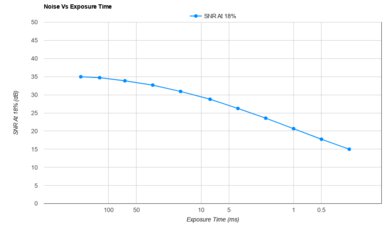
Noise handling is very good. Photos stay clean at slower shutter speeds and in decent light, and you can raise the ISO a fair amount before grain becomes distracting.
The Nikon Z 5IIC has an extensive set of video features for its class. It records 4k and 1080p video, but there's no 6k mode. For color grading, you can shoot in N-Log, which preserves more dynamic range, or in HLG for HDR playback. Exposure and focus tools include a waveform display, zebras, and focus peaking. A recording light and a red frame around the screen show when the camera is recording.
For solo creators, a product showcase mode shifts focus to any object you hold up to the camera. The camera also outputs a clean HDMI signal for external monitors and recorders. According to Nikon's manual, that output is 10-bit 4:2:2 when you record 10-bit footage.
The Nikon Z 5IIC records MOV files with H.265 compression in 8-bit or 10-bit, plus 8-bit MP4 files with H.264 compression. H.264 only works in 1080p, so you need H.265 for 4k. All-Intra compression isn't available, since every mode uses Long GOP. For RAW video, the camera records 12-bit N-RAW internally in the NEV format. When you shoot RAW, it saves a 1080p MP4 proxy file to the card alongside each clip. The camera uses that smaller file for playback, and so does Nikon's NX Studio software.
4k frame rate options are excellent. The Nikon Z 5IIC records 4k at up to 30 fps using the full width of its sensor. A 60 fps mode gives you smoother motion or half-speed slow motion, but it adds a 1.5x crop. The tighter framing makes wide shots harder to get, especially when you film yourself at arm's length.
Internal recording in 4k is excellent. The Nikon Z 5IIC records 10-bit H.265 video at high bit rates, and it oversamples the image at 24 and 30 fps for extra detail. However, H.265 only supports 4:2:0 chroma sampling.
For more flexibility in post, you can record 12-bit N-RAW internally at up to 30 fps. Nikon lists a bit rate of about 420 Mbps for that format at 30 fps and recommends V90 SD cards. RAW files take up a lot of space, and you need compatible software on a computer to view and edit them.
Clips can run for up to 125 minutes. However, the camera overheated once during our continuous recording test, which interrupted the recording.
Rolling shutter in 4k is disappointing. The sensor reads out slowly, so vertical lines lean noticeably when you pan quickly, and fast-moving subjects can look skewed. Slower, steadier camera movements keep the effect in check. If you want a Nikon body with much less skew, the Nikon ZR's partially stacked sensor reads out far faster.
Rolling shutter is good in 1080p, and it's far less pronounced than in 4k. Vertical lines still slant a little during fast pans, but it isn't distracting in most situations.
The Nikon Z 5IIC has excellent video dynamic range. Shooting in N-Log, it holds detail from dark shadows through bright highlights. Noise stays low across most of that range, even by a strict standard, so high-contrast footage keeps plenty of latitude for grading.
Tested settings:
- Resolution: 4k
- Frame Rate: 30 fps
- Format: MOV, H.265, 10-bit
- Log Format: N-Log