The Nikon Z 5II is an entry-level full-frame camera in Nikon's mirrorless Z lineup, sitting below the Nikon Z 6III. It follows the Nikon Z 5 and still includes essential features such as in-body image stabilization, dual SD card slots, and weather sealing. The Z5II improves on many of its predecessor's limitations. It updates the model to the latest processor, brings a fully articulating screen, much faster burst shooting, and a noticeably more capable autofocus system with more versatile subject detection. While it doesn't quite match the performance of the Z 6III and its partially stacked sensor, which delivers quicker readout speeds, it still offers an extremely complete overall package that's actually closer to this sibling than the original Z 5. You'll even find many advanced features, like a pre-release capture mode that records images and buffers them for up to 1 second before the shutter-release button is fully pressed, and 12-bit RAW video support, which is a big step forward for this line of cameras.
Our Verdict
The Nikon Z 5II is very good for travel photography, but it's quite bulky to carry, especially when you add a larger zoom lens. In exchange for the size, you get excellent image quality and a very reliable autofocus system for tracking moving subjects. The camera also feels great in hand, with a weather-sealed build that's grippy and solid. Its in-body image stabilization performs very well, which helps in low-light scenarios, especially if you don't want to carry a tripod around. That said, while it supports USB-C charging, its estimated battery life for photos is relatively short, so you'll most likely need to also carry extra batteries to be on the safe side for those longer days.
Excellent autofocus performance for both acquiring and tracking subjects.
Outstanding dynamic-range.
Well-built and weather sealed.
In-body image stabilization system performs very well.
Sensor delivers amazingly sharp results with very good noise handling.
Quite large and heavy.
Photo battery life is only okay.
The Nikon Z 5II is excellent for landscape photography, delivering amazing image quality with plenty of dynamic range for high-contrast scenes or tricky light conditions. It's well-built and very comfortable to shoot with. Its body is weather-sealed, so you can be more confident in adverse conditions. If you're carrying a tripod and shooting a static scene, the multi-shot high-resolution mode is a nice bonus, combining multiple exposures into an ultra-detailed image of roughly 96 megapixels. The one downside is battery life in photo mode, which is only okay, so it's worth investing in extra batteries or a battery pack.
Outstanding dynamic-range.
Well-built and weather sealed.
In-body image stabilization system performs very well.
Sensor delivers amazingly sharp results with very good noise handling.
Quite large and heavy.
Photo battery life is only okay.
The Nikon Z 5II is excellent for sports and wildlife photography. It has remarkably quick burst options reaching 11 fps in RAW or a 30 fps JPEG-only with electronic shutter. A pre-capture mode is another nice addition, helping you catch a subject's movement before you even fully commit to the shot. Autofocus is another strong suit, with subject detection covering people, animals, and vehicles, contributing to an excellent overall system that acquires subjects quickly and tracks them reliably. The fundamentals are also all there. The body is well-built, weather-sealed, and comfortable to shoot for extended periods. The only real knock against the Z5II is the estimated photo battery life, which runs a bit short.
Excellent autofocus performance for both acquiring and tracking subjects.
1-second pre-capture and 30 fps shooting speeds are outstanding additions for fast-moving subjects.
Impressive continuous shooting speed.
Well-built and weather sealed.
In-body image stabilization system performs very well.
Quite large and heavy.
Photo battery life is only okay.
The Nikon Z5II is decent for vlogging, mainly thanks to its very well-rounded technical performance. Its video quality is excellent with ample room for color correction thanks to 12-bit N-RAW and Log support. Its autofocus is also excellent. It can reliably track subjects as they move across the frame. It also includes a fully articulating screen, which makes it easier to monitor yourself, and its in-body image stabilization system is quite effective at reducing camera shake if you plan to shoot handheld. Recordings are limited to 125 minutes, which should still leave plenty of leeway for your shots. The big issue with this system is its sheer size. This is a large and heavy camera that can be quite difficult to use if you plan to do walk-and-talk-style vlogs.
Impressive video autofocus.
Amazing dynamic-range.
12-bit RAW video and N-Log support.
In-body image stabilization system performs very well.
Quite large and heavy.
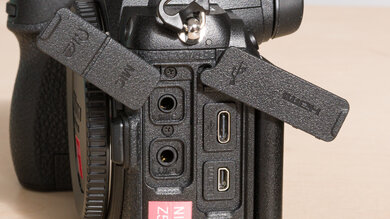
The Nikon Z5II is a fantastic choice for studio video work. It can record 12-bit RAW video internally, unlike its predecessor, giving you more color information to work with in post. Log recording is also supported, so you can fully exploit the sensor's excellent full dynamic range. A full set of inputs and outputs rounds things out, including a headphone jack and microphone input, though the HDMI port is a Micro connector, which isn't ideal. Autofocus is also excellent. The camera can recognize many types of subjects and track them across the frame extremely well. The recording time caps out at 125 minutes per clip, plenty for most shoots, though we did run into an overheating warning during testing. The video battery life runs a bit short, but the camera can be used while charging over USB, which helps out on long shooting days.
Impressive video autofocus.
Amazing dynamic-range.
12-bit RAW video and N-Log support.
Action video isn't really what the Nikon Z5II is built for. It's weather-resistant, but not waterproof, and there's no real way to mount it to a helmet or chest rig for rugged shoots. Being a large full-frame body, it's also not something you can carry seamlessly through that kind of rocky, high-motion use. 4k frame rate options add another limitation, since high frame rate 4k isn't available, and 4k/60 fps only comes with a 1.5x crop. IBIS does a solid job smoothing out handheld shake, but for genuinely smooth action footage, you'll still need to pair the camera with a gimbal.
Impressive video autofocus.
Amazing dynamic-range.
12-bit RAW video and N-Log support.
Not designed for action cam mounting.
The Nikon Z5II delivers excellent RAW image quality. Dynamic range stands out in particular; it can resolve a very wide array of highlight and shadow detail. The images also stay sharp with plenty of fine detail, even when you punch in. Noise handling is also very good overall.
Outstanding dynamic-range.
Sensor delivers amazingly sharp results with very good noise handling.
Performance Usages
Check Price
Differences Between Sizes And Variants
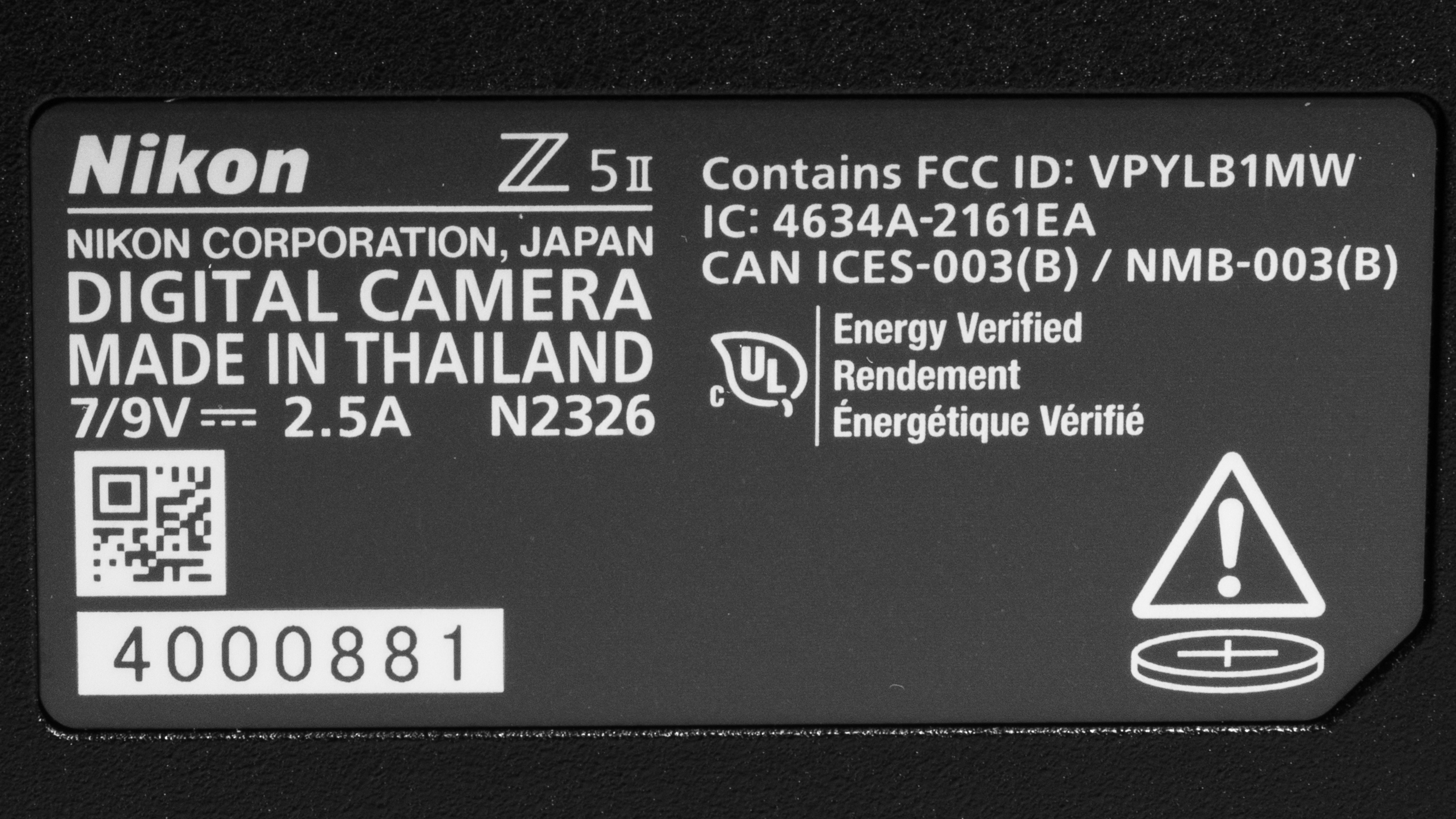
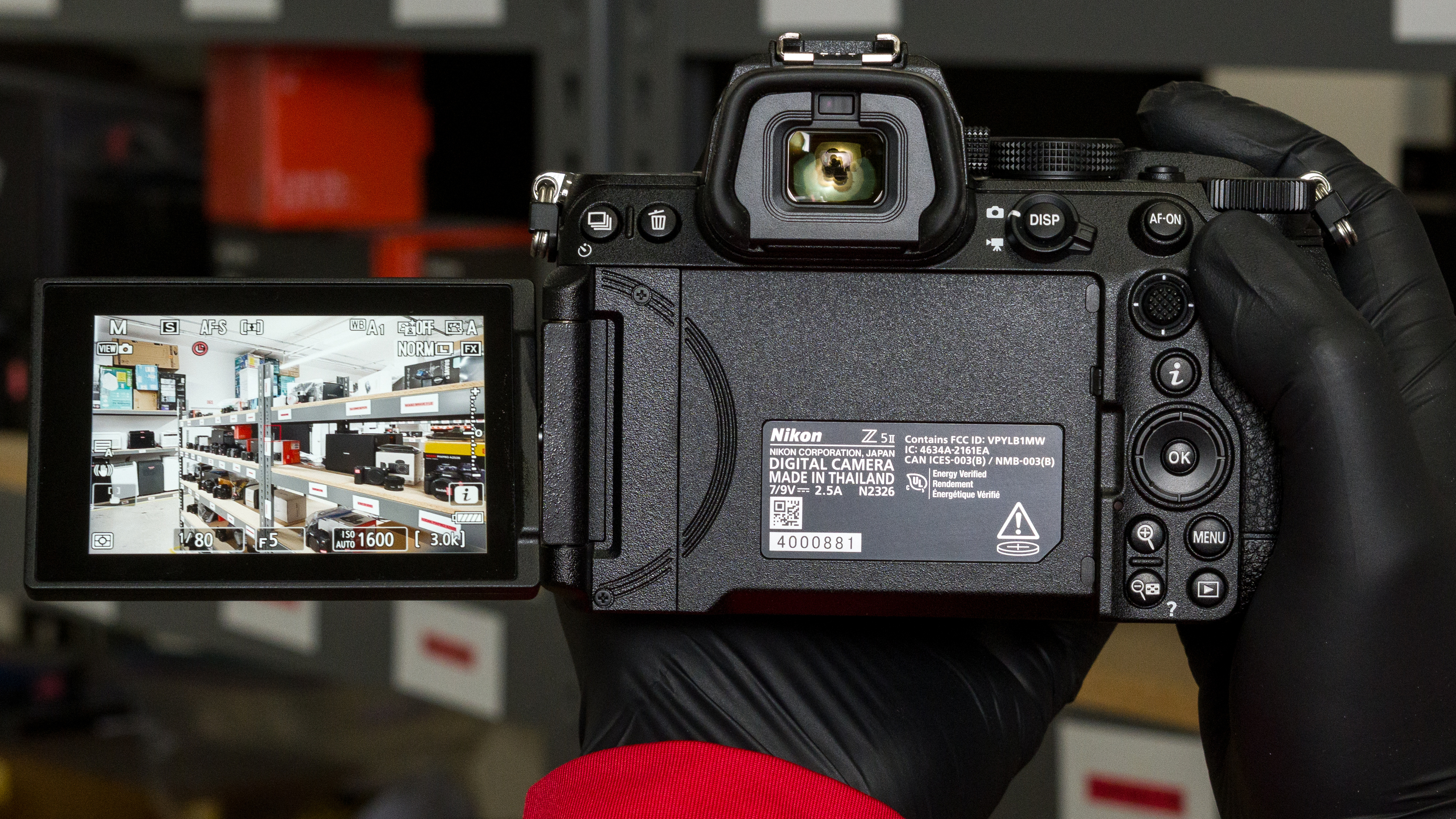
The Nikon Z5II is only available in one color variant: 'Black,' and you can see our unit's label here.
Popular Camera Comparisons
The Nikon Z 5II delivers an extremely complete overall package that should satisfy even the most demanding photographers. It doesn't really have any major flaws, and most of its predecessor's shortcomings have been addressed. It shoots very quickly, its focus system is highly dependable, and its sensor captures a lot of detail even in more difficult lighting conditions.
It's also not too shabby for video shooters, as it now includes a Log profile and even 12-bit N-RAW support, which allows for much more leeway when editing. That said, if you're a very serious video shooter, you may find value by looking at the higher-end Nikon Z 6III. For example, while the Z 5II requires an APS-C crop to shoot in 4k60, the Z 6III can shoot uncropped 6k video at 60 fps. Its partially stacked sensor also helps drastically reduce rolling shutter.
Even so, you'll be hard-pressed to find a more complete package in this segment. Its main competition comes from higher-end last-generation models like the Sony α7 IV, the Canon EOS R6 Mark II, and the Nikon Z 6II, all of which are now nearing the end of their shelf life and have recently come down in price. The Z5II still manages to keep up with, or even outperform, these models in most respects, and shines especially with its sensor's dynamic range, its excellent IBIS implementation, and brisk shooting speed. The battery life for photography is really the only recurring weak point across the whole package, and it's a minor one considering how much else the Z 5II gets right.
For more options, check out the best digital cameras we've tested, the best cameras for wildlife photography, or the best cameras for videography and filmmaking.
Despite being a lower-end model, the Nikon Z 5II matches the Nikon Z 6III in several respects: both cameras use the same EXPEED 7 processor and a 24.5 MP sensor, with similar autofocus capabilities. The Z 5II even takes the edge when it comes to photo dynamic range. Where the Z 6III pulls ahead is overall speed. Its partially stacked sensor enables blackout-free shooting, and burst rates climb much higher, up to 120 fps with the e-shutter, compared to the Z 5II's 30 fps. It's also a more capable video camera, as it can capture up to 6k video or even 4k/120.
The Nikon Z 5II is a big improvement over its predecessor, the Nikon Z 5. Its burst rates are more than twice as fast, its autofocus is much more reliable, its backside-illuminated sensor delivers more dynamic range, and the camera can shoot uncropped, oversampled 4k30 video compared to the APS-C crop on the original. Unless you mostly shoot slow-moving subjects and don't really require a speedy camera, the Z 5II is an all-around better choice.
The Nikon Z 5II comes out ahead of the Nikon Z 50II in many respects. It uses a full-frame sensor that delivers more detailed files and better light-gathering performance. It also includes many perks, such as a weather-sealed body, a dual SD card slot, and an improved viewfinder and main display. That said, the Z 50II uses the same processor, which helps it deliver similar autofocus performance and overall snappiness when it comes to the user experience. Although it's an APS-C sensor, both cameras are pretty similar in size.
The Nikon Z f and Nikon Z 5II are a match when it comes to overall performance. They use the same sensor-and-processor combination. The main thing to consider when deciding between these two models is which body you prefer. While the Z 5II prioritizes comfort and ergonomics with its more conventional modern design, the Z f goes for an old-school style with plenty of very tactile dials to play with.
Test Results
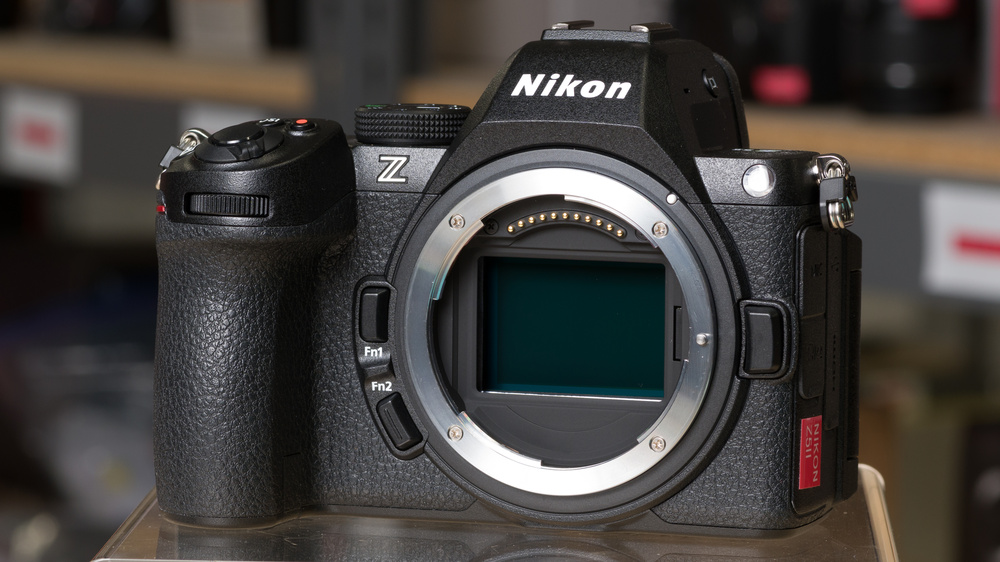
The Nikon Z5II keeps nearly the same body as its predecessor, the Nikon Z 5. It weighs slightly more, but you won't notice the difference in-hand. The overall footprint stays large and heavy, in line with most other full-frame models in this segment.
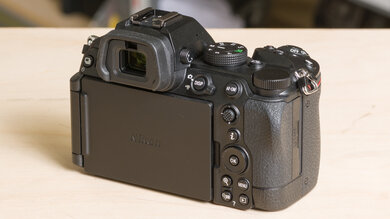
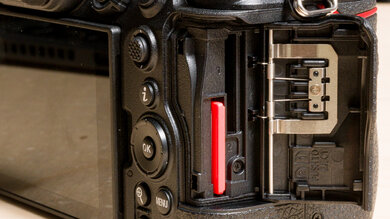
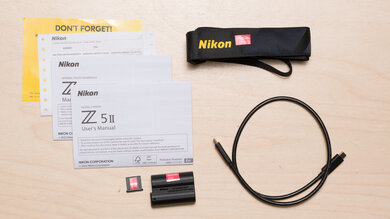
The Nikon Z5II boasts impressive build quality. It has a magnesium alloy body with a textured, rubbery coating around the grip, thumb rest, and front of the camera, and it feels solid overall. The dials are well-built with good feedback, though the back dial pad is quite stiff, which might require some getting used to. The new fully articulating display doesn't sit as flat as on the previous iteration, so it can get in the way of easily activating the pad's left side. Both the memory card door and the battery door are hinged and lock securely when closed. The shoulder strap hooks are still the dangly kind, so they're not the best for video recording. Inputs are covered by a sturdy rubber flap, and the camera ships with a hot-shoe protection cover, which will also help against dust and debris.
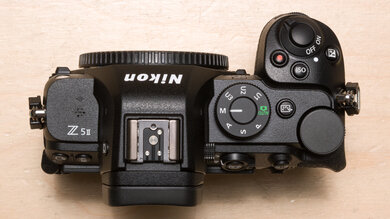
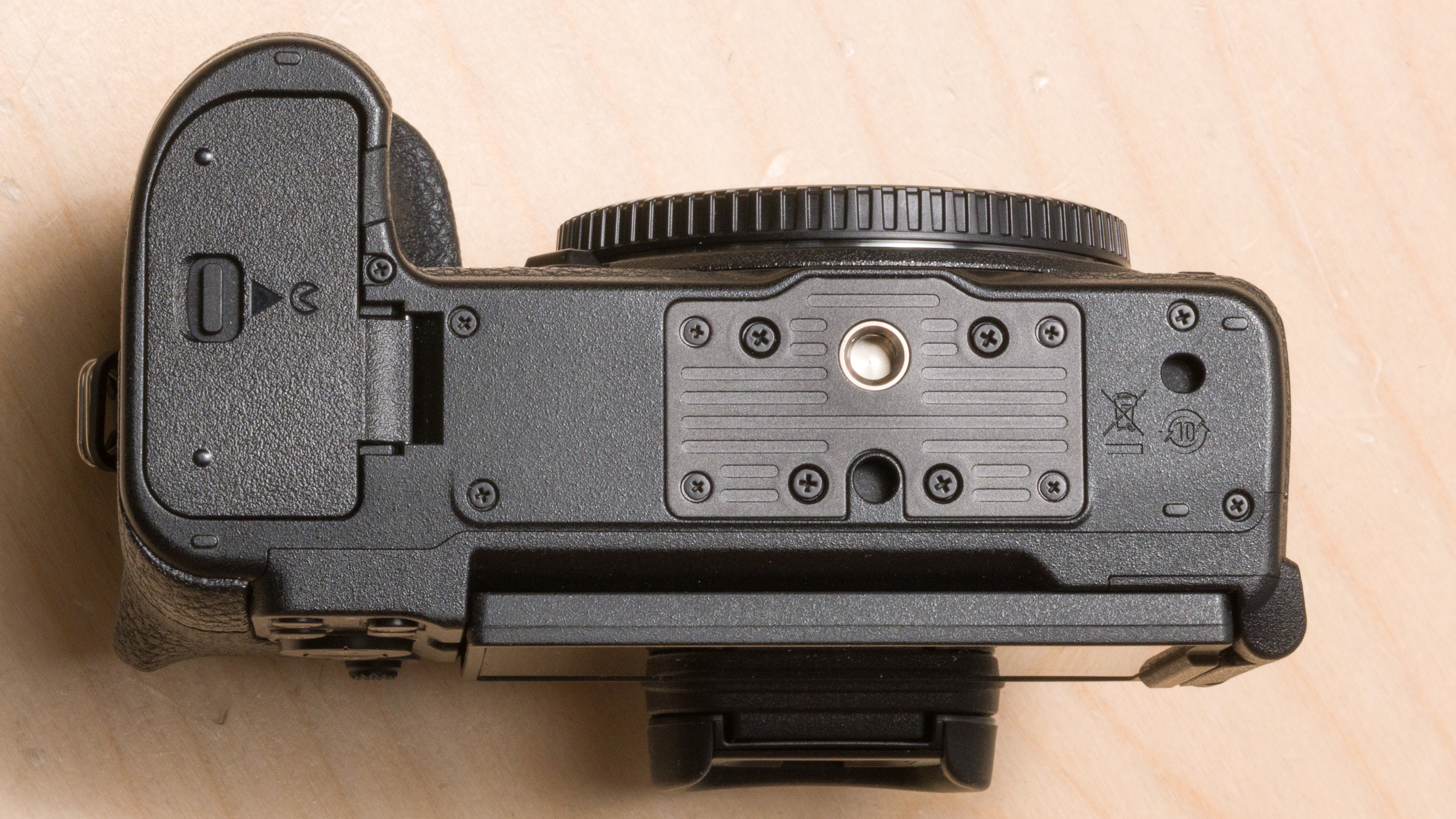
Here's a picture of the camera's underside.
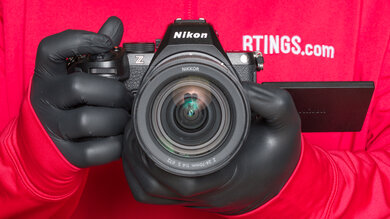
In keeping with Nikon's recent models, the Nikon Z5II has outstanding ergonomics. From the back, its control layout closely mirrors that of higher-end Nikon bodies, keeping most of what you need within easy reach of your right hand.
You can easily change exposure settings using the command dials and the dedicated ISO button on top of the grip, all while keeping your eye on the viewfinder or monitor. In manual mode, the front dial controls aperture, and the back dial controls shutter speed by default. While they provide good feedback, the back dial is quite stiff. The dedicated drive mode button has moved to the top left corner. There's also a dedicated switch to toggle between photo and video modes, with a red button to start recording, though this only works in video mode. You can't take a photo with the shutter button while in video mode.
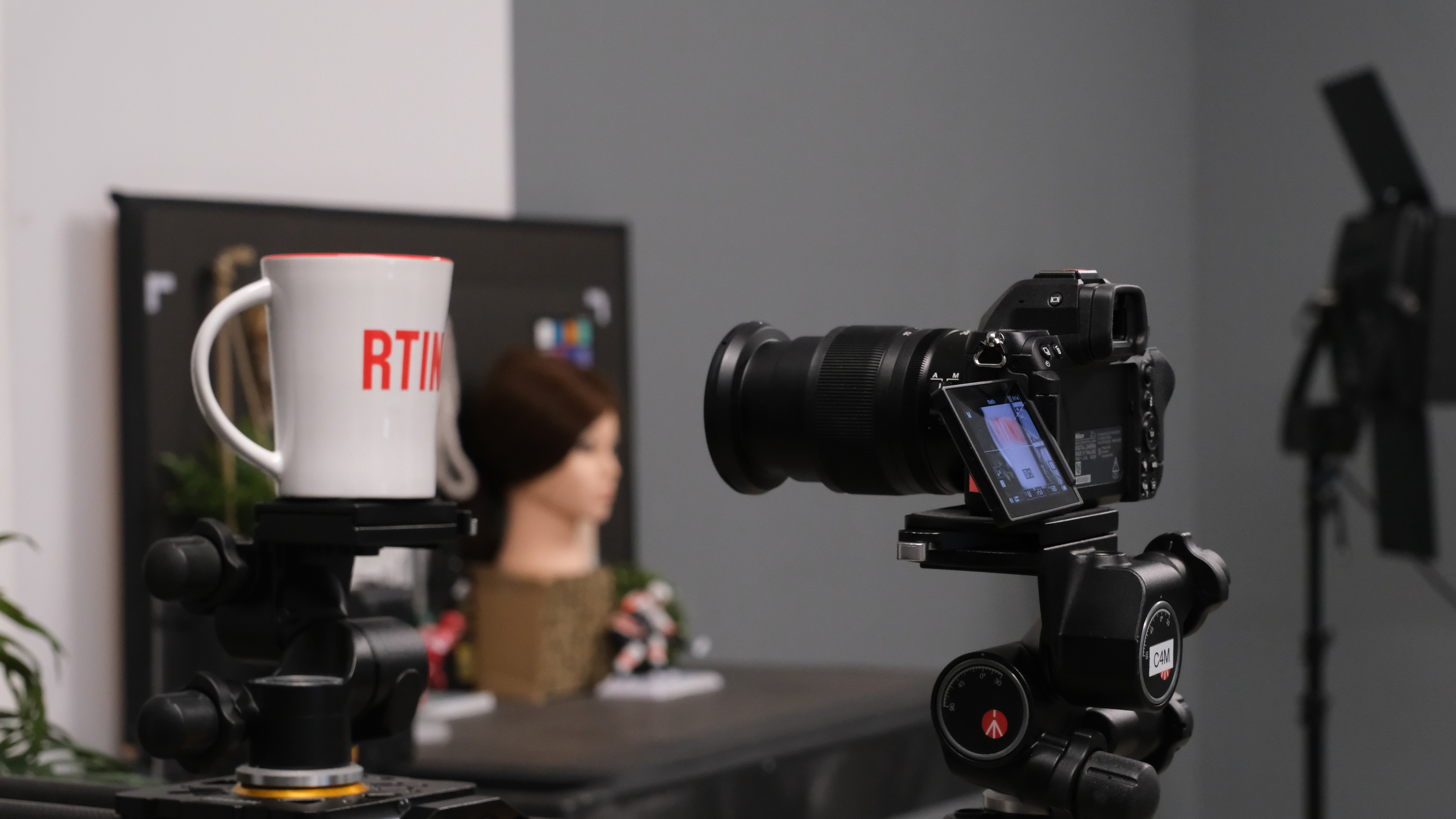
The viewfinder is very comfortable, protruding far enough from the body with soft rubber around the eyecup. The grip itself is rubbery and offers a secure hold, and there's plenty of room between it and the lens for your fingers. Aside from the drive mode button, every control is easy to reach and activate with one hand. The D-pad, joystick, and full touch functionality make navigating menus and settings straightforward. The backrest also gives your thumb plenty of room, so you won't accidentally press any buttons. On top of that, the new fully articulated screen makes it easy to shoot from different angles, even if it requires popping it out for low- and high-angle photos, which can be more cumbersome than a simple tilt.
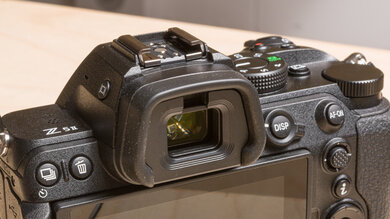
The Nikon Z5II's electronic viewfinder (EVF) has a high resolution, giving you a clear, sharp view of your subject that's ideal for checking focus.
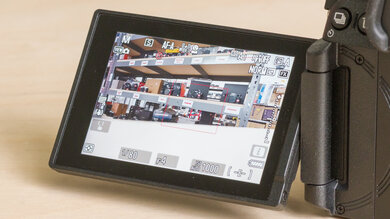
The Nikon Z5II's screen is outstanding and a nice upgrade over its predecessor. It's now fully articulated, has a high resolution, and is bright enough to be usable even in sunny conditions.
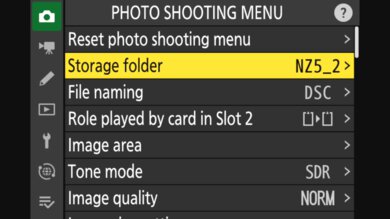
Nikon's user interface is intuitive and well-organized. You can navigate the Nikon Z5II's menu using either the physical controls or the touchscreen, and the system remembers the last option you visited, so you can jump right back to changing a setting instead of being sent back to the top of the menu, as on most cameras. There's also a customizable quick menu, the {i} menu, where you can place your most-used settings for faster access. A help function provides more information about certain settings when you tap the "?" symbol in the bottom-left corner of the screen or press the zoom-out button, though it's only available for some settings.
Because of the sheer number of settings, some functions, like video and focus assist, can be harder to find at first, but once you get used to the layout, it's easy to navigate back to the features you need most.
The Nikon Z5II features a backside-illuminated sensor design, which should improve its light-gathering capability compared to its predecessor. In essence, this is the same sensor as what's used on the Nikon Z f.
Although it's within the average for this type of camera, the battery performance on the Nikon Z5II is mixed. It lasts quite a long time for recording video, and the camera even supports power delivery while filming, but it's just okay for photography.
In the real world, actual battery life will vary depending on how you use the camera, how long you keep it powered on, the type of shooting you're doing, and more. Still, the CIPA rating is a reliable way to gauge its performance relative to other cameras.
The shooting speed on the Nikon Z5II is amazing and represents a big improvement over its predecessor. With the mechanical shutter, it reaches 11 fps in RAW or 14 fps in JPEG.
You also have the option to use the 'High-Speed Frame Capture,' or 'C30' and 'C15,' modes that capture high-speed 30 fps or 15 fps bursts. However, this mode is restricted to JPEG format in 'Large' image quality. This can be combined with the 'Pre-Release Capture,' which buffers frames with a half-press of the shutter button and then saves up to 1 second of those frames when you press the shutter all the way.
Regardless of your shooting mode, the camera has a max buffer depth of 200 frames. After that, it stops shooting, but you'll be able to restart immediately since the buffer empties instantly.

The Nikon Z 5II has an updated autofocus system with an EXPEED 7 processor, matching the wider range of subject detection modes found on other Nikons equipped with the same chip. It can detect humans, birds, cats, dogs, cars, motorcycles, bicycles, trains, and airplanes. It also features '3D Tracking' AF, like the Nikon Z 6III, which tracks any subject under the focus point regardless of which subject detection mode you've chosen.
Overall, the autofocus performance is decent. It's a noticeable improvement over the Nikon Z 5, and while it doesn't work quite as seamlessly as the Z 6III, it gets awfully close.

The Nikon Z5II's in-body image stabilization is rated by Nikon at up to 7.5 stops of compensation, and it lives up to that claim, letting you shoot steady handheld shots even at very slow shutter speeds. Using the Nikkor Z 24-70mm f/4 S, a lens without its own optical stabilization, we got roughly the same results as the Nikon Z f and Nikon Z 6III, despite those cameras' higher 8-stop rating.
There's also a 'Focus Point Stabilization' feature that shifts the IBIS system's focus from the center of the frame to wherever your focus point is. That way, your subject stays sharp regardless of where they land in the composition.
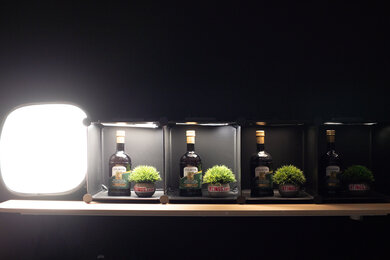
The camera's RAW dynamic range is exceptional. It's ideal to capture detail in high-contrast scenes or in trickier lighting.
Note: The Nikon Z5II's NEF files aren't currently compatible with LibRAW, which we use to process and measure our RAW image quality tests. For that reason, we've had to use RAW files converted to DNG format, so the results here may not be fully comparable with other cameras we've tested.

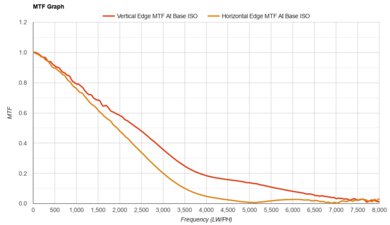
Even without the resolution of higher-megapixel sensors, this camera's sensor delivers plenty of sharpness and detail, leaving you room to crop into your shots when needed.

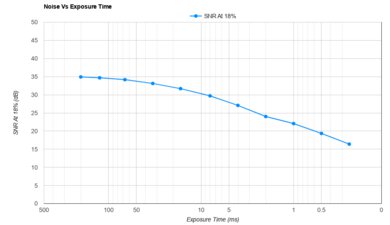
The Nikon Z 5II handles noise in RAW files very well, which comes in handy for low-light shooting, since you can push to higher ISOs while keeping visible noise at acceptable levels.
The Nikon Z5II can record sub-sampled 12-bit N-RAW (NEV) internally or oversampled H.265 10-bit 4k at 30 and 24 fps in either Log or SDR, so you'll have to choose between the color-grading flexibility of 12-bit RAW and the sharpness of oversampled 10-bit H.265, depending on your workflow's priorities.
When you shoot RAW video, the camera saves a companion MP4 FHD version alongside it on the SD card. This proxy clip is used for in-camera playback, and it's also what Nikon's NX Studio software relies on for playback there.
The internal video recording capability on the Nikon Z 5II is excellent, offering oversampled H.265 4k UHD 10-bit Log video at up to 326Mbps. Unfortunately, it's limited to 4:2:0 chroma sampling, so you won't be able to push your colors as far as competitors that can use 4:2:2.
You can also shoot in the N-RAW 12-bit at 30 fps; you can expect a bitrate around 420Mbps according to Nikon's documentation. However, the end result may be a bit less detailed than the regular Log format because the camera uses a sub-sampled readout for this mode.
While video recording isn't unlimited, it has a longer 125-minute which will give you plenty of leeway. That said, during testing, we encountered an overheating issue in which the camera shut down and cooled off before we could continue shooting.
Autofocus performance in 4k video is outstanding in our testing, with the camera quickly locking onto subjects and tracking them with ease. Even when subjects move in and out of frame, the system rarely struggles to keep up. Built-in detection covers humans, animals, birds, and even some vehicles, which makes the whole system extremely versatile.
The Nikon Z5II's sensor readout speed is quite slow, which means you'll get a lot of rolling shutter, especially when panning quickly. This is an area where the partially stacked sensor on the Nikon Z 6III shows its strengths.
While not perfect, the rolling shutter effect is much less pronounced in 1080p compared to 4k.
The Nikon Z 5II has excellent video dynamic range, capturing detail across a wide range of exposure levels. This comes in handy if you often shoot in difficult lighting, since it's easier to recover shadow or highlight detail that would otherwise get lost.
Tested settings:
- Resolution: 4k
- Frame Rate: 30 fps
- Log Format: N-Log