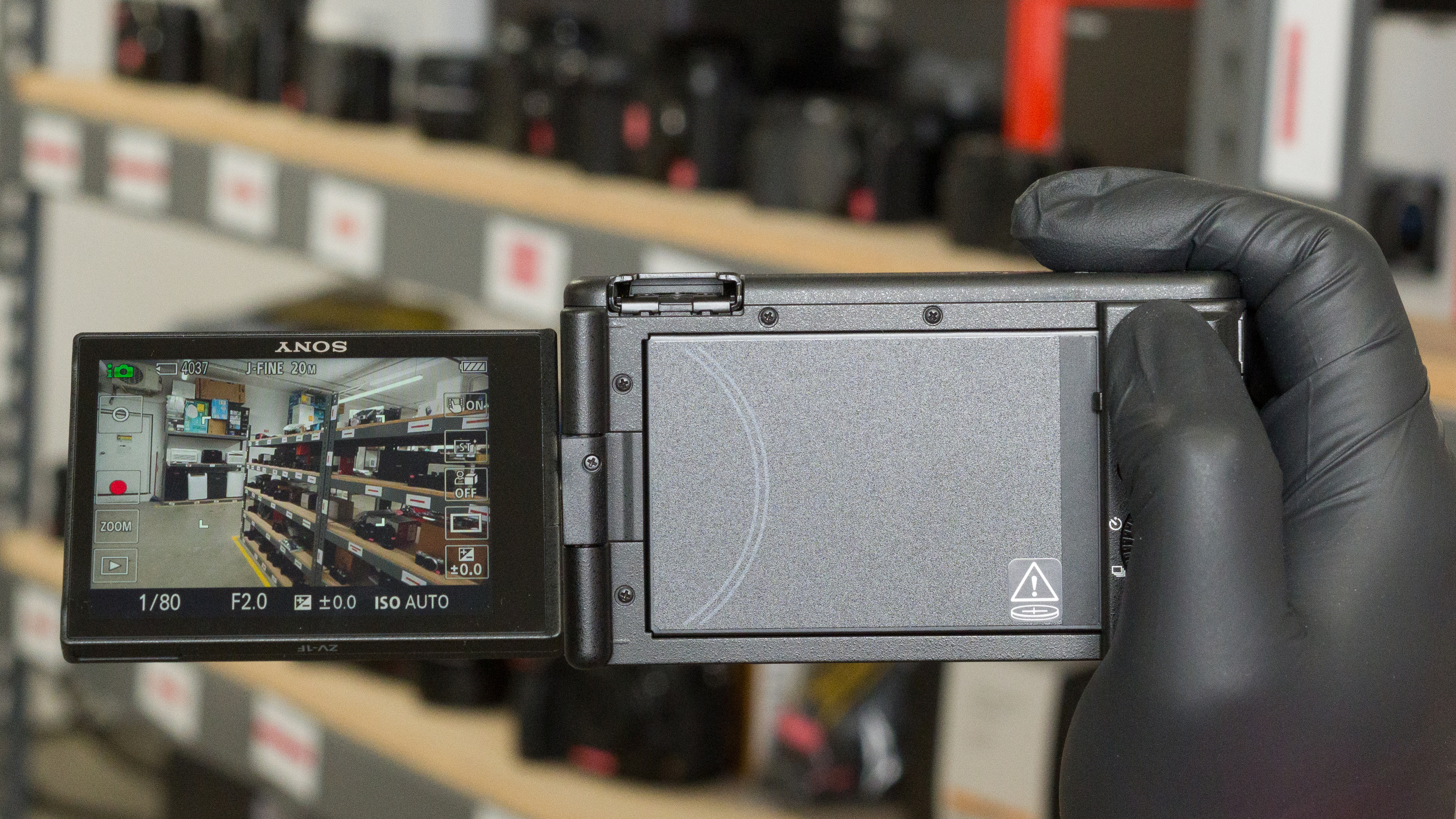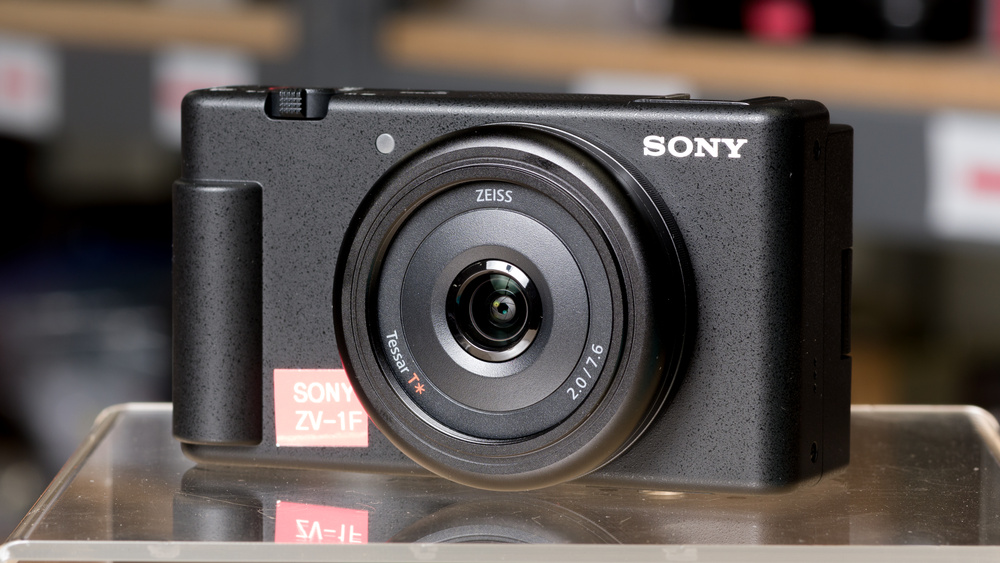
The Sony ZV-1F is a compact vlogging camera and the most affordable sibling of the Sony ZV-1 II. It features a fixed 20mm full-frame-equivalent lens, making it well-suited for vlogging. Like other cameras in Sony's ZV lineup, it has a portable design with a touchscreen, a three-capsule directional microphone, and Sony's latest vlogging features, including Product Showcase and Cinematic Vlog mode. The ZV-1F uses the same stacked 20MP 1-inch sensor found in the ZV-1 II. However, unlike the original Sony ZV-1, it lacks optical image stabilization and instead relies on digital stabilization to smooth out footage.
Our Verdict
The Sony ZV-1F is a mediocre choice for travel photography. Its small, light body slips easily into a pocket or bag, and the fixed 20mm-equivalent lens is wide enough for most environmental shots and group photos. However, it can't shoot RAW, so you're stuck with JPEGs and have less room to recover detail in tricky lighting. There's no optical zoom either, so getting closer to a subject means relying on a soft digital zoom instead. Battery life for photos is decent on paper, but with no image stabilization in photo mode and a smaller 1-inch sensor, it's quite limited for low light.
Compact and lightweight, easy to carry or pocket.
Fully articulated touchscreen with full touch control.
Well-organized, easy-to-navigate menu system.
No viewfinder.
Small, non-rubberized grip that's cramped for larger hands.
No continuous auto-focus.
No RAW support.
No IBIS or optical stabilization.
The Sony ZV-1F isn't a good option for landscape photography. Its fixed wide-angle lens suits the genre well on paper, and it uses the same 20.1 MP sensor as Sony's other 1-inch compacts. That's where the good news ends, though. Without RAW support, you lose most of the dynamic range and post-processing flexibility that landscape work depends on. There's also no image stabilization in Photo mode, and the slowest available shutter speed is just 1/4s, which rules out long exposures for waterfalls, star trails, or other low-light landscape shots.
Compact and lightweight, easy to carry or pocket.
Fully articulated touchscreen with full touch control.
Well-organized, easy-to-navigate menu system.
No viewfinder.
Small, non-rubberized grip that's cramped for larger hands.
No RAW support.
No IBIS or optical stabilization.
For sports and wildlife, the Sony ZV-1F is a middling performer. It can shoot at a fast pace in both regular and silent shooting modes, and its buffer clears quickly. The main issue is that the camera has no continuous autofocus for stills, only single-shot AF and manual focus, so tracking a moving subject through a burst is essentially impossible. Its fixed 20mm-equivalent lens is also far too wide for most wildlife shooting, with no telephoto reach beyond a soft digital zoom.
Fully articulated touchscreen with full touch control.
Well-organized, easy-to-navigate menu system.
No viewfinder.
Small, non-rubberized grip that's cramped for larger hands.
No continuous auto-focus.
No RAW support.
No IBIS or optical stabilization.
The Sony ZV-1F is a very good vlogging camera. The fully articulated touchscreen makes it easy to frame yourself. Video autofocus is reliable for both face and object tracking. The ZV-1F has essentially no recording time limit in 4k and rarely overheats, so you can keep filming without interruption. The fixed lens limits your framing options since there's no optical zoom.
Compact and lightweight, easy to carry or pocket.
Fully articulated touchscreen with full touch control.
Well-organized, easy-to-navigate menu system.
Essentially unlimited 4k recording time with minimal overheating.
USB-C port with power delivery while recording.
No headphone jack.
Small, non-rubberized grip that's cramped for larger hands.
Cold shoe instead of a true hot shoe, so it can't power accessories.
No continuous auto-focus.
The Sony ZV-1F performs well for studio video. It includes S-Log picture profiles for more flexible color grading, along with a wide range of other picture profiles to match your preferred look. Video dynamic range is strong. A stereo mic input lets you plug in an external microphone, and USB-C power delivery means you can shoot for very long periods without stopping. The camera's biggest limitation in a studio setting is the lack of a headphone jack, so there's no way to monitor your audio in real time.
Fully articulated touchscreen with full touch control.
Well-organized, easy-to-navigate menu system.
Essentially unlimited 4k recording time with minimal overheating.
USB-C port with power delivery while recording.
No headphone jack.
Small, non-rubberized grip that's cramped for larger hands.
Cold shoe instead of a true hot shoe, so it can't power accessories.
The Sony ZV-1F isn't built for action video, and it shows. It isn't rugged or weather sealed, so it isn't the camera to bring into rain, dust, or rough conditions. It also lacks any real image stabilization beyond a digital stabilization mode, which does little to smooth out footage once you start moving quickly. Frame rate options are limited for high-speed capture, too, especially in 4k where it tops out at 30 fps. 1080p fares better at up to 120 fps. It's a fine camera for casual handheld action video, but not one built to mount on a helmet or a bike.
No continuous auto-focus.
Can't be mounted on accessories for action shots.
The Sony ZV-1F doesn't shoot RAW photos.
No RAW support.
Performance Usages
Check Price
Differences Between Sizes And Variants
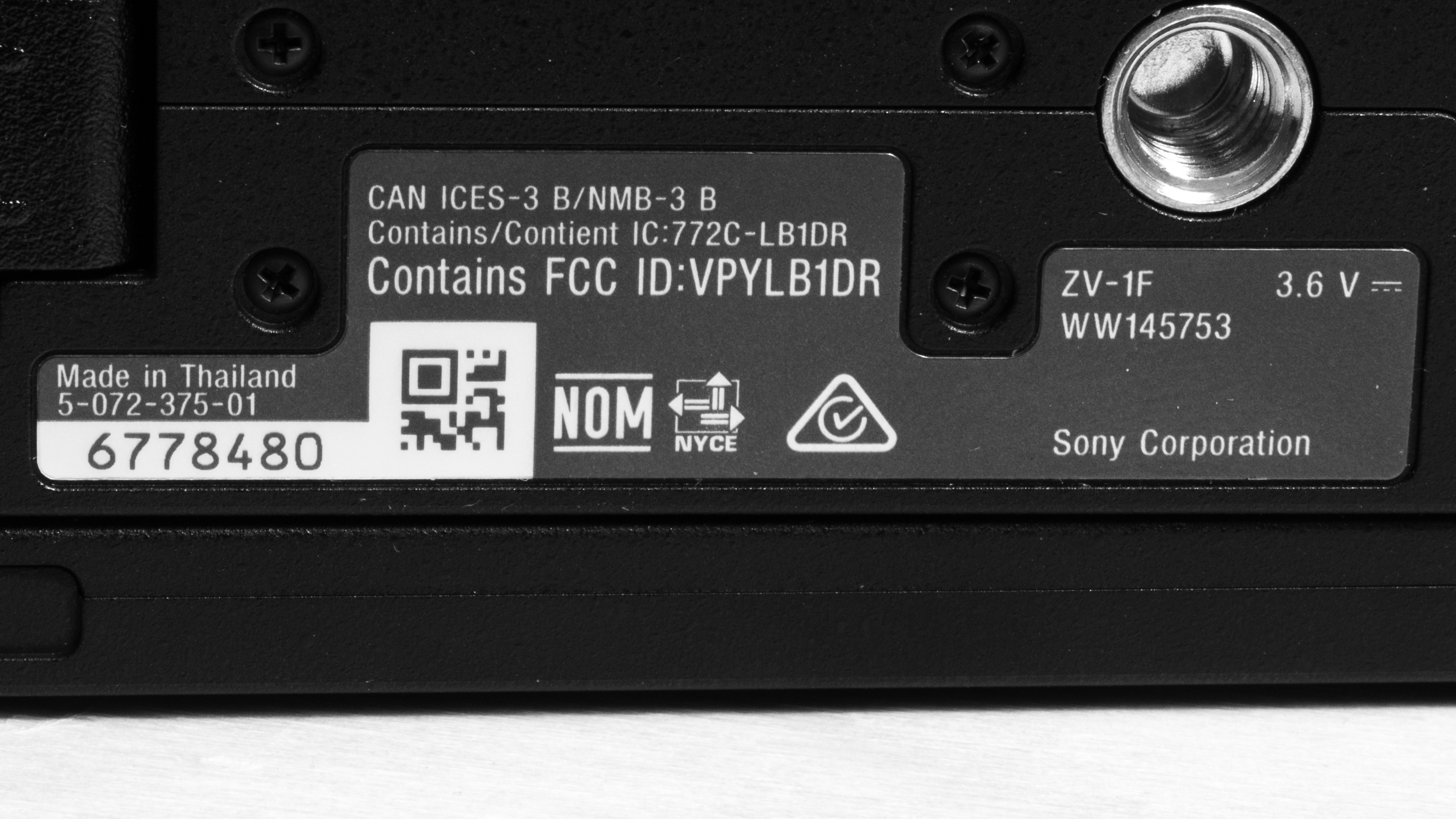
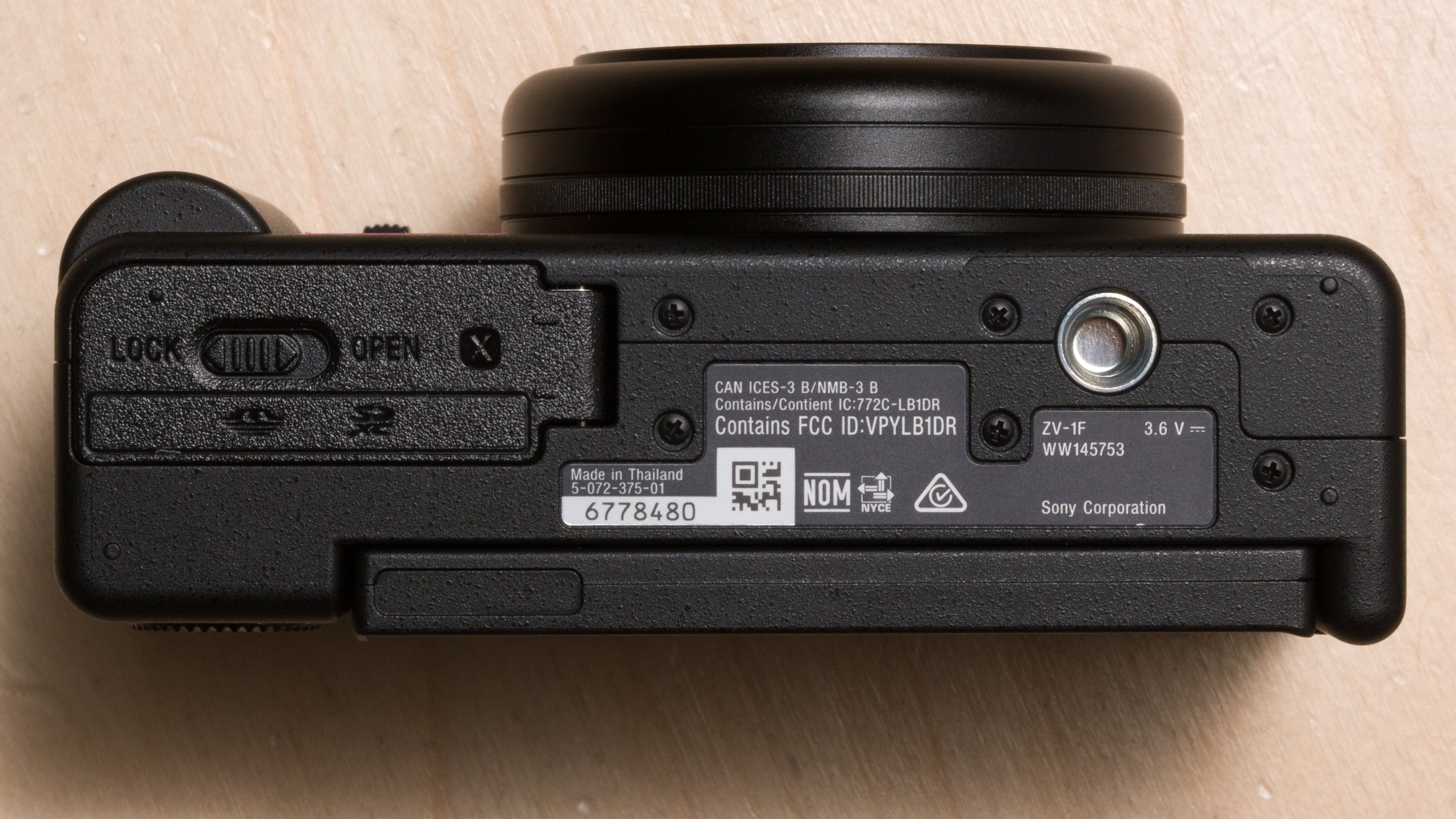
The Sony ZV-1F comes in two color variants: Black and White. We bought the Black variant, and here's its label.
Popular Camera Comparisons
The Sony ZV-1F sits at the bottom of Sony's ZV lineup, and the price reflects it. Where the Sony ZV-1 and Sony ZV-1 II both use zoom lenses, 24-70mm and 18-50mm equivalent respectively, the ZV-1F trades that flexibility for a single fixed 20mm-equivalent f/2.0 lens. That makes it less versatile if you like to zoom in on a subject, but it also keeps the camera smaller, simpler, and ultimately cheaper to buy.
In our testing, we also noticed that the ZV-1F runs cooler than its siblings: it barely overheated during extended 4k recording, while both the ZV-1 and ZV-1 II shut down repeatedly under the same conditions. The trade-off that matters most is stills, though. The ZV-1F can't shoot RAW photos at all, so if photography matters to you as much as video, the ZV-1 or ZV-1 II are the better picks. If you want more creative control and don't mind spending more, an interchangeable-lens Sony ZV-E10 II or the Fujifilm X-M5 is worth a look, too, since they accept a wide range of lenses and offer a larger APS-C sensor, which will give you better video and photo quality. Other options, like the DJI Pocket 4, also bridge the gap between sports cameras and vlogging and may be easier to carry.
For more options, check out the best vlogging cameras, the best compact cameras for travel, and the best point-and-shoot cameras.
The Canon EOS R100 and Sony ZV-1F land at similar prices but serve different purposes. The R100 is an interchangeable-lens camera with a larger APS-C sensor, a built-in viewfinder, and RAW support, making it a much better choice for photography. It also has a real hot shoe and a built-in flash, both of which are missing on the ZV-1F. For video, though, the ZV-1F pulls significantly ahead: its screen is fully articulated and touch-enabled, while the R100's is fixed in place with no touch support at all. The R100 also shows much more rolling shutter distortion in 4k and caps out at 24 fps with a heavier crop. Choose the R100 for stills and lens flexibility, and the ZV-1F for vlogging and casual video.
The Sony ZV-1F swaps the Sony ZV-1's zoom lens for a fixed 20mm-equivalent f/2.0 lens that's wider but can't zoom at all. That said, it has far fewer overheating interruptions and virtually no recording time limit, plus a significantly longer battery life. Its touchscreen is also fully functional, unlike the ZV-1's limited touch controls, and its menu system is much easier to navigate. The trade-offs really show up in photography, though: the ZV-1F can't shoot RAW, lacks image stabilization, and drops the ZV-1's hot shoe. The ZV-1F makes more sense if you only shoot video, don't need a zoom lens, and if photography matters too.
The Sony ZV-1F and Sony ZV-1 II are close in build and features, but the lens is the biggest difference. The ZV-1 II has an 18-50mm-equivalent zoom for more framing flexibility, while the ZV-1F's 20mm lens is fixed but brighter at a constant f/2.0. Neither has image stabilization for stills, but the ZV-1 II can still shoot RAW photos, and the ZV-1F can't, which matters if you want to shoot photos. For video, the ZV-1F holds a real edge: it overheats far less in 4k.
The Canon PowerShot G5 X Mark II and Sony ZV-1F take different approaches to a similar 1-inch sensor. The Canon adds a built-in viewfinder, a 24-120mm-equivalent zoom with optical stabilization, and RAW support, making it the much stronger pick for photography. The ZV-1F trades all of that for a fixed 20mm f/2.0 lens, but it's built more for video. It lasts significantly longer on a charge, records 4k for hours without overheating, and has Log profiles and a microphone input that the Canon lacks entirely. The Canon can shoot uncropped 4k, but overheating limits that to just 10 minutes at once.
Test Results
The Sony ZV-1F is a small, simple camera built to disappear into your hand or your bag. While it's not small enough to fit in your pants pocket, it can easily fit in most jacket pockets or a small sling bag.
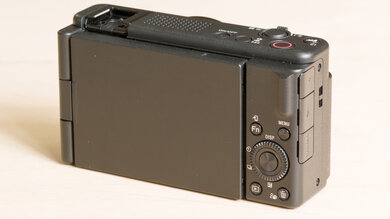
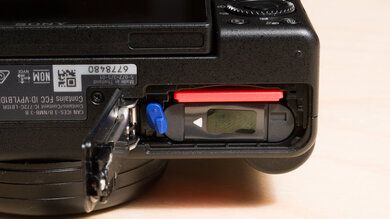
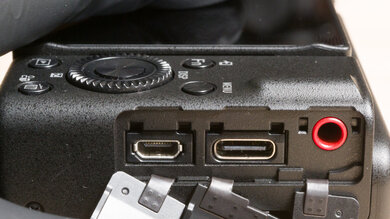
The build quality is decent. The body is made entirely of hard plastic, but it doesn't feel cheap or hollow. Buttons are on the small side, though they give good tactile feedback, and the large, dedicated record button on top is easy to find and press without looking. The battery and SD card compartments sit under a locking, hinged door on the bottom of the camera, while the side ports use simple flap-style doors held by rubber. Like the Sony ZV-1 II, Sony moved the tripod thread on the ZV-1F away from the battery compartment, so you can still swap memory cards or charge the battery with the camera mounted on a tripod. There's no weather sealing, so treat it carefully around rain, dust, or sand.
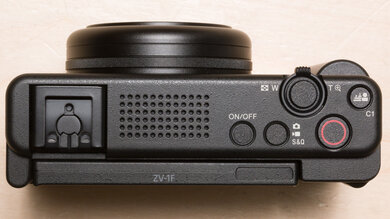
The layout looks a lot like the rest of the ZV lineup, with a top-mounted record button, a single rear control dial, and a total of six customizable buttons. One key difference is the accessory shoe on top. Unlike the Sony ZV-1 and Sony ZV-1 II, it's a basic cold shoe rather than Sony's Multi Interface hot shoe, so it can hold a flash or microphone in place but can't power or communicate with it. There's also no built-in flash. The shutter is fully electronic, with a fastest speed of 1/32,000s, but there's no mechanical shutter option at all. That also means a much narrower shutter speed range than the original ZV-1: the slowest speed you can select is just 1/4s, compared to a full 30 seconds and a bulb mode on the ZV-1. That rules out most long-exposure photography. As with the rest of the lineup, the lens is fixed in place and can't be swapped.
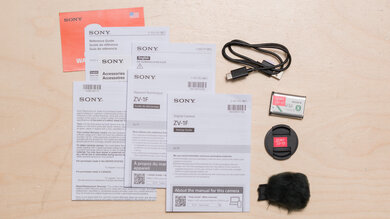
- Sony ZV-1F camera
- Windscreen for microphone
- 1x Sony Np-BX1 battery
- User manual and documentation
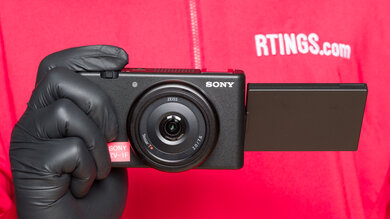
The ergonomics are decent for a camera this small, but the camera isn't built for larger hands. The grip is functional but small, and unlike the original Sony ZV-1, it isn't rubberized, so it's a bit more slippery to hold one-handed for extended periods. Buttons are easy to reach, but their small size and close spacing make it easy to bump the wrong one or accidentally trigger the touchscreen near the back dial. It also means you'll be hiding most buttons when holding the camera with a regular one-handed grip. The touchscreen itself handles a full range of settings. One recurring annoyance is that when the included furry windscreen is attached to the accessory shoe, it partially covers the power button, making the camera harder to turn on and off.
The Sony ZV-1F doesn't have a viewfinder, and there's no way to add one.
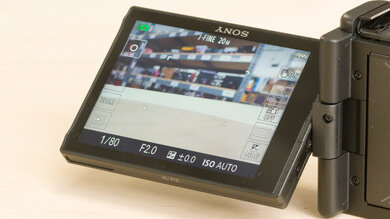
This camera has a fully articulated, 3-inch touchscreen with full touch control. That said, its swipe gestures are more basic than on the Sony ZV-1 II: swiping up opens the quick 'Fn' menu, but there aren't as many additional swipe shortcuts. While it's not the brightest of screens, it should still hold up reasonably well outdoors.
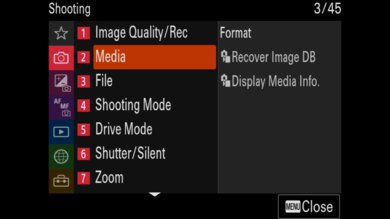
The menu system is outstanding. Pages are clearly organized, icons and labels are easy to parse, and you can navigate the whole thing with the touchscreen, which feels fluid, similar to scrolling on a phone. You can build a custom 'My Menu' with shortcuts to your most-used settings, and the 'Fn' quick menu is fully customizable and touch-accessible too, with room for up to twelve shortcuts of your own. This is the first version of Sony's newer menu system, the same one introduced on the Sony α7 IV, so it's missing the 'Main Menu' home screen that Sony later added to the Sony ZV-1 II and newer cameras. Even so, it's easy to find what you need once you've set things up the way you like. The camera pairs with Sony's Creators' App for file transfers and remote shooting.
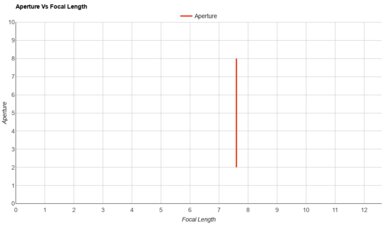

This camera uses the same 20.1 MP, 1-inch stacked BSI CMOS sensor as the Sony ZV-1 and Sony ZV-1 II, paired with the same BIONZ X processor. Since all three cameras share this sensor, the differences between them mostly come down to the lens and the camera's processing rather than the sensor itself.
With the monitor-off setting set to 2 seconds, you can get up to 540 shots.
This camera shoots quickly, but it can't continuously focus during its burst. For the 16 fps high-speed mode, you'll need to enable 'Speed Priority Continuous Shooting,' which locks focus and exposure to the first frame of the burst.
It doesn't have continuous autofocus for stills at all. Single-shot AF and manual focus are your only options for photos.
The Sony ZV-1F doesn't have continuous autofocus for stills.
This camera has no optical or in-body stabilization for photos. In our handheld shutter speed testing, we could reliably get sharp shots down to about 1/50s, a notch behind the original Sony ZV-1, which benefits from lens-based optical stabilization. Below that shutter speed, bracing the camera or using a tripod becomes necessary.
This camera doesn't shoot RAW photos.
This camera doesn't shoot RAW photos.
This camera doesn't shoot RAW photos.
The Sony ZV-1F has the full PP1 through PP10 suite, including S-Log2, S-Log3, and several HLG gamma curves, giving you the same color-grading flexibility as the pricier cameras in the lineup.
This camera uses a three-capsule directional microphone. The included furry windscreen helps reduce wind noise when shooting outdoors, and an on-screen mic-level display lets you keep an eye on your input levels.
The Sony ZV-1F records in Sony's XAVC S format for both 4k and Full HD, with no legacy AVCHD option and no All-Intra compression available.
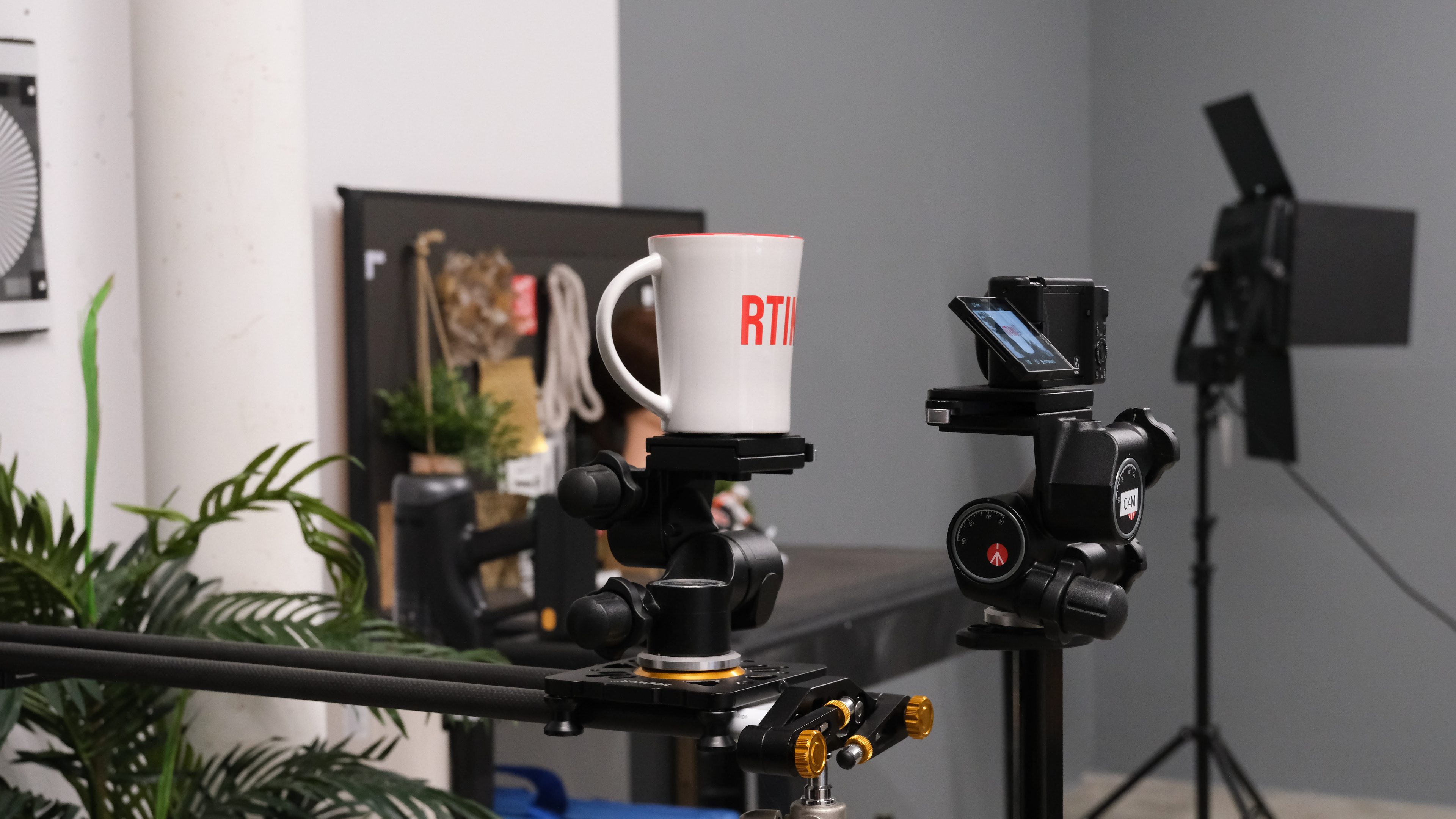
It overheated and stopped just once during our extended recording test. This is a big improvement over the Sony ZV-1 and Sony ZV-1 II, which shut down from overheating seven times in the same test.
Despite using only a contrast-based system rather than the phase-detect system usually found on Sony cameras, the autofocus performance in 4k video is very good on the Sony ZV-1F, though a step behind its siblings. Object tracking is reliable, and the camera offers 'Product Showcase' and 'Background Defocus' modes, which can be useful for product presentation videos.
Unfortunately, there's a lot of noticeable rolling shutter effect in 4k. In day-to-day use, it's most noticeable with vertical lines, such as signposts or buildings, that appear skewed when panning quickly to the side.
The rolling shutter is much better controlled in 1080p than in 4k. At just 3 degrees of distortion, quick pans and fast motion look noticeably cleaner in Full HD than in 4k.
Video dynamic range is another strong point for the Sony ZV-1F. Shooting in S-Log3 at 4k, 30 fps, we measured a strict, low-noise dynamic range of about 7 stops. Both numbers edge out the Sony ZV-1 and Sony ZV-1 II. It's a solid result for a compact camera in this price range, especially one that's limited to 8-bit recording.
Tested settings:
- Resolution: 4k
- Frame Rate: 30 fps
- Log Format: S-Log3