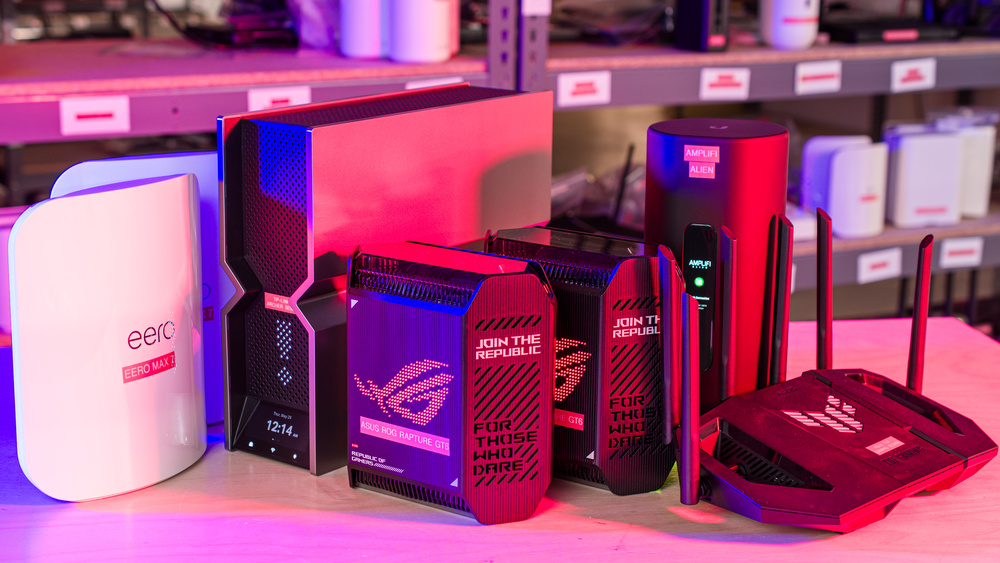
The most important factor in a good online gaming experience is low latency. Many manufacturers advertise having the "best routers for gaming" capable of delivering massive performance gains over standard routers. But after a thorough investigation, we found that Wi-Fi itself is the limiting factor, no matter the device. One thing has become clear through our testing: no Wi-Fi router can deliver better latency performance than a wired connection. And if you game competitively, you simply cannot rely on Wi-Fi; plugging your device into your router with an Ethernet cable is always the best option. That said, running cables throughout your home isn't always easy or realistic, and if your current router is holding your network back, an upgrade can still make sense.
With that in mind, some routers handle wireless latency better than others. If you can't connect your gaming device via Ethernet, an upgrade could still offer a meaningful improvement to your gaming experience over Wi-Fi. We've tested over 75 of the most popular Wi-Fi routers on the market, and while no router can magically erase lag, our recommendations below cut through the marketing to showcase excellent all-around routers that offer strong range, fast speeds, and a solid selection of networking ports. They work well for gaming when wired and handle everything else your home network needs.
Check out our articles on the best Wi-Fi routers, the best routers for streaming, and the best mesh Wi-Fi systems for more recommendations. You can also check out our ISP-specific recommendations for Spectrum and Xfinity. For more insight into how we test latency, check out our new publication on gaming routers and what has the biggest impact on real-world performance.

Since we started reviewing them in 2024, we've tested over 60 routers. We maintain complete editorial independence and impartiality by purchasing each router ourselves, which ensures we aren't testing specially selected review units. Rather than casually assessing performance by throwing on Netflix and seeing if it works, we rigorously evaluate each router on a standardized testing platform, providing you with all the data you need to compare different models.
-
Best Gaming Router
 GamingLatencySpeedType:Standalone RouterMulti Band:Quad-Band (2.4 / 5 / 5 / 6)See all our test resultsWi-Fi Version:Wi-Fi 7 (be)
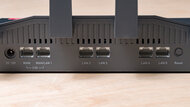
The TP-Link Archer BE900 is the best gaming router that we've tested. It's a Wi-Fi 7 router that boasts some absolutely top-of-the-line specs: four bands (2.4GHz, two 5GHz, and 6GHz), eight networking ports (four 2.5Gbps, three 10Gbps, one of which is SFP+, and one 1Gbps), and two USB ports (one USB 3.0 and one USB 2.0). These features are useful if you have a ton of multi-gigabit wired devices, like a gaming PC. It also has an LED matrix on the front that can display the time, weather, and even emojis, as well as a small touchscreen that shows your network status and other settings.
It's not all show and no go either, as it delivers ballistic wireless speeds up to around 3Gbps on the 6GHz band, more than enough to download those large game update files in an instant, and it won't even break a sweat handling a household full of gamers playing and talking on Discord at the same time. With solid wireless gaming performance and a slightly better latency score than some other routers we've tested, the BE900 is suitable for casual play over Wi-Fi, although a wired connection is always preferable for competitive gaming. Despite being a standalone router, it delivers impressive range that's more than enough to serve a large, multi-level home. If that's still not enough, it's compatible with TP-Link's EasyMesh technology, so you can easily set up a mesh network with supported routers or range extenders.
While it delivers top-of-the-line performance, this router is very excessive if you don't have 10Gbps devices and a multi-gigabit internet connection. Our picks below still deliver outstanding performance and are more than suitable for handling even the most demanding households.
-
Best Upper Mid-Range Gaming Router
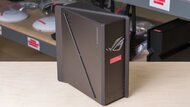
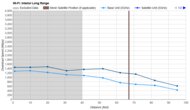
GamingLatencySpeedType:Standalone RouterMulti Band:Tri-Band (2.4 / 5 / 6)See all our test resultsWi-Fi Version:Wi-Fi 7 (be)If you don't need 10Gbps Ethernet ports from the BE900, the ASUS ROG Strix GS-BE18000 is the best Wi-Fi router for gaming at an upper mid-range price point. It's a tri-band Wi-Fi 7 router with 2.4GHz, 5GHz, and 6GHz bands. It sports a gamer-y aesthetic adorned with ASUS ROG logos and addressable RGB lighting, so it'll look at home in your gaming room if you're into that sort of thing. The router has eight 2.5Gbps Ethernet ports, two of which are 'gaming ports' that automatically prioritize devices connected to them for gaming. The feature that really sets this router apart is its support for AFC (automated frequency coordination). Without going into too much detail, AFC can significantly improve the range of the router's 6GHz band by increasing its broadcasting power. We weren't able to test this feature since, at the time of writing, ASUS's firmware doesn't allow AFC in Canada. Regardless, it's a promising feature that gives this router a serious leg up over the competition.
Performance-wise, this router delivers excellent speeds at close range and impressive, consistent range performance. It's not as fast as our top pick, the TP-Link Archer BE900, but it's still red-hot, and absolutely delivers more than enough performance and low enough latency for gaming, Discord calls, and large file downloads at the same time. With all that in mind, it's still a very expensive router that's excessive for the majority of households, and you'll find a much better bang-for-the-buck with one of our picks below.
Looking for more ASUS router recommendations? Be sure to check out our list of the best ASUS routers we've tested.
-
Best Mid-Range Gaming Router
GamingLatencySpeedType:Standalone RouterMulti Band:Tri-Band (2.4 / 5 / 6)See all our test resultsWi-Fi Version:Wi-Fi 7 (be)While both of our high-end picks above are outstanding in their own right, they're overkill for most people. That's why we recommend the TP-Link Archer BE550 as the best mid-range gaming router that we've tested. It's still a tri-band Wi-Fi 7 router, and while its range isn't quite as good as the more expensive ASUS above, it's still very good. It delivers close-range speeds and gaming performance suitable for multiple connected users downloading large updates, gaming, and streaming. Its wireless latency is low enough to ensure your connection remains stable during casual online play, but a wired connection is always preferable for stability if you're aiming to climb the ranks in competitive matches.
This router also has an excellent port selection, with all five of its Ethernet ports rated for 2.5Gbps, so high-bandwidth wired devices like a gaming PC or NAS can reach their full speeds. If your home has solid walls or other obstacles that leave you with dead zones, don't worry. This router is compatible with TP-Link's EasyMesh functionality, allowing you to create a mesh network with other compatible routers or range extenders for better coverage.
-
Best Lower Mid-Range Gaming Router
GamingLatencySpeedType:Standalone RouterMulti Band:Dual Band (2.4 / 5)See all our test resultsWi-Fi Version:Wi-Fi 6 (ax)If our picks above are too expensive, the GL.iNet Flint 2 (GL-MT6000) is our recommended lower mid-range gaming router. While it lacks the faster 6GHz band of our more expensive Wi-Fi 7 picks, its excellent speeds, decent latency, and impressively consistent range make it suitable for a houseful of heavy internet users and gamers. It's a dual-band Wi-Fi 6 router with 2.4GHz and 5GHz bands, and it's equipped with four 1Gbps LAN ports and two 2.5Gbps WAN/LAN ports, so there are ample wired networking options if you have many wired devices, like gaming PCs and consoles.
GL.iNet routers are beloved by networking enthusiasts and tinkerers for their high configurability and flexibility. This router runs a version of OpenWRT, which is an open-source router firmware. It includes useful features out of the box, like the ability to set up a network-wide VPN and easily configure Wi-Fi extenders or a mesh network, as well as more advanced features, such as connecting a cellular modem (like a cellphone!) to the USB port for failover or load balancing. Not to mention the breadth of plugin support for even more advanced features. The beauty of all this flexibility is that it's presented in an easy-to-use interface, even if you don't have a computer science degree. Overall, this router is a fantastic option if you want solid performance throughout your home and don't care about bonkers multi-gigabit speeds or the absolute latest and greatest in Wi-Fi tech.
-
Best Budget Gaming Router
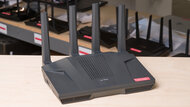
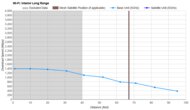
GamingLatencySpeedType:Standalone RouterMulti Band:Dual Band (2.4 / 5)See all our test resultsWi-Fi Version:Wi-Fi 6 (ax)If your home internet plan is less than 1Gbps, we recommend the TP-Link Archer AX55 as the best budget gaming router. It doesn't deliver the same crazy fast top speeds as our picks above, but it still delivers gaming performance that's more than good enough for even the most hardcore gamers. It's a dual-band Wi-Fi 6 router with a conventional design and a small footprint, so it doesn't take up too much space. It really shines in its range and speed performance; at close range, it can saturate an internet connection up to 750Mbps and maintain consistently fast speeds up to nearly 100 feet away. With speeds like that, it has no problem handling high-speed downloads and multiple users browsing and watching 4k content simultaneously, and it won't break a sweat handling a household full of gamers with solid wireless latency and gaming performance.
This router has impressive range that's suitable for most apartments and up to medium-sized homes. If your home is especially large or you can't place the router centrally because of where your internet cable enters the house, it's compatible with both OneMesh and EasyMesh, technologies that let you create a mesh network with compatible routers and range extenders. If you have a lot of cutting-edge Wi-Fi 6E or Wi-Fi 7 devices, this router's biggest drawback is that it's Wi-Fi 6, so you'll lose access to the 6GHz band for faster speeds and less interference. The TP-Link Archer BE230 is worth considering if you find it for a similar price, since it delivers slightly higher top speeds along with an upgraded 2.5Gbps WAN and LAN port. However, its Wi-Fi 7 implementation doesn't actually include a 6GHz band, so the AX55's stronger range makes it a more well-rounded performer overall.










Notable Mentions
-
eero Max 7:
The eero Max 7 is the best-performing router we've tested, but it's incredibly expensive and has worse latency performance than our top pick. The TP-Link Archer BE900 delivers outstanding performance and has better wired connectivity options at a lower price.
See our review -
ASUS TUF Gaming BE9400:
The ASUS TUF Gaming BE9400 offers marginally better wireless latency than our mid-range pick, the TP-Link Archer BE550, and the lowest latency of any router we've tested. It doesn't quite hit the same impressive range and speeds, however, making the BE550 the better choice for most people.
See our review
Recent Updates
Aug 11, 2026:
We've reviewed our recommendations to ensure that they remain the best possible options and are readily available, and we haven't made any pick changes.
Jun 10, 2026:
We've updated this article's Table Tool to improve visibility of Gaming and Latency usages. We've also added the TP-Link Archer BE230 as an alternative in our 'Best Budget' recommendation.
Apr 17, 2026:
We've removed the 'Best Mesh For Gaming' category, as these systems generally introduce more latency than a standalone router. We've also added the ASUS TUF Gaming BE9400 as a Notable Mention, verified our current picks are still the best available, and updated this article's table tool to include the new Gaming & Latency usages from the latest test bench.
All Reviews
Our recommendations above are currently the best gaming routers for most people, whether you're looking to upgrade to the latest Wi-Fi standard, replace your ISP-provided router, or improve your backyard connection. We factor in price (a cheaper router wins over a pricier one if the difference isn't worth it), user feedback, and availability (no routers that are hard to find or almost out of stock everywhere).
If you'd like to choose for yourself, here's the list of all our router reviews. Be careful not to get too caught up in the details. While no router is perfect, nearly all of them are more than suitable for gaming and most high-bandwidth uses, like streaming 4k content and downloading large files quickly.