
The UniFi Express 7 is a compact tri-band Wi-Fi 7 router and the successor to the UniFi Express. As part of Ubiquiti's UniFi lineup, it features a host of software and hardware features that are more common on enterprise IT equipment. It has a 10Gbps WAN port, a 2.5Gbps LAN port, and a 0.96" information display on the front showing at-a-glance info like the number of devices connected to the network and speed test results. It runs UniFi's 'Network' application, a powerful software you can access via its local web server or using the UniFi mobile app. The software allows you to manage all of the UniFi devices on your network, monitor traffic in real time, and adjust settings in granular detail.
Note: We've removed the Wi-Fi coverage tests as we explore better ways to convey these results to users.
Our Verdict
The UniFi Express 7 is an excellent router for an apartment or smaller home. It has a 10Gbps WAN port and a 2.5Gbps LAN port, so you can take advantage of a multi-gigabit internet connection. That said, you'll need to purchase an additional Ethernet switch if you have many wired devices. It delivers amazing wireless speeds that are suitable for a household of users concurrently downloading, streaming, or otherwise doing bandwidth-intensive activities. While its 6GHz band has great range, the 5GHz band slows down significantly at longer distances, but that shouldn't be a big issue unless you have a very large apartment. It runs UniFi's 'Network' application, a software that allows you to manage other UniFi devices on your network, and much more. The app provides a level of control and configurability closer to an enterprise networking solution while remaining approachable and user-friendly.
Wi-Fi 7 support.
Multi-gigabit Ethernet ports.
Amazing top speeds.
Excellent 6GHz range.
UniFi's network application is robust and highly configurable.
Mediocre 5GHz range.
Only two Ethernet ports.
The UniFi Express 7 is a good router for a multi-level house. It delivers excellent speeds and range on its 6GHz band, but its 5GHz band slows down significantly at longer distances. Still, it delivers more than enough performance for a full household of users concurrently streaming 4k video, gaming, and downloading files. Thanks to its 10Gbps WAN port and 2.5Gbps LAN port, you can leverage a multi-gigabit internet connection, but you'll need to get an additional Ethernet switch if you have more wired devices. Additionally, it runs UniFi's 'Network' software, a robust application that offers a much higher level of configurability and control than a typical consumer router.
Wi-Fi 7 support.
Multi-gigabit Ethernet ports.
Amazing top speeds.
Excellent 6GHz range.
UniFi's network application is robust and highly configurable.
Mediocre 5GHz range.
Only two Ethernet ports.
The UniFi Express 7 is adequate for casual gaming over Wi-Fi. It offers reasonable wireless latency performance on the 6GHz band, but its latency on the 5GHz band is mediocre. On the positive side, it delivers outstanding top speeds for downloading large game update files quickly. However, its range is just okay.
Amazing top speeds.
Excellent 6GHz range.
Adequate 6GHz latency for web browsing and non-competitive gaming.
Mediocre 5GHz range.
Mediocre 5GHz wireless latency performance.
Unsuitable for competitive gaming over Wi-Fi.
While the UniFi Express 7 isn't explicitly designed as a travel router, it's still good for the job. It's very small and has internal antennas, so it's easy to bring with you when you're traveling. Feature-wise, it has network-wide VPN support and can connect to a cellular network, though that requires additional hardware. Also, it doesn't have WISP mode, so you can't configure your own network using a public network's internet connection.
Small, light, and portable.
LTE support requires additional hardware from UniFi.
The UniFi Express 7 delivers amazing speeds that are suitable for a multi-gigabit internet connection. It supports Dynamic Frequency Selection (DFS), which provides access to more channels for better speeds in congested wireless environments like apartment buildings.
Wi-Fi 7 support.
Amazing top speeds.
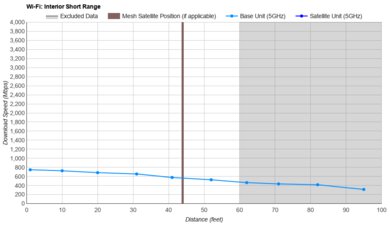
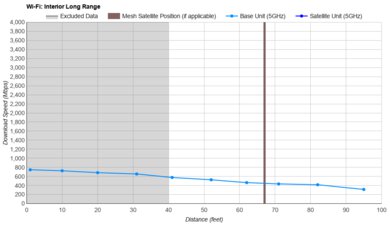
The UniFi Express 7 has adequate range. While its 6GHz band remains fast at longer distances, its 5GHz band slows down significantly the further away you are from the router. It's compatible with UniFi's range of wireless access points, so you can easily create a mesh network.
Wi-Fi 7 support.
Excellent 6GHz range.
Mediocre 5GHz range.
The UniFi Express 7 delivers passable wireless latency performance overall. It's in line with most other routers on the 6GHz band, but its latency on the 5GHz band is notably worse. The latency on either band is fine for most web browsing, but anything more latency-sensitive, like gaming or taking video calls, is better on the 6GHz band.
Adequate 6GHz latency for web browsing and non-competitive gaming.
Mediocre 5GHz wireless latency performance.
Unsuitable for competitive gaming over Wi-Fi.
This router has outstanding configurability. It supports UniFi's 'Network' application. With it, you can control and manage your network and other UniFi devices, like additional access points. The software is easy to use and especially well designed if your network is skewed towards UniFi's ecosystem of networking products.
UniFi's network application is robust and highly configurable.
LTE support requires additional hardware from UniFi.
Performance Usages
Changelog
- Updated Sep 11, 2026: We've updated this review to Test Bench 0.10! This update adds Portability and Configurability testing to evaluate how suitable routers are for travel and to show how configurable their settings are. Read the changelog for more info.
- Updated Jun 22, 2026: We've updated this review to Test Bench 0.9.1! This is a minor change that makes the router type easier to see at the top of each review. Read the changelog for more info.
-
Updated Apr 08, 2026:
We've updated the text throughout the review to reflect the changes from Test Bench 0.9.
- Updated Apr 08, 2026: We've updated this review to Test Bench 0.9! This update adds wireless latency testing to evaluate router gaming performance. Read the changelog for more info.
Check Price
Differences Between Sizes And Variants
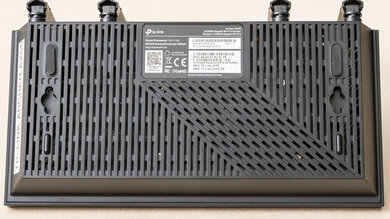
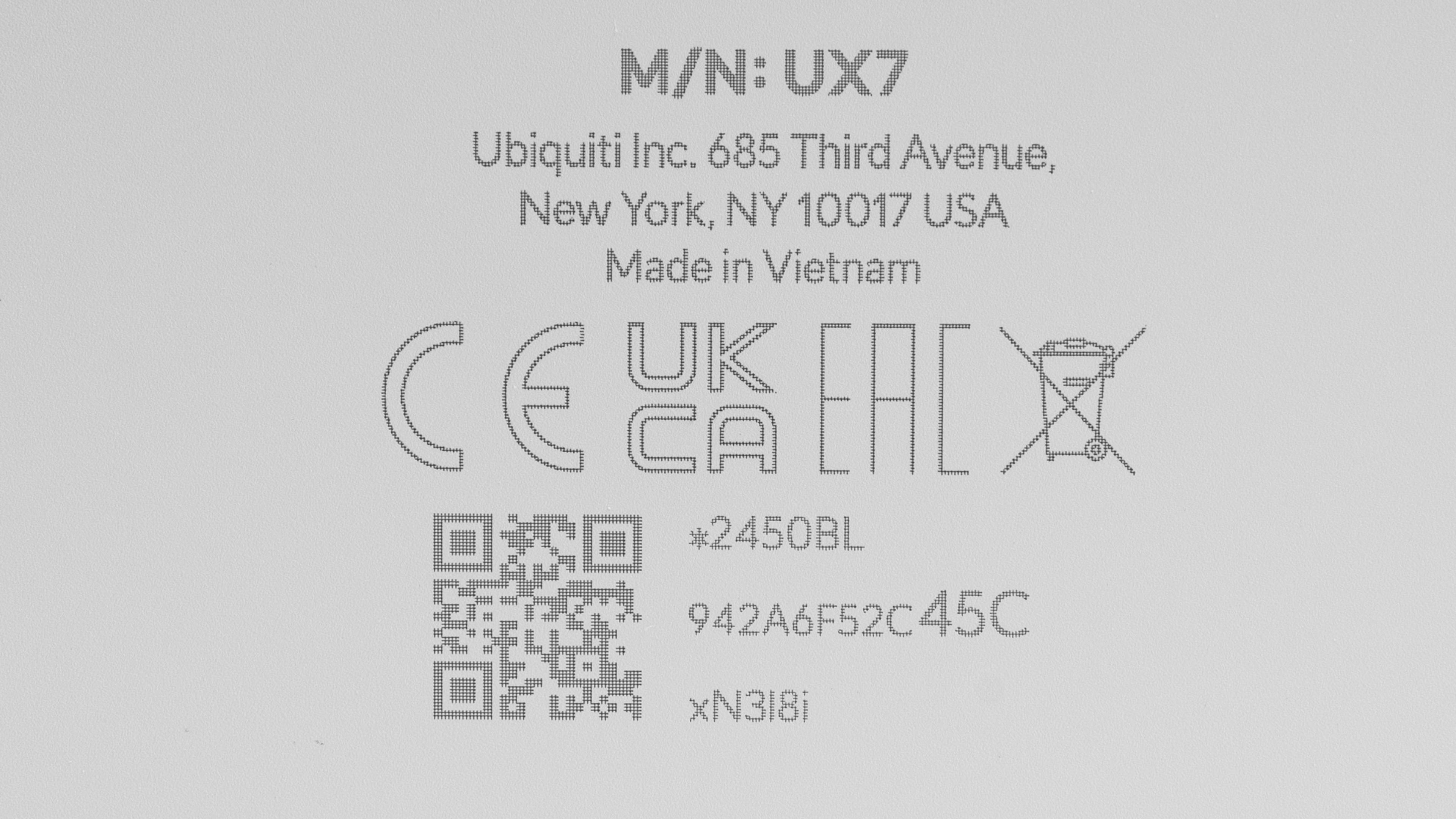
The UniFi Express 7 doesn't have any variants. See a picture of our unit's label.
Popular Router Comparisons
The UniFi Express 7 is a tri-band Wi-Fi 7 router with a 10Gbps WAN port and a 2.5Gbps LAN port. It's the successor to the Wi-Fi 6 UniFi Express. UniFi markets it as a 'Cloud Gateway,' meaning it can function as either a Wi-Fi router, an access point with a wired backhaul, or a mesh access point with a wireless backhaul. This flexibility means it's easy to expand your wireless network if you need more coverage or want to add more UniFi devices. It uses UniFi's 'Network' application, which is robust software that lets you control a variety of settings and configure your network with much more granular detail than a traditional consumer router. Unlike the UniFi Dream Router and the Dream Router 7, it doesn't support UniFi's 'Protect,' 'Talk,' and 'Access' applications for security cameras, door controls, and VOIP phones.
Its flexibility and advanced features set it apart from consumer routers, and it serves as an excellent entry point into the UniFi ecosystem at an approachable price. It also delivers excellent speeds that rival some of the fastest Wi-Fi 7 routers on the market, like the TP-Link Archer BE550 and the TP-Link Deco 7 Pro BE63, with the caveat that its 5GHz band underperforms at longer distances.
See our recommendations for the best long-range Wi-Fi routers, the best Wi-Fi routers, or the best routers for streaming.
The UniFi Dream Router 7 (UDR7) and the UniFi Express 7 (UX7) are tri-band Wi-Fi 7 routers with 2.4GHz, 5GHz, and 6GHz bands. They're both part of UniFi's Wi-Fi Integrated Cloud Gateway lineup and offer a robust feature set and highly configurable software for controlling your home network. The UDR7 supports a wide array of features, like UniFi's full application suite, while the UX7 only supports UniFi's 'Network' application. The UDR7 additionally features three 2.5 GbE LAN ports (one supporting PoE), a 2.5 GbE RJ45 WAN port, and a 10 GbE SFP+ WAN port, while the UX7 only has a 2.5 GbE LAN port and a 10 GbE RJ45 WAN port. Also, the UDR7 has a microSD slot with an included 64GB card for network video storage. The two deliver similar overall performance, but the UDR7's 5GHz band has better range.
The TP-Link Archer AXE75 and the UniFi Express 7 are both tri-band routers, but the former supports Wi-Fi 6E while the latter supports Wi-Fi 7. The UniFi delivers much better performance on its 6GHz band across the board, but the TP-Link has better range on it's 5GHz band. The TP-Link also has five Ethernet ports, while the UniFi has only two, albeit they're rated for much higher speeds. While the TP-Link is a consumer router with limited software configuration, the UniFi has very robust software and integration with UniFi's networking products.
The TP-Link Archer BE550 and the UniFi Express 7 are tri-band Wi-Fi 7 routers. The TP-Link has more Ethernet ports and better range than the UniFi, but the latter has many more software features and a deep integration with UniFi's ecosystem of networking products.
The UniFi Dream Router (UDR) and the UniFi Express 7 (UX7) are both part of UniFi's Wi-Fi integrated Cloud Gateway lineup. The former is a dual-band Wi-Fi 6 router while the latter is a tri-band Wi-Fi 7 router. All five of the UDR's ports are 1 GbE, with two of them supporting PoE (Power over Ethernet), while the UX7 has a 2.5 GbE LAN port and a 10 GbE WAN port. The UDR also boasts a microSD card slot and a built-in 128GB SSD for storing network video files. While both routers support UniFi's powerful 'Network' application for managing your network, the UDR supports the entire UniFi application suite for managing security cameras, VOIP phones and more. The UX7 is much faster overall, but its 5GHz band has worse range than the UDR.
Test Results
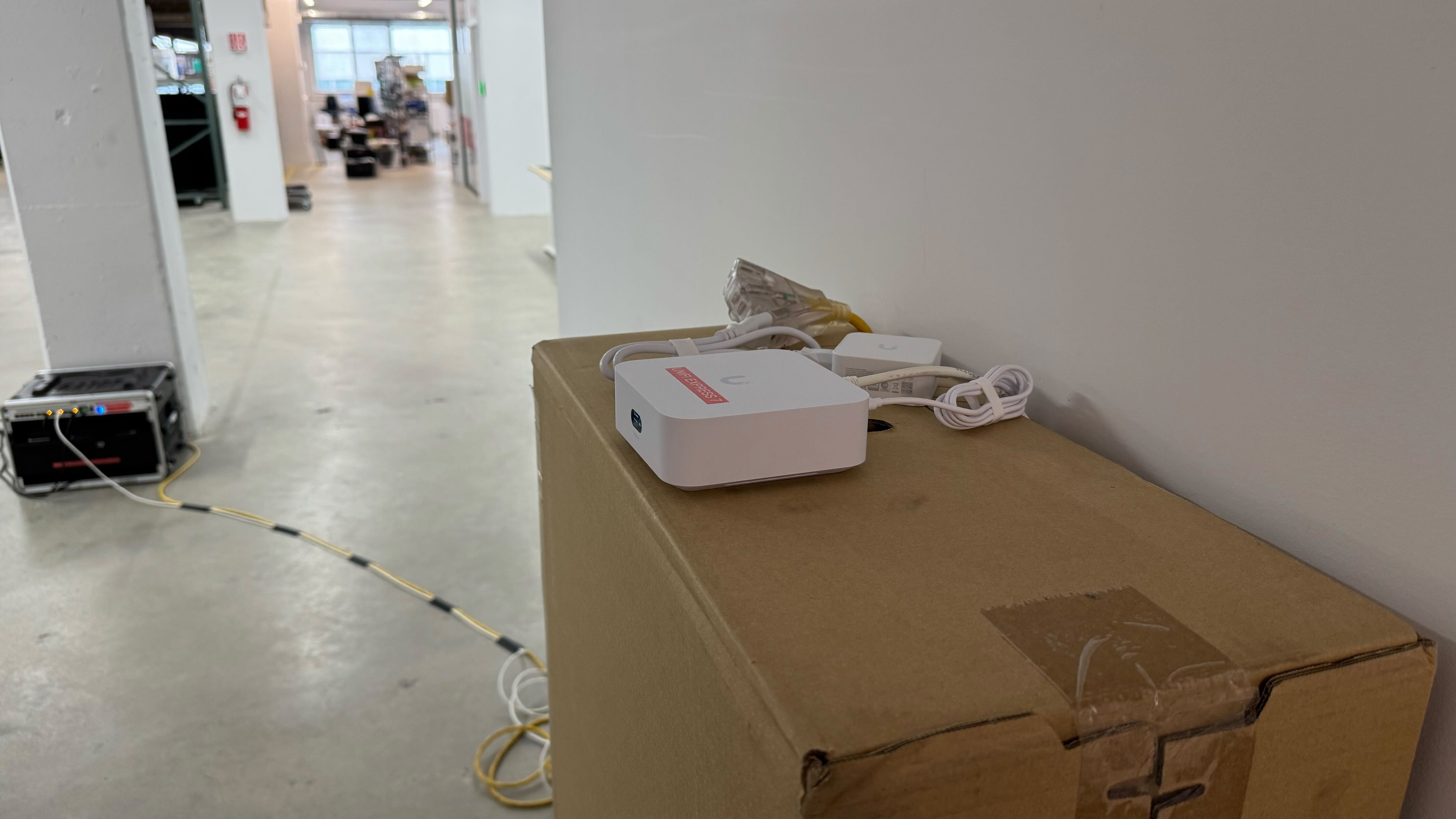
for pictures & test results
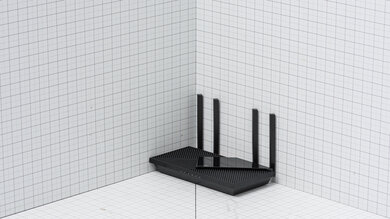
for pictures & test results
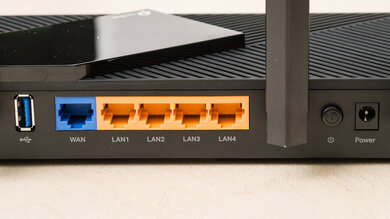
If you're looking for a Wi-Fi 7 router with more network ports, check out the GL.iNet Flint 3 (GL-BE9300).
The UX7's USB-C port is only for power and doesn't support data transfer.
for pictures & test results
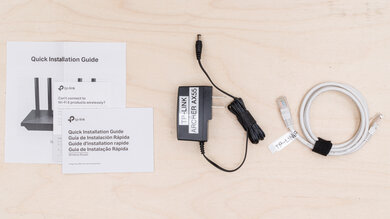
- AC power cord
- USB-C power supply
- UniFi Etherlighting patch cable*
- Adhesive feet
- User documentation
*This 10 GbE patch cable has translucent boots that allow LED lighting effects from supporting UniFi equipment to shine through.
While you can configure this router as a repeater, it only works within an existing UniFi network. Additionally, you need to purchase the UniFi LTE Backup to connect to a cellular network.
for pictures & test results
for pictures & test results
for pictures & test results
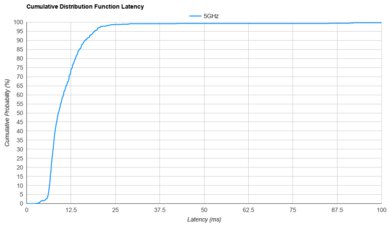
This router has acceptable wireless latency performance overall; however, the 5GHz band has notably higher latency and jitter than the 6GHz band, which is unexpected compared to most other routers. We ensured that all the settings were the same for the two bands, updated the router to the latest firmware, and reran the test several times to verify our results. We recommend connecting to the 6GHz band for any latency-sensitive tasks like video calls or online gaming.
Wi-Fi 7 has faster speeds, lower latency, and supports more simultaneous connections than previous generations of Wi-Fi. However, you'll need devices supporting Wi-Fi 7 to benefit from these features.
for pictures & test results
This router uses alternating MLO (multi-link operation), which is a limited implementation of the technology that establishes a connection with clients on one band at a time. For more information, read our article on the topic.