
The UniFi Dream Router is a dual-band Wi-Fi 6 router and the successor to the Wi-Fi 5 UniFi Dream Machine. It's manufactured by Ubiquiti, a company that primarily offers networking products geared towards small business and enterprise users. As such, this router offers a suite of features that are well-suited for users with more advanced networking needs, like PoE (Power over Ethernet) networking ports and 128GB of built-in storage for video surveillance footage. In addition to UniFi's 'Network' application, it supports the 'Protect,' 'Talk,' and 'Access' applications which host security camera footage, VOIP phones, and IoT security systems, respectively. It also sports robust mesh networking connectivity with support for up to 15 additional Ubiquiti access points.
Note: We've removed the Wi-Fi coverage tests as we explore better ways to convey these results to users.
Our Verdict
The Ubiquiti Dream Router is good if you live in an apartment or a single-story home. It delivers very good speeds that are suitable for multiple users streaming 4k video simultaneously or downloading large files quickly. That said, its range is only decent, so it might leave you with slow areas if you live in a bigger home. With all that in mind, this router supports many advanced features like PoE ports, built-in storage, and support for UniFi's powerful networking applications, allowing for a level of customization closer to an enterprise networking solution than a consumer router. However, its network ports are only rated for 1Gbps, so you can't leverage a multi-gigabit connection if you have one.
Very good top speeds.
Decent range.
DFS support.
Robust feature set and support for UniFi applications.
Wi-Fi 6 won't take full advantage of new Wi-Fi 6E or 7 devices.
1Gbps network ports can't leverage a multi-gigabit connection.
The UniFi Dream Router is satisfactory if you live in a multi-level house. While its range performance is only decent, it delivers very good speeds that are suitable for high-bandwidth activities like multiple users streaming 4k content and downloading large files quickly. Apart from its wireless performance, this router supports UniFi's application suite that hosts a variety of advanced features like a platform for monitoring and storing security camera footage, support for VoIP phone systems, IoT security systems, and highly configurable and scalable Wi-Fi and network switching. It even has two PoE ports you can use to power compatible devices like additional access points, security cameras, and network switches. All of these additional features bring it closer to an enterprise-grade networking solution than a consumer router. Unfortunately, its network ports are only rated for 1Gbps, so it can't leverage a multi-gigabit connection.
Very good top speeds.
Decent range.
Robust feature set and support for UniFi applications.
Wi-Fi 6 won't take full advantage of new Wi-Fi 6E or 7 devices.
1Gbps network ports can't leverage a multi-gigabit connection.
Wi-Fi 6 won't take full advantage of new Wi-Fi 6E or 7 devices.
The Ubiquiti Dream Router has very good top speeds that are suitable for an internet connection up to ~700Mbps. It also supports Dynamic Frequency Selection (DFS), giving you access to less congested channels for better speeds in noisy wireless environments.
Very good top speeds.
DFS support.
Wi-Fi 6 won't take full advantage of new Wi-Fi 6E or 7 devices.
1Gbps network ports can't leverage a multi-gigabit connection.
The Ubiquiti Dream Router has decent range performance as a standalone unit, but you might experience slower speeds in the farther reaches of your home depending on its size, layout, and construction materials. That said, it runs UniFi's Network application, which supports a variety of ways to connect additional access points, including devices using PoE and compatible APs with a wireless backhaul.
Decent range.
Wi-Fi 6 won't take full advantage of new Wi-Fi 6E or 7 devices.
Wi-Fi 6 won't take full advantage of new Wi-Fi 6E or 7 devices.
Changelog
- Updated Jun 22, 2026: We've updated this review to Test Bench 0.9.1! This is a minor change that makes the router type easier to see at the top of each review. Read the changelog for more info.
-
Updated Jun 03, 2026:
We've added a link to the newly reviewed ARRIS SURFboard G18 in the Wi-Fi Specifications section of the review.
- Updated May 08, 2026: We've updated this review to Test Bench 0.9! This update adds wireless latency testing to evaluate router gaming performance. Read the changelog for more info.
- Updated Dec 16, 2025: We've added an MLO Implementation test for Test Bench 0.8.2! Read the changelog for more details.
Check Price
Differences Between Sizes And Variants
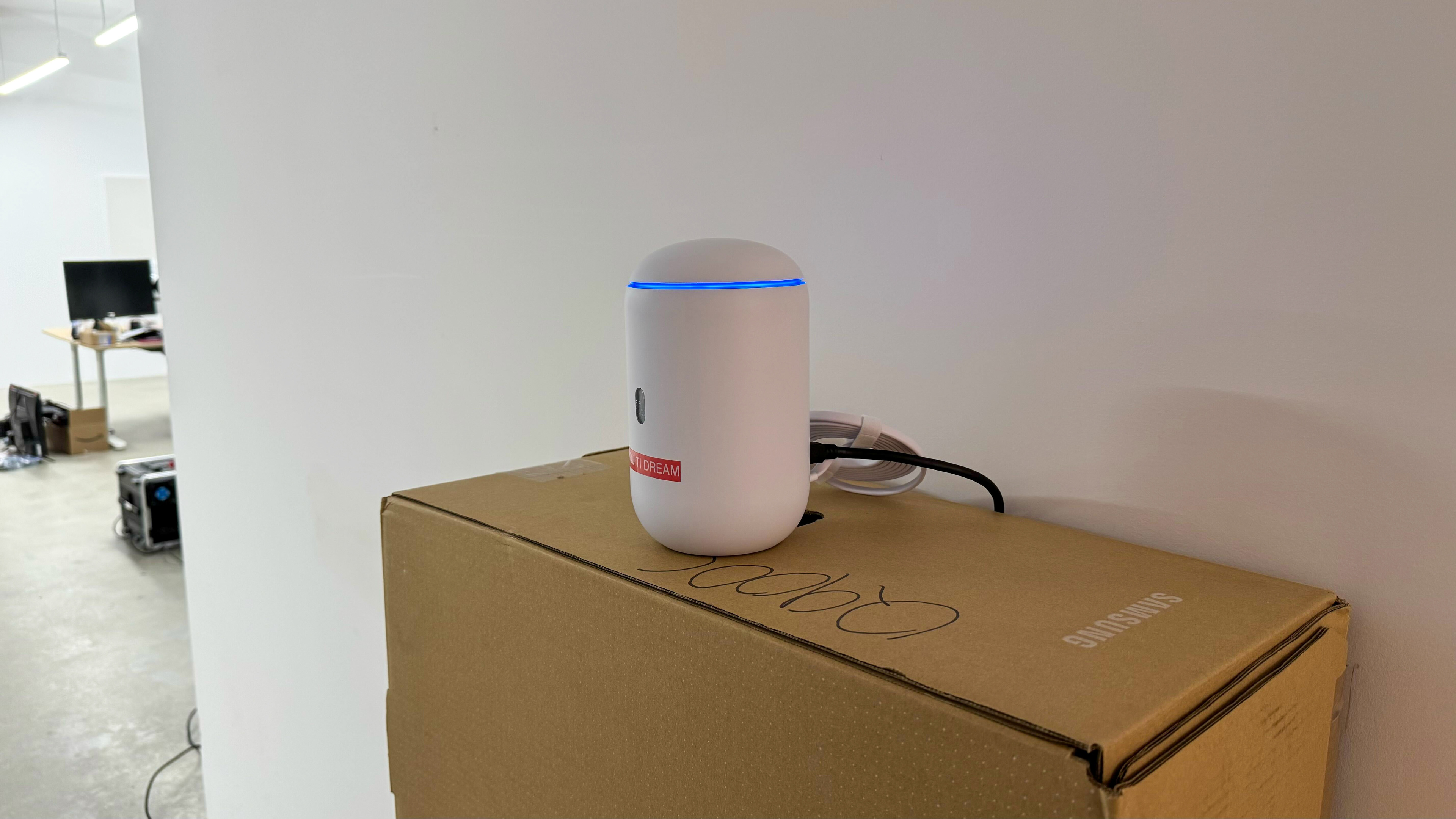
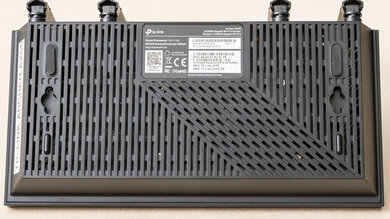
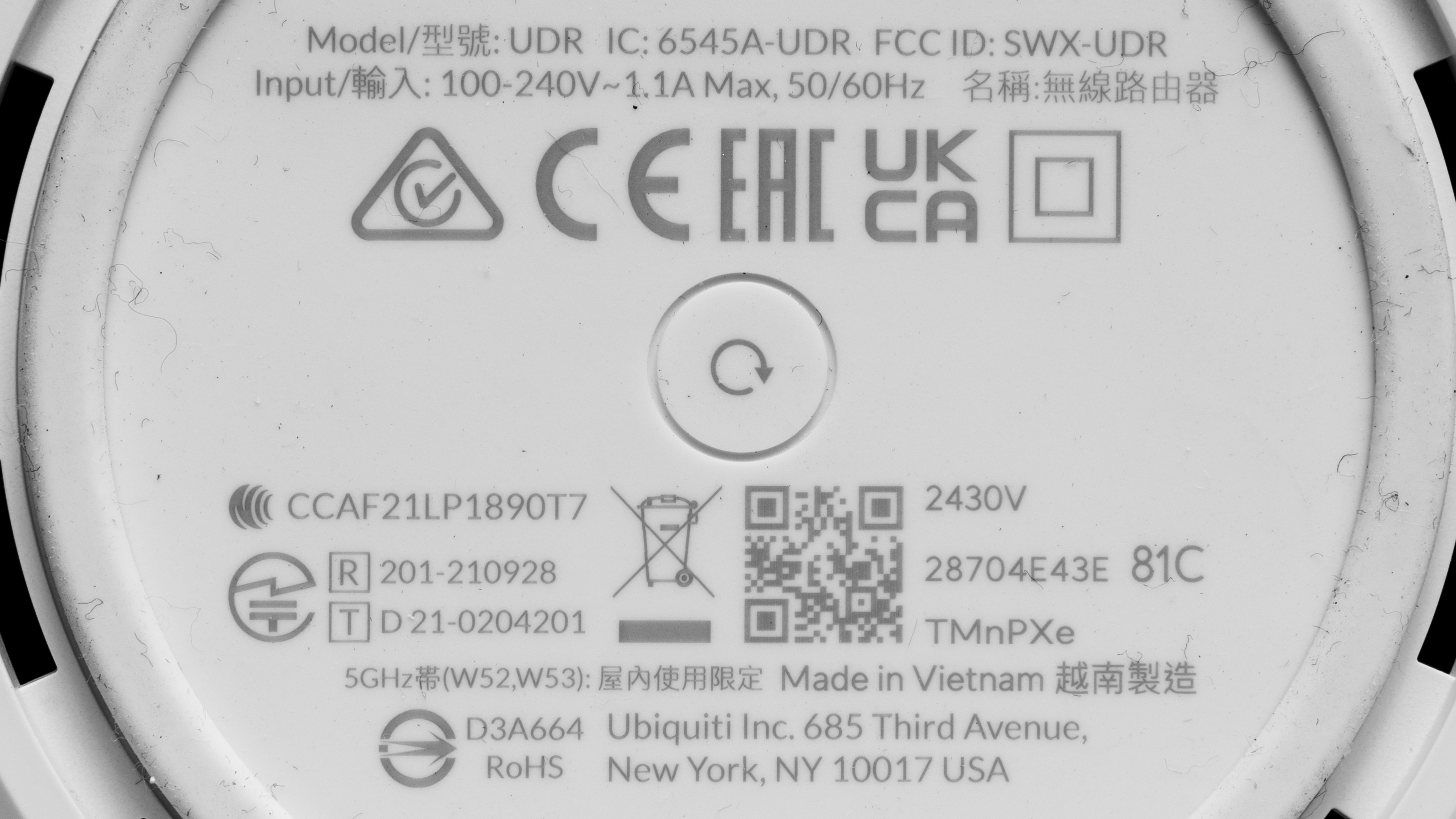
The UniFi Dream Router that we bought and tested doesn't have any variants. It replaces the Wi-Fi 5 UniFi Dream Machine. See our unit's label.
Popular Router Comparisons
The UniFi Dream Router is a dual-band Wi-Fi 6 router supporting 2.4GHz and 5GHz bands. It offers a robust feature set that bridges the gap between enterprise-level functionality and home use. Key features include two 802.3af PoE (Power over Ethernet) ports, a built-in 128GB SSD for storing security camera footage or VoIP call recordings, a MicroSD card slot, and a front-facing status screen. It serves as the hub for an ecosystem of compatible devices powered by UniFi's integrated suite of four apps: Network, Protect, Talk, and Access.
The Network app, accessible via browser or mobile device, provides comprehensive network control. You can add up to 15 access points to create a mesh network, manage traffic, set up content filtering, and more. It also offers optional automatic threat detection, though enabling this may reduce wireless speeds. The other apps—Protect, Talk, and Access—support surveillance cameras, VoIP phones, and IoT home security devices like doorbell cameras, respectively.
While its advanced suite of features sets it apart from routers in its price range, less expensive models like the TP-Link Archer AX55 and the ASUS RT-AX3000 offer better speed and range performance. Overall, this router is ideal for advanced home users or small businesses that can benefit from its extensive features and configuration flexibility. If you don't take advantage of its features, one of the cheaper options above will serve you better.
See our recommendations for the best long-range Wi-Fi routers, the best Wi-Fi routers for large homes, and the best Wi-Fi 6 routers.
The UniFi Dream Router (UDR) and the UniFi Express 7 (UX7) are both part of UniFi's Wi-Fi integrated Cloud Gateway lineup. The former is a dual-band Wi-Fi 6 router while the latter is a tri-band Wi-Fi 7 router. All five of the UDR's ports are 1 GbE, with two of them supporting PoE (Power over Ethernet), while the UX7 has a 2.5 GbE LAN port and a 10 GbE WAN port. The UDR also boasts a microSD card slot and a built-in 128GB SSD for storing network video files. While both routers support UniFi's powerful 'Network' application for managing your network, the UDR supports the entire UniFi application suite for managing security cameras, VOIP phones and more. The UX7 is much faster overall, but its 5GHz band has worse range than the UDR.
The UniFi Dream Router (UDR) is the predecessor to the UniFi Dream Router 7 (UDR7). The UDR is a dual-band Wi-Fi 6 router, while the UDR7 is a tri-band Wi-Fi 7 router. The latter delivers significantly higher speeds and range, largely thanks to its 6GHz band. Also, the UDR7 has much faster wired networking with a 10Gbps SFP+ WAN port, a 2.5Gbps RJ45 WAN port, and three 2.5Gbps LAN ports. The UDR, on the other hand, only has 1Gbps Ethernet ports. That said, two of the UDR's Ethernet ports support PoE (power over Ethernet), while only one of the UDR7's does.
The TP-Link Archer AX55 and the UniFi Dream Router are dual band Wi-Fi 6 routers. The TP-Link delivers better raw speed and range performance overall, but the UniFi has a much more robust set of features and deep integration with UniFi's ecosystem of networking products.
The eero Pro 6E is a tri-band Wi-Fi 6E mesh system and the UniFi Dream Router is a dual-band Wi-Fi 6 router. The eero has better range and speed performance, but the UniFi has a much more robust feature set, wired connectivity, and advanced configuration options. The eero is the better choice if you want a 'set it and forget it' mesh system, whereas the UniFi offers greater flexibility if you have more advanced networking needs.
Test Results
for pictures & test results
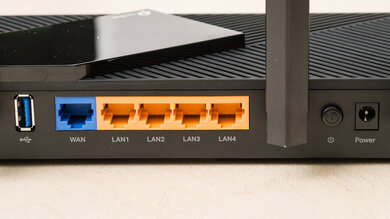
Ports 3 and 4 support 802.3af PoE (Power over Ethernet), meaning you can power compatible external devices like security cameras or network switches directly from the router.
While this router doesn't have any USB ports, there's a microSD card slot on the back that supports cards with at least 128GB in capacity. The router also has a built-in 128GB SSD to store security camera footage and phone call recordings.
for pictures & test results
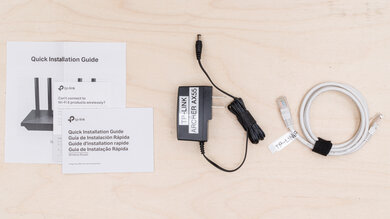
- Power cord
- microSD card slot removal tool
- User documentation
for pictures & test results
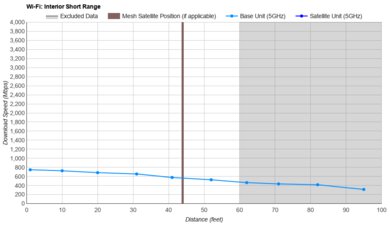
We tested this router in standalone mode, so the mesh satellite position line on this graph isn't applicable.
for pictures & test results
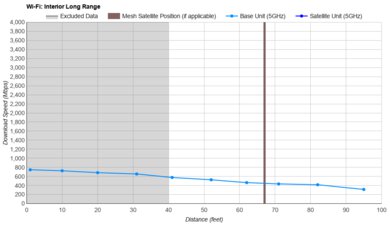
We tested this router in standalone mode, so the mesh satellite position line on this graph isn't applicable.
for pictures & test results
The UniFi Dream Router 7 is the new Wi-Fi 7 version of this router with a 2.4GHz band, a 5GHz band, and a 6GHz band.
If you're looking for a two-in-one cable modem and Wi-Fi 6 router, check out the ARRIS SURFboard G18.