
The UniFi Dream Router 7 is a tri-band Wi-Fi 7 router and the successor to the Wi-Fi 6 UniFi Dream Router. It's manufactured by Ubiquiti and is part of their UniFi family of Wi-Fi integrated Cloud Gateways. It has a rather compact, pill-like design with a status LED ring on the top and a 0.96-inch information display on the front. It features a laundry list of hardware and software features more commonly found on enterprise equipment than consumer routers. Namely, a 10Gbps SFP+ WAN port, a 2.5Gbps WAN port, and three 2.5Gbps LAN ports. It supports UniFi's Network, Protect, Talk, Access, and Connect applications, which allow you to manage everything from mesh access points to security cameras to EV chargers.
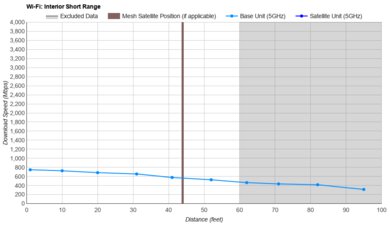
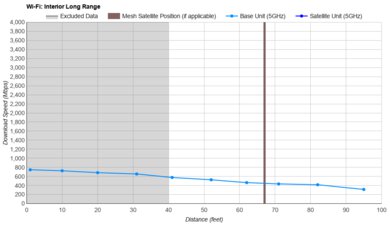
Note: We've removed the Wi-Fi coverage tests as we explore better ways to convey these results to users.
Our Verdict
The UniFi Dream Router 7 is excellent for apartments and smaller homes. It delivers impressive speeds that are suitable for fast downloads and high-bandwidth activities for multiple concurrent users. It has a 10Gbps SFP+ WAN port, a 2.5Gbps WAN port, and three 2.5Gbps LAN ports. One of its LAN ports even supports PoE to power compatible external devices like security cameras. Speaking of which, this router supports UniFi's full application suite with advanced functionality like a platform for monitoring and storing security camera footage, support for VoIP phone systems, IoT security systems, and highly configurable and scalable Wi-Fi and network switching.
Ample multi-gigabit networking ports.
Amazing top speeds and Wi-Fi 7 support.
Very good range that can be expanded with compatible access points.
Powerful array of software tools and hardware compatibility.
The UniFi Dream Router 7 is a great router for multi-level homes. It delivers excellent top speeds and good range, making it suitable for a household of users doing high-bandwidth activities like streaming 4k video and downloading large files quickly. It also has an impressive port selection with a 10Gbps SFP+ WAN port, a 2.5Gbps WAN port, and three 2.5Gbps LAN ports, one of which supports PoE. In addition to its hardware capabilities, it has much more advanced functionality and supports UniFi's full application suite. Using the applications, you can control and manage your network and other UniFi devices, along with VoIP phones, security cameras, and additional access points. Overall, the router's performance and advanced feature set make it a compelling choice for advanced home users or even the centerpiece of an IT system for small businesses.
Ample multi-gigabit networking ports.
Amazing top speeds and Wi-Fi 7 support.
Very good range that can be expanded with compatible access points.
Powerful array of software tools and hardware compatibility.
Standalone coverage may not be sufficient for very large homes.
The UniFi Dream Router 7 combines excellent top speeds with strong range to deliver a solid gaming experience throughout the home. Its wireless latency levels are decent overall and largely in line with similar routers in its class. While serviceable for casual gaming and streaming over Wi-Fi, competitive players will see the best results from a wired connection to one of the Dream 7's multi-gigabit ports.
Amazing top speeds and Wi-Fi 7 support.
Very good range that can be expanded with compatible access points.
Decent wireless latency performance for everyday use and casual gaming.
Not recommended for competitive gaming over Wi-Fi.
The UniFi Dream Router 7 isn't designed as a travel router. While it's somewhat small, it's rather heavy. Feature-wise, it offers an ample selection of network ports, VPN support, and the ability to connect to a cellular network, though that requires additional hardware. Unfortunately, it doesn't have WISP mode, so you can't configure your own network using a public network's internet connection.
VPN support.
Heavy to travel with.
LTE support requires additional hardware from UniFi.
The UniFi Dream Router 7 delivers excellent speeds suitable for a multi-gigabit internet connection. It supports Dynamic Frequency Selection (DFS), which provides access to more channels for better speeds in congested wireless environments like apartment buildings.
Amazing top speeds and Wi-Fi 7 support.
The UniFi Dream Router 7 has good range. It's also compatible with UniFi's catalog of wireless access points, offering a variety of ways to expand your network's range, including adding more units via wired or wireless backhaul.
Very good range that can be expanded with compatible access points.
Standalone coverage may not be sufficient for very large homes.
The UniFi Dream Router 7 delivers decent wireless latency performance overall. Its latency and jitter are stable enough for web browsing and non-competitive gaming, with results broadly in line with those of similar routers. However, those seeking the lowest possible lag for gaming and latency-sensitive applications will still benefit from a wired connection.
Decent wireless latency performance for everyday use and casual gaming.
Not recommended for competitive gaming over Wi-Fi.
This router has outstanding configurability. It supports UniFi's full application suite. Using the applications, you can control and manage your network and other UniFi devices, along with VoIP phones, security cameras, and additional access points. The software is easy to use and especially well designed if your network is skewed towards UniFi's ecosystem of networking products.
Powerful array of software tools and hardware compatibility.
LTE support requires additional hardware from UniFi.
Performance Usages
Changelog
- Updated Sep 11, 2026: We've updated this review to Test Bench 0.10! This update adds Portability and Configurability testing to evaluate how suitable routers are for travel and to show how configurable their settings are. Read the changelog for more info.
- Updated Jun 22, 2026: We've updated this review to Test Bench 0.9.1! This is a minor change that makes the router type easier to see at the top of each review. Read the changelog for more info.
-
Updated May 27, 2026:
We've updated this review with additional text to help contextualize our latest Gaming and Latency usage scores from Test Bench 0.9.
- Updated Apr 22, 2026: We've updated this review to Test Bench 0.9! This update adds wireless latency testing to evaluate router gaming performance. Read the changelog for more info.
Check Price
Differences Between Sizes And Variants
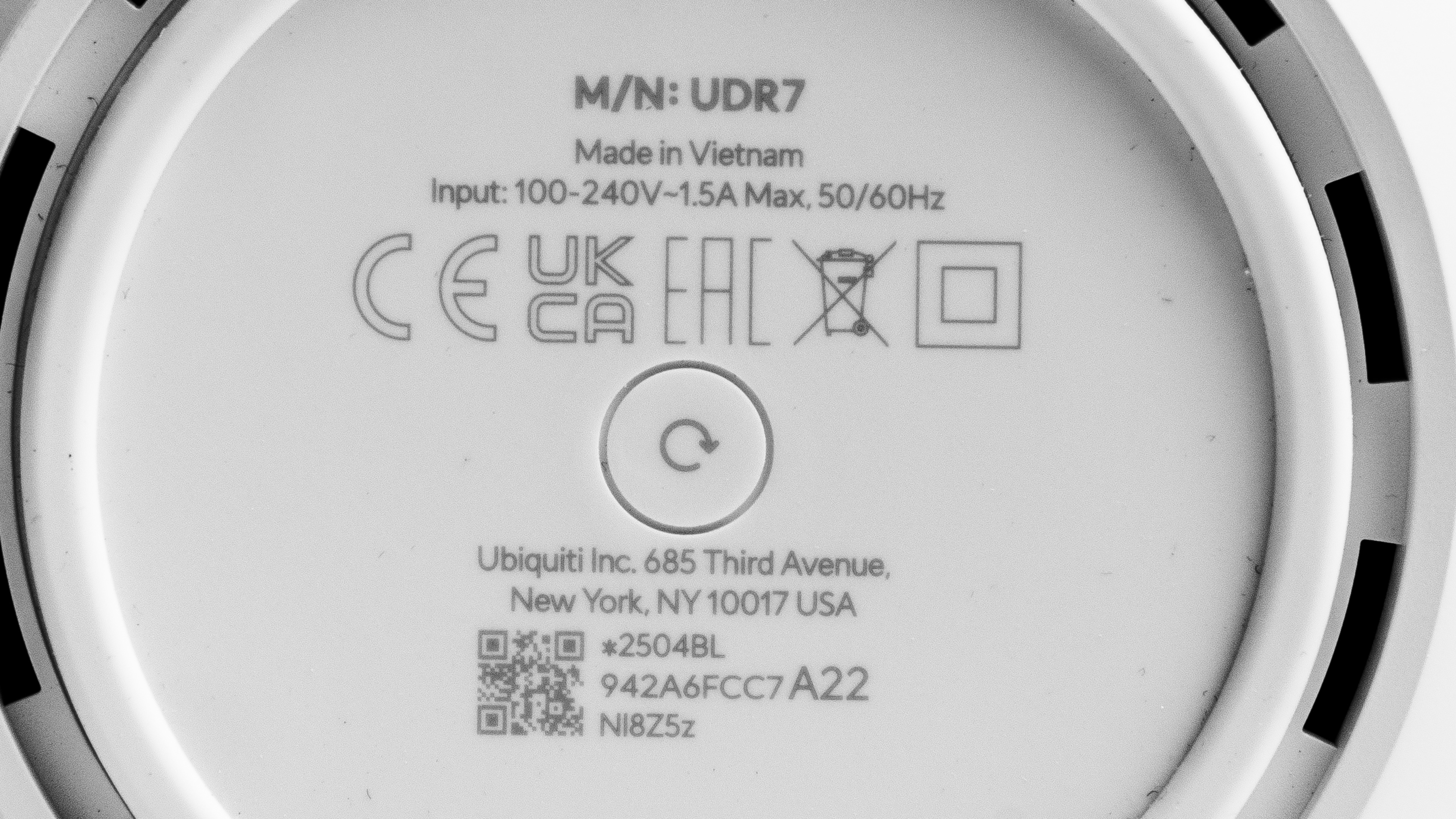
The UniFi Dream Router 7 has no variants. You can see a picture of our unit's label here.
Popular Router Comparisons
The UniFi Dream Router 7 is a tri-band Wi-Fi 7 router and the successor to the Wi-Fi 6 UniFi Dream Router. It's part of UniFi's Wi-Fi-integrated 'Cloud Gateway' lineup, and it offers functionality well beyond that of typical consumer routers. For starters, it has impressive hardware: a 10Gbps SFP+ WAN port, a 2.5Gbps WAN port, and three 2.5Gbps LAN ports (one of which supports PoE), all crammed into a fairly small, sleek enclosure. One of its biggest selling points, however, is its flexibility and integration with UniFi's full suite of applications: Network, Protect, Access, Talk, and Connect. Using these, you can manage and configure your network, security cameras, intercom systems, VoIP phones, and even EV charging stations. This functionality brings the router much closer to an enterprise networking solution, but in a package you can fit in your living room.
As a wireless access point, it compares well with consumer routers like the ASUS ZenWiFi ET9 and the TP-Link Archer BE550, boasting excellent top speeds and good range.
See our recommendations for the best long-range Wi-Fi routers, the best Wi-Fi routers, or the best routers for streaming.
The UniFi Dream Router 7 (UDR7) and the UniFi Express 7 (UX7) are tri-band Wi-Fi 7 routers with 2.4GHz, 5GHz, and 6GHz bands. They're both part of UniFi's Wi-Fi Integrated Cloud Gateway lineup and offer a robust feature set and highly configurable software for controlling your home network. The UDR7 supports a wide array of features, like UniFi's full application suite, while the UX7 only supports UniFi's 'Network' application. The UDR7 additionally features three 2.5 GbE LAN ports (one supporting PoE), a 2.5 GbE RJ45 WAN port, and a 10 GbE SFP+ WAN port, while the UX7 only has a 2.5 GbE LAN port and a 10 GbE RJ45 WAN port. Also, the UDR7 has a microSD slot with an included 64GB card for network video storage. The two deliver similar overall performance, but the UDR7's 5GHz band has better range.
The eero Max 7 and the UniFi Dream Router 7 are tri-band Wi-Fi 7 routers. We tested the eero in a dual mesh configuration, while we tested the UniFi as a standalone unit. The eero delivers significantly faster speeds and better range than the UniFi. That said, the UniFi has significantly more robust software, tools, and features than the eero, like a PoE (power over Ethernet) port, a 10 Gbps SFP+ port, and support for UniFi's full application suite and catalog of networking hardware.
The UniFi Dream Router 7 and the GL.iNet Flint 3 (GL-BE9300) are tri-band Wi-Fi 7 routers. They deliver similar wireless performance with excellent top speeds and good range. Both routers have excellent wired connectivity, albeit with slightly different usages in mind. The GL.iNet's five 2.5Gbps ports make it better suited for home users with lots of traditional Ethernet devices. On the other hand, the UniFi has four 2.5Gbps ports and one 10Gbps SFP+ port, making it better suited as a solution for small businesses or homes with a 10Gbps internet connection. Both routers are highly configurable, but take different approaches. The GL.iNet runs OpenWRT, an open-source, Linux-based firmware, while the UniFi can run the company's full suite of proprietary applications.
The AmpliFi Alien and the UniFi Dream Router 7 are tri-band routers from two of Ubiquiti's product lines. The AmpliFi has a 2.4GHz and two 5GHz bands, while the UniFi has a 2.4GHz, a 5GHz, and a 6GHz band. Performance-wise, the UniFi has better top speeds, while the AmpliFi has better range. Otherwise, the UniFi has a much more robust feature set with highly configurable software and faster wired networking ports, while the AmpliFi is a consumer product with fewer configuration options.
Test Results
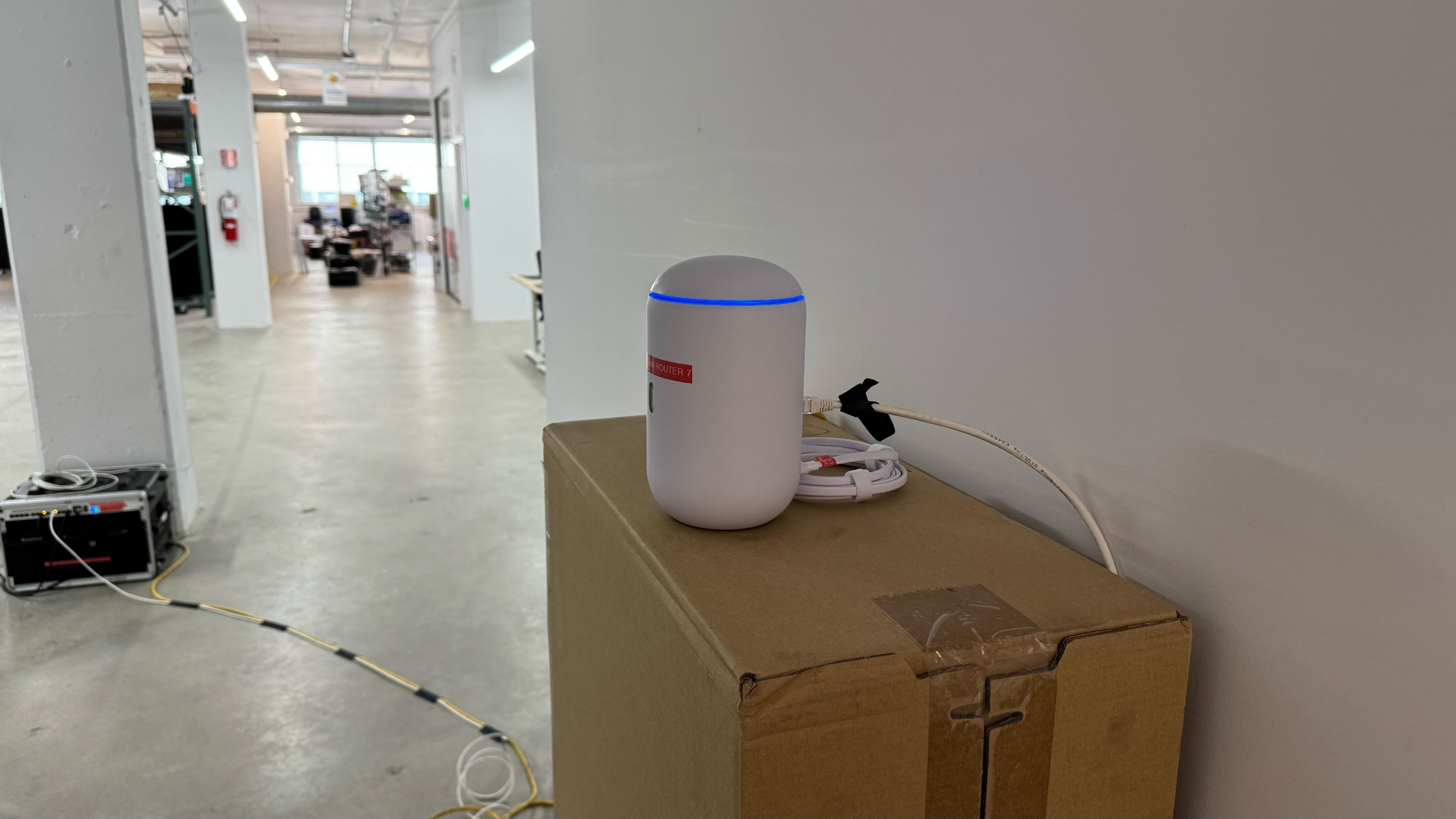
for pictures & test results
for pictures & test results
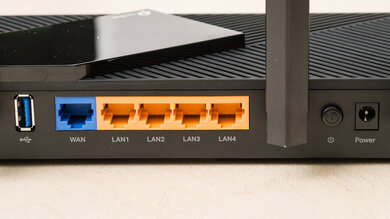
Port 1 supports 802.3af PoE (Power over Ethernet), so you can power compatible external devices like an IP security camera or VOIP phone directly from the router.
The UDR7 doesn't have any USB ports, but there's a microSD card slot on the back with a 64GB WD Purple card pre-installed to store security camera footage and phone call recordings.
for pictures & test results
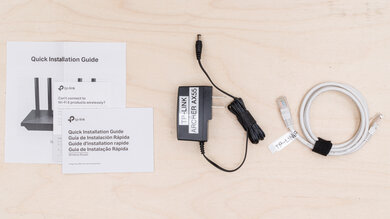
- Power cord
- microSD card slot removal tool
- User documentation
While you can configure this router as a repeater, it only works within an existing UniFi network. Additionally, you need to purchase the UniFi LTE Backup to connect to a cellular network.
for pictures & test results
for pictures & test results
for pictures & test results
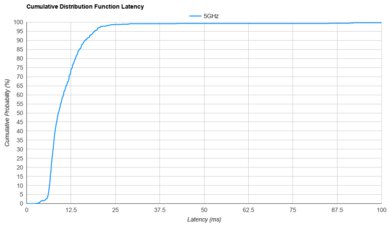
The UniFi Dream Router 7 maintains stable latency and jitter levels that are broadly in line with similar routers on the market. Those seeking the lowest possible lag for gaming and latency-sensitive applications will still benefit from a wired connection.
Wi-Fi 7 has faster speeds, lower latency, and supports more simultaneous connections than previous generations of Wi-Fi. However, you'll need devices supporting Wi-Fi 7 to benefit from these features.
for pictures & test results
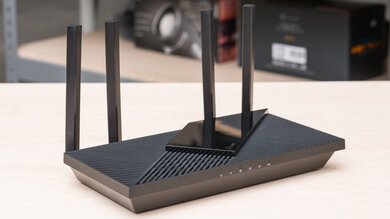
This router uses alternating MLO (multi-link operation), which is a limited implementation of the technology that establishes a connection with clients on one band at a time. For more information, read our article on the topic.