
The ASUS ZenWiFi ET9 is a tri-band Wi-Fi 6E router that's part of ASUS's ZenWiFi lineup of mesh systems. It's available in a one, two, or three-pack. Like the other models in the lineup, it uses ASUS's AiMesh technology, so it's compatible with any other AiMesh-enabled ASUS access point. We bought a two-pack and tested it in dual-mesh mode.
Note: We've removed the Wi-Fi coverage tests, as we're exploring better ways to convey the results that'll be more helpful to users.
Our Verdict
The ASUS ET9 is a great router for use in an apartment, condo, or single-story home. It delivers very good speeds and range, making it suitable for multiple users streaming 4k HDR content or downloading large files quickly. It has a slick design that's easy to find a spot for in your home. Its 6GHz band can help deliver better speeds to your compatible devices in noisy wireless environments.
Great top speeds.
6GHz band helps in noisy wireless environments.
LAN ports are limited to 1Gbps.
The ASUS ZenWiFi ET9 is a great router if you live in a multi-level home. It delivers great speeds and has enough range for larger homes with multiple floors. It's suitable for your whole family streaming 4k content, downloading large files, and whatever other high-bandwidth activities you throw at it. Since it's a mesh router, you can easily add more access points for better coverage. It has great connectivity, too, with a USB 3.0 port, ample LAN ports, and a WAN port rated for 2.5Gbps speeds.
Great top speeds.
6GHz band helps in noisy wireless environments.
Can add additional mesh access points to further improve range.
Higher, more erratic lag and jitter when connected to a satellite node.
LAN ports are limited to 1Gbps.
The ASUS ZenWiFi ET9's performance is adequate for gaming over Wi-Fi. Its impressive top speeds and wide coverage allow for fast game downloads throughout much of the home. However, its wireless latency performance is only fair overall, and connecting through a satellite node can introduce noticeable lag spikes. For competitive gaming, connecting your device to the main unit via Ethernet is recommended to ensure the most reliable connection.
Great top speeds.
6GHz band helps in noisy wireless environments.
Can add additional mesh access points to further improve range.
Latency performance is adequate for general use and non-competitive gaming.
Unsuitable for competitive gaming over Wi-Fi.
Higher, more erratic lag and jitter when connected to a satellite node.
LAN ports are limited to 1Gbps.
The ASUS ZenWiFi ET9 is designed as a home mesh router, so it's larger than most dedicated travel routers and requires a separate power supply. In terms of features, it has network-wide VPN support, and you can configure it to connect to a cellular network with USB tethering. While it has a great selection of network ports, they're limited to 1Gbps.
VPN and cellular network support.
Larger than dedicated travel routers, requires discrete power supply.
The ASUS ET9 delivers great speeds that are suitable for a gigabit internet connection. Its 6GHz band helps deliver faster speeds in noisy wireless environments and at shorter distances.
Great top speeds.
The ASUS ET9 has great range. Since it's a mesh router, you can add additional access points to improve your range and help maintain consistent speeds over longer distances.
Can add additional mesh access points to further improve range.
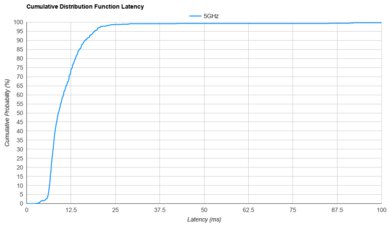
The ASUS ZenWiFi ET9 maintains sufficient latency performance for common tasks like web browsing, video calls, and casual gaming over Wi-Fi. Both its 5GHz and 6GHz bands yield similarly fair median latency and jitter results that are in line with other mesh systems. However, its performance degrades significantly when connected to a satellite unit, where it suffers from higher latency spikes than most competing mesh systems.
Latency performance is adequate for general use and non-competitive gaming.
Unsuitable for competitive gaming over Wi-Fi.
Higher, more erratic lag and jitter when connected to a satellite node.
The ASUS ZenWiFi ET9 has excellent configurability. Its software is easy to use and has a host of all the basic and advanced features that you could want to optimize your Wi-Fi network.
Highly configurable and flexible out of the box.
Performance Usages
Changelog
- Updated Sep 11, 2026: We've updated this review to Test Bench 0.10! This update adds Portability and Configurability testing to evaluate how suitable routers are for travel and to show how configurable their settings are. Read the changelog for more info.
- Updated Jun 22, 2026: We've updated this review to Test Bench 0.9.1! This is a minor change that makes the router type easier to see at the top of each review. Read the changelog for more info.
-
Updated May 22, 2026:
We've updated this review with clearer language in our pros and cons, and added text to contextualize our results from Test Bench 0.9.
- Updated Apr 22, 2026: We've updated this review to Test Bench 0.9! This update adds wireless latency testing to evaluate router gaming performance. Read the changelog for more info.
Check Price
Differences Between Sizes And Variants
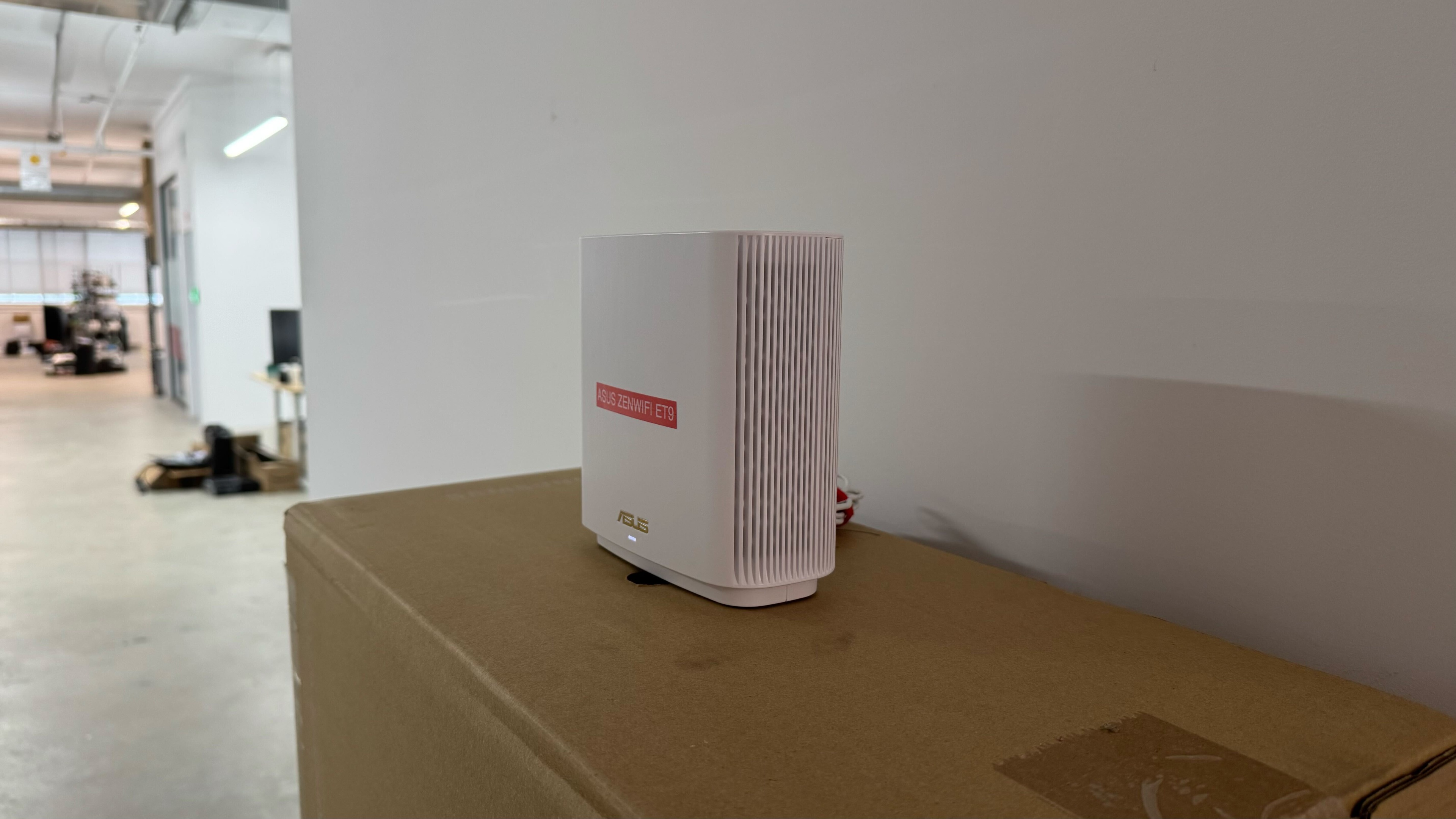
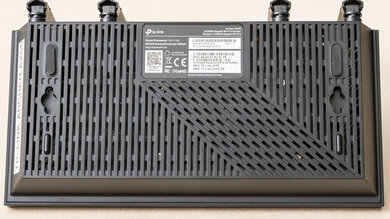
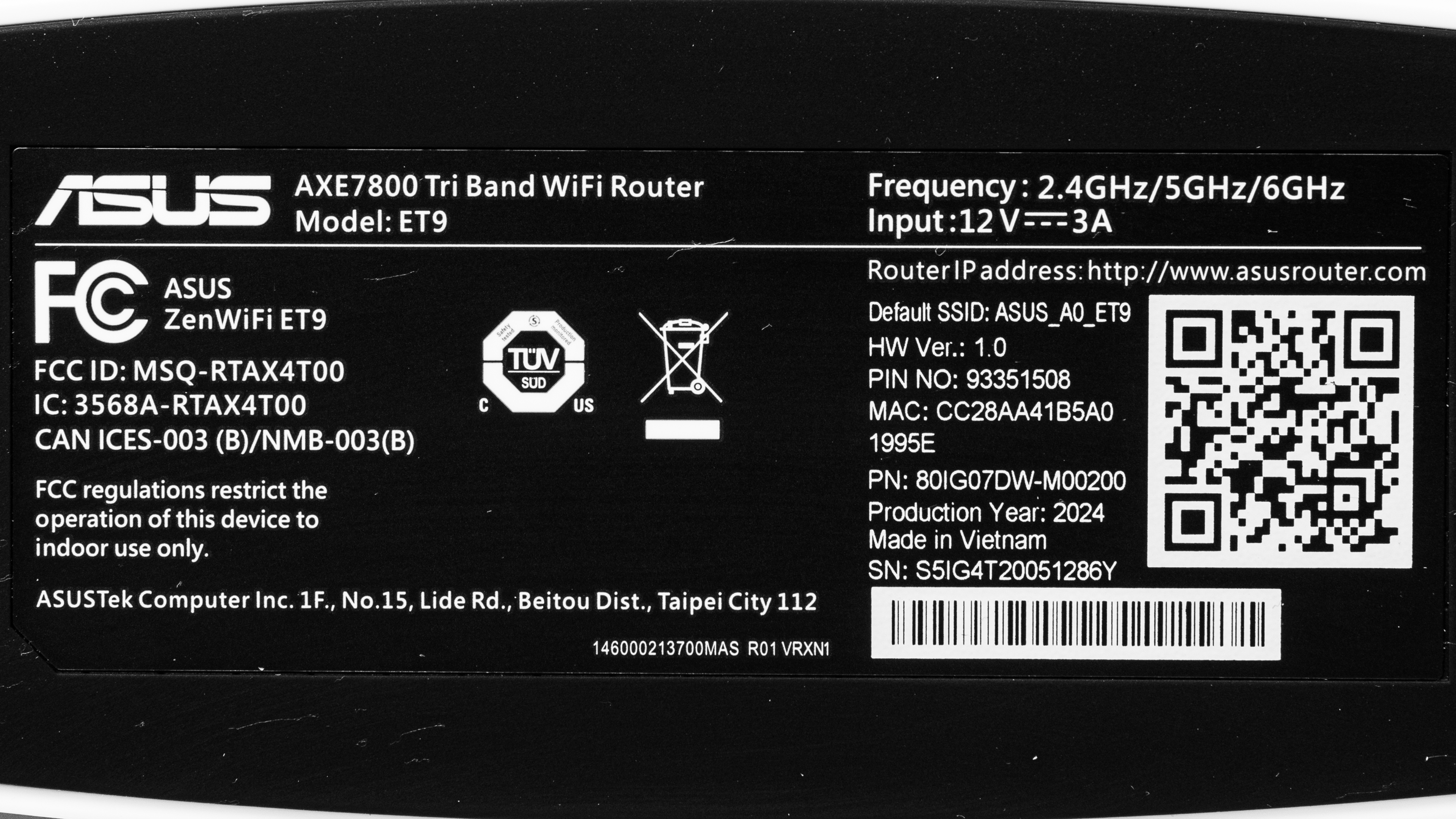
The ASUS ZenWiFi ET9 is available in a one, two, or three-pack. Here's our unit's label.
Popular Router Comparisons
The ASUS ET9 is a tri-band Wi-Fi 6E mesh router in ASUS's ZenWiFi lineup. It's similar to the ASUS ZenWiFi XT9 but has a 6GHz band instead of a second 5GHz band. Its main competitors include the TP-Link Deco XE5300 and the eero Pro 6E. It delivers very similar performance to both systems but has better connectivity with more LAN ports and a USB port, which the others lack. Lower mid-range Wi-Fi 7 mesh systems, like the TP-Link Deco 7 Pro BE63, offer significantly faster 6GHz speeds for a similar price.
If you're looking for more options, check out our recommendations for the best Wi-Fi routers, the best mesh Wi-Fi systems, and the best Wi-Fi routers for large homes.
The ASUS ZenWiFi BT10 and the ASUS ZenWiFi ET9 are tri-band mesh routers that are part of the same lineup. The former is Wi-Fi 7 and the latter is Wi-Fi 6E. The BT10 delivers significantly faster top speeds, while both routers have similarly great range. The BT10 has faster wired networking ports with two 10Gbps Ethernet ports and one 1Gbps port, while the ET9 has three 1Gbps ports and one 2.5Gbps port.
The eero Pro 6E and the ASUS ZenWiFi ET9 are Wi-Fi 6E mesh routers. They have comparable performance, but the eero is slightly faster overall. The ASUS, on the other hand, has better connectivity with more LAN ports and a USB port.
The ASUS ZenWiFi XT9 and the ASUS ZenWiFi ET9 are mesh routers from the same lineup. The ET9 is Wi-Fi 6E while the XT9 is Wi-Fi 6. They deliver similar speeds and range, but the ET9's 6GHz band should perform better in noisy wireless environments.
The ASUS ZenWiFi ET9 is a slightly better router than the Google Nest Wifi Pro. The ASUS is a little faster, has a bit better range, and has better wired connectivity.
Test Results
for pictures & test results
for pictures & test results
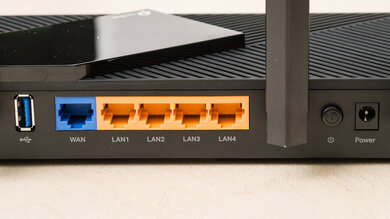
This router's USB port supports USB 3.2 Gen 1 data transfer speed of up to 5Gbps.
for pictures & test results
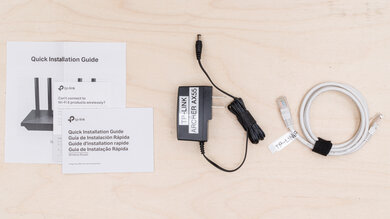
- Ethernet cable
- Power adapter x2
- User documentation
for pictures & test results
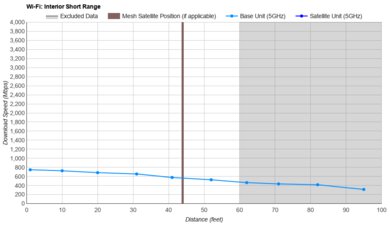
We tested this router in dual mesh mode.
for pictures & test results
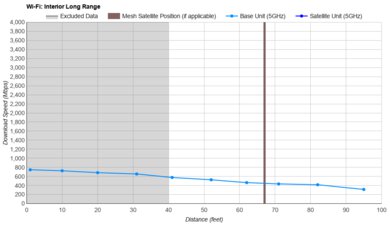
We tested this router in dual mesh mode.
for pictures & test results
for pictures & test results
The ZenWiFi ET9's wireless latency is adequate for web browsing, video calls, and casual gaming, with its 5GHz and 6GHz bands producing similar latency and jitter results overall. However, latency performance degrades noticeably when connected through a satellite node, with larger and more frequent latency spikes than most competing mesh systems we've tested.
Repeated testing and resetting the system produced nearly identical results, suggesting this behavior is consistent with the router's mesh implementation rather than a testing anomaly.
Wi-Fi 6E gives access to the 6GHz band, which takes advantage of less signal interference for faster speeds, but you'll need devices that support it to benefit from it.
Check out the ASUS ZenWiFi BT10 if you're looking for a Wi-Fi 7 router from the same lineup.