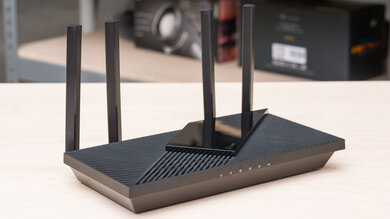
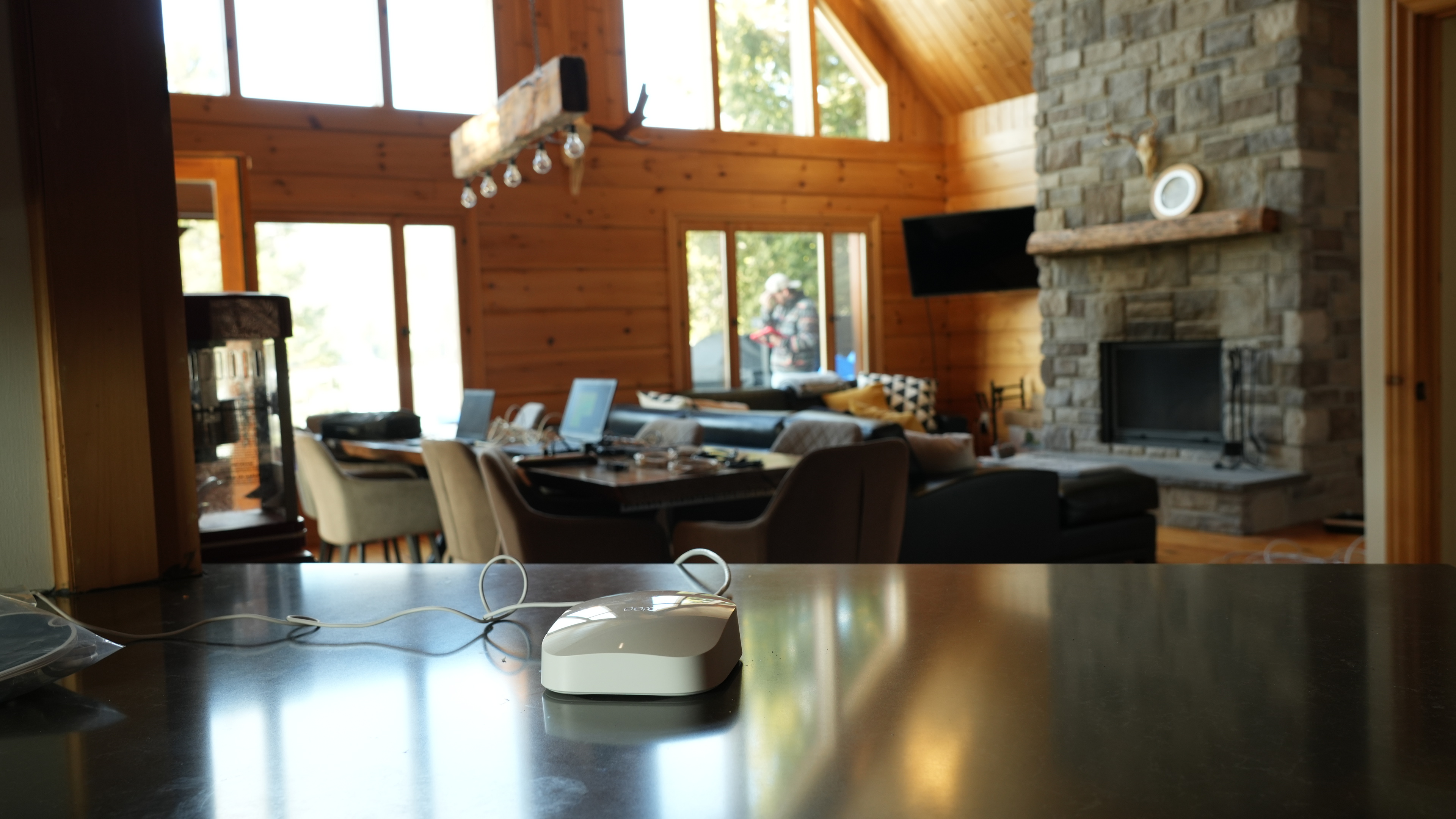
The eero Pro 6E is a tri-band Wi-Fi 6E router with a 2.4GHz band, a 5GHz band, and a 6GHz band. It's available as a single router or in packs of two or three for mesh networking. It has a sleek design with a small footprint, a low profile, and no external antennas. It features a built-in Zigbee smart home hub and support for Amazon Alexa. You manage it through eero's mobile app, where you can configure basic settings. The app has a paid subscription tier that allows you to access additional features like ad blocking, content filters, and a VPN. We bought a two-pack and tested it in both mesh mode and standalone mode.
Our Verdict
The eero Pro 6E is a great router for apartments, condos, or small homes. Its attractive design and small footprint will easily fit into your living space. It provides great speeds suitable for bandwidth-heavy internet activities, like quickly downloading large files. It also has a 2.5 Gbps wired networking port.
- Small and sleek design.
- Built-in smart home integration.
- Impressive top speeds.
- Have to pay an additional subscription fee for advanced features.
- Only two networking ports.
The eero Pro 6E is a very good router if you have a medium- to large-sized home with a backyard. It provides great speeds suitable for bandwidth-intensive internet use, like 4k video streaming on multiple devices and quickly downloading large files, no matter where you are in the house. You can easily add access points to a mesh network for better coverage. It only has two wired networking ports, but only one is rated for 2.5 Gbps.
- Small and sleek design.
Great range, which can be improved with additional access points.
- Built-in smart home integration.
- Impressive top speeds.
- Have to pay an additional subscription fee for advanced features.
- Only two networking ports.
The eero Pro 6E delivers decent Wi-Fi gaming performance that's similar to most home routers, with fast top speeds and broad coverage that can comfortably handle large downloads and updates throughout the home. Its latency and jitter performance are adequate for casual gaming, but competitive players should still opt for a wired connection for the most consistent experience.
Great range, which can be improved with additional access points.
- Impressive top speeds.
Sufficient latency performance for web browsing and non-competitive gaming.
- Only two networking ports.
Unsuitable lag for competitive gaming over Wi-Fi.
The eero Pro 6E delivers great speeds that are suitable for a 1 Gbps internet connection or higher. It also supports Dynamic Frequency Selection (DFS), so it can use less congested DFS-only channels to give you better speeds in noisy wireless environments.
- Impressive top speeds.
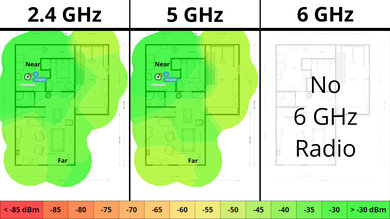
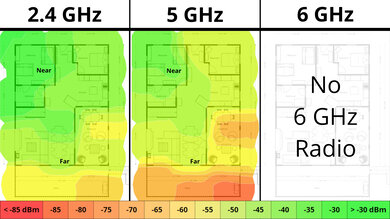
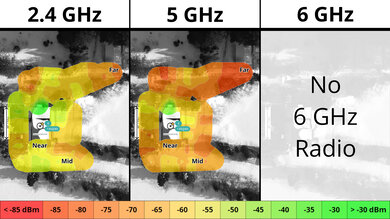
The eero Pro 6E has very good range performance. Since it's a mesh router, satellite access points help it maintain consistent average speeds over long distances, making it suitable for high-bandwidth uses and high-speed downloads over a wide area.
Great range, which can be improved with additional access points.
The eero Pro 6E delivers adequate wireless latency overall. Its connection is reasonably stable for general web browsing, video calls, and casual gaming. As with most mesh systems, you can expect latency levels to increase when your device is connected to a satellite node rather than the main unit.
Sufficient latency performance for web browsing and non-competitive gaming.
Unsuitable lag for competitive gaming over Wi-Fi.
Changelog
- Updated Jun 22, 2026: We've updated this review to Test Bench 0.9.1! This is a minor change that makes the router type easier to see at the top of each review. Read the changelog for more info.
-
Updated May 25, 2026:
We've updated this review with additional text to help contextualize results and usages introduced in Test Bench 0.9.
- Updated Apr 22, 2026: We've updated this review to Test Bench 0.9! This update adds wireless latency testing to evaluate router gaming performance. Read the changelog for more info.
- Updated Dec 16, 2025: We've added an MLO Implementation test for Test Bench 0.8.2! Read the changelog for more details.
Check Price
Differences Between Sizes And Variants
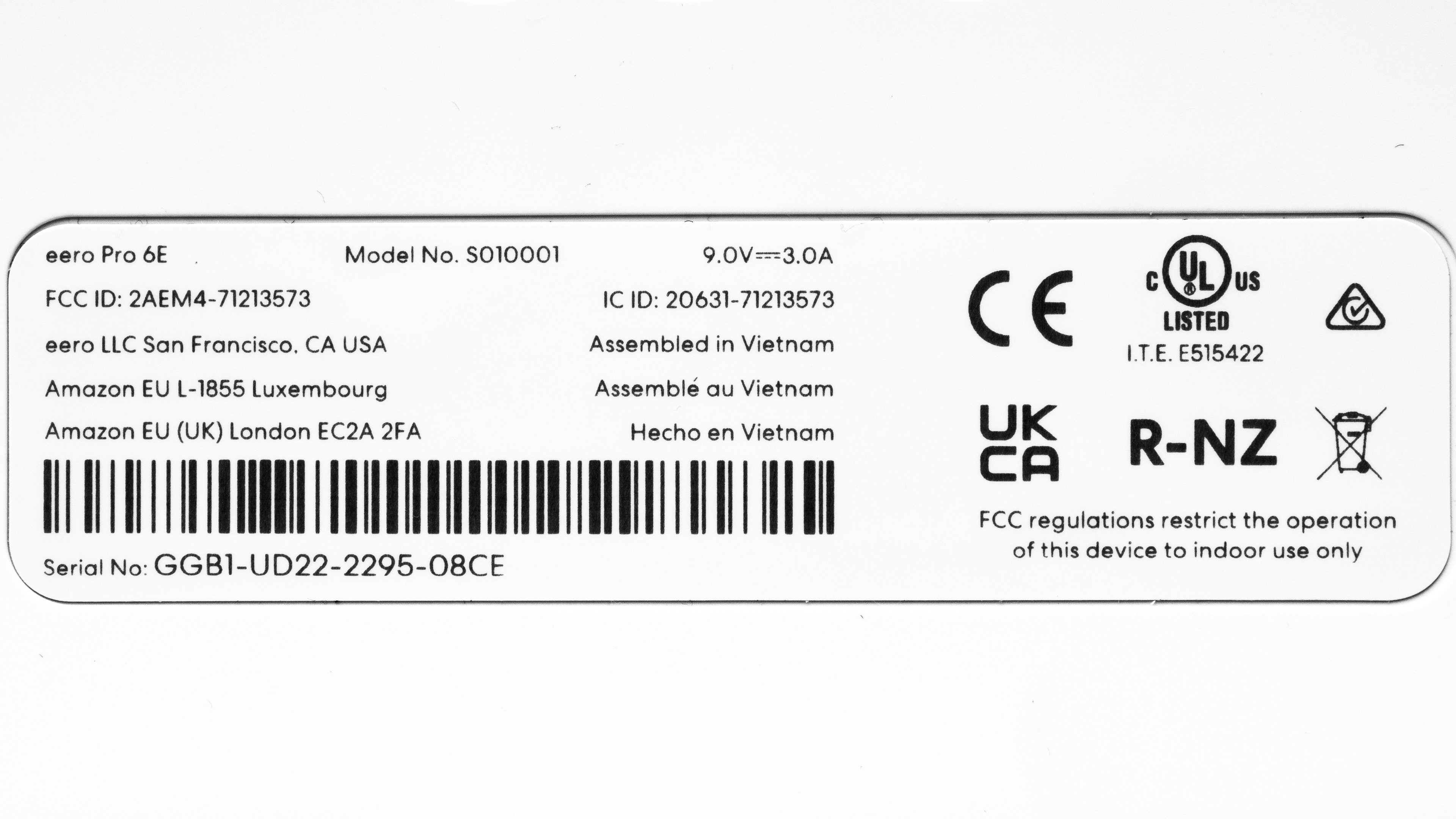
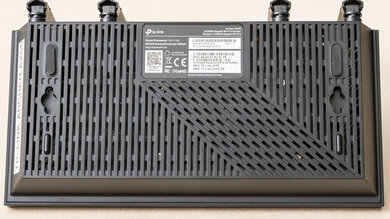
This router is available on its own or in a two- or three-pack. We bought and tested a two-pack. Here's a photo of our unit's label.
Popular Router Comparisons
The eero Pro 6E is a Wi-Fi 6E router with 2.4GHz, 5GHz, and 6GHz bands. It shares many features with other eero routers, including mesh networking with additional access points and compatibility with Zigbee smart home devices. eero offers an "eero Plus" membership that allows you to access advanced settings and additional features like ad blocking, content filters, and VPN access.
This router and other eero routers stand out because of their ease of use and setup, integration with smart home features, and sleek design. You have to use the eero app to set up and manage the network, and there's no web interface at the time of writing. It's convenient and easy to use, but it's not very flexible, as there are very few configurable options you can change compared to standalone routers and even some other mesh systems. Performance-wise, the eero 6E has slightly better speeds and range than other Wi-Fi 6E routers, but it's usually more expensive.
The eero Pro 6 is a discontinued Wi-Fi 6 router; the eero Pro 6E is a Wi-Fi 6E router that replaces the former. They're both tri-band routers, but the Pro 6E's third band is 6GHz instead of 5GHz. The Pro 6E is a better router since it can reach higher top speeds and has better range. It also has a 2.5Gbps networking port, while the Pro 6 only has a single gigabit networking port. They're both designed for mesh networking; you can easily add more access points for better coverage.
The eero Pro 6E is a tri-band Wi-Fi 6E router, while the eero 7 is a dual-band Wi-Fi 7 router. Both routers have 2.4GHz and 5GHz bands, but the Pro 6E has an additional 6GHz band. As such, it delivers significantly faster speeds and better range than the eero 7. That said, the eero 7 touts some Wi-Fi 7 exclusive benefits like MLO (multi-link operation), allowing compatible devices to connect to multiple bands at the same time.
The eero Pro 7 and the eero Pro 6E are tri-band mesh routers from eero's 'Pro' lineup. The Pro 7 is a Wi-Fi 7 router, while the Pro 6E is a Wi-Fi 6E router. Performance-wise, the former offers better speeds and range on its 6GHz band, but the latter has a significantly more performant 5GHz band. Other than the Pro 6E being smaller and easier to place, the two offer very similar functionality.
The eero Pro 6E is a better router than the eero 6. The former is a tri-band Wi-Fi 6E router with 2.4GHz, 5GHz, and 6GHz bands, while the latter is a dual-band Wi-Fi 6 router that lacks a 6GHz band. They're both designed for use in mesh networks with multiple access points. Each router has two Ethernet ports, but the 6E has a 2.5Gbps port and a 1Gbps port, while the 6 has two 1Gbps ports. The 6E has better range and faster top speeds than the 6.
Test Results
for pictures & test results
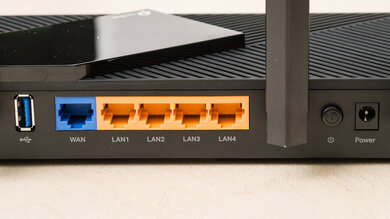
This router has two networking ports that automatically detect whether you use a WAN or LAN connection. However, you'll have to buy an external network switch if you have many wired devices.
If you're looking for a router with more network ports, check out the ASUS ZenWiFi ET9.
While this router has a USB-C port, it's only used for power and doesn't support data transfer.
for pictures & test results
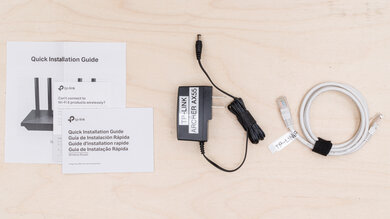
- Ethernet cable x2
- USB-C power adapter x2
- User documentation
for pictures & test results
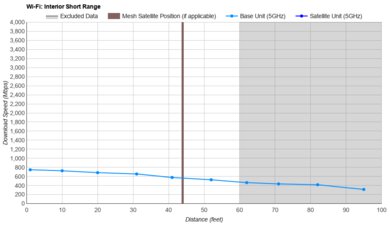
We tested this router in dual mesh mode.
for pictures & test results
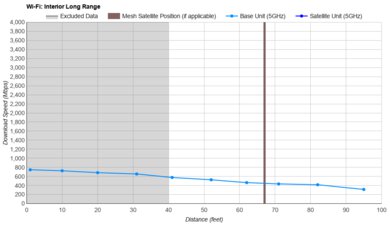
We tested this router in dual mesh mode. While there's a slight speed penalty when connected to the satellite, this is expected, and the additional access point helps deliver more consistent speeds over very long distances.
for pictures & test results
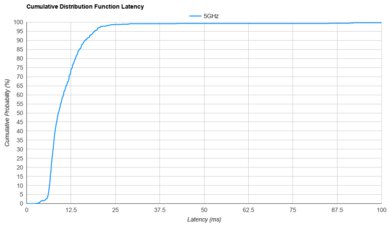
Because the eero Pro 6E uses a shared SSID for the 5GHz and 6GHz bands, we were only able to gather latency results for the 6GHz band. We expect the 5GHz band to perform similarly in terms of latency and jitter.
The router's wireless performance is good enough for video calls, everyday browsing, and non-competitive gaming.
for pictures & test results
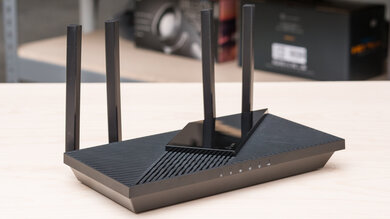
Wi-Fi 6E gives access to the 6GHz band, which takes advantage of less signal interference for faster speeds, but you'll need devices that support it to benefit from it.
If you're interested in a Wi-Fi 7-capable mesh router, check out the TP-Link Deco 7 Pro BE63 or the TP-Link Deco 7 Pro BE65 Pro.