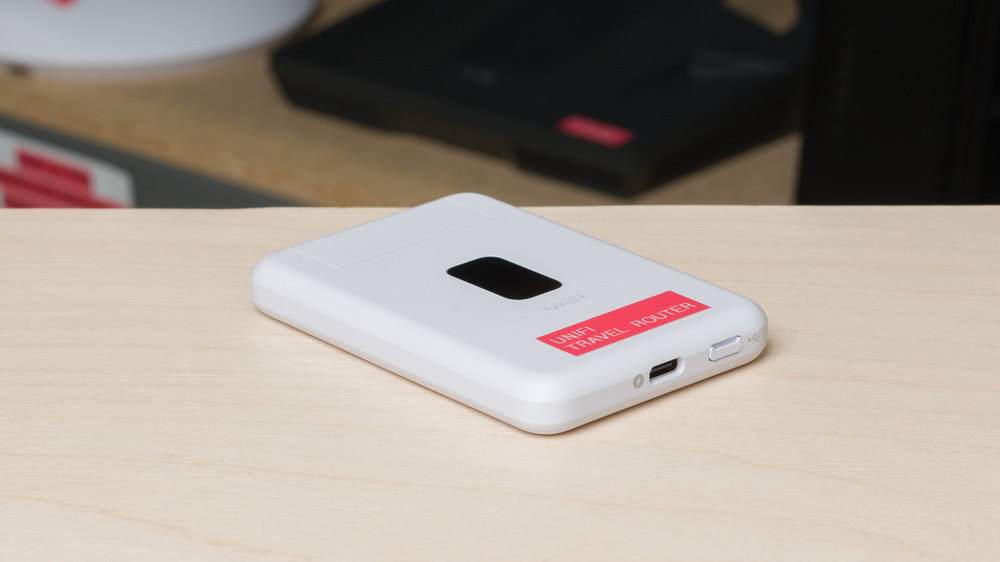
The UniFi Travel Router (UTR) is a lightweight dual-band Wi-Fi 5 travel router. It can connect to the internet via Ethernet, another Wi-Fi network, or USB tethering from an iOS or Android phone. It has one 1Gbps WAN port, one 1Gbps LAN port, two USB-C connections, and a 1.14-inch network status display. You can use it as a standalone router without a UniFi account, or sign in to configure it with a VPN using WireGuard, OpenVPN, or Teleport (UniFi's push-button VPN tool built on the WireGuard protocol).
Our Verdict
The UniFi Travel Router is sub-par for an apartment or small home. It fits in the palm of your hand and provides reasonable speeds nearby, but its connection drops at a distance since it's made for portability rather than range. Its single gigabit LAN port is equally limiting for wired setups.
Exceptionally compact design.
Okay speeds at short distances.
Simple app-based setup with one-touch VPN support.
Horrible range.
Uses the older Wi-Fi 5 standard.
Only one 1Gbps LAN port.
Designed as a pocket-sized travel router rather than a standalone system, the UniFi Travel Router is a bad fit for a large or multi-level home. Although it provides fair speeds for general browsing when you're nearby, its range is terrible, and it can't maintain a consistent connection past 70 feet from the router.
Okay speeds at short distances.
Simple app-based setup with one-touch VPN support.
Horrible range.
Uses the older Wi-Fi 5 standard.
Only one 1Gbps LAN port.
No mesh support.
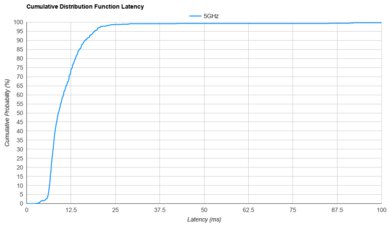
The UniFi Travel Router is usable for casual gaming, but only if you're connected over Ethernet or within a very close range. Its peak speeds are fast enough for some game downloads and everyday play, but its high latency and jitter levels make it a poor long-term solution that's entirely unsuitable for competitive gaming.
Okay speeds at short distances.
Usable for casual gaming at very short range.
Horrible range.
Uses the older Wi-Fi 5 standard.
Latency and jitter are disappointingly high.
Completely unsuitable for competitive gaming.
The UniFi Travel Router's speeds are adequate for routine tasks like browsing and streaming when you're nearby. It tops out at just 286 Mbps in our tests, although its WAN port is rated for up to 1Gbps.
Okay speeds at short distances.
Only one 1Gbps LAN port.
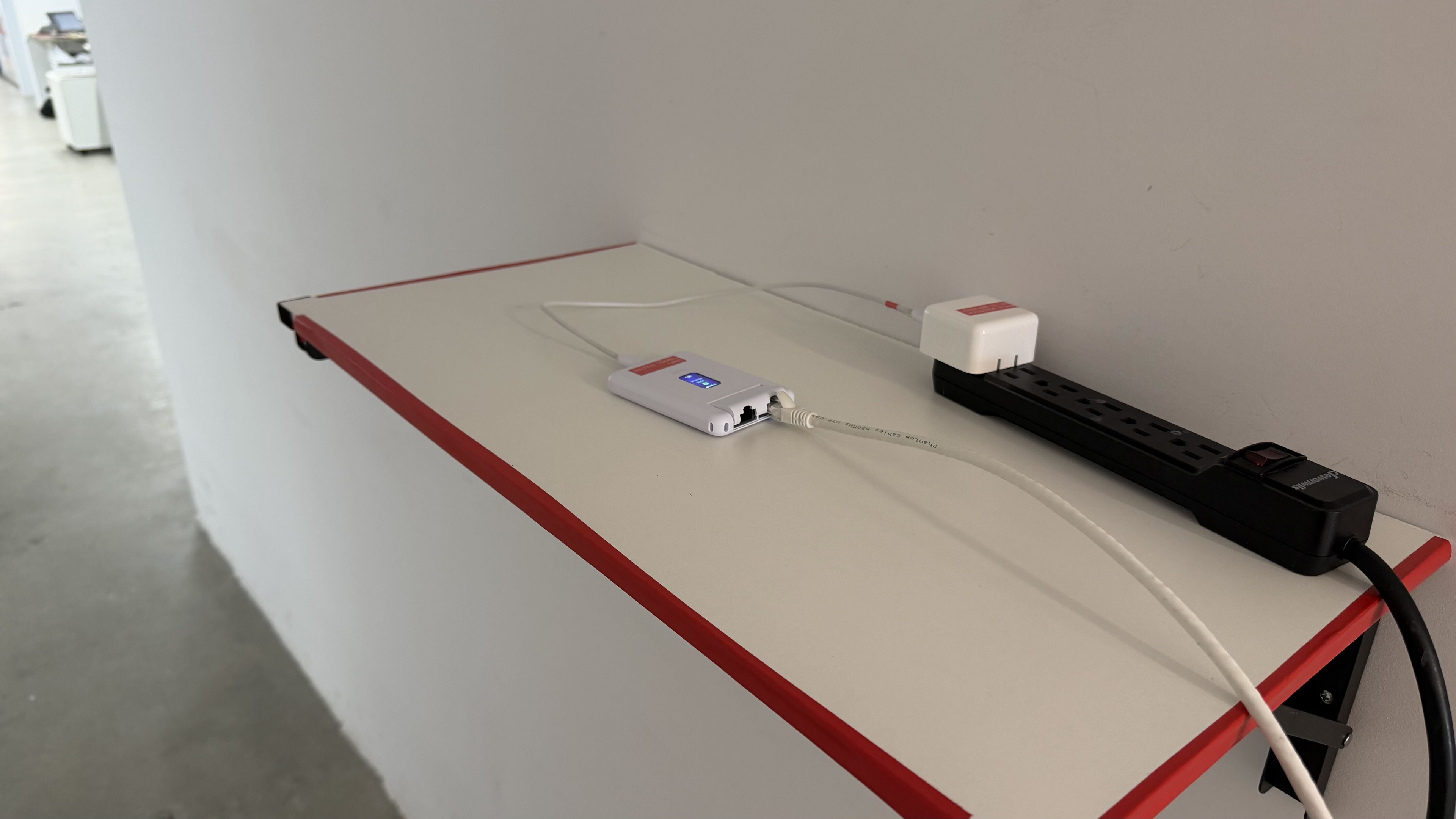
The UniFi Travel Router has abysmal range, making it terrible for anything but the smallest spaces. It's fit for temporary use at close range, such as in a hotel room or on a plane, but its performance becomes unstable past 50 feet and drops entirely at longer distances.
Horrible range.
No mesh support.
The UniFi Travel Router's wireless latency and jitter levels are both disappointing. It handles browsing and streaming okay enough, but you're likely to experience choppy performance during calls or online gaming, especially at a distance. Connecting your device to its LAN port will provide a more reliable connection than over Wi-Fi.
Latency and jitter are disappointingly high.
Completely unsuitable for competitive gaming.
Changelog
-
Updated Sep 15, 2026:
We've added links to the newly reviewed TP-Link Roam 6 TL-WR3002X and the TP-Link Roam 7 in the Interior Short Range section of the review.
- Updated Aug 19, 2026: Review published.
- Updated Aug 13, 2026: Early access published.
- Updated Aug 10, 2026: Our testers have started testing this product.
Check Price
Differences Between Sizes And Variants
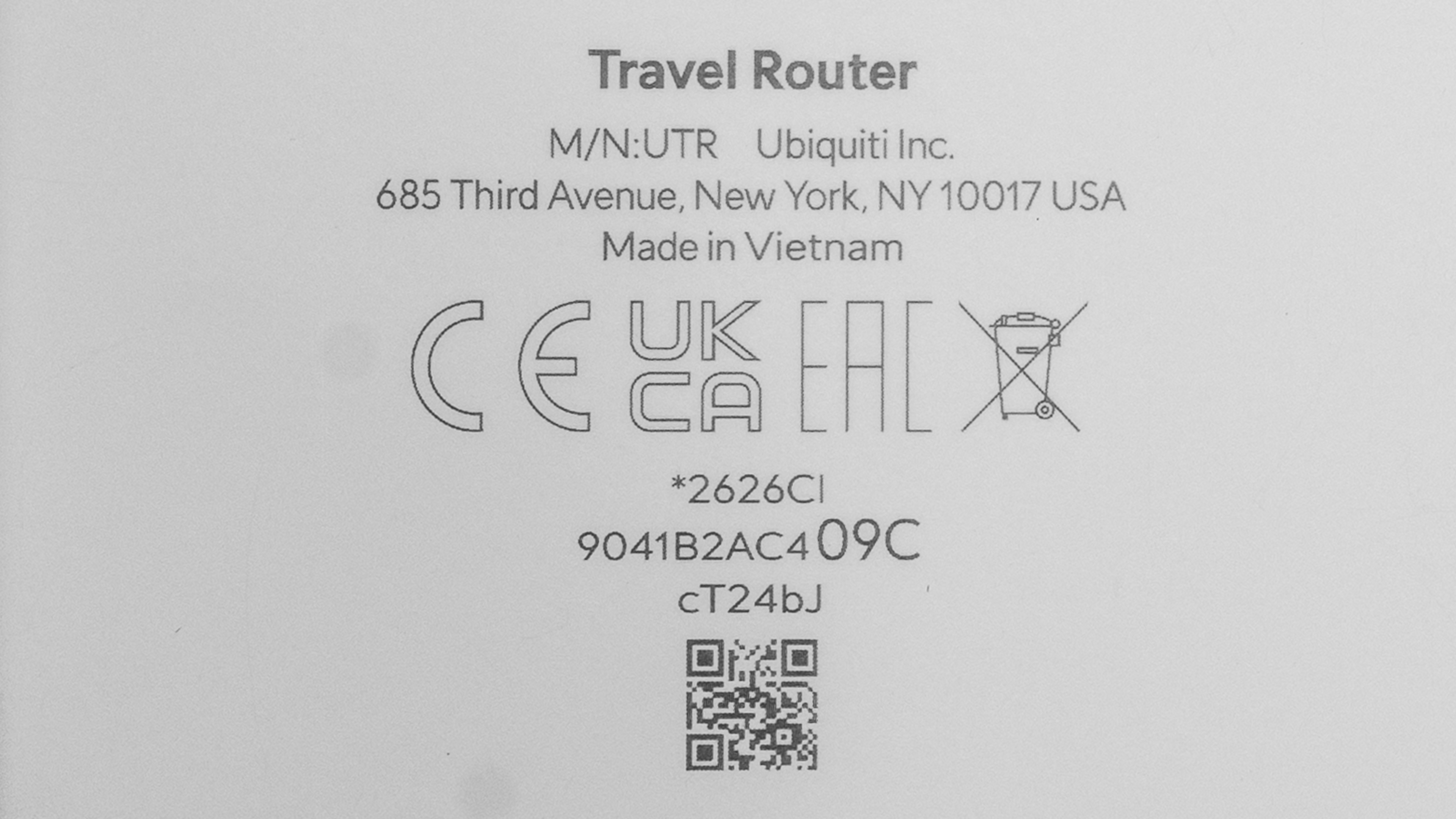
The UniFi Travel Router (UTR) doesn't have any variants. We bought and tested the standard white model shown in this review. See a photo of our unit's label.
Popular Router Comparisons
The UniFi Travel Router is a dual-band Wi-Fi 5 router built for portability and easy integration with the UniFi ecosystem. It's incredibly slim and works over Ethernet, Wi-Fi, or a tethered phone. However, that pocketable design comes at the expense of a heavily compromised range, as the router becomes completely unusable beyond 70 feet.
The portable GL.iNet Slate 7 (GL-BE3600) is a better travel option thanks to its Wi-Fi 7 support, higher speeds, multi-gigabit ports, and massively better range. And if you don't need Wi-Fi 7, both the GL.iNet Beryl AX (GL-MT3000) and GL.iNet Slate AX (GL-AXT1800) still handily outperform the UTR across the board. If you're set on UniFi and don't need a pocketable form factor, the UniFi Express 7 and UniFi Dream Router 7 offer better performance and broader functionality as dedicated home routers. Both are tri-band Wi-Fi 7 devices with mesh expandability and excellent speeds, but the Dream Router 7 has more Ethernet ports while the Express 7 stays impressively compact.
Just looking for a cheap router? Be sure to have a look at our guide to the best budget and cheap routers, or browse our top picks for the best Wi-Fi routers and best routers for fiber internet. If you're on the hunt for more travel-friendly routers, be sure to check out our complete list of recommendations.
The UniFi Travel Router and the GL.iNet Beryl AX (GL-MT3000) are both ultra-compact dual-band travel routers, but the GL.iNet is the more capable option overall; it delivers far faster speeds, much better range, and lower wireless latency (though its latency performance is still unremarkable). It steps up to Wi-Fi 6 and a faster 2.5Gbps WAN port, and ships with a clean, deeply configurable interface based on OpenWrt. With its internal antennas, the UniFi UTR is slightly more compact and integrates smoothly with existing UniFi hardware. Still, its range is terrible, and its Wi-Fi 5 hardware is dated, so it's really only worth considering if staying in the UniFi ecosystem is your main concern.
The GL.iNet Slate 7 (GL-BE3600) is a far more capable ultra-compact router than the UniFi Travel Router. The GL.iNet uses the latest Wi-Fi 7 standard, delivers much faster speeds and significantly better range, and has two 2.5Gbps Ethernet ports instead of two 1Gbps ports. Its custom OpenWrt-based software offers deep configuration tools wrapped in a user-friendly interface.
The UniFi is slimmer still and has a simpler app with VPN support, but its abysmal range gives it far less utility overall. The Slate 7 has one USB-A 3.0 port, while the UTR has two USB-C ports. Neither is mesh expandable.
The UniFi Express 7 is a more capable choice for a permanent home network, while the UniFi Travel Router serves as a temporary on-the-go solution. The Express 7 is a tri-band Wi-Fi 7 router with mesh expandability, delivering much stronger speeds and more flexible coverage than the dual-band Wi-Fi 5 Travel Router. While the Express is relatively compact for a standalone, the UTR is best suited to a purse or pocket and supports phone tethering via USB-C.
The UniFi Travel Router and the ASUS RT-BE58 Go are both dual-band pocket-sized routers. The UniFi is modestly more compact thanks to its internal antennas, but the ASUS is a more capable travel companion overall; the RT-BE58 delivers significantly faster peak speeds, lower wireless latency, and substantially better range (though its range is still poor). It also uses Wi-Fi 7 and has a 2.5Gbps WAN port, while the UniFi uses Wi-Fi 5 and only supports speeds up to 1Gbps. Both are powered via a USB-C connection.
Test Results

for pictures & test results
The UniFi Travel Router uses one USB-C port for power and the other for WAN tethering from an iOS or Android device. Since it only draws up to 5W, it's easy to power it from a portable charger or power bank.
for pictures & test results

Check out the TP-Link Roam 6 TL-WR3002X or the TP-Link Roam 7 if you're looking for travel routers with faster close-range speeds.
for pictures & test results

In a rare first for our test bench, we weren't able to complete our standard suite of range tests. The UniFi Travel Router's performance slowed to a crawl at 50 feet, and its signal became too unstable to test beyond 70 feet.
for pictures & test results