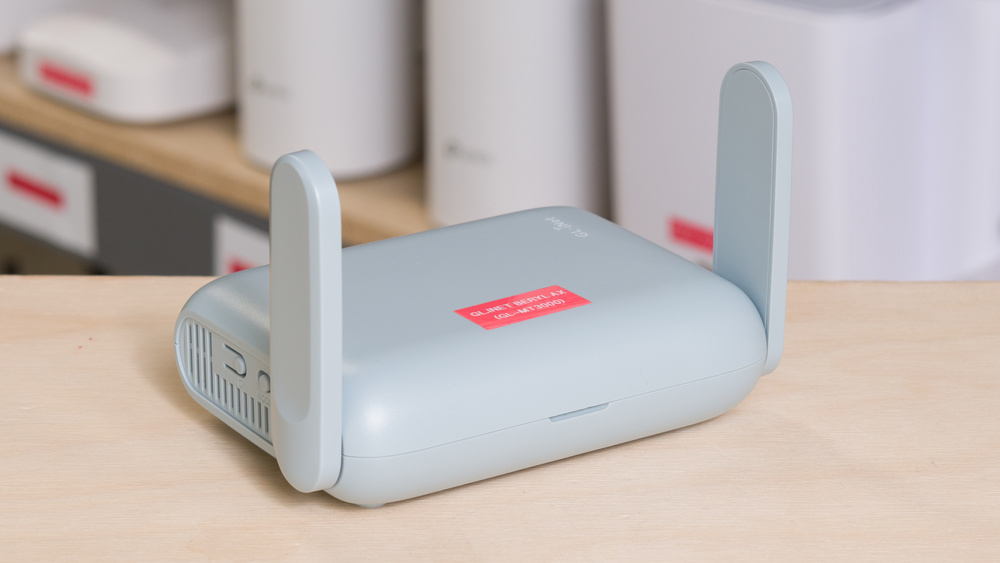
The GL.iNet Beryl AX (GL-MT3000) is a dual-band Wi-Fi 6 travel router and the successor to the Wi-Fi 5 Beryl (GL-MT1300). It has a 2.5Gbps WAN port, a 1Gbps LAN port, and a USB 3.0 port. It runs a version of OpenWRT, a Linux-based, open-source firmware that's highly configurable. It has Tailscale, ZeroTier, OpenVPN, and WireGuard pre-installed so you can tunnel your entire network through a VPN, among many other advanced features.
Our Verdict
The GL.iNet GL-MT3000 is a very good router for an apartment or small home. Since it's designed as a travel router, it's extremely small, so you can easily find an unobtrusive place to set it up inside your home. It touts a 2.5Gbps WAN port, a 1Gbps LAN port, and a USB 3.0 port for connecting external storage, cellular modem, or even tethering your mobile device for hotspot use. As for its performance, it delivers good speeds suitable for a family streaming 4k video simultaneously or other high bandwidth activities. It also supports Dynamic Frequency Selection (DFS), so it can use less congested DFS-only channels to give you better speeds in apartment buildings with noisy wireless conditions. Additionally, it has features that make it particularly well-suited as a travel companion, like having OpenVPN and WireGuard VPN protocols pre-installed, and the inclusion of travel adapters in the box. Its implementation of OpenWRT firmware makes it highly configurable and allows for a level of customization that make it a compelling option for networking enthusiasts.
Very good speeds.
Decent range.
Highly configurable and flexible OpenWRT-based software.
Only two Ethernet ports.
Wi-Fi 6 doesn't take full advantage of new Wi-Fi 6E or 7 devices.
Despite being primarily designed as a travel router, the GL.iNet GL-MT3000 Beryl AX is a good router for multi-level homes. It has decent range and delivers very good speeds that are suitable for high-bandwidth use, like downloading large files quickly. It has a 2.5Gbps WAN port, a 1Gbps LAN port, and a USB 3.0 port you can use to connect external storage or even a cellular modem. It runs a version of OpenWRT, an open-source firmware that's highly configurable and well-suited for home networking enthusiasts.
Very good speeds.
Decent range.
Highly configurable and flexible OpenWRT-based software.
Only two Ethernet ports.
Wi-Fi 6 doesn't take full advantage of new Wi-Fi 6E or 7 devices.
The GL.iNet GL-MT3000 is just okay for gaming over Wi-Fi. Its wireless latency performance is mediocre, so it's only suitable for non-competitive gaming. It does, however, deliver very good top speeds and decent range, so you can download large game files fairly quickly.
Very good speeds.
Decent range.
Acceptable wireless latency for web browsing and non-competitive gaming.
Unsuitable for competitive gaming over Wi-Fi.
The GL.iNet Beryl AX (GL-MT3000) is a remarkable travel router. It's compact enough to slip into a bag or pocket, it features foldable antennas and includes international power adapters. It can route traffic from all your devices through a VPN, making it appear as though you're browsing from your home country while traveling. You can also use Tailscale to securely access your home network from anywhere. And with USB tethering support, it can connect to a cellular network when Wi-Fi isn't available.
Travel adapters included in the box.
VPN, WISP, and cellular support.
The GL.iNet GL-MT3000 delivers very good wireless speeds that are suitable for an internet connection up to ~700Mbps. It supports Dynamic Frequency Selection (DFS), which provides access to more channels for better speeds in congested wireless environments like apartment buildings.
Very good speeds.
Wi-Fi 6 doesn't take full advantage of new Wi-Fi 6E or 7 devices.
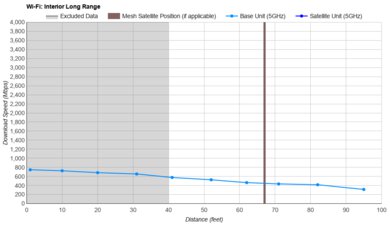
The GL.iNet GL-MT3000 has decent range. While it doesn't have any native mesh support, you can configure it as an extender/repeater in the software.
Decent range.
The GL.iNet Beryl AX has mediocre latency performance that's slightly less consistent than most other routers. It's still acceptable for daily internet use, video calls, and non-competitive gaming, however.
Acceptable wireless latency for web browsing and non-competitive gaming.
Unsuitable for competitive gaming over Wi-Fi.
The GL.iNet Beryl AX has fantastic configurability. Its web-based firmware is easy to use and extremely flexible, allowing you to easily configure a range of expected and advanced settings.
Highly configurable and flexible OpenWRT-based software.
Performance Usages
Changelog
-
Updated Sep 15, 2026:
We've added links to the newly reviewed TP-Link Roam 6 TL-WR3002X and the TP-Link Roam 7 in the Interior Short Range section of the review.
- Updated Sep 11, 2026: We've updated this review to Test Bench 0.10! This update adds Portability and Configurability testing to evaluate how suitable routers are for travel and to show how configurable their settings are. Read the changelog for more info.
- Updated Jun 22, 2026: We've updated this review to Test Bench 0.9.1! This is a minor change that makes the router type easier to see at the top of each review. Read the changelog for more info.
-
Updated Apr 27, 2026:
We've added a link to the newly reviewed Davolink Minions Kevin in the Interior Short Range section of the review.
Check Price
Differences Between Sizes And Variants
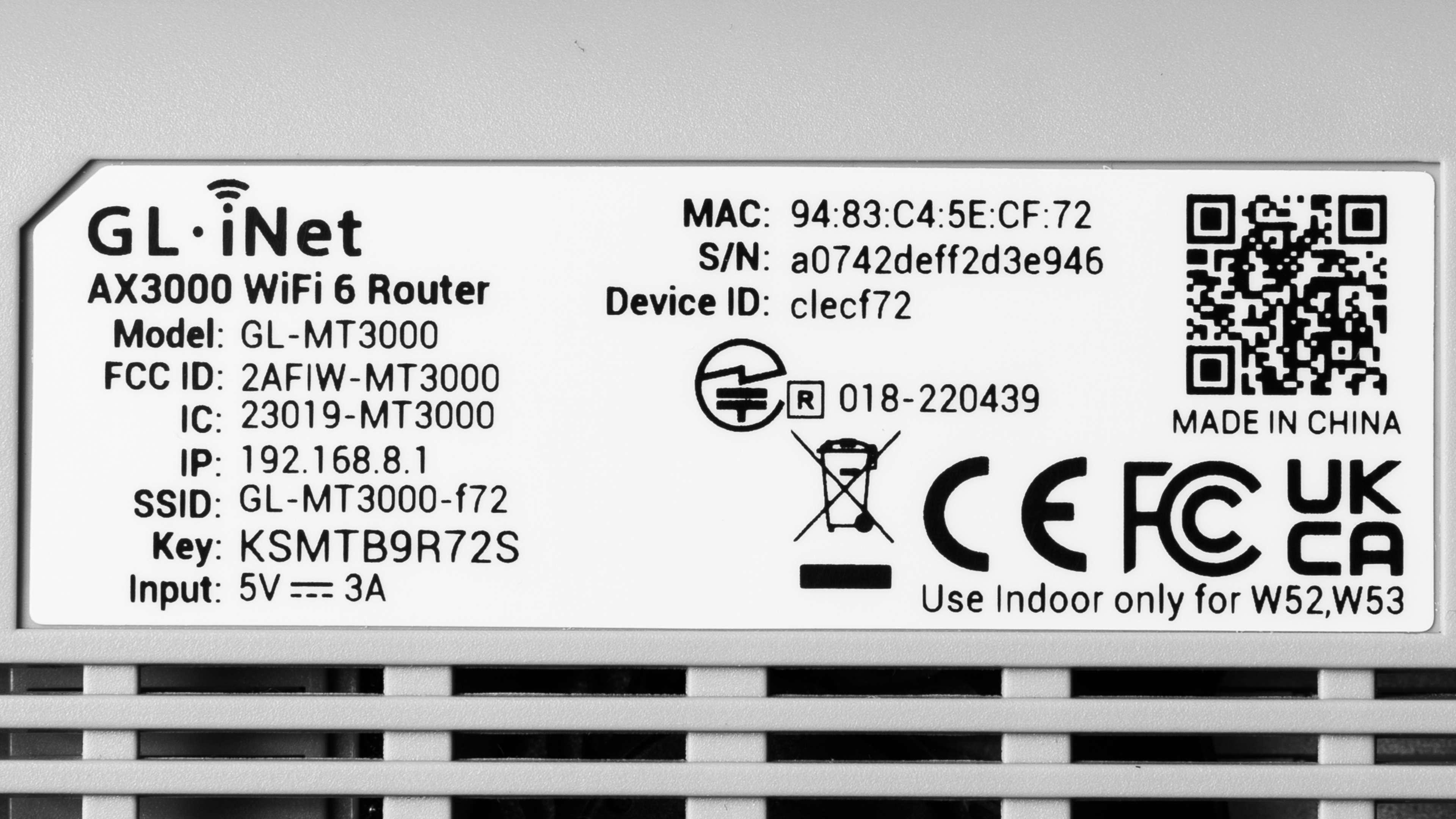
This router doesn't have any variants. See a photo of our unit's label.
Popular Router Comparisons
The GL.iNet GL-MT3000 Beryl AX is a dual-band Wi-Fi 6 travel router. It has several features that make it well-suited if you need control over the Wi-Fi network where you're staying while traveling. Its small size and foldable antennae make it easy to tote, and it even comes with travel adapters in the box. One of the most unique aspects of this router is its firmware. It runs a version of OpenWRT, an open-source, Linux-based firmware that's highly configurable and has lots of extra features, like Tailscale and WireGuard VPNs pre-installed, an adblocker, plug-in support, failover, and much more. While it doesn't support the same creation of mesh networks that off-the-shelf products like the TP-Link Deco X5000 do, you can configure it as an access point with a wired backhaul or an extender in the firmware.
This router has good performance that's really impressive considering its size and price bracket. Its range isn't quite as good as the TP-Link Archer AX55, but it's still decent and absolutely suitable if you live in an apartment or smaller home.
See our recommendations for the best Wi-Fi 6 routers, the best budget and cheap routers, and the best routers for streaming.
The GL.iNet Beryl AX (GL-MT3000) and the ASUS RT-BE58 Go are dual-band travel routers with compact bodies and foldable antennas. The GL.iNet is Wi-Fi 6, while the ASUS is Wi-Fi 7. They both offer similar functionality in their firmware, but the GL.iNet's open-source firmware is more configurable. Performance-wise, the ASUS delivers faster top speeds up close, but the GL.iNet has significantly better range.
The UniFi Travel Router and the GL.iNet Beryl AX (GL-MT3000) are both ultra-compact dual-band travel routers, but the GL.iNet is the more capable option overall; it delivers far faster speeds, much better range, and lower wireless latency (though its latency performance is still unremarkable). It steps up to Wi-Fi 6 and a faster 2.5Gbps WAN port, and ships with a clean, deeply configurable interface based on OpenWrt. With its internal antennas, the UniFi UTR is slightly more compact and integrates smoothly with existing UniFi hardware. Still, its range is terrible, and its Wi-Fi 5 hardware is dated, so it's really only worth considering if staying in the UniFi ecosystem is your main concern.
The GL.iNet Flint 3 (GL-BE9300) and the GL.iNet Beryl AX (GL-MT3000) are routers from the same manufacturer. The Flint 3 is a full-sized, tri-band Wi-Fi 7 home router, while the Beryl AX is a dual-band, Wi-Fi 6 travel router. The latter is considerably smaller and has low-profile folding antennae, so it's easy to travel with, but it only has two Ethernet ports. Conversely, the Flint 3 has five 2.5Gbps Ethernet ports, so it's better suited if you have a lot of wired devices. Performance-wise, the Flint 3 delivers considerably better speeds and range, thanks in part to its 6GHz band. The little Beryl AX still performs admirably, with good top speeds and decent range that's suitable for smaller homes.
The GL.iNet Slate 7 (GL-BE3600) and the GL.iNet Beryl AX (GL-MT3000) are both deeply configurable routers sized for convenience and portability. The Slate 7 uses the newer Wi-Fi 7 standard for higher overall speeds and added MLO support, while its range performance is largely on par with the Beryl's. It also features two 2.5Gbps ports, while the Beryl has one 2.5Gbps WAN port and one 1Gbps LAN port, making the Slate 7 a higher performer overall.
Test Results
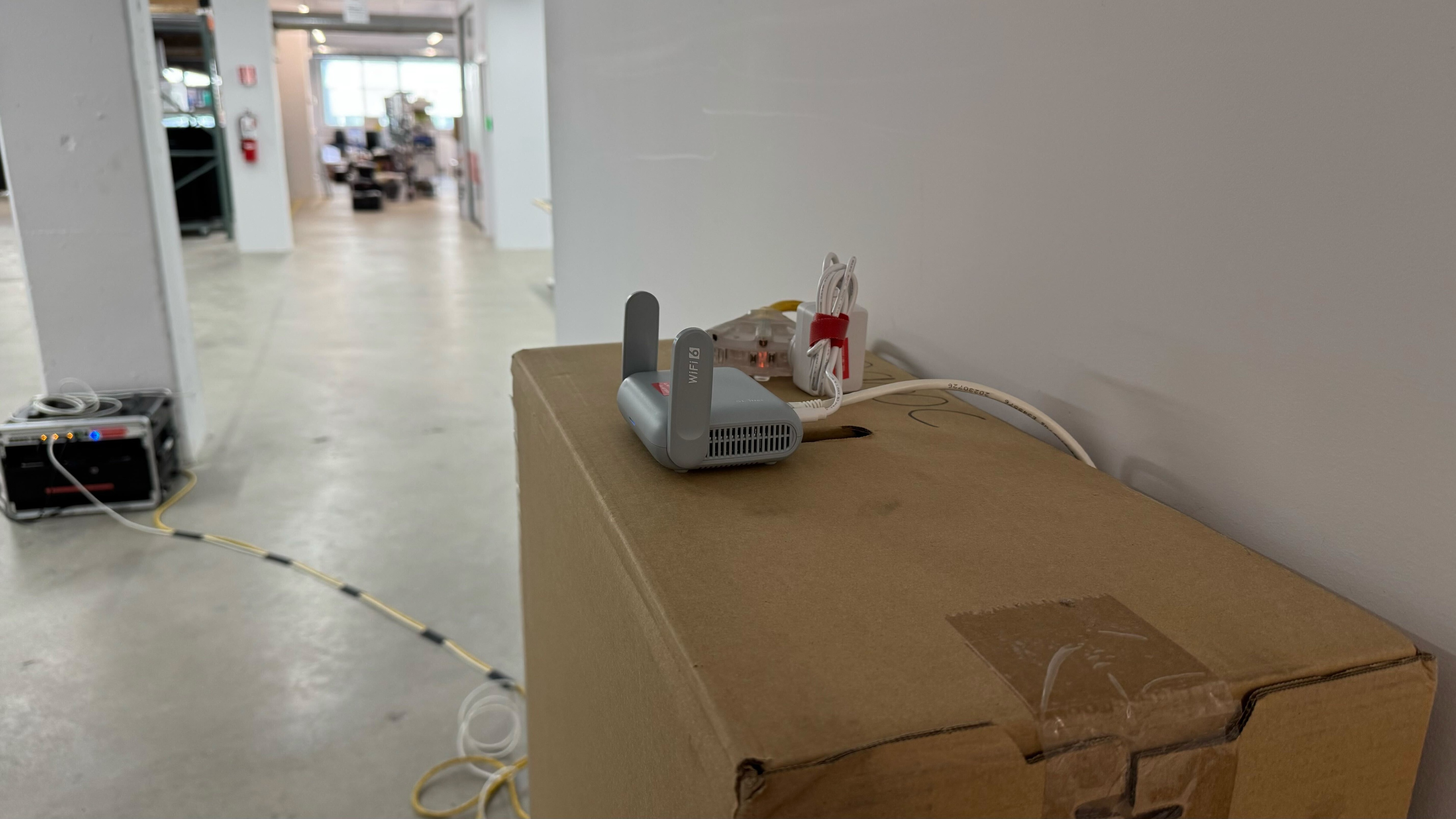
for pictures & test results

for pictures & test results
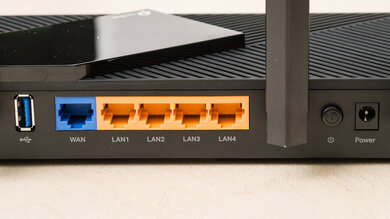
If you're looking for a similar travel router with a 2.5Gbps LAN port, check out the GL.iNet Slate 7 (GL-BE3600).
The USB-C port is only for power and doesn't support data transfer.
for pictures & test results
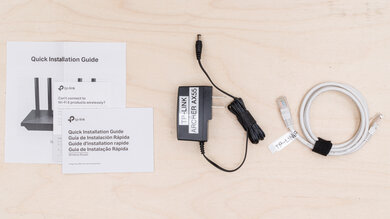
- Ethernet cable
- Power adapter
- Travel adapter (Europe)
- Travel adapter (UK)
- User documentation
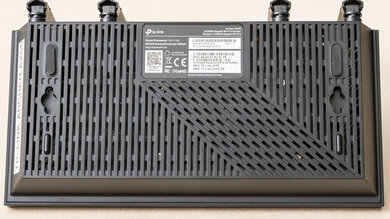
for pictures & test results
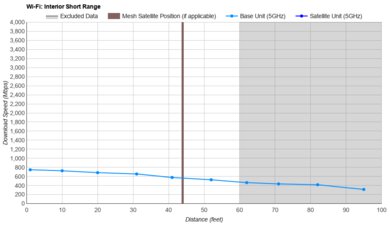
If you're looking for a router with a 6GHz band and flexible network segmentation, check out the Davolink Minions Kevin. Or, if you're looking for travel routers with faster close-range speeds, check out the TP-Link Roam 6 TL-WR3002X or the TP-Link Roam 7.
for pictures & test results
for pictures & test results
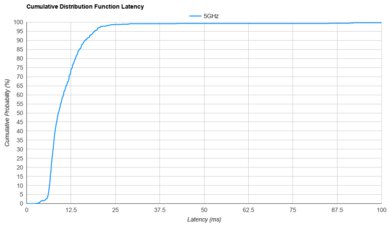
This router has mediocre latency and jitter that's slightly worse than most other routers on the market. While it's acceptable for daily internet use, streaming videos, and casual gaming, a router with more consistent latency results will serve you better.
If you're looking for a Wi-Fi 7 router from the same manufacturer with a similar set of features, check out the GL.iNet Flint 3 (GL-BE9300).