
An antidote to the trend of high-stack, maximalist shoes, the Brooks Hyperion 2 is a lightweight, low-stack option for daily workouts. If you're looking for the flatter, more grounded feel of traditional running shoes, this is the shoe for you. Though it lacks the high-performance foam of models like the Brooks Hyperion Elite 4 PB that would give it a more energetic ride, the DNA Flash v2 foam returns more energy than many other daily trainers, and with its lightweight build, it can handle some strides.
Our Verdict
The Brooks Hyperion 2 isn't suitable for marathon racing. Even as a daily trainer, it's better suited to shorter runs and up-tempo workouts. It lacks sufficient cushioning and softness for longer distances, and it isn't as responsive as high-performance marathon racers.
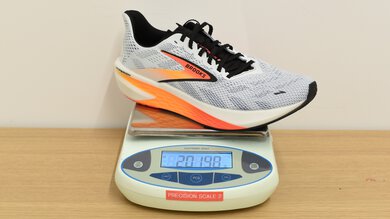
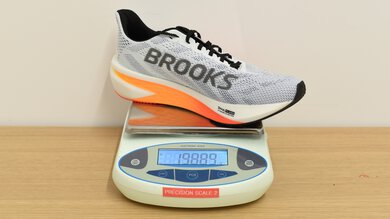
Impressively lightweight.
Poor overall energy return.
Overall cushioning is inadequate for longer distances.
Not the most stable shoe.
The Brooks Hyperion 2 is a daily trainer rather than a racing flat, but as a trainer, it's most suited to picking up the pace at shorter distances. It doesn't have enough energy return, but its lightweight design and low-stack grounded feel make for a smooth and controlled ride.
Impressively lightweight.
Poor overall energy return.
Changelog
- Updated Jun 30, 2026: We've converted this review to Test Bench 0.12, which fixes how we measure firmness, a component of the Stability and 5K/10K Racing usages. There may be inconsistencies between the text and the scores for these usages, but the scores should still be considered valid. We've also brought back the Energy Return score and added two new usages: Daily Training and Long Run. To read more about the changes, see the changelog.
- Updated Jun 30, 2026: We've converted this review to Test Bench 0.11, adding two new rocker measurements to the Design section, and three new responsiveness tests to the Performance section. The Energy Return usage score has been replaced with Responsiveness. Check out the details in our changelog.
- Updated Apr 29, 2026: We've converted this review to Test Bench 0.10, adding a new set of fit tests to the Design section and an overall fit performance usage. Check out the details in our changelog.
- Updated Apr 13, 2026: We've converted this review to Test Bench 0.9, which adds a Forefoot Long Run Cushioning test to our performance section. Read more in our changelog.
-
Updated Feb 11, 2026:
We've updated the energy return, cushioning, and firmness scores due to an error in our testing.
-
Updated Oct 23, 2025:
We updated the Pros & Cons, Cushioning, 5K/10K Racing, Heel Energy Return, Heel Cushioning, Forefoot Cushioning, Heel Firmness, Forefoot Firmness, and Forefoot Energy Return boxes to align with the latest test bench and revised the side-by-side comparisons to keep the review accurate.
- Updated Oct 20, 2025: We've converted this review to Test Bench 0.8.2, which updates our methodology for the impact force range used in our compression tests to improve their accuracy. This also affects all usage and performance usage boxes using those compression tests as score components.
-
Updated Jul 30, 2025:
We revised the phrasing in the Cushioning, Lateral Stability, Heel Cushioning, and Forefoot Cushioning boxes to reflect the changes in the latest test bench.
- Updated Jul 30, 2025: We've converted this review to Test Bench 0.8.1, which mainly updates the score components for the Marathon Racing and Lateral Stability usage boxes to improve accuracy.
- Updated Apr 02, 2025: Converted to Test Bench 0.8.
- Updated Apr 02, 2025: Review published.

We've bought and tested more than 250 running shoes. Every pair purchased with our own money, never supplied or sponsored by brands. Our data-driven tests are designed to go beyond marketing claims, and since every shoe goes through the exact same methodology, you can directly compare results to find the right pair for your needs.
Test Results
Energy Return

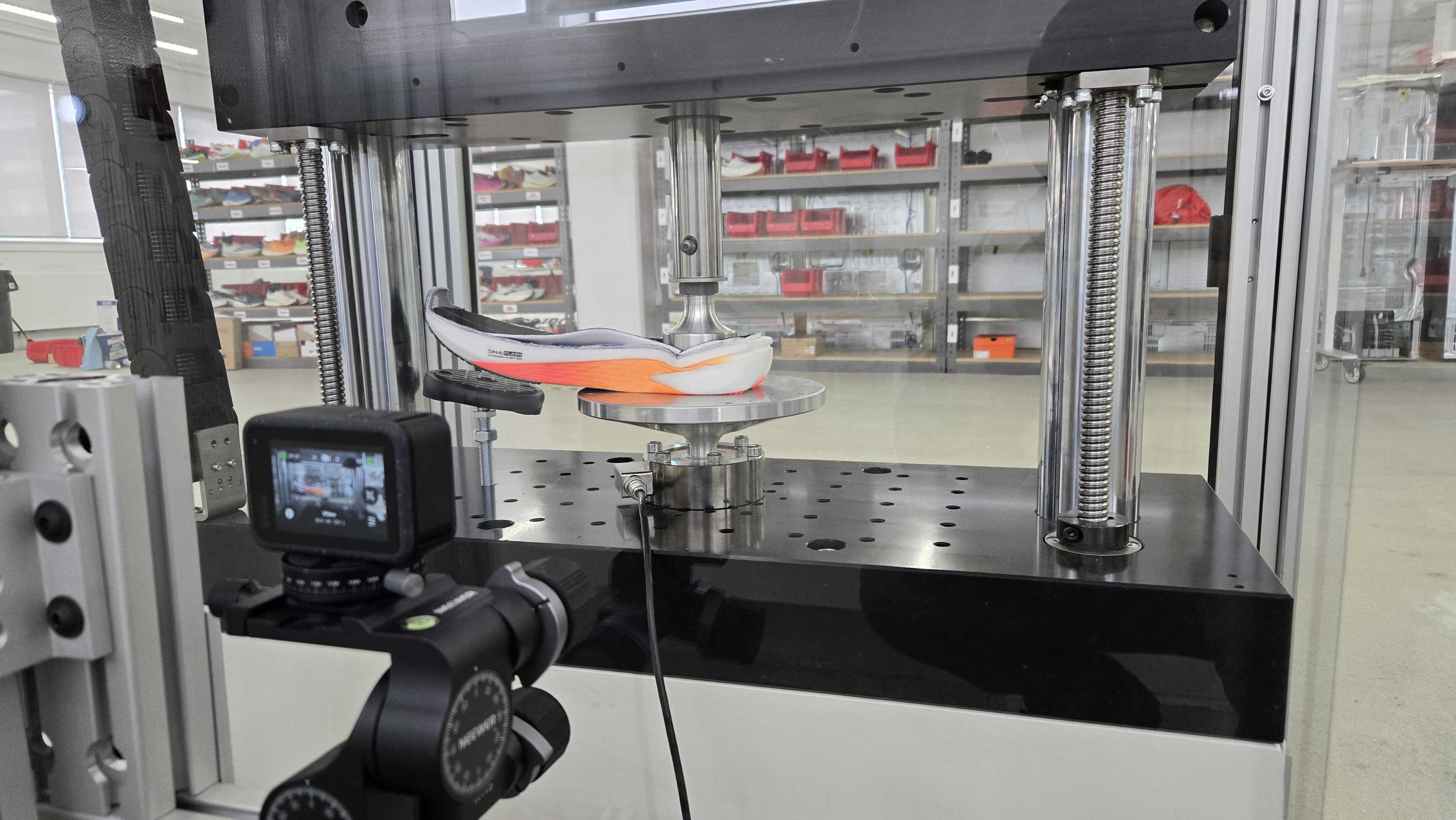
The forefoot offers a bit more energy return than the heel, making for somewhat springy toe-offs, but you won't have the same propulsive feel as a modern-day racing shoe like the Nike Vaporfly 4.

Stability
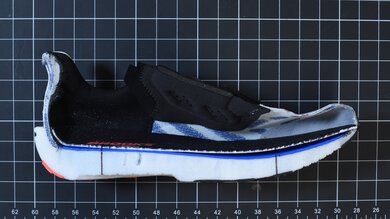
The Brooks Hyperion 2 has very good lateral stability. It's designed to be as lightweight as possible, so there isn't much excess in the outsole, which makes for a smaller platform, especially in the heel. The heel also feels quite soft for heavier runners or at faster paces, which compromises some lateral stability. However, its low stack height and relatively firm foam help compensate for those flaws and provide good stability and ground feel for a pretty controlled ride overall.
Low stack height.
Firm foam, especially in the forefoot.
Narrow outsole in the heel.
Heel feels soft at higher forces.
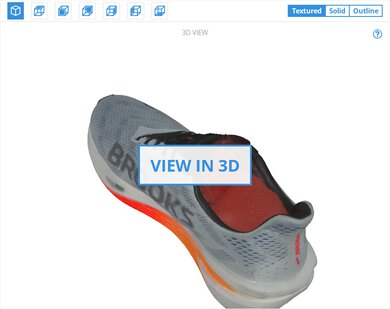
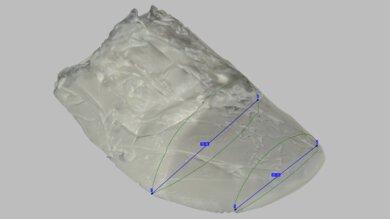
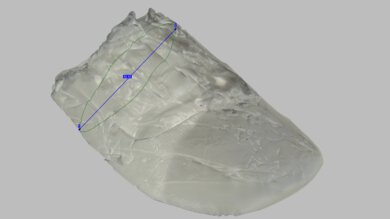
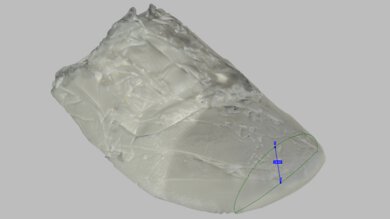
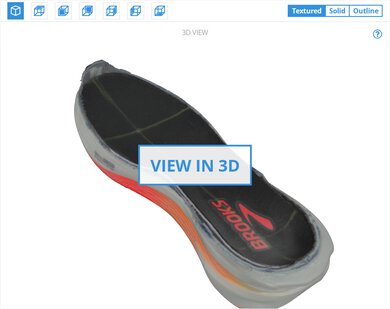
Note: In order for our 3D scanner to detect the nitrogen-infused foam on this model, we had to use scanning spray, which appears as white residue on the 3D model. This doesn't reflect the shoe's color or texture in a completely accurate way.

The heel is quite soft at low forces, meaning mid and forefoot runners or lighter heel strikers will feel the foam deforming. At higher forces, it's still less firm than models like the New Balance FuelCell Rebel v4, making for a softer, albeit somewhat less stable, feel underfoot for heavier heel strikers or when picking up the pace.

Cushioning
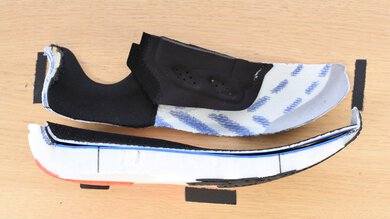
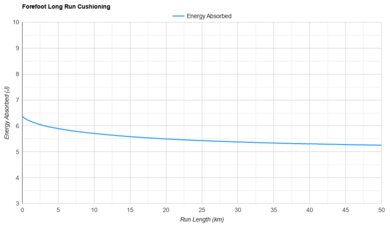
The Brooks Hyperion 2 has okay cushioning overall. The underfoot protection is especially lacking in the forefoot, where the shoe can feel harsh or bottom out after a while.
Lacks cushioning, especially in the forefoot.
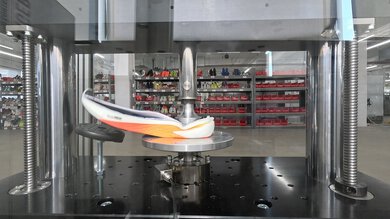

The shoe's heel is somewhat cushioned. Compared to other shoes, it doesn't offer much protection underfoot at low and high forces, but at medium forces (where most runners fall into), the cushioning is quite decent. This means the heel will offer sufficient protection from the road for most people, especially for shorter daily runs.
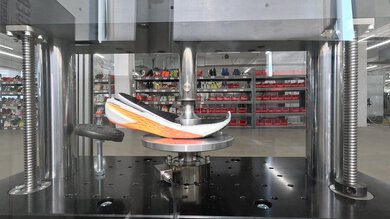

The cushioning in the forefoot is mediocre. It's notably firmer in the forefoot than the heel, so it's much less forgiving and protected for mid and forefoot strikers. That said, if you prefer a shoe with more ground feel, this level of cushioning might not be a dealbreaker.
Responsiveness
The Brooks Hyperion 2 has poor overall energy return. While it's okay for a daily trainer, its foam isn't efficient enough for a very bouncy, responsive ride.
Poor overall energy return.


True To Size

Popular Running Shoe Comparisons
The Brooks Hyperion 2 is a lightweight running shoe designed to deliver comfort without added bulk, making it a great alternative for those who don't want to jump on the maximalist trend. Unlike higher-stack trainers like the ASICS NOVABLAST 4, it sits lower to the ground and offers a more streamlined design. This second iteration is a complete overhaul of the original Brooks Hyperion, with a new upper, new outsole, and new foam that add some versatility while keeping down the weight and making it more adept at speed-focused training sessions and intervals.
While most of the market has been tending towards bigger and flashier shoes, the Hyperion lineup is focused on keeping things light and simple. The Brooks Hyperion Max 2 is the higher-stack, more cushioned alternative to the Hyperion 2, with a nylon plate for better stability. Rounding out the lineup is the support-oriented Brooks Hyperion GTS 2 (the GTS stands for "Go-To Support"), which includes GuideRails technology to prevent excessive leg rotation, and the competition-oriented Brooks Hyperion Elite 4, which is intended to be the lineup's high-performance racing model.
For other options, check out the best running shoes we've tested.
The Brooks Hyperion 2 and the Brooks Hyperion 3 occupy very different roles despite sharing the same lineage. The Hyperion 2 is a firm, low-to-the-ground lightweight trainer built for daily miles and faster paces, with a lean upper and a snappy feel. The Hyperion 3 adds a thicker slab of DNA Flash v2 and a softer, higher platform, turning the design into a more cushioned and more forgiving daily trainer that can still handle some pace pickups. It is now only moderately light rather than featherweight, and while the added foam improves comfort and long-run protection, it also removes the agile character that made the Hyperion 2 feel quick underfoot. The result is a shoe that is smoother and more versatile for everyday running, but less nimble and less immediately responsive than the Hyperion 2 for pickups.
Both the Brooks Hyperion 2 and Brooks Hyperion Max 2 are intended for faster-paced workouts, but they approach that goal in different ways. The Hyperion 2 is a more traditional shoe with a lighter weight and lower stack height that makes it well-suited to faster and shorter runs. Meanwhile, the Hyperion Max 2 has a less traditional geometry and falls a bit more into the super trainer category, with a pronounced rocker and nylon plate. It's notably more cushioned than the Hyperion 2, making it the better option for longer efforts.
The Brooks Hyperion 2 and the HOKA Mach 6 are both lightweight trainers adept at picking up the pace. The Brooks is the lighter of the two, making it feel more agile, but the HOKA has better energy return and feels more cushioned underfoot, making it a bit more well-rounded.
The Brooks Hyperion 2 and the New Balance FuelCell Rebel v4 are both relatively lightweight, low-stack daily trainers. They perform very similarly overall, but the New Balance offers more efficient energy return, while the Brooks has better cushioning.
The adidas Adizero Evo SL is better overall than the Brooks Hyperion 2, offering more versatility for different kinds of runs. It delivers significantly better energy return, making for a more responsive ride when picking up the pace, and its more cushioned midsole makes it a better fit for longer efforts as well.
The adidas Adizero Adios 9 and the Brooks Hyperion 2 are both lightweight trainers that embrace their low-stack heritage, but they differ in execution. The adidas shoe is the lighter and more stripped-down option, sitting closer to the ground with a firmer, more energetic Lightstrike Pro midsole. It's an all-in, well-executed speed shoe that excels at intervals and short races. The Brooks, on the other hand, is more of a traditional lightweight daily trainer. It's heavier, not as energetic underfoot, and prioritizes durability over raw performance.
The New Balance FuelCell Rebel v5 and the Brooks Hyperion 2 represent two different philosophies within the daily trainer space. Once seen as a lightweight performance trainer, the Rebel has shifted toward a softer, higher-stacked daily trainer with broader appeal: more cushioned, more comfortable, but less exciting than previous versions. In contrast, the Hyperion 2 sticks to the roots of the lightweight, lower-stack, more traditional trainer niche. It's way lighter, firmer, and tuned for runners who value ground feel and precision over plushness. The Rebel v5 is noticeably more cushioned underfoot, with more give and a more relaxed, forgiving ride.
Differences Between Sizes And Variants
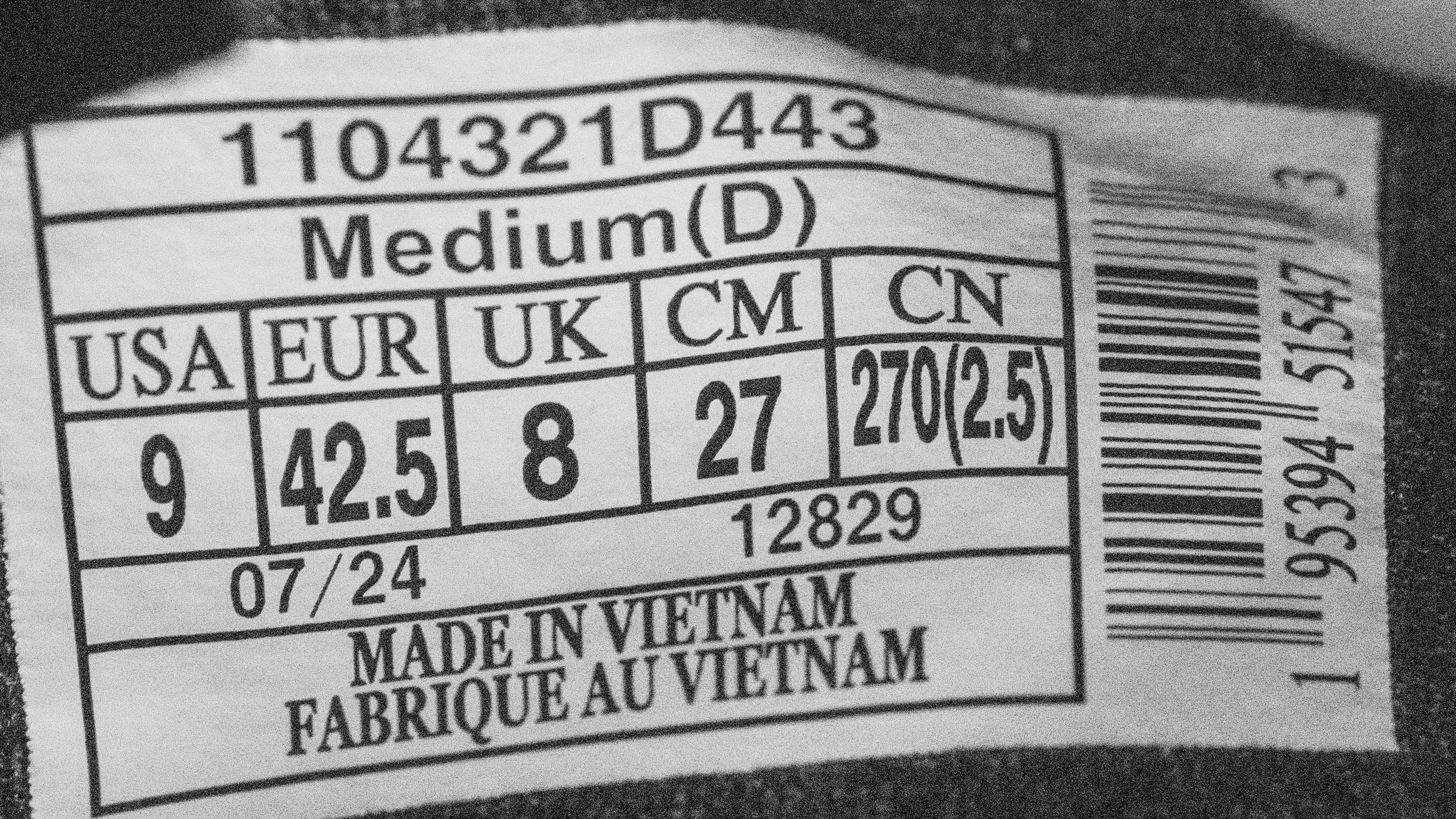
We bought and tested the Brooks Hyperion 2 in men's US size 9 in the Illusion/Coral/Black colorway. Here's the label for our pair. You can also buy the shoe in several other colorways, depending on the region and gender, including but not limited to Alloy/Bright White/Black, Black/Ebony/Primer Gray, Crystal Seas/Diva Pink/Black, Cockatoo/Purple/Lavender, and White/Murmur/Sugar Plum.
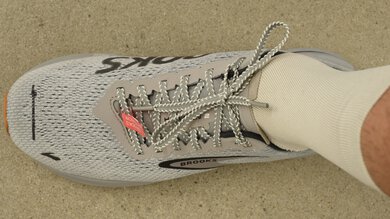
The shoe only comes in standard widths for men and women.