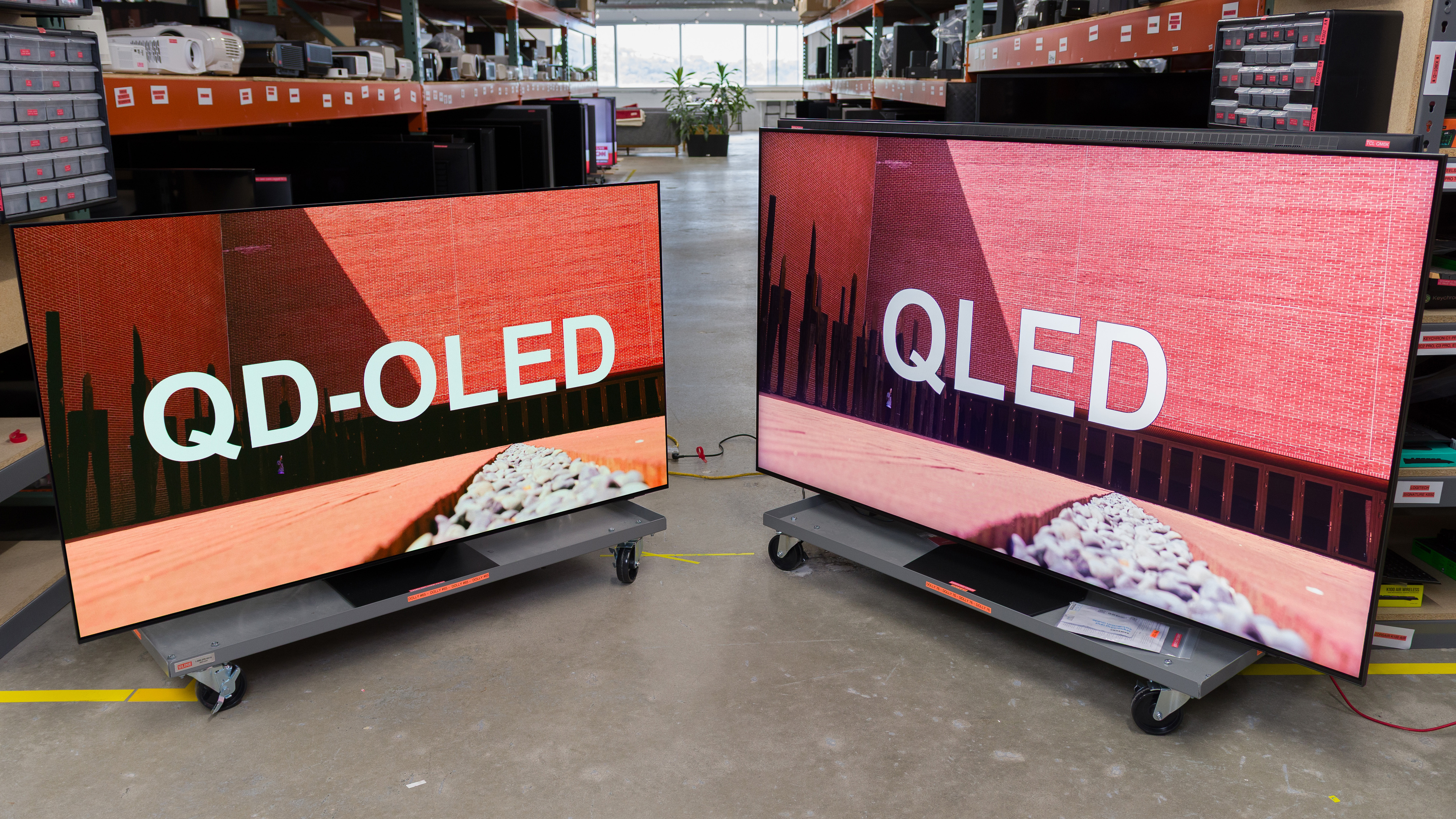
QD-OLED and QLED represent two of the most popular panel technologies on the market these days. Samsung is one of the largest manufacturers of both, so how do you choose between Samsung QLED vs OLED? In this article, we'll break down both technologies, exploring their technical differences, and give you a few tips to help you choose the best one for your needs.
What Are They?
Before we get into the details of how they perform and how you should choose between QD-OLED vs QLED, let's start with the basics. This part is a bit technical, so if you just want to see who wins when it's QD-OLED versus QLED, skip to the next section.
QD-OLED
Traditional WOLED technology works by first producing white light (the 'W' in WOLED), and then passing that light through red, green, and blue color filters to produce the three primary colors that make up each pixel. WOLEDs also have a fourth, unfiltered white subpixel that's used to boost brightness. There are a lot of downsides to this technology. The color filters are very inefficient, as they work by simply blocking the unwanted portion of each subpixel. They also rely heavily on the white subpixel for high peak brightness, which dilutes color purity in bright scenes.
Samsung introduced QD-OLED as an alternative to WOLED, starting with the Samsung S95B OLED in 2023. Their goal with QD-OLED was to improve the purity of colors by changing the way the TV produces light. QD-OLEDs start with blue light instead of white, which then passes through layers of a special material called quantum dots. This material has an interesting capability: when light hits them, that light is then emitted at a lower frequency. This process is extremely efficient, and the wavelength of the emitted light depends only on the size of the quantum dot. Since Samsung Display is able to precisely control the size of each quantum dot, this results in extremely precise colors. Put it all together and you get the same strengths as traditional OLEDs, but with the benefits of quantum dots, resulting in much better color saturation.
QLED
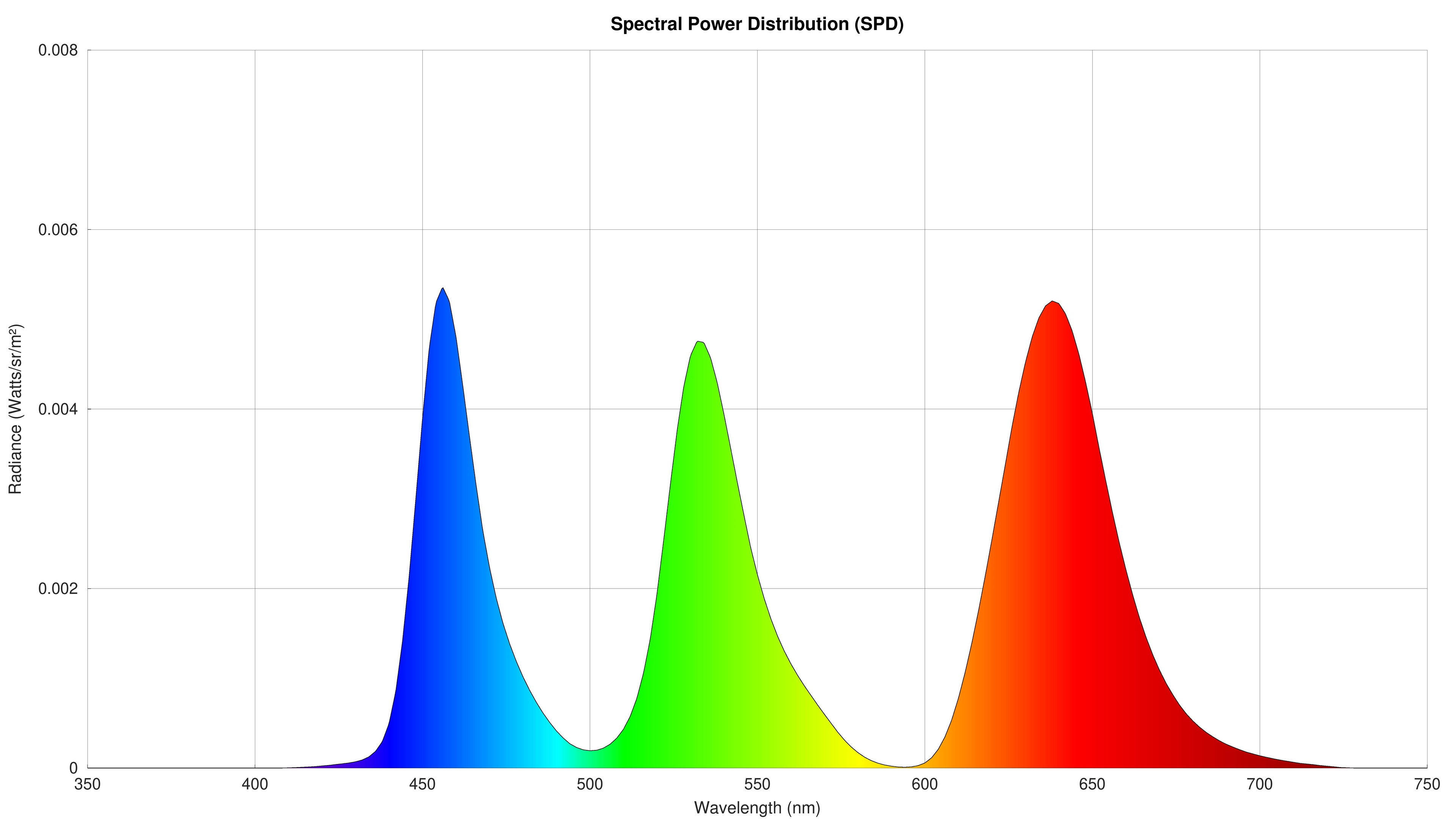
QLED and QD-OLED have a lot in common; the only real difference is the light source. True QLED panels use quantum dot technology with an LED backlight instead of OLED. Unfortunately, there's a bit of market speak going on here, though, and in practice, QLED is mainly a marketing term used to cover a wide range of TVs that use some form of wide color gamut technology. Not all QLEDs are created equally; there are different qualities of quantum dots, and some TVs only use quantum dots to generate green light, opting for other technologies like KSF phosphors for reds.
There's no way to know if a TV really uses quantum dots or not simply by the marketing; only real-world measurements of a TV's color gamut and spectral power distribution can show this. So, like anything, it's important to look at actual reviews and measurements before choosing which TV to buy. While this guide will mainly focus on Samsung, almost every major TV brand uses QLED technology in some form. Learn more about QLED. There are different marketing names for it, though, depending on the brand. Here are just a few examples from some of the other brands out there:
- Samsung: QLED, Neo QLED
- LG: QNED
- Sony: Triluminos/Triluminos Pro
- Hisense: ULED
- TCL: QLED, QD-Mini LED
Performance
So, now that we've explained what these terms mean, let's take a look at two real-world examples to see how they actually compare and help you decide which one is right for you. To compare these two cutting-edge TV technologies, we'll look at two of Samsung's 2025 flagship models: the Samsung S95F OLED and the Samsung QN90F QLED. We'll focus on the panels themselves and how they differ, so we won't cover things like inputs, smart features, or audio, as these things aren't affected by the panel. So, is QD-OLED better than QLED?
Contrast
 |
 |
 |
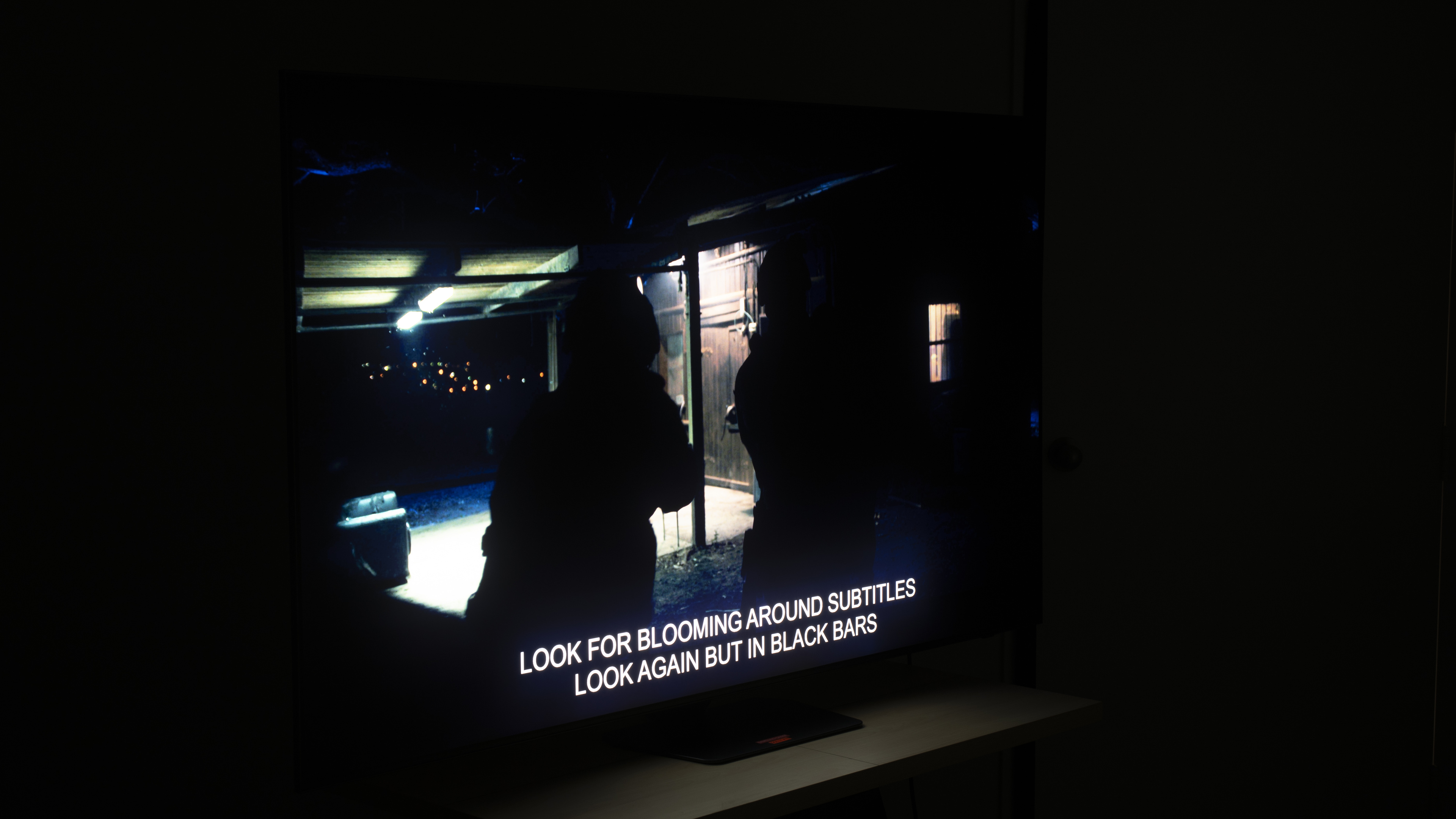 |
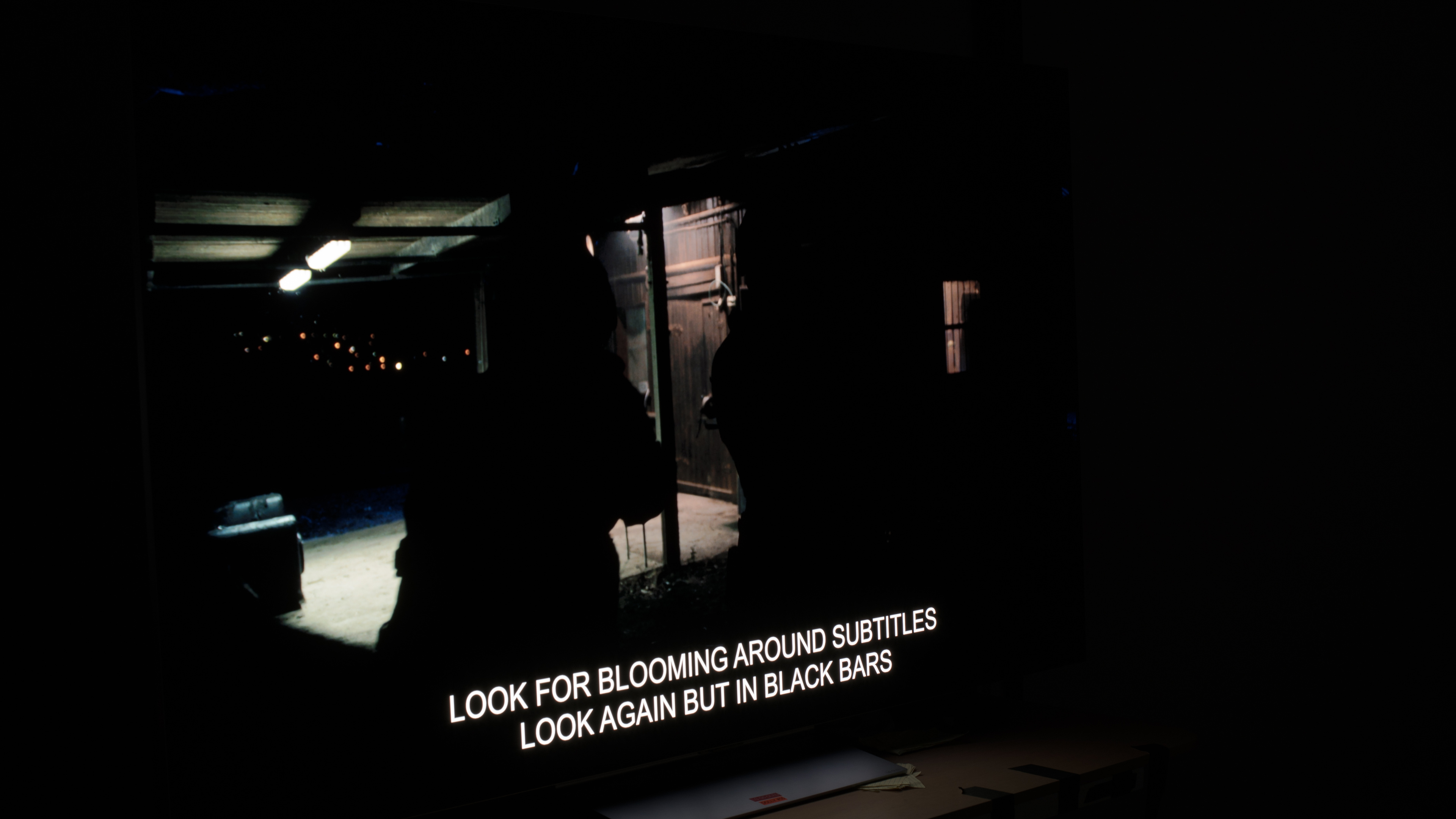
Although QLEDs have gotten a lot better over the years, when it comes to contrast, QD-OLEDs are still king. Their ability to control the light output of each individual pixel results in perfect contrast, with absolutely no halo effect around bright parts of the screen. Dark scenes look perfect, with deep inky blacks and bright highlights, giving the image a pseudo 3D effect. That's not to say that QLEDs are bad, though. With increasingly smaller dimming zones and higher zone counts on Mini LED models (which Samsung calls Neo QLED), QLEDs are starting to close the gap.
Taking the contrast picture above, unless you're in a perfectly dark room, you probably wouldn't even notice the difference between QLED and QD-OLED, but it's there. The zone precision test highlights these differences a bit better, and here you can clearly see the halo effect around the subtitles on the bottom of the screen, and above the floor of the garage, bleeding into the darkness outside. The QN90F is actually pretty good, and many QLEDs look much worse than this. There's no variation on QD-OLEDs, though; they all deliver perfect blacks in a dark room.
Winner: QD-OLED
Brightness
 |
 |
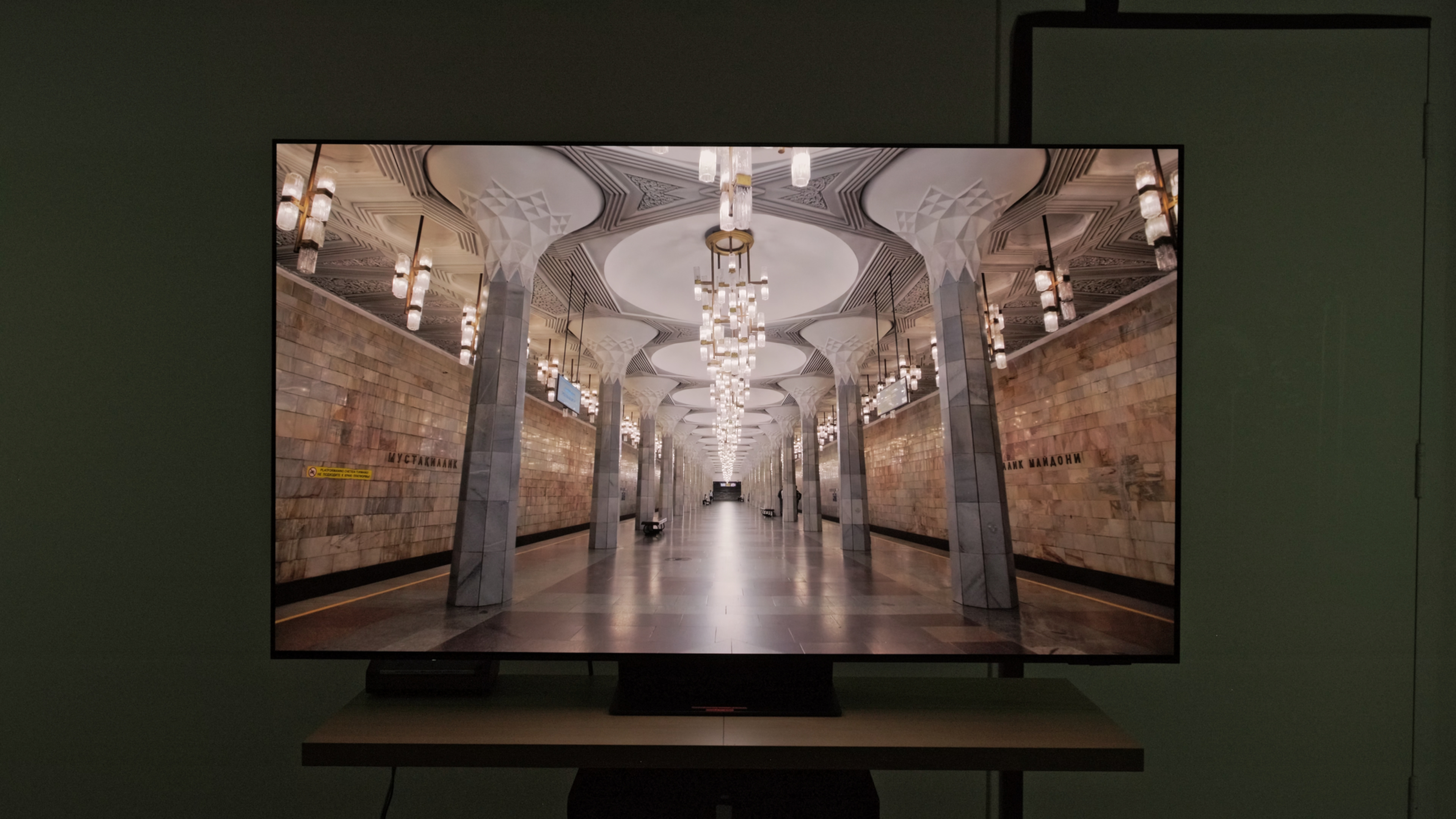
Even in 2025, brightness is one aspect that varies wildly between individual models, and you can't choose solely by the panel technology. QLEDs are, on average, brighter than QD-OLED, but there are some exceptions to that, and it doesn't mean that every QLED is brighter than every QD-OLED. Even the type of content is an important consideration when comparing these two technologies. When it comes to small specular highlights in HDR, like a wide shot of the sky with the sun in one corner, QD-OLED and QLED are just as bright, and both can deliver an incredibly impactful viewing experience. The situation is a bit different when we're looking at very bright scenes, where most of the screen is bright, like an outdoor shot on a sunny day. In situations like that, high-end QLEDs are typically brighter than even the brightest QD-OLED.
There's been an ongoing brightness war between display manufacturers for a few years now, and this is one area where TV technology is still rapidly evolving. New QD-OLED technology like the 5-layer tandem OLED stack found in the Samsung S95F helps it get much brighter with full field content than other QD-OLEDs. QLEDs aren't sitting still, either, as Mini LED TVs continue to push the brightness limits for LED TVs. Keep that in mind when shopping for a new TV; not all panels are the same, and even with something relatively new like QD-OLED, there are already multiple panel variants out there, and they don't all perform the same.
Winner: It depends on the specific model; no panel type is inherently brighter.
Colors
 |
 |
 |
 |
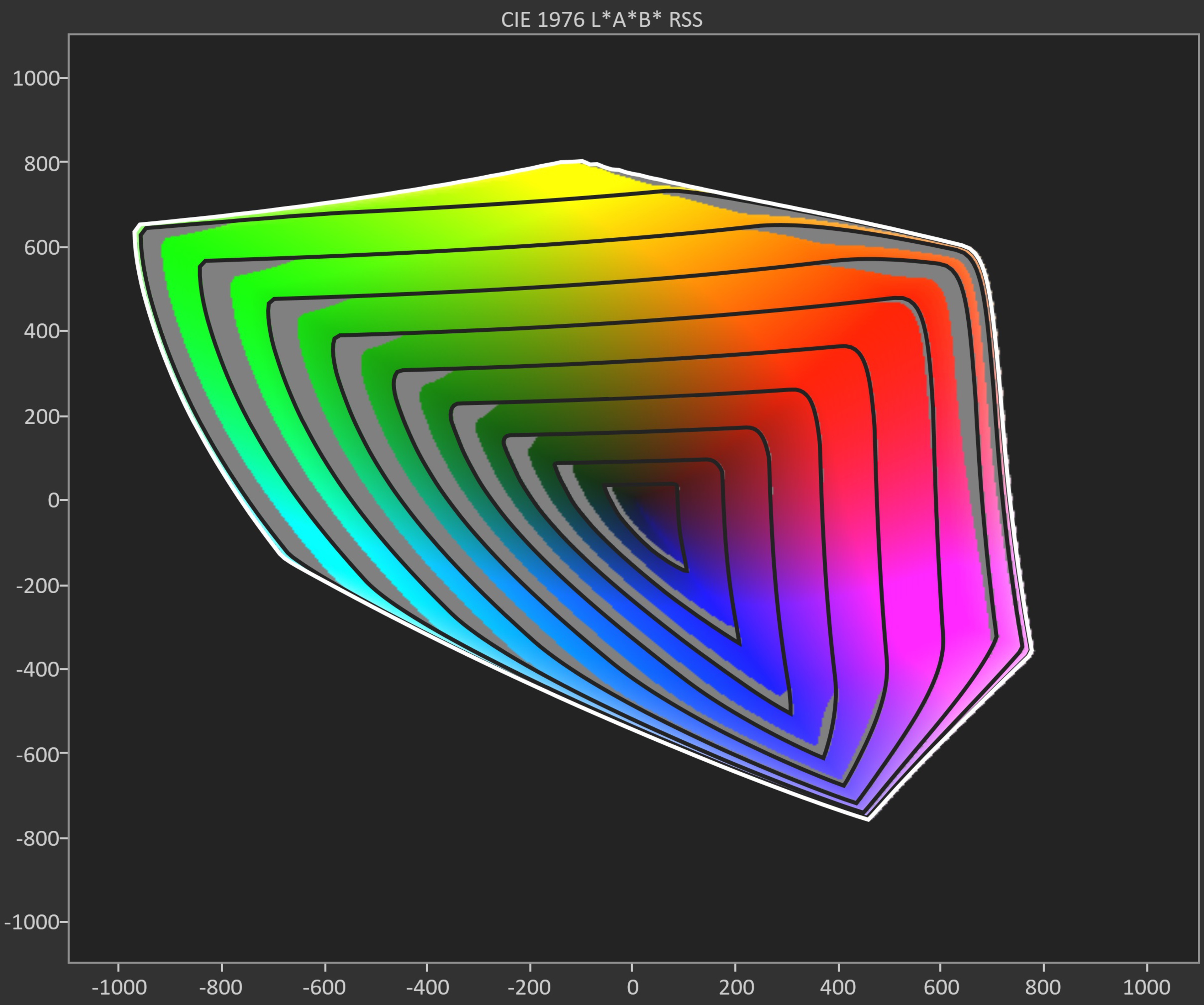
QD-OLED and QLED displays both rely on quantum dot technology to deliver the purest colors possible. Not all quantum dots are created equally, though, and there are different qualities and even different types. Some QLEDs offer purer colors than others, and some TVs that are marketed as QLED don't actually use quantum dots. Some TVs also use a combination of technologies, like green quantum dot material combined with a KSF phosphor for reds. So you really have to know what you're buying when looking at a QLED.
QD-OLEDs, on the other hand, are far more consistent, with barely any variation in color performance between models, and even the worst QD-OLED we've ever tested displays a wider range of colors than the best QLED we've tested. We use a few different metrics to evaluate color performance on a TV, including the SDR gamut rings shown above. We also evaluate color volume in HDR, which is similar to the gamut rings test above, and it shows us how well the TV displays colors across a range of luminance levels. To perform well in this test, a TV needs to have high peak brightness as well as vivid colors. Despite the higher peak brightness of some QLEDs, QD-OLED stands out here again and is the clear winner, though some QLEDs are starting to catch up.
Winner: QD-OLED
Response Time
 |
 |
 |
 |
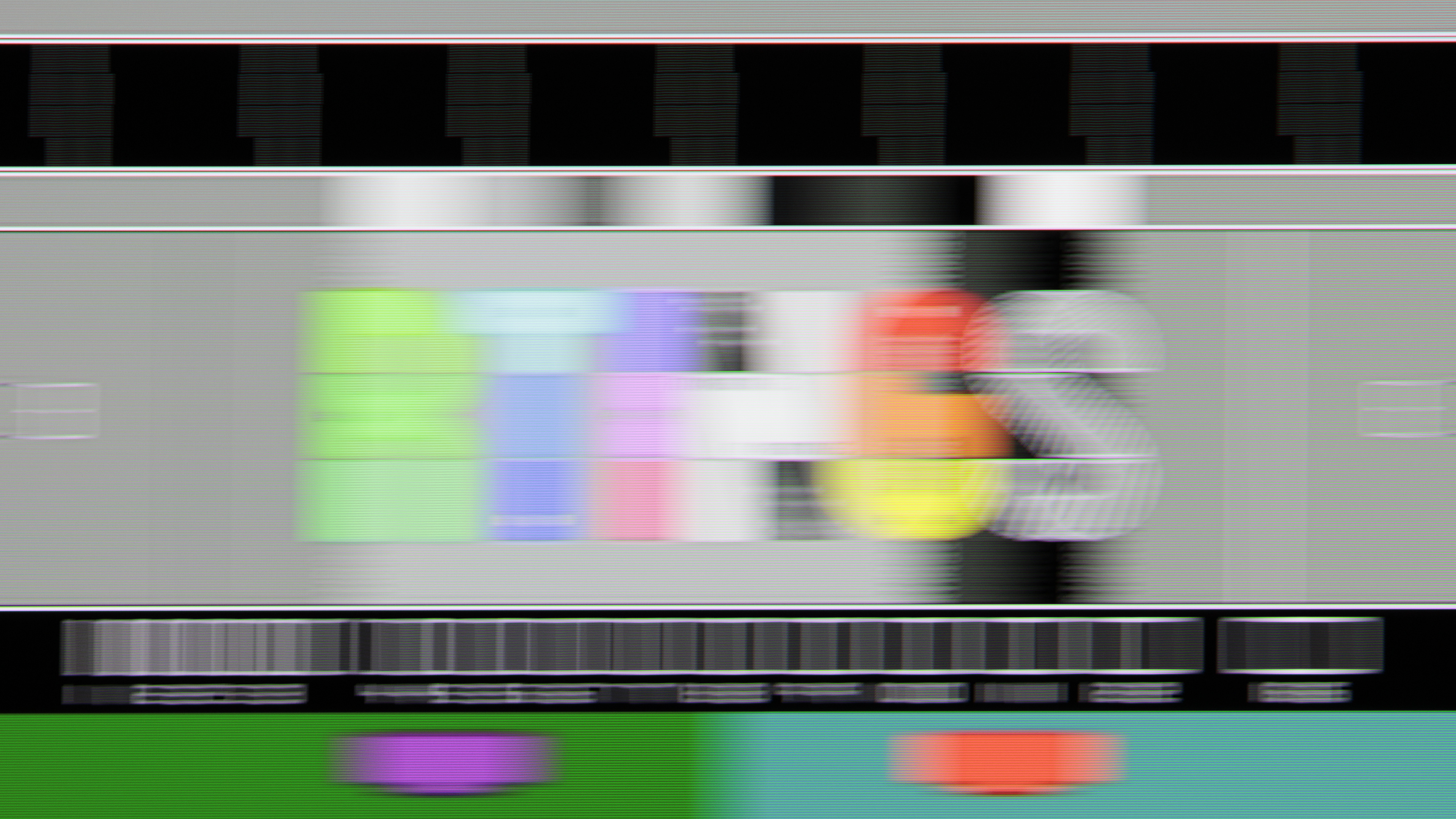
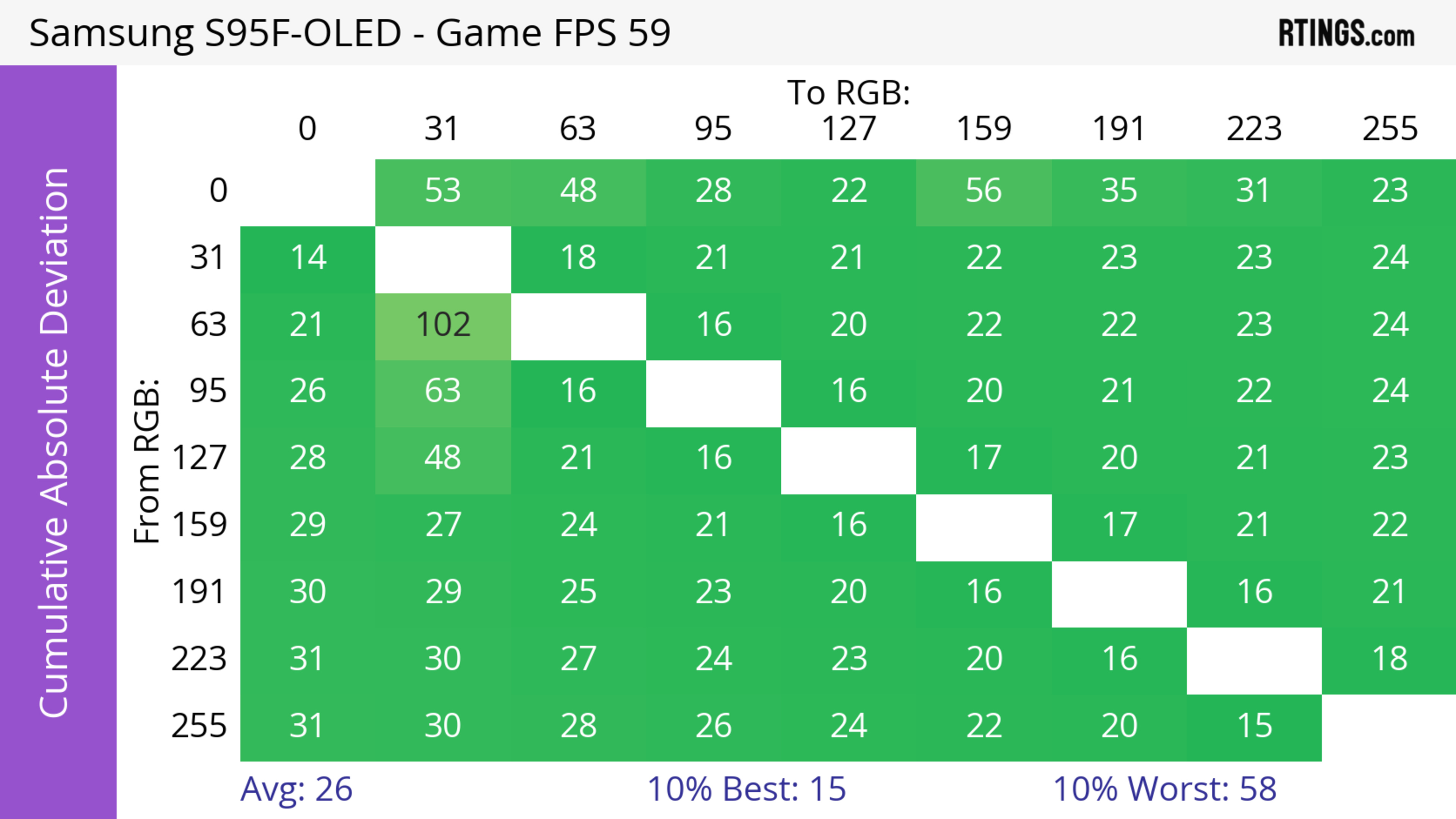
When it comes to response time, there's really no contest here: QD-OLEDs have a significantly faster response time than even the fastest QLEDs. This is due to the very nature of OLED technology, as each pixel is able to transition almost instantaneously from one shade to another. This is extremely beneficial if you're a gamer, especially at high refresh rates, as OLEDs deliver crystal clear motion with no blur or distracting overshoot. Faster isn't always better, though, as this speed comes at a cost: OLEDs have more noticeable stutter when watching low frame rate content like movies.
Winner: QD-OLED.
Uniformity
 |
 |
A dirty-looking screen is incredibly distracting when you're watching sports or using a TV as a PC monitor. While the exact uniformity varies between individual units, QD-OLEDs typically have much better uniformity than QLEDs. There is some variation, though, so like anything else, it's important to look at the results for the specific model you're considering. QD-OLEDs also don't suffer from the green tint issue that's affecting some WOLED models, so you don't have to worry about that in this case.
Winner: QD-OLED
Longevity
 |
 |
Our extensive testing with the accelerated longevity test and the real-life burn-in test has shown that when any OLED, regardless of the specific type of OLED, is exposed to static elements over time, they will eventually experience burn-in. For most users, though, this will take many, many years, and you probably won't have any issues as long as you mix it up a bit and watch different things every once in a while.
That doesn't mean that QLEDs are immune to issues, though. The longevity test has clearly shown that while QLEDs don't experience burn-in the way QD-OLEDs do, the quantum dots themselves have a limited life span, and these layers degrade over time. You can see an example of this type of failure in the Samsung QN95B above.
With all of that in mind, there's really no clear winner when it comes to longevity. If you're a gamer or watch the same channels all the time, a QLED is probably a safer choice, but as long as you mix it up occasionally, your QD-OLED should last you just as long.
Winner: Tie
Cost And Selection
Unlike most of these panel-type comparisons, there's a clear winner when it comes to cost and selection. QLEDs are available in an extremely wide range of sizes, from 43 inches and even smaller up to massive 116-inch panels; it really doesn't matter. They also come in many different performance levels, so you can truly find something in any size or to meet even the strictest of budgets. QLEDs are also available from nearly every mainstream TV manufacturer out there, even if they don't necessarily use the "QLED" buzzword.
QD-OLEDs, on the other hand, are much more limited in availability. As of 2025, they're only available in 55, 65, and 77-inch sizes, with rumors of an 83-inch panel coming soon. With a relatively limited selection, most QD-OLEDs are at the upper end of the price range, with no real budget picks available.
Winner: QLED
Conclusion
So with all the behind us, who wins? Well, it should be pretty obvious that QD-OLED delivers the best picture quality of the two, with just a few areas where QLED is slightly better on average. This doesn't mean that everyone should buy a QD-OLED over a QLED, though. The wider selection and wider range of sizes make QLED a more versatile choice, and if you're shopping for a secondary location like a bedroom, garage, or bathroom (we won't judge), then QLED TVs are the much more logical choice. You have to be careful, though, as QLED is a bit of a catch-all term that doesn't necessarily indicate you'll get a good TV.