- 1.0%DCI P3 xy
- 1.0%DCI P3 uv
- 1.0%Rec 2020 xy
- 1.0%Rec 2020 uv
A TV's color gamut defines the range of colors that it can display. Color accuracy is one of the more important aspects of picture quality, so it's important to have a TV that displays a wide range of colors, especially in HDR. We no longer run this test as part of our TV reviews (learn more about how we test TVs), but 2D chromaticity was an industry-standard way of measuring color gamut for many years. Newer, more technically accurate methods like gamut rings have replaced color gamut.
We tested the color gamut by sending signals using two types of color gamut, Rec. 2020 and DCI-P3, and measuring how much of the color space the TV could display. We didn't measure the Rec. 709 color space, which is more commonly used for SDR content, because it's such a small color space that the vast majority of modern TVs fully cover it.
Test Methodology Coverage
The color gamut test was originally added in our 1.0 test bench update and was removed in the 2.0 update. The test didn't change at all between those two versions, so the results are directly comparable on any TV that still has this test. The 2D chromaticity plots used in our tests are no longer considered to be a valid way to measure chromaticity, and this test has been deprecated in favor of other tests like 3D color volume or SDR gamut rings. Learn how our test benches and scoring system work.
| 1.0 - 1.11 | |
|---|---|
| Wide Color Gamut | ✅ |
| DCI-P3 xy | ✅ |
| DCI-P3 uv | ✅ |
| Rec. 2020 xy | ✅ |
| Rec. 2020 uv | ✅ |
When It Matters
A wide color gamut only matters for HDR sources, like UHD Blu-rays and most streaming content. Having a wide color gamut isn't the only factor in watching HDR content, but it's one of the most important. Without a wide color gamut, your TV will look dull and lifeless, and it won't be able to display most HDR content the way the content creator intended. Learn more about the differences between SDR and HDR.
 |
 |
Above, you can compare the Samsung JS8500 with the wide color gamut feature disabled on the left to the same TV with the wide color gamut feature enabled on the right. Both are playing an HDR test file. You can see that colors are deeper and richer when the feature is enabled.
Our Tests
Although we don't measure a TV's color gamut this way anymore, testing the color gamut was very straightforward. Using an HDMI connection, we connected the TV to one of our test PCs, either with an NVIDIA GeForce GTX 1060 or an NVIDIA GeForce GTX 1660 SUPER graphics card. We then connected a Colorimetry Research CR-100 colorimeter to the PC and placed it in front of the TV. We made sure the PC is displaying a 4k @ 60Hz signal with chroma 4:2:2 and 10-bit color depth, and we tested it using a 75% stimulus. Using the CalMan software on the PC, we then first measured the PQ curve used in the HDR Brightness test. Then we measured the Rec. 2020 and DCI-P3 color spaces and published the results.
DCI-P3 xy
The DCI-P3 color space is the most common color space used in modern HDR content, and most recent TVs have at least good coverage of it. The CalMan software analyzes six colors (red, green, blue, yellow, magenta, and cyan) at different saturations to assess the color gamut and tone mapping. The DCI-P3 xy represents the intersection between the DCI-P3 color space and the TV's boundaries, using the CIE 1931 xy color space. As you see below, it's where the triangle (CIE xy) meets the more circular shape (DCI-P3), and it measures how much of the area the TV covers; the higher the percentage, the better.
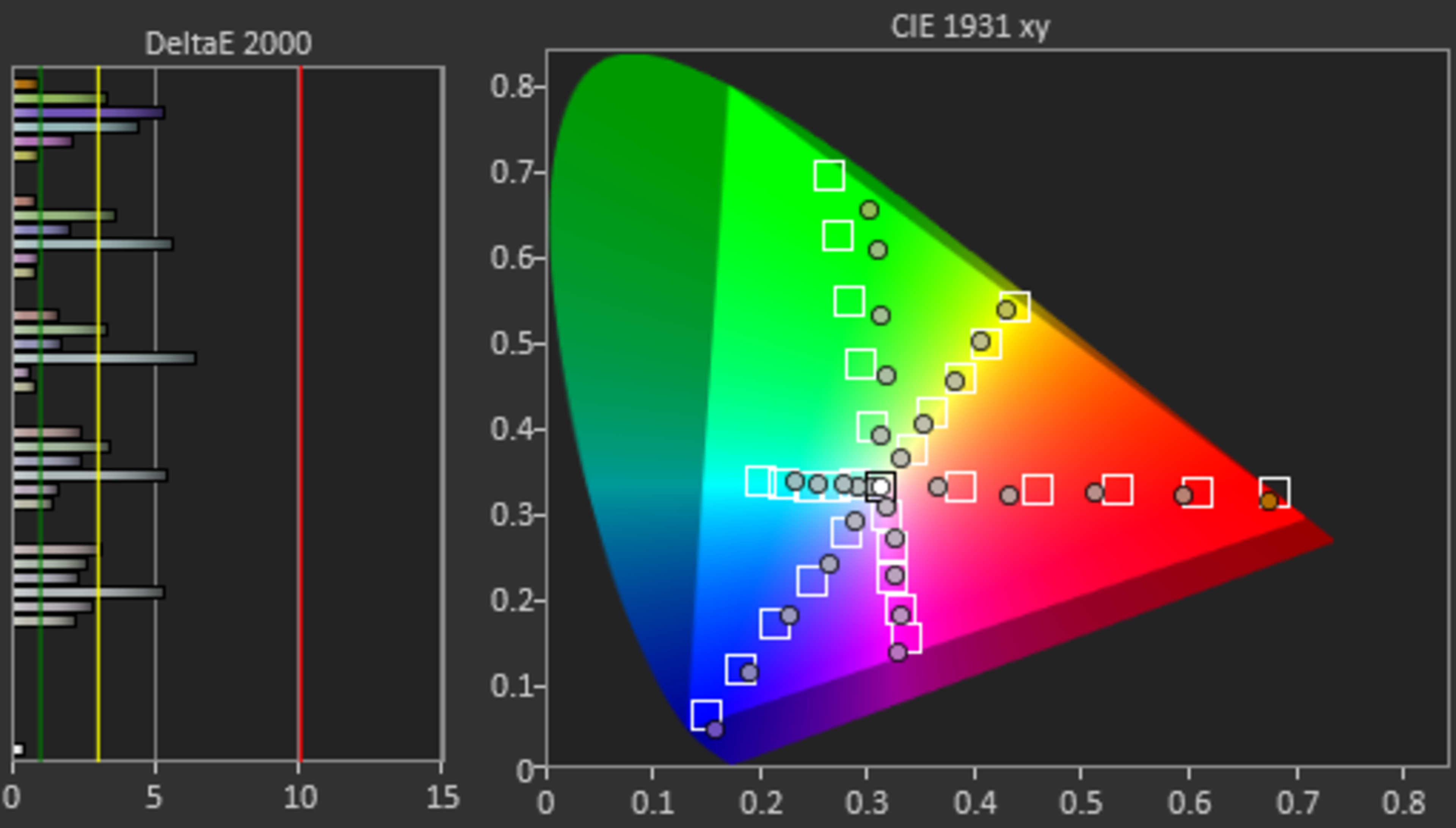
Below you can see fantastic coverage on the Vizio P Series Quantum 2021 (left) and only good coverage on the Vizio V5 Series 2021 (right). You can see that the P Series displays the primary colors a lot better (especially green), and colors are more accurate.
 |
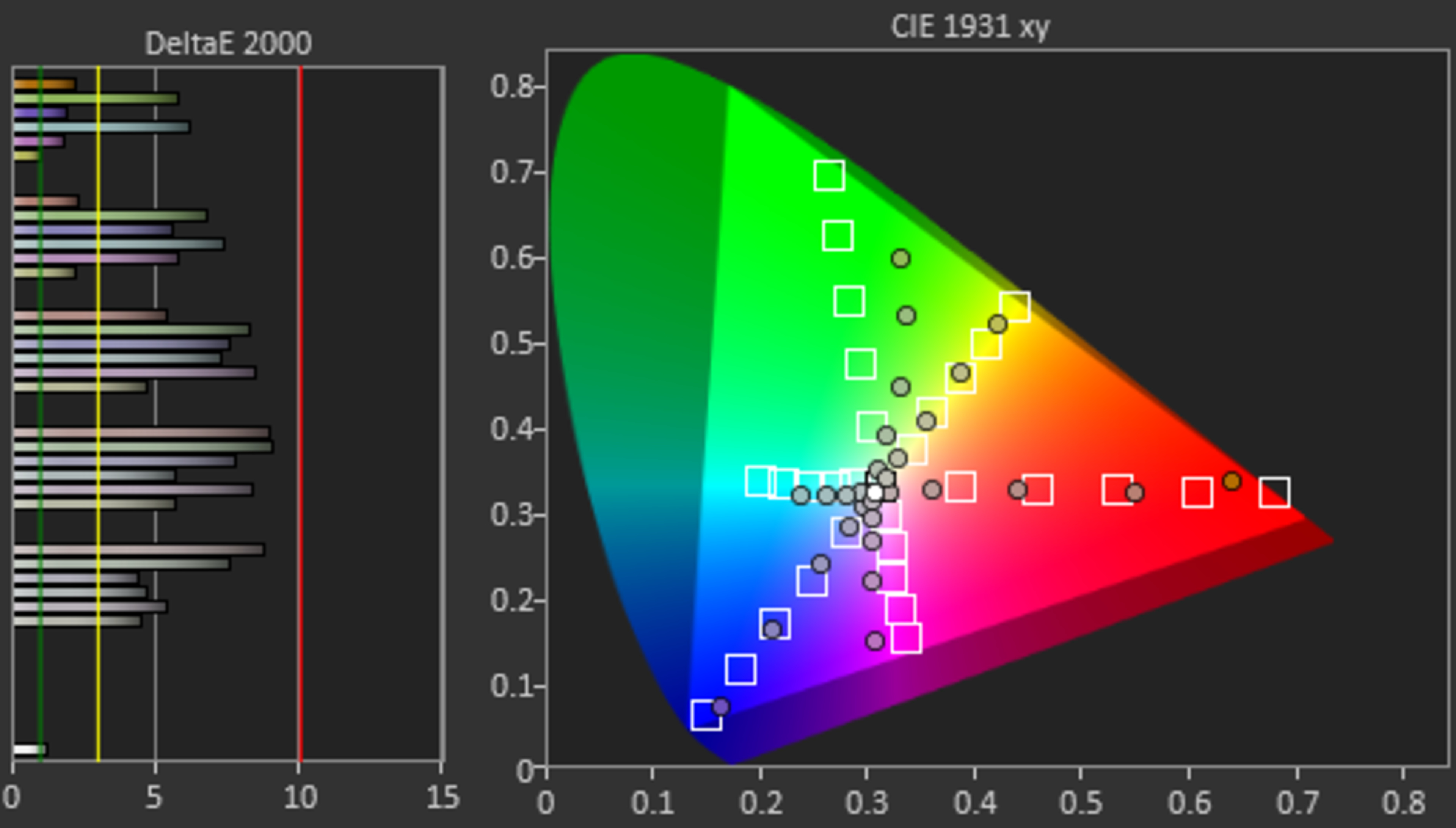 |
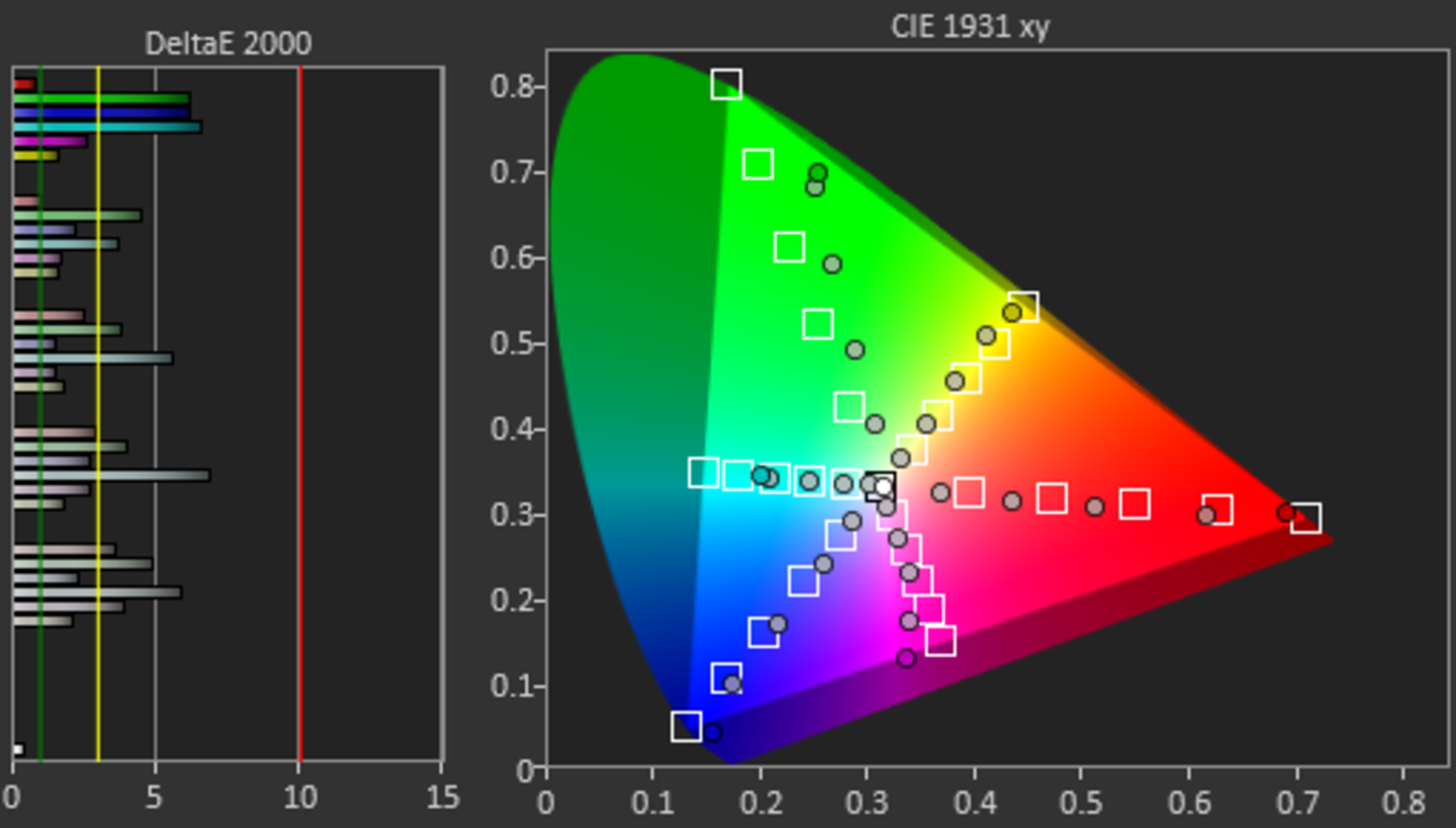
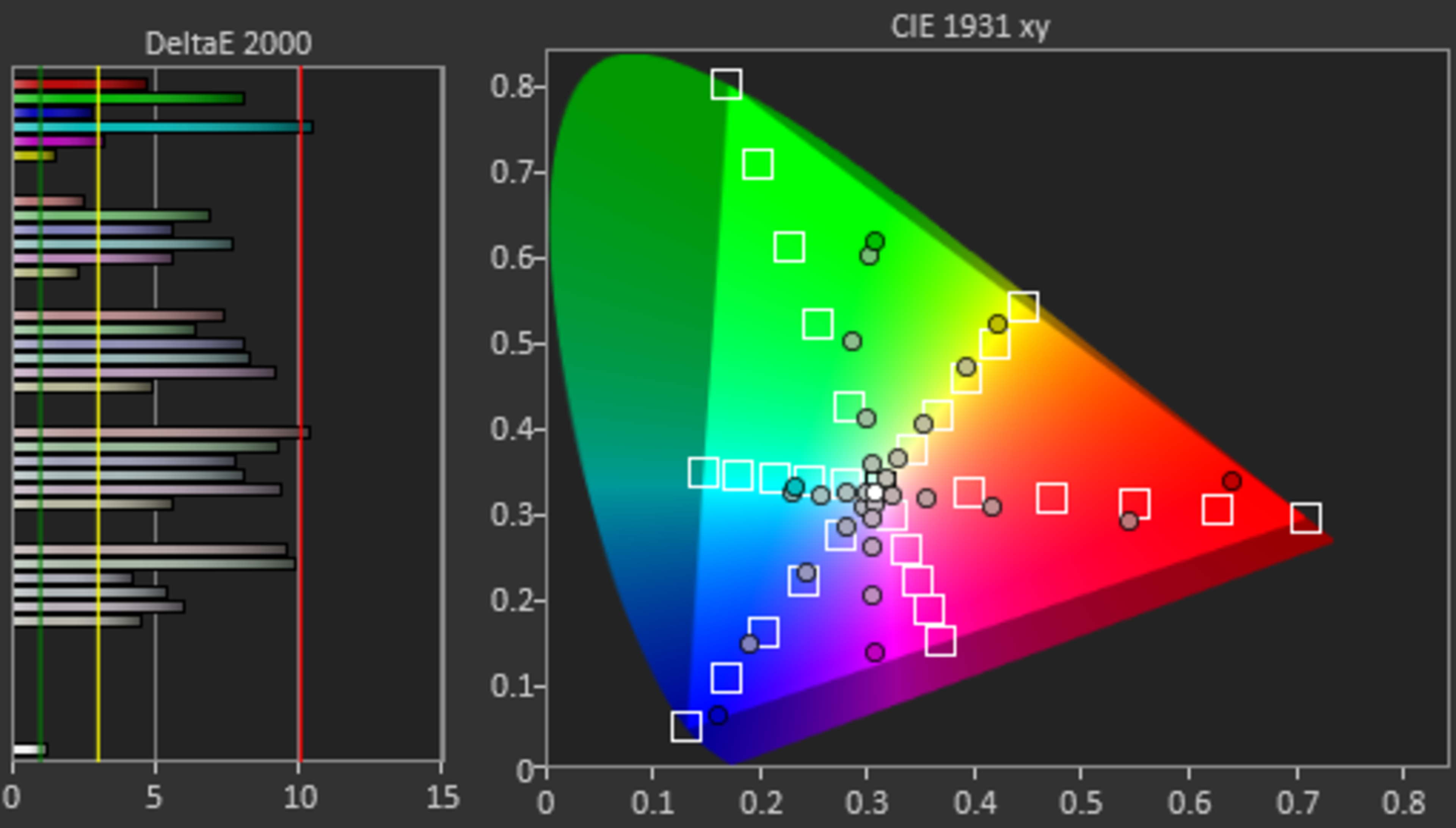
The graphs above aren't too difficult to read. The section on the left is the tone mapping, and each horizontal bar represents the standard deviation of each color; the longer the bar, the worse the tone mapping. The yellow vertical line marks the point where an error is noticeable to a trained eye, and anything past the red vertical line is noticeable to everyone. The section on the right is the actual color space, and the white squares are the colors the TV is supposed to display. The dots are what it actually displays, so ideally, the dots should be in the squares, but sometimes that's not the case.
Rec. 2020 xy
We would then repeat the process with the Rec. 2020 color space, which is wider and not quite as common. Rec. 2020 xy is measured the same way as DCI-P3 xy, by measuring the intersection of the Rec. 2020 color space and the CIE 1931 xy color space. No TV, even in 2026, can display the full range of colors supported by this color space.
Using the same Vizio TVs as the previous example, you can see the difference between a good and a bad TV. The P Series has good coverage, and besides extremely saturated colors, it displays colors well. However, the V5 Series struggles with any saturated color and can't display them as it should.
 |
 |
Conclusion
A TV's color gamut is the range of colors it can display in HDR. This is an important aspect of picture quality because it indicates whether it can display the colors needed for HDR content. No TV can display the entire Rec. 2020 color space, but TVs have gotten much better with DCI-P3 in recent years, and some can display most of it.
We don't measure a TV's color gamut this way anymore, as it's been replaced by more accurate representations like gamut rings. Charts like the 2D chromaticity charts shown above are still very common in the TV review industry, though, and we still use them to measure color accuracy in both SDR and HDR.