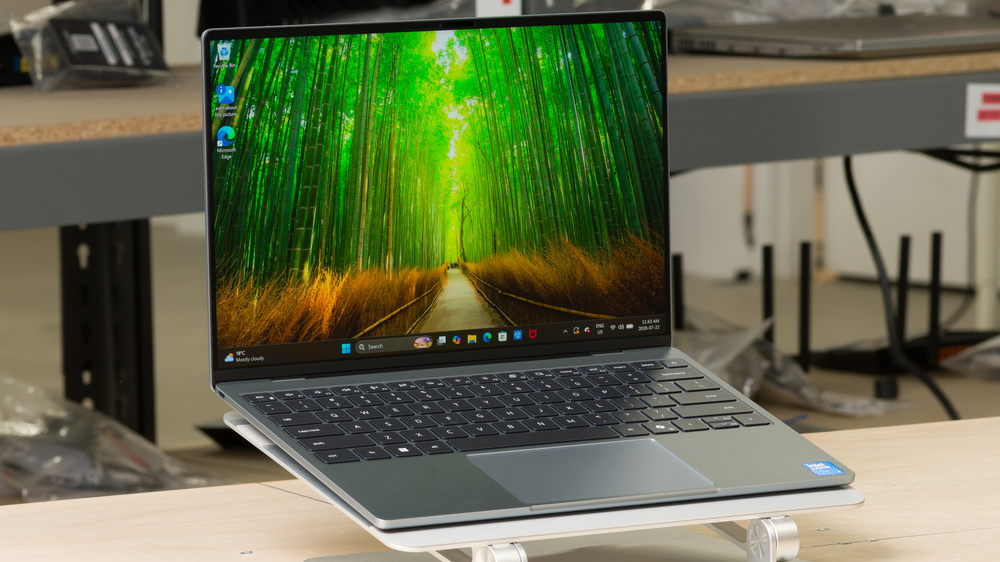

The Dell XPS 13 (2026) is a premium ultraportable Windows laptop that marks the return of Dell's XPS 13 lineup after the company briefly retired the XPS branding in 2025. While it comes in at a lower price point than previous XPS 13 laptops, it has very limited configuration options, including no OLED display option, which was available on previous versions. This generation is slightly thinner and lighter, and Dell has restored a physical function row and reintroduced a physical trackpad with a clearly identifiable usable area. It has an IPS 2560 × 1600 display, an Intel Core 5 CPU with integrated Intel Graphics, 512GB SSD storage, and memory options for 8GB or 16GB of RAM.
See our unit's specifications and more details on the available configuration options in the Differences Between Variants section.
Our Verdict
The Dell XPS 13 (2026) isn't designed for gaming. It has no discrete GPU options. The integrated Intel graphics are only capable of playing much less demanding games or older titles at reduced settings.
Excellent build quality.
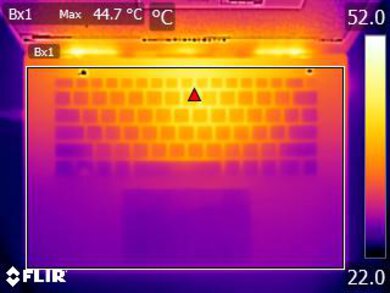
Fan noise is very quiet, and the keyboard doesn't get too hot, even under load.
IPS display is bright with vibrant colors and great contrast.
Can't play any graphically demanding games.
Mediocre CPU performance.
No discrete GPU options.
The Dell XPS 13 (2026) is great for school and work. It's very portable, with a thin, lightweight aluminum body that has excellent build quality. The entry-level configuration we tested has only 8GB of RAM, which can limit heavier multitasking in Windows 11, but more expensive 16GB configurations handle multiple apps and browser tabs more effectively. It also has superb battery life, easily lasting through a full work or school day with light use. Its IPS display gets bright but doesn't handle reflections particularly well. It supports a dynamic refresh rate of up to 120Hz, which can make scrolling through web pages or documents look smoother. The fairly basic mechanical touchpad supports multi-touch gestures but has a small usable area, while the keyboard provides a satisfying typing experience and has adjustable backlighting. The webcam and microphone are perfectly serviceable but aren't particular strengths. Unfortunately, port selection is limited, and there's no headphone jack.
Superb battery life: ~15 hours browsing and ~8.5 hours video playback.
Very thin and extremely lightweight.
Fan noise is very quiet, and the keyboard doesn't get too hot, even under load.
IPS display is bright with vibrant colors and great contrast.
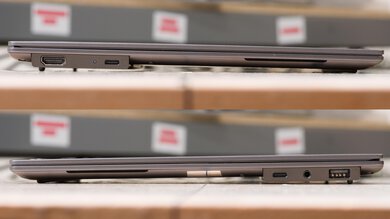
Poor port selection: no USB-A, HDMI, or headphone jack.
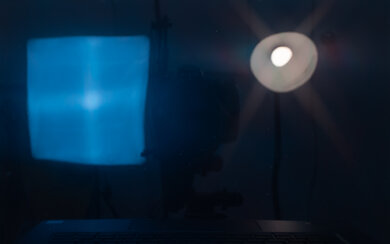
IPS display has mediocre reflection handling.
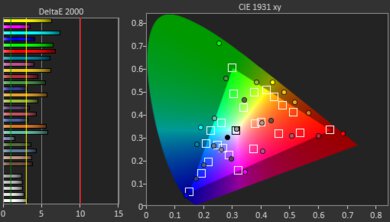
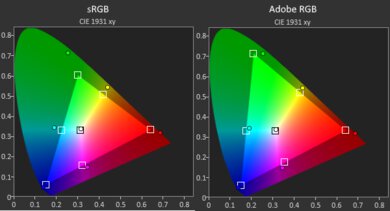
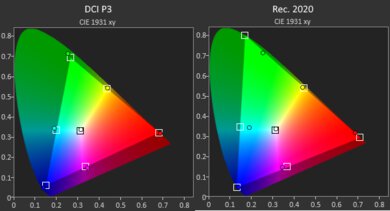
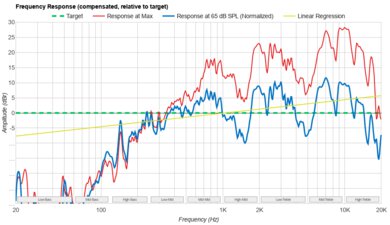
The Dell XPS 13 (2026) is great for media consumption. It has excellent build quality and is highly portable, with a very thin and lightweight chassis. Its IPS display gets very bright and produces vibrant colors. However, its colors aren't very accurate out of the box, so some content may appear different from what its creator intended. This laptop also has superb battery performance of around 8.5 hours during video playback. Unfortunately, it lacks a 3.5mm headphone jack, but its speakers can get quite loud and sound fairly clear without significant distortion.
Superb battery life: ~15 hours browsing and ~8.5 hours video playback.
Very thin and extremely lightweight.
Excellent build quality.
IPS display is bright with vibrant colors and great contrast.
Poor port selection: no USB-A, HDMI, or headphone jack.
IPS display has mediocre reflection handling.
No OLED display option.
Mediocre color accuracy out of the box.
The Dell XPS 13 (2026) is sub-par for heavy workloads. It isn't designed for demanding rendering, CAD, or media production workloads, as it lacks a discrete GPU and CPU performance declines during prolonged, sustained workloads. It's also limited to a maximum of 16GB of soldered RAM, with no open slots for upgrades.
Excellent build quality.
Mediocre CPU performance.
No discrete GPU options.
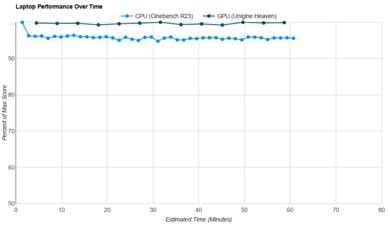
CPU performance drops over time under heavy, sustained workloads.
Poor port selection: no USB-A, HDMI, or headphone jack.
Mediocre color accuracy out of the box.
The Dell XPS 13 has outstanding battery life. It lasts well over a full day of productivity use, and you can watch a few movies before needing to recharge.
Superb battery life: ~15 hours browsing and ~8.5 hours video playback.
The Dell XPS 13 (2026) has excellent build quality. It has a sturdy, premium-feeling aluminum chassis while remaining lightweight. There's some minor flex and uneven seams here and there, but it's only cosmetic. The hinge is also stable, and you can lift the lid with one finger.
Excellent build quality.
The Dell XPS 13 has poor graphics performance. Its integrated GPU is only suitable for basic productivity tasks and content consumption.
Can't play any graphically demanding games.
No discrete GPU options.
The Dell XPS 13 is suitable for light productivity tasks such as text processing, web browsing, teleconferencing, and media consumption, but it isn't capable of demanding or heavily multi-threaded workloads. CPU performance also declines significantly over time.
Mediocre CPU performance.
CPU performance drops over time under heavy, sustained workloads.
Performance Usages
Changelog
- Updated Oct 08, 2026: We've updated this review to Test Bench 1.0! This update adds several new verdict scores to the review, so it's easier to make a buying decision. Read the changelog for a full list of changes.
- Updated Aug 11, 2026: Review published.
- Updated Aug 06, 2026: Early access published.
- Updated Jul 31, 2026: Our testers have started testing this product.
Check Price
Differences Between Sizes And Variants
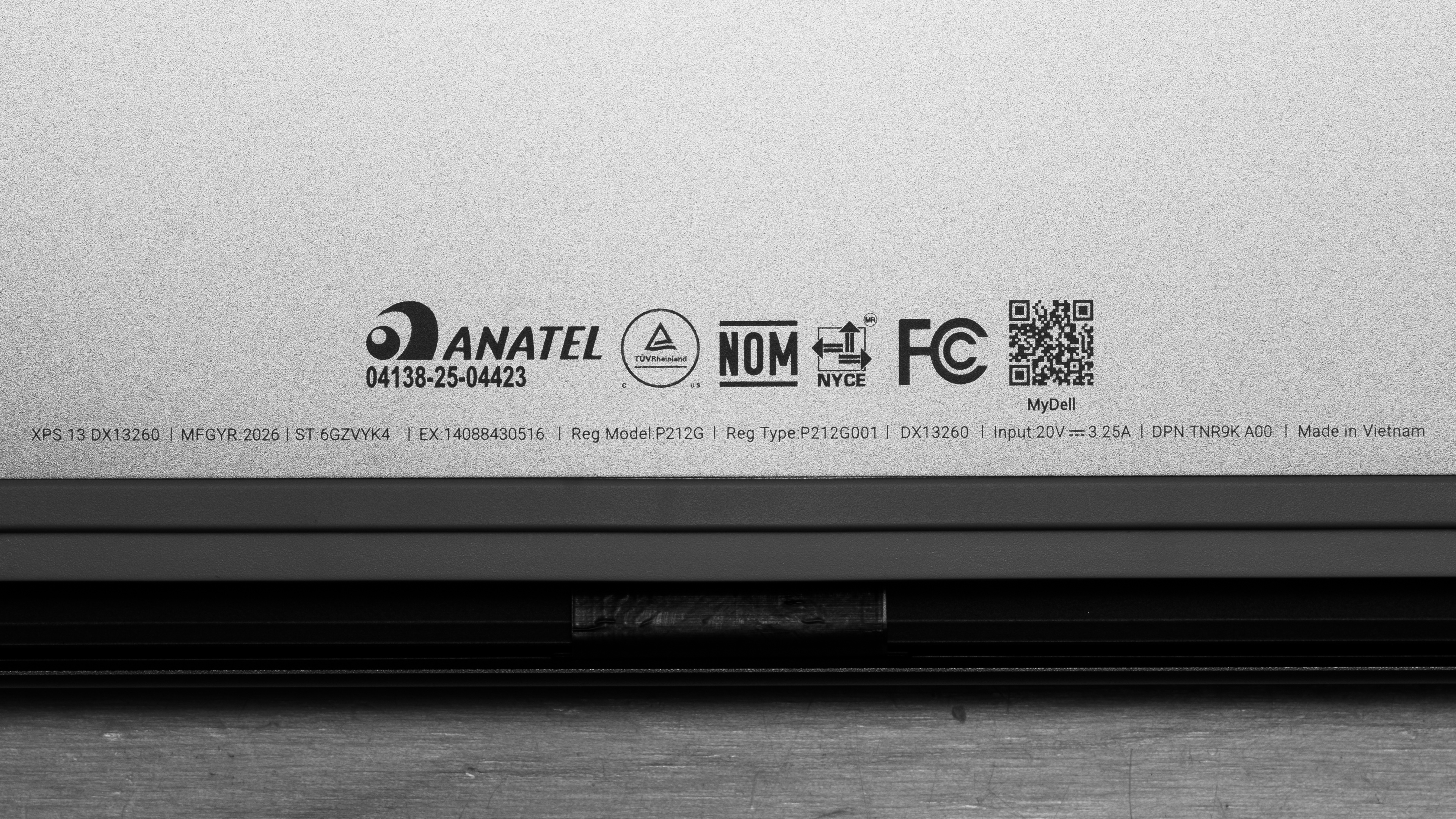
The Dell XPS 13 (2026) is available with several configuration options. The unit we tested carries a DX13260 model designation. It has an Intel Core 5 Processor 320, integrated Intel Graphics, 8GB of RAM, 512GB SSD storage, and a 13.4-inch IPS QHD+ (2560 × 1600) touchscreen display. See a photo of our unit's label.
Below, we've listed the configuration options as of August 2026, with our configuration highlighted. You can also check Dell's configurator to explore the available options, as they may change with time.
SCREEN
- 13.4" IPS 2560 × 1600 30–120Hz (touchscreen, 500 cd/m², 100% DCI-P3)
CPU
- Series 3 Intel Core 5 Processor 320 (6 cores, 6 threads, up to 4.6 GHz, 6MB cache)
GPU
- Intel Graphics (integrated)
MEMORY
- 8GB LPDDR5x 7467MT/s (single-channel)
- 16GB LPDDR5x 7467MT/s (single-channel)
OPERATING SYSTEM
- Windows 11
STORAGE
- 512GB M.2 PCIe NVMe SSD
COLOR
- Sky
- Storm
Popular Laptop Comparisons
Dell positions the Dell XPS 13 (2026) as a highly portable laptop for everyday productivity and browsing. It largely picks up where the Dell XPS 13 (2024) left off, but Dell has reversed two widely criticized design decisions from previous models: It's restored the physical function row and replaced the seamless haptic touchpad with a mechanical one that has clearly defined boundaries. Dell has also dropped the OLED display option, which may disappoint you if you plan to use this laptop for watching films, TV shows, and other content.
This laptop is less expensive than previous XPS models, putting it in direct competition with ultraportables like the Microsoft Surface Laptop 13-inch. The Surface offers an additional USB-A port and potentially longer battery life, though its ARM-based Snapdragon CPU can cause compatibility issues with some apps and peripherals. Apple MacBook Neo (A18 Pro, 2026) is another strong competitor at the same price if you're considering macOS. Its build feels more premium, and its 8GB of RAM generally isn't as limiting for everyday use due to macOS's more efficient memory management. That said, the XPS 13 (2026) is a standout option if you need a small, lightweight Windows laptop and don't mind its limited port selection or lack of an OLED display.
For more recommendations, see our picks for the best overall laptops, the best 13-14-inch laptops, and the best lightweight laptops. You may also want to check out our list of the best Dell laptops.
Despite both carrying XPS branding, the Dell XPS 14 (2026) and Dell XPS 13 (2026) have quite different designs and target different uses. The XPS 14 feels slightly more premium, has somewhat better build quality, and is available in a wider range of more powerful configurations better suited for heavier productivity, content creation, and light gaming. It's also available with either an IPS or OLED display. By comparison, the XPS 13 is designed primarily for light productivity and everyday browsing and is only available with an IPS display. Both are quite lightweight and portable, but the XPS 13 has a smaller display and overall footprint, and it's noticeably lighter.
The Dell XPS 15 (2023) is an older, considerably larger, heavier, and more performance-focused model in Dell's XPS lineup than the Dell XPS 13 (2026). It's better suited for content creation and workstation usage, particularly when configured with a discrete GPU. The XPS 13 (2026), on the other hand, is considerably smaller and lighter, designed more narrowly for everyday productivity and browsing, with a greater emphasis on portability and battery efficiency.
The Microsoft Surface Laptop 7th Edition 15 (2024) and Dell XPS 13 (2026) are premium laptops designed for general productivity and web browsing. Both have excellent battery life, though the Microsoft lasts even longer overall. It's considerably larger and heavier, with a much bigger display, but it's available with up to 64GB of RAM, which can make it better-suited for heavy multitasking. However, its ARM-based Snapdragon processor can introduce compatibility issues with certain apps and peripherals. The Dell is considerably smaller and lighter, making it more portable overall. That said, it has far fewer configuration options and a maximum of only 16GB of RAM, making it less suitable for heavy multitasking.
The Lenovo ThinkPad X1 Carbon Gen 14 Aura Edition (2026) is the more versatile business machine, while the Dell XPS 13 (2026) is better for everyday use at a lower price. The ThinkPad offers more powerful processor options, higher memory capacities, cellular connectivity on select configurations, and a much broader port selection, including USB-A, HDMI, and a headphone jack. Choose the Dell if you want a smaller laptop that's easier to carry, with a standard 2560x1600 120Hz IPS display that's sharper and smoother than the ThinkPad's base IPS option. Its limited configurations make it less suited for demanding workloads and heavy multitasking.
Test Results
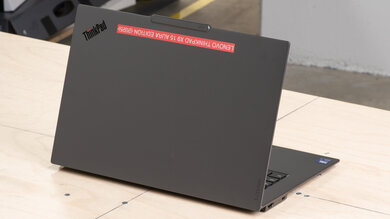
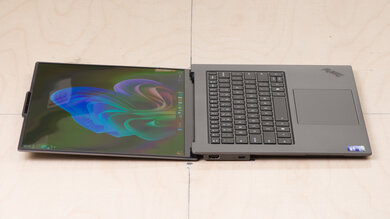
for pictures & test results
for pictures & test results
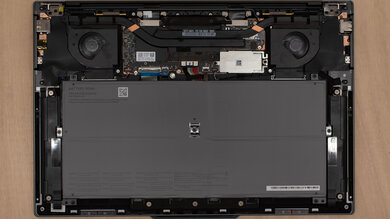
for pictures & test results


for pictures & test results

for pictures & test results
for pictures & test results
for pictures & test results