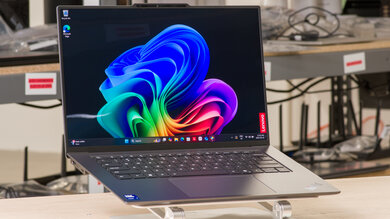
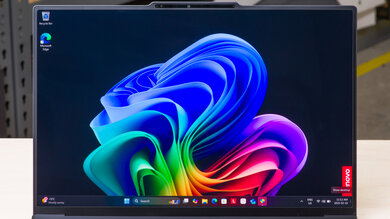
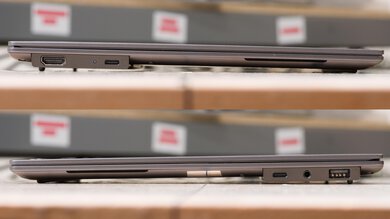
The Lenovo Yoga Slim 7i Aura Edition 15 (2024) is a 15.3-inch Windows ultraportable laptop featuring Intel Lunar Lake SoCs. It's configurable with 16GB or 32GB of RAM and up to 1TB of storage. Display options include an IPS and an OLED panel; both have the same 2.8k resolution and 120Hz refresh rate, though only the IPS panel supports touch input, and the OLED panel is only available outside of North America. This laptop also has a 1080p webcam with Windows Hello facial recognition support and Wi-Fi 7 wireless connectivity. Ports comprise a USB-A, two USB-C/Thunderbolt 4s, an HDMI 2.1, and a headphone jack.
See our unit's specifications and the available configuration options in the Differences Between Variants section.
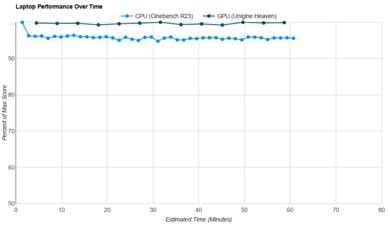
Note: We performed the productivity benchmarks, gaming benchmarks, thermals and noise, and performance over time tests using the Performance power mode instead of the default Adaptive (Auto) mode. This change makes the results more representative of the laptop's maximum potential and brings them closer to user expectations. However, this also means that the results are only comparable with reviews containing this disclaimer, as we previously tested laptops in their default mode, which usually throttles performance to prolong battery life.
Our Verdict
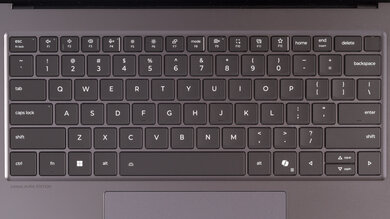
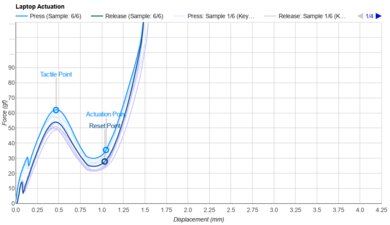
The Lenovo Yoga Slim 7 is great for school use. It's easy to carry for a 15-inch device, and its battery lasts around 11 to 12 hours for light uses, which is enough to get you through a typical school day with charge to spare. The user experience is excellent; you get a bright 2.8k display, a comfortable keyboard, and a good number of ports. The touchpad tracks all movements and gestures well, but its actuation feels shallow and mushy. Performance-wise, its Intel SoC can easily handle general productivity workloads like web browsing, text processing, and video playback. You can do some moderately intensive workloads, like programming and photo editing; however, you're better off getting a workstation or gaming laptop if you need to perform highly demanding tasks like 3D animation or simulations.
Easy to carry.
Battery lasts around 11 to 12 hours of light use.
Sharp, bright 2.8k display.
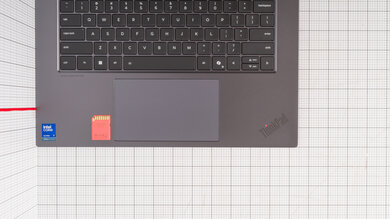
Comfortable keyboard, large touchpad.
Great port selection.
Touchpad clicks feel shallow and mushy.
CPU and integrated GPU can't handle highly demanding workloads.
Glossy display struggles with bright reflections.
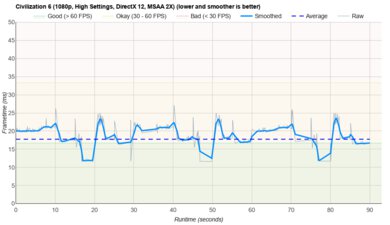
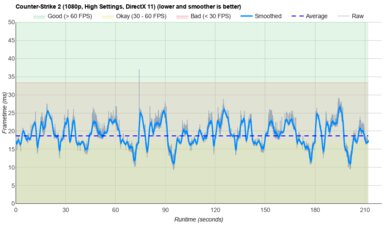
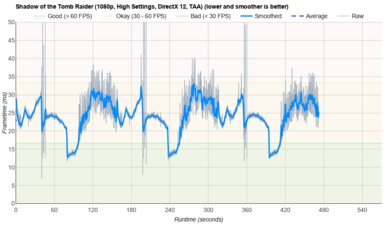
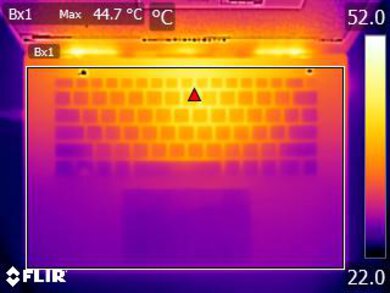
The Lenovo Yoga Slim 7 isn't designed for gaming. While its Lunar Lake SoC's integrated GPU can handle some games at 1080p, you'll have to play with fairly low graphical settings to get playable frame rates, and some highly demanding titles likely won't run at all. This laptop is available with a 120Hz IPS or OLED panel; the former has a somewhat slow response time, causing visible ghosting, and neither supports FreeSync nor G-SYNC to reduce screen tearing. On the bright side, the laptop never gets hot or loud under load.
120Hz display.
User-replaceable storage drive.
Doesn't get hot or loud under load.
CPU and integrated GPU can't handle highly demanding workloads.
Display has slow response time.
No VRR support to reduce screen tearing.
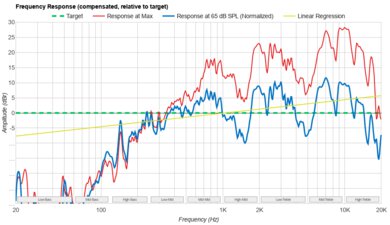
The Lenovo Yoga Slim 7 is great for media consumption. It's very portable for a 15-inch device, and its battery lasts around 10 hours of local video playback, giving you plenty of time to get through multiple movies and TV show episodes. You can get this laptop with a 2.8k IPS or OLED display; the latter will deliver a better viewing experience, especially in dark rooms and HDR content, but keep in mind that the OLED likely flickers, which might bother some people, causing eye strain. The speakers sound clear and well-balanced, with a good amount of bass. They get very loud but sound a bit harsh at higher volume levels.
Easy to carry.
Sharp, bright 2.8k display.
Speakers sound well-balanced, with a good amount of bass.
Available with OLED display for better dark room viewing experience.
Battery lasts around 10 hours of local video playback.
Speakers sound harsh at high volume levels.
Glossy display struggles with bright reflections.
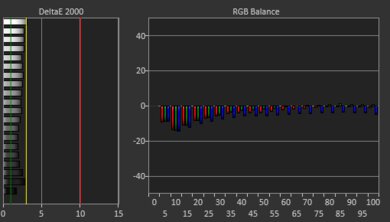
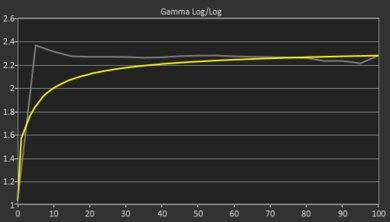
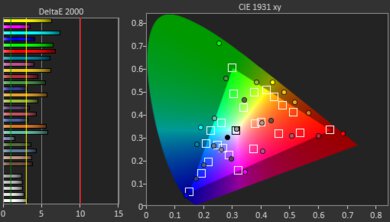
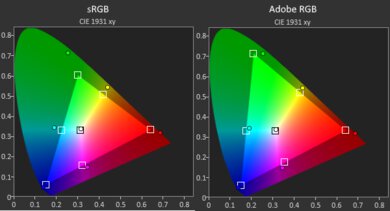
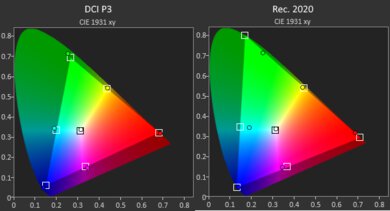
The Lenovo Yoga Slim 7 isn't designed for use as a workstation laptop. Its Intel Lunar Lake SoC is a low-power chip that can only handle light to moderately demanding tasks. Also, you can only get up to 32GB of soldered RAM, which isn't enough for highly intensive workloads. You can do some color-correction work, as both available displays have full sRGB and DCI P3 coverage. Thermal throttling is minimal, and the laptop doesn't get hot or loud under load.
User-replaceable storage drive.
Doesn't get hot or loud under load.
Display is suitable for some color-critical work.
CPU and integrated GPU can't handle highly demanding workloads.
Can only get up to 32GB of soldered RAM.
The Lenovo Yoga Slim 7 is great for business use. It has a sturdy build, a compact design, and a battery that lasts around 11 to 12 hours in light uses, making it ideal for those who travel a lot for work. Its bright 2.8k display gives you plenty of room for split-screen multitasking, and its keyboard feels comfortable to type on for long periods. The touchpad's actuation feels rather mushy, though, and the webcam's video quality is only decent, as the image looks noisy. Performance isn't a problem; its Intel Lunar lake SoC can easily handle productivity tasks like text processing, web browsing, spreadsheets, and presentations. You can also do some light video editing as long as the project isn't too complex, which is great for small business owners needing to produce their own ads.
Easy to carry.
Battery lasts around 11 to 12 hours of light use.
Sharp, bright 2.8k display.
Comfortable keyboard, large touchpad.
Great port selection.
Touchpad clicks feel shallow and mushy.
Glossy display struggles with bright reflections.
Changelog
-
Updated Aug 13, 2025:
Added mention of the ASUS Zenbook S 16 UM5606 (2024) as an alternative with pen input support in the Extra Features section.
-
Updated Jun 09, 2025:
Added mention of the ASUS Zenbook A14 UX3407 (2025) as an alternative with a longer battery life in the Battery section.
- Updated May 27, 2025: Review published.
- Updated May 21, 2025: Early access published.
Check Price
Differences Between Sizes And Variants
We tested the Lenovo Yoga Slim 7i Aura Edition 15 (model 15ILL9) with a 120Hz 2.8k IPS display, an Intel Core Ultra 7 256V SoC, and 1TB of storage. The display, SoC, and storage are configurable; see below for the available options.
SCREEN
- 15.3" IPS 2880 x 1800 120Hz (glossy, touchscreen, 500 cd/m², 100% DCI P3)
- 15.3" OLED 2880 x 1800 120Hz (glossy, 500 cd/m², 100% DCI P3, only available outside of North America)
SoC
- Intel Core Ultra 7 256V (8 cores/8 threads, up to 4.8GHz, 12MB cache, Arc Graphics 140V, 16GB RAM)
- Intel Core Ultra 7 258V (8 cores/8 threads, up to 4.8GHz, 12MB cache, Arc Graphics 140V, 32GB RAM)
MEMORY
- 16GB LP-DDR5x 8533MHz (soldered, Core Ultra 7 256V)
- 32GB LP-DDR5x 8533MHz (soldered, Core Ultra 7 258V)
STORAGE
- 512GB M.2 2242 PCIe Gen 4 NVMe SSD
- 1TB M.2 2242 PCIe Gen 4 NVMe SSD
COLOR
- Luna Gray
See our unit's label.
Popular Laptop Comparisons
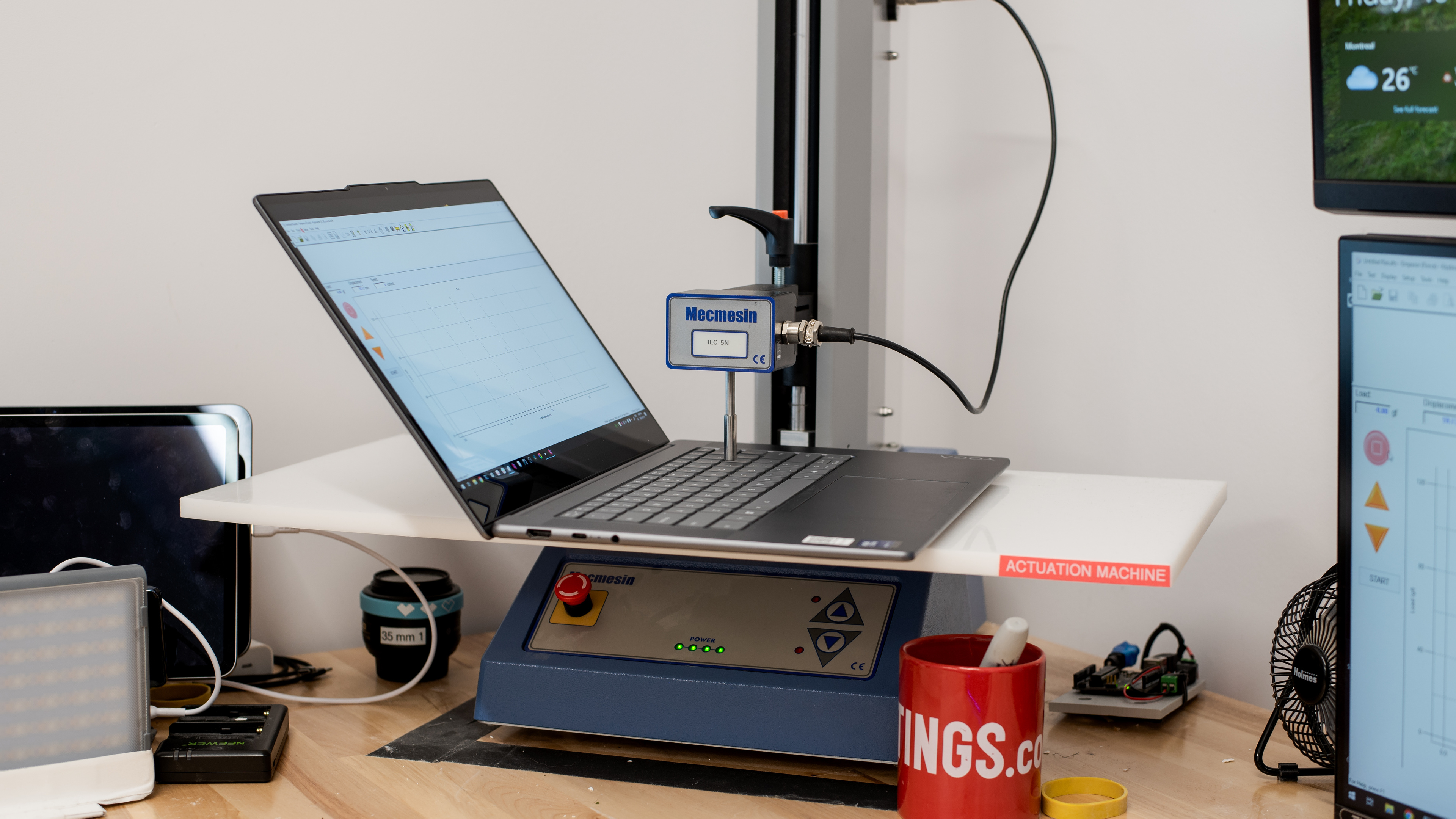
The Lenovo Slim 7i is a great ultraportable overall. While the Yoga 7 is technically a tier below the Yoga 9 series in Lenovo's lineup, this Slim 7i model sits in the premium range, competing directly against other high-end models like the Apple MacBook Air 15 (M4, 2025) and the ASUS Zenbook 14 OLED (2024). The Yoga Slim 7i holds up well against these models, offering a display with a higher refresh rate than the MacBook Air 15's Retina screen, as well as a wider port selection and a user-replaceable storage drive. It also has a longer battery life than the Zenbook and doesn't throttle nearly as much under load. Its Intel Lunar Lake SoC's performance doesn't really stand out compared to other current-gen chips, lagging behind Apple's M4 SoC, but it's likely satisfactory for most people with a light, general productivity workload. Finally, the use of a diving board touchpad is a little disappointing, as many laptops in its class have adopted a haptic touchpad.
For more options, check out our recommendations for the best lightweight laptops, the best Windows laptops, and the best ultrabooks.
The ASUS Zenbook A14 UX3407 (2025) and the Lenovo Yoga Slim 7i Aura Edition 15 (2024) are both great ultraportables. In terms of user experience, the Yoga Slim 7i comes out ahead; it has a sturdier build, a sharper, brighter screen, and a more comfortable keyboard with longer travel keys. However, the Zenbook A14 is more portable, and its battery life is in a league of its own, lasting almost eight hours longer than the Yoga Slim 7i. One thing to keep in mind about the Zenbook A14 is that it's an ARM-based model using a Qualcomm Snapdragon SoC. This means some apps might not work or will run poorly, so make sure the apps you use work first.
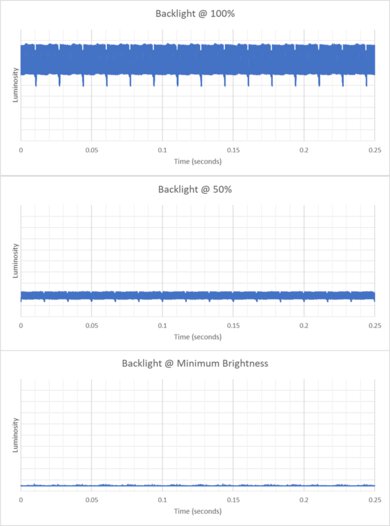
The Lenovo Yoga Slim 7i Aura Edition 15 (2024) and the ASUS Zenbook 14 OLED (2024) are both high-end ultraportables that deliver a similarly premium user experience. The Lenovo has a slightly larger screen that makes split-screen multitasking feel less cramped, and its battery life is noticeably better, lasting around three hours longer. However, the ASUS' touchpad feels more tactile, as its actuation provides a more satisfying click. You can also use its touchpad as a virtual numpad, which is handy if you work with lots of numbers. For those sensitive to display flicker, the Lenovo is a better choice, as it has a flicker-free IPS display option, while the ASUS is only available with OLED panels that flicker.
The Lenovo Yoga Slim 7i Aura Edition (2024) and the Microsoft Surface Laptop 7th Edition 15 (2024) are both premium 15-inch ultraportables. The main difference between these two devices is the chip; the Yoga Slim 7i uses an x86 Intel Lunar Lake SoC, while the Surface Laptop uses an ARM-based Qualcomm SoC. The Surface's Qualcomm SoC is technically faster in multi-threaded workloads; however, many programs don't run natively on an ARM chip, so you must ensure that the apps you use are compatible. If you aren't sure, then the Yoga Slim 7i is a safer choice. In terms of the overall user experience, the Surface comes out slightly ahead, as it has a sturdier build, a brighter display, a more tactile haptic touchpad, and a higher-quality webcam.
The Lenovo ThinkPad X9 15 Aura Edition (2025) and the Lenovo Yoga Slim 7i Aura Edition (2024) are both ultraportables featuring Intel Lunar Lake chips, delivering nearly identical performance. However, the ThinkPad X9 is an even more premium device, sporting a sturdier build, a haptic touchpad, and a better 1440p webcam. The X9 also has a better battery life, lasting nearly four hours longer in light uses. That said, if you're sensitive to display flicker, know that the X9 is only available with OLED displays that flicker at 480Hz, while the Yoga Slim 7i has a flicker-free IPS panel option.
Test Results
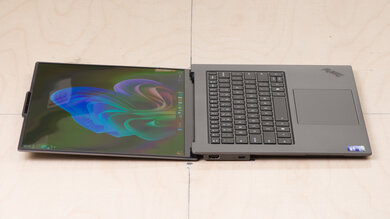
for pictures & test results
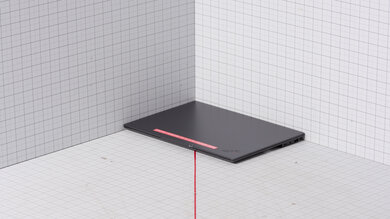
for pictures & test results
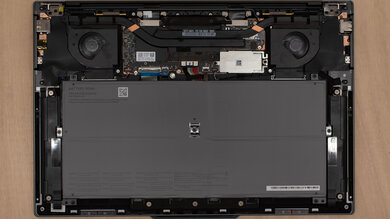
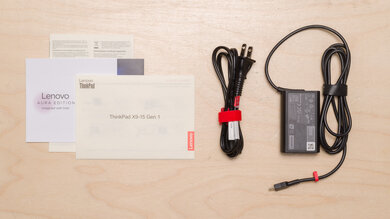
for pictures & test results





for pictures & test results
for videos & test results

for pictures & test results
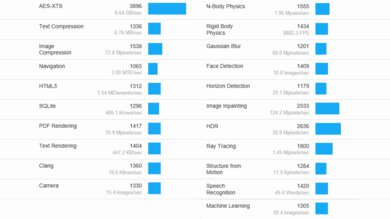
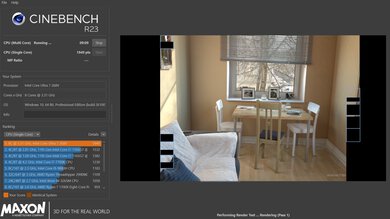



for pictures & test results
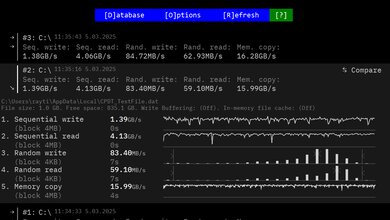
for pictures & test results
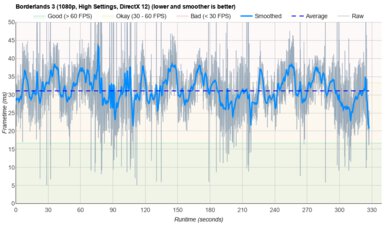
for pictures & test results
for pictures & test results
for pictures & test results
for pictures & test results
for pictures & test results