HP OmniBook Ultra Flip 14 (2024)  Laptop Review

Reviewed Jan 22, 2025 at 09:04am
Writing modified Aug 25, 2025 at 01:22pm
Tested using Methodology v0.8.3 
HP OmniBook Ultra Flip 14 (2024)
8.5
School 
7.8
Gaming 
8.8
Multimedia 
8.3
Workstation 
8.3
Business 
 4
  1. Recommended in:
  2. Brands
  3. HP

The HP OmniBook Ultra Flip 14 (2024) is a Windows 2-in-1 convertible laptop. It replaces the HP Spectre x360 14 (2024). The name change is due to HP's rebranding, which put all personal laptops under the OmniBook brand, with the 'Ultra' modifier denoting the highest-end model. This laptop is available with Intel Lunar Lake SoCs (up to a Core Ultra 9 288V), up to 32GB of RAM, and up to 2TB of storage. It has a 2.8K OLED display, a 4k webcam, and Wi-Fi 7 wireless connectivity. Ports include three USB-Cs (two Thunderbolt 4s) and a 3.5 mm headphone jack. The display supports pen input, but you may have to purchase the stylus separately, depending on the region and retailer.

See our unit's specifications and the available configuration options in the Differences Between Variants section. For more information about HP's rebranding, check out our best HP laptops article.

Note: We performed the productivity benchmarks, gaming benchmarks, thermals and noise, and performance over time tests using the Performance mode instead of the default Balanced mode. This change makes the results more representative of the laptop's maximum potential and brings them closer to user expectations. However, this also means that the results are only comparable with reviews containing this disclaimer, as we previously tested laptops in their default mode, which usually throttles performance to prolong battery life.

Our Verdict

8.5
School 

The HP OmniBook Ultra Flip 14 is excellent for school use. It has a compact design that makes it easy to carry around, and its battery lasts easily through a typical school day. The overall user experience is excellent, as it has a sharp OLED display with touch and pen input support, a tactile keyboard, an easy-to-use haptic touchpad, and an outstanding 4k webcam. Keep in mind the OLED panel doesn't deal with bright reflections very well, which can be a problem in well-lit settings. This laptop's Intel SoC can easily handle general productivity workloads like web browsing, text processing, and video playback. You can do some moderately intensive tasks like programming and photo editing, but for highly demanding workloads like 3D animation or simulations, you're better off getting a workstation or gaming laptop with a more powerful CPU and discrete GPU.

Pros
  • Easy to carry around.

  • Battery lasts around 10 hours of light use.

  • Sharp, colorful OLED display.

  • Tactile keyboard, easy-to-use haptic touchpad.

  • Outstanding 4k webcam.

Cons
  • CPU and GPU can't handle highly intensive workloads.

  • No USB-A or HDMI port.

  • Glossy display struggles with bright reflections.

7.8
Gaming 

The HP OmniBook Ultra Flip 14 isn't designed for gaming. While its Lunar Lake SoC's integrated GPU can deliver decent frame rates in some demanding games at 1080p with low settings, there'll likely be a lot of titles that are simply too intensive to run smoothly. Also, performance can be inconsistent due to thermal throttling. The OLED display has a 120Hz refresh rate and a decent response time, but it doesn't support FreeSync or G-SYNC, which means you'll still see some screen tearing when gaming with an uncapped frame rate. In short, this laptop is fine for casual gaming, but it isn't ideal if your primary goal is to play games.

Pros
  • 120Hz OLED panel with decent response time.

  • Doesn't get hot or loud under load.

  • User-replaceable SSD.

Cons
  • CPU and GPU can't handle highly intensive workloads.

  • No FreeSync or G-SYNC support.

  • No USB-A or HDMI port.

  • CPU throttles under load.

8.8
Multimedia 

The HP OmniBook Ultra Flip 14 is excellent for media consumption. It's very portable, thanks to its thin and light design, and since it's a 2-in-1 convertible, you can set it in tent mode when viewing content or use it as a tablet. Its OLED display looks sharp and colorful, and it can produce deep, inky blacks, making it fantastic for dark room viewing and HDR content. The only downside with the display is that its glossy finish struggles with bright reflections, so visibility can be an issue in well-lit environments. The speakers get very loud with minimal compression, and they sound clear and well-balanced, with a decent amount of bass. Its battery life is outstanding at around 11 hours of video playback, giving you ample time to get through multiple movies and TV show episodes.

Pros
  • Easy to carry around.

  • Sharp, colorful OLED display.

  • Battery lasts almost 11 hours of video playback.

  • Loud speakers sound well-balanced, with a decent amount of bass.

  • Display supports touch and pen input.

Cons
  • Glossy display struggles with bright reflections.

8.3
Workstation 

The HP OmniBook Ultra Flip 14 isn't designed for use as a workstation. Its Intel Lunar Lake SoC can only handle light to moderately demanding tasks. Plus, you can only get up to 32GB of soldered RAM, which isn't enough for highly intensive workloads. You can do some color-correction work, though, as its 2.8k OLED display has full DCI P3 and near-full Adobe RGB coverage. It has a fast, user-replaceable SSD and a decent port selection that includes two Thunderbolt 4 ports. The laptop doesn't get hot or loud under load, though there's some thermal throttling on the CPU, resulting in inconsistent performance.

Pros
  • Display is suitable for color-critical work.

  • Thunderbolt 4 support.

  • Doesn't get hot or loud under load.

  • User-replaceable SSD.

Cons
  • CPU and GPU can't handle highly intensive workloads.

  • Can only get up to 32GB of soldered RAM.

  • No USB-A or HDMI port.

  • CPU throttles under load.

8.3
Business 

The HP OmniBook Ultra Flip 14 is great for business use. It has a sturdy all-aluminum build, a compact design, and all-day battery life, making it well-suited for those who travel a lot for work. It also provides an excellent user experience thanks to its sharp OLED display, tactile keyboard, haptic touchpad, and 4k webcam. There's a fingerprint sensor and a facial recognition IR camera, which is great if you want to avoid typing in your password in public spaces. Performance-wise, its Intel SoC can easily handle productivity tasks like text processing, web browsing, spreadsheets, and presentations. Unfortunately, the OLED display is susceptible to permanent burn-in, so you'll want to take active measures to prevent it if you plan to keep the laptop for a while, like hiding Windows' taskbar.

Pros
  • Easy to carry around.

  • Battery lasts around 10 hours of light use.

  • Sharp, colorful OLED display.

  • Tactile keyboard, easy-to-use haptic touchpad.

  • Outstanding 4k webcam.

Cons
  • No USB-A or HDMI port.

  • Glossy display struggles with bright reflections.

  • 8.5
    School
  • 7.8
    Gaming
  • 8.8
    Multimedia
  • 8.3
    Workstation
  • 8.3
    Business
  • Changelog

    1.  Updated Aug 25, 2025: 

      Added mention of the ASUS Zenbook DUO UX8406 14 (2025) as a dual-screen alternative in the Screen Specs section.

    2.  Updated May 07, 2025: We've updated this review to Test Bench 0.8.3, which removes the viewing angle tests and adds a GPU Total Graphics Power comparison in the GPU section. The Pen Input test in the Extra Features section has also changed, as it now shows whether the laptop supports pen input rather than the inclusion of a stylus in the box. See the changelog for more details.
    3.  Updated Apr 30, 2025: 

      Added mention of the Lenovo Yoga 9i 2-in-1 Aura Edition 14 (2025) as an alternative with a USB-A port in the Ports section.

    4.  Updated Apr 02, 2025: 

      Added mention of the Apple MacBook Air 13 (M4, 2025) as an alternative with a longer battery life in the Battery section.

    Differences Between Sizes And Variants

    We tested the HP OmniBook Ultra Flip 14 with an Intel Core Ultra 7 256V SoC, 16GB of RAM, and 1TB of storage. The SoC and storage are configurable; see the available options below.

    SCREEN

    • 14" OLED 2880 x 1800 120Hz with touch and pen input support

    SOC (System on Chip)

    • Intel Core Ultra 5 226V (8 cores/8 threads, up to 4.5GHz, 8MB cache, Arc Graphics 130V)
    • Intel Core Ultra 7 256V (8 cores/8 threads, up to 4.8GHz, 12MB cache, Arc Graphics 140V)
    • Intel Core Ultra 7 258V (8 cores/8 threads, up to 4.8GHz, 12MB cache, Arc Graphics 140V)
    • Intel Core Ultra 9 288V (8 cores/8 threads, up to 5.1GHz, 12MB cache, Arc Graphics 140V)

    MEMORY

    • 16GB LP-DDR5x 8533MHz (Core Ultra 5 226V and Core Ultra 7 256V only)
    • 32GB LP-DDR5x 8533MHz (Core Ultra 7 258V and Core Ultra 288V only)

    STORAGE

    • 512GB M.2 2280 PCIe Gen 4 NVMe SSD
    • 1TB M.2 2280 PCIe Gen 4 NVMe SSD
    • 2TB M.2 2280 PCIe Gen 4 NVMe SSD

    COLOR

    • Eclipse Gray
    • Atmospheric Blue

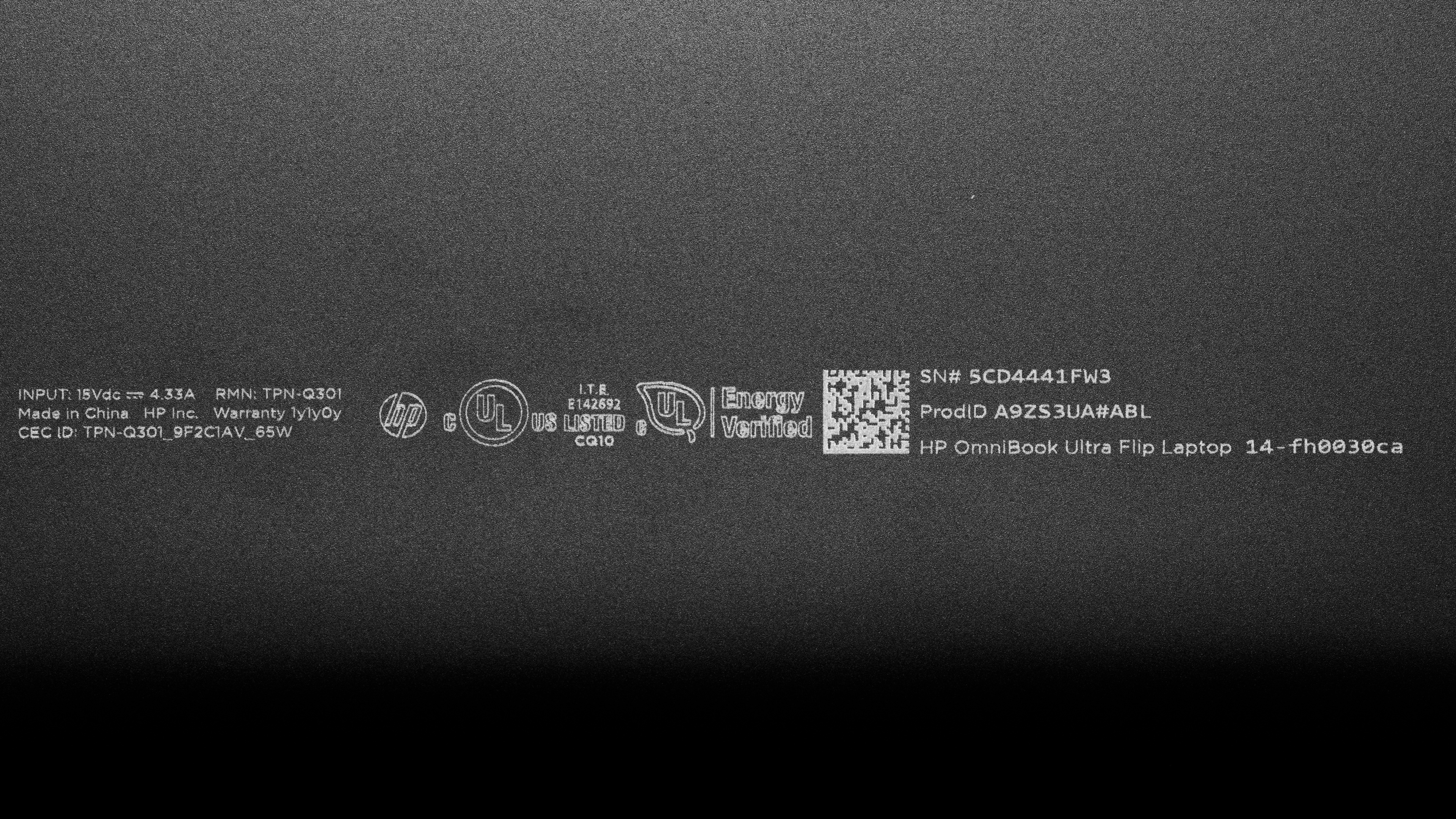
    See our unit's label.

    Popular Laptop Comparisons

    The HP OmniBook Ultra Flip 14 is a great ultraportable laptop for general productivity tasks. The build quality, as well as the overall user experience, is among the best you can find on Windows laptops. Although Intel's Lunar Lake SoCs are a step backward compared to their Meteor Lake predecessors in multi-thread performance, they're still plenty fast for this laptop's intended use. That said, the Lunar Lake SoCs, which were designed specifically to improve power efficiency, fail to deliver a significant increase in battery life, making it hard to recommend this laptop over its predecessor, the HP Spectre x360 14 (2024).

    For more options, check out our recommendations for the best business laptops, the best lightweight laptops, and the best travel laptops.

    Lenovo Yoga 9i 2-in-1 Aura Edition 14 (2025)

    The Lenovo Yoga 9i 2-in-1 Aura Edition 14 (2025) and the HP OmniBook Ultra Flip 14 (2024) are both 14-inch convertibles that provide a similar user experience overall. The choice depends on what you care about most; the Yoga has a longer battery life and a USB-A port, while the OmniBook has an easier-to-use haptic touchpad and a better webcam. You can get the Yoga with a sharper 4k+ OLED display, whereas the OmniBook is only available with a 2.8k panel; however, remember that the increased resolution will drain the battery faster.

    HP Spectre x360 14 (2024)

    The HP OmniBook Ultra Flip 14 (2024) is the successor to the HP Spectre x360 14 (2024). HP has merged all of its personal laptops under the OmniBook brand, hence the name change. These two laptops are very similar in terms of design and features; the only difference is that the OmniBook has a third USB-C instead of a USB-A port. CPU performance is a bit of a toss-up since it depends on which configuration you get, though it's worth noting that the Lunar Lake SoCs have a much better integrated GPU, allowing you to play more games.

    Microsoft Surface Laptop 7th Edition 15 (2024)

    The HP OmniBook Ultra Flip 14 (2024) and the Microsoft Surface Laptop 7th Edition 15 (2024) are both great ultraportables that deliver an excellent user experience. Each has its pros and cons. The OmniBook Ultra is more versatile since it's a 2-in-1 you can use as a tablet, and it supports pen input if you want to take handwritten notes or draw. On the other hand, the Surface Laptop has a significantly longer battery life. The displays trade blows: the OmniBook's OLED panel looks nicer, as it can produce deeper blacks, but it doesn't get nearly as bright as the Surface Laptop's IPS panel, and it's susceptible to permanent burn-in. The most notable difference between these two laptops is the SoC. The Surface Laptop sports an ARM-based chip with better multi-thread performance than the OmniBook's Intel Lunar Lake SoCs. However, many apps don't run natively on an ARM processor, so make sure you check for compatibility first.

    Lenovo ThinkPad X9 15 Aura Edition (2025)

    The Lenovo ThinkPad X9 15 Aura Edition (2025) and the HP OmniBook Ultra Flip 14 (2024) are both premium Windows laptops. However, the ThinkPad is a 15-inch clamshell model, while the OmniBook is a 14-inch 2-in-1 convertible. Although both laptops sport a 2.8k OLED display, the ThinkPad's panel gets brighter and is better at reducing bright reflections, making it ideal for well-lit environments. The ThinkPad also has a more comfortable keyboard with more key travel, a wider port selection, and a longer battery life.

    Show more 

    Test Results

    perceptual testing image
    Sort:
    RATINGS
    Category:
    All
    Design
    Style
    Form Factor
    2 in 1

    The HP OmniBook Ultra Flip 14 is available in an Eclipse Gray or Atmospheric Blue colorway. See the bottom of the laptop.

    9.0
    Build Quality

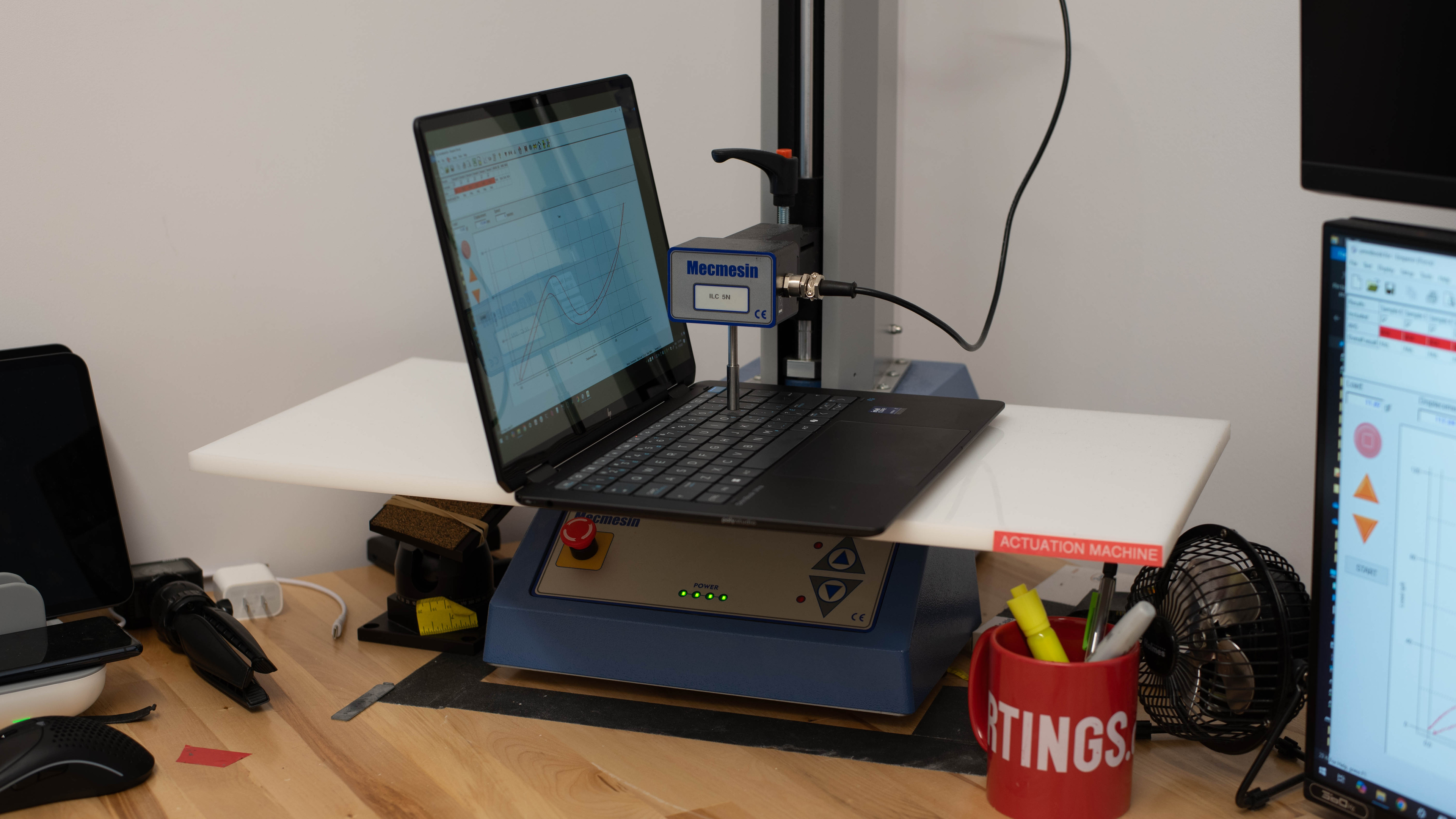
    The HP OmniBook Ultra Flip feels remarkably well-built, with no obvious gaps in the construction. Its full-aluminum chassis is very sturdy; there's some flex on the lid and keyboard deck, but only when applying a lot of force, so it isn't a concern in regular use. The finish doesn't scratch easily, though the touchpad, keycaps, and bottom of the laptop attract a fair amount of fingerprints and smudges. The feet feel solid and stick firmly to the bottom.

    7.5
    Hinge
    Range
    360°
    Stability
    Good
    One Finger Lift
    No

    The hinges feel smooth when opening and closing the lid, and they're very stable, exhibiting little to no wobble when typing heavily. Opening the laptop with one hand isn't possible, as the base isn't heavy enough to remain in place.

    8.8
    Portability
    Size
    14"
    Thickness
    0.7" (1.7 cm)
    Width
    12.4" (31.5 cm)
    Depth
    8.5" (21.7 cm)
    Volume
    70.5 in³ (1,155.2 cm³)
    Weight
    2.9 lbs (1.3 kg)
    Charger Size
    6.7 in³ (109.7 cm³)
    Charger Weight
    0.6 lbs (0.3 kg)
    6.5
    Serviceability
    Ease Of Access
    8.0
    RAM Slots
    0
    Storage Slots
    1
    Replaceable Battery
    Yes
    Replaceable Wireless Adapter
    Yes

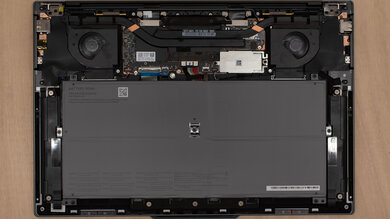
    The HP OmniBook Ultra Flip's serviceability is okay. Accessing the internals is straightforward; you only need to remove four T5 screws and undo a few clips with a prying tool. There are two screw sizes; the ones at the bottom (where the battery is) are shorter. The storage slot supports M.2 2280 PCIe Gen 4 NVMe SSDs.

    See HP's online maintenance and service guide.

    In The Box

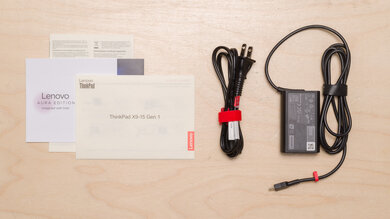
    • 65W USB-C power adapter and cord
    • Documentation
    Display
    Screen Specs
    Resolution
    2880 x 1800
    Aspect Ratio
    16:10
    Pixel Density
    242 PPI
    Panel Type
    OLED
    Touch Screen
    Yes
    Screen-To-Body Ratio
    84%

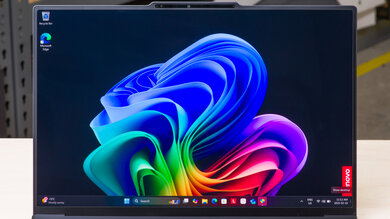
    The HP OmniBook Ultra Flip's OLED display looks very sharp and provides just enough screen real estate for split-screen multitasking. Its 16:10 aspect ratio is great for productivity, as the increased vertical space in landscape mode (compared to a 16:9 display) lets you see more information at once when reading a document. However, some may find 16:10 a little too narrow when using the device as a tablet in portrait mode, as most people are more accustomed to Apple iPad's 4:3 or Microsoft Surface Pro's 3:2 aspect ratios. OLEDs are susceptible to permanent burn-in, so you'll have to take active measures to prevent it, like hiding Windows' taskbar. If you need a lot of screen space, check out the ASUS Zenbook DUO UX8406 14 (2025), a dual-screen laptop with a kickstand and detachable keyboard.

    8.7
    Refresh Rate
    Refresh Rate
    120 Hz
    Variable Refresh Rate
    Dynamic Refresh Rate

    The HP OmniBook Ultra Flip 14 is only available with a 120Hz OLED display. A 120Hz refresh rate provides a better user experience than a standard 60Hz display, as it makes motion look smoother and improves input responsiveness. However, setting the refresh rate to 120Hz will drain the battery faster. You can set it to a fixed 60Hz to save battery, and there's also a setting that automatically switches the refresh rate between 60Hz and 120Hz, depending on whether you're actively using the laptop or looking at static content. As for the response time, it's a little slow for a 120Hz OLED display, but pretty good considering this is primarily a productivity laptop. Dynamic Refresh Rate isn't the same as FreeSync or G-SYNC, so you may still see some screen tearing when gaming with an uncapped frame rate.

    10
    Contrast
    Native Contrast
    48,500 : 1

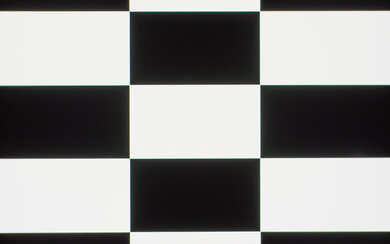
    The display's contrast ratio is effectively infinite since OLEDs can turn off individual pixels to produce perfect blacks.

    7.5
    Brightness
    Maximum Brightness
    354 cd/m²
    Minimum Brightness
    20 cd/m²

    The HP OmniBook Ultra Flip 14's display gets bright enough for use in most indoor settings. However, you may still have some visibility issues if lights shine directly at the screen because the glossy finish struggles with bright reflections. The display gets very dim at the lowest brightness setting, which helps reduce eye strain when viewing content in the dark.

    We've also tested the HDR peak brightness. The display can reach 553 cd/m², which is bright enough to deliver a fairly decent HDR viewing experience.

    7.5
    Reflections
    Screen Finish
    Glossy
    Total Reflections
    4.131%
    Indirect Reflections
    1.046%
    Calculated Direct Reflections
    3.09%

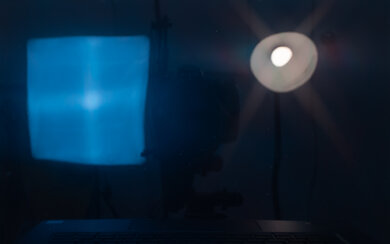
    The display's glossy finish mainly struggles with bright light sources, like a lamp or open window during the day. These reflections are visible even when viewing light-color content with the screen at maximum brightness.

    10
    Black Uniformity
    Uniformity (Std. Dev.)
    0.127%
    7.9
    Out-Of-The-Box Color Accuracy
    Avg. White Balance dE
    1.45
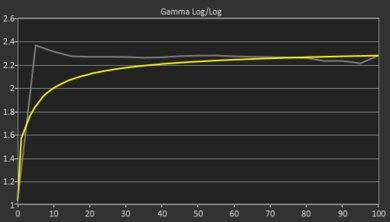
    Avg. Gamma
    2.24
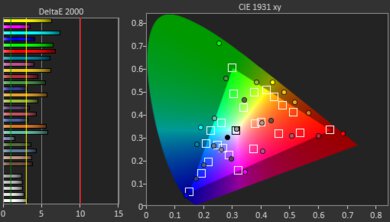
    Avg. Color dE
    4.16
    Avg. Color Temperature
    6,241.5 K

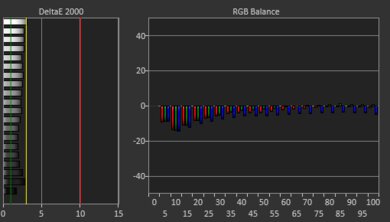
    The HP OmniBook Ultra Flip 14's display accuracy is good out of the box. There's no major issue with the white balance, and the color temperature is only a tad warmer than the standard 6500K target, not enough to make a huge difference visually. The color dE is high mainly because the display is in DCI P3 by default, resulting in oversaturation. Some people might prefer this over-saturated look; just know it isn't accurate. The gamma isn't too far off except in very dark scenes where it's far too high, crushing blacks.

    The posted results are measurements taken in the default color profile. You can change the color profile in the myHP app. Here are the results for the sRGB, P3, and Adobe RGB profiles:

    sRGB

    • Avg. White Balance: 1.31
    • Avg. Gamma: 2.17
    • Avg. Color dE: 1.29
    • Avg. Color Temp: 6358K

    P3

    • Avg. White Balance: 1.31
    • Avg. Gamma: 2.17
    • Avg. Color dE: 1.25
    • Avg. Color Temp: 6366K

    Adobe RGB

    • Avg. White Balance: 1.03
    • Avg. Gamma: 2.17
    • Avg. Color dE: 1.33
    • Avg. Color Temp: 6367K
    9.6
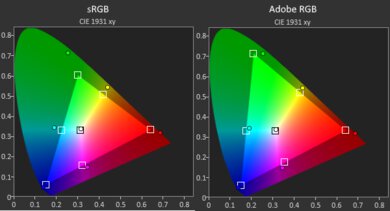
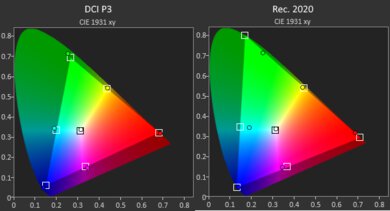
    Color Gamut
    sRGB xy
    145.62%
    sRGB uv
    136.01%
    Adobe RGB xy
    90.83%
    Adobe RGB uv
    96.21%
    DCI P3 xy
    99.89%
    DCI P3 uv
    99.85%
    Rec. 2020 xy
    76.12%
    Rec. 2020 uv
    78.48%

    The display's color gamut is superb. It has full coverage of the sRGB and DCI P3 color spaces, as well as near-full coverage of the Adobe RGB color space. It's suitable for media consumption, professional photo editing, and HDR video production.

    7.2
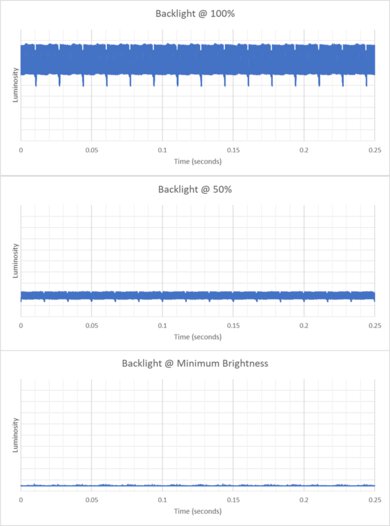
    Flicker
    Flicker-Free
    No
    Flicker Frequency
    480 Hz
    Flicker Active Below
    100%

    The display's flicker is unlikely to be an issue for most people, as the flicker frequency is relatively high. However, it may still cause eye strain if you're sensitive to display flickering.

    Interface
    8.0
    Keyboard
    Typing Quality
    8.0
    Numpad
    No
    Backlighting
    Adjustable
    See details on graph tool
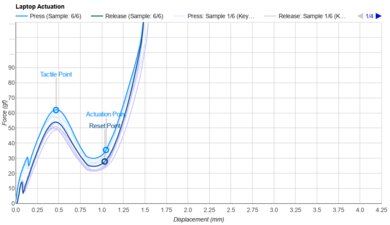
    Operating Force
    76 gf
    Actuation Force
    39 gf
    Pre-Travel
    0.72 mm
    Total Travel
    1.05 mm

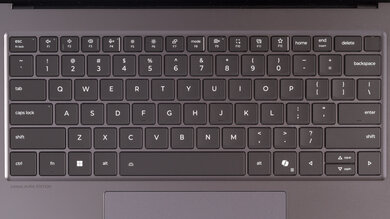
    The HP OmniBook Ultra Flip has a great keyboard. Its layout is fairly standard, so it doesn't take long to get used to it. Most people probably won't have a problem with the size, although those with larger hands may find this keyboard a tad cramped since this is a fairly small laptop. You need to do a long press on the power button to put the laptop to sleep, so you don't have to worry about accidentally pressing it when using Delete or Backspace.

    The overall typing experience is great, though opinions may vary depending on your preference. Essentially, this keyboard has completely flat keycaps and very short key travel, similar to Apple MacBooks. You need to apply a fair amount of force to actuate the keys, which can be both good and bad, as it may help reduce unintentional presses but can cause more fatigue. The tactile feedback feels clear and satisfying, and the typing noise is very low.

    The backlight is white and shines well through the legends. You can toggle between two brightness levels or turn it off completely using the F5 hotkey.

    9.1
    Touchpad
    Tracking Quality
    9.0
    Size
    18.4 in² (118.9 cm²)
    Material
    Glass
    Dedicated Buttons
    No

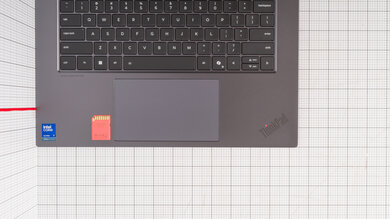
    The HP OmniBook Ultra Flip has an outstanding touchpad. It's large, and it tracks all movements and gestures well. Palm rejection works with no issue. This is a haptic touchpad, meaning it uses a haptic engine to simulate clicks instead of mechanical buttons, allowing you to click anywhere on the touchpad. The haptic feedback feels satisfying, giving you a clear indication when an actuation occurs.

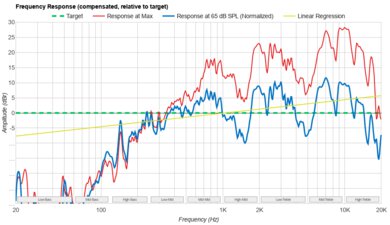
    9.2
    Speakers
    See details on graph tool
    Max Volume
    81 dB SPL
    Standard Error @ Normal Vol. (65 dB)
    4.6 dB
    Slope @ Normal Vol. (65 dB)
    0.1
    Bass Extension (Low-Frequency Ext.)
    233 Hz
    Treble Extension (High-Frequency Ext.)
    19 kHz
    Dynamic Range Compression @ Max Vol.
    0.3 dB

    The HP OmniBook Ultra Flip's speakers sound clear, natural, and well-balanced, with a decent amount of bass. They get very loud with minimal compression artifacts at high volume levels.

    9.6
    Webcam & Microphone
    Video Quality
    9.5
    Resolution
    4k
    Position
    Top Center
    Privacy Cover
    Yes
    Face Unlock
    Yes

    The HP OmniBook Ultra Flip has an outstanding webcam. It captures a sharp and detailed image, with only a tiny amount of noise here and there. The only complaint is that the color temperature is quite warm, affecting the overall color accuracy. Voices sound loud and clear over the microphone, with little to no background noise. The privacy cover is just a physical barrier, meaning it doesn't disable it at the software level. You can turn off the microphone using the F9 shortcut.

    Connectivity
    7.0
    Ports
    USB-A Ports
    0
    USB-C Ports
    3
    Thunderbolt
    Thunderbolt 4
    USB-C Charging
    Yes
    USB-C Display Out
    Yes
    HDMI
    No
    DisplayPort
    No
    3.5mm Jack
    Combo mic/headphone
    Card Reader
    No
    Ethernet
    No
    Proprietary Port
    No
    Security Lock
    No

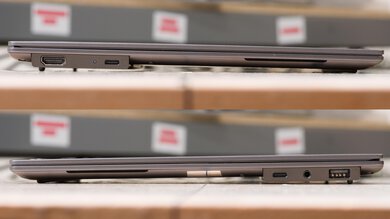
    The HP OmniBook Ultra Flip has a decent port selection. The two USB-C ports on the right side support Thunderbolt 4 (up to 40Gbps data transfer speed and two 4k @ 60Hz displays) and DisplayPort 2.1, while the one on the left supports USB 3.2 Gen 2 data transfer speed (up to 10Gbps) and DisplayPort 1.4a. All three USB-Cs support Power Delivery as well as Sleep and Charge. Power Delivery lets you fast charge the laptop and other mobile devices connected to the port, while Sleep and Charge lets you charge a device even when the laptop is in sleep mode. Check out the Lenovo Yoga 9i 2-in-1 Aura Edition 14 (2025) if you want a similar laptop with a USB-A port.

    Wireless Communication
    Wi-Fi
    Wi-Fi 7 (802.11be)
    Bluetooth
    5.4

    The HP OmniBook Ultra Flip's wireless adapter is an Intel Wi-Fi 7 BE201. Like Wi-Fi 6E, Wi-Fi 7 gives you access to the 6GHz band but with even faster speeds and lower latency. However, you need a router that supports Wi-Fi 7 to benefit from these features. See our best routers recommendations if you want to upgrade your home Wi-Fi.

    Configuration
    CPU
    Brand
    Intel
    Model
    Core Ultra 7 256V
    Core Count
    8
    Thread Count
    8

    The HP OmniBook Ultra Flip is available with the following SoCs:

    • Intel Core Ultra 5 226V (8 cores/8 threads, up to 4.5GHz, 8MB L3 cache, Arc Graphics 130V, 16GB RAM)
    • Intel Core Ultra 7 256V (8 cores/8 threads, up to 4.8GHz, 12MB L3 cache, Arc Graphics 140V, 16GB RAM)
    • Intel Core Ultra 7 258V (8 cores/8 threads, up to 4.8GHz, 12MB L3 cache, Arc Graphics 140V, 32GB RAM)
    • Intel Core Ultra 9 288V (8 cores/8 threads, up to 5.1GHz, 12MB cache, Arc Graphics 140V, 32GB RAM)

    The available processors are low-power chips designed for general productivity tasks like web browsing, text processing, spreadsheets, and video playback. Unlike their Meteor Lake predecessors, these Lunar Lake processors are proper SoCs (System on Chip) with the RAM built in. This change limits the RAM configuration, meaning you can only get 16GB of RAM with the Core Ultra 5 or Core Ultra 7 256V SoC, while the 32MB memory configuration is only possible if you upgrade to the Core Ultra 7 258V or Core Ultra 9. Another change is the lack of Hyper-Threading, resulting in slightly slower multi-thread performance compared to Meteor Lake CPUs. All four SoCs have the same core count and composition: four performance and four efficiency cores. There isn't much performance difference between these processors—the top-end Core Ultra is around 10% to 15% faster than the lowest-end Core Ultra 5 in most workloads. Finally, all four SoCs have an NPU (Neural Processing Unit) to handle AI tasks, like Windows Copilot, image generation in photo editing apps, and background-blurring on video calls. The Core Ultra 5 226V's NPU has a rated performance of 40 TOPS (Trillions of Operations per Second). The Core Ultra 7s have a rated performance of 47 TOPS, and the Core Ultra 9 288V has a rated performance of 48 TOPS.

    You can see more information about the Lunar Lake SoCs in Intel's press brief.

    GPU
    Brand
    Intel
    Model
    Arc Graphics
    Dedicated/Integrated
    Integrated
    VRAM Size
    N/A
    GPU Total Graphics Power (TGP)
    N/A

    The HP OmniBook Ultra Flip is only available with integrated graphics; the Core Ultra 5 226V uses Intel Arc Graphics 130V, while the Core Ultra 7s and Core Ultra 9 use the marginally faster Arc Graphics 140V. These integrated graphics are low-power GPUs designed primarily for light productivity tasks; that said, they're a nice step up from the GPUs on previous Intel chips, performing close to the discrete, albeit quite old, NVIDIA GeForce GTX 1650 (mobile) in synthetic gaming benchmarks. This means you can get pretty decent frame rates at 1080p in demanding games, provided you turn down some settings. There's technically some graphical performance difference between the four available SoCs; however, it isn't huge, as we're talking only a difference of a single core (the Core Ultra 5 has seven Xe cores, while the others have eight) and minor differences in clock speeds.

    RAM
    Capacity
    16 GB
    Modules
    8 (Soldered)
    Type
    LP-DDR5x
    Speed
    8,533 MHz

    You can get this laptop with 16GB or 32 GB of RAM. However, as mentioned in the CPU section, you can only get 16GB if you get a Core Ultra 5 or Core Ultra 7 256V model, while 32GB is only available on models with a Core Ultra 7 258V or Core Ultra 9 SoC. The RAM isn't user-replaceable.

    Storage
    Advertised Capacity
    1,000 GB
    Usable Capacity
    952 GB
    Drive 1
    Micro MTFDKBA1T0QFM-1BD1AABHA
    Drive 1 TypeSSD
    Drive 2
    No 2nd Drive
    Drive 2 TypeNo 2nd Drive

    You can configure the HP OmniBook Ultra Flip 14 with 512GB, 1TB, or 2TB of storage. The 1TB option is also available with a 'Performance' drive when purchasing directly from HP, though the exact model of the SSD is unknown. The 2TB drive is always a 'Performance' SSD. The storage is user-replaceable; the slot supports M.2 2280 PCIe Gen 4 NVMe SSDs.

    Performance
    9.3
    Geekbench 5 (Synthetics)
    CPU Single-Thread
    1,991 points
    CPU Multi-Thread
    9,420 points
    GPU Compute
    30,404 points

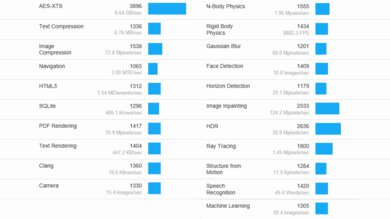
    The HP OmniBook Ultra Flip with an Intel Core Ultra 7 256V SoC scores well in the Geekbench 5 benchmarks. While its multi-thread performance is a step backward compared to the last-gen Intel Meteor Lake CPUs, this performance level is still more than adequate for the type of workload this laptop is designed for, namely general productivity tasks like web browsing, text processing, spreadsheets, presentations, and video playback. There are significantly faster CPUs and SoCs on the market if you need more processing power to run heavily multi-threaded applications, like Intel or AMD's HX CPUs and Apple's M4 Pro and Max SoCs. As for the GPU, while the new Arc Graphics are a step up from previous generation integrated GPUs, they're still pretty weak compared to discrete GPUs, at least when it comes to non-gaming, computing tasks.

    9.7
    Cinebench R23 (CPU Rendering)
    Single-Thread
    1,855 points
    Multi-Thread
    9,040 points

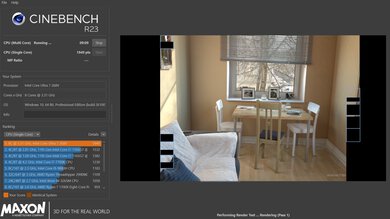
    The HP OmniBook Ultra Flip 14 with an Intel Core Ultra 7 256V SoC performs relatively well in the Cinebench R23 benchmarks, at least for an ultraportable. Its multi-thread performance is good enough for light to moderately intensive workloads. There are much faster CPUs on the market if you need to perform highly demanding multi-threaded tasks, like the Razer Blade 18 (2024)'s Intel Core i9-14900HX and the Apple MacBook Pro 16 (2024)'s M4 Max SoC.

    7.6
    Blender (3D Rendering)
    CPU Render Time
    4.8 min
    GPU Render Time
    N/A
    GPU Render Time (Optix)
    N/A

    While you can render 3D images in Blender using the CPU, getting a laptop with a discrete GPU is best, as even an entry-level GPU, like the NVIDIA GeForce RTX 3050, can render images much faster.

    7.1
    Basemark GPU (Game Scene)
    Overall Score
    40,726

    The Intel Core Ultra 7 256V's integrated Arc Graphics 140V scores decently well in the Basemark GPU benchmarks. This performance level is roughly in the same ballpark as the NVIDIA GeForce GTX 1650 (mobile), an entry-level discrete GPU first launched in 2019. It can handle some demanding games at 1080p, though you'll have to lower some graphical settings to get playable frame rates.

    9.2
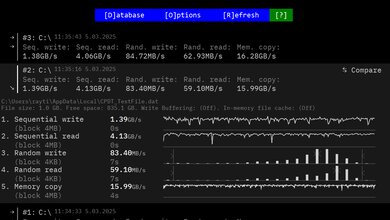
    Storage Drive Performance
    Sequential Write Speed
    1,406.6 MB/s
    Sequential Read Speed
    3,099.5 MB/s
    Random Write Speed
    85.0 MB/s
    Random Read Speed
    44.2 MB/s

    Drive speeds vary depending on the size and type of SSD you get.

    8.4
    Battery
    Capacity
    64 Wh
    Battery Life (Web Browsing)
    10.3 hrs
    Battery Life (Video Playback)
    10.8 hrs
    Battery Life (Gaming)
    2.2 hrs
    Charge Time
    2.3 hrs

    We performed the web browsing and video playback tests using the default Balanced mode and the gaming test using the Performance mode, which is more representative of real-world usage. If you want a similar laptop with a longer battery life, check out the Apple MacBook Air 13 (M4, 2025).

    5.1
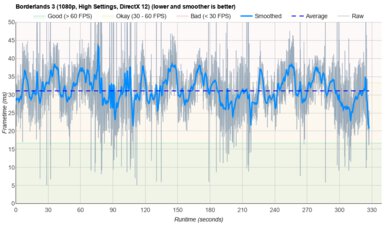
    Borderlands 3
    See details on graph tool
    Avg. FPS
    33 fps
    1% Low
    22 fps
    0.1% Low
    12 fps
    1% Low Delta
    15 ms
    0.1% Low Delta
    56 ms
    Avg. FPS On Very Low
    73 fps

    Borderlands 3 runs poorly at 1080p on the HP OmniBook Ultra Flip with a Core Ultra 7 256V SoC. Although you can get over 60 fps with low settings, the gameplay is choppy due to frame drops. Lowering the resolution to 720p will likely reduce the stuttering but won't completely fix it.

    7.0
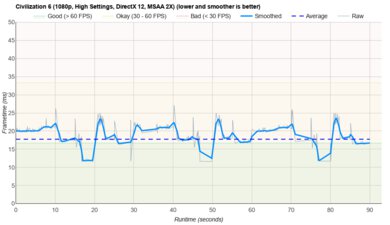
    Civilization VI
    See details on graph tool
    Avg. FPS
    50 fps
    1% Low
    36 fps
    0.1% Low
    34 fps
    1% Low Delta
    8 ms
    0.1% Low Delta
    9 ms
    Avg. FPS On Minimum
    188 fps
    Avg. Turn Time
    7.59 s

    The HP OmniBook Ultra Flip can run Civilization VI and other similar strategy games smoothly with few tweaks in the settings. The turn time is a bit long, though, averaging in the same ballpark as older Intel 12th Gen U-series CPUs.

    6.6
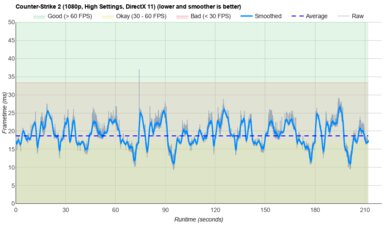
    Counter-Strike 2
    See details on graph tool
    Avg. FPS
    73fps
    1% Low
    39fps
    0.1% Low
    19fps
    1% Low Delta
    12 ms
    0.1% Low Delta
    40 ms
    Avg. FPS On Low
    154fps

    Counter-Strike 2 runs reasonably well on the HP OmniBook Ultra Flip with a Core Ultra 7 256V SoC. You can easily get well over 60 fps with a couple of tweaks in the settings, but you might still experience occasional stutters, which isn't ideal for a competitive FPS game such as this.

    6.1
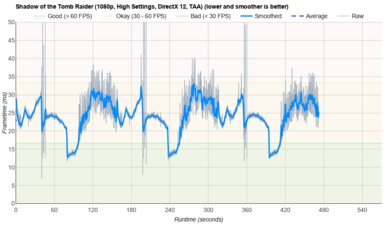
    Shadow Of The Tomb Raider
    See details on graph tool
    Avg. FPS
    55 fps
    1% Low
    32 fps
    0.1% Low
    23 fps
    1% Low Delta
    13 ms
    0.1% Low Delta
    26 ms
    Avg. FPS On Lowest
    77 fps

    Shadow of the Tomb Raider is playable at 1080p with low to medium settings. However, performance can vary due to thermal throttling. The large frametime spikes are scene changes and aren't representative of the performance.

    7.8
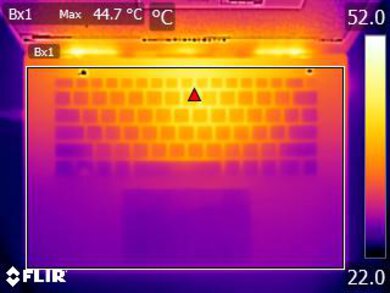
    Thermals And Noise
    Keyboard Temp While Idle
    28 °C (82 °F)
    Keyboard Temp Under Load
    44 °C (111 °F)
    Fan Noise While Idle
    25.0 dBA
    Fan Noise Under Load
    42.8 dBA
    Power & Fan Control App
    Yes

    The keyboard only gets mildly warm under load, and the fans are relatively quiet. Using the device on your lap won't be a problem either, as the bottom of the laptop is even cooler at 38 °C (100.4 °F). The posted results are measurements taken in the Performance mode. The myHP app has a few performance modes. Here are the results in the other modes:

    Cool:

    • Keyboard Temp Under Load: 33.4  °C (92.12 °F)
    • Fan Noise Under Load: 32.7 dBA

    Quiet:

    • Keyboard Temp Under Load: 38.9 °C (102.02 °F)
    • Fan Noise Under Load: 31.9 dBA

    Balanced:

    • Keyboard Temp Under Load: 40.8  °C (105.44 °F)
    • Fan Noise Under Load: 40.1 dBA

    Power Saver:

    • Keyboard Temp Under Load: 33.9  °C (93.02 °F)
    • Fan Noise Under Load: 32.2 dBA
    9.3
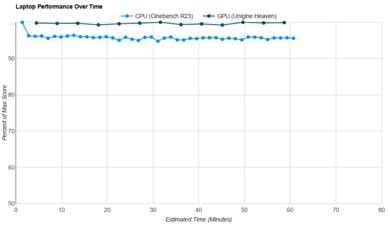
    Performance Over Time
    See details on graph tool
    CPU Temp (Cinebench)
    73 °C
    CPU Perf. Loss (Cinebench)
    4% loss
    GPU Temp (Heaven)
    68 °C
    GPU Perf. Loss (Heaven)
    0% loss
    Additional Features And Software
    Software
    Operating System
    Windows 11
    Additional Software
    Yes

    The HP OmniBook Ultra Flip has many pre-installed applications; see this video for the full list. You can choose between Windows 11 Home or Pro when purchasing the laptop directly from HP.

    We've experienced some display flickering issues during testing that required a few restarts to fix. There were also instances when the laptop didn't wake from sleep after closing the lid. These are likely issues that HP or Microsoft can fix via a firmware update; we'll update the review if anything changes.

    Extra Features
    Biometrics
    Face Recognition and Fingerprint Sensor
    RGB Illumination
    No
    Touch Pen Support
    MPP 2.0
    Secondary Display
    No

    The HP OmniBook Ultra Flip has a Windows Hello IR camera and a fingerprint sensor. You can use either to log in quickly, authorize purchases in the Windows Store, and auto-fill saved passwords on supported websites.

    The display supports pen input using Microsoft Pen Protocol technology (formerly N-Trig). Depending on the region and retailer, a stylus may come with the laptop. The stylus is an HP rechargeable (via USB-C) MPP 2.0 pen with 4096 levels of pressure sensitivity and tilt support. It attaches magnetically to the right side of the laptop for transport.