- 80.0%Battery Life
- 20.0%Charge Time
Our projector battery tests evaluate how a projector handles portable power: how long it lasts away from an outlet, how long it takes to recharge, and which power sources it supports. This is especially important for portable projectors, since their convenience depends on more than just being easy to move around. A projector that lasts long enough for a movie is useful, but it's even better if it recharges quickly or can be powered through a flexible option like USB-C.
For our tests, we use the projector's most accurate picture mode after calibration, so the results reflect how the projector performs when set up for accurate, regular viewing. We then measure battery life while playing a video with the brightness set to maximum and the built-in speakers playing at a consistent volume. We also measure charging time after the battery is depleted and record whether the projector uses AC power, USB power, a built-in battery, or a combination of those options.
Test results
Test Methodology Coverage
Our Battery tests were first added in Test Bench 0.12. Prior to that, we had no equivalent test.
| 0.9 | 0.10 | 0.11 | 0.12 | |
|---|---|---|---|---|
| Battery Life | ❌ | ❌ | ❌ | ✅ |
| Charge Time | ❌ | ❌ | ❌ | ✅ |
| Power Source | ❌ | ❌ | ❌ | ✅ |
When It Matters
Battery life is most important if you want to use a projector away from a power source. A projector with a built-in battery is easier to use outdoors, in different rooms, while traveling, or anywhere you don't want to run a power cable across the floor. It's especially useful for casual movie nights, camping, backyard viewing, or quick setups where convenience matters more than maximum picture quality.
A longer battery life also gives you more flexibility. Some projectors can only run for a short episode or presentation, while others can last through a full-length movie without needing to be plugged in. Charge time matters too, since a projector that takes several hours to recharge can be inconvenient if you use it often or want to watch more than one thing in a day.
Power source support is also worth considering, as some models can be charged or powered over USB, making them more flexible if you want to use a compatible USB-C charger or power bank.
Our Tests
Our battery testing has three parts. First, we measure how long the projector can run from its built-in battery while using its most accurate picture mode after calibration. Then, we measure how long it takes to recharge after the battery is depleted. Finally, we record what type of power source the projector supports, since some models require AC power while others can run or charge over USB.
Battery Life
Our Battery Life test measures how long the projector can operate during a repeatable viewing session using its built-in battery. This is the most important result if you plan to use a portable projector away from an outlet, whether that's outdoors, while traveling, or in a room where plugging it in isn't convenient.
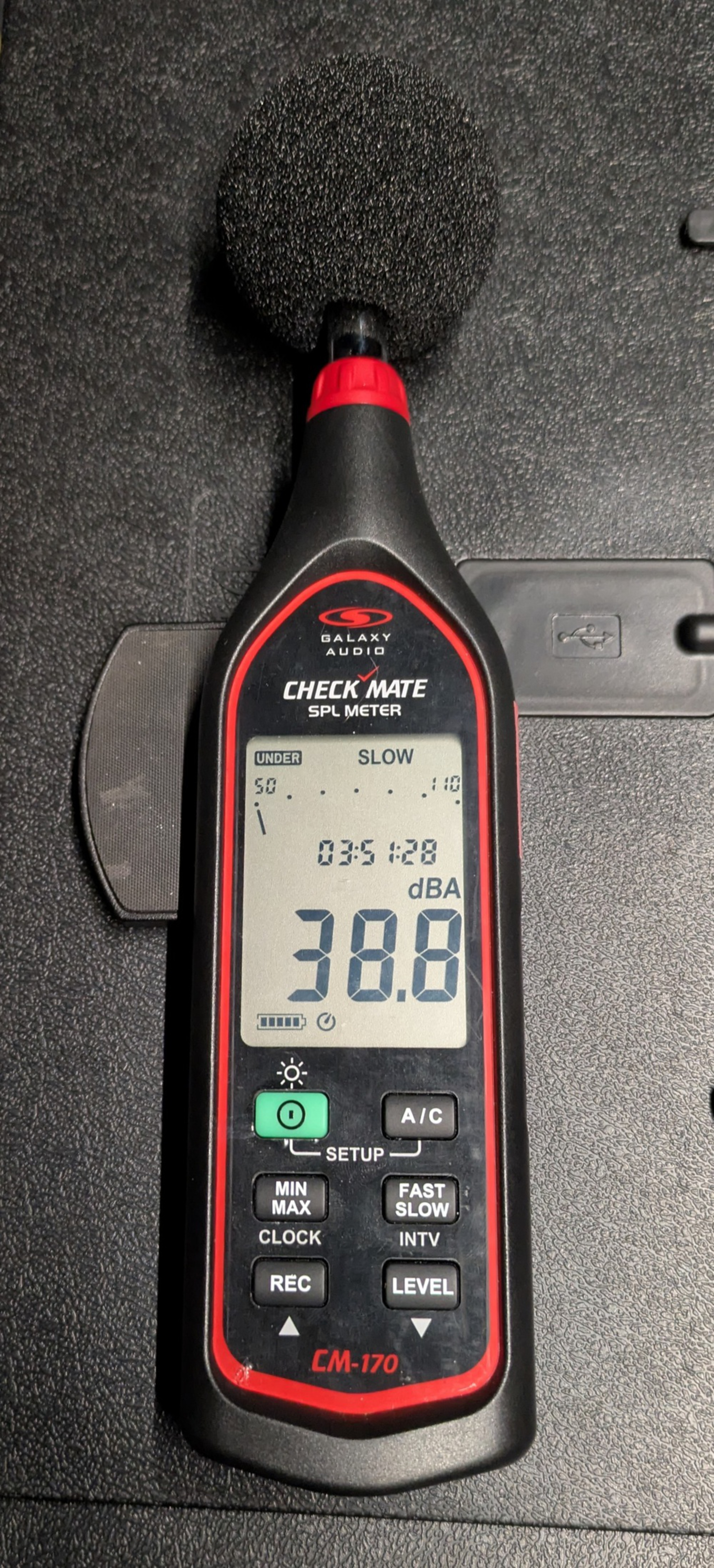
To run the test, we fully charge the projector, disable power-saving features that could affect the result, and set the brightness to maximum. This gives users a conservative battery-life estimate closer to the lower end of what they can expect, since lowering brightness or using power-saving modes can extend runtime. We then play our battery test video through the projector's native Plex app. The video includes an on-screen timer, and we use a CM-170 Sound Pressure Level Meter to set the projector's speaker volume as close as possible to 80 dBA from one meter away, so the projector is running with a consistent audio load instead of playing silently.
We record the projected image with a webcam for the duration of the test. Once the projector shuts down, we review the recording and use the last visible timer reading as the projector’s battery life result, in minutes.
Charge Time
Charge time tells you how long you need to wait before the projector is ready for another battery-powered session. It's a useful companion to the Battery Life result, because a projector with decent battery life can still be frustrating if it takes a very long time to recharge, especially if you want to charge it quickly between two movies.
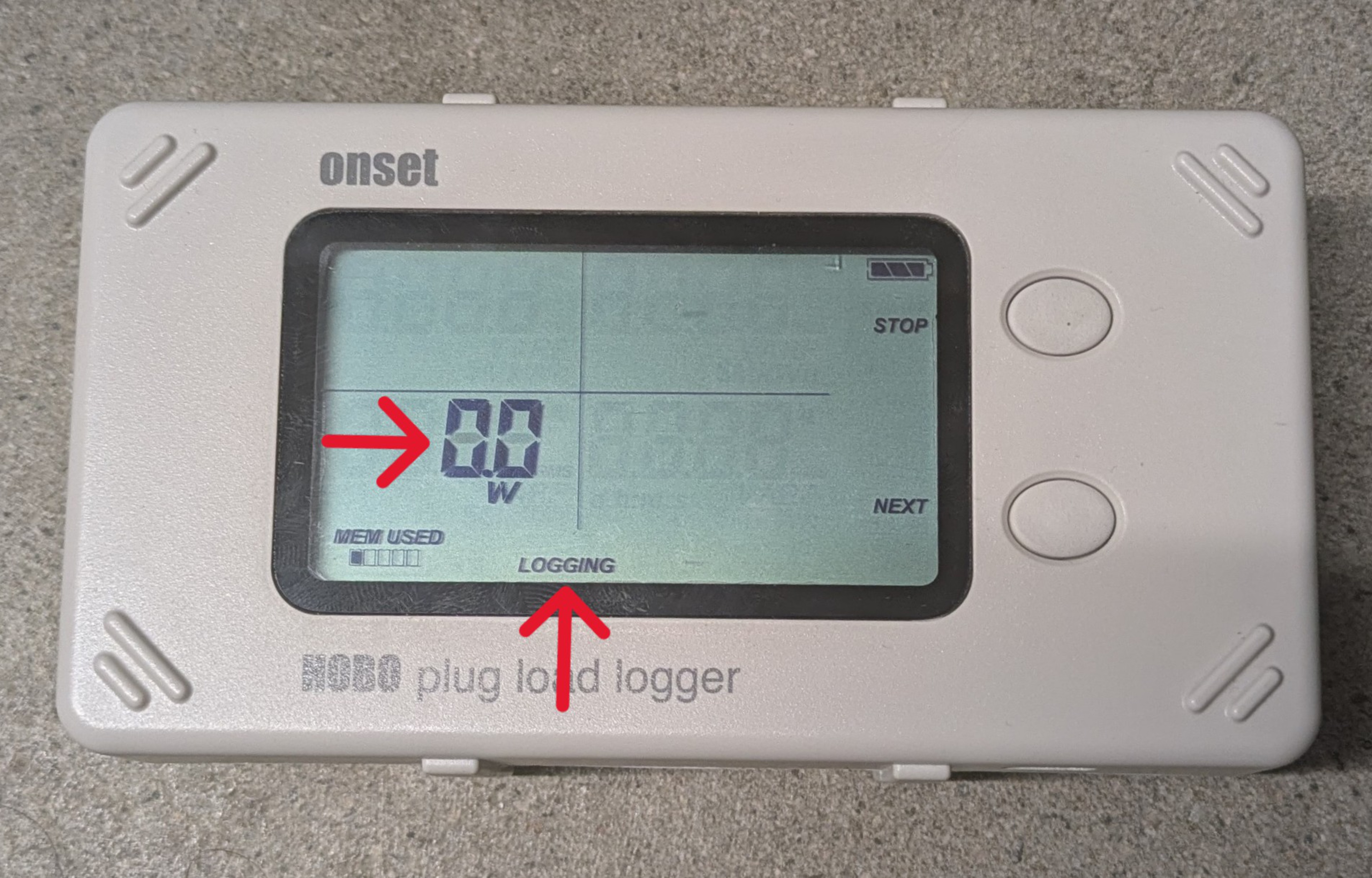
After the Battery Life test, we let the projector cool down before charging it. This helps avoid unusual charging behavior caused by heat, especially with projectors that use USB-C Power Delivery. We then connect the projector through a HOBO Plug Load Data Logger and track its power draw while it charges.
 |
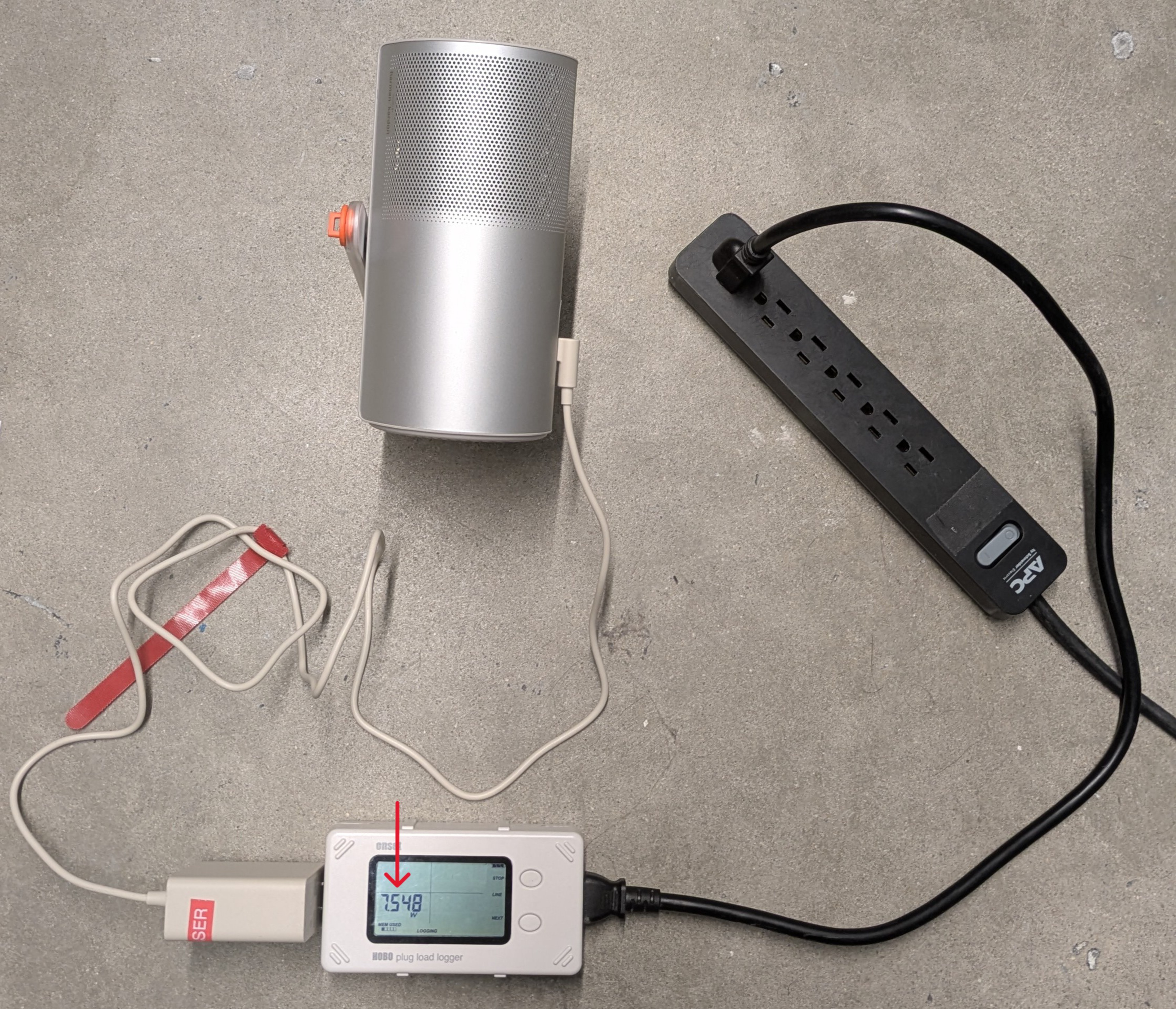 |
We consider the projector fully charged when its charging indicator shows that charging is complete and the measured power draw drops below 1W and remains stable. If the projector's charge indicator says it’s full, but the measured power draw remains higher than expected, we verify the endpoint by disconnecting and reconnecting the charger to see whether the draw drops below 1W.
We then use the logged power data to identify the charging interval and calculate the final charge time in minutes.
Power Source
In addition to battery life and charge time, we also record how the projector can be powered. This result isn't scored, but it gives useful context about how flexible the projector is in day-to-day use.
Some projectors don't have a built-in battery and need to be connected to power at all times. Others have a built-in battery, so they can be used away from an outlet and recharged later. Battery-powered projectors can also be used while connected to power, so if the battery runs out, you can keep using the projector as long as you have access to a compatible power source.
We classify each projector into one of five categories:
- AC Only: The projector needs AC power and doesn't have a built-in battery.
- USB Only: The projector is powered through USB and doesn't have a built-in battery.
- AC + USB: The projector doesn't have a built-in battery but can be powered through either AC or USB.
- Battery + AC: The projector has a built-in battery and charges through an AC adapter.
- Battery + USB: The projector has a built-in battery and charges through USB.
Conclusion
Battery life is an important factor in making a portable projector convenient. A good battery-powered projector should last long enough for the way you plan to use it, whether that's a short viewing session, a full movie, or a longer event. Charge time also matters, since a projector that takes too long to recharge can be inconvenient even if its battery life is decent, especially if you want to watch multiple movies.