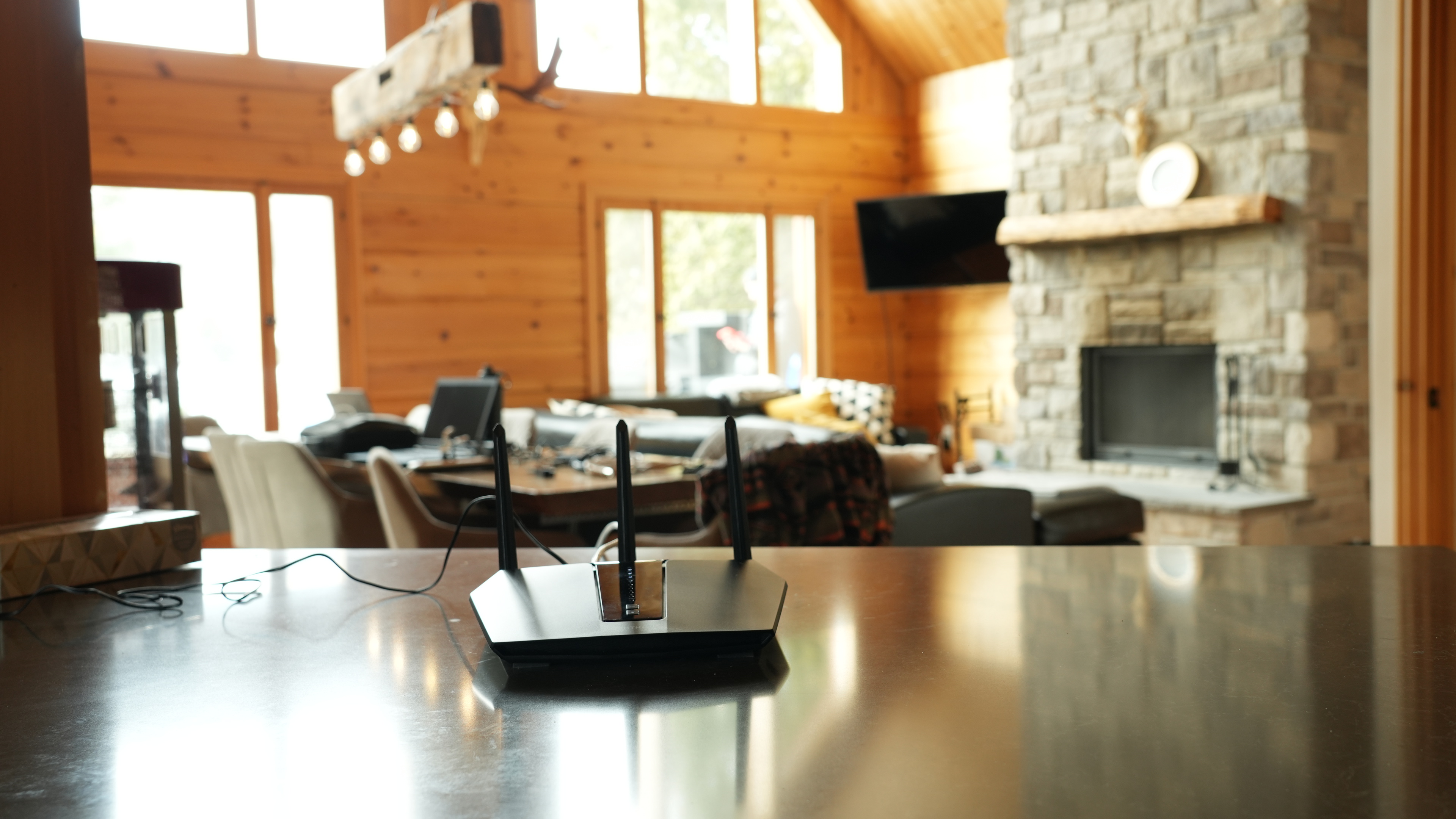
The NETGEAR Nighthawk RAX30 is a simple dual-band Wi-Fi 6 router with 2.4GHz and 5GHz bands. It's on the lower end of NETGEAR's Nighthawk lineup and has a fairly basic feature set. It has four 1 Gbps wired LAN ports and a USB 3.0 port for local file sharing. You can set it up and change its settings with the Nighthawk mobile app.
Our Verdict
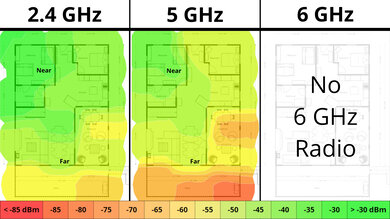
The NETGEAR Nighthawk AX2400 is a decent router if you live in an apartment, condo, or single-story home. It provides fast speeds suitable for high-bandwidth activities like 4k video streaming throughout a single floor. However, it doesn't have Dynamic Frequency Selection (DFS) support, so you can't use the often less congested DFS-only channels. It has four 1 Gbps LAN ports and a USB 3.0 port for local file sharing.
- Fast speeds throughout average-sized homes.
- Wi-Fi 6 doesn't take full advantage of new Wi-Fi 6E or 7 devices.
- Lacks DFS support, so it can't avoid more congested channels.
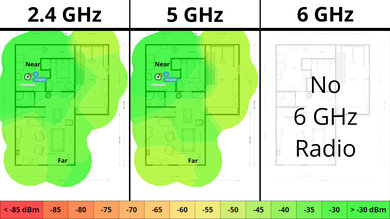
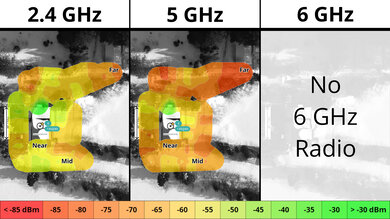
The NETGEAR RAX30 is a decent router if you live in a multi-level home with a backyard. It provides speeds that are suitable for high-bandwidth uses like 4k video streaming throughout the whole home. Its speeds are just okay if you're far from the router or have a very large home. It has four 1 Gbps LAN ports and a USB 3.0 port for local file sharing.
- Fast speeds throughout average-sized homes.
- Standalone router that may have deadzones if you have a very large home.
- Wi-Fi 6 doesn't take full advantage of new Wi-Fi 6E or 7 devices.
- Lacks DFS support, so it can't avoid more congested channels.
The NETGEAR Nighthawk AX2400 delivers good speeds suitable for an internet connection up to ~700 Mbps. Unfortunately, it lacks Dynamic Frequency Selection (DFS) support, so it can't use the often less congested DFS-only channels, which would help if you live in a congested wireless environment.
- Fast speeds throughout average-sized homes.
- Lacks DFS support, so it can't avoid more congested channels.
The NETGEAR RAX30 has decent range. It's a standalone router without mesh capabilities, so its speed drops linearly over distance. It's still fast enough for 4k video streaming at longer distances. If range is a priority for you, consider getting a mesh setup.
- Standalone router that may have deadzones if you have a very large home.
Changelog
- Updated Jun 22, 2026: We've updated this review to Test Bench 0.9.1! This is a minor change that makes the router type easier to see at the top of each review. Read the changelog for more info.
- Updated May 08, 2026: We've updated this review to Test Bench 0.9! This update adds wireless latency testing to evaluate router gaming performance. Read the changelog for more info.
-
Updated Jan 20, 2026:
We've added a link to the GL.iNet Flint 2 (GL-MT6000) in the Interior Long Range Section of the review.
- Updated Dec 16, 2025: We've added an MLO Implementation test for Test Bench 0.8.2! Read the changelog for more details.
Check Price
Differences Between Sizes And Variants
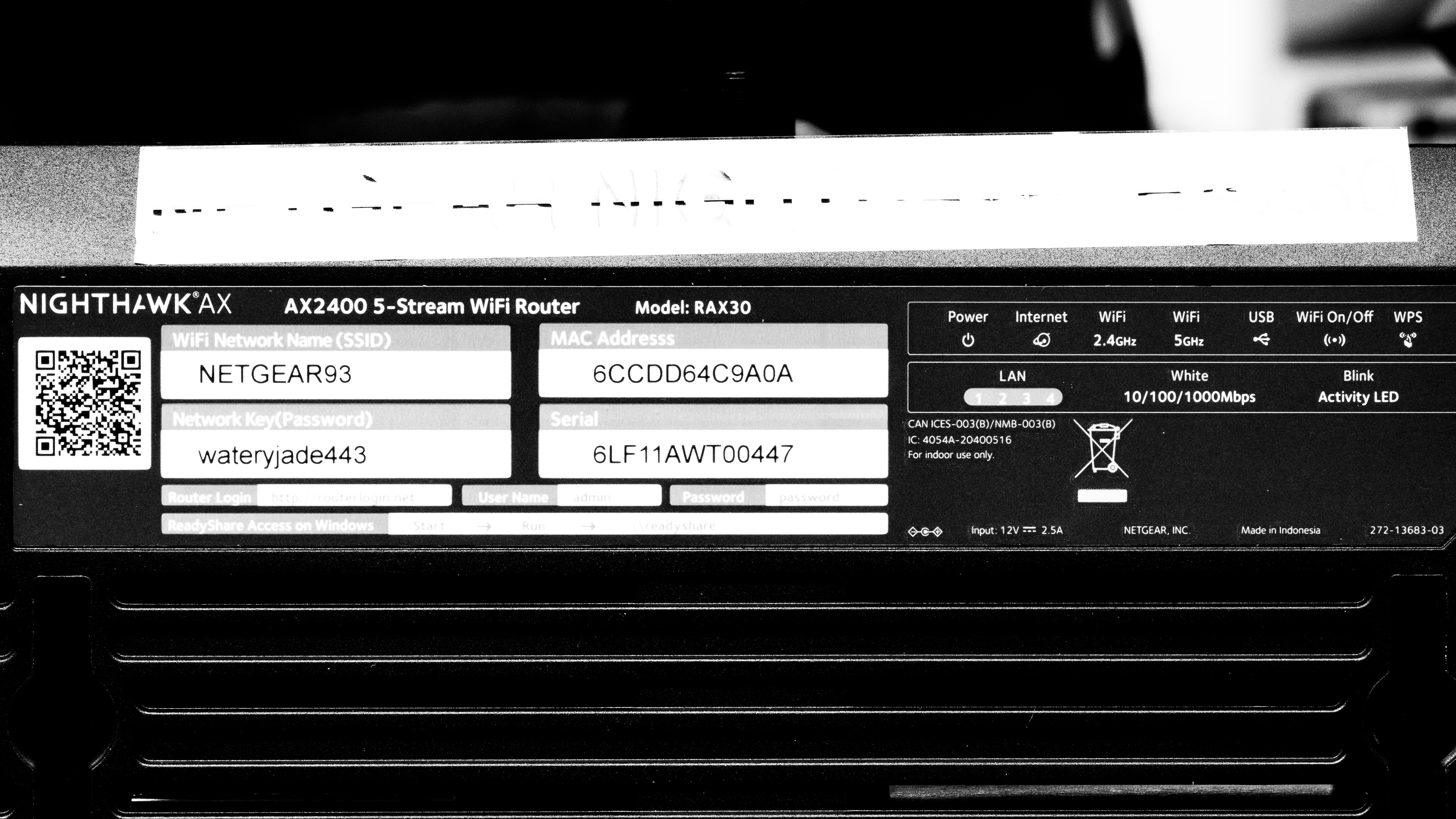
The NETGEAR Nighthawk AX2400 that we bought and tested has no variants. Here's a photo of our unit's label.
Popular Router Comparisons
The NETGEAR Nighthawk AX2400 is a dual-band Wi-Fi 6 router with 2.4GHz and 5GHz bands. It's a mid-range router with a fairly basic feature set without support for mesh networking, DFS, or other more advanced features. However, it does have a USB 3.0 port on its side for local file sharing.
Performance-wise, it's similar in speed to other routers in its price range. Its signal strength and speed aren't as good as those of the ASUS RT-AX3000, but it's faster overall than the TP-Link Archer AX21.
For more recommendations, check out the best Wi-Fi 6 routers, the best Wi-Fi routers, or the best routers for streaming.
The TP-Link Archer BE230 is better than the NETGEAR Nighthawk RAX30. The TP-Link provides faster speeds overall, and unlike the NETGEAR, you can improve its performance in the far corners of your home by adding another EasyMesh-compatible router or extender. It also supports Dynamic Frequency Selection (DFS), which can be helpful in noisy wireless environments like large apartment buildings. Both routers have five network ports; however, the TP-Link has two ports that support up to 2.5Gbps speeds, while the NETGEAR only has 1Gbps ports.
The NETGEAR Nighthawk RAX30 and the Netduma R3 are dual-band Wi-Fi 6 routers. The NETGEAR is a better performer with faster speeds and longer range, but the Netduma has access to DFS channels, which can be beneficial in noisy wireless environments.
Test Results
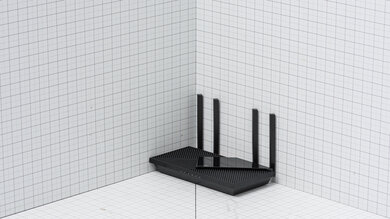
for pictures & test results
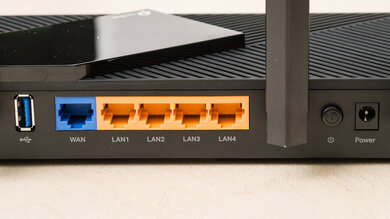
Check out the GL.iNet Beryl AX (GL-MT3000) if you want a higher bandwidth 2.5Gbps WAN port.
for pictures & test results
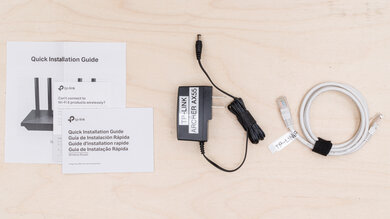
- Ethernet cable
- Power adapter
- User documentation
for pictures & test results
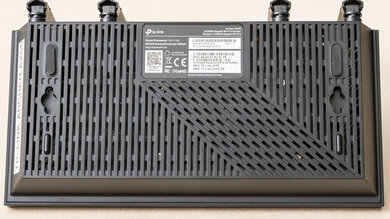
This router has a pair of screw head slots on the bottom, so you can easily mount it to your wall or ceiling.
for pictures & test results
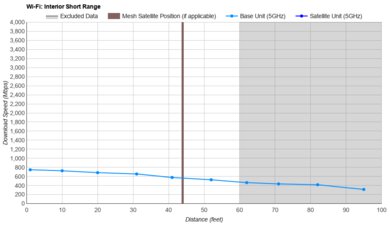
This is a standalone router without mesh capabilities, so the mesh satellite position line on this graph isn't applicable.
for pictures & test results
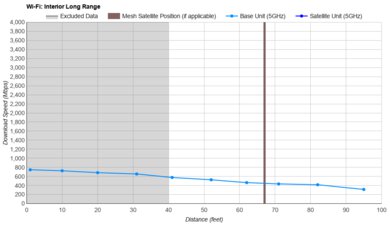
This is a standalone router without mesh capabilities, so the mesh satellite position line on this graph isn't applicable.
Check out the GL.iNet Flint 2 (GL-MT6000) if you're looking for a router with better range.
for pictures & test results
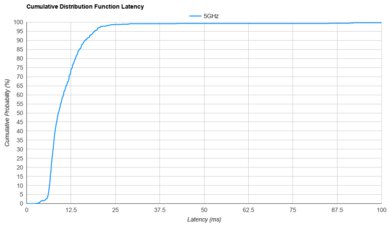
Check out the TP-Link Archer BE230 if you want a router that supports Dynamic Frequency Selection, which can help improve performance in noisy wireless environments like large apartment buildings.