
The Netduma R3 is a dual-band Wi-Fi 6 gaming router with a 2.4GHz band and a 5GHz band. It runs Duma OS, a firmware that comes with several features advertised to improve your online gaming experience. Some of these features include 'Geo-Filter 2.0,' which shows the closest game servers with low ping, 'SmartBOOST', which is a QoS feature, 'Ping Optimiser,' and, of course, RGB lighting. We did an investigation to see if features like these on gaming routers can actually impact gaming performance. Learn more in the Compared to Other Routers section.
Note: We've removed the Wi-Fi coverage tests, as we're exploring better ways to convey the results that'll be more helpful to users.
Our Verdict
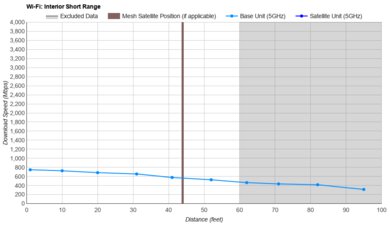
The Netduma R3 is an okay router for apartments and small homes. It provides speeds fast enough for high-bandwidth uses like multiple devices streaming 4k video. Unfortunately, its range performance is disappointing, so you'll likely experience slowdowns depending on the size and layout of your home.
Good top speeds.
Poor range.
Wi-Fi 6 router that can't take advantage of newer Wi-Fi 6E or 7 devices.
The Netduma R3 is a mediocre router for multi-level homes. It delivers speeds suitable for most high-bandwidth activities, like 4k video streaming, when you're close to it. However, it has poor range. It slows down significantly the further away from it you get, and it will likely leave some deadzones in your home depending on its size and layout. It also doesn't have any mesh capabilities, so you can't improve coverage with additional satellite units.
Good top speeds.
Poor range.
No mesh capabilities.
Wi-Fi 6 router that can't take advantage of newer Wi-Fi 6E or 7 devices.
The Netduma R3 is adequate for gaming over Wi-Fi. It delivers good close-range speeds and reasonable wireless latency that's in line with most wireless routers. It has poor range, however, so it's slow if you're far away from it. Plugging your devices into one of the LAN ports delivers much better latency and jitter, but that's the case for all Wi-Fi routers.
Good top speeds.
Adequate wireless latency for web browsing and non-competitive gaming.
Poor range.
Wi-Fi 6 router that can't take advantage of newer Wi-Fi 6E or 7 devices.
Unsuitable for competitive gaming over Wi-Fi.
The Netduma R3 isn't designed to be a travel router. It's too large to bring with you practically, and it doesn't support useful travel features like LTE connectivity or WISP/repeater mode.
Too large to travel with easily.
No WISP or LTE support.
The Netduma R3 delivers speeds suitable for an internet connection up to ~600Mbps. It also supports Dynamic Frequency Selection (DFS), so it can use less congested DFS-only channels to give you better speeds in noisy wireless environments.
Good top speeds.
The Netduma R3 has poor range. It slows down the further away from it you get, and it doesn't have the ability to add mesh access points.
Poor range.
No mesh capabilities.
The Netduma R3 has adequate wireless latency and jitter performance that's similar to most Wi-Fi routers. It's acceptable for web browsing, video calls, and even light gaming, but you're always better off plugging your computer or console in via Ethernet if you're competitively gaming.
Adequate wireless latency for web browsing and non-competitive gaming.
Unsuitable for competitive gaming over Wi-Fi.
The Netduma R3 is decently configurable. It has most of the basic configuration options you'd expect on a router, but lacks more advanced features such as WISP/repeater mode, mesh connectivity, and LTE support.
Most basic configuration settings are available.
Lacking some advanced configuration options.
Performance Usages
Changelog
- Updated Sep 11, 2026: We've updated this review to Test Bench 0.10! This update adds Portability and Configurability testing to evaluate how suitable routers are for travel and to show how configurable their settings are. Read the changelog for more info.
- Updated Jun 22, 2026: We've updated this review to Test Bench 0.9.1! This is a minor change that makes the router type easier to see at the top of each review. Read the changelog for more info.
-
Updated Apr 17, 2026:
We've added links to the newly reviewed ARRIS SURFboard G34 and ARRIS SURFboard G36 cable modem/router combo units in the Network Ports section of the review.
-
Updated Apr 08, 2026:
We've updated the text throughout the review to reflect the changes from Test Bench 0.9.
Check Price
Differences Between Sizes And Variants
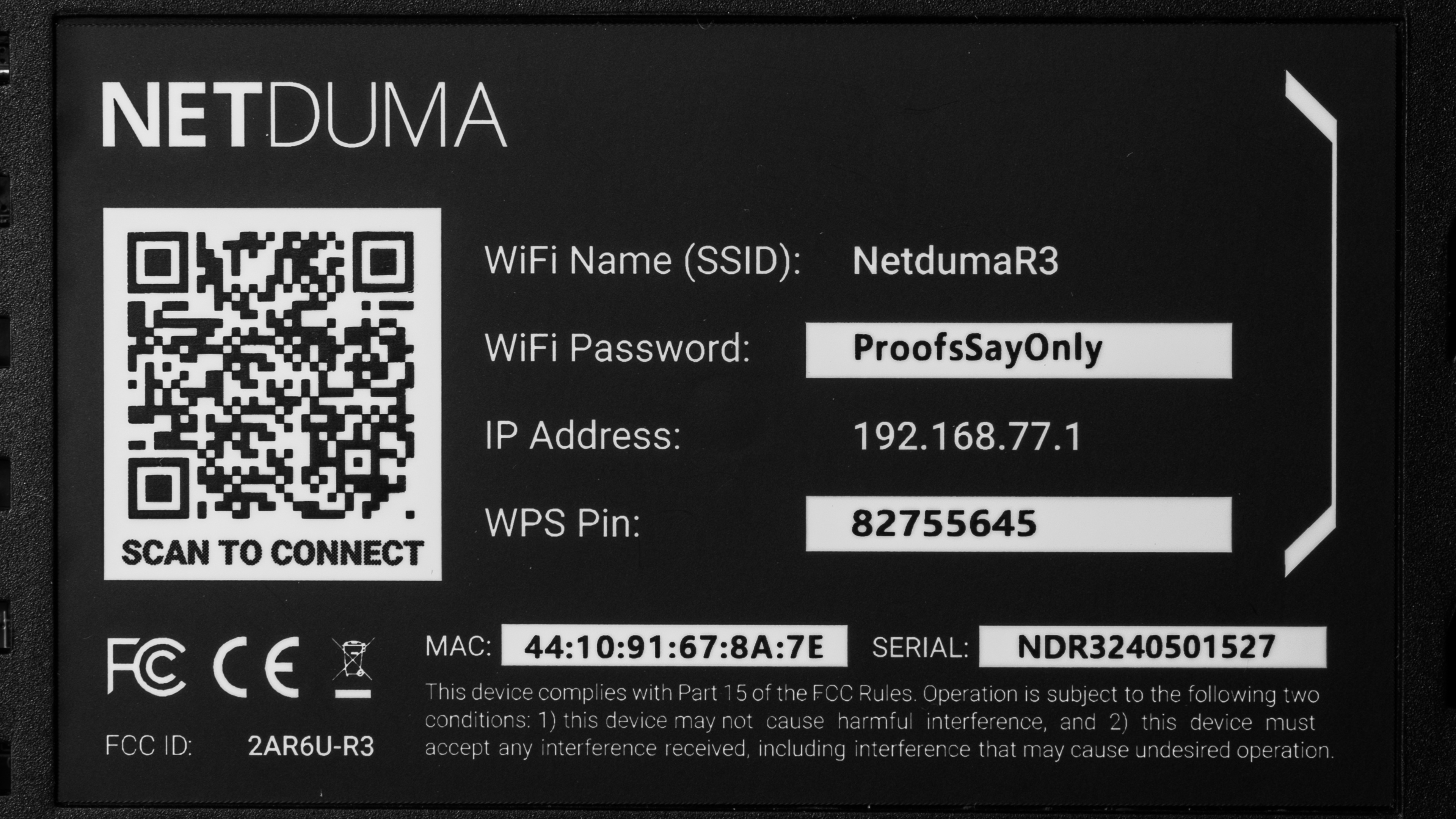
The Netduma R3 doesn't have any variants. See our unit's label.
Popular Router Comparisons
The Netduma R3 is a dual-band Wi-Fi 6 gaming router. Its firmware, DumaOS, offers various features advertised to improve your network's gaming performance. Ultimately, the quality of your online gaming experience is determined by the time it takes for your device to send and receive packets from the game server you connect to—ping or latency. To see if features like this or gaming routers in general can help, we conducted an experiment testing 11 routers, including this one. In brief, there's no significant difference between models. QoS/SQM (called SmartBOOST on this router) can help if your network is absolutely saturated, but they're common features on non-gaming models. Read the full article here.
Firmware aside, this router has pretty disappointing performance. It's handily outperformed by routers in the same price range, like the Wi-Fi 7 TP-Link BE550, and considerably cheaper Wi-Fi 6 routers like the TP-Link Archer AX55.
For better options, check out our recommendations for the best Wi-Fi routers, the best Wi-Fi 6 routers, the best routers for streaming, and the best gaming routers.
The ASUS RT-AX86U Pro is a better router than the Netduma R3. They're both dual-band Wi-Fi 6 routers, but the ASUS has better top speeds, range, and wired connectivity than the Netduma.
The NETGEAR Nighthawk RAX30 and the Netduma R3 are dual-band Wi-Fi 6 routers. The NETGEAR is a better performer with faster speeds and longer range, but the Netduma has access to DFS channels, which can be beneficial in noisy wireless environments.
The TP-Link Archer AX20 and the Netduma R3 are dual-band Wi-Fi 6 routers. The TP-Link offers better performance overall, with better range and faster speeds. However, the Netduma can access DFS-only channels, which can help your connection in noisy wireless conditions.
The ASUS ROG Rapture GT-BE98 Pro is a better router than the Netduma R3. The former is a quad-band Wi-Fi 7 router with one 2.4GHz, one 5GHz, and two 6GHz bands, while the latter is a dual-band Wi-Fi 6 router. The ASUS is considerably faster, has better range, and has better wired connectivity than the Netduma. That said, it's considerably bigger.
Test Results
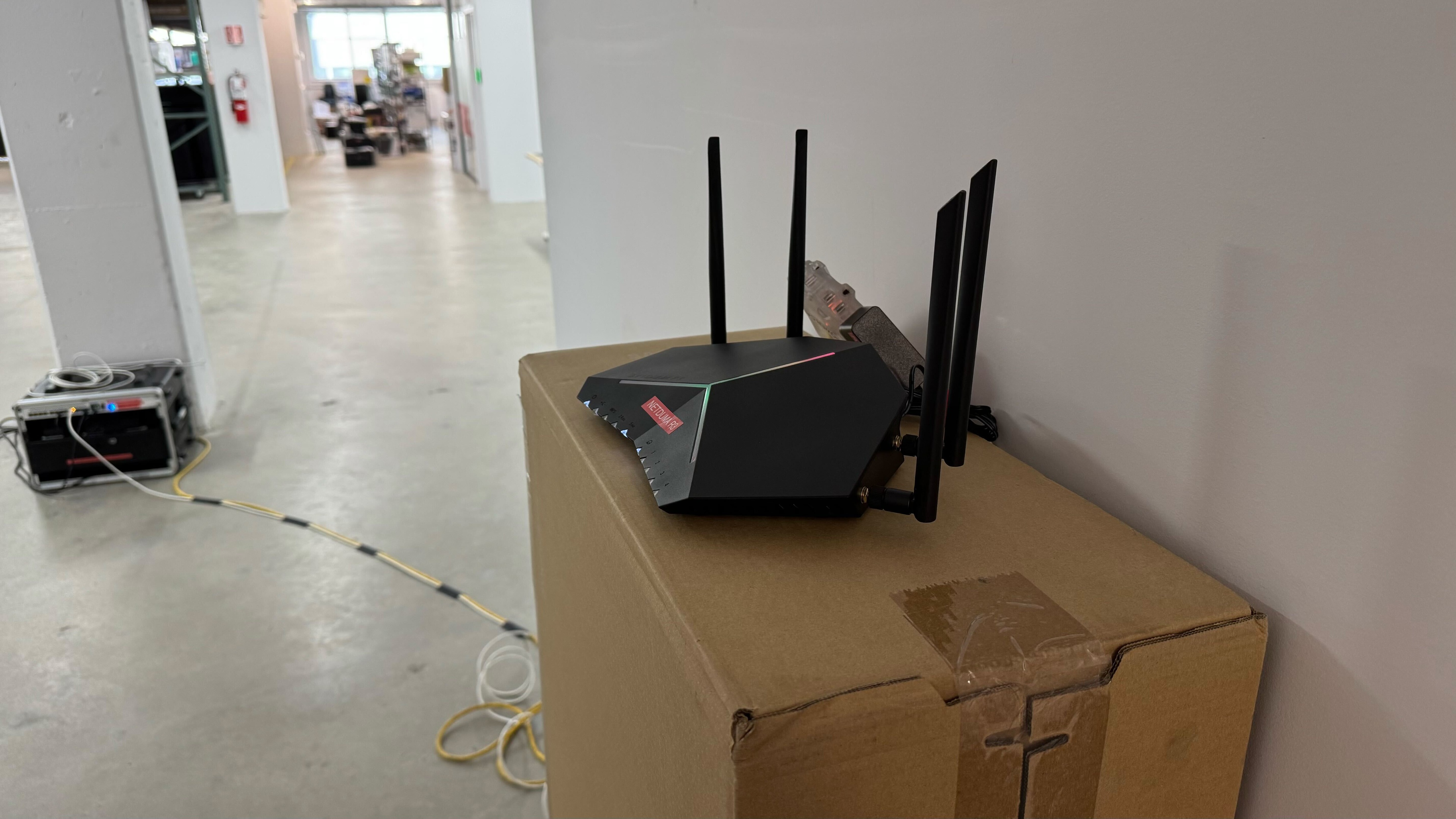
for pictures & test results

for pictures & test results
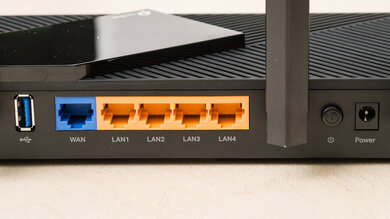
Check out the ARRIS SURFboard G34 or the ARRIS SURFboard G36 if you're looking for a router/DOCSIS 3.1 cable modem combo unit with a coaxial cable port.
for pictures & test results
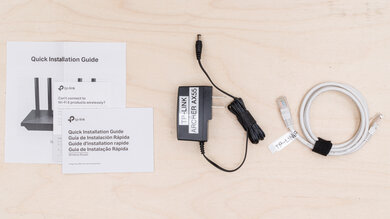
- Ethernet cable
- Power adapter
- User documentation
for pictures & test results
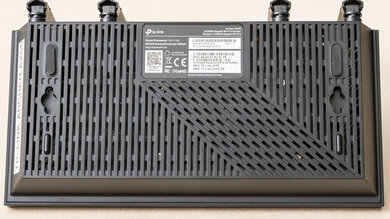
This router has a pair of screw head slots on the bottom, allowing you to mount it to your wall or ceiling.
You can create two guest networks in addition to your main network, one on the 2.4 GHz band and one on the 5 GHz band. However, they aren't isolated from your main network, meaning connected devices can still communicate with and access devices on it.
The Netduma R3's parental controls cover most of the basic functions that you'd expect, but it's not particularly easy or intuitive to use. You also can't filter by content category, so you have to block websites and apps manually.
for pictures & test results
for pictures & test results
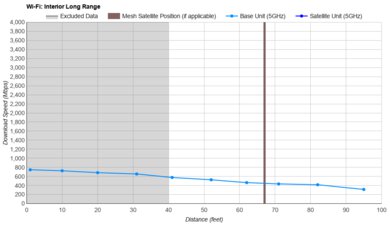
Check out the GL.iNet Flint 2 (GL-MT6000) if you're looking for a router with better range.
for pictures & test results
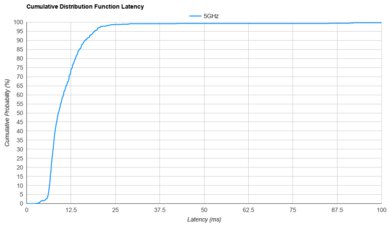
This router delivers adequate wireless latency performance for calls, video streaming, web browsing, and casual gaming.
We achieved these results with the "Ping Optimiser" setting enabled, which appears to slightly increase the median latency to reduce jitter. We also conducted this test with the "Ping Optimiser" setting turned off and achieved the following results:
- 5GHz Median Latency: 7.8ms
- 5GHz Median Jitter: 4.9ms