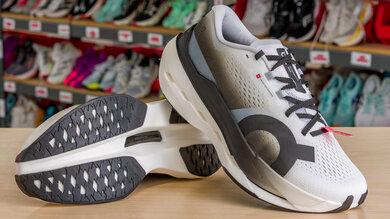
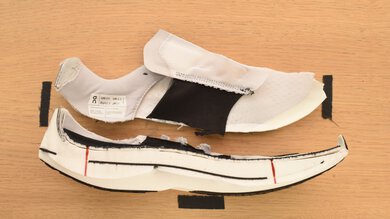
The On Cloudboom Max is the cloudy brand's attempt at a marathon shoe for the masses: it doesn't have a carbon plate, but it at least has a thick plastic "speedboard" that serves a similar purpose. While elite-level marathon shoes are becoming more streamlined and lightweight, the Cloudboom Max prioritizes comfort, even if it means adding extra weight. Overall, the design prioritizes stability over agility, but this shoe is not without a few top-tier features. The speedboard sits between a layer of the PEBA-based "Helion HF" used in On's premium racing shoes and a firm TPEE-based foam underneath. The Cloudboom Max features an aggressive geometry with an early rocker that keeps your foot rolling forward onto your toes. Although On still labels the five thin cutouts on each side of the Cloudboom Max as "CloudTec", these have more aesthetic continuity than functional similarity to the Swiss cheese midsoles of some of On's shoes that leave more air than foam underfoot.
Our Verdict
The On Cloudboom Max is a decent shoe for novice marathoners. The brand claims that the shoe is engineered for a 4-hour marathon pace, and the design choices do seem to reflect that: there's enough energy return from the midsole to keep moving steadily forward, and enough stability to keep you from wobbling side to side as your legs fatigue. That said, the aggressive rocker can feel more like a rock than a roll if you're not landing just right. The Cloudboom Max isn't a lightweight or streamlined super shoe, but it can definitely help you complete a 26.2-mile run.
Very tall stack height.
Very heavy for a shoe marketed as race-ready.
The On Cloudboom Max is a reasonable shoe for a 5k or 10k. The aggressive rocker and firm forefoot do give this shoe the feel of a racer, but the less-than-stellar energy return and relatively heavy weight mean that feeling will be short-lived if you are trying to push your limits.
Plastic plate adds a lot of firmness, especially in the forefoot.
Very heavy for a shoe marketed as race-ready.
Changelog
-
Updated Aug 07, 2026:
We updated the Popular Running Shoe Comparisons box with the latest On releases.
-
Updated Jun 22, 2026:
We've updated the Popular Comparisons section to include a link to the recently reviewed Mount to Coast C1.
- Updated Jun 17, 2026: We've converted this review to Test Bench 0.12, which fixes how we measure firmness, a component of the Stability and 5K/10K Racing usages. There may be inconsistencies between the text and the scores for these usages, but the scores should still be considered valid. We've also brought back the Energy Return score and added two new usages: Daily Training and Long Run. To read more about the changes, see the changelog.
-
Updated Apr 30, 2026:
We've updated this review to add text for the new Responsiveness usage box.
- Updated Apr 28, 2026: We've converted this review to Test Bench 0.11, adding two new rocker measurements to the Design section, and three new responsiveness tests to the Performance section. The Energy Return usage score has been replaced with Responsiveness. Check out the details in our changelog.
-
Updated Feb 26, 2026:
We updated the review to include text for the new Fit usage box, which was recently added to our test bench.
- Updated Feb 20, 2026: We've converted this review to Test Bench 0.10, adding a new set of fit tests to the Design section and an overall fit performance usage. Check out the details in our changelog.
-
Updated Feb 19, 2026:
We retested the Forefoot Long Run Cushioning to confirm the results were accurate.
- Updated Jan 07, 2026: Review published.
- Updated Dec 16, 2025: Early access published.
- Updated Aug 29, 2025: Our testers have started testing this product.
- Updated Aug 21, 2025: The product has arrived in our lab, and our testers will start evaluating it soon.
- Updated Aug 21, 2025: We've purchased the product and are waiting for it to arrive in our lab.

We've bought and tested more than 300 running shoes. Every pair purchased with our own money, never supplied or sponsored by brands. Our data-driven tests are designed to go beyond marketing claims, and since every shoe goes through the exact same methodology, you can directly compare results to find the right pair for your needs.
Test Results
Energy Return
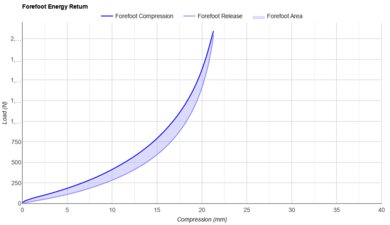
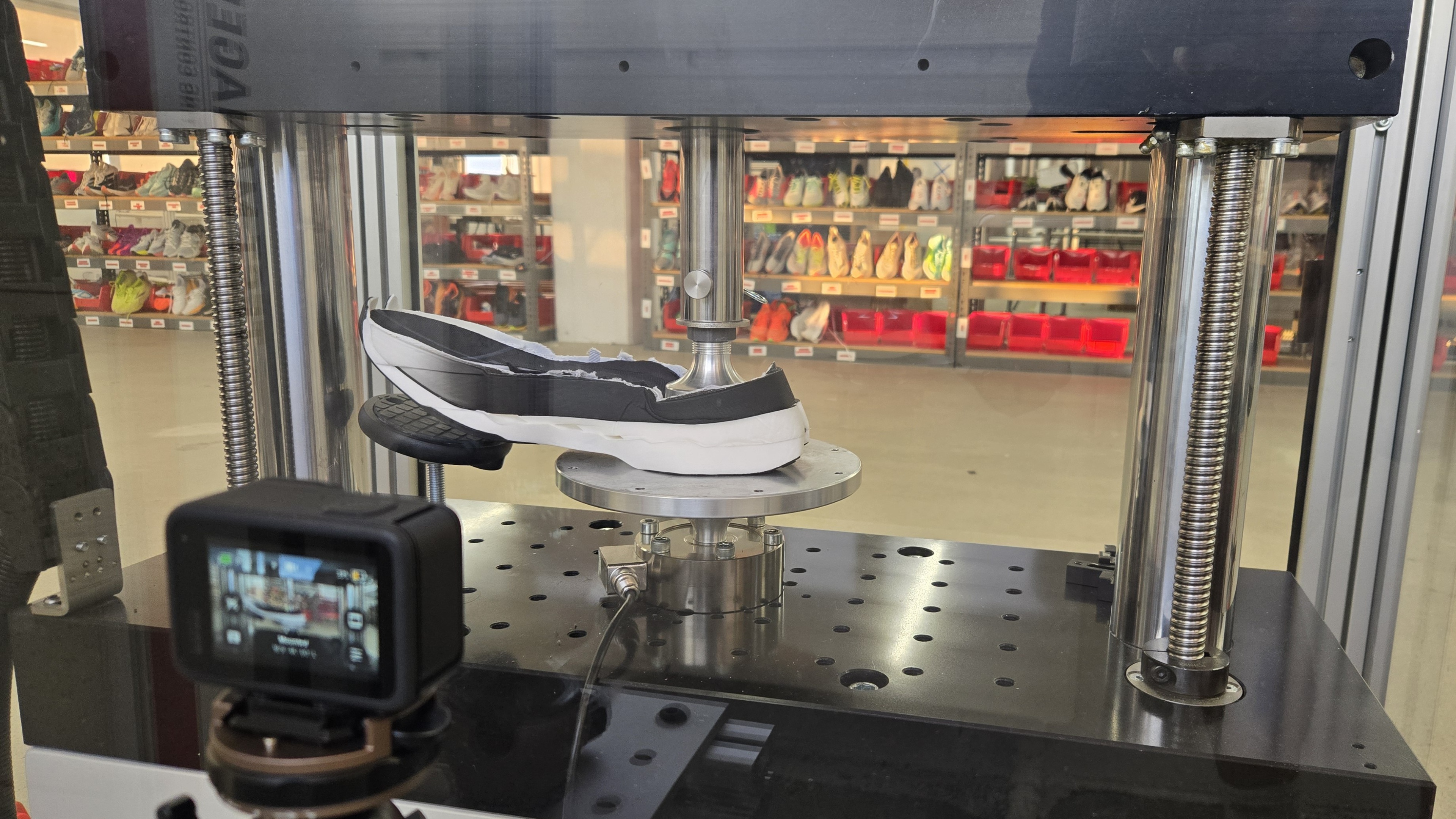
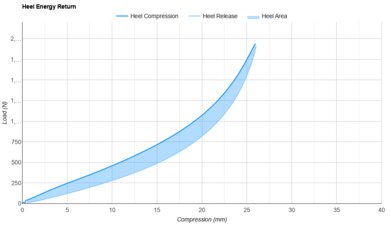
The energy return from the forefoot of the On Cloudboom Max isn't in the same league as the true super shoes, but it's still quite decent. It's not quite as lively as the unplated On Cloudboom Zone, but it's miles ahead of hollowed-out shoes like the On Cloudsurfer Next or On Cloudsurfer Max.
Stability
The On Cloudboom Max has good lateral stability, and this is one of its main advantages versus other middle-of-the-pack racing shoes. The platform of the Cloudboom Max is exceptionally wide, not just for a racing shoe, but even compared to some dedicated stability shoes. The thick plastic plate and rigid heel counter, combined with a firm forefoot, create a ride that feels very controlled.
Exceptionally wide heel platform.
Plastic plate adds a lot of firmness, especially in the forefoot.
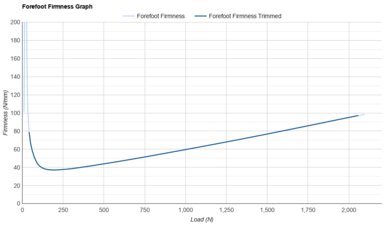
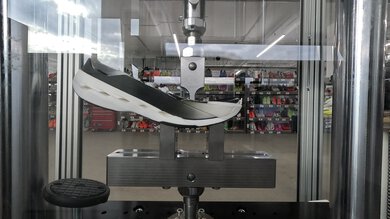
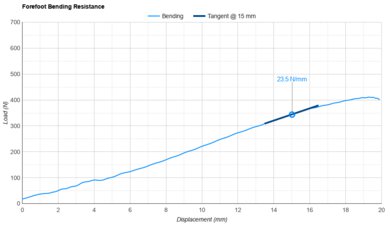
In terms of firmness, the forefoot of the On Cloudboom Max sits somewhere between the more pliable midsole of a plastic-plated super trainer (like the HOKA Mach X 3 or Brooks Hyperion Max 3) and the rigid feel of a carbon-plated racer like the New Balance FuelCell SuperComp Elite v5 or adidas Adizero Adios Pro 4.
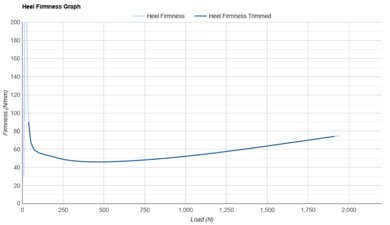
Despite the stiff plastic plate, the heel of the On Cloudboom Max is not particularly firm. Thanks to the broad outsole platform, the heel still feels rather stable, but noticeably less rigid than racing shoes like the HOKA Rocket X3 or New Balance FuelCell SuperComp Elite v5.
Cushioning
The On Cloudboom Max has very good cushioning, and heavy heel strikers will especially benefit from the generous stack in the back of the shoe, which becomes increasingly absorbent as more force is applied. Runners accustomed to On shoes with gaping holes in a midsole that bottoms out when force is applied will be pleasantly surprised by the real protection the Cloudboom Max supplies.
Very tall stack height.
The heel can handle very heavy impacts.
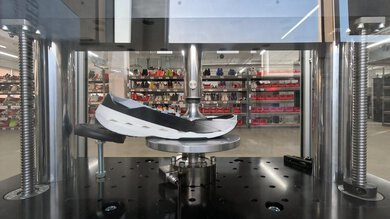
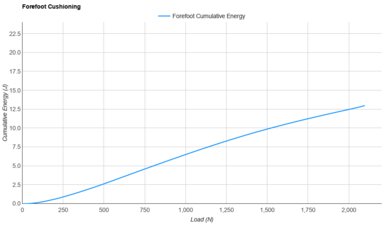
The cushioning in the Cloudboom Max is generally impressive, although it's not as absorbent at higher force levels, so lighter runners at slower paces will feel comparatively more protected.
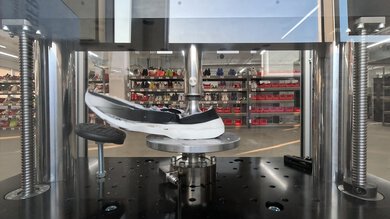
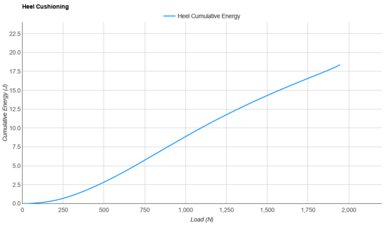
The On Cloudboom Max has great heel cushioning. It's not as deeply protective as plated super trainers like the HOKA Mach X 3 or Brooks Hyperion Max 3, but better than more aggressive racing shoes like the Nike Alphafly 3 or even the New Balance FuelCell SuperComp Elite v5.
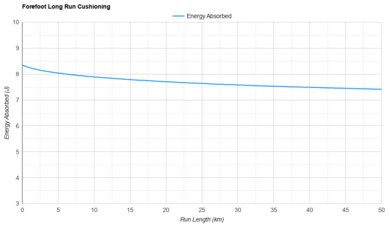
The On Cloudboom Max provides decent forefoot protection over long distances. Once again, it can hold its own against racing shoes like the New Balance FuelCell SuperComp Elite v5 or adidas Adizero Adios Pro 4, but a super trainer like the HOKA Mach X 3 or Brooks Hyperion Max 3 will provide better cushioning on long runs.
Responsiveness
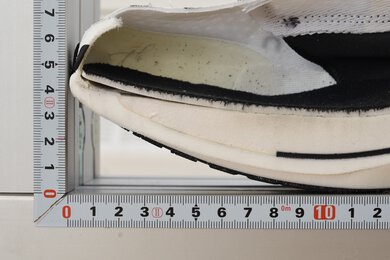
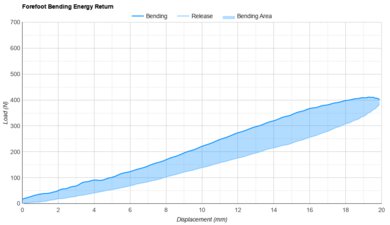
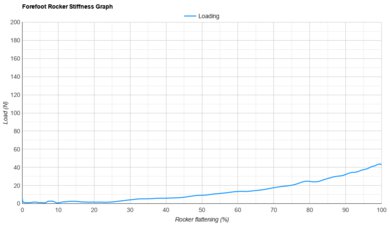
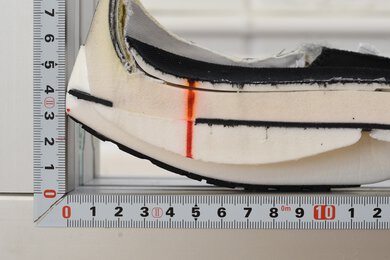
Overall, the On Cloudboom Max is reasonably responsive, even if not explosive. The early rocker starts your foot rolling forward quickly, but the angle isn't that aggressive, and the rocker doesn't maintain its shape as well under heavy force. The foam in the heel does not rebound as quickly as the forefoot, so heel strikers may find the ride less smooth. The forefoot is livelier, though the thick plastic plate between the two foam layers makes the rebound feel somewhat muted.
Forefoot has some decent pop.
Disjointed combination of materials in midsole dampens rebound.
True To Size
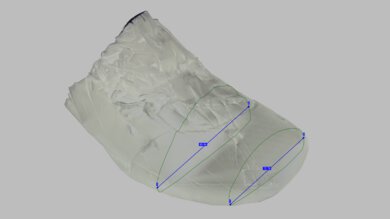
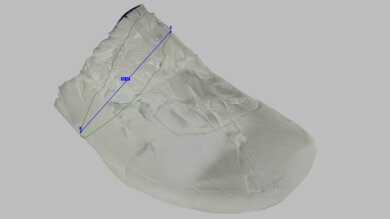
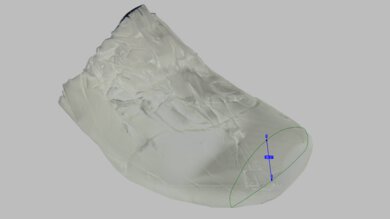
The On Cloudboom Max is well-sized, with enough room in the toe box for some toe splay, and length that feels true to size. The arch is a bit narrow, and may not be ideal for runners with wider feet, but most runners can safely stick to their usual size.
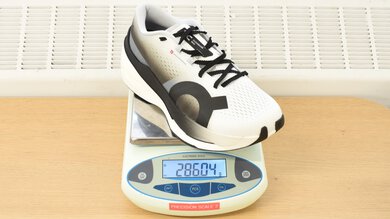
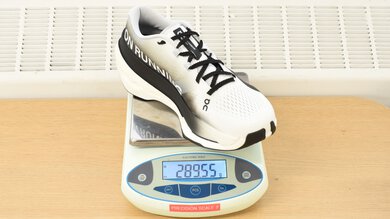
The On Cloudboom Max is especially heavy for a shoe that's marketed as a marathon racer. One of these shoes weighs more than both shoes combined of the ASICS METASPEED RAY.
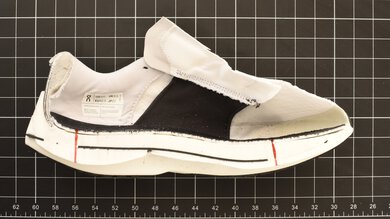
The early rocker of the On Cloudboom Max affects our measurement of the heel drop of this shoe. At the fixed point where we measure the stack height of every shoe's heel, the footbed is still sitting fairly high, due to the aggressive geometry, thus accounting for a much higher drop than advertised by the brand.
Popular Running Shoe Comparisons
The On Cloudboom Max is a new entrant to a relatively new niche within the running shoe market: racing shoes geared toward 4-hour (or longer) marathoners. The huge boom in marathon entries in recent years has swelled the middle of the pack, and shoes like the Cloudboom Max or the ASICS S4+ YOGIRI try to explicitly appeal to this segment. The logic behind these shoes' design is sound: a streamlined shoe like the ASICS METASPEED RAY will likely be too narrow and wobbly for a novice runner who hasn't worked on their running form, and the aggressive geometry of a super shoe like the PUMA Fast-R NITRO Elite 3 pushes runners to quicken their stride much faster than is necessary for a 4-hour marathon. The Cloudboom Max's combination of a plastic plate and mild rocker, in a midsole that's wider and taller than those in racing shoes designed for the front of the pack, makes sense for intermediate marathoners. However, there are other plated race shoes, such as the Saucony Endorphin Pro 4 or Diadora Gara Carbon, that offer comparable stability without the added weight. For an unplated option that has better responsiveness and long run comfort, check out the Mount to Coast C1.
Within the brand's lineup, the Cloudboom Max is the less streamlined but more approachable racing shoe, sitting in the shadow of the On Cloudboom Strike 2, a lighter carbon-plated racer with much better energy return and long-run cushioning. Another uptempo option is the On Cloudboom Zone, which is even lighter still and has a partial plastic shank instead of a plate. The other On shoe to bear the max designation is the On Cloudsurfer Max, which is meant to be a cushioned daily trainer, but despite its name, it is significantly shorter and less cushioned.
If you're looking for more options, check out our recommendations for the best running shoes, the best long-distance running shoes, and the best shoes for running a marathon.
The On Cloudboom Max and On Cloudboom Strike are two of the Swiss brand's racing shoes, each targeting a different segment of the pack. The Cloudboom Max is designed for marathoners aiming for a time of 4 hours or more, while the Cloudboom Strike would be more suitable for a 3-hour marathon. The Max has a wider base, which offers more lateral stability, but also adds significant weight. It has a plastic plate, which does add some rigidity, but is also heavier than the carbon plate in the Cloudboom Strike. Both shoes' midsoles contain a foam branded as Helion HF, but the Strike's version of it provides much better energy return.
The New Balance FuelCell SuperComp Elite v5 and On Cloudboom Max are two marathon shoes designed for the masses, although they approach their appeal in different ways. The New Balance shoe has a footbed that is on the wider side for a super shoe, but still has a fairly streamlined outsole platform. Its midsole has a carbon fiber plate and a very lively PEBA-based foam that can bounce with the best in the business. If the New Balance shoe is on the wider side, the On Cloudboom Max is all the way overboard, with an exceptionally broad platform that is wider even than some dedicated stability shoes. The midsole has a plastic plate sandwiched between a layer of PEBA and a TPEE carrier foam, providing great cushioning but merely satisfactory energy return. Both of these shoes could be suitable for a 4-hour marathon; if you prioritise efficiency in chasing that goal, the New Balance shoe is the lighter, nimbler option. If comfort and stability are more important, the Cloudboom Max has the edge.
The On Cloudboom Zone and On Cloudboom Max are two boisterously named, ambitiously marketed, but ultimately limited-use case shoes. On claims the Zone is a versatile trainer that can handle 99 percent of a runner's mileage, but in practice, its lightweight build, partial plastic shank, and subtle rocker make it more suited to uptempo workouts. Similarly, On markets the Cloudboom Max as an elite-level super shoe, but its bulky construction that prioritises stability over speed makes it more suitable for middle-of-the-pack runners aiming for a 4-hour marathon.
The ASICS S4+ YOGIRI and On Cloudboom Max are both racing shoes geared toward 4-hour marathoners, but each makes slightly different adjustments that move them from the front to the middle of the pack. The S4+ YOGIRI still has a very rigid carbon plate and the streamlined profile of a top-tier racing shoe, but a less pronounced rocker. The Cloudboom Max, meanwhile, features an aggressive rocker, a plastic-plated midsole, and a very wide base that adds stability but also considerable extra weight. For intermediate marathoners who are concerned about their form or worried about instability, the Cloudboom Max is the more solid option. For marathoners who are confident in their form and want the relatively lightweight feel of a super shoe, the S4+ YOGIRI is a livelier option for achieving a sub-4-hour finish.
Differences Between Sizes And Variants
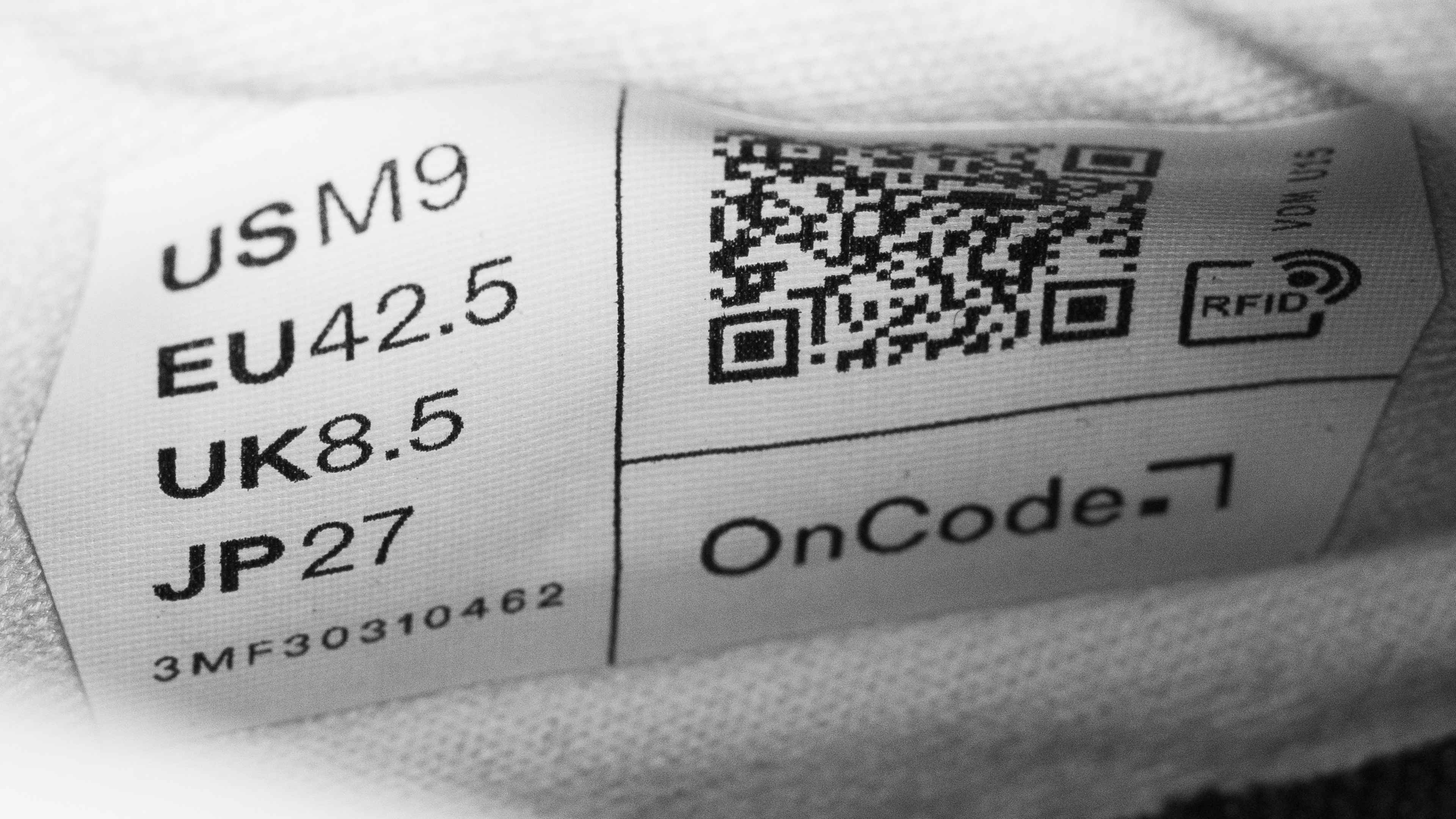
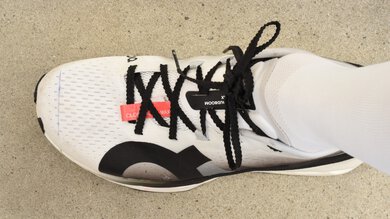
We bought and tested the On Cloudboom Max in men's US size 9, as noted on the label for our pair. The pair we purchased is the White|Black colorway. You can also buy the shoe in other colorways, depending on the region. This shoe is only available in standard widths for both men and women.