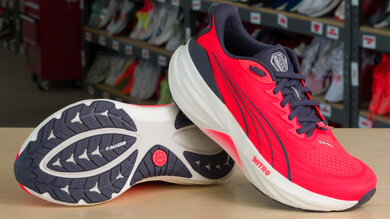
The PUMA ForeverRun NITRO 3 is the brand's dedicated stability daily trainer for overpronators and runners who want added support and guidance, with a firmer midsole rim and heel support that help limit inward roll. Its good cushioning and impressive stability make it well-suited to easy runs and everyday mileage. However, its heavy build and muted ride make it feel sluggish at faster paces, so it isn't intended for faster workouts or racing.
| ✅ Buy If: | ❌ Skip If: |
|
|
Our Verdict
The PUMA ForeverRun NITRO 3 isn't designed primarily for racing, but it's still an okay choice for long-distance events if you prioritize stability over speed. Its tall stack, good initial cushioning, and impressive stability provide plenty of protection and control, but its heavy build and unresponsive feel make it harder to maintain race pace as the distance builds. The cushioning also doesn't hold up really well over distance, so it will feel harsher underfoot by the end of the race.
Broad platform creates a very stable base.
Well-cushioned heel provides good impact protection.
Heavy build feels cumbersome when the pace picks up.
Weak rebound limits propulsion.
Cushioning loses protection as the distance builds.
The PUMA ForeverRun NITRO 3 is a mediocre option for shorter races. Its firm, reasonably stiff forefoot provides some structure at toe-off, but the shoe's heavy build is a major limitation, and it returns little energy when you toe-off. Its modest rocker and energy return make it feel cumbersome rather than quick when running at faster paces.
Firm forefoot gives toe-off some structure.
Heavy build feels cumbersome when the pace picks up.
Weak rebound limits propulsion.
The PUMA ForeverRun NITRO 3 is a decent choice for long runs, especially if stability matters most to you. It feels very planted, and its cushioning feels quite protective initially. However, the forefoot cushioning gradually loses protection as the distance builds, and the heavy, unenergetic ride can feel cumbersome late in the run. Overall, it's best left to slow long runs rather than progression runs with faster sections.
Broad platform creates a very stable base.
Well-cushioned heel provides good impact protection.
Heavy build feels cumbersome when the pace picks up.
Cushioning loses protection as the distance builds.
The PUMA ForeverRun NITRO 3 is a good daily trainer. Its impressive stability and good cushioning make it comfortable and dependable for easy runs and routine mileage, while its heel rocker helps heel strikers transition smoothly through each landing. However, its heavy build and disappointing energy return make it less suitable for faster sessions.
Broad platform creates a very stable base.
Well-cushioned heel provides good impact protection.
Heel rocker smooths transitions for heel strikers.
Heavy build feels cumbersome when the pace picks up.
Changelog
- Updated Sep 02, 2026: Review published.
- Updated Aug 28, 2026: Early access published.
- Updated Aug 17, 2026: Our testers have started testing this product.
- Updated Aug 10, 2026: The product has arrived in our lab, and our testers will start evaluating it soon.
- Updated Aug 06, 2026: We've purchased the product and are waiting for it to arrive in our lab.

We've bought and tested more than 300 running shoes. Every pair purchased with our own money, never supplied or sponsored by brands. Our data-driven tests are designed to go beyond marketing claims, and since every shoe goes through the exact same methodology, you can directly compare results to find the right pair for your needs.
Test Results
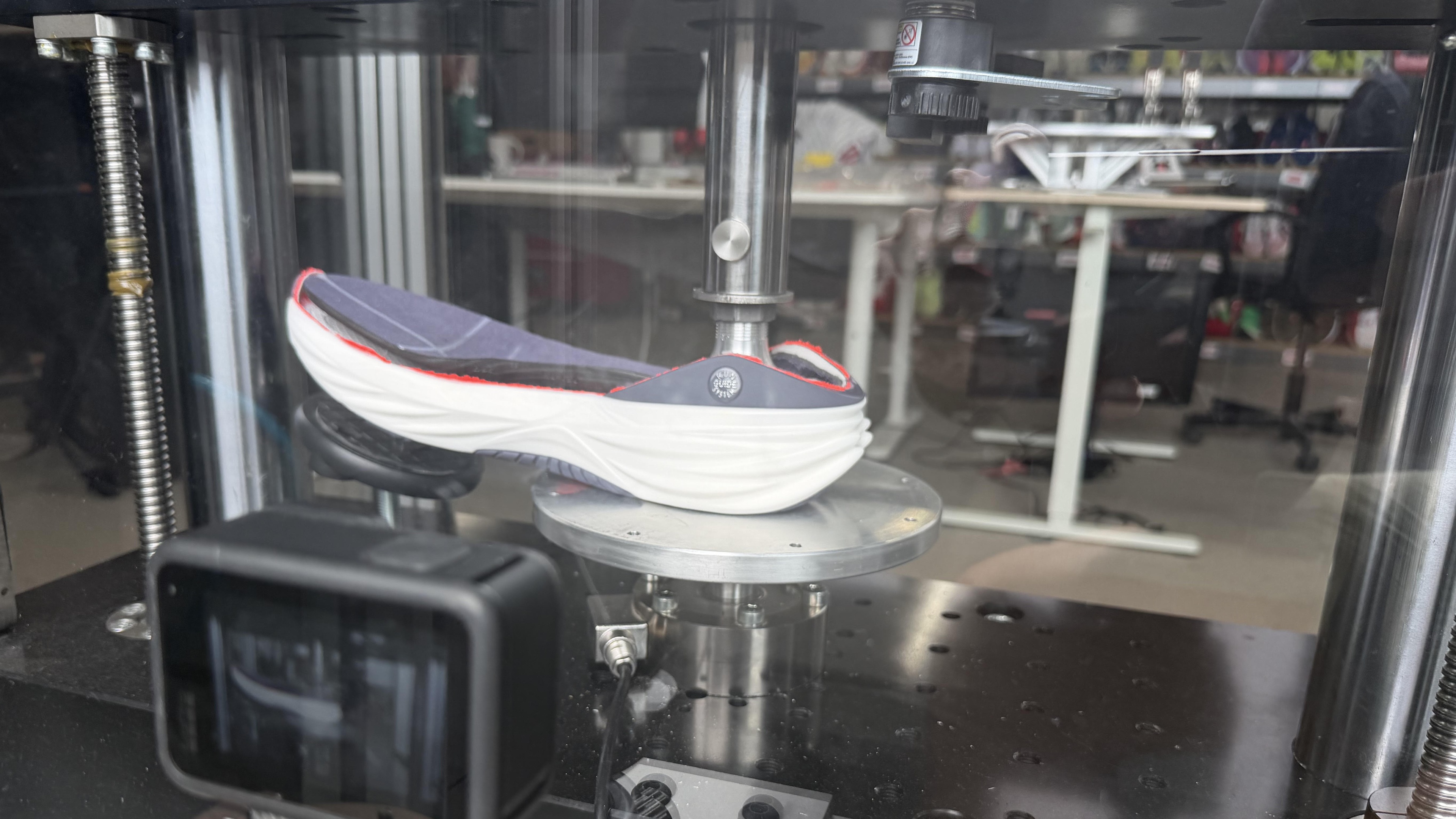
Energy Return
The PUMA ForeverRun NITRO 3 has disappointing energy return. The forefoot returns a mediocre amount of energy, while the heel feels even less lively. This limits propulsion and contributes to the shoe's subdued feel when you try to pick up the pace.

Forefoot energy return is mediocre. It's significantly better than in the PUMA ForeverRUN NITRO 2 and much stronger than at the heel, but still provides limited propulsion if you try to increase the pace.
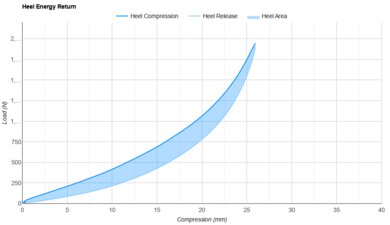
The heel has poor energy return. Although it improves significantly over the previous PUMA ForeverRUN NITRO 2, it still loses too much energy under load to feel lively.
Stability
The PUMA ForeverRun NITRO 3 offers impressive stability. Its broad heel, arch, and forefoot provide a secure base, while the relatively firm midsole resists excessive compression under load. The semi-gusseted tongue also helps keep the foot locked down, making the shoe especially reassuring when your form starts to break down.
Broad platform creates a very stable base.
Firm foam keeps the platform controlled under load.
Semi-gusseted tongue holds the foot securely in place.


The heel is quite firm for stability and stays consistent as impact forces rise. It's significantly softer than the PUMA ForeverRUN NITRO 2, but still resists compression well enough to keep landings controlled.


Cushioning
The PUMA ForeverRun NITRO 3 provides good cushioning overall. The heel offers good protection, and the forefoot still absorbs a decent amount of impact, making the shoe comfortable for daily mileage. However, its cushioning gradually decreases over longer distances, so the protection is less convincing late in extended runs.
Well-cushioned heel provides good impact protection.
Cushioning loses protection as the distance builds.


The heel provides very good cushioning. Protection is good at lighter loads and improves as impact forces rise, making it especially protective for heavier heel strikers.


The PUMA ForeverRun NITRO 3 provides decent forefoot cushioning overall. It absorbs impact impressively at lower forces but partly bottoms out under higher forces, so it will feel less protective if you put down a lot of power when you land.

The cushioning doesn't hold up very well over long distances. It loses the most protection early, then continues decreasing at a lower rate, leaving only mediocre impact absorption later in the run. That means it's best suited for shorter sessions, as stretching your runs with this model will make it feel harsher on your legs.
Bounciness
The PUMA ForeverRun NITRO 3 has sub-par bounciness. The foam doesn't compress enough to create a particularly springy sensation, and the especially poor heel energy return prevents the foam from rebounding with much force. The result is a controlled but muted ride rather than a lively one.
Shallow foam compression makes the ride feel flat.


Snappiness
The PUMA ForeverRun NITRO 3 has mediocre snappiness. Its firm, reasonably stiff forefoot gives toe-off some structure, but it returns little energy as it unbends, and the shallow rocker angle provides limited forward assistance. As a result, toe-offs don't feel particularly quick or propulsive.
Firm forefoot gives toe-off some structure.
Forefoot doesn't return much energy at toe-off.
Flexible forefoot rocker provides little forward assistance.

This shoe has poor bending energy return at the forefoot. The shoe loses much of the energy stored as it bends and unbends, reducing efficiency and snap at toe-off.


Roll
The PUMA ForeverRun NITRO 3 has a moderate rolling sensation. Its pronounced heel rocker helps heel strikers move smoothly into the stride, but the flexible forefoot rocker provides little assistance through toe-off. This makes the transition feel much smoother at the heel than at the front of the shoe.
Heel rocker smooths transitions for heel strikers.
Flexible forefoot rocker provides little forward assistance.

The forefoot rocker flattens relatively easily under load, so it provides limited mechanical assistance through toe-off.
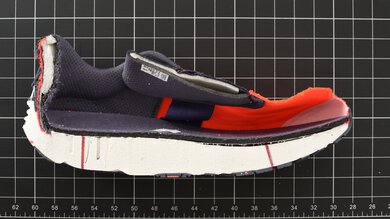
The heel and forefoot stacks are both quite tall, leaving plenty of foam between the foot and ground. The heel-to-toe drop is quite high, but it's a bit lower than in the previous PUMA ForeverRUN NITRO 2.

The heel rocker is quite pronounced, helping heel strikers move smoothly from landing into midstance. It's significantly more pronounced than on the previous PUMA ForeverRUN NITRO 2.
True To Size
The PUMA ForeverRun NITRO 3 fits true to size in length and forefoot width, and most runners can confidently pick their usual size. Its arch is slightly narrower than average, and the toe box is relatively low, so runners with higher-volume feet may find the standard version snug. A wide option is available for those who need more room.
Fits true to size in length and forefoot width.
Toe box could have a little bit more room vertically.


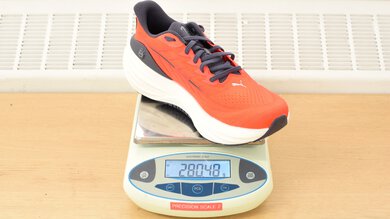
The PUMA ForeverRun NITRO 3 is quite heavy for a daily trainer. It's significantly lighter than the PUMA ForeverRUN NITRO 2, but still feels cumbersome when the pace picks up. That said, it's designed primarily for stability and slower paces, where the extra weight is unlikely to be particularly bothersome.


The midsole uses two densities of NITROFOAM, pairing a softer core with a firmer outer rim. This provides cushioning in the center while adding guidance around the foot. The exact foam chemistry isn't disclosed by PUMA.

The PUMA ForeverRun Nitro 3 uses flat laces with moderate stretch that make it easy to dial in the fit you like.


The PUMA ForeverRun NITRO 3 has good breathability, allowing enough airflow to help keep your feet cool during warm-weather runs and longer efforts. However, it doesn't breathe as well as some performance-focused options like the PUMA Fast-FWD NITRO Elite 2.


Popular Running Shoe Comparisons
The PUMA ForeverRun NITRO 3 is a stability daily trainer for overpronators and runners who want extra support without an overly intrusive feel. It competes with the ASICS GT-2000 15 and Saucony Hurricane 26, but both are more well-rounded options overall: the ASICS delivers nearly the same stability in a lighter, livelier package, while the Saucony provides deeper cushioning and more energy underfoot while remaining very stable. The PUMA remains dependable for easy daily mileage if you prioritize a secure, controlled ride, but the two other options above are more well-rounded shoes overall at a similar price point. Neutral runners who don't need guidance features should consider the lighter, more energetic PUMA Magnify NITRO 3 instead.
For more options, check out our recommendations for the best stability running shoes and the best running shoes.
The PUMA ForeverRun NITRO 3 and PUMA ForeverRUN NITRO 2 are two iterations of the brand's stability daily trainer. The NITRO 3 is a worthwhile upgrade: it's lighter, more cushioned, more stable, and more energetic, making it a more well-rounded shoe overall. Stick with the NITRO 2 only if you actively prefer its firmer underfoot feel.
The PUMA ForeverRun NITRO 3 and Saucony Hurricane 26 are stability daily trainers that provide added support and guidance for overpronators. Get the PUMA if you want the firmer, more stable, and more controlled ride. Get the Saucony if you want a lighter, softer, and much more cushioned shoe with a significantly livelier ride. It's better for long runs, and it's a more versatile shoe overall.
The PUMA ForeverRun NITRO 3 and HOKA Clifton 10 are daily trainers made for different types of runners. The PUMA is a stability shoe for overpronators, while the HOKA is a neutral shoe that prioritizes soft cushioning. Get the PUMA for a firmer, more stable ride with slightly better energy return. Get the HOKA if you prioritize deeper cushioning and a more pronounced rocker.
Differences Between Sizes And Variants
We bought and tested the PUMA ForeverRun NITRO 3 in men's US size 9, as indicated on the label for our pair. The colorway shown here is Ultra Red-Inky Depths, and the shoe is available in several other colorways. Wide versions are available for both men and women. The design section applies only to the exact pair we tested, but we expect other sizes and gender variants to perform similarly.