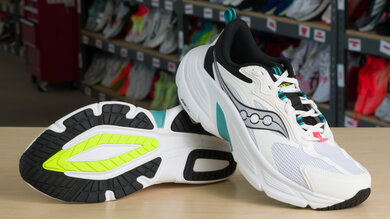
The Saucony Procyon Max is a value-oriented trainer that works as both a walking and running shoe. Its sturdy construction makes it feel very stable underfoot, and the upper is roomy and accommodating. Despite the Max in its name, the shoe doesn't have that much cushioning, but it's quite heavy, making it better suited to easy cruising than faster workouts.
| ✅ Buy If: | ❌ Skip If: |
|
|
Our Verdict
The Saucony Procyon Max is a mediocre shoe for running a marathon. Its cushioning is inadequate for covering such a long distance, and it's a rather heavy shoe, making it feel cumbersome on tired legs. On the positive side, it's very stable, so the ride stays steady, even if your form starts to break down.
Ride stays stable even when your form fades.
Heavy weight is inefficient for racing.
Not enough cushioning for long distances.
The Saucony Procyon Max isn't a bad shoe for running shorter races, but it's certainly not designed for speed. The biggest drawback is its heavy construction, which can feel sluggish if you're trying to go fast. The firm forefoot ensures that you'll have a stable foundation when you throw down with force, but the midsole isn't rigid enough to translate that force into much leverage as you push off.
Firm forefoot keeps the ride stable even when you push the pace.
Heavy weight is inefficient for racing.
Midsole isn't rigid enough to give much leverage at toe-off.
The Saucony Procyon Max is a decent long-run shoe. The solid platform helps keep you stable over the course of many miles, and the gentle rocker helps to maintain steady momentum. The biggest drawback is the cushioning, which becomes significantly less shock-absorbent after the first 10K of a run.
Ride stays stable even when your form fades.
Not enough cushioning for long distances.
The Saucony Procyon Max is a good daily trainer. Its stable platform and relaxed geometry are great for easy, everyday outings. The cushioning isn't bad and can handle shorter runs or walks. The weight of the shoe makes it feel sluggish if you try to pick up the pace, so this is a shoe that's best for going slow and steady.
Gentle rocker helps maintain steady, easy paces.
Stable platform is great for everyday use.
Lack of energy return and weight can make the shoe feel sluggish.
Changelog
- Updated Sep 18, 2026: Review published.
- Updated Sep 10, 2026: Early access published.
- Updated Aug 17, 2026: Our testers have started testing this product.
- Updated Aug 10, 2026: The product has arrived in our lab, and our testers will start evaluating it soon.
- Updated Aug 06, 2026: We've purchased the product and are waiting for it to arrive in our lab.
We've bought and tested more than 250 running shoes. Every pair purchased with our own money, never supplied or sponsored by brands. Our data-driven tests are designed to go beyond marketing claims, and since every shoe goes through the exact same methodology, you can directly compare results to find the right pair for your needs.
Test Results

Energy Return
The Saucony Procyon Max has sub-par energy return. Heel landings feel especially dull and flat, while the forefoot is at least able to return a reasonable amount of the energy you put into it, so it doesn't feel completely lifeless when you push off.
Heel landings feel flat.
Midsole rebound is inconsistent and inefficient.

The forefoot does a much better job than the heel of rebounding, but it's still nowhere near as reactive as the Saucony Paramount Max or the Saucony Ride 19. You won't get a huge boost as you push off, but there's at least some life in the shoe.

Stability
The Saucony Procyon Max is an amazingly stable shoe. Its combination of very firm foam and a wide outsole platform creates a solid base for takeoff and landing.
Very firm foam resists wobbling.
Wide outsole platform creates stable base.


The heel is exceptionally firm. This helps keep heel landings stable, but it can also start to feel harsh after repeated impacts.


Cushioning
The Saucony Procyon Max has mediocre cushioning. Despite being marketed as a max-cushioned shoe, the midsole isn't that effective at absorbing impact, especially toward the end of a long run. For walks or shorter runs, it's not bad, but the basic foam isn't up to the challenge of more intense running.
Forefoot cushioning feels good at lower force levels.
Shock absorption declines over long distances.
Forefoot bottoms out under pressure.


The heel does a passable job of cushioning heel strikes. It doesn't feel plush, but is similar to other budget trainers like the adidas Adizero Pacer and the Brooks Revel 9.


Bounciness
The Saucony Procyon Max isn't a bouncy shoe. The foam resists compression and doesn't return much of the energy it absorbs, resulting in a ride that feels rather flat.
Midsole rebound is inconsistent and inefficient.
Foam doesn't compress or decompress very well.


Snappiness
The Saucony Procyon Max doesn't have any remarkable snap. Although the forefoot is very firm, it doesn't stay stiff enough to create a super snappy feel. It also doesn't return much energy as it unbends, so there's not really any springy sensation as you push off.
Midsole isn't rigid enough to give much leverage at toe-off.
Firm forefoot provides stable base for pushing off.
Midsole isn't stiff enough to generate much leverage.
Forefoot doesn't spring back as it unbends.

The EVA-based midsole returns a poor amount of energy as the forefoot unbends and releases. It isn't designed to feel springy, so toe-off doesn't feel propulsive or efficient.


Roll
The Saucony Procyon Max rolls fairly well through each stride. The rocker angle isn't that aggressive, but it holds its shape reasonably well, so it continues rolling even when you land with lots of force.
Rocker holds its shape under pressure.
Rocker angle is rather shallow, so rolling effect is limited.

The rocker of the Saucony Procyon Max stays reasonably stiff when force is applied, allowing it to continue rolling fairly smoothly.

Despite the 'Max' in its name, the Saucony Procyon Max is much shorter than most max-cushioned shoes. It sits 7 mm lower in the heel and 10 mm lower in the forefoot than the Saucony Paramount Max, which itself is not as tall as the Brooks Glycerin Max 2.

True To Size
The Saucony Procyon Max is remarkably true to size, with an appropriate length and width that's close to our reference fit. Most people can safely buy their usual size.
Length is true to size.
Good width through forefoot.


The Saucony Procyon Max is a fairly heavy shoe given its relatively modest stack height. It's slightly heavier than the Saucony Paramount Max despite being 7 mm shorter in the heel. This is largely due to the denser foam in the Procyon Max's midsole.


The Saucony Procyon Max uses Saucony's standard PWRRUN foam formula, which is an EVA compound. It's not as energetic or protective as the PWRRUN+ found in the Saucony Ride 19, but it's significantly livelier than the VERSARUN foam found in the Saucony Cohesion 19.

Popular Running Shoe Comparisons
The Saucony Procyon Max is a value-oriented trainer that's advertised as a max-cushion shoe. In the current running shoe market, though, it's closer to a standard daily trainer. Within this price range, the HOKA Rincon 5 offers better cushioning, but much less energy return. The Li-Ning Chaoying Pro is similarly priced and significantly better cushioned, but its fit is extremely narrow, and the shoe is only available online in most Western countries. Runners looking for a true max-cushion shoe from Saucony should check out the Saucony Paramount Max.
For more options from Saucony, check out our recommendations for the best Saucony running shoes. For more cushioned shoes, see our recommendations for the best cushioned running shoes.
The Saucony Paramount Max is a more premium max-cushioned shoe than the Saucony Procyon Max. The Procyon Max is lower stacked, but also has a more basic foam that doesn't feel as plush or as bouncy as the Paramount Max. The Procyon Max is much cheaper, though, so if you just want a stable shoe for walking around or jogging on the treadmill, it gets the job done without any fuss.
The HOKA Rincon 5 and Saucony Procyon Max sit in the same price category but take slightly different approaches. The Rincon 5 has better cushioning, especially in the heel, but it has almost no bounce or energy return. The Procyon Max compromises a bit on cushioning, but at least has some snappiness and energy return. If you like a softer feel underfoot and aren't planning on doing any speedy workouts, the Rincon is the better choice. If you want the more stable, slightly peppier shoe, the Procyon Max is better.
The Li-Ning Chaoying Pro and Saucony Procyon Max sit in a similar price range, but the Li-Ning is actually a max-cushioned trainer, while the Procyon Max is a more basic, value-oriented trainer. In terms of performance, the Li-Ning is the better shoe across the board, but it has a very narrow arch, which could make it impractical for runners with wider arches. It's also not available in stores in most Western countries, so you wouldn't be able to try it on in stores to see if the fit works for you before buying.
Differences Between Sizes And Variants
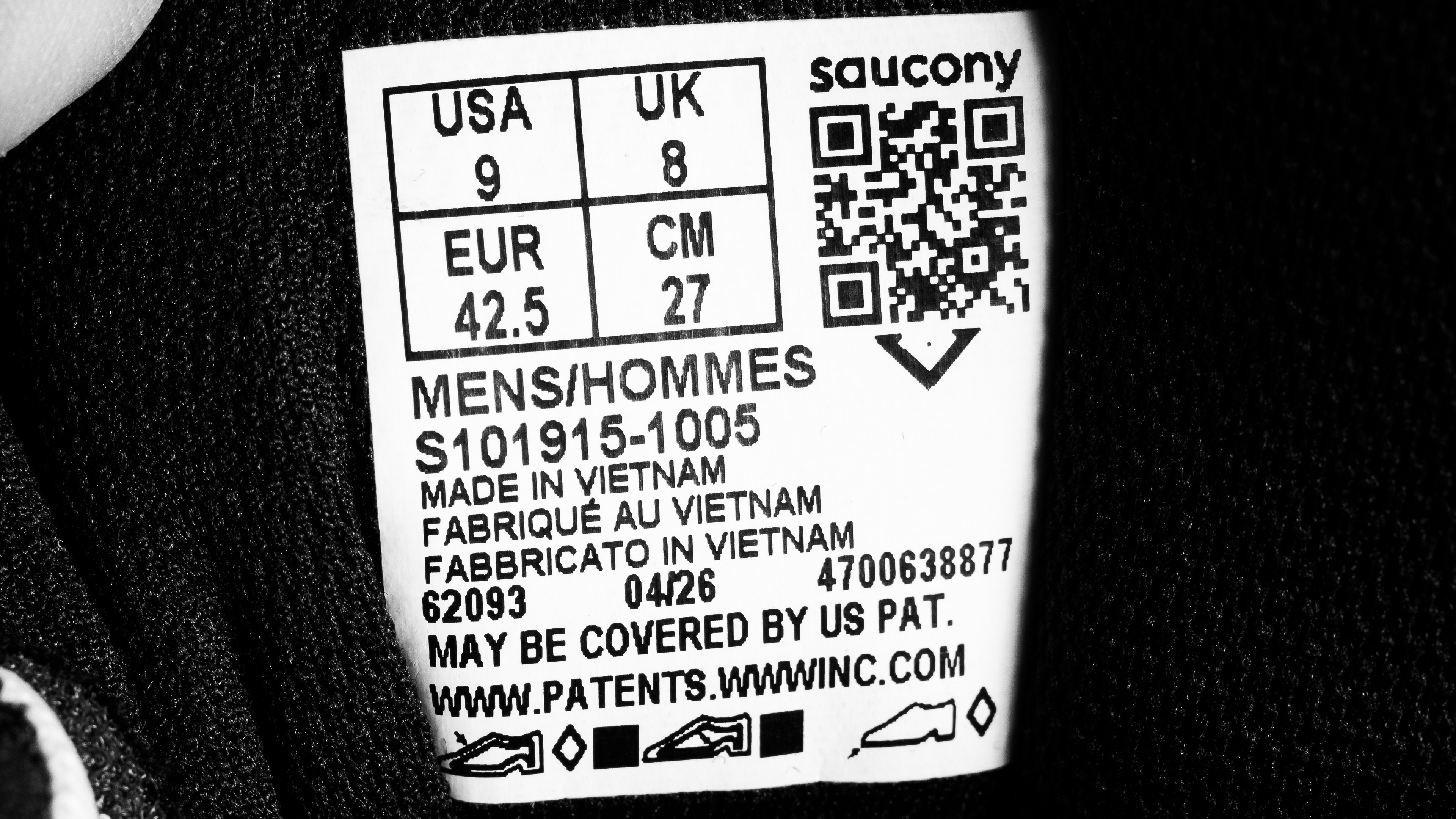
We bought and tested the Saucony Procyon Max in a men's U.S. size 9 in the White/Tranquil colorway. Here's the label for our pair. Several other colorways are available depending on your region, but as of September 2026, only a standard width is available. The design section applies specifically to the pair we tested, but we expect other sizes to perform similarly.