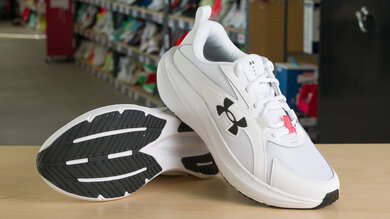
The Under Armour Charged+ Assert 11 is an affordable shoe designed for walking, gym work, and short runs. Its firm platform is very stable, while the heel provides adequate impact protection for heel strikers. However, it's very heavy for a running shoe, and the uneven cushioning can feel very harsh, with terrible rebound that makes faster or longer runs tiring and inefficient. It can handle daily training decently if you mix running with walking, but it's poorly suited to prolonged efforts or racing.
| ✅ Buy If: | ❌ Skip If: |
|
|
Our Verdict
The Under Armour Charged+ Assert 11 is a poor choice for marathon racing. Its very stable platform keeps the ride controlled as fatigue builds, but almost everything else works against covering the distance efficiently. It's very heavy, the cushioning does a poor job of protecting your legs once the miles build, and the terrible rebound makes maintaining pace very tiring. The forefoot also returns very little of the energy stored when it unbends, so there's little spring to help move you through toe-off.
Very stable platform keeps the ride controlled as fatigue builds.
Heavy build becomes increasingly cumbersome over the distance.
Poor cushioning leaves your legs more beat up as the miles build.
Terrible rebound makes holding marathon pace very tiring.
Very little spring through toe-off makes the stride inefficient.
The Under Armour Charged+ Assert 11 is an inadequate choice for 5K and 10K racing. Its exceptionally firm forefoot gives you a solid base to push from, and the shoe resists bending well enough to provide some leverage through toe-off. However, its heavy build makes it tough to turn over at speed, while the terrible rebound leaves the ride flat and inefficient. There's almost no spring or snap when you push off, either, as the front of the shoe returns very little of the energy stored when it unbends.
Exceptionally firm forefoot gives you a solid base to push from.
Good forefoot stiffness provides some leverage through toe-off.
Heavy build makes hitting and holding race pace hard.
Terrible rebound makes turnover tiring.
Lacks the snap of a dedicated racer.
Very little spring through toe-off limits acceleration.
The Under Armour Charged+ Assert 11 isn't a good choice for long runs. It remains secure underfoot as fatigue builds, and the heel geometry does a very good job of moving rearfoot landings smoothly into midstance. However, the cushioning does a poor job of protecting your legs over longer efforts. Its significant bulk also becomes tiring to turn over, while the dull ride makes even relaxed paces increasingly inefficient as the distance builds.
Very stable platform keeps the ride controlled as fatigue builds.
Heel rocker does good job of assisting into midstance.
Poor cushioning leaves your legs more beat up over longer efforts.
Significant bulk becomes tiring to turn over as the miles build.
The Under Armour Charged+ Assert 11 is a decent choice for daily training, especially if your routine mixes running with walking. Its good stability makes it dependable for regular miles, while the very good heel geometry moves heel strikers smoothly into midstance. The firm heel also keeps rearfoot landings controlled. However, the shoe is very heavy, and its poor rebound and uneven cushioning make it much better suited to shorter runs than longer efforts.
Good stability makes it dependable for regular miles.
Heel geometry gives heel strikers a smooth transition into midstance.
Firm heel keeps rearfoot landings controlled.
Heavy build makes faster running unsustainable.
Forefoot cushioning is harsh beyond short, slow runs.
Dull ride is very tiring to turnover.
Changelog
- Updated Sep 25, 2026: Review published.
- Updated Sep 23, 2026: Early access published.
- Updated Aug 24, 2026: Our testers have started testing this product.
- Updated Aug 17, 2026: The product has arrived in our lab, and our testers will start evaluating it soon.
- Updated Aug 12, 2026: We've purchased the product and are waiting for it to arrive in our lab.

We've bought and tested more than 250 running shoes. Every pair purchased with our own money, never supplied or sponsored by brands. Our data-driven tests are designed to go beyond marketing claims, and since every shoe goes through the exact same methodology, you can directly compare results to find the right pair for your needs.
Test Results
Energy Return
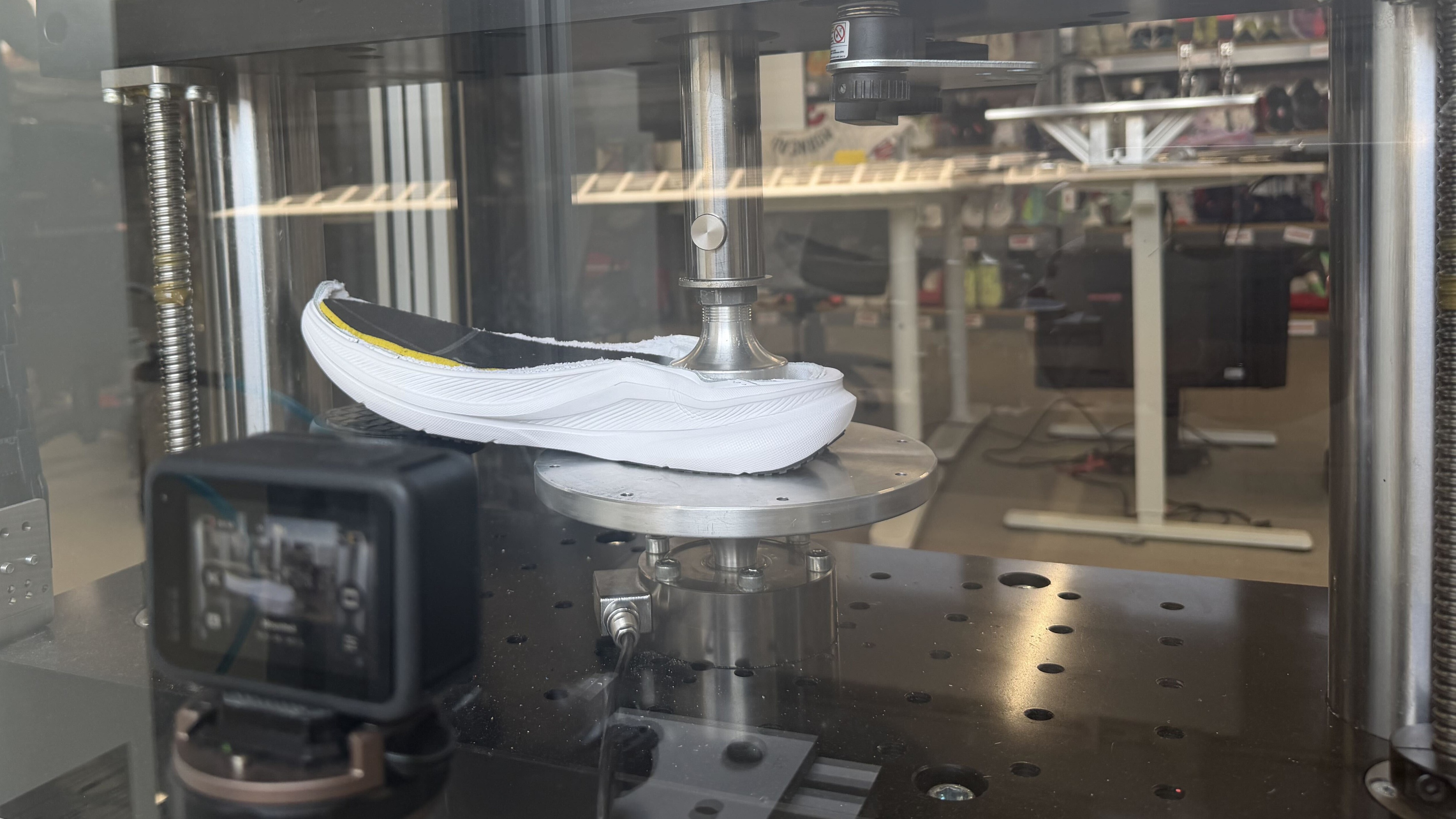
The Under Armour Charged+ Assert 11 has terrible rebound. Both the heel and forefoot return relatively little of the energy from each landing. As a result, the ride is flat and inefficient, offering very little assistance in maintaining momentum, so faster or longer running is very tiring. It's much more comfortable walking than running seriously.
Poor rebound makes the ride flat.
Shoe gives you very little help maintaining pace.

The forefoot has truly awful rebound. It returns very little of the energy from each landing, leaving push-off flat and inefficient. For context, it provides even less rebound than the Crocs Classic Clog.

The heel also has truly awful rebound. Rearfoot landings get minimal assistance from the midsole, making the ride feel dead. It also provides less rebound than the Crocs Classic Clog.
Stability
The Under Armour Charged+ Assert 11 has very good stability. Its exceptionally firm heel keeps rearfoot landings controlled, while the very firm forefoot gives you a secure base when you push off. The broad heel also gives heel strikers plenty of support on landing, and the firm platform works well for gym exercises where you want a steady base underfoot. However, the relatively narrow midfoot provides less support through transition, so runners whose ankles tend to roll inward may still notice some wobble.
Firm heel keeps rearfoot landings controlled.
Very firm forefoot gives you a secure base at toe-off.
Broad heel gives heel strikers plenty of support on landing.
Narrow midfoot provides less support through transition.


The heel is incredibly firm, so rearfoot landings are very secure, but the lack of give will feel harsh with repeated impacts.

The forefoot is exceptionally firm. It provides a very secure base to push from, but, much like the heel, the rigid platform is very harsh.

The Under Armour Charged+ Assert 11 uses a non-gusseted tongue and has no plate. Although an attached tongue can improve lockdown, the shoe's other stability features keep the foot secure. The lack of a plate also fits its intended use for daily training, walking, gym work, and general lifestyle wear.
Cushioning
The Under Armour Charged+ Assert 11 has mediocre cushioning overall. The heel becomes more protective as impact increases, so heel strikers who load the shoe more heavily get better protection than lighter runners moving slowly. The forefoot is much less forgiving, with protection dropping as force increases, making it increasingly harsh for faster or heavier runners. The cushioning also does a poor job of protecting your legs over longer distances.
Heel offers adequate protection under moderate and high forces.
Forefoot is reasonably protective for lighter runners at relaxed paces.
Forefoot is harsh for faster or heavier runners.
Cushioning leaves your legs increasingly beat up over longer runs.


The heel provides adequate impact protection overall, but the result depends heavily on how much force you put through it. Lighter heel strikers at relaxed paces get sub-par protection, though the cushioning improves noticeably as impact increases.


The forefoot has sub-par cushioning. It does an okay job for lighter runners at relaxed paces, but protection drops quickly as more force is applied, making it harsh for faster or heavier runners. It's nowhere near as protective as the Nike Winflo 12.

The Under Armour Charged Assert 11 does a poor job of protecting your legs over long distances, so you absorb much more of the road impact as the miles build. Your legs will be sore if you take it beyond 10K, and budget-conscious runners wanting better protection should get the Nike Winflo 12 or adidas Questar 4 instead.
Bounciness
The Under Armour Charged+ Assert 11 has terrible bounce. Neither the heel nor forefoot compresses deeply, leaving very little spring when you land and push off, while the terrible rebound makes the ride firm and dead rather than lively.
Shallow compression provides very little spring.
Terrible rebound makes the ride feel dead and tiring.


Snappiness
The Under Armour Charged+ Assert 11 has mediocre snappiness. Its exceptionally firm forefoot gives you a solid base to push from, and it takes a lot of force to bend, so there's some leverage through toe-off. However, the forefoot does a bad job of giving back the energy stored when bent, so it lacks any juicy snap at push-off. The very mild forefoot rocker angle means toe-off isn't especially propulsive.
Exceptionally firm forefoot gives you a solid base to push from.
Forefoot takes a lot of force to bend, providing excellent leverage.
Shoe returns very little energy as the forefoot unbends, so push-off lacks snap.
Toe-off lacks propulsion due to mild rocker angle.

The forefoot of this shoe does a bad job of returning the energy stored when bent, so toe-off is inefficient, with very little spring helping you move forward.


Roll
The Under Armour Charged+ Assert 11 has okay roll. The heel geometry does a very good job of moving heel strikers smoothly into midstance, while the forefoot rocker provides decent assistance through toe-off. However, the rocker flattens fairly easily under load, reducing how much help it gives you through the stride. The low stack also flattens instead of guiding you smoothly through toe-off.
Heel geometry does a great job moving heel strikers smoothly into midstance.
Overall forefoot geometry provides decent assistance through toe-off.
Rocker flattens fairly easily, reducing assistance through the stride.
Low forefoot stack flattens instead of rolling you forward.

The rocker holds its shape adequately under load, preserving some assistance from the shoe's geometry as you move through the stride. However, it isn't rigid enough to deliver a particularly strong rolling sensation.


True To Size
The Under Armour Charged+ Assert 11 runs a little long, but we're confident most runners should stick with their usual size. If you're normally between two sizes, the smaller one is likely the better choice. The forefoot width should work well for most feet, and there's plenty of room through the arch. However, the toe box height is fairly low, so runners with taller toes or who lift them on landing may experience some chafing.
Runs long but should be fine for most runners.
Arch has plenty of room.
Forefoot roomy enough for most feet.
Low toe box may feel restrictive for runners with taller toes.


The Under Armour Charged Assert 11 is a heavy shoe, and there's no mistaking its heft. It's much heavier than daily trainers like the Saucony Ride 19, and even heavier than other cheap shoes like the Nike Winflo 12, making it cumbersome on foot. We also found a noticeable discrepancy between shoes, with the left shoe being much heavier.


The Under Armour Charged+ Assert 11 uses Charged+ foam, a basic EVA-based compound. It provides uneven cushioning and terrible rebound, making the ride much less lively than the Nike Winflo 12 and less protective than the adidas Questar 4, especially on longer runs.

Popular Running Shoe Comparisons
The Under Armour Charged+ Assert 11 is a budget shoe advertised as a do-it-all sneaker. In practice, it fills a similar role to lifestyle-focused options like the Nike Quest 7, handling walking, gym work, and occasional short runs rather than functioning as a dedicated running shoe. Within the same price range, the adidas Questar 4 is a much better pick for running, with deeper cushioning and better protection over longer distances at a similar weight. Runners who want an affordable daily trainer that can handle all of their weekly mileage should check out the Nike Winflo 12 instead.
If you're just getting started with running, check out our picks for the best running shoes for beginners. If price is the priority, see our recommendations for the best cheap running shoes.
The Nike Winflo 12 is a better running shoe than the Under Armour Charged+ Assert 11. The Nike is lighter, much more stable, and considerably more protective, with enough rebound to make regular running less tiring. Its tall platform can take some getting used to, but it handles daily mileage and longer runs much better. Get the Under Armour if you mainly want a shoe for walking or gym work with a little cardio; get the Nike if running is the priority.
The adidas Questar 4 is a better running shoe than the Under Armour Charged+ Assert 11. The adidas has better stability and significantly better cushioning, so it protects your legs more effectively and handles longer runs much better. Both are similarly heavy, but the adidas is the better option if running makes up a meaningful part of your routine, and it's also cheaper at full retail. Only get the Under Armour if you like the look better and mainly want it for walking or gym work with occasional short runs.
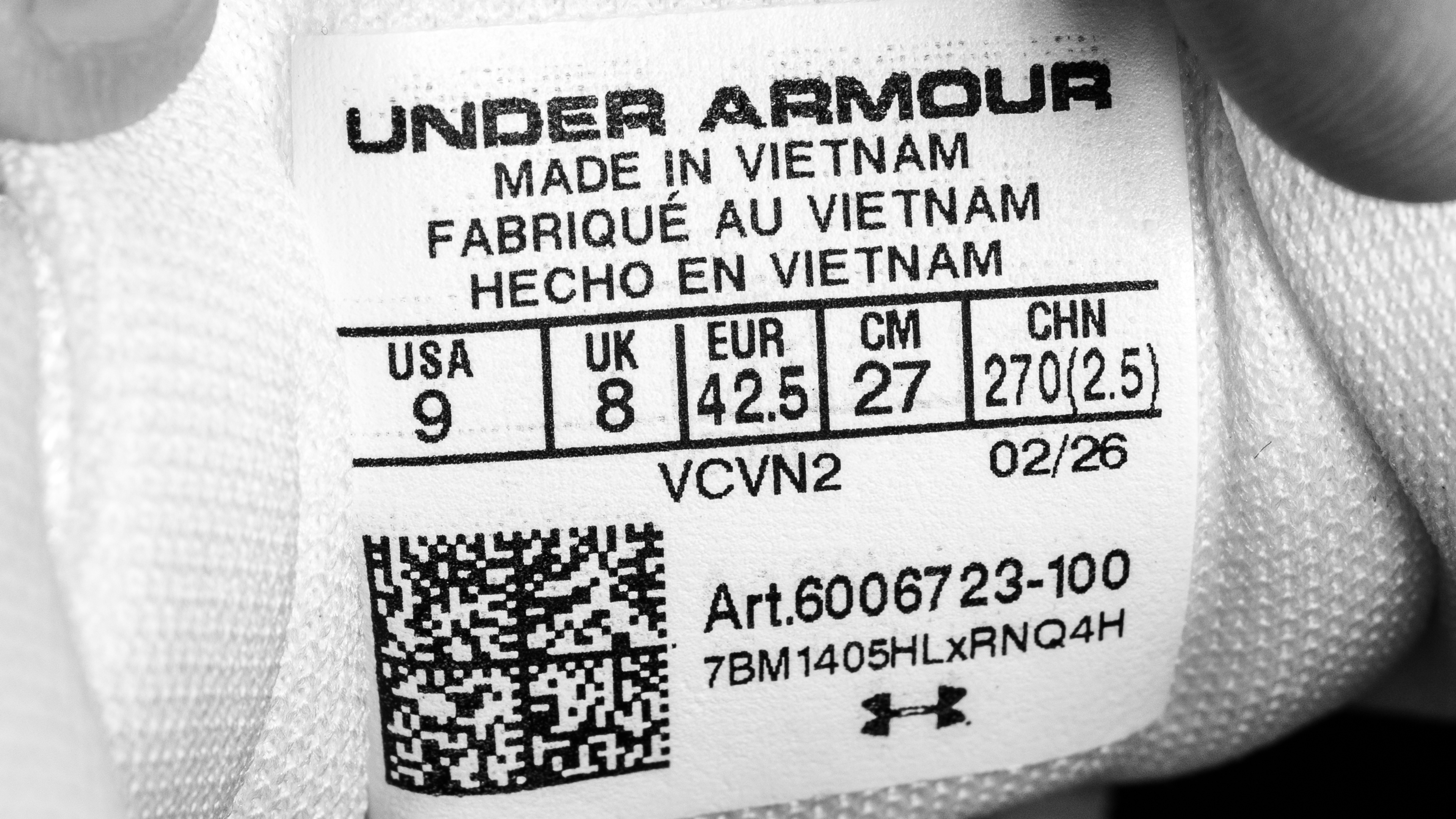
Differences Between Sizes And Variants
We bought and tested the Under Armour Charged+ Assert 11 in a men's U.S. size 9 in the White/Black colorway. Here's the label for our pair. Several other colorways are available depending on your region. This shoe is available in both standard and wide sizing for men and women. The design section applies specifically to the pair we tested, but we expect other sizes and gender variants to perform similarly.