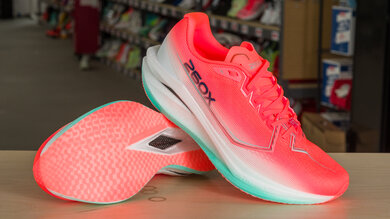
The XTEP 260X 3.0 is a snappy, carbon-plated super trainer that's great for short to middle-distance racing and interval training. Its responsive midsole gives impressive energy return, although the construction is a bit heavier than that of the most streamlined racing shoes. For runners who prefer a firmer ride and can maintain a higher cadence, the 260X 3.0 is a strong contender.
| ✅ Buy If: | ❌ Skip If: |
|
|
Our Verdict
The XTEP 260X 3.0 is a decent shoe for racing a half-marathon, and could work for a marathon, although the limited cushioning will leave your legs feeling especially beat up the next day. The midsole has excellent energy return, so it rewards harder efforts, but the relatively narrow platform can make stability a challenge if your form breaks down late in a race.
Impressive energy return makes the shoe efficient at faster paces.
Relatively light weight is good for racing.
Cushioning doesn't hold up over long distances.
Stability isn't great for long distances.
The XTEP 260X 3.0 is a great shoe for racing distances up to 10k. The firm, snappy forefoot makes it very responsive at faster paces, and the stiff rocker helps keep turnover high. The build is lightweight enough for a racing shoe, but the design isn't the most streamlined, so runners chasing maximum efficiency might be disappointed.
Impressive energy return makes the shoe efficient at faster paces.
Relatively light weight is good for racing.
Stiff rocker helps maintain high turnover.
Energy return isn't on par with current generation of racing shoes.
If you're already buying the XTEP 260X 3.0 for racing or speed workouts, you can also use it for long runs, even if this isn't its forte. The shoe's rockered geometry helps keep it turning over mile after mile, and the stability is satisfactory for prolonged efforts. The main limitation is the lack of cushioning. The midsole quickly bottoms out and becomes increasingly harsh underfoot as the miles stack up.
Stiff rocker helps maintain high turnover.
Light weight keeps the shoe from feeling sluggish on tired legs.
Cushioning doesn't hold up over long distances.
Stability isn't great for long distances.
The XTEP 260X 3.0 is a passable choice for a daily trainer, though the carbon-plated midsole may feel a bit too rigid for everyday use. Its cushioning is alright, but not the most protective, so it could be a limiting factor if you're putting in lots of miles every week and want a daily trainer that can absorb all the pounding that entails. The shoe offers satisfactory stability, though it's not as solid or reliable as a classic daily trainer.
Too unstable for a daily trainer.
Changelog
- Updated Jul 30, 2026: Review published.
- Updated Jul 27, 2026: Early access published.
- Updated Jun 02, 2026: Our testers have started testing this product.
- Updated May 27, 2026: The product has arrived in our lab, and our testers will start evaluating it soon.
- Updated May 11, 2026: We've purchased the product and are waiting for it to arrive in our lab.
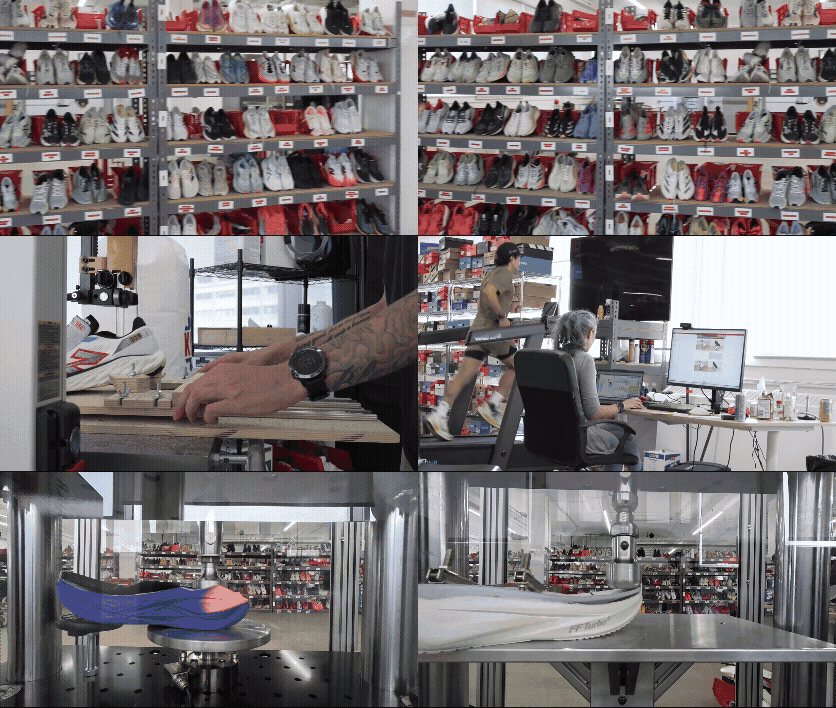
We've bought and tested more than 250 running shoes. Every pair purchased with our own money, never supplied or sponsored by brands. Our data-driven tests are designed to go beyond marketing claims, and since every shoe goes through the exact same methodology, you can directly compare results to find the right pair for your needs.
Test Results
Energy Return
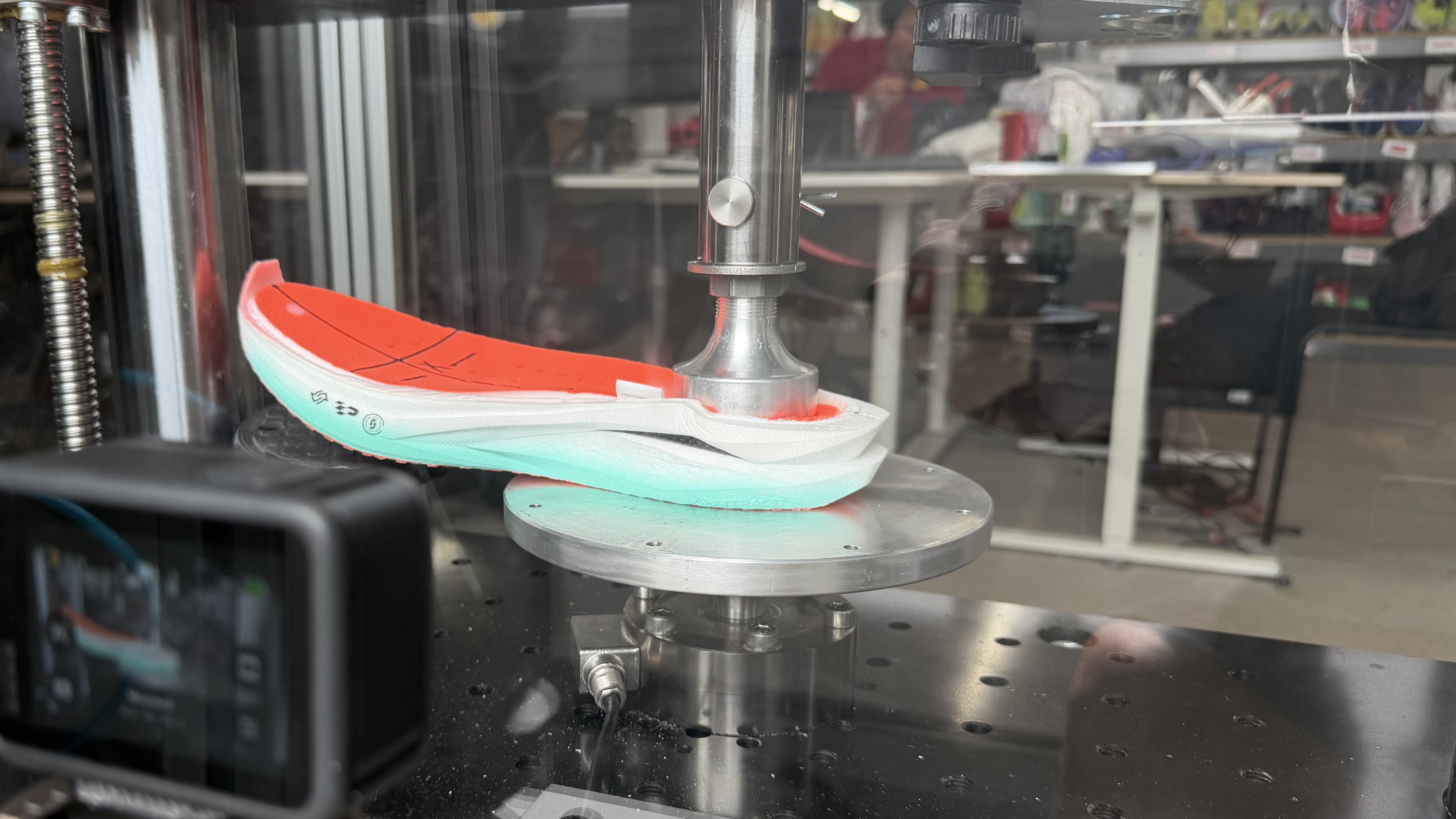
The XTEP 260X 3.0's energy return is one of its greatest attributes. This is especially noticeable in the forefoot, which returns an impressive amount of the energy you put into it and makes the ride feel dynamic and lively enough for racing or faster workouts.
Forefoot is very lively.
Energy return in heel isn't as impressive, but good enough to keep the ride lively.
Energy return isn't on par with current generation of racing shoes.

The XTEP 260X 3.0's forefoot is especially lively, making it a rewarding shoe for faster paces. It actually returns energy slightly better than the Nike Alphafly 3.

The XTEP 260X 3.0's heel does a very good job of returning energy, helping heel strikers bounce forward onto their toes. It's not quite as lively as the Saucony Endorphin Pro 5, but significantly better than the ANTA C202 7.
Stability
The XTEP 260X 3.0 has decent stability, thanks to its firm midsole, but the platform is relatively narrow. If you land on your heel or midfoot, the landing pad could feel particularly precarious.
Firm midsole provides a solid base.
Narrow platform under heel and arch requires strong stabilizer muscles.


The XTEP 260X 3.0's heel is very firm, which partially compensates for the platform's narrowness.


Cushioning
The XTEP 260X 3.0 has okay cushioning. The heel is adequately padded to absorb most impacts, but the forefoot struggles under heavy forces, making the ride increasingly harsh for forceful forefoot strikers. Long runs can also turn unpleasant, as the midsole's shock absorption becomes increasingly unreliable after about 10k.
Decent cushioning for heel strikers.
Cushioning doesn't hold up over long distances.
Forefoot bottoms out too easily.


The XTEP 260X 3.0 has satisfactory cushioning for most heel strikers, but it's not as protective as the Saucony Endorphin Pro 5 or ANTA C202 7.


Bounciness
The XTEP 260X 3.0 has some bounce, but it's rather unremarkable. Although the shoe has great energy return, the sensation isn't that bouncy, as the midsole foam resists compression, making the ride very efficient but not particularly elastic.
Impressive energy return makes the shoe efficient at faster paces.
Lack of compression mutes bounciness.


Snappiness
The XTEP 260X 3.0 is a very snappy shoe. The forefoot snaps back very forcefully when bent and acts as an efficient lever when you push off. The rocker angle isn't especially steep at the front, but the overall firmness of the forefoot makes contact with the ground very direct and responsive.
Springy forefoot.
Firm forefoot makes the shoe very responsive.

The XTEP 260X 3.0's forefoot springs back with impressive force when bent, giving a very snappy sensation at push-off.


The XTEP 260X 3.0's stiff forefoot makes it easy to get a lot of leverage when pushing off. The bending stiffness is comparable to that of the adidas Adizero Boston 13.

Roll
The XTEP 260X 3.0's geometry makes the shoe roll smoothly through each stride. The carbon plate in the midsole helps the rocker maintain its shape when you apply force, and keeps your foot rolling forward. The heel rocker is less aggressive than the forefoot, so if you land too far back on your foot, the roll won't be quite as smooth.
Geometry of the forefoot encourages forward roll.
Rocker maintains its shape well under load, aiding turnover.

The XTEP 260X 3.0's rocker does a very good job of holding its shape, as the carbon plate stiffens it.


True To Size
The XTEP 260X 3.0 fits very close to true to size, and most runners can confidently order their normal size.
Enough room in toe box for some splay.
Length is true to size.


Although it's not a featherweight, the XTEP 260X 3.0 is light enough to be a good racing shoe.


The dual-density midsole has a top layer of PEBA-based XTEP ACE+ foam, which is more concentrated under the forefoot, and a bottom layer of E-TPU-based XTEP POWER, which is more concentrated under the heel. The E-TPU on the bottom is denser, so the heel doesn't bottom out as quickly as the forefoot.

Popular Running Shoe Comparisons
The XTEP 260X 3.0 is a snappy super-trainer that can bridge the gap between interval training and shorter races. It's not to be confused with the XTEP 360X 2.0, which is a heavier but better-cushioned carbon-plated trainer. The 260X 3.0 is very good for shorter races and workouts, but runners who want similar performance and energy return in a more stable platform would be better served by the Saucony Endorphin Pro 5. If, on the other hand, you want a lightweight carbon-plated trainer with better cushioning, check out the ANTA C202 7.
If you're planning to do longer races, you'll find better options in our recommendations for the best shoes for running a marathon. If you're looking for deals, check out our recommendations for the best cheap running shoes.
The XTEP 160X 7.0 PRO and XTEP 260X 3.0 are both carbon-plated XTEP shoes that excel at different distances. The 260X 3.0 is a short-distance workout and racing shoe that works best for lighter runners who want a responsive shoe for faster efforts. The 160X 7.0 PRO is more suited to endurance races, thanks to its deeper cushioning and better energy return. If you're racing a 5k or 10k, and you're doing shorter speed workouts, get the 260X 3.0. If you're doing a half or full marathon, get the 160X 7.0 PRO.
The ANTA C202 7 and XTEP 260X 3.0 are two lightweight, carbon-plated trainers that you can use both on race day and in the training leading up to it, but the best choice depends on the distance. The XTEP shoe is very snappy and has impressive energy return, so it's a great shoe for racing a 5k or 10k. The ANTA trades some energy return for better cushioning and uses a more pronounced rocker to assist with turnover. It has the versatility to cover a wide range of distances, but its comparative advantage over the XTEP is in longer races like the half or full marathon.
Differences Between Sizes And Variants
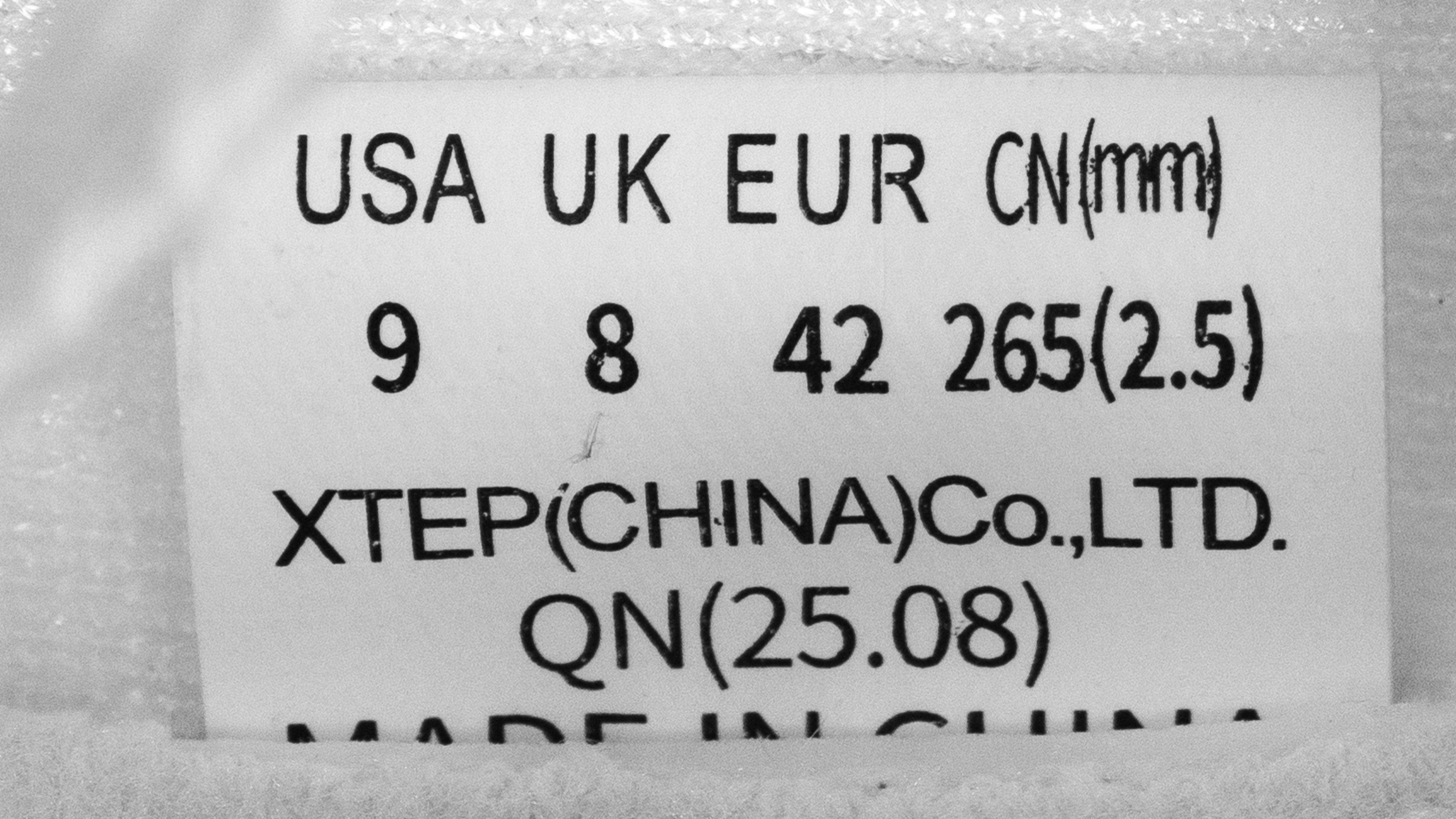
We bought and tested the XTEP 260X 3.0 in US men's size 9, as indicated on the label for our pair. This colorway is simply called 'Orange'. The shoe is available in several other exciting colorways, depending on your region, but only in one standard width. The Design section applies only to the specific model we tested, but we expect other sizes to perform similarly.