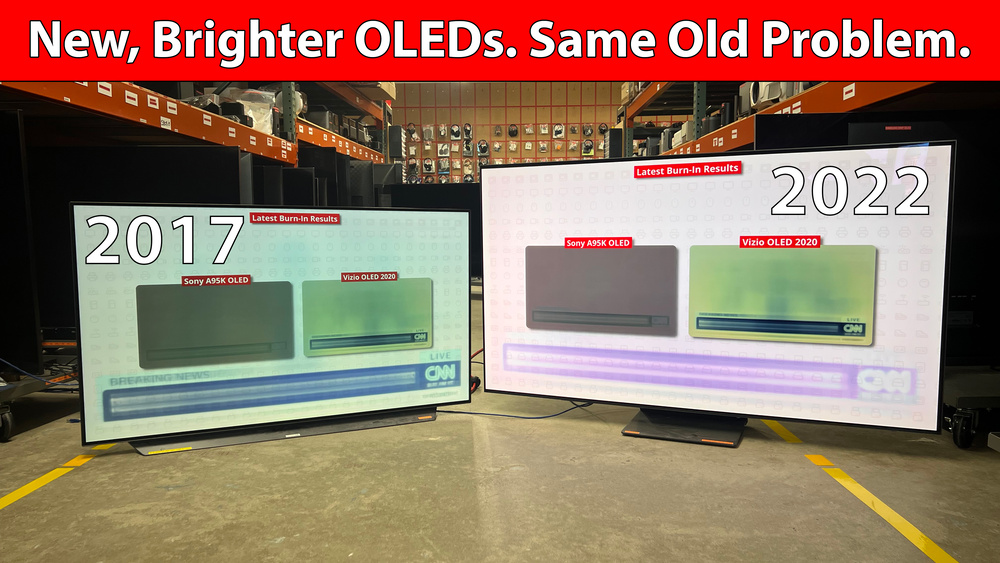
Modern OLED TVs use more advanced materials, panel structures, compensation cycles, and thermal management than early-generation models. We expected those advances to make newer models more resistant to burn-in.
At the same 10,500-hour CNN checkpoint, however, the 2020–2023 OLEDs in our Accelerated Longevity Test did not show a consistent reduction in permanent image retention compared to the 2017 LG C7 OLED tested in our previous Real-Life OLED Burn-In Test. That doesn't mean OLED technology stood still, nor does it mean most people should avoid OLED.
Newer OLEDs were substantially brighter. Considering their significant increase in overall brightness, newer OLEDs are much more resilient to burn-in than their first-generation counterparts. However, these benefits are largely negated by their increased brightness, resulting in similar levels of burn-in during static use at maximum brightness. Still, for most mixed-content viewers, the increase in brightness is a net benefit. For static-heavy users, especially all-day news viewers, desktop users, or people who play the same game with fixed HUDs for thousands of hours, burn-in remains a real consideration.
Newer OLEDs Don't Show A Clear Burn-In Advantage
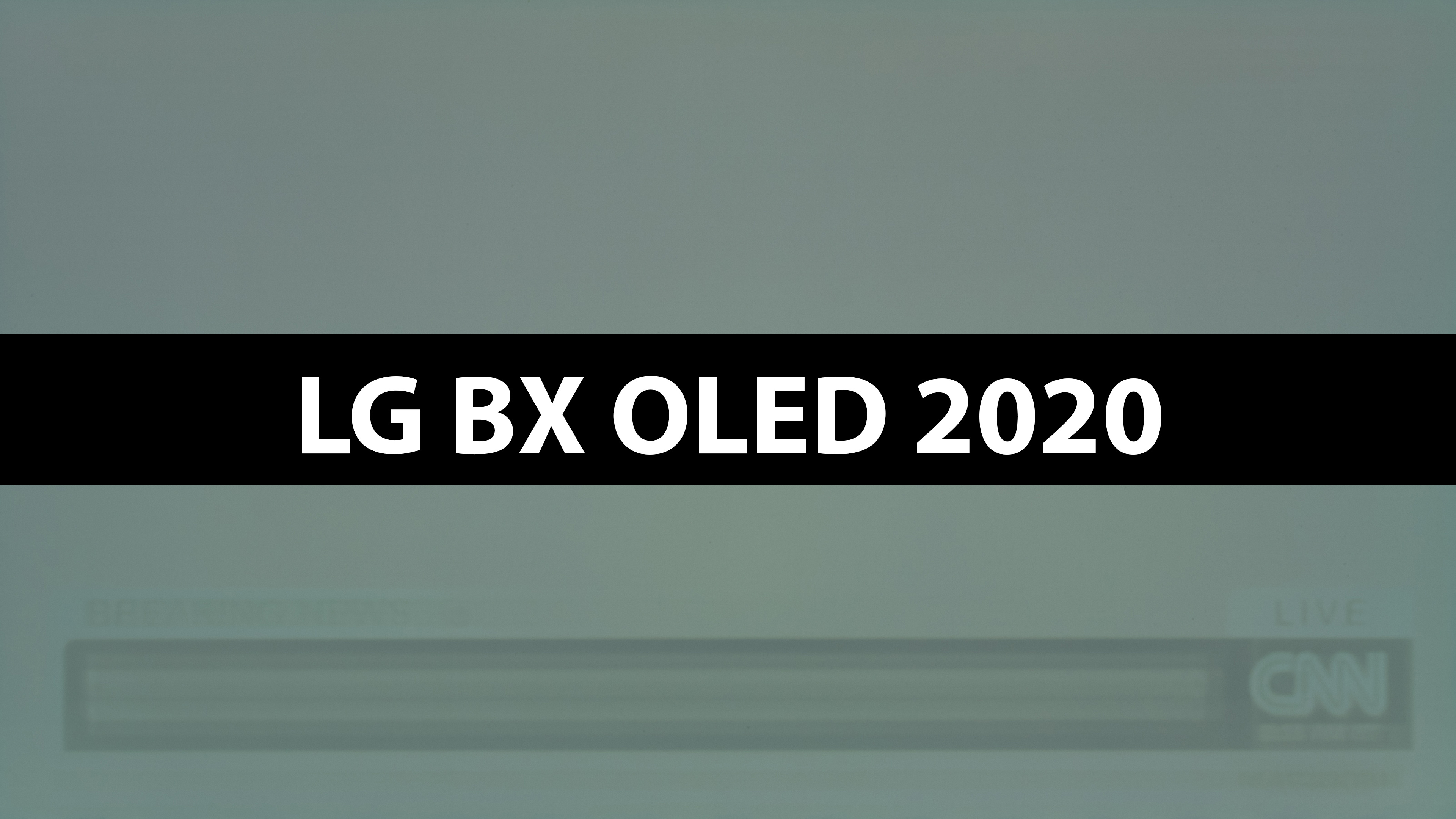
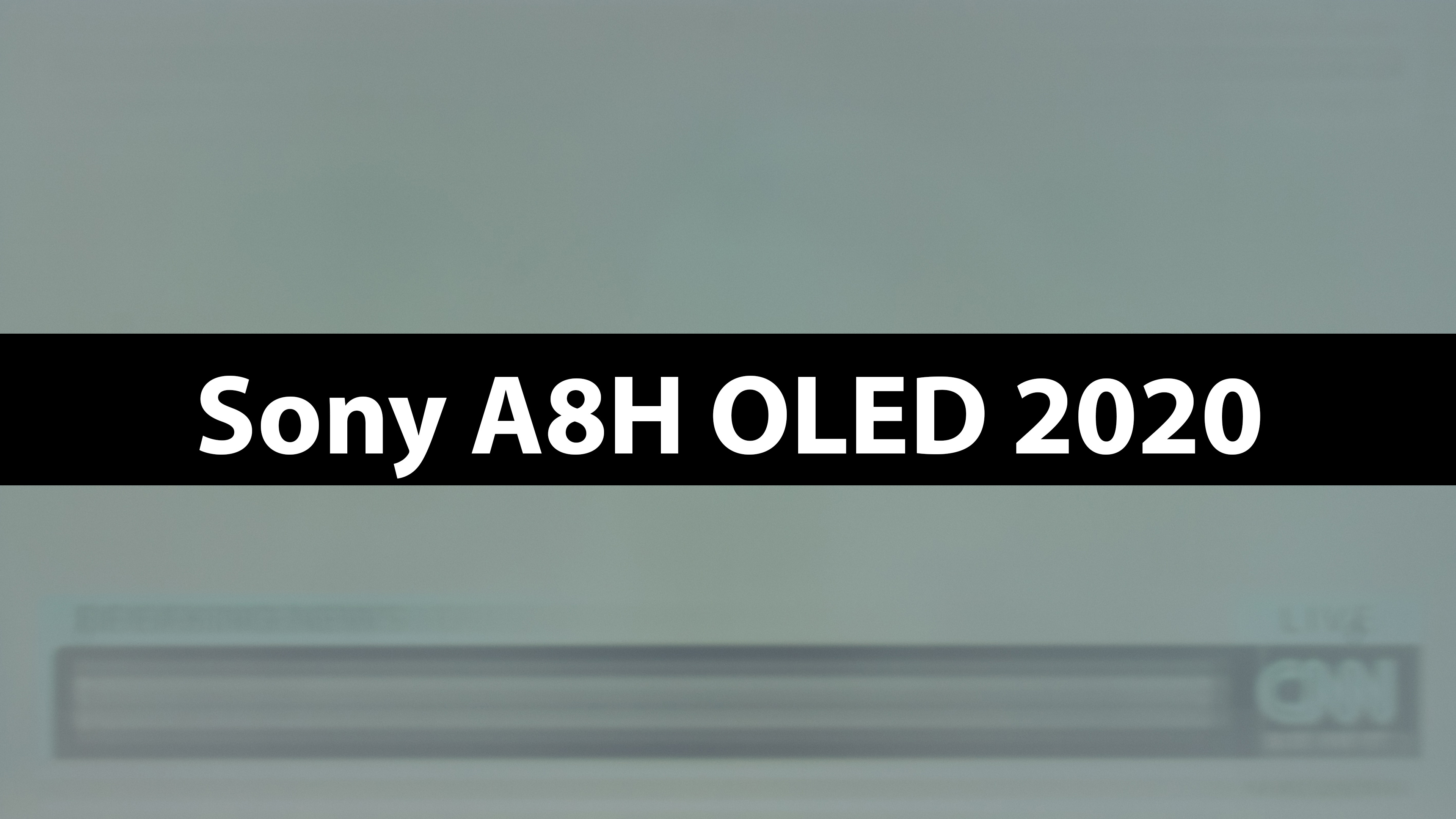
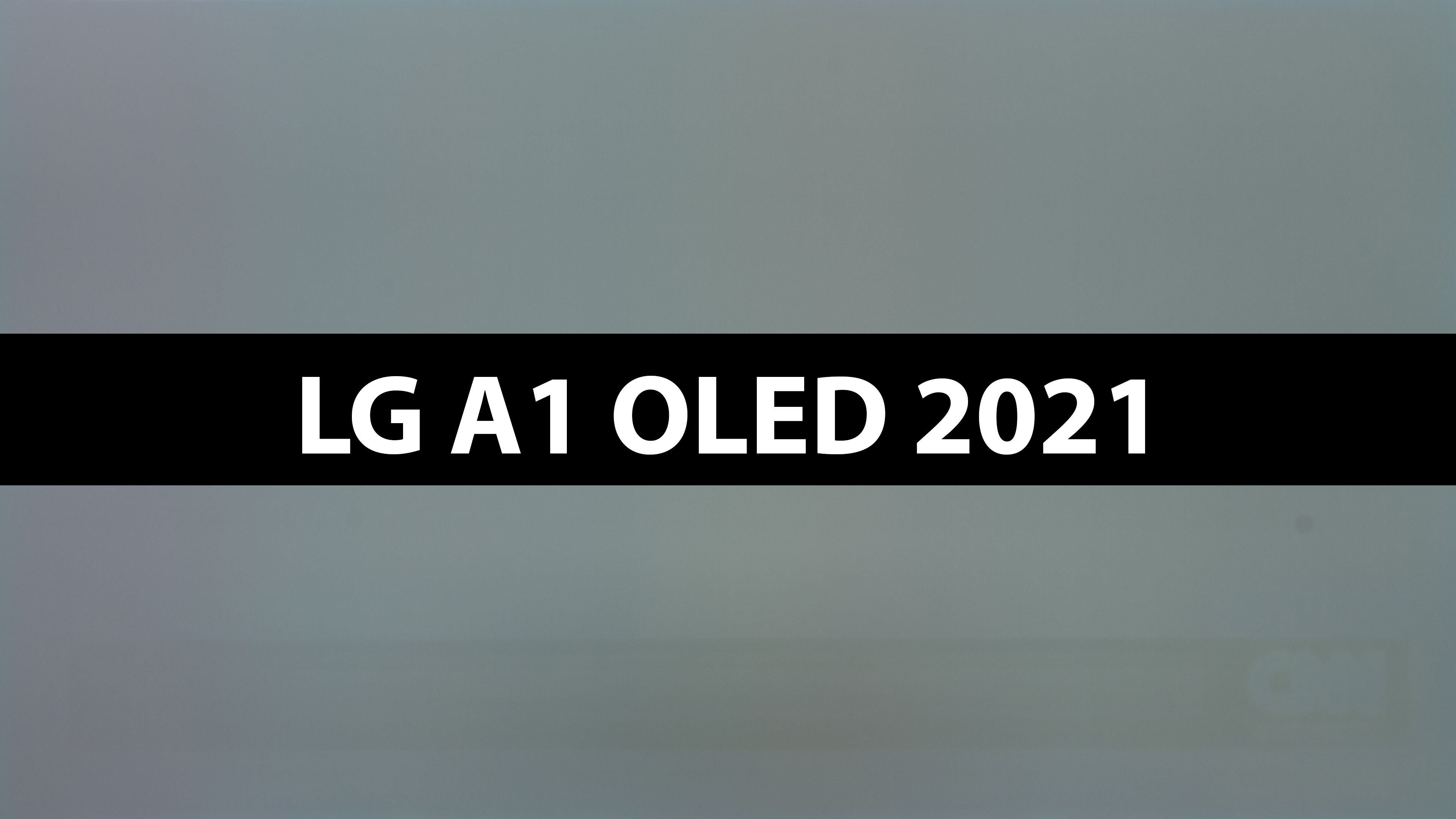
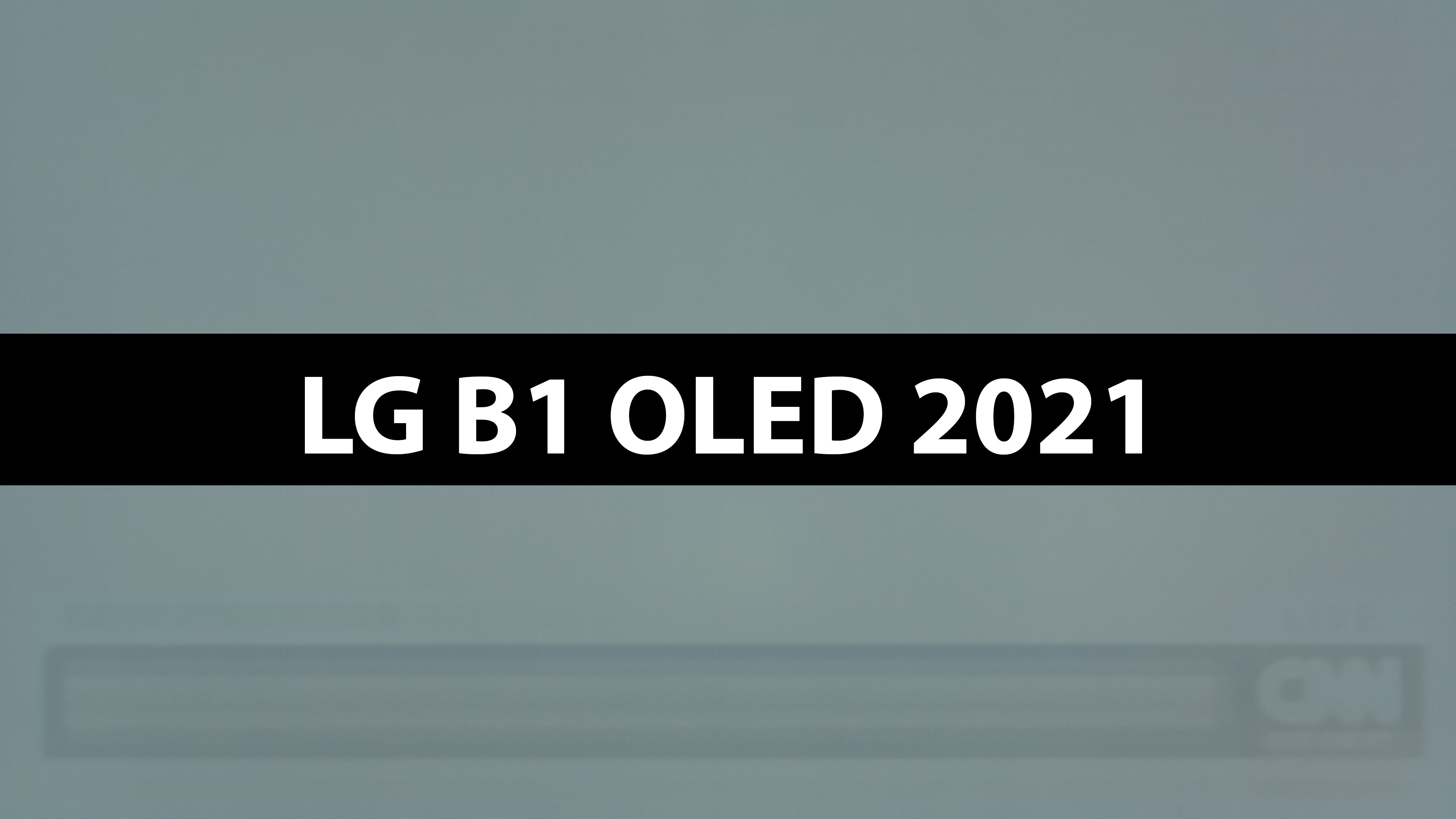
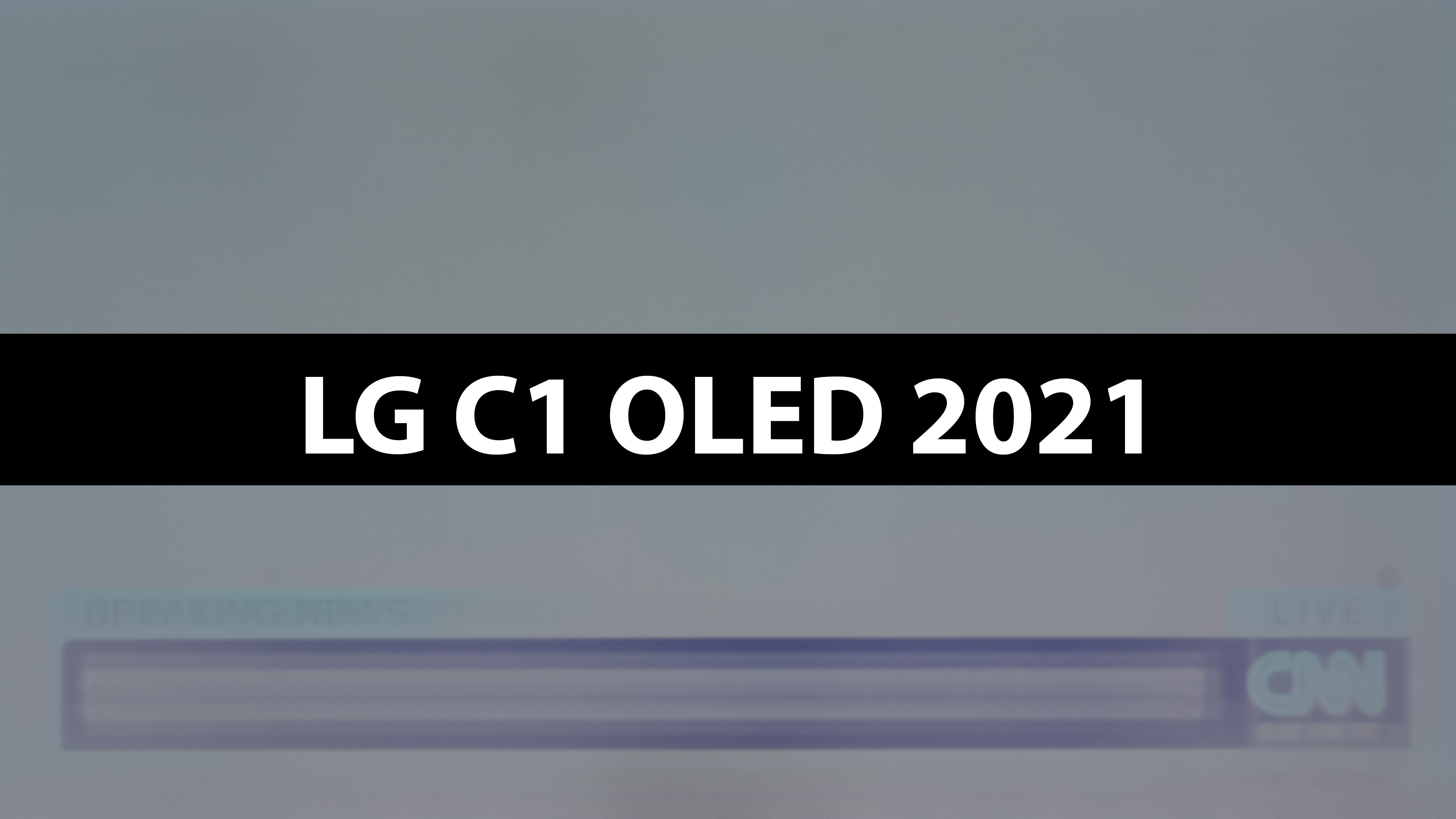
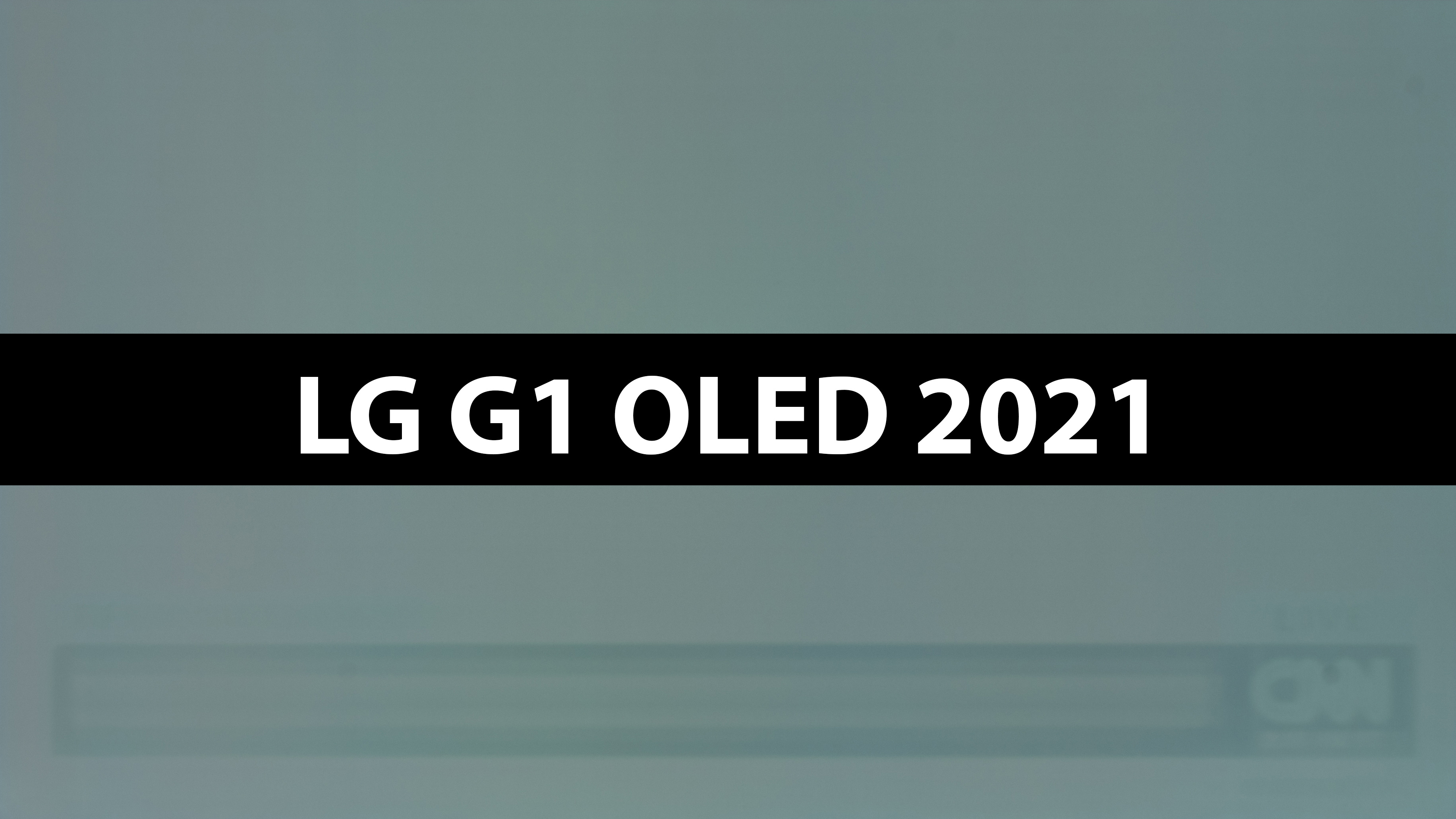
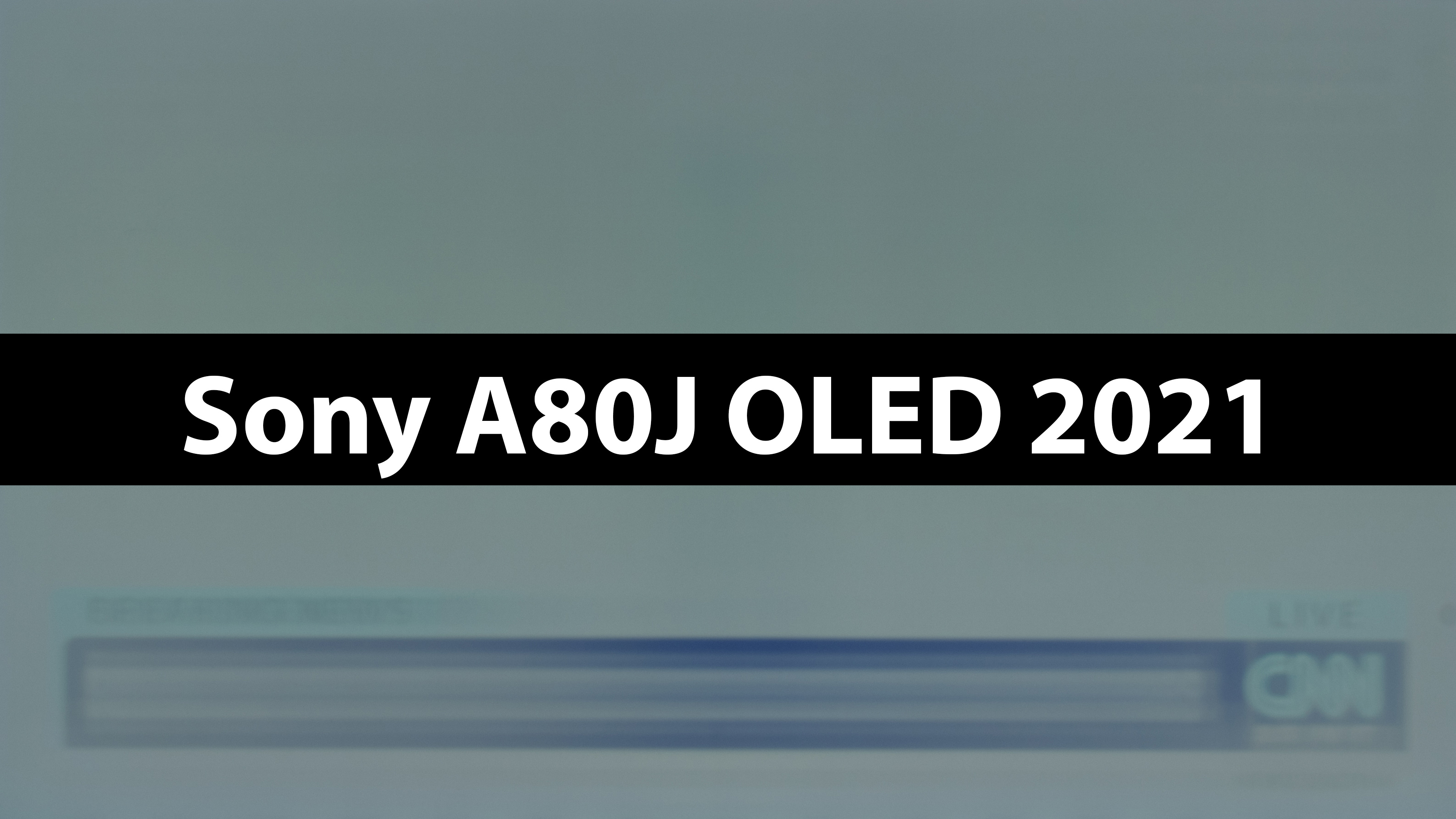
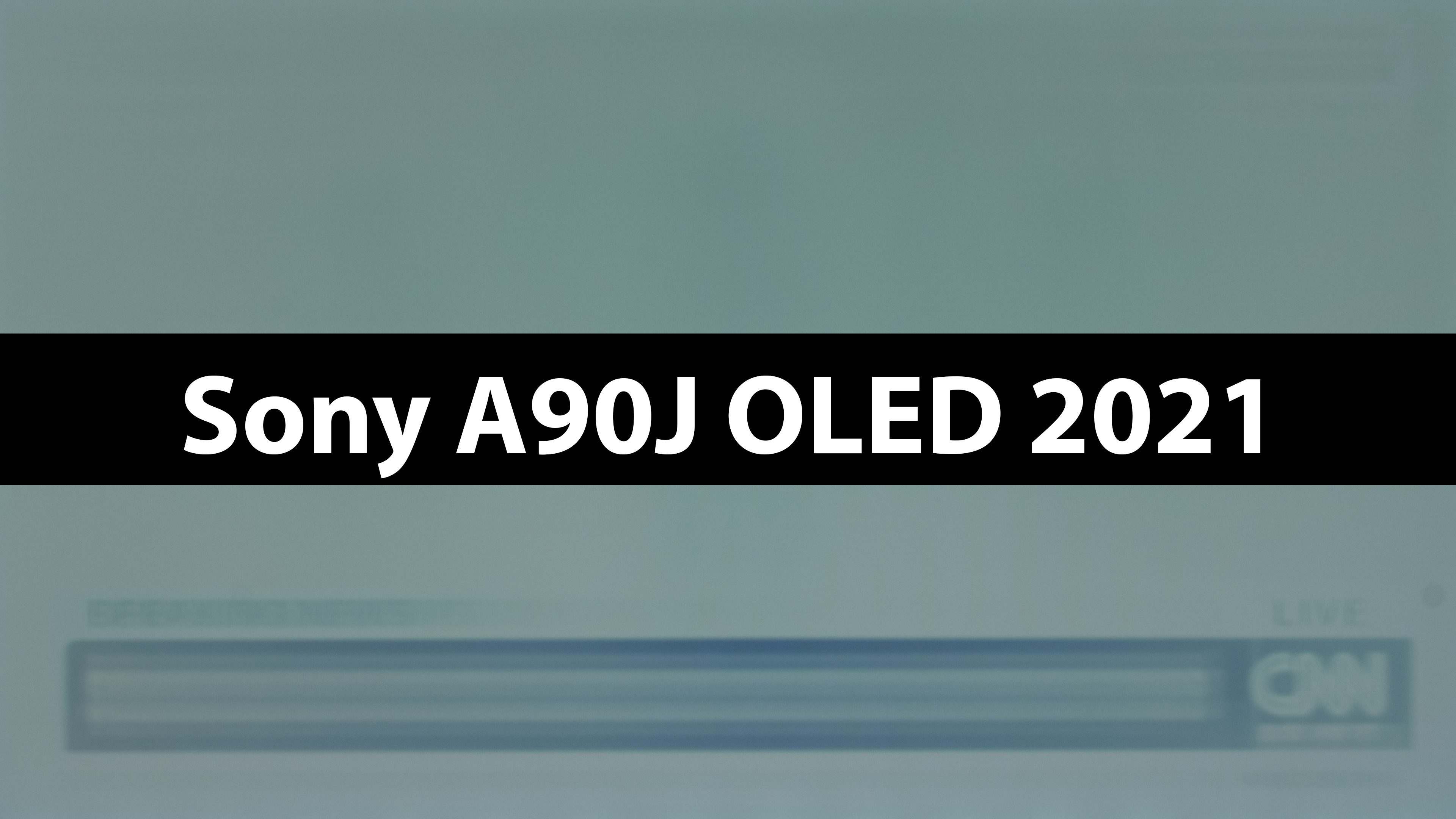
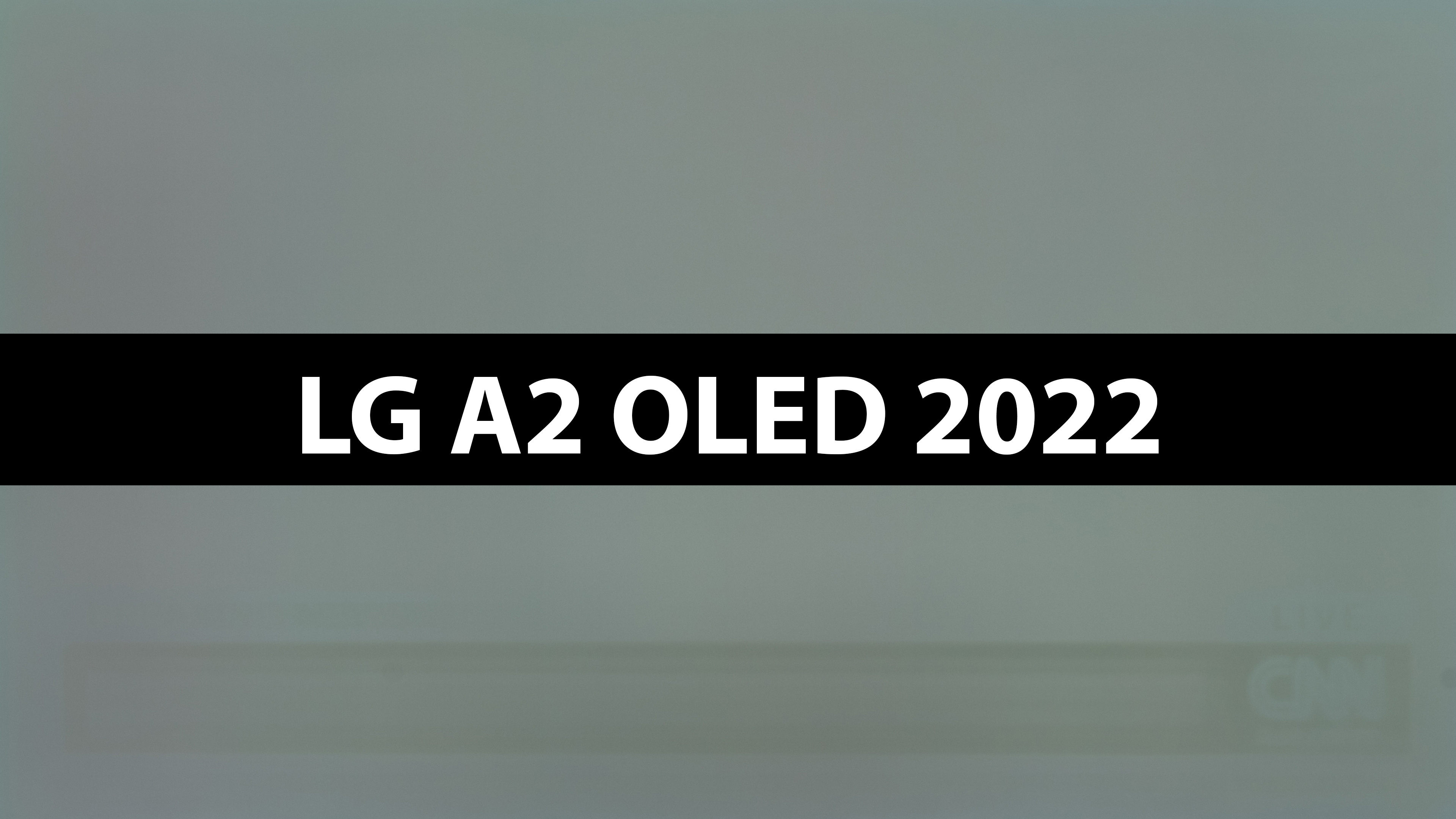
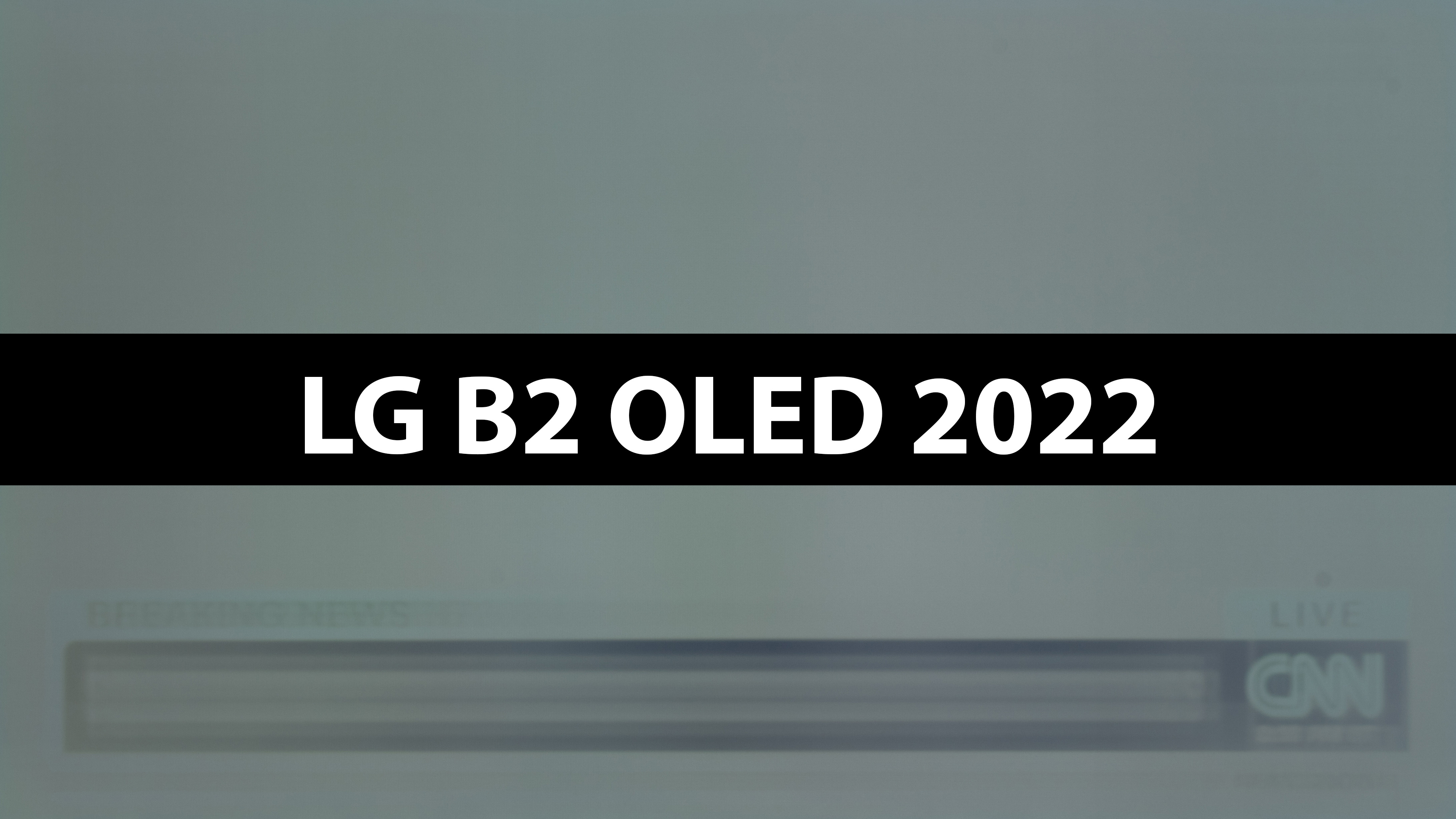
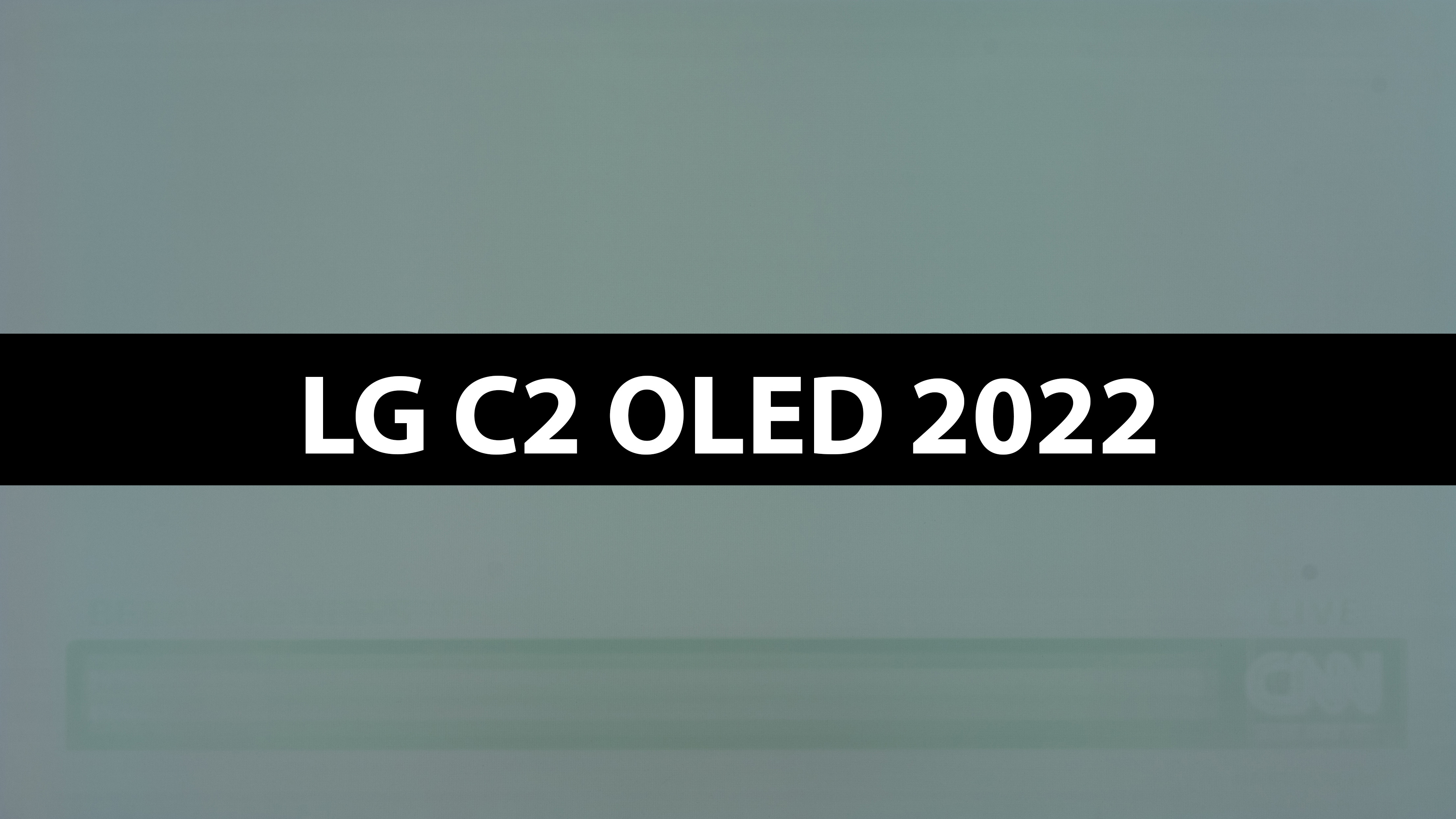
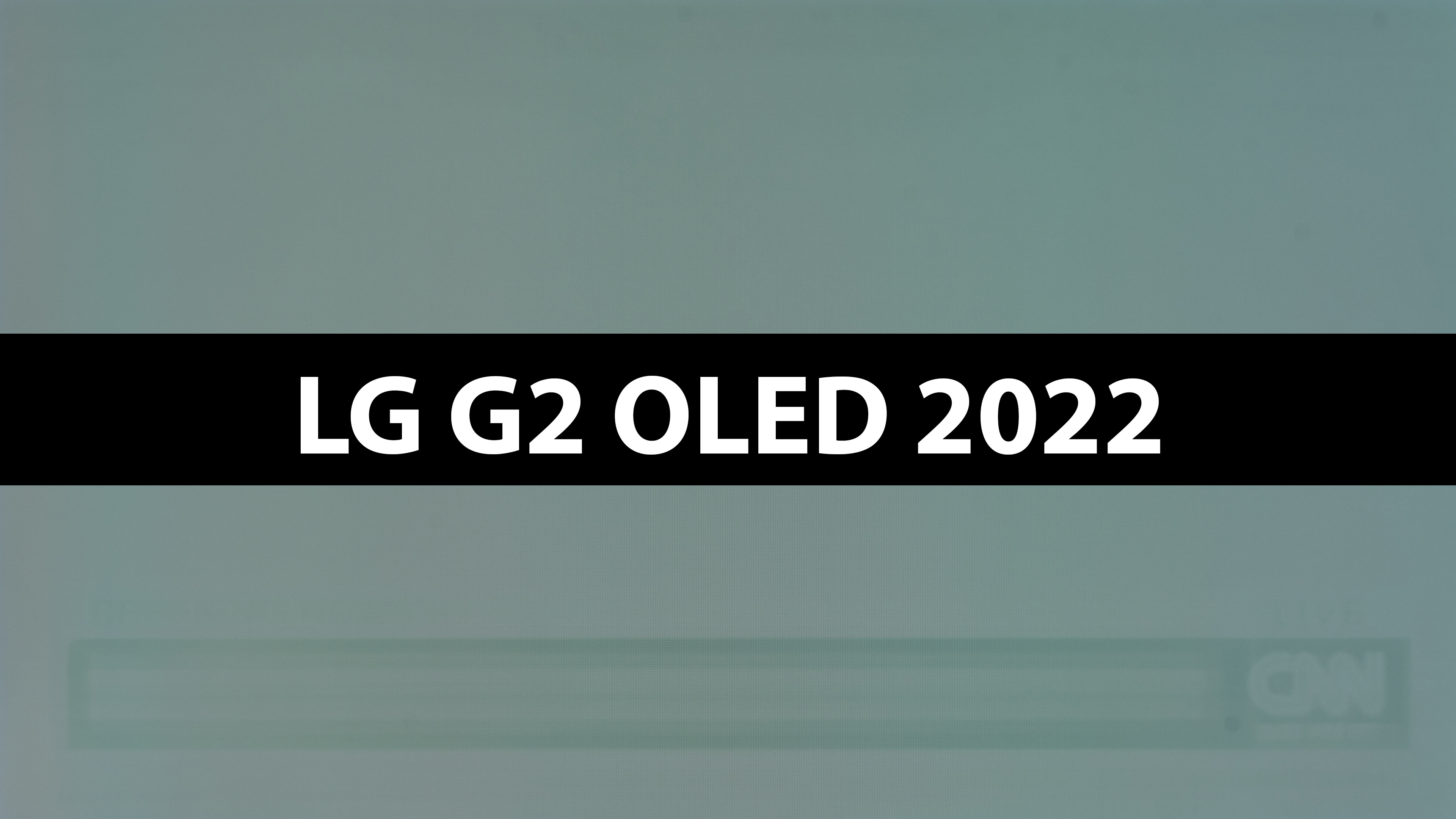
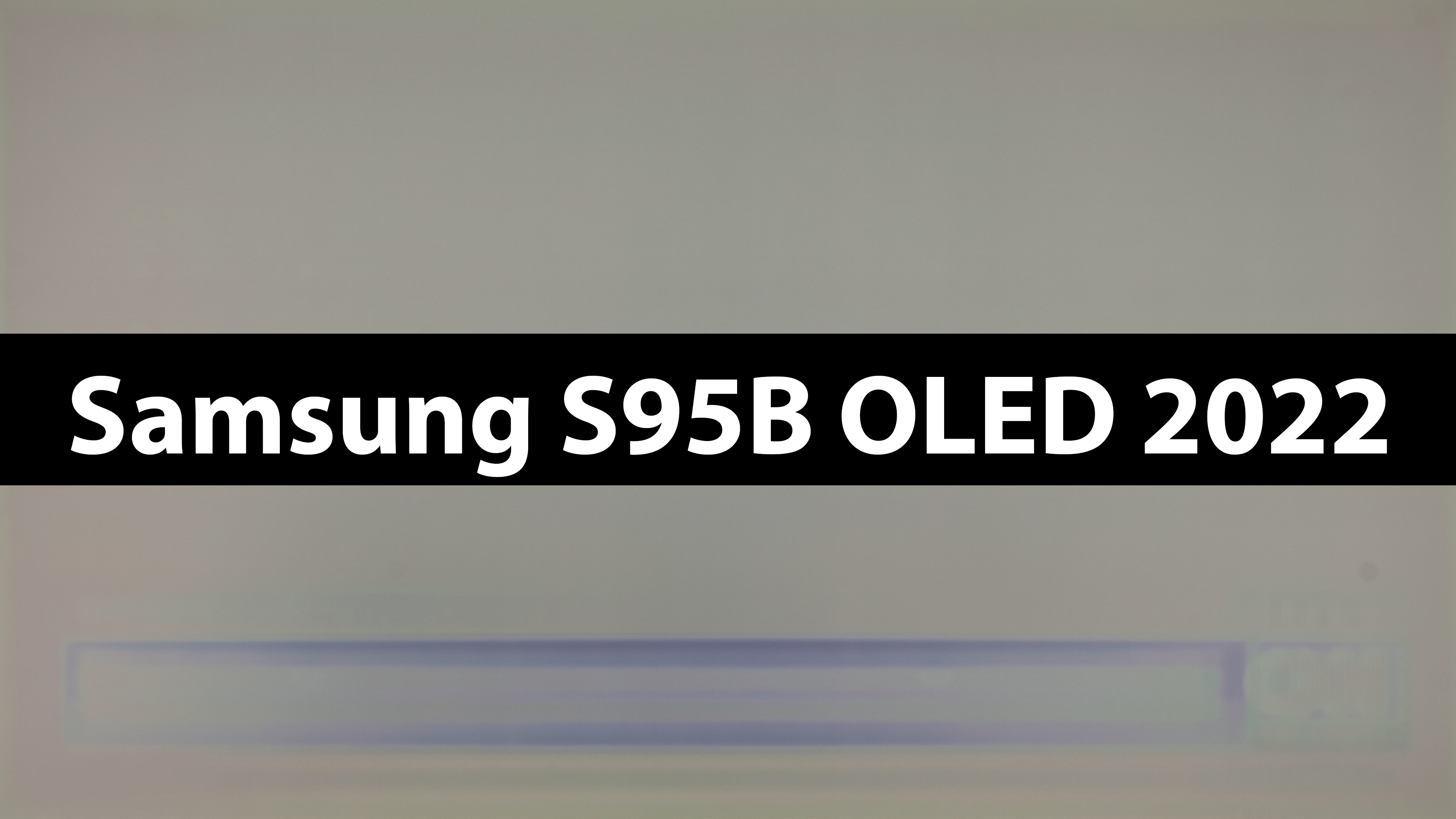
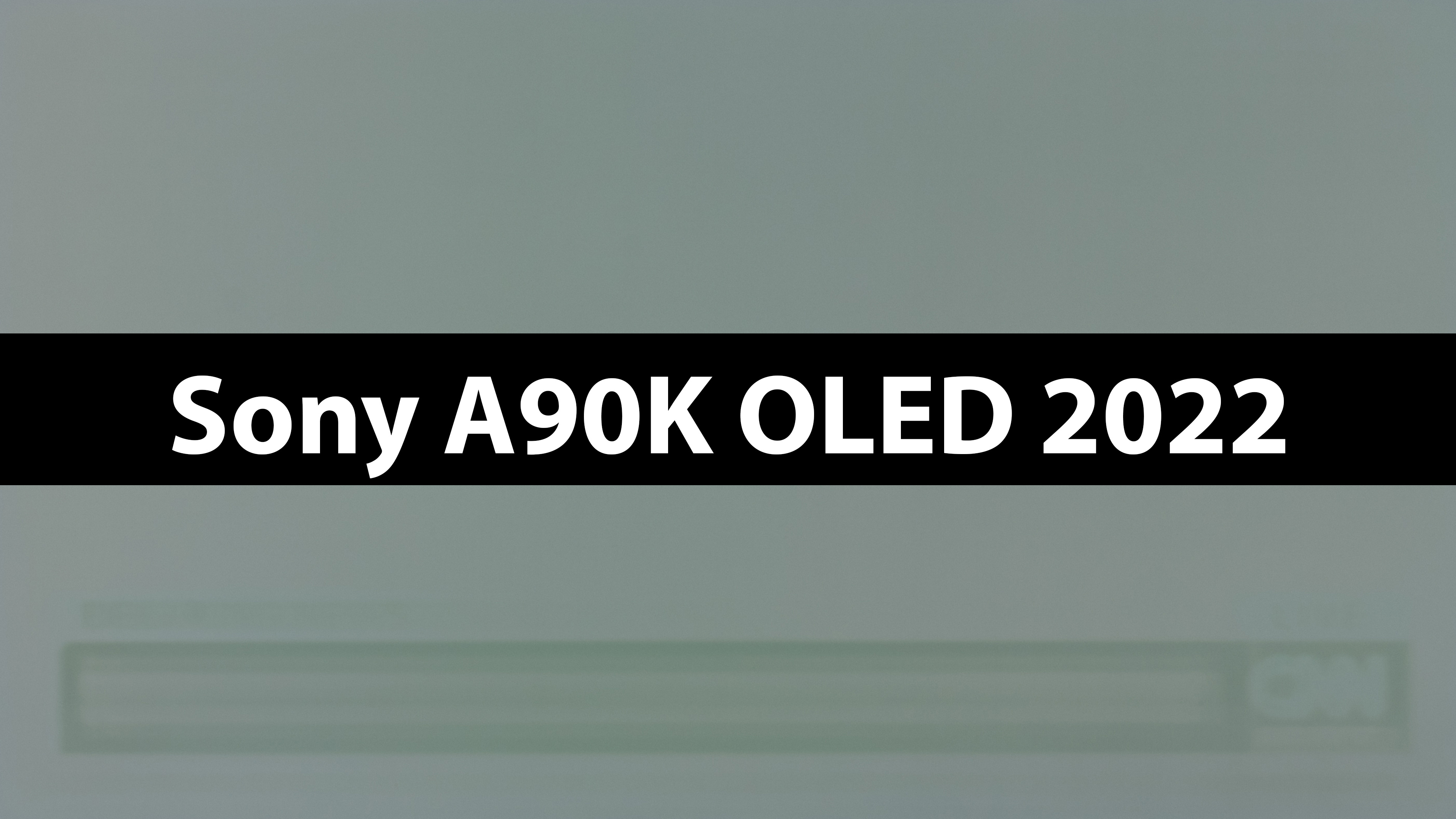
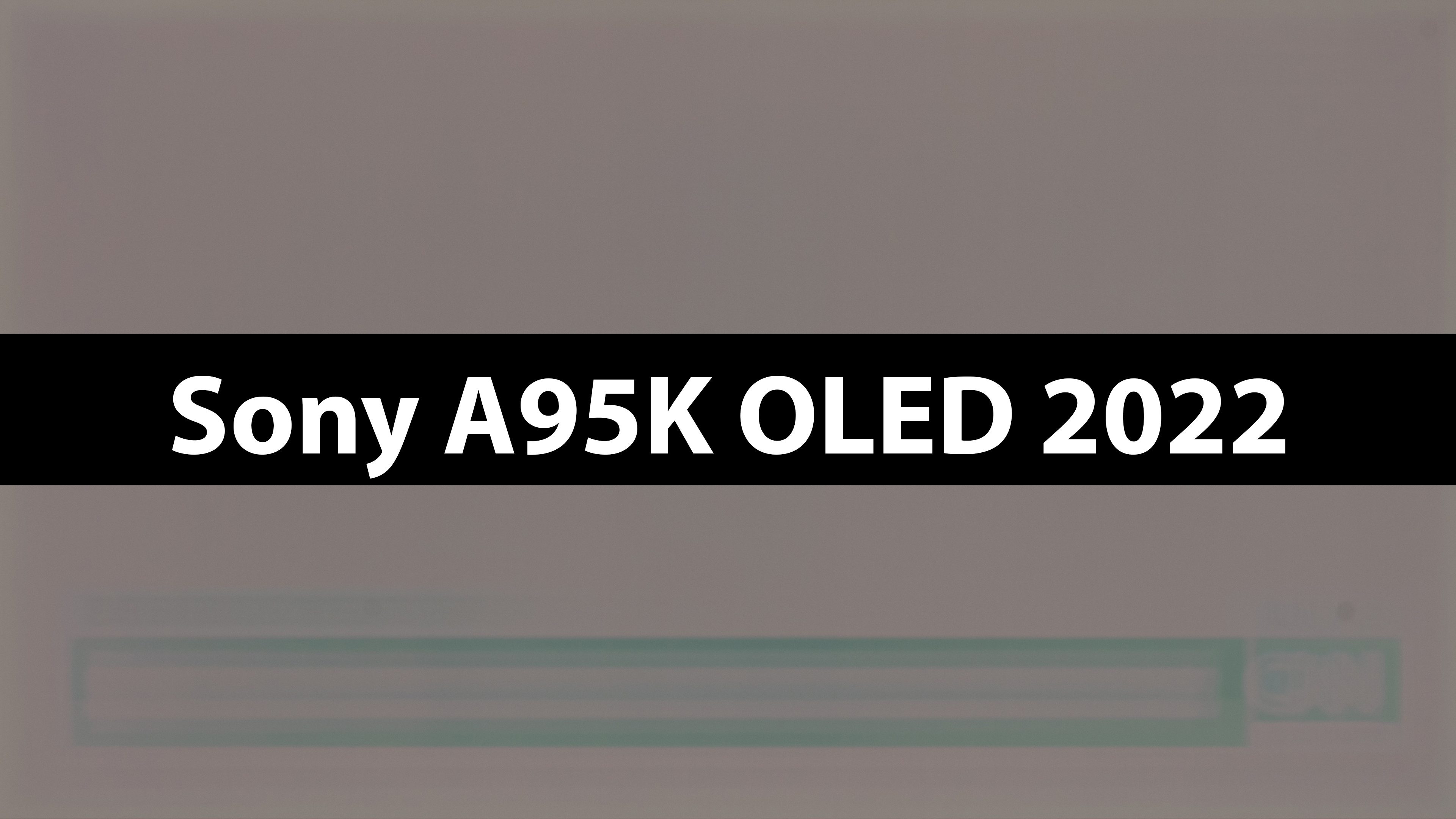
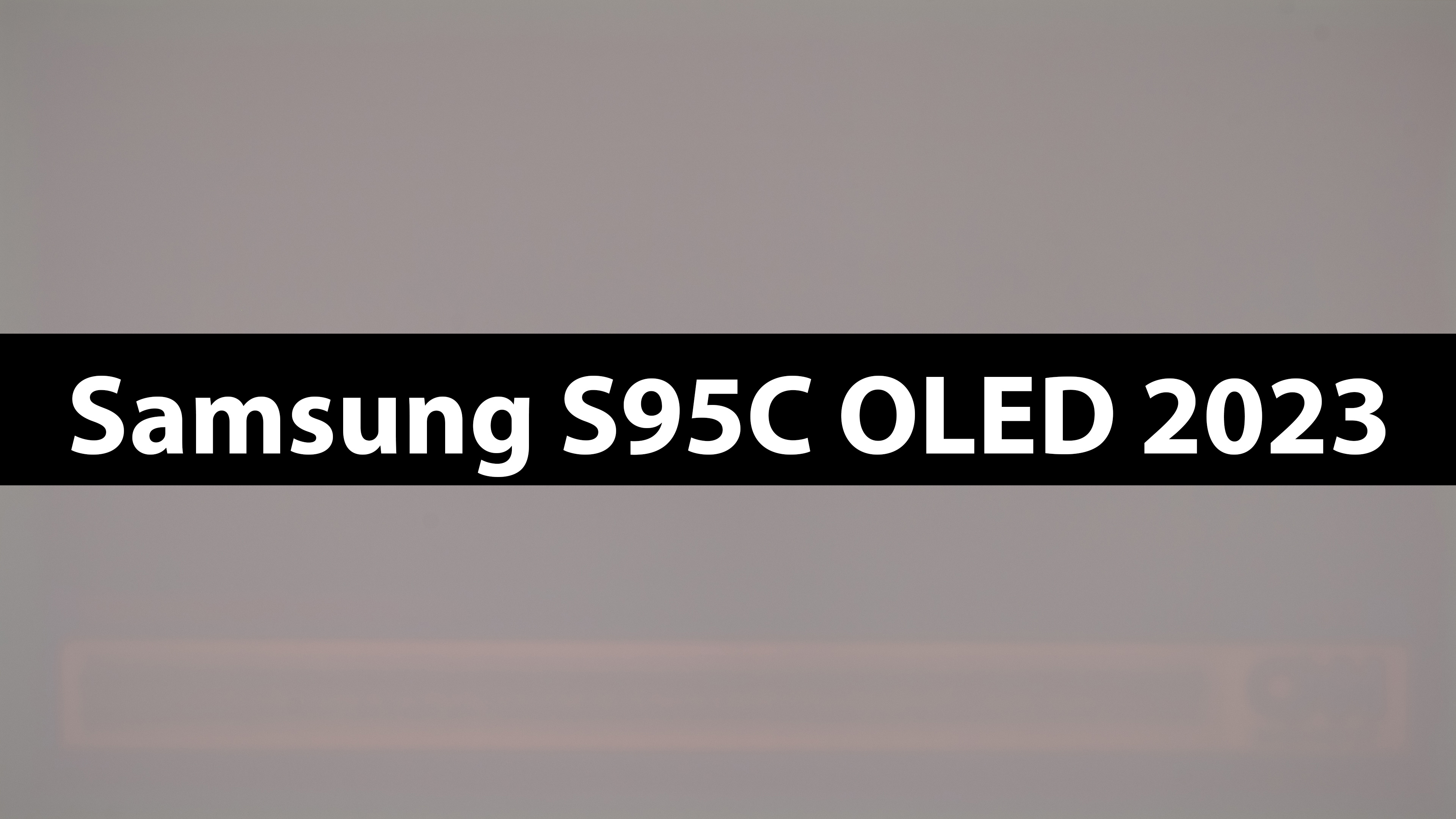
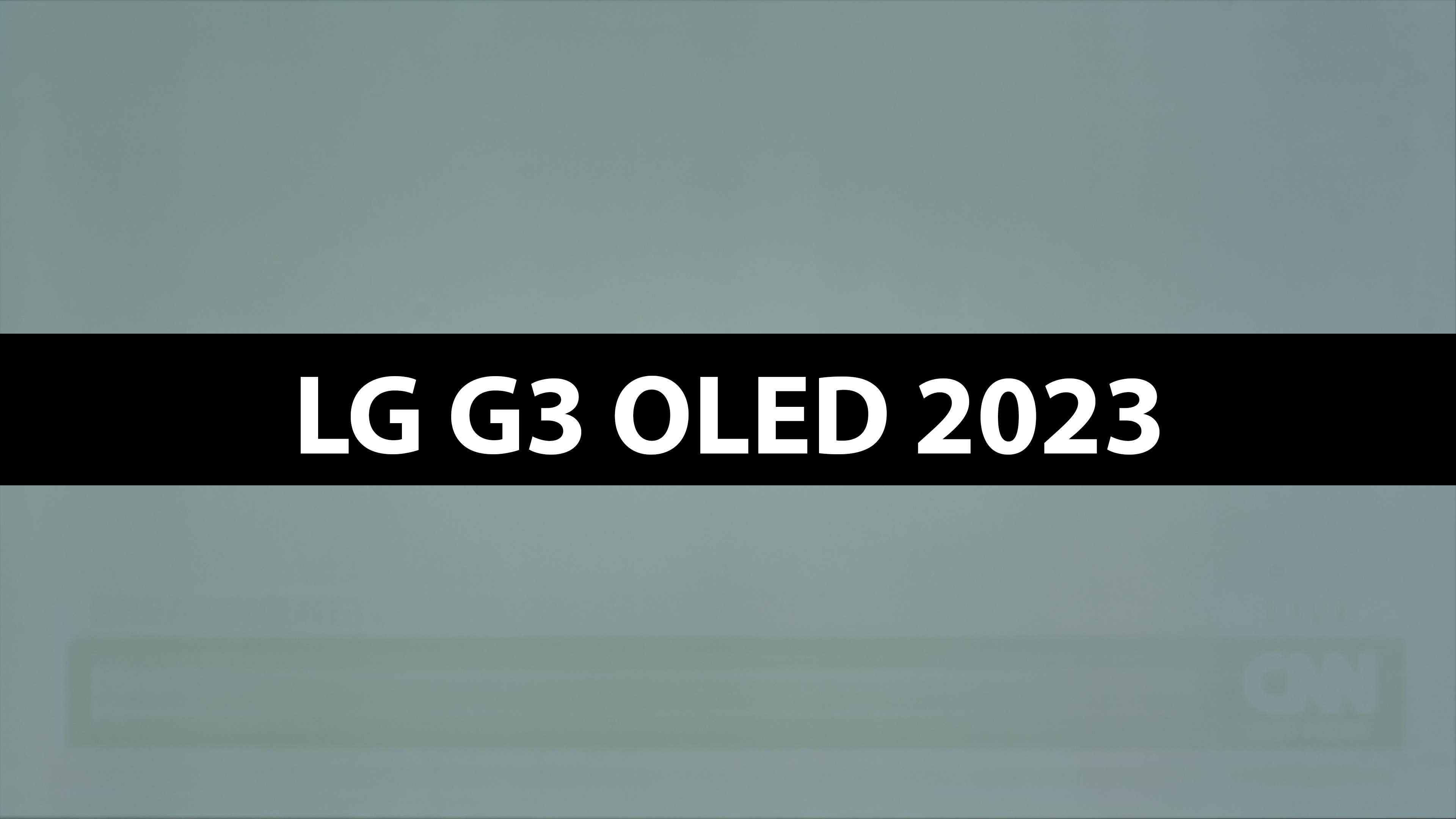
After running for over 10,000 hours, the 2020–2023 OLEDs in our accelerated test didn't consistently show less permanent burn-in than the 2017 LG C7 under our earlier CNN stress test, as shown by the uniformity pictures below. Both tests consisted of running live CNN exclusively, at each TV's maximum brightness setting in our recommended SDR picture mode.
 |
 |
 |
 |
 |
 |
 |
 |
 |
 |
 |
 |
 |
 |
 |
 |
 |
 |
 |
 |
Because each TV was tested at its maximum SDR brightness setting rather than at a matched luminance output, this comparison reflects the burn-in outcome at each model's available output. It does not isolate intrinsic panel durability under identical luminance output conditions.
Similar burn-in after the same number of hours does not mean the underlying technology failed to improve. The newer TVs output substantially more brightness, suggesting that improvements in OLED technology have been leveraged to produce higher light output rather than additional burn-in resistance.
OLED's Biggest Gain Isn't Longevity: It's Brightness
While every newer OLED in the test developed visible permanent image retention, what stands out is just how much brighter they are than earlier-generation models.
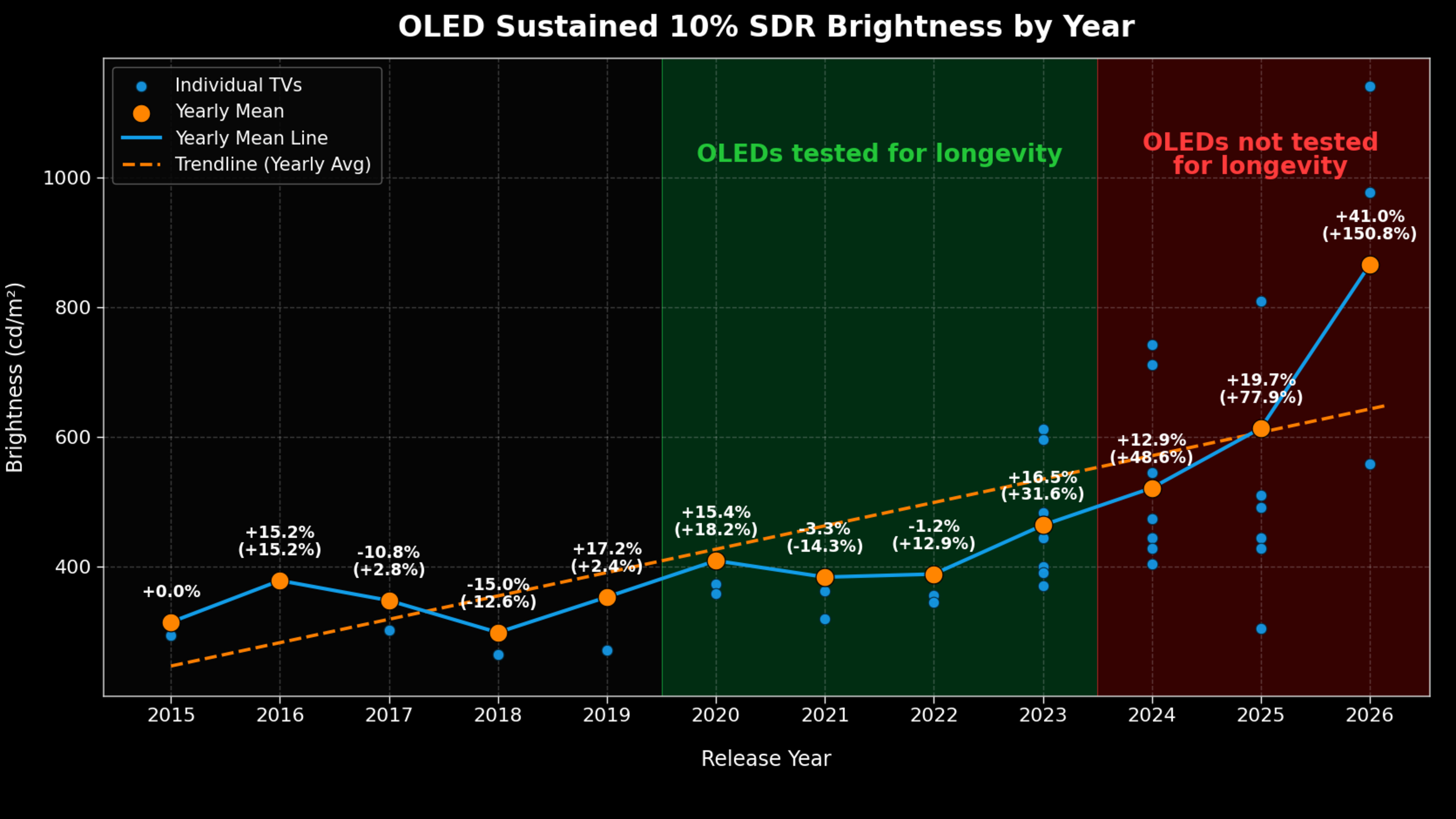
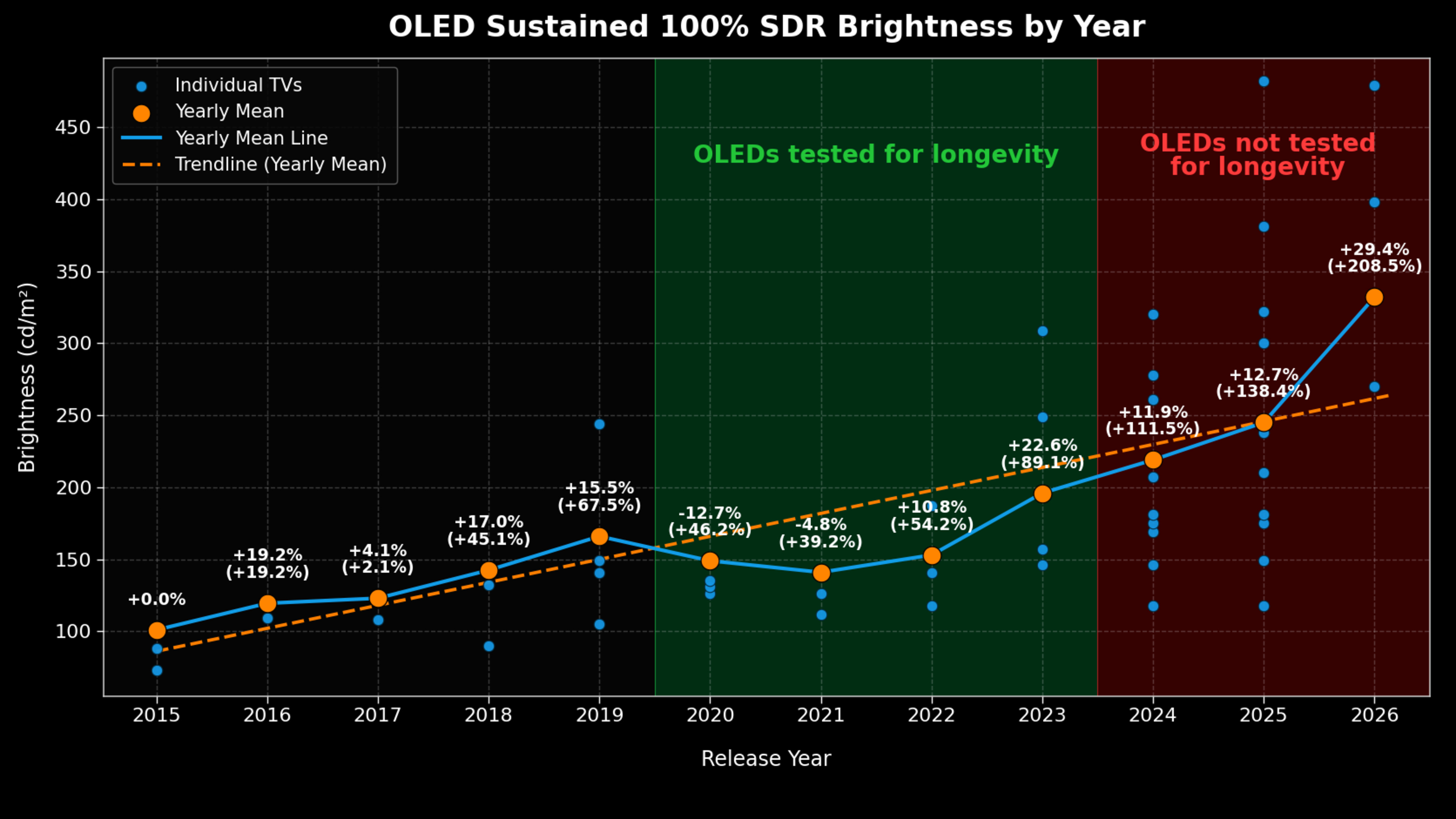
Across our TV review dataset, the average 2023 OLED was 28% brighter than the 2017 OLED average in our sustained 10% SDR window test and 52% brighter in our sustained full-screen SDR test, as shown in the charts below.
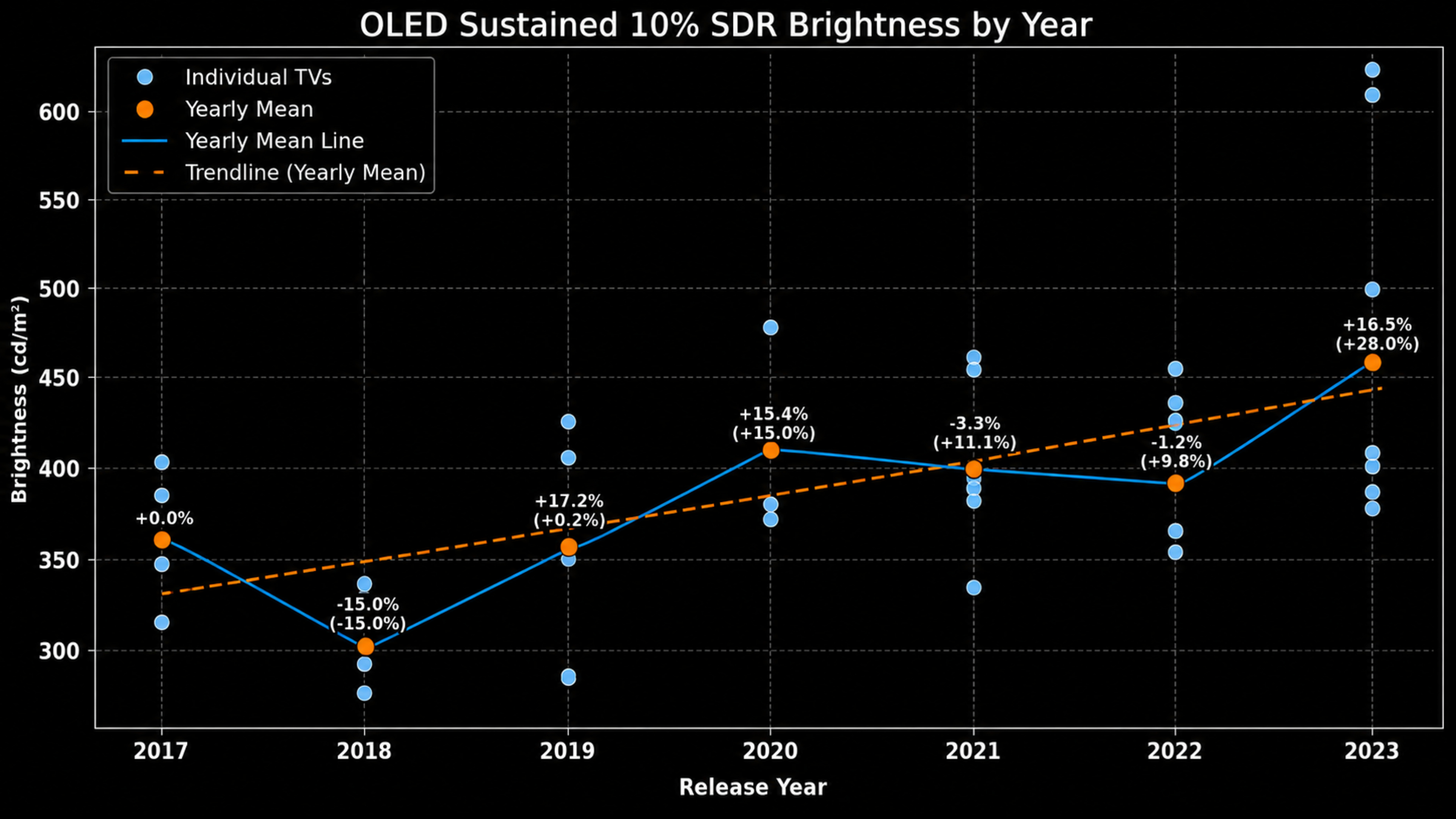
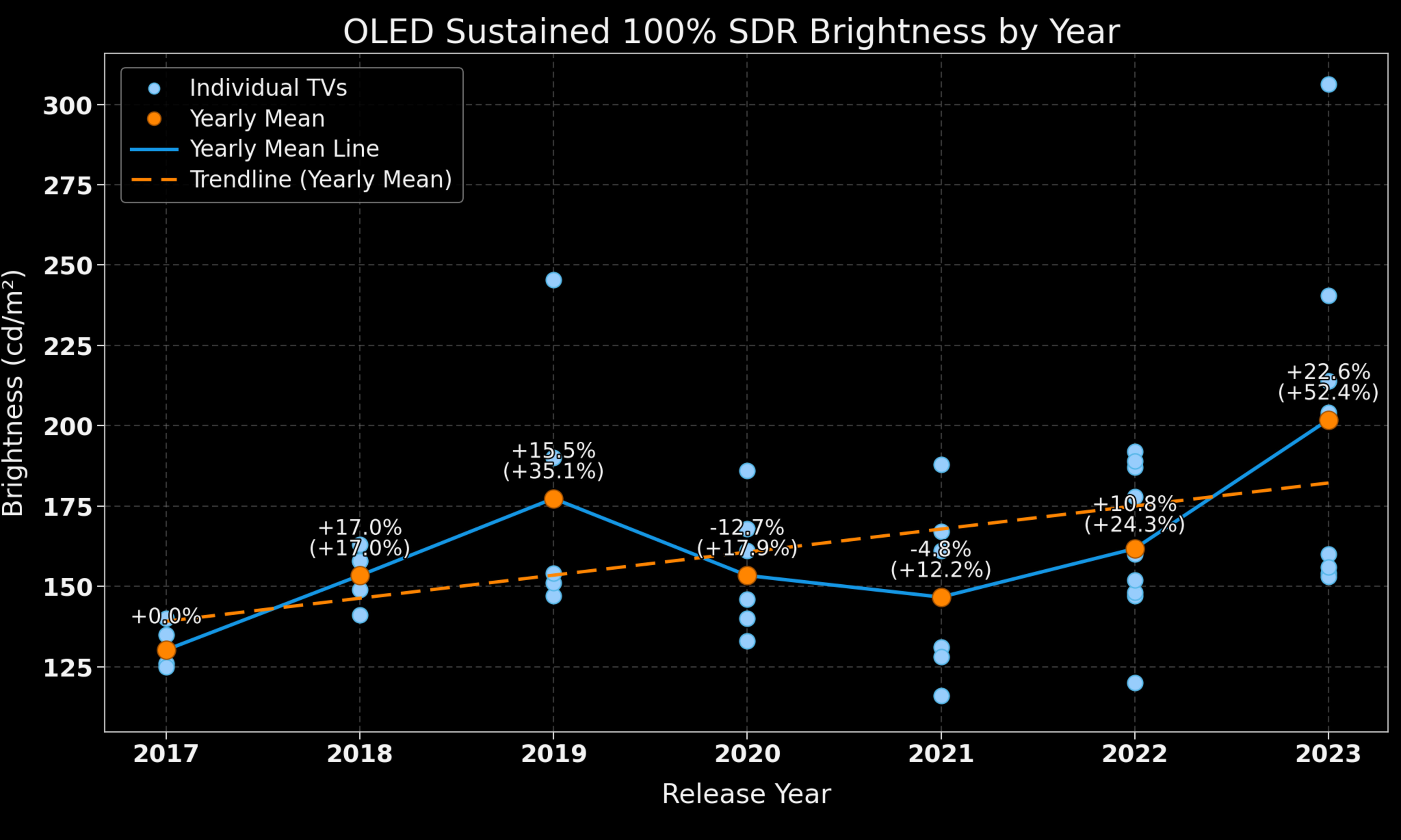
This increased brightness output is largely due to improvements in OLED panel efficiency. Our testing shows that these efficiency gains have been significant, especially since 2021 and 2022, coinciding with the adoption of LG Display's second-generation WBE OLED panels and the introduction of Samsung Display's QD-OLED panels. When we adjust for panel size, our test results indicate that 2025 and 2026 OLEDs use around 33% less power than 2020 and 2021 models to produce the same 50% APL, 100 cd/m² checkerboard pattern.
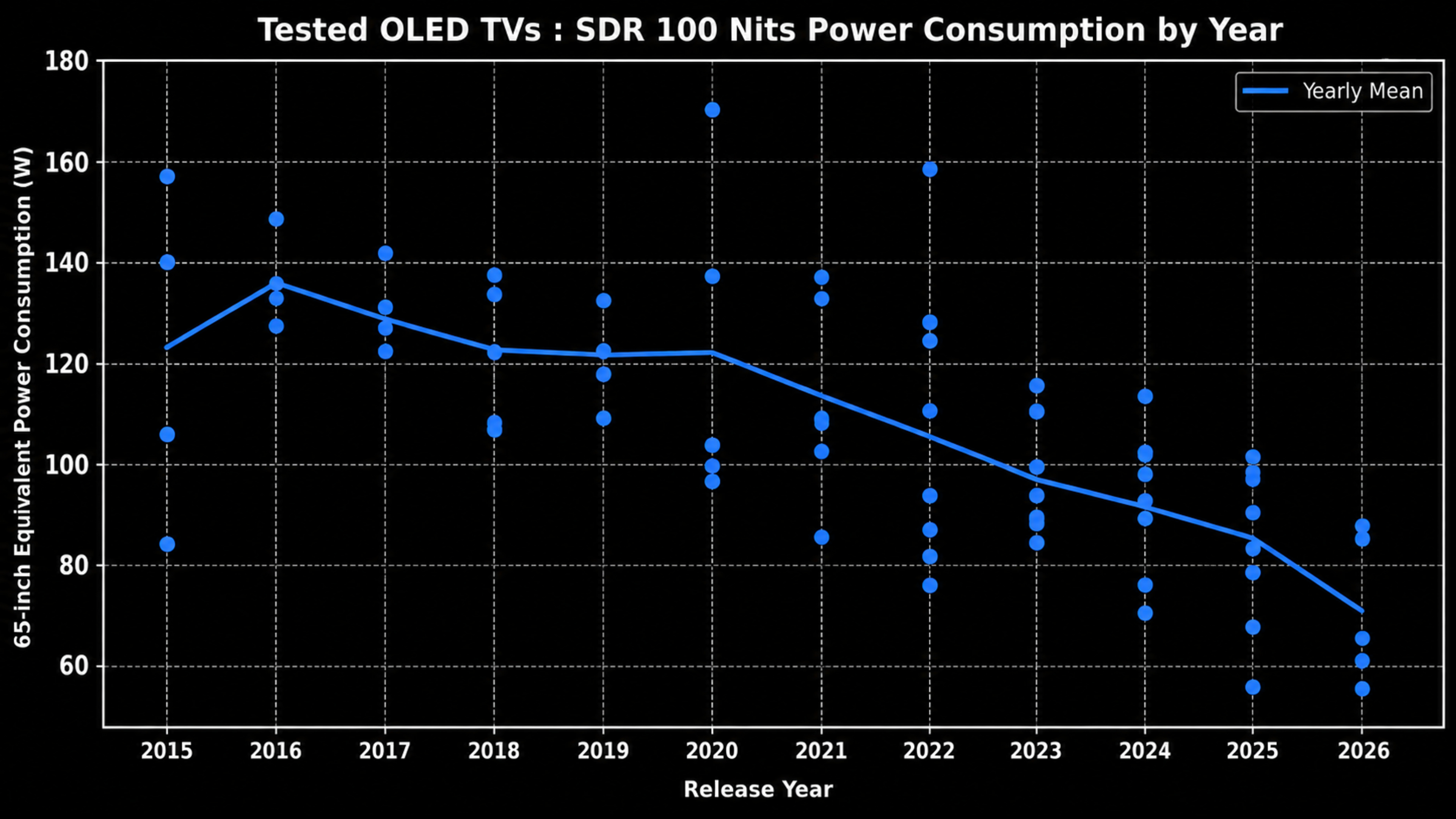
Note that adjusting for panel size offers only a broad approximation of relative efficiency between TV models. The panel accounts for most of a TV's power consumption, but other components like video processing also consume power and don't scale with screen size. These figures should therefore be viewed as an overall efficiency trend rather than a direct measurement of panel efficiency.
Should Burn-In Resistance Have Been Prioritized?
Learning that newer OLED TVs didn't show a clear improvement in burn-in resistance can be disappointing, but the trade-off is more nuanced than it first appears.
Based on our testing, burn-in is unlikely to be an issue for the vast majority of viewers, as most will regularly vary their content. The risk increases when the same bright static elements are displayed for thousands of hours, particularly with prolonged news viewing, desktop use, or repeated play of the same game.
Excluding burn-in, the main weakness of early OLED TVs was their limited brightness output, particularly in bright scenes. Power and thermal limits could also trigger aggressive dimming, making those models less suitable for bright rooms than comparable LCD TVs. Newer OLEDs have narrowed that gap substantially, especially for smaller highlights, although LCDs still retain a clear advantage in sustained full-screen brightness.
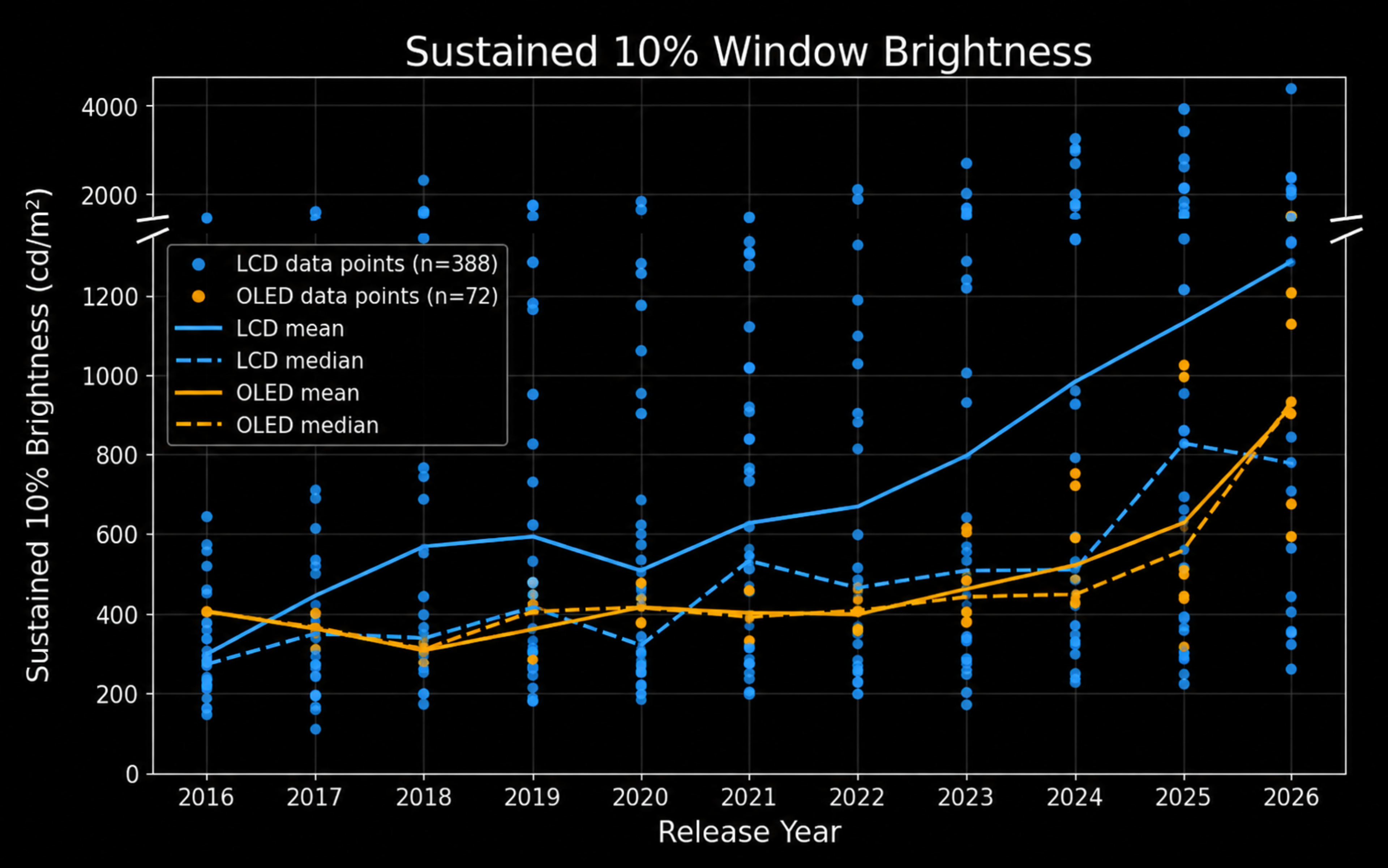
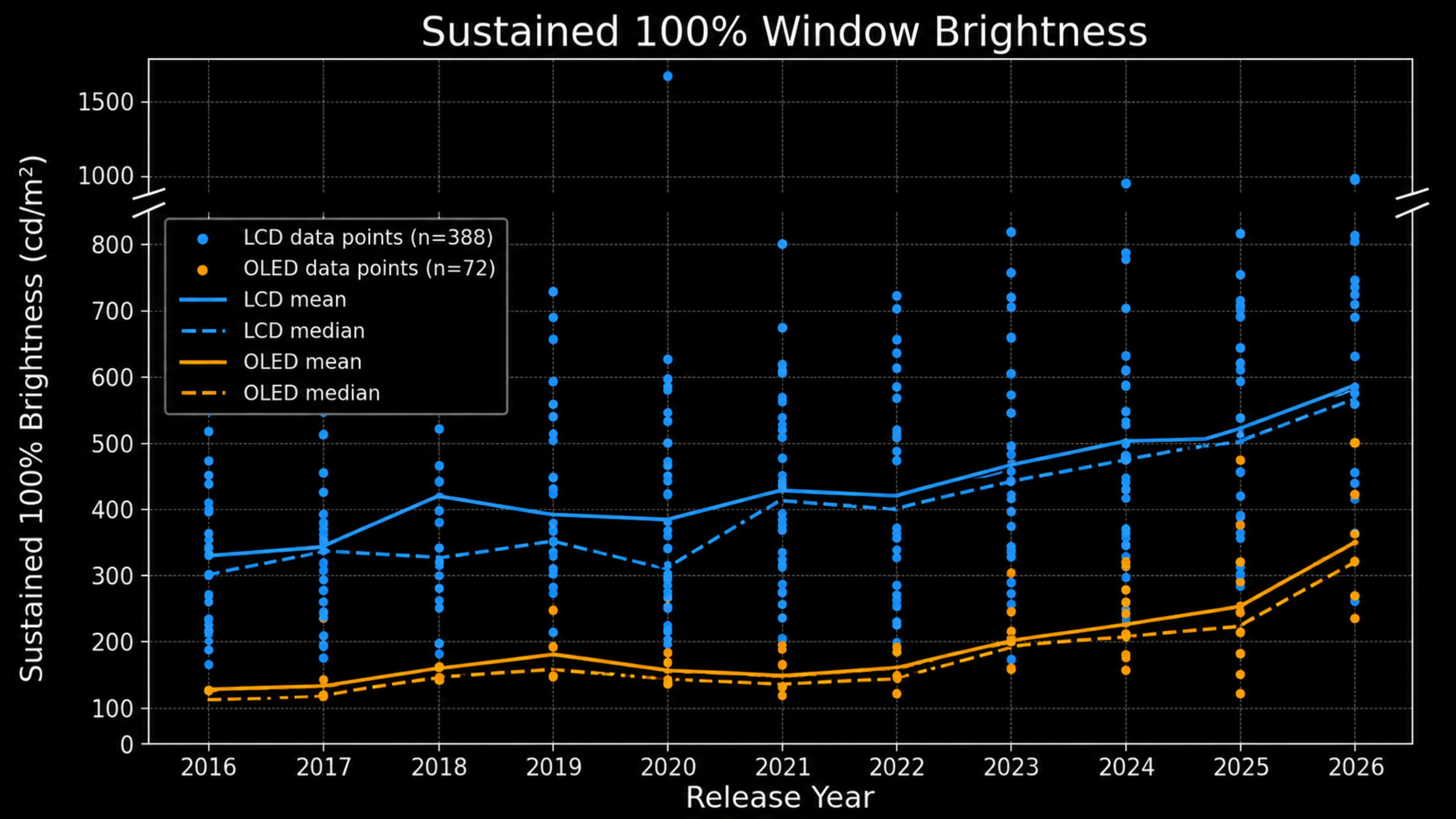
Newer OLEDs have become substantially brighter, especially with smaller bright highlights. LCD TVs have also continued improving and remain brighter on average, particularly with full-screen brightness. Even so, while there is still a gap between OLED and LCD, the absolute brightest output of OLEDs has increased to a level that allows for use in brighter environments than before, though they still lag far behind the brightest LCD models available today.
Our Accelerated Longevity Test was intentionally severe: the TVs displayed CNN for 18,000 hours. Visible permanent image retention developed primarily where static elements remained on screen, especially the news ticker boxes and, on some TVs, the area where the news anchor usually appeared. Areas that displayed varied content didn't exhibit any noticeable burn-in. Below is the image retention on primary and secondary color slides for the 2021 LG C1 OLED.
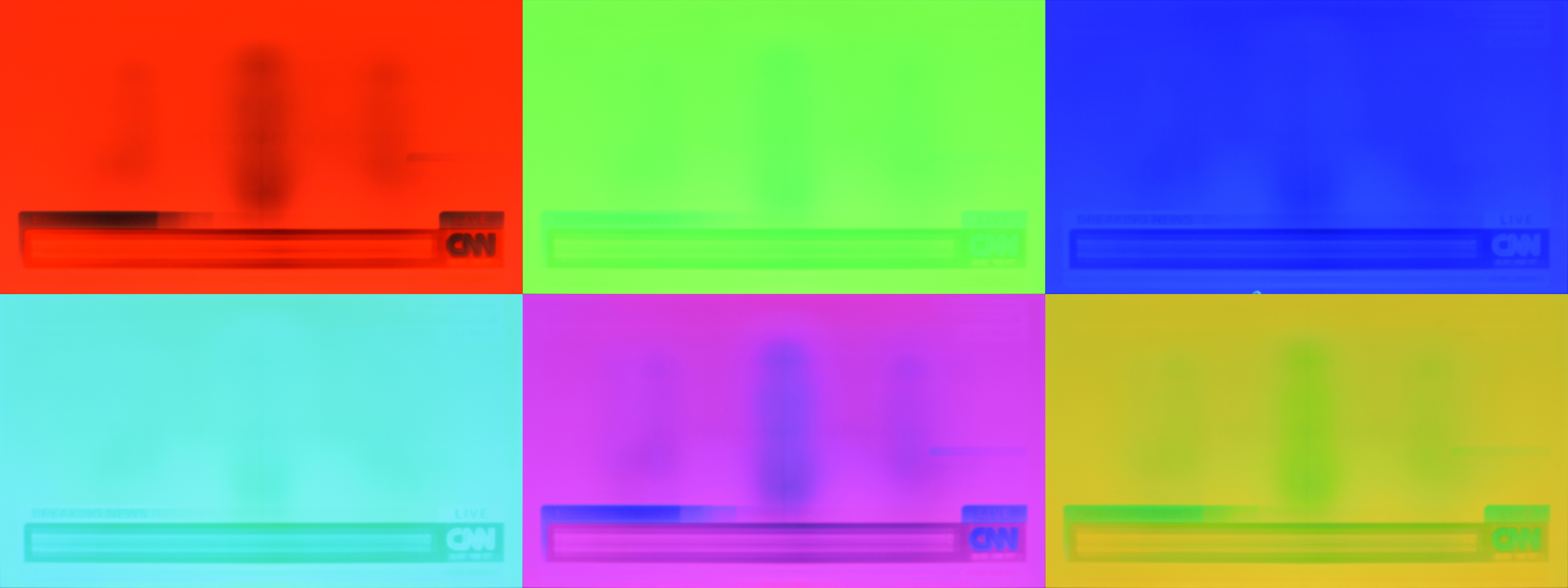
Eighteen thousand hours is equivalent to roughly 10 years of viewing at five hours per day. It's worth stressing that this CNN-only test is not at all equivalent to ten years of normal mixed use.
For most consumers, using part of OLED's technological progress to improve brightness appears to be worth trading off. Users with unusually static workloads can instead trade some of that extra brightness headroom for lower wear, as detailed in the next section.
Brightness Can Now Be Used As A Functional Lifespan Control
In many situations, especially with SDR content in a dark room, an OLED does not need to operate at its maximum brightness setting.
Higher light output generally places more cumulative stress on OLED pixels. Lowering the brightness setting should therefore reduce wear when the TV regularly displays bright static elements. Our test did not quantify how much this would extend the panel's useful life, so it should be understood as a risk-reduction measure rather than a guaranteed lifespan control.
This trade-off is more practical than it was on early OLEDs because recent models have considerably more brightness headroom. Users with static-heavy workloads can reduce output while still retaining usable image brightness, reducing the risk of burn-in and extending their TV panel's life.
Conclusion
OLED brightness has made the biggest jump in its history since 2024. However, none of the 2024–2026 models shown in these charts were included in our Accelerated Longevity Test, so we cannot determine from these results whether their burn-in resistance has also changed.
What's clear is that for most mixed-content viewers, burn-in remains unlikely to become an issue. Users with static-heavy SDR workloads can lower the brightness setting to reduce cumulative stress while still retaining more usable brightness than earlier OLED generations offered.
For buyers today, the takeaway is straightforward: OLED's clearest generational gain has been brightness. Users who display unusually static content can trade some of that extra headroom for lower panel stress.
A new small-scale accelerated test of current QD-OLED and tandem OLED panels could determine whether they match or exceed the burn-in resistance of earlier generations, despite their incredible brightness output increase. Let us know in the comments if this is something you'd like to see us test, or if you have any other suggestions.
