
There's no escaping video these days. Unless you're considering a wallet-breaking Leica or Hasselblad, it's almost impossible to find a camera released today without a video mode and increasingly advanced video features. Thankfully, the upside of these technological advancements is that most modern cameras also deliver fantastic image quality. Taking quality images, however, comes down to the photographer wielding the camera. While lenses will have just as much impact on your overall image quality, camera sensors and focus systems have also been steadily improving to help the process feel as seamless as possible. In our review process, we also take into account the camera's ergonomics, as it can quickly become a determining factor, especially during those longer shoot days.
We've bought and tested over 125 cameras in our lab, and below, you'll find our recommendations for the best cameras for photographers. If you're looking for something more specific, you can also check out our recommendations for the best cameras for low-light photography, the best cameras for portrait photography, the best cameras for landscape photography, or the best cameras for wildlife photography. If you've found yourself here by accident and you're actually after a camera for videography, you'll want to look at our best video cameras instead.
We've independently purchased over 100 cameras and tested them using a standardized methodology. All the results are available to help you make the right purchasing decision for your needs, with objective, data-driven reviews. We keep every product in our lab inventory to ensure we can go back, retest models, and verify that all the information we provide is still accurate.
-
Best Camera For Photography
 Travel Photography8.2Landscape Photography8.4Sports & Wildlife Photography8.6Vlogging7.8Studio Video9.5Action Video5.5Raw Photo8.7Body Type:SLR-StyleMirrorless:YesSee all our test resultsSensor Size:Full Frame
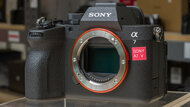
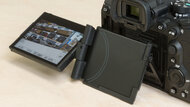
While it's very much in the hybrid photo/video camp, the Sony α7 V is one of the best cameras for photography that we've tested. It adds a lot of great functions over its already very solid predecessor, especially if you value high-speed shooting. The camera can now shoot up to 30 fps with the e-shutter and supports a pre-capture function that records up to 1 second before the shutter is fully pressed. This can be helpful with subjects whose movements are difficult to predict. You're still getting a very well-built weather-sealed body, dual SD card slots with the option to use a CFexpress card, in-body image stabilization (IBIS), and a high-resolution viewfinder. Beyond that, it features a fantastic partially stacked full-frame sensor with a very wide dynamic range and 33-megapixel resolution. That's higher than most of its peers at this level, giving you a touch more leeway to crop in your images, and the outstanding dynamic range performance helps keep all the lighting detail even in more challenging situations.
At this price point, pretty much any camera will produce excellent results. However, the real reason this is our number one pick is its wide selection of lenses. Sony's E mount is one of the most established mirrorless lens ecosystems, with a wide range of both native and more affordable third-party options. That makes it incredibly versatile for almost any type of photography you want to do, whether it's portraits or landscapes. Sony's autofocus system is also among the very best in the market. It's quick and precise at both acquiring a target and keeping it sharp. Another excellent option at this tier is the Nikon Z6 III, which can be found at a slightly lower price and offers an outstanding all-around package. However, its lens selection is more limited because it uses a newer mount.
-
Best Upper Mid-range Camera For Photography
Travel Photography8.2Landscape Photography8.1Sports & Wildlife Photography8.3Vlogging7.6Studio Video9.2Action Video6.6Raw Photo8.1Body Type:SLR-StyleMirrorless:YesSee all our test resultsSensor Size:APS-CIf you prefer the portability and lower cost of APS-C cameras, the Fujifilm X-T5 is among the best we've tested. With a 40.2-megapixel APS-C sensor, it's one of the best digital cameras for photography if you're interested in landscapes or portraits, giving you a lot of room to crop your photos without losing sharpness. While images taken in low light are typically noisier than with full-frame alternatives like the Sony α7 V, the image quality you can get out of this camera is hard to beat for the money.
The camera also honors Fujifilm's photography-oriented roots with dedicated exposure dials that give you more hands-on control over your settings and a three-way tilting screen that's incredibly versatile for waist-level shooting and street photography. If you're looking for a more robust camera with better ergonomics for studio work, you might prefer the Fujifilm X-H2. It uses the same sensor as the X-T5 but has a bigger body and additional benefits for hybrid or video shooters. Meanwhile, the Fujifilm X-H2S uses a lower-resolution stacked sensor with a faster readout speed that makes it a better option for sports and action photography. However, both models are pricier and less portable than the X-T5.
-
Best Mid-Range Camera For Photography
Travel Photography7.5Landscape Photography8.1Sports & Wildlife Photography7.3Vlogging6.1Studio Video7.6Action Video3.3Raw Photo8.4Body Type:SLR-StyleMirrorless:YesSee all our test resultsSensor Size:Full FrameWhile it's starting to be a bit older, the Nikon Z 5 is an outstanding mid-range camera that punches way above its price. This camera gives you everything you could need for any type of photography, unless speed is of the utmost importance to you. You'll have access to a 24MP full-frame sensor that produces detailed photos even in low light. The 5-axis in-body image stabilization (IBIS) also comes in handy for those slower shutter-speed shots. It's also very comfortable to use, even with larger lenses, and it includes some water and dust protection. It's not the fastest camera by any means, and its autofocus tracking performance isn't the best, which may not make it the best choice for shooting fast-moving subjects.
If you prioritize a camera with the most reliable autofocus system, to be certain you don't miss a shot, and want a more portable option, the Sony α6700 is an outstanding choice. This hybrid model uses a 26-megapixel APS-C sensor and captures fantastic overall image quality. It's also relatively portable and has an excellent battery life, making it a good choice for long days on the go. The camera's autofocus system is also one of the most effective on the market, with AI-driven subject detection and incredibly accurate AF tracking. On top of that, it has IBIS and a wide selection of compatible lenses, including plenty of more affordable third-party options.
-
Best Budget Camera For Photography
Travel Photography7.9Landscape Photography7.5Sports & Wildlife Photography8.0Vlogging7.6Studio Video8.0Action Video4.2Raw Photo7.4Body Type:SLR-StyleMirrorless:YesSee all our test resultsSensor Size:APS-CThe Canon EOS R50 is an excellent budget model that packs a punch for its price. With a highly accessible user interface and great ergonomics, it's beginner-friendly and easy to use. It has a highly accurate and effective autofocus system, quick burst shooting, and good battery life. On top of that, it has good video specs for an entry-level model, including 4k recording at up to 30 fps and a flip-out screen that can come in handy for group photos or vlogging. Canon's warm colors are also quite pleasing and will require little editing.
The biggest downside of the R50 is that lens selection is still relatively limited for the RF mount. You can still get an EF-lens adapter that'll give you access to a plethora of old Canon lenses, but it'll be an added cost to consider. If you'd prefer a more established lens ecosystem, the Sony α6400 is another great choice at a slightly higher price point. It's a more portable option with outstanding autofocus and a wide range of lenses from Sony and third-party manufacturers.
-
Best Cheap Camera For Photography
Travel Photography7.7Landscape Photography7.6Sports & Wildlife Photography6.9Vlogging5.1Studio Video7.4Action Video3.1Raw Photo7.3Body Type:SLR-StyleMirrorless:YesSee all our test resultsSensor Size:APS-CIf you're looking to spend as little as possible while still getting an excellent overall package, consider the Canon EOS R100. While it lacks some features found on newer mirrorless models, such as advanced video specs and more accurate subject-aware autofocus tracking algorithms, it still performs very well for casual photography. You'll benefit from a reliable dual-pixel autofocus, Canon's warm color science, and comfortable ergonomics. This is also a great place to start exploring the hobby, thanks to the Creative Assist mode, which offers a simple interface and terminology that's easy for first-time photographers to understand.
Like the R50 above, the main issue with the R100 is the lens selection. Canon keeps its lens mount design much more closed off than its competitors', which really hinders third-party lenses. Therefore, lenses are few and far between and likely to be more expensive than their counterparts. This isn't an issue if you plan to get as much mileage as possible from your kit lens, but it could prove limiting if you're willing to experiment. If you want to play around with a bunch of lenses, you should consider the Olympus OM-D E-M10 Mark IV. While it uses a smaller Micro Four Thirds sensor, it offers access to a mature lens ecosystem in a small, very portable package. It even includes in-body image stabilization, which can be great if you plan to use small non-stabilized lenses.
-
Best Compact Camera For Photography
Travel Photography7.7Landscape Photography8.7Sports & Wildlife Photography6.4Vlogging3.3Studio Video4.1Action Video3.6Raw Photo9.1Body Type:Large Sensor CompactMirrorless:YesSee all our test resultsSensor Size:APS-CRICOH's compact series of GR cameras has long been a favorite among street photographers and enthusiasts, and the RICOH GR IIIx is no exception. This is one of the best point-and-shoot options if you prioritize image quality and portability. Despite its pocketable size, it features a relatively large APS-C sensor and an IBIS system to help stabilize shots at slower shutter speeds. The camera's 'Snap Focus' feature is great for zone focusing and capturing quick snapshots on the street. Plus, its built-in lens opens up to a relatively wide max aperture of f/2.8 and has a versatile 40mm full-frame equivalent focal length. While this is a bit tighter than the now-discontinued RICOH GR III, it's versatile for different kinds of point-and-shoot photography, though it isn't as wide for landscape photos. Note that while we have yet to test it, the RICOH GR IV has also been released and uses a 23mm lens. It does come with a steep price increase, however.
If you prefer to shoot through a viewfinder and have extras like a tilting screen and more reliable autofocus, the Fujifilm X100VI is the point-and-shoot to end all point-and-shoots. However, it's more expensive, less compact, and harder to find. This camera uses the same sensor as the Fujifilm X-T5 and comes with a 23mm f2.0 lens that's excellent for everyday shooting. It's very well-built and will encourage you to experiment with the many film simulations it includes.



Notable Mentions
-
Canon EOS R7:
The Canon EOS R7 is an excellent upper mid-range camera that's well-suited to wildlife photography. It has a sturdy build, great ergonomics, quick burst shooting, and a reliable autofocus system. However, lens options are still relatively limited, especially compared to the Fujifilm X-T5.
See our review -
Nikon D850:
The Nikon D850 is one of the best all-around DSLR cameras we've tested and is suitable for various photography styles. Some may prefer its optical viewfinder to the electronic viewfinders on mirrorless models like the Sony α7 V. However, it isn't the most portable camera and has a slower burst rate than many mirrorless alternatives with an e-shutter function.
See our review -
OM SYSTEM OM-1 Mark II:
The OM SYSTEM OM-1 Mark II is a flagship Micro Four Thirds camera. It's a great choice for wildlife photography, with a rugged build, quick burst shooting, and more portable telephoto lens options. However, it's less well-rounded than the Sony α7 V, with less dynamic range and a less reliable autofocus system overall.
See our review -
PENTAX K-3 Mark III:
The PENTAX K-3 Mark III is a fantastic DSLR camera, with an APS-C sensor that performs remarkably well in low light. The camera is robust and has excellent ergonomics, in addition to a long battery life. That said, it isn't nearly as portable as the Fujifilm X-T5 and has a less intuitive autofocus system.
See our review -
Sony α7 IV:
The older Sony α7 IV remains an excellent alternative to its successor, the Sony α7 V. While it lacks some of the newer bells and whistles that can be nice to have, especially if you often shoot with fast-moving subjects, it remains an outstanding all-rounder that can now be found at a lower price.
See our review
Recent Updates
Aug 26, 2026:
The Sony α7 V replaces the Sony α7 IV as our top camera for photography thanks to its improved shooting speed. The Nikon Z5 replaces the Sony α6700 as our new mid-range pick, thanks to its outstanding ergonomics and excellent image quality. Finally, the Canon EOS R100 is our new cheap pick, replacing the now-discontinued Canon EOS Rebel SL2, while the Canon EOS R50 is our new budget pick, and the Ricoh GR IIIx replaces the now-discontinued GR III as our 'Best Compact Camera.'
Feb 11, 2025:
We added mention of the Fujifilm X100VI as an alternative to the RICOH GR III and updated the introduction to add more relevant article links for more specific usages.
Dec 12, 2024:
We added mention of the Fujifilm X-H2S as another alternative to the Fujifilm X-T5, mainly due to its faster stacked sensor.
Oct 11, 2024: We revamped this article to better align with consumers shopping for a camera primarily for photography. To that end, we adjusted the introduction, made the Sony α7 IV the top pick, replaced the Canon EOS R50 with the Canon EOS Rebel SL3/250D in the budget spot, added the RICOH GR III as a compact option, and added the PENTAX K-3 Mark III and OM SYSTEM OM-1 Mark II as Notable Mentions.
Jun 12, 2024: We removed the Canon EOS 5D Mark IV from the Notable Mentions because it's a bit outdated in today's market, and we added the Panasonic LUMIX G9 II as a Notable Mention to present more Micro Four Thirds options.
All Reviews
Our recommendations above are what we think are currently the best digital cameras for photography for most people to buy, according to their needs. We factor in the price, feedback from our visitors, and availability (no cameras that are difficult to find or almost out of stock in the U.S.).
If you'd like to choose for yourself, here's the list of all our camera reviews. Be careful not to get caught up in the details. There is no single perfect camera. Personal taste, preference, and shooting habits will matter more in your selection.