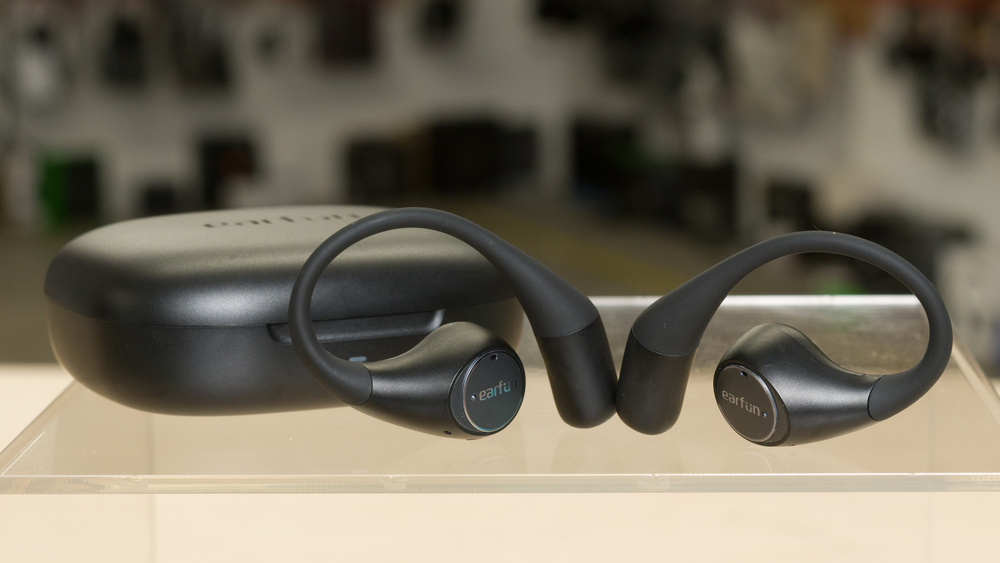
The EarFun OpenJump are the brand's first hook-style open-ear earbuds, aimed at people who want both a secure fit and to stay aware of their environment while listening. They compete against the likes of the Shokz OpenFit Air at the more affordable end of the open-ear market, where wireless charging helps distinguish them against other budget-priced options.
Our Verdict
The EarFun OpenJump are great for sports and fitness. Their soft ear hooks help the buds stay securely in place during intense exercise, and their lightweight design remains comfortable even through long workouts. They also have an IPX7 rating, which will keep them safe during jogs in the rain. However, glasses or a close-fitting hat can make the fit less stable, and their open design produces almost no bass, so workout playlists sound thin. They're a better choice for podcasts than beat-heavy music.
Comfortable, secure fit, even during intense exercise.
Long battery life.
Exceptionally accurate mid-range makes these a good choice for podcasts.
Almost no audible bass.
Glasses can interfere with fit.
The EarFun OpenJump are poor for travel because they're not designed for this use at all. Their open-ear design leaves your ear canal open to all the noise around you, so you'll hear airplane engines and nearby conversations clearly. People near you will also likely hear a thin version of your content, too.
Comfortable, secure fit, even during intense exercise.
Long battery life.
Exceptionally accurate mid-range makes these a good choice for podcasts.
No noise isolation, but that's by design.
Almost no audible bass.
Microphone recordings sound thin and muffled.
Glasses can interfere with fit.
The EarFun OpenJump are poor for office work. Their open design means they don't block out any chatter, and they leak enough audio that nearby coworkers will be able to hear a thin version of what you're playing at moderate or high volumes. Still, that same openness can be an advantage in a collaborative workplace, where you want to be able to hear coworkers without removing your earbuds. You'll likely have to listen at quieter levels, though. They're comfortable and have a long enough battery for a full workday, and their microphone is good enough for occasional calls. But for regular office use, you'll want to steer clear of these.
Comfortable, secure fit, even during intense exercise.
Long battery life.
Exceptionally accurate mid-range makes these a good choice for podcasts.
No noise isolation, but that's by design.
Almost no audible bass.
Microphone recordings sound thin and muffled.
Glasses can interfere with fit.
The EarFun OpenJump aren't very suitable for wireless gaming. They don't support a proprietary wireless dongle, and even with Game Mode enabled, their 210 ms Bluetooth latency is too high for responsive gameplay. That said, you can use them for turn-based RPGs or any game where timing isn't essential.
The EarFun OpenJump only work wirelessly.
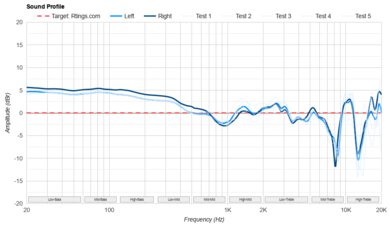
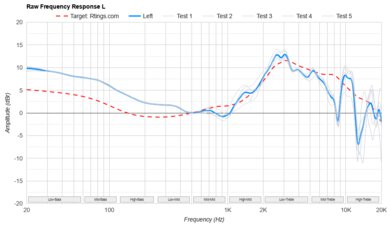
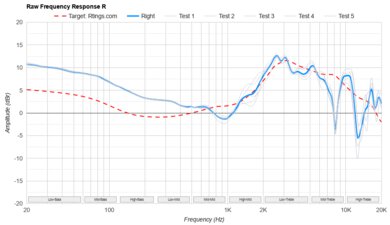
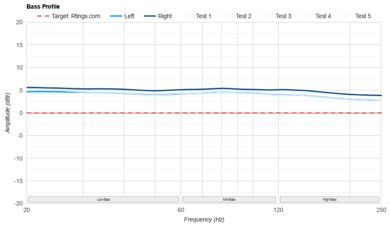
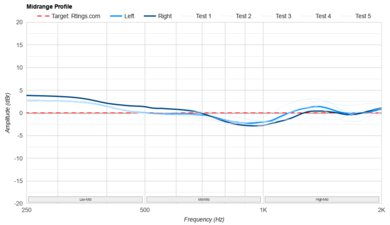
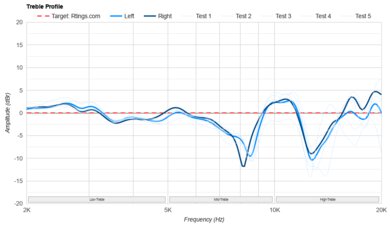
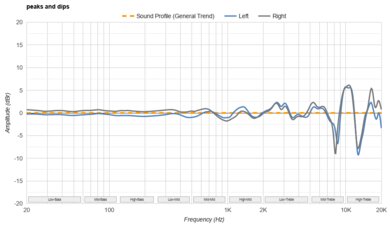
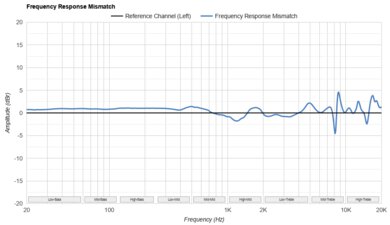
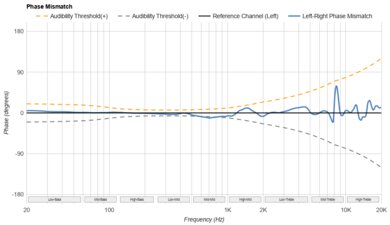
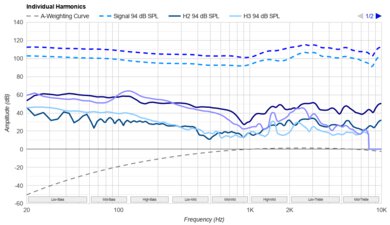
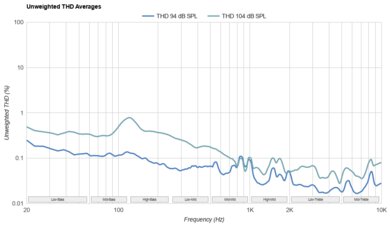
The EarFun OpenJump have adequate audio reproduction accuracy. Their exceptionally balanced mid-range keeps speech sounding natural, making these a good choice for listening to podcasts. And the treble generally follows our target closely. However, they reproduce almost no audible bass, leaving music without much thump or warmth, and a couple of treble peaks can make cymbals and voices sound piercing at times. On the plus side, their left and right drivers are well-matched (although driver matching varies per unit), and harmonic distortion is low.
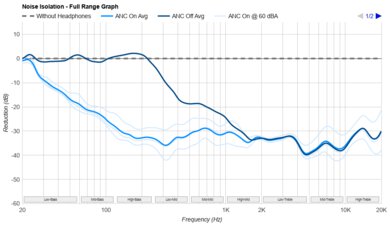
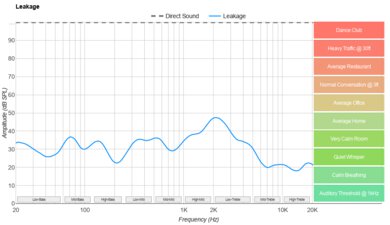
The EarFun OpenJump have terrible noise isolation by design. They leave your ear canals unsealed, so you'll hear all the noise going on around you. They also leak audio at moderate volumes, so people nearby will be able to hear a thin version of your audio.
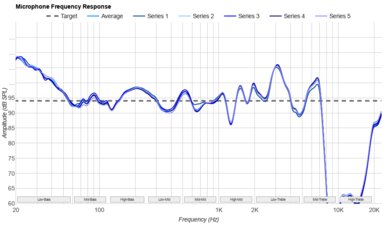
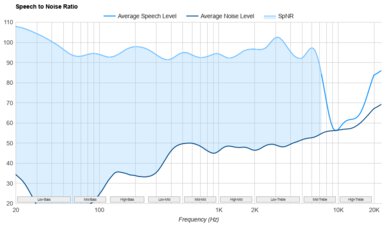
The EarFun OpenJump have mediocre microphone performance. Recorded speech sounds thin and muffled, though you're still comprehensible, so you can use these for the odd call while you're out on a jog. The mic system also separates your voice from noise around you reasonably well, but loud noise like a passing train can overwhelm the system and reduce your voice's intelligibility.
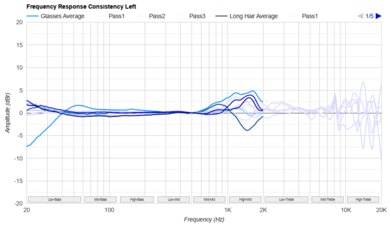
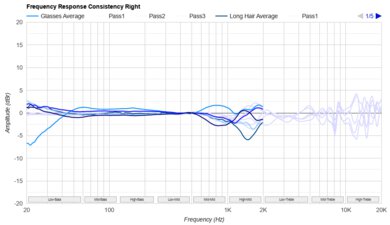
The EarFun OpenJump have mediocre frequency response consistency. Since their drivers rest outside your ear canals, small changes in their angle and position can noticeably alter the sound from one wear to the next. Taking time to place both earbuds consistently helps, though glasses can make achieving the same fit more difficult.
Performance Usages
Changelog
-
Updated Sep 03, 2026:
We added a reference to the Sennheiser ACCENTUM Clip in the Controls box.
- Updated Aug 04, 2026: Review published.
- Updated Jul 28, 2026: Early access published.
- Updated Jul 20, 2026: Our testers have started testing this product.
Check Price
Differences Between Sizes And Variants
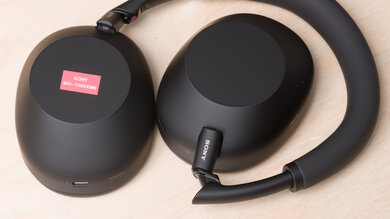
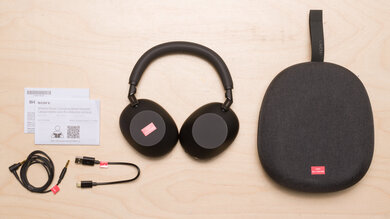
The EarFun OpenJump are available in two color variants: 'Black' and 'White'. We bought and tested a 'Black' pair and took a photo of its label.
If you encounter another variant of these headphones, let us know in the comments, and we'll update our review.
Popular Headphone Comparisons
The EarFun OpenJump are the brand's first hook-style open-ear earbuds. Their comfortable and secure fit, IPX7 rating, and long continuous battery life make them practical for runners who want to hear their surroundings. That said, their open design limits their versatility, since it provides no isolation against outside noise. That's great for runners who want to stay aware of their environment, but it means they're not very useful on planes or trains. And their open fit also means you won't hear much bass in your audio at all.
The Shokz OpenFit Air are a comparable rival that have easier-to-use controls, though they're less comfortable and stable than the EarFun. Depending on your tastes, you may prefer clip-on alternatives like the SoundPeats PearlClip Pro or Anker Soundcore C30i. These don't place hooks around your ears, so they're a bit smaller and easier to pocket, but neither last as long as the EarFun. That said, the Anker do have a more controlled and even sound profile.
For more fitness-oriented solutions, check out the best bone conduction and open-ear headphones, the best wireless Bluetooth earbuds under $100, and the best headphones and earbuds for running and working out.
The EarFun OpenJump and Shokz OpenFit True Wireless are workout-focused earbuds with different strengths. Both use flexible ear hooks and remain comfortable and stable during exercise, though glasses can dislodge the fit a little. The EarFun last longer and also support Bluetooth multipoint pairing and wireless charging. On the other hand, the Shokz reproduce noticeably more bass, so music sounds warmer. The Shokz also offer a better mic.
The EarFun OpenJump are better open-fit earbuds for most people than the Shokz OpenFit Air. The EarFun offer stronger water resistance, a longer battery life, and wireless charging. They're also more comfortable and remain stable through more intense exercise, although glasses can interfere with either pair. On the other hand, the Shokz' controls offer clearer feedback. Both pairs use ear hooks and leave your ear canals open, so neither blocks much noise around you, and both are light on bass.
The EarFun OpenJump are more dependable workout earbuds than the SoundPeats PearlClip Pro, though the SoundPeats are a better choice if you prefer clip-on earbuds. Both stay securely attached during more active workouts like burpees, but the EarFun are more comfortable and last over three times longer on a single charge. Their app is also far less troublesome, as the SoundPeats app is prone to freezing, crashing, and connection problems. The main advantage of the SoundPeats is that if you find ear-hook style workout buds don't fit you well, which can be the case if you wear glasses or have long hair. In that case, the clip-on design of the SoundPeats may work well.
The EarFun OpenJump are better for anyone prioritizing comfort in their open-fit workout buds, while the Anker Soundcore C30i offer a more controlled sound and a longer continuous battery life. Both remain highly stable during exercise and let you hear everything around you, and neither produce much bass at all. The large ear-hooks of the EarFun fit more comfortably over long sessions, but the clip-on Anker are smaller and might be a better fit if you wear glasses or have longer hair. That said, we found the Anker less comfortable over long sessions, although their battery does last longer than the EarFun.
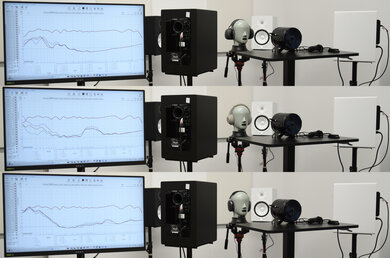
Our How We Test Headphones article takes you behind the scenes in our lab. You'll learn how we choose and purchase products and dive into the details of our review philosophy, from testing and scoring to writing and editing.
You can also discover how we produce recommendations like this one so that you can find the best headphones (or earbuds!) for your needs.
Test Results
for pictures & test results
for pictures & test results
for pictures & test results

for pictures & test results






for pictures & test results
for pictures & test results