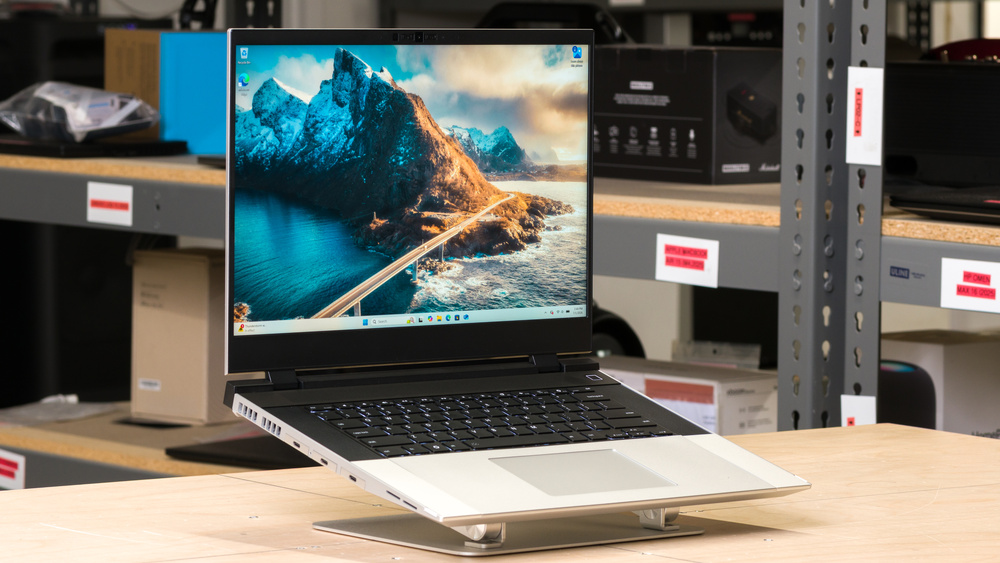
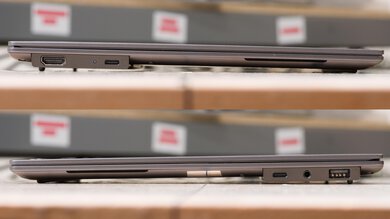
The Framework Laptop 16 (2026) is a modular laptop suitable for uses ranging from general productivity to gaming or workstation tasks, depending on how you configure it. You can choose from several prebuilt configurations targeting different performance tiers or build a DIY configuration by selecting the components and installing your own operating system. Hardware options include AMD Ryzen AI 300 CPUs, discrete NVIDIA GeForce RTX 5070 or AMD Radeon RX 7700S GPUs, 16GB to 96GB of DDR5 memory, and multiple storage options. You can also customize the input deck with a conventional or haptic trackpad, keyboards for various languages, white or RGB backlighting, and supplementary modules like a numpad or macropad. Additionally, there's a wide range of Expansion Cards that add USB-C, USB-A, Ethernet, HDMI, SD card, and other ports.
The unit we bought and tested is Framework's prebuilt Performance configuration, which doesn't have a discrete GPU. More powerful configurations are available and will perform significantly better in games and demanding workstation tasks. For more information about our unit and the other available configurations, see the Differences Between Variants section.
Our Verdict
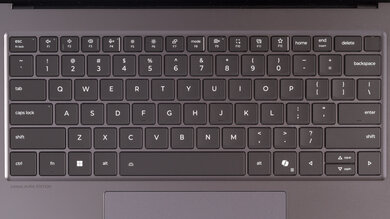
The Framework 16 (2026) is a very good laptop for everyday work, including web browsing, word processing, spreadsheets, light multitasking, and video calls. It has excellent build quality, with a lightweight aluminum chassis that feels premium and sturdy. Its battery should last through most of a typical workday consisting primarily of light tasks and web browsing, and its very large, bright display handles reflections well. It also has a great trackpad with a fairly large addressable surface and a well-spaced keyboard that provides a satisfying, comfortable typing experience. That said, it's quite a large laptop that's somewhat heavy, so it isn't particularly portable. Its webcam and microphone are good overall, though neither is a particular strength. The fans are inaudible when the laptop is idle and become noticeable under heavy load, but they aren't too loud. Multitasking performance is underwhelming on the model we tested, but you can configure it with much more powerful components for heavier workloads.
Battery life should last through an entire workday with light tasks and web browsing.
Excellent build quality.
Extensive configuration, expansion, and repair options.
Large, bright display with good reflection handling.
Quite large and somewhat heavy, making it difficult to carry around.
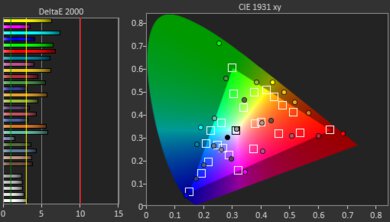
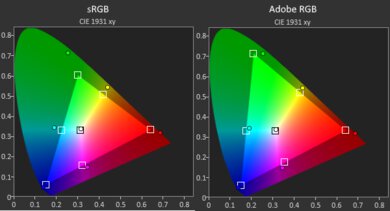
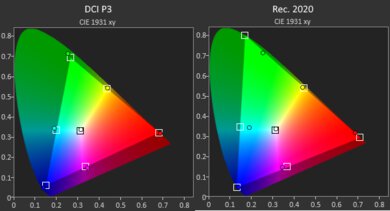
Display needs calibration for color-sensitive work.
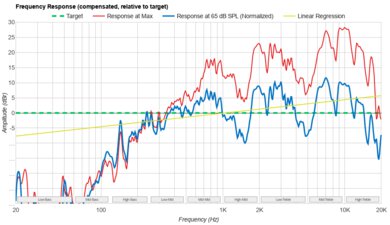
The Framework Laptop 16 (2026) is great for watching or listening to media. It has superb video playback, battery life, and a large, bright display with good reflection handling and good color accuracy out of the box. However, its contrast ratio is underwhelming, so blacks appear gray in dim settings. Its 16:10 aspect ratio also results in some letterboxing when watching most videos. The speakers are good overall and get fairly loud with little compression, though their poor bass and treble extension make them sound somewhat thin and lacking in detail. While the laptop's size allows for a very large display, it also makes it difficult to carry around easily.
Excellent build quality.
Extensive configuration, expansion, and repair options.
Large, bright display with good reflection handling.
165Hz refresh rate display with fast response times and FreeSync support.
Superb video playback battery life.
Low contrast makes blacks appear gray.
Quite large and somewhat heavy, making it difficult to carry around.
The prebuilt Performance configuration Framework 16 (2026) we tested has a low-powered integrated GPU and is inadequate for gaming. However, you can configure much more capable gaming models, particularly with the option for discrete Radeon RX 7700S or NVIDIA GeForce RTX 5070 GPUs that provide significantly better gaming performance. See the GPU and GPU-Intensive Game Performance sections for more details.
Extensive configuration, expansion, and repair options.
Discrete GPU configurations can run modern, demanding games.
Large, bright display with good reflection handling.
165Hz refresh rate display with fast response times and FreeSync support.
The Base model and the Performance model we tested are only capable of very light gaming.
Low contrast makes blacks appear gray.
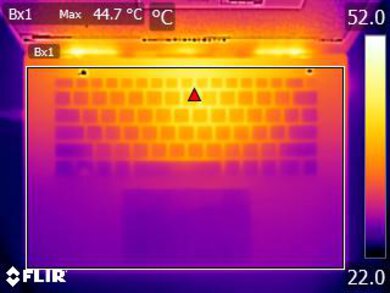
Fans get loud under load.
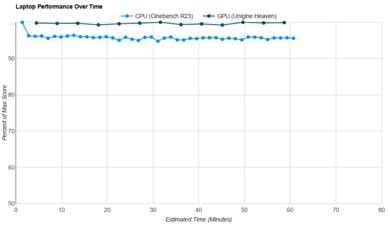
The prebuilt Performance configuration of the Framework Laptop 16 (2026) we tested is only adequate for workstation use. While it has a capable CPU, its relatively underpowered integrated graphics limit its performance in GPU-heavy tasks. That said, you can choose a configuration with a more powerful CPU, a discrete GPU, and more RAM to make the laptop significantly better suited for demanding workloads like 3D modeling, CAD, video editing and rendering, and some machine learning and AI applications.
Extensive configuration, expansion, and repair options.
Higher-tier configurations are capable of demanding workstation workloads.
The Base and Performance model we tested has underwhelming multitasking performance.
Fans get loud under load.
Display needs calibration for color-sensitive work.
Check Price
Differences Between Sizes And Variants
The Framework 16 (2026) is available in a wide variety of configurations, either prebuilt or DIY.
The model we tested is Framework's prebuilt Performance model with an AMD Ryzen AI 7 350 CPU, 16 GB of memory, 512 GB of SSD storage, and Windows 11 Home. Additional configurations we chose include a US English keyboard (2nd Gen), two black spacers, and the three-piece touchpad.
We've listed the available DIY configuration options as of August 2026 below, with our prebuilt configuration highlighted. We recommend checking Framework's configurator, as the available options may change over time.
SCREEN
- 16.0-inch IPS 2560 × 1600 165Hz (non-touch, 500 cd/m², 100% DCI-P3)
CPU
- AMD Ryzen AI 5 340 (6 cores, 12 threads, up to 4.8GHz)
- AMD Ryzen AI 7 350 (8 cores, 16 threads, up to 5.0GHz)
- AMD Ryzen AI 9 HX 370 (12 cores, 24 threads, up to 5.1GHz)
Note: Framework's configurator also lists an option for previous-generation Ryzen 7040 Series CPUs, but they were out of stock at the time of writing. We haven't included them here because we expect they represented remaining stock for the original Framework Laptop 16 (2024) rather than this newer 2026 model.
GPU (integrated, determined by CPU choice)
- AMD Radeon 840M (integrated with AMD AI 5 340 CPU)
- AMD Radeon 860M (integrated with AMD AI 7 350 CPU)
- AMD Radeon 890M (integrated with AMD AI 9 HX 370 CPU)
GPU (discrete)
- AMD Radeon RX 7700S (2nd Gen, 8GB)
- NVIDIA GeForce RTX 5070 Laptop GPU (8GB)
- NVIDIA GeForce RTX 5070 Laptop GPU (12GB)
MEMORY
- 16GB DDR5-5600
- 32GB DDR5-5600
- 64GB DDR5-5600
- 96GB DDR5-5600
STORAGE
- 512GB M.2 PCIe NVMe SSD
- 1TB M.2 PCIe NVMe SSD
- 2TB M.2 PCIe NVMe SSD
- 4TB M.2 PCIe NVMe SSD
- 8TB M.2 PCIe NVMe SSD
- Up to 2TB secondary M.2 2230 SSD
OPERATING SYSTEM
- Windows 11 Pro
- Windows 11 Home
- No operating system
KEYBOARD
- US English keyboard (2nd Gen, white backlighting)
- US English one-piece keyboard
- RGB keyboard
- Additional keyboard languages
INPUT MODULES
- Numpad
- RGB macropad
- Spacers in various colors (Black x2)
TOUCHPAD
- Three-piece touchpad
- One-piece haptic touchpad
BEZEL
- Black
- Orange
- Lavender
- Translucent smoke gray
EXPANSION CARDS
- USB-C ( x 6)
- USB-A
- HDMI
- DisplayPort
- Ethernet
- Audio (3.5 mm headphone jack)
- microSD
- SD
- 250GB storage
- 1TB storage
POWER ADAPTER
- 100W
- 240W
- No power adapter
We typically include a photo of our unit label, but no label is visible on this laptop.
Popular Laptop Comparisons
The Framework Laptop 16 (2026) continues Framework's flagship line of full-size modular laptops, with the same emphasis on repairability and upgradeability they've come to be known for. Like many competing laptops, it's available with different CPU, memory, and storage options. However, it provides much more granular customization, allowing you to choose individual ports, input modules such as a numpad or haptic touchpad, and even a user-replaceable discrete GPU module, a defining feature currently unique to Framework 16 laptops. This modular design makes replacing and upgrading components much easier than on conventional premium laptops. However, some of its most important modular components have Framework-specific form factors, so future upgrade paths still depend on continued support from Framework and its broader hardware ecosystem.
You can find premium 16-inch laptops that provide a more polished overall experience for a similar price or less. The Dell XPS 16, for example, provides a more conventional premium Windows experience in a similarly sized chassis. Meanwhile, the MacBook Pro 16 can deliver stronger performance for creative workloads at a similar price. However, neither provides the same degree of repairability, port customization, or long-term upgrade potential. The Framework Laptop 16 (2026) is most appealing if you prioritize repairability and upgradeability, and either don't mind or actively enjoy performing potential hardware upgrades and repairs down the line yourself.
See our recommendations for the best Laptops, the best 15-16 inch laptops, and the best Windows laptops.
The Framework Laptop 16 (2026) is a newer iteration of the Framework Laptop 16 (2023). Depending on their configuration, these modular laptops are suitable for general productivity, gaming, or workstation use. They share the same display and many basic design elements, with both emphasizing upgradeability and repairability. The newer model offers updated CPUs and significantly faster discrete GPU options. It also has better overall fit and finish, particularly between its modular components, addressing a minor build-quality issue we encountered with the older model.
The Framework Laptop 16 (2026) and the ASUS ROG Zephyrus G16 (2024) GU605 are 16-inch performance laptops with dramatically different design philosophies. The Framework is more versatile and well suited to general productivity, gaming, or workstation use, depending on the configuration you choose. It emphasizes modularity, repairability, and upgradeability above all else, with replaceable memory, upgradeable graphics, and customizable ports and input modules. The ASUS is a more conventional gaming laptop that's considerably lighter and available with more powerful discrete GPUs. Some configurations also have an OLED display, an option the Framework doesn't offer. However, its memory is soldered and limited to 32GB, making it far less upgradeable than the Framework.
The Framework Laptop 16 (2026) and the ASUS ProArt P16 H7606 (2024) are 16-inch laptops suitable for demanding creative and workstation tasks. The Framework is more versatile as it has DIY configurations that allow you to choose your own components, including custom port selection, input modules, and higher-spec discrete GPU options. It also has significantly better serviceability and repairability overall. Comparatively, the ASUS is considerably lighter and more portable, while its sharper 4k+ OLED touchscreen delivers deeper blacks and supports pen input, making it better suited to color-critical creative work. However, its memory is soldered, limiting its upgradeability.
The Framework Laptop 13 (2025) and Framework Laptop 14 (2026) are from different lineups in Framework's portfolio, but the share the same design philosophy focus on modularity, repairability, and upgradeability. Both offer the same CPU options, but the laptop 13 is much more portable, with a smaller screen. The Laptop 16 has a larger display, a configurable input deck, and optional discrete GPUs, none of which are available on the Laptop 13. These higher-end configurations also make the Laptop 16 much better suited to gaming and workstation use.
Test Results
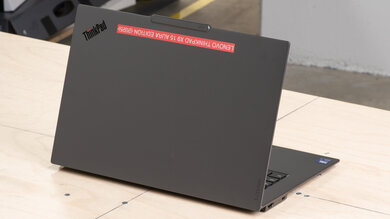
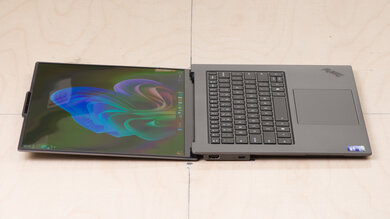
for pictures & test results
for pictures & test results
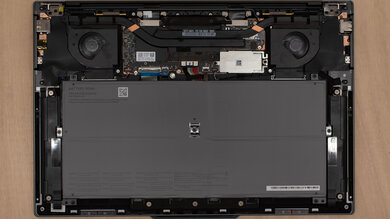
for pictures & test results





for pictures & test results
for videos & test results

for pictures & test results
for pictures & test results
for pictures & test results