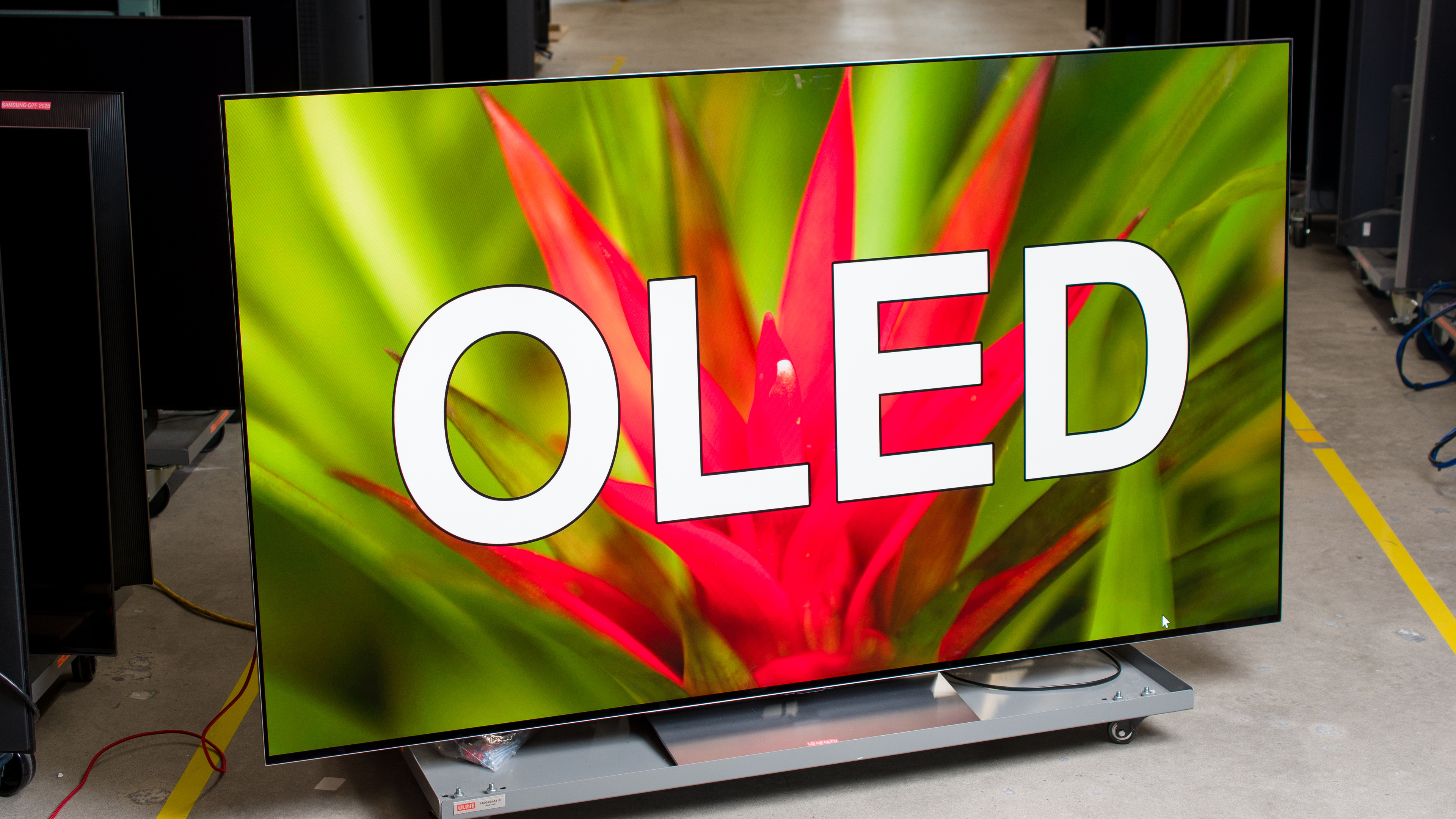
OLED TVs have been taking the TV world by storm for the last 10 years, but what is OLED? Is this relatively new technology really worth the expense? In this article, we'll break down how OLEDs work and look at their strengths and weaknesses to help you decide if an OLED TV is right for you. When you're ready to start shopping, check out our picks for the best OLED TVs.
What Is an OLED TV?
What is OLED? OLED stands for Organic Light Emitting Diode. It refers to the way a display, like a TV, monitor, or maybe even your phone, generates light. OLED materials have one fantastic advantage over any other display technology: their size. Unlike LEDs, which are relatively large, OLEDs are the size of an individual pixel. This means that each pixel's light output can be precisely controlled without affecting the pixels around it. Even if you have an extremely bright spot of light in a scene completely surrounded by black, both the bright light and the darkness surrounding it will be displayed perfectly. Blacks remain black, with no distracting halo effect or backlight glow. If you're unsure if an OLED or an LED is best for you, check out our OLED vs. LED TVs guide that explores the differences and compares the two types directly.
OLED Performance
Even though all OLEDs work on the same underlying principle, there are some significant differences between different models. These differences depend on the specific type and model of panel used, including whether it's a WOLED or QD-OLED panel. We'll cover some of these differences a little later on, but you can jump there now if you want to learn more. There are some noticeable trends, though, and even a few things that all OLEDs have in common. To better understand what to expect from an OLED display, we'll look at the overall spread and median results for a few key results of the 19 OLED TVs we've tested on either our 2.0.1 or 2.1 test methodologies. There are other performance metrics that are important when choosing a TV, but most of the other metrics have more to do with the TV's electronics and processing than the panel itself, so you should look at the specific reviews for that information.
Contrast
There's one thing that all OLED TVs have in common: perfect contrast. There's no variation at all between individual units, generation, or panel types; they all have a nearly infinite contrast ratio when viewed in a dark room. They also all have perfect black uniformity, with no variation in black levels across the screen. Near-blacks are a bit of a different story, though, and some OLED models have trouble displaying shadow details properly, depending on how the manufacturer tuned the TV. This has led to issues with some recent models, including dithering and a snow effect on the LG C5 OLED and the LG G5 OLED.
Perceived contrast when viewed in a bright room, on the other hand, varies between models depending on the specific type of OLED you buy and the screen coating used. If this matters to you, take a look at the Ambient Black Level Raise test under the Reflections category of our reviews; this test shows you how well an OLED maintains those black levels when viewed in a bright room.
Brightness
 |
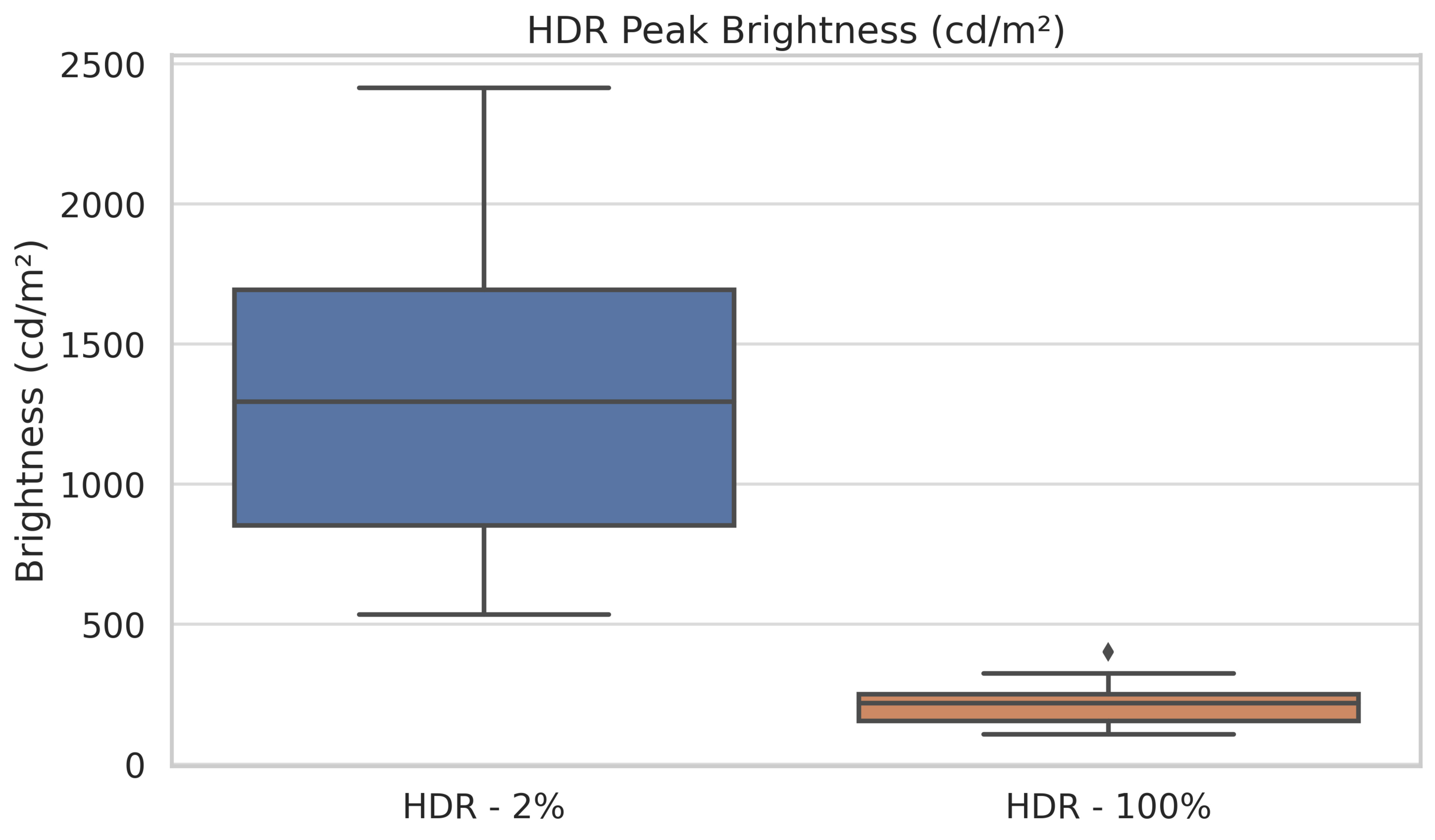 |
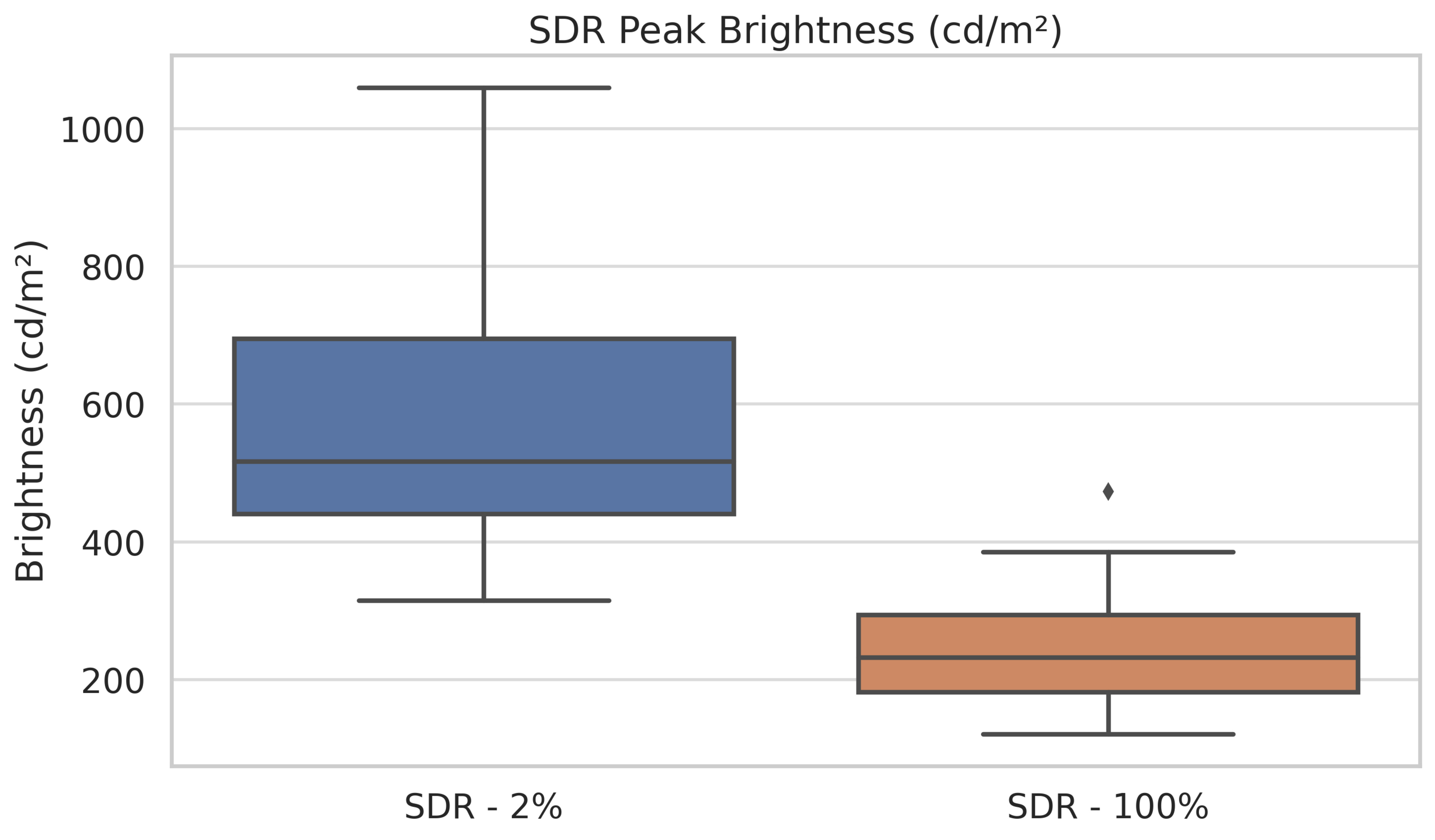
We measure brightness across a wide range of test window sizes and real scenes, but for this article, we're just going to look at two very important metrics: a 2% window and a 100% window. The 2% shows us how bright the smallest highlights can get, and here you can see that in both SDR and HDR, there's a considerable difference between individual OLED models. Higher-end OLEDs have much higher peaks, especially in HDR, where they use that brightness to bring out small specular highlights. The 100% window shows us how well the TV can handle the brightest content available, like very bright outdoor scenes or when you're watching sports. The difference here isn't as significant as it is with a 2% window, but it's still there. The latest OLED panels offer significantly increased 100% window brightness, allowing the few TVs that use them to reach much higher peak brightness than older panels.
Overall, OLEDs are a good choice if you care about peak brightness. Most of them get bright enough to deliver bright specular highlights, so your favorite content in HDR stands out the way the content creator intended. They also handle very bright scenes well, but pay attention to the 100% measurements if you plan on watching sports in a bright room, as they're not all bright enough to overcome glare.
Color Volume
 |
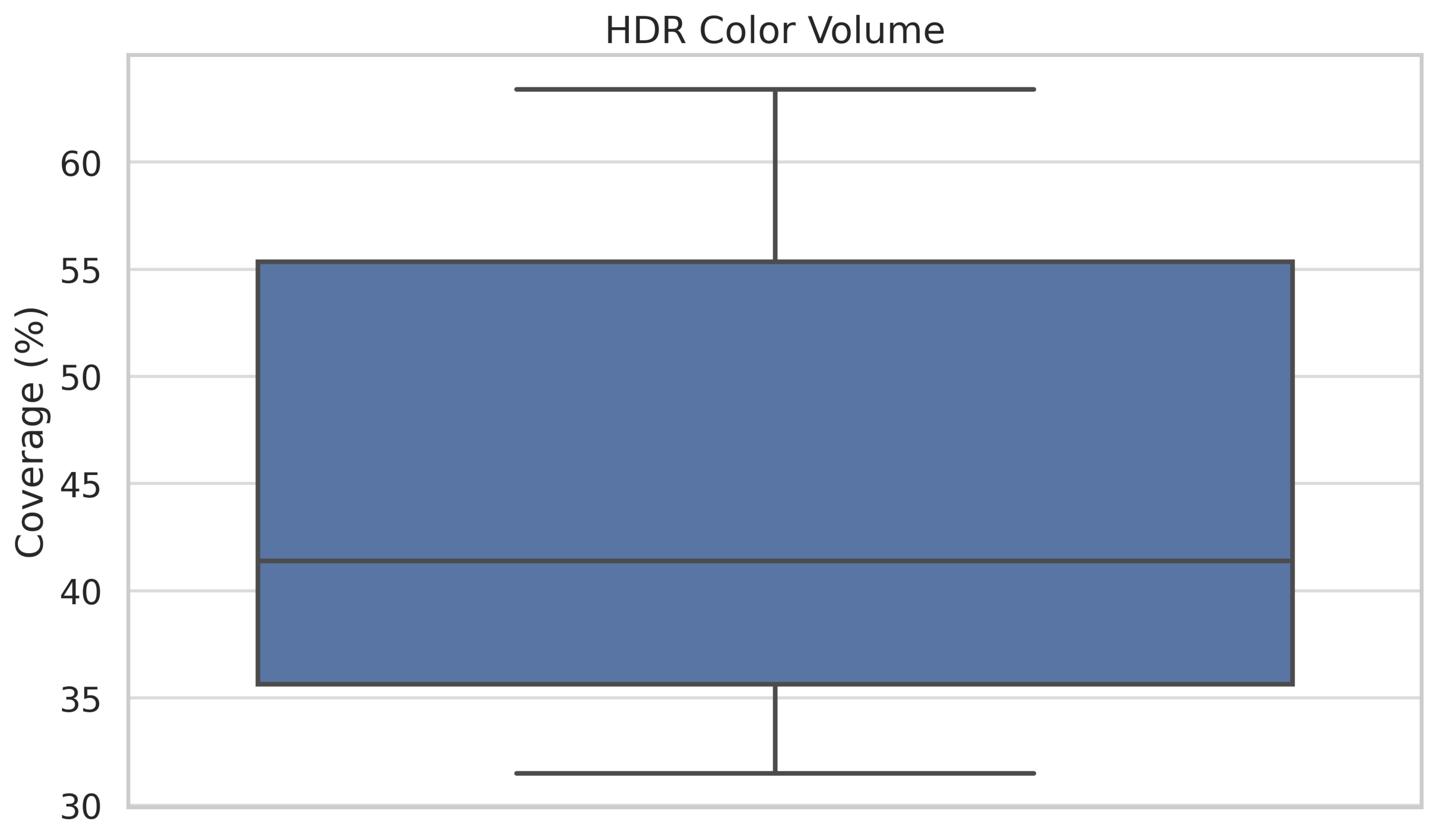 |
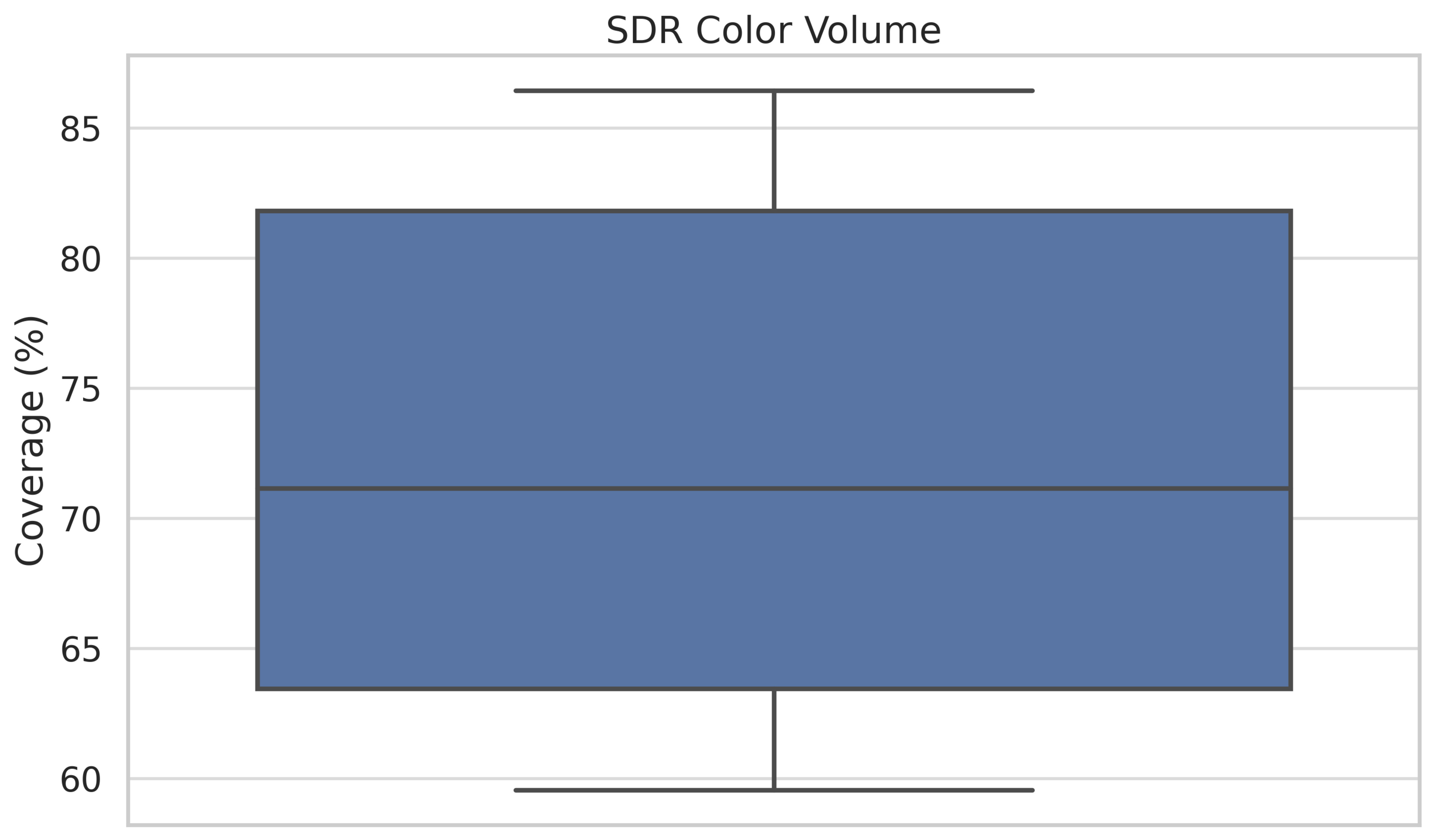
Whereas brightness shows how bright a TV can get with pure white, color volume looks at how well a TV can display colors and pure white across a wide range of lightness levels. OLEDs have a few key advantages over other display types, including the ability to display deep, saturated colors extremely well, thanks to their nearly perfect contrast. At high luminance levels, though, OLEDs tend to struggle a bit. TVs with WOLED panels rely on the white subpixel to boost the TV's brightness, and this causes colors to appear a bit washed out in very bright scenes. QD-OLEDs handle bright scenes better, with no noticeable color washout as they don't rely on that white subpixel. So if you enjoy vivid colors, an OLED can be a great choice, but some OLEDs are better than others. There's even a noticeable variation between individual units across both types of OLED, and some models are better than others, so you need to look at the results for the specific models you're considering.
Gray Uniformity
 |
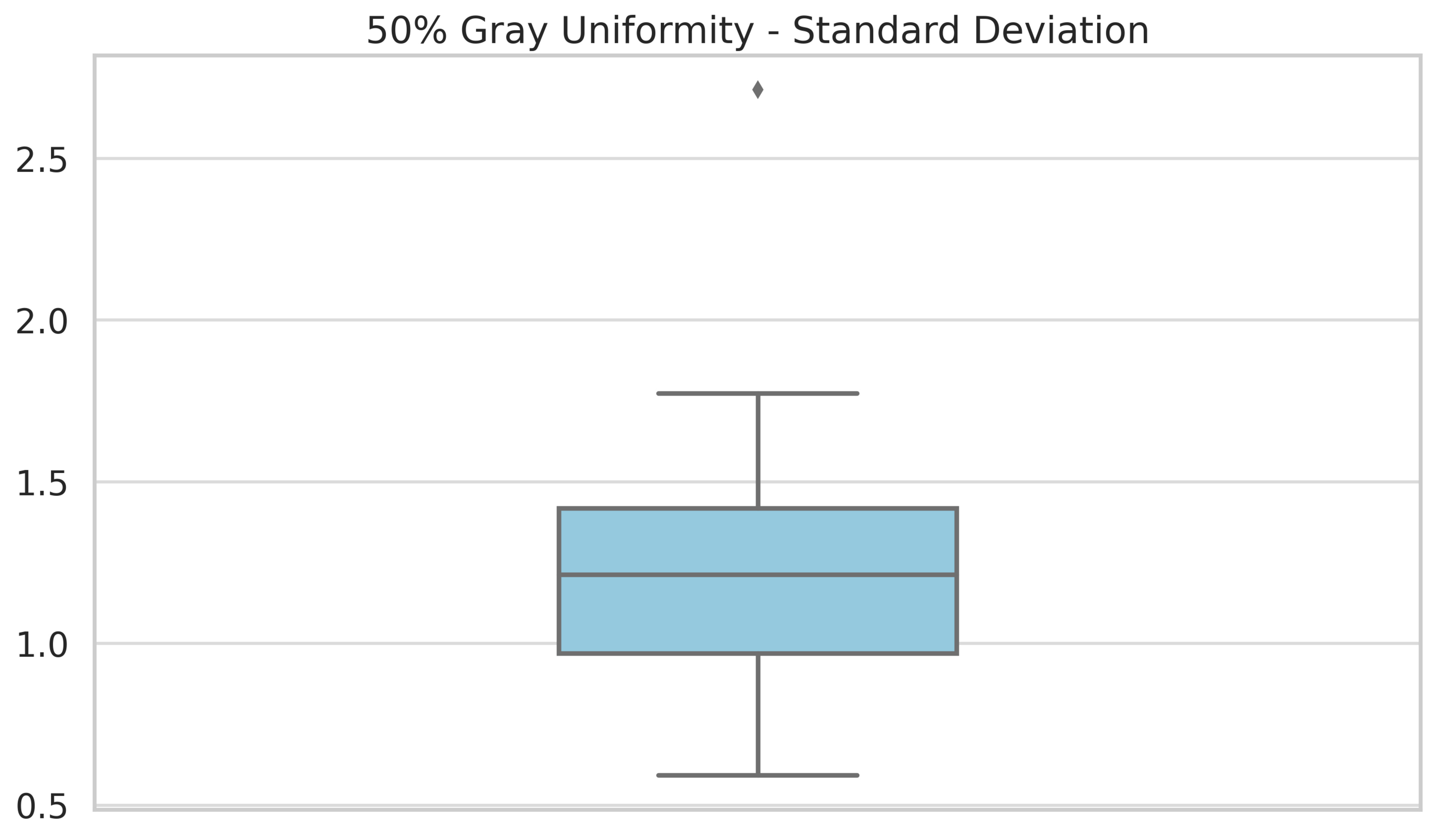 |
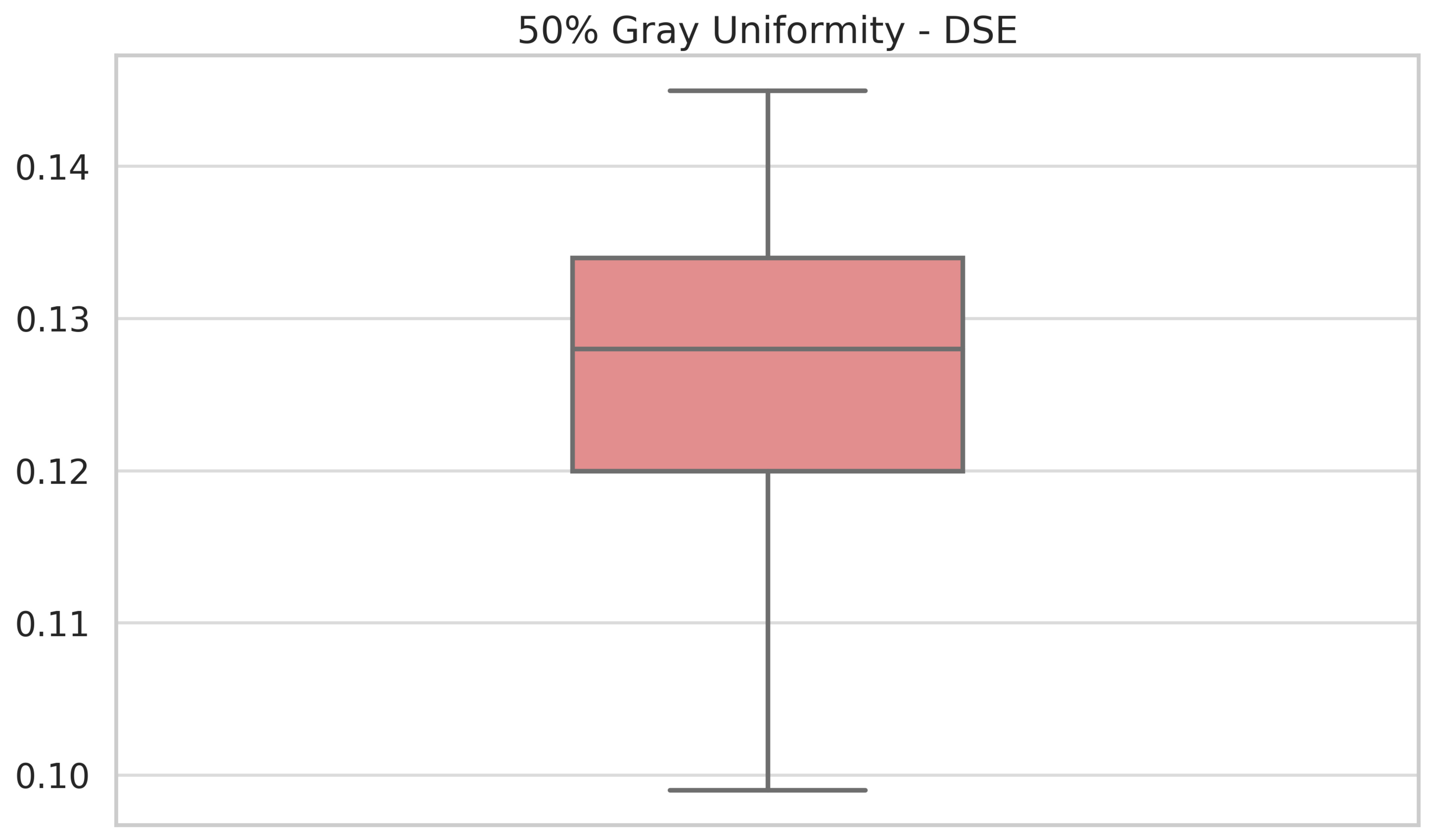
There are two key metrics we look at when considering gray uniformity: the amount of dirty screen effect and the standard deviation. In both cases, OLEDs tend to perform very well, with just a slight variation between individual units. There are a few outliers, but if you're a sports fan and want a clean image, an OLED is usually a safe bet. There are a few other issues to keep in mind, though. Some OLEDs, especially WOLED models released in the last few years, exhibit a noticeable green tint, especially when viewed from the sides. This varies between individual units, and even if your unit has this problem, you might not notice it.
Motion Blur
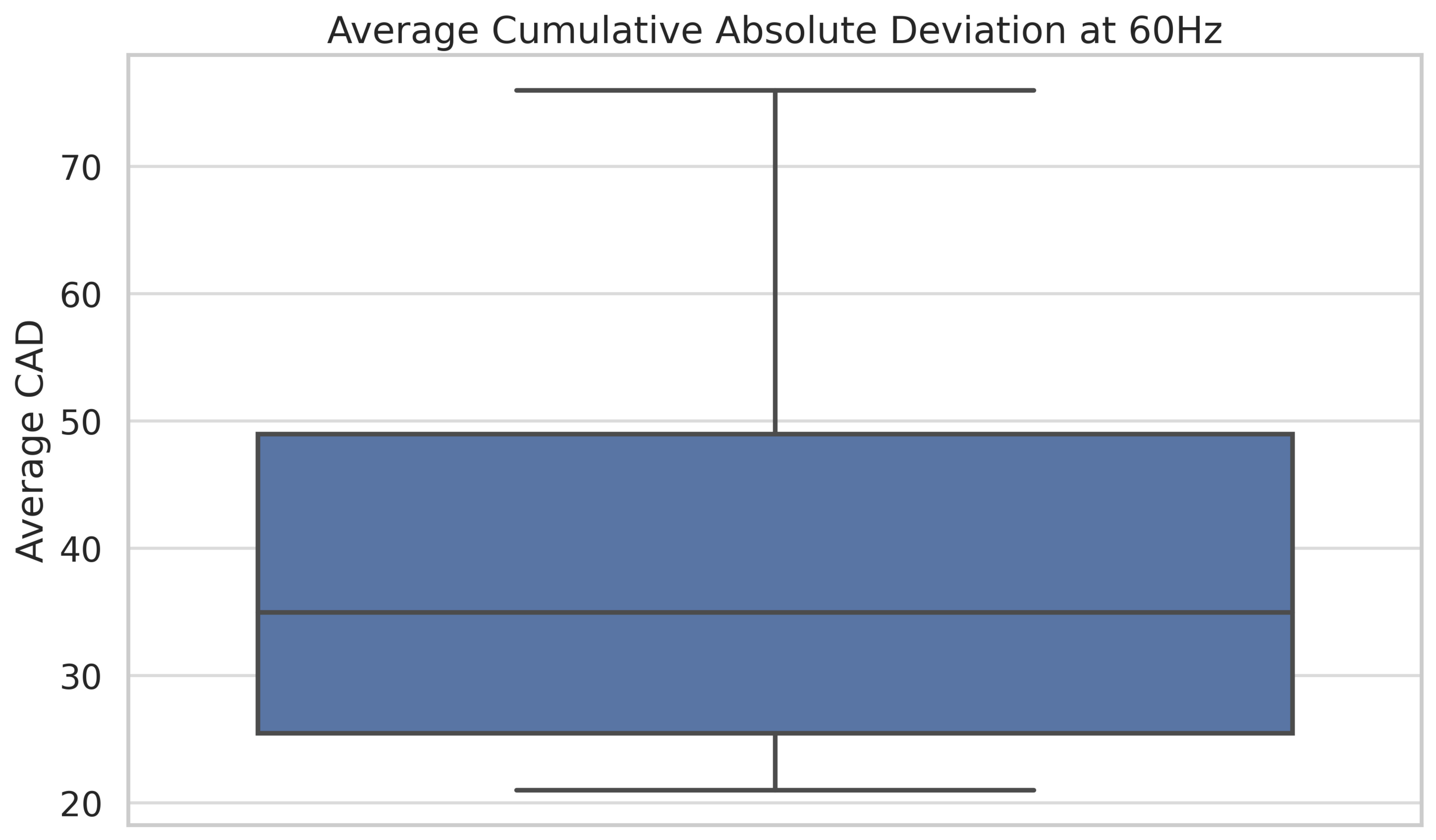
Cumulative absolute deviation is a way of measuring how quickly a TV's pixels can change from one shade to the next. Lower numbers indicate that there's less delay switching from one frame to the next, so you'll see a smoother transition with less motion blur in fast-moving action shots. Here, almost all OLEDs have incredibly fast transitions, but they struggle a bit with transitions to and from near-black shades. The exact time varies a bit between individual models depending on how it was tuned by the manufacturer, but even though there's some variation, it's still far quicker than any other TV technology out there. The fastest LED we've tested is nearly three times slower than the slowest OLED.
Unfortunately, this also comes with a major downside. A quicker response time means that each frame is held static on the screen for a relatively long time. This isn't an issue with high-frame-rate content like games or sports, but it's a big issue with movies or other 24/30 fps content. The human eye tracks movement at a consistent rate, but with a quick response time, moving objects appear to jump across the screen instead of moving smoothly. This stutter effect can be very distracting in certain scenes, but it doesn't bother everyone to the same degree.
Burn-in

The 'O' in OLED stands for organic, and like most organic compounds, they degrade over time. This means that as your OLED TV ages, it'll eventually start to fade. When certain parts of an OLED screen degrade at a different rate than the rest, you get uneven uniformity, like the CNN banner above on the LG CX OLED. We spent a lot of time investigating this issue in our real-life burn-in test, our 20/7 burn-in test, and, more recently, our accelerated longevity test. Since 2017, we've destroyed 27 OLEDs in the name of science, and the good news is that we found with varied usage, burn-in shouldn't be an issue for most people. So while it's something you need to be aware of if you're considering buying an OLED TV, you don't really need to worry about it unless you only ever watch the same channels or play the same games for thousands of hours.
Conclusion
OLED TVs are almost always among the top-scoring TVs of any given year, and for good reason. They deliver an unmatched dark room experience, with deep inky blacks, vibrant colors, and bright highlights. Their quick pixel response times also make them a fantastic choice for gamers and sports fans alike. OLEDs are almost always a safe choice for any usage or viewing condition, but there are some differences between them. Before deciding to go with an OLED, it's important to look at the performance of the specific models you're considering.
Types Of OLED
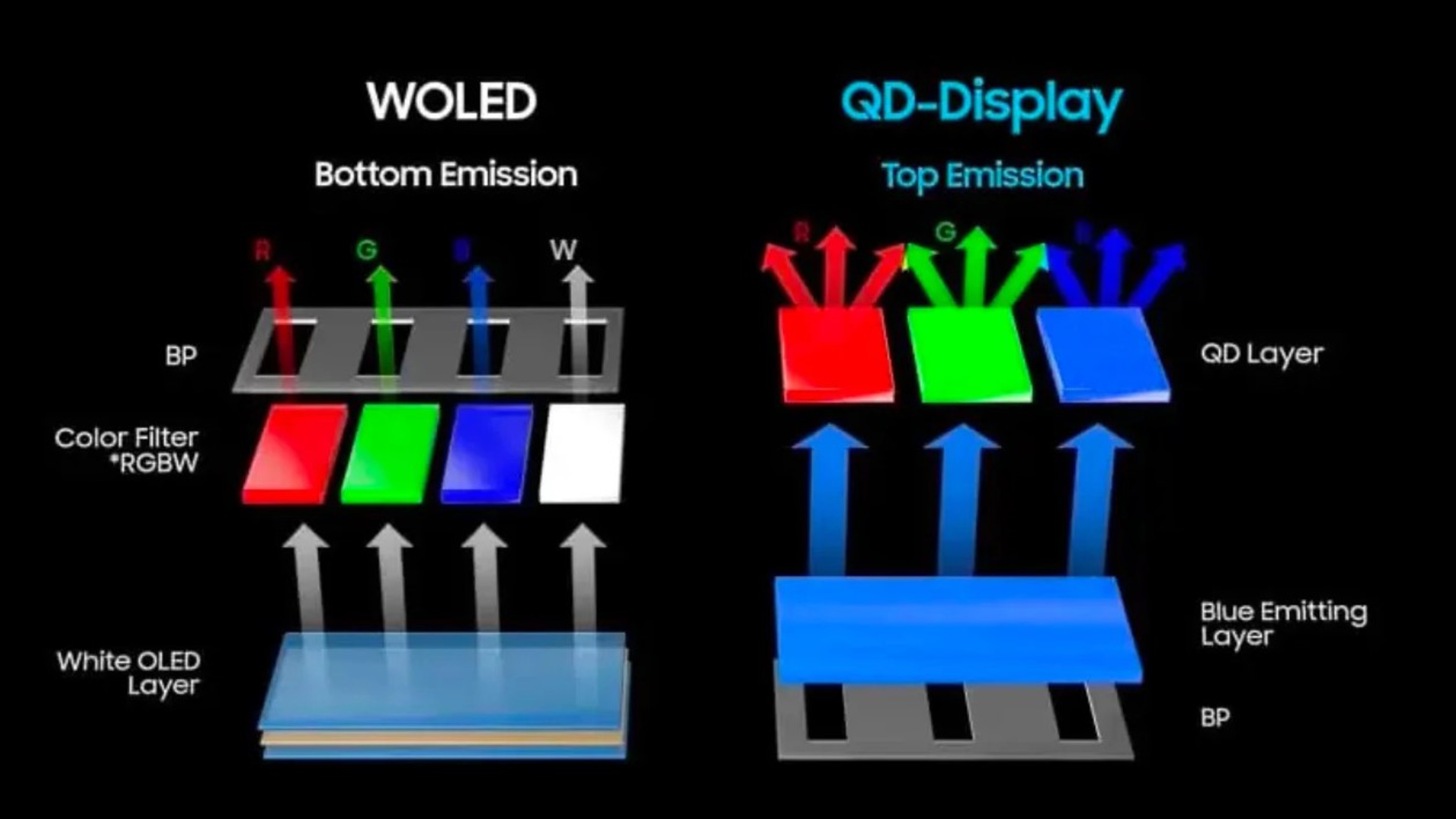
As we mentioned at the beginning, there's more than one type of OLED out there. WOLED and QD-OLED are two competing technologies developed separately by LG and Samsung, and they each have specific strengths and weaknesses. We won't get into the performance differences between them, but we'll talk about how they work below and some of the benefits of each.
WOLED
The first widely available OLED TVs on the market were made by LG and used a WOLED panel. These TVs use a stack of OLED-emitting materials that produce white light. This white light then passes through color filters to produce separate red, green, and blue light, and a fourth subpixel with no filter that allows the white light to pass straight through. The white OLED layer at the bottom gives the display technology its name: White OLED, or WOLED for short.
There are a few noticeable issues with this technology, though. Color filters aren't very efficient. The display takes energy to produce white light across all four subpixels, but the color filter blocks much of that light. Similar to a projector color wheel, this solution produces brighter whites but dilutes color purity. This reduces the overall color volume, and saturated colors appear dull and muted compared to bright white highlights. These panels are still very popular, and you can find them on many high-end models like the LG C5 OLED.
QD-OLED
In 2022, Samsung Display entered the market with an entirely new solution. Instead of a white OLED layer with inefficient color filters, QD-OLED panels use a blue OLED layer as a light source, with quantum dots printed in a separate layer that converts blue light to red and green. Learn more about QD-OLED technology.
Why change to blue, and why does this matter? Unlike inefficient color filters, these materials are extremely efficient at producing light. Instead of blocking the undesired wavelengths from passing through, they absorb light from an external source and then re-emit photons at a different wavelength without needing an electric charge. Quantum dots are far more efficient at converting light from one color to another, so the underlying OLED emissive layer doesn't have to work as hard to produce bright highlights. Samsung has tweaked the technology a bit since it first launched, but this panel type is still very similar to the original, and you'll find it on models like the Samsung S90F OLED.
Primary RGB Tandem
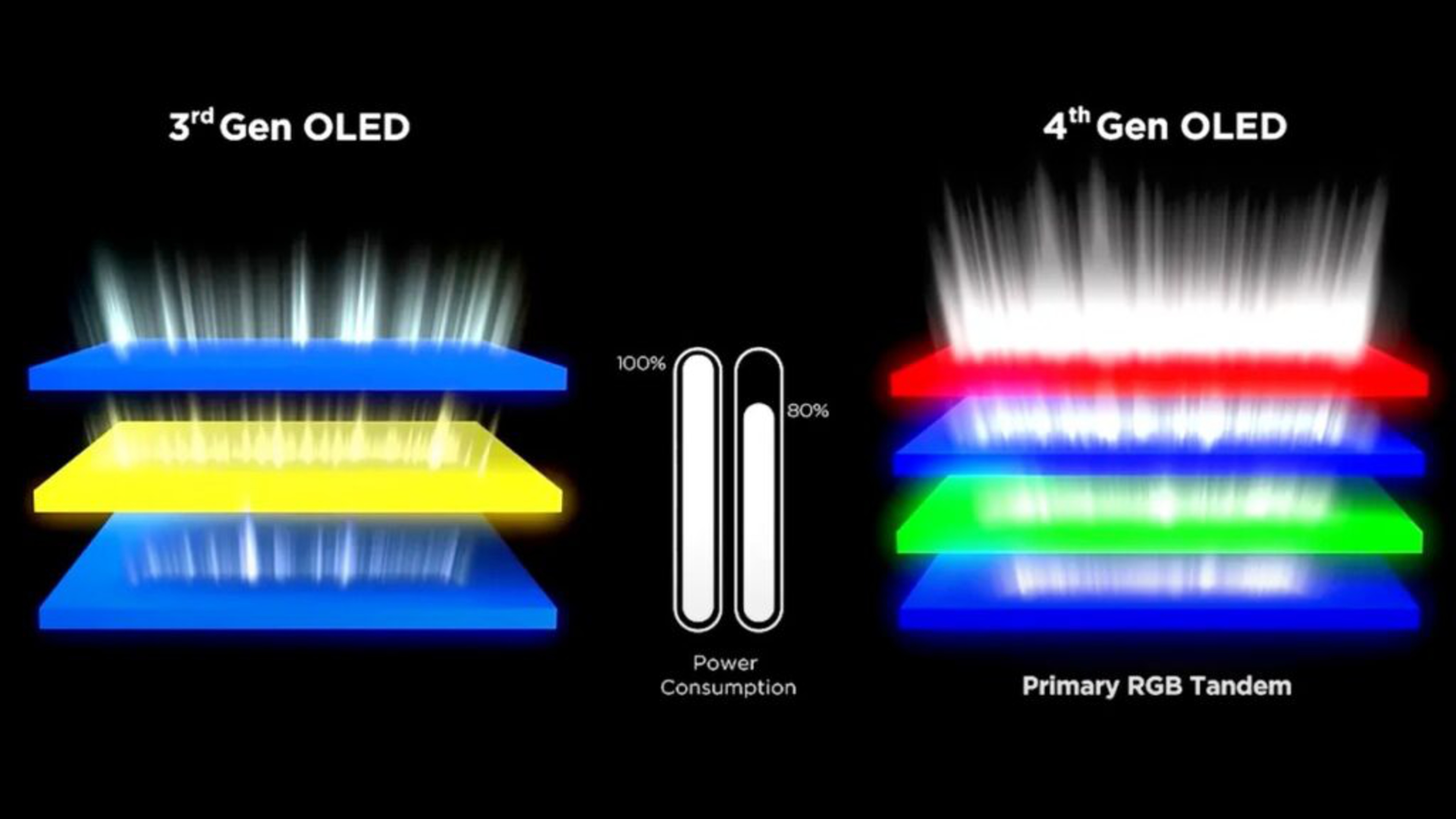
Primary RGB tandem isn't really another type of OLED; it's the evolution of the two OLED panel types mentioned above. These new panels changed the different layers that make up the emitting stack. On WOLED models like the LG G5 OLED, instead of using a sandwich of blue and yellow emitters to produce white light, they switched to an RGB stack with two blue emitters. Samsung's QD-OLED stack doubles up on the blue and green emitters, switching to a five-layer stack with three blue and two green emitters on the Samsung S95F OLED.
These new panels deliver significantly higher peak brightness levels, allowing for much higher brightness levels, especially with the brightest 100% APL scenes. They're also more efficient than previous generations.