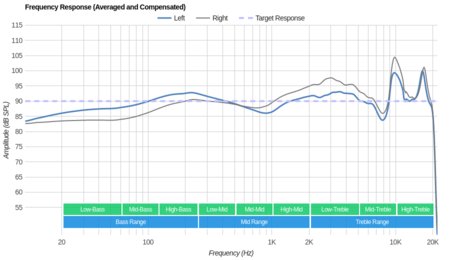
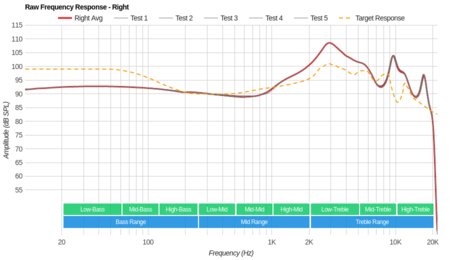
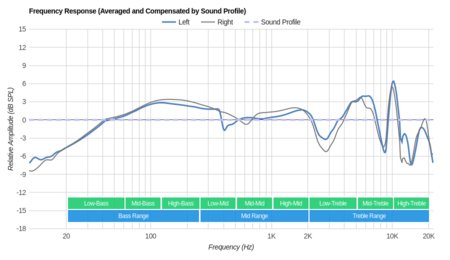
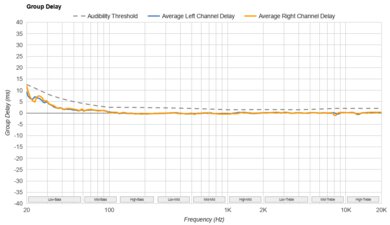
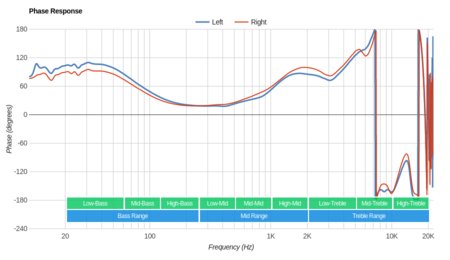
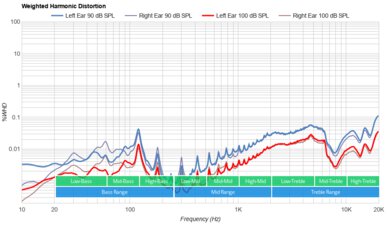
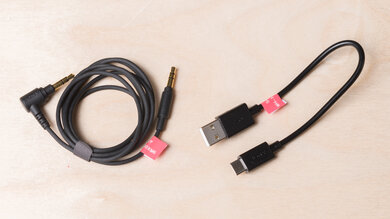
The Audio-Technica ATH-ANC33iS have a typical in-ear design and above-average audio reproduction. Unfortunately, they may not be comfortable for everyone, and their poor isolation means ambient noise could potentially ruin your listening experience.
Our Verdict
The Audio-Technica ATH-ANC33iS perform moderately well in most use cases and make for decent everyday headphones.
- Great audio reproduction.
- Minimal leakage.
- In-Ear design may be uncomfortable for some.
- Poor noise isolation.
The Audio-Technica ATH-ANC33iS are average for neutral listening. They have a decent audio reproduction, but the closed-back in-ear design lacks a little openness.
The Audio-Technica ATH-ANC33i are average for commuting. They're small and have a compact design, but their active noise isolation is weak and may not be sufficient for loud, noisy environments.
The Audio-Technica ATH-ANC33iS are above average for sports use. They're stable and are also small enough to carry around on your person everywhere you go.
The Audio-Technica ATH-ANC33iS are average for office use. They won't block the chatter of a busy office.
Changelog
- Updated Nov 21, 2019: Converted to Test Bench 1.3.1.
- Updated Nov 21, 2019: Converted to Test Bench 1.3.
- Updated Feb 16, 2018: Converted to Test Bench 1.2.
- Updated Sep 28, 2017: The microphone has been tested with our new methodology, as explained here
Check Price
We've upgraded our Headphones Test Bench to 2.0! This update brings several key changes to our tests and usages, making it easier than ever to interpret our sound results based on your personal preferences. You'll also find a brand-new interactive graph tool featuring multiple targets (including our own!) for you to explore and compare.
For a full breakdown, check out our changelog, which includes detailed commentary from our test designer explaining the rationale behind our update.
We'd also love to hear your thoughts: your feedback helps us keep improving, so join us in the comments!
Test Results
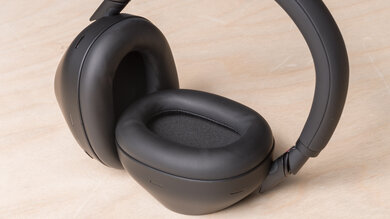
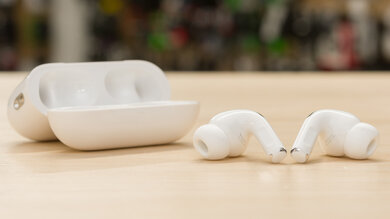
The Audio-Technica ATH-ANC33iS have the same aesthetic as the Audio-Technica ATH-ANC23, with a few minor color differences. They have a very common design with an all-black color scheme. The control module isn't too bulky, and the in-ear buds and tips are also all-black and engraved with the Audio-Technica logo on the back.
The Audio-Technica ATH-ANC33iS are as comfortable as you would expect for an in-ear design. They offer a variety of tip sizes and an additional memory foam tip that provides slightly better stability once in the ear. They apply a bit of pressure within the ear canal, which may be uncomfortable for some, especially during long listening sessions.
Button functionality and placement are average. They offer decent functionality with call/music and volume control, as well as a simple switch to enable noise cancelling. However, the buttons feel poorly laid out; the call/music button being too far from the volume dial is slightly frustrating.
These headphones are very portable. They can easily fit into a pocket, purse, or bag and don't take up much space. However, since these are noise cancelling headphones, they come with a control module that makes them a little bigger when folded than regular passive in-ear headphones.
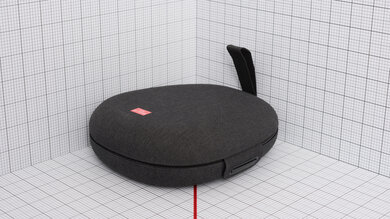
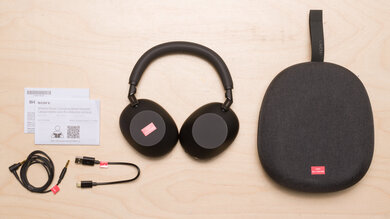
These headphones come with a drawstring pouch that can help protect the headphones from damage. It doesn't add much bulk and is small enough to fit into a pocket. Sadly, the headphones aren't really protected from physical stress and hard falls and could get damaged by water as the pouch is not waterproof.
The Audio-Technica ATH-ANC33iS are decently stable. They fit deeply into the ear canal and don't quickly fall out of your ears during moderate physical activity. However, the control module and long cable can easily get hooked on something and pull the headphones out of your ears. They also don't have any unique tips to help maintain a stable fit, which makes them not really ideal for high-intensity exercises.
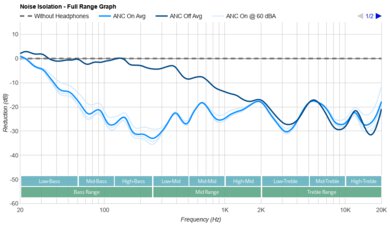
Poor performance. These headphones do poorly throughout the frequency range. The passive isolation provided by these in-ears is especially poor around 5kHz. The active noise isolation, although effective in the bass and mid regions, performs consistently below average.
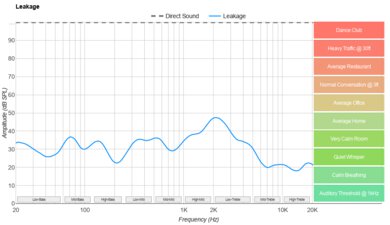
Average leakage. The majority of the leakage will be in the treble range, which is typical of in-ear earphones. However, the loudness of the leakage is unusually high for an in-ear design.
No compatible app.