Bowers & Wilkins PX5 Wireless  Headphones Review

Reviewed Sep 28, 2020 at 08:14am
Tested using Methodology v1.4 
Bowers & Wilkins PX5 Wireless
6.9
Mixed Usage 
6.1
Neutral Sound 
7.6
Commute/Travel 
6.9
Sports/Fitness 
7.4
Office 
5.4
Wireless Gaming 
6.9
Wired Gaming 
6.4
Phone Calls 
 2

The Bowers & Wilkins PX5 are premium wireless on-ear headphones. They're amazingly well-built, have a great ANC system, and deliver excellent battery performance. They're also decently comfortable and have a control scheme that places a lot of functionality at your fingertips. Unfortunately, their bass-heavy sound profile may not suit everyone, and their companion app gives you no way to adjust it, which is a disappointing omission. Still, if you don't mind a boomy listening experience and prefer a tight on-ear fit, these may be a good choice.

Our Verdict

6.9
Mixed Usage 

The Bowers & Wilkins PX5 are decent for mixed usage. They're well-built, block out plenty of ambient noise, and feature an easy-to-use control scheme, all of which makes them good for commuting. Their multi-device pairing capability and long battery life make them decent for office work. Unfortunately, their bass-heavy sound profile isn't for everyone, and their mediocre integrated microphone limits their usage for phone calls.

Pros
  • Excellent build quality.
  • Great control scheme.
  • Impressive noise isolation performance.
  • Good battery life.
Cons
  • No EQ to modify their sound profile.
  • No microphone compatibility when using a wired connection.
  • Sub-par microphone recording quality and mediocre noise handling capability.
  • Mediocre stability.
6.1
Neutral Sound 

The Bowers & Wilkins PX5 are mediocre for neutral listening. Their bass response is heavily overemphasized, resulting in a boomy sound profile with muddied vocals and lead instruments. There's no EQ in their companion app either, so you can't adjust their sound profile. Also, they don't provide an especially spacious listening experience.

Pros
  • Consistent audio delivery.
  • Good stereo imaging performance.
Cons
  • No EQ to modify their sound profile.
  • Closed-off soundstage.
7.6
Commute/Travel 

The Bowers & Wilkins PX5 are good for commuting. Their adjustable ANC system effectively filters out engine noise and their battery life should be long enough to get you through a long overnight flight. While their on-ear fit may not suit everyone, they're decently comfortable and have very low latency on mobile devices, which is good if you like to watch movies or shows on your way into the office.

Pros
  • Excellent build quality.
  • Impressive noise isolation performance.
  • Low wireless latency on mobile devices.
  • Good battery life.
Cons
  • No EQ to modify their sound profile.
  • Mediocre stability.
6.9
Sports/Fitness 

The Bowers & Wilkins PX5 are an acceptable choice for sports and fitness. While they aren't especially stable or easy to carry around, they're sturdy enough to take a few bumps and have a control scheme that easy to use when you're on the go. Their adjustable ANC system and talk-through feature allow you to let in more ambient noise if you're out on a run and want to stay aware of your surroundings.

Pros
  • Excellent build quality.
  • Great control scheme.
Cons
  • No EQ to modify their sound profile.
  • Mediocre stability.
7.4
Office 

The Bowers & Wilkins PX5 are decent for office use. They're impressively effective when it comes to filtering out the chatter of coworkers and support multi-device pairing, which is useful if you listen to content on your phone and work computer. Their 38-hour battery life should have no trouble dealing with a couple of days in the office.

Pros
  • Support for multi-device pairing.
  • Impressive noise isolation performance.
  • Good battery life.
Cons
  • No EQ to modify their sound profile.
  • No microphone compatibility when using a wired connection.
  • Sub-par microphone recording quality and mediocre noise handling capability.
5.4
Wireless Gaming 

The Bowers & Wilkins PX5 aren't suitable for wireless gaming due to their high latency on PC and incompatibility with PS4 and Xbox One consoles.

6.9
Wired Gaming 

The Bowers & Wilkins PX5 are okay for wired gaming, as long as you don't plan on using the integrated mic, as neither the 1/8" TRS cable nor USB-A to USB-C charging cable support microphone usage. Their bass-heavy sound profile emphasizes some sound effects in action-heavy games but may overwhelm in-game dialogue. Thankfully, their on-ear fit provides relatively consistent audio delivery.

Pros
  • Consistent audio delivery.
  • Good stereo imaging performance.
Cons
  • No EQ to modify their sound profile.
  • No microphone compatibility when using a wired connection.
6.4
Phone Calls 

The Bowers & Wilkins PX5 are just okay for making phone calls. They do a great job of blocking out ambient noise, so you should have no trouble following the conversation, even in loud environments. Unfortunately, their integrated mic delivers sub-par recording quality and does an unremarkable job of separating speech from ambient noise.

Pros
  • Excellent build quality.
  • Impressive noise isolation performance.
Cons
  • No microphone compatibility when using a wired connection.
  • Sub-par microphone recording quality and mediocre noise handling capability.
  • 6.9
    Mixed Usage
  • 6.1
    Neutral Sound
  • 7.6
    Commute/Travel
  • 6.9
    Sports/Fitness
  • 7.4
    Office
  • 5.4
    Wireless Gaming
  • 6.9
    Wired Gaming
  • 6.4
    Phone Calls
  • Changelog

    1.  Updated Jun 11, 2021: Changed USB Audio results for clarity.
    2.  Updated Sep 28, 2020: Review published.
    3.  Updated Sep 11, 2020: Early access published.
    4.  Updated Aug 19, 2020: Our testers have started testing this product.

    Check Price

    Differences Between Sizes And Variants

    There are two color variants of the Bowers & Wilkins PX5. We tested the 'Blue' variant, though we expect the 'Space Grey' model to perform similarly. If someone comes across a model variant that isn't mentioned, let us know in the discussions below so that we can update our review.

    Popular Headphones Comparisons

    The Bowers & Wilkins PX5 are well-built on-ear headphones. They have excellent build quality, great battery life, and a user-adjustable ANC system. Unfortunately, while some users may prefer their bass-heavy sound profile, their companion app doesn't feature presets or an EQ, which makes them less than ideal for neutral listening. For more options, take a look at our list of recommendations for the best wireless Bluetooth headphones, the best noise-cancelling headphones, and the best on-ear headphones.

    Bowers & Wilkins PX7 Wireless

    The Bowers & Wilkins PX7 Wireless and the Bowers & Wilkins PX5 Wireless are closely-matched. The on-ear PX5 have a more comprehensive control scheme, are easier to carry around, provide more consistent audio delivery, leak less audio, and have a superior integrated mic. That said, the PX7 are more comfortable and provide a far more spacious listening experience.

    Bowers & Wilkins PX Wireless

    The over-ear Bowers & Wilkins PX Wireless are better mixed-usage headphones than the Bowers & Wilkins PX5 Wireless. The PX are better-built, more stable on the head, provide a better-balanced and far more spacious listening experience, and block out more ambient noise. Conversely, the PX5 have a longer battery life, a superior integrated mic, lower wireless latency, and a more comprehensive control scheme.

    Beats Solo3 2018

    The Bowers & Wilkins PX5 Wireless are better mixed usage wireless on-ears than the Beats Solo3 2018. The Bowers & Wilkins have an easier-to-use and more comprehensive control scheme, are better-built, block out more ambient noise, and feature a companion app with more options. However, the Beats have a more neutral sound profile and last slightly longer on a single charge. They also offer full audio and microphone compatibility on a wired connection thanks to their 1/8" TRRS cable.

    Beats Solo Pro

    The Beats Solo Pro and the Bowers & Wilkins PX5 Wireless have different strengths. The Bowers & Wilkins are better-built, more comfortable, and have an easier to use control scheme as well as a more comprehensive companion app. They also offer multi-device pairing and wired audio playback, neither of which the Beats support. However, the Beats provide more consistent and neutral sound profile, charge faster, feel more stable, and have a much longer wireless range.
    Sennheiser PXC 550-II Wireless

    The Sennheiser PXC 550-II Wireless are more versatile than the Bowers & Wilkins PX5 Wireless. The over-ear Sennheiser have a more comfortable and stable fit, a more neutral sound profile, and a better integrated microphone. They also support the aptX-LL codec for low latency audio and provide a lower-latency Βluetooth connection with PCs using that codec. Ηowever, the Bowers & Wilkins are better-built, have a much longer battery life, leak less audio, and have a superior control scheme.

    Overhauling Our Audio Measurements And A New Multi-Curve Graphing Tool

    We've upgraded our Headphones Test Bench to 2.0! This update brings several key changes to our tests and usages, making it easier than ever to interpret our sound results based on your personal preferences. You'll also find a brand-new interactive graph tool featuring multiple targets (including our own!) for you to explore and compare.

    For a full breakdown, check out our changelog, which includes detailed commentary from our test designer explaining the rationale behind our update.

    We'd also love to hear your thoughts: your feedback helps us keep improving, so join us in the comments!

    Test Results

    perceptual testing image
    Sort:
    RATINGS
    Category:
    All
    Design
    Style
    TypeOn-ear
    EnclosureClosed-Back
    WirelessYes
    TransducerDynamic

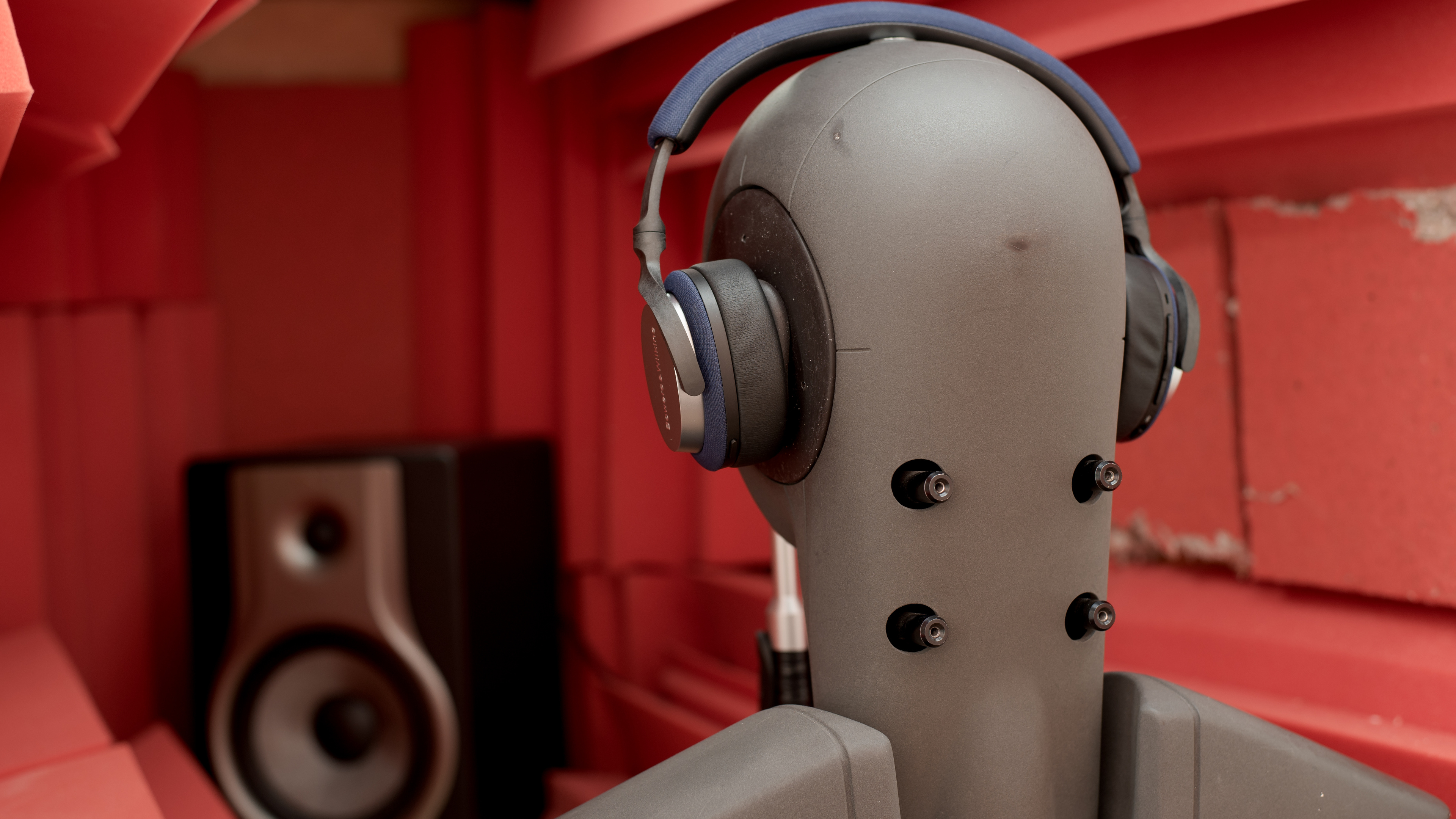
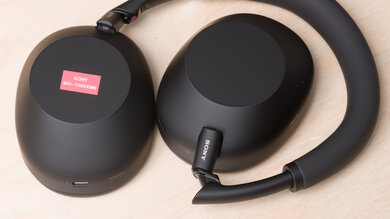
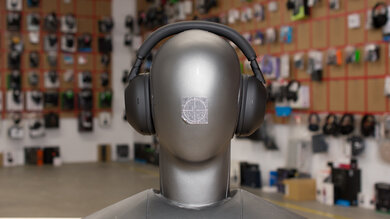
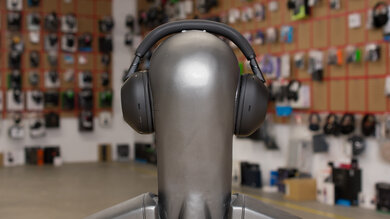
    The Bowers & Wilkins PX5 are premium-looking headphones. Their construction features textured, high-grade plastic and densely-woven cloth, which surrounds the ear cups and headband. The cloth material is available in either blue or dark grey.

    7.0
    Comfort
    Weight0.59 lbs
    Clamping Force
    0.8 lbs

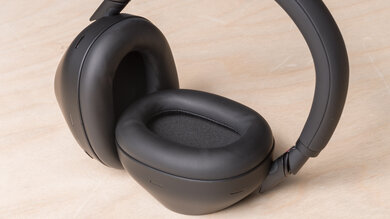
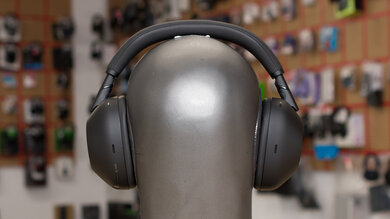
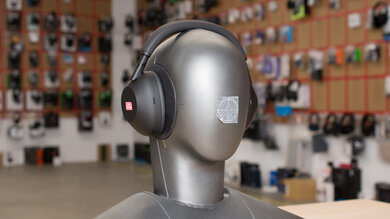
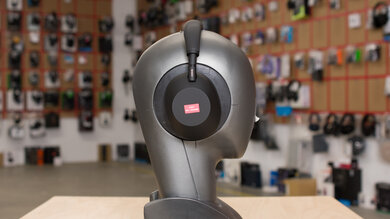
    These are decently comfortable on-ear headphones. The ear cups feature memory foam padding and offer a broad range of adjustability. Unfortunately, you may experience a little fatigue during longer listening sessions, as the ear cups are a little small and can put pressure on your ear. The headband also has a stiff range of adjustment, which can be annoying when trying to change their fit.

    8.1
    Controls
    OS Compatibility
    Not OS specific
    Ease Of UseGood
    FeedbackGood
    Call/Music ControlYes
    Volume ControlYes
    Microphone ControlMute/Unmute
    Channel Mixing
    No
    Noise Cancelling ControlPresets
    Talk-Through
    On/Off
    Additional ControlsBluetooth Sync

    These headphones have a great physical control scheme. It's fairly easy to use and places a lot of functionality at your fingertips. It offers controls for volume adjustment, playback and call functions, microphone muting, ANC preset cycling, and enabling talk-through, not to mention Bluetooth pairing. Most inputs come with an audible voice cue, and the buttons themselves offer plenty of physical feedback.

    6.1
    Portability
    L7.7"
    W6.8"
    H1.8"
    Volume94 in³
    Transmitter RequiredNo

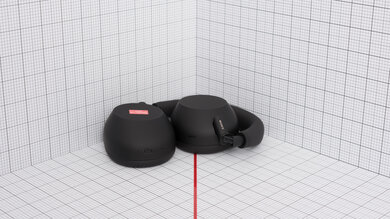
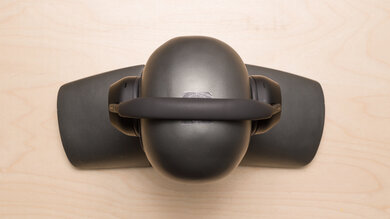
    The Bowers & Wilkins PX5 are acceptably portable. While they take up less space than some over-ear alternatives, they're still somewhat bulky and don't have a folding headband. Thankfully, their ear cups rotate flat to make it easier to slide them into a bag.

    6.5
    Case
    TypeSoft case
    L9"
    W6.5"
    H2.4"
    Volume140 in³

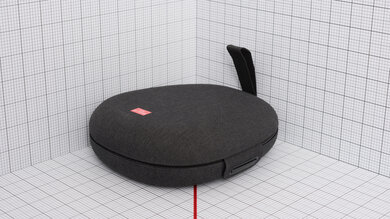
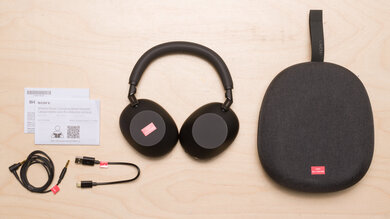
    These on-ears come with a case that's a middle ground between a pouch and a soft case. It should protect the headphones from scratches and minor water damage, but not large impacts. It uses an elastic instead of a zipper to stay shut, meaning that it remains permanently semi-open, though the headphones shouldn't fall out.

    8.5
    Build Quality

    These headphones feel impressively well-built. They feature a high-grade plastic construction, accented with a densely-woven cloth and thick padding. The yokes and headband feel very solid, and there are no obvious weak points to worry about. They should be able to survive some minor drops and bumps.

    6.0
    Stability

    The Bowers & Wilkins PX5 have mediocre stability. If you make a sudden movement or lean too far forward, they may slip off of your head. Thankfully, their wireless design eliminates the risk of having an audio cable snag on something and yanking them from your ears.

    Headshots 1
    Headshots 2
    Top
    In The Box

    • Bowers & Wilkins PX5 headphones
    • 1/8" TRS cable
    • USB-C cable
    • Manuals
    • Soft case
    Sound
    Sound Profile
    See details on graph tool
    Bass Amount
    2.24 dB
    Treble Amount
    -3.07 dB

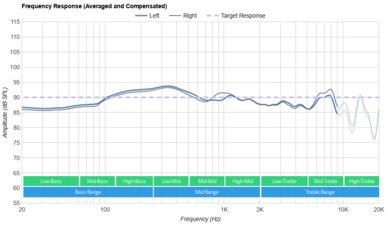
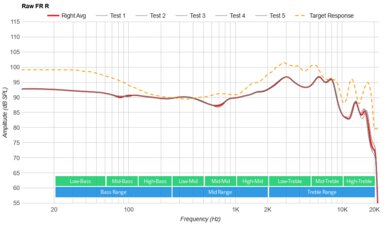
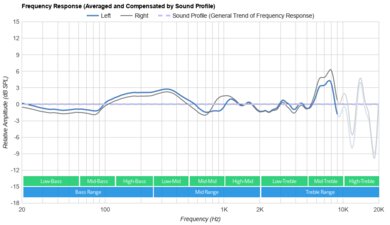
    These on-ears have a very bass-heavy sound profile. While this may please listeners who prefer more thump and rumble in their music, this overemphasized bass response muddies vocals and lead instruments. Their treble response is also somewhat uneven, leading to slightly harsh and piercing high notes.

    7.5
    Frequency Response Consistency
    See details on graph tool
    See details on graph tool
    Avg. Std. Deviation
    0.49 dB

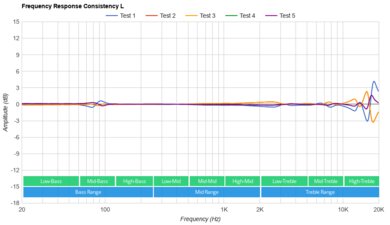
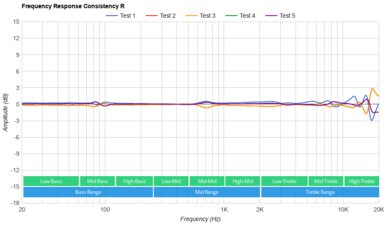
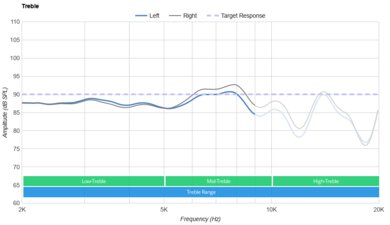
    The Bowers & Wilkins PX5's frequency response consistency is good. You should be able to achieve consistent audio delivery on separate listening sessions, even if you have long hair or wear glasses. That said, there are some inconsistencies in the mid to high-treble range due to fit and positioning.

    Raw Frequency Response
    See details on graph tool
    See details on graph tool
    4.8
    Bass Accuracy
    See details on graph tool
    Std. Err.
    7.35 dB
    Low-Frequency Extension
    10 Hz
    Low-Bass
    4.21 dB
    Mid-Bass
    8.15 dB
    High-Bass
    10.13 dB

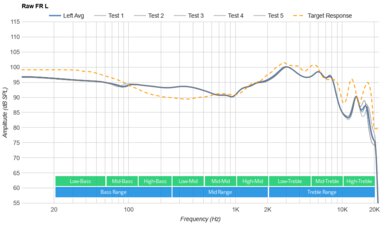
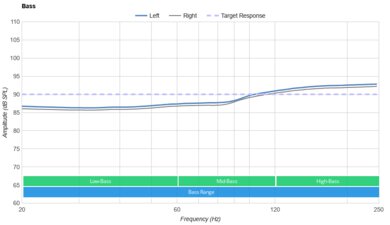
    The Bowers & Wilkins PX5 have poor bass accuracy. It's overemphasized across the entire range, which may please fans of bass-heavier genres. However, it results in a very boomy listening experience that makes them poorly-suited for more vocal or lead-centric genres, like jazz or classical.

    7.3
    Mid Accuracy
    See details on graph tool
    Std. Err.
    3.63 dB
    Low-Mid
    5.7 dB
    Mid-Mid
    1.39 dB
    High-Mid
    0.51 dB

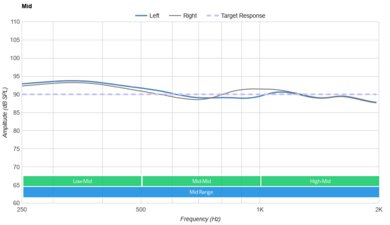
    The Bowers & Wilkins PX5 have decent mid accuracy. Their heavily overemphasized high-bass carries over into the low-mids, muddying vocals and leads. That said, the mid-mids and high-mids are very well-balanced, resulting in adequate clarity and detail.

    7.0
    Treble Accuracy
    See details on graph tool
    Std. Err.
    4 dB
    Low-Treble
    1.64 dB
    Mid-Treble
    4.43 dB
    High-Treble
    -7.45 dB

    The Bowers & Wilkins PX5's treble accuracy is satisfactory. There's some slight overemphasis in the low-treble and mid-treble ranges, resulting in some harsh and piercing high notes.

    6.9
    Peaks/Dips
    See details on graph tool
    Peaks
    2.2 dB
    Dips
    1.19 dB

    The peaks and dips performance of these on-ears is satisfactory. The bump in the high-bass and low-mid ranges generates some boominess and muddies vocals and lead instruments. A dip in the mid-mids pushes those notes toward the back of the mix. The sharp spike in the mid-treble makes some higher notes overly bright and piercing.

    7.8
    Imaging
    See details on graph tool
    See details on graph tool
    Weighted Group Delay
    0.17
    Weighted Amplitude Mismatch
    1.1
    Weighted Frequency Mismatch
    2.12
    Weighted Phase Mismatch
    15.75

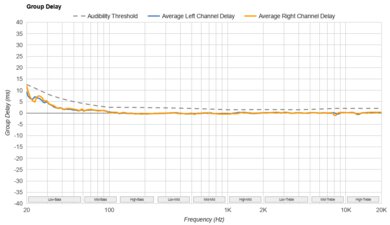
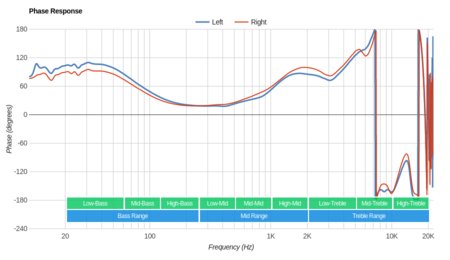
    The Bowers & Wilkins PX5 deliver very good stereo imaging performance. The weighted group delay falls entirely beneath the audibility threshold, resulting in tight bass and transparent treble. The L/R drivers are also well-matched in regards to amplitude and phase response, with only minor frequency mismatch. Overall, these headphones should do a good job of accurately placing objects in the stereo image. These results are only valid for our test unit, and yours may perform differently.

    3.0
    Passive Soundstage
    See details on graph tool
    PRTF Accuracy (Std. Dev.)
    2.58 dB
    PRTF Size (Avg.)
    1.25 dB
    PRTF Distance
    3.59 dB
    Openness
    1.7
    Acoustic Space Excitation
    2.5

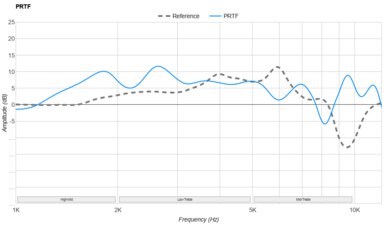
    The Bowers & Wilkins PX5 have a bad passive soundstage. Due to their closed-back enclosure and on-ear design, which results in only partial interaction with the outer ear, sound is perceived as coming from the inside of your head.

    0.0
    Virtual Soundstage
    Head Modeling
    No
    Speaker Modeling
    No
    Room Ambience
    No
    Head Tracking
    No
    Virtual Surround
    No

    The Bowers & Wilkins PX5 don't have any virtual soundstage features.

    7.2
    Weighted Harmonic Distortion
    See details on graph tool
    WHD @ 90
    0.474
    WHD @ 100
    0.186

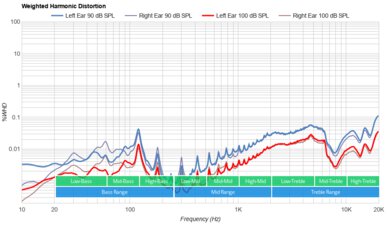
    The Bowers & Wilkins PX5's weighted harmonic distortion performance is decent. Aside from some distortion throughout the mid-mid to the low-treble range at both moderate and high volumes, the rest of the frequency range falls within good limits. This results in mostly clean and pure audio reproduction.

    Test Settings
    Firmware
    1.1 (1B084)
    Power
    On
    Connection
    Bluetooth 5.0
    Codec
    aptX HD, 24-bit, 48kHz
    EQ
    No EQ
    ANC
    High
    Tip/Pad
    Default
    Microphone
    Integrated

    These are the results used to test the Bowers & Wilkins PX5. We used the 'High' ANC preset for noise isolation tests. Our results are only valid when the headphones are used in this configuration.

    Isolation
    8.3
    Noise Isolation
    See details on graph tool
    Isolation Audio
    Overall Attenuation
    -22.97 dB
    Noise CancellingYes
    Bass
    -16.61 dB
    Mid
    -18.67 dB
    Treble
    -33.61 dB

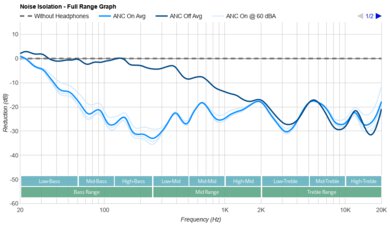
    With the ANC system set to 'High', the Bowers & Wilkins PX5 do an impressive job of filtering out background noise. The ANC system is very effective in the bass and low-mid range, as it blocks out a good amount of noises like bus engines. Meanwhile, the feature does nothing to improve upon their passive noise isolation from the mid-mid to the high-treble range. Still, you likely won't hear much of the chatter of nearby coworkers or the hum of an AC unit, even if their ANC system is turned off.

    7.8
    Leakage
    See details on graph tool
    Leakage Audio
    Overall Leakage @ 1ft
    34.69 dB

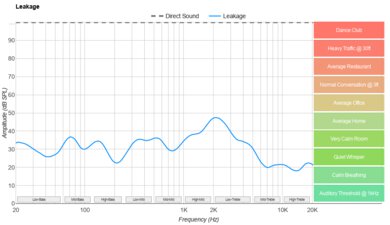
    These on-ears do a very good job of preventing audio from leaking out the ear cups. If you listen to your music at high volumes, people probably won't hear too much of what you're listening to, even in a moderately quiet environment.

    Microphone
    Microphone Style
    Integrated
    Yes
    In-Line
    No
    Boom
    No
    Detachable Boom
    No
    MicYes

    The Bowers & Wilkins PX5 have an integrated mic.

    5.6
    Recording Quality
    See details on graph tool
    Recorded Speech
    LFE
    315.41 Hz
    FR Std. Dev.
    6.23 dB
    HFE
    2,560 Hz
    Weighted THD
    0.851
    Gain
    21.05 dB

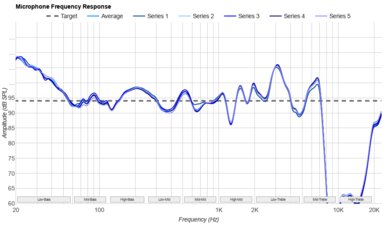
    The integrated mic has disappointing recording quality. While your voice should be mostly free of distortion, it also sounds muffled and lacking in overall detail.

    6.4
    Noise Handling
    See details on graph tool
    Speech + Pink Noise
    Speech + Subway Noise
    SpNR
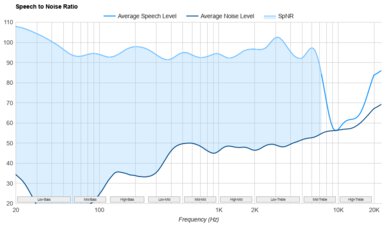
    16.81 dB

    The integrated microphone does an unremarkable job of isolating speech from background noise. If you make a call from an especially noisy environment, like a subway station, people on the other end of the line could probably have trouble understanding you.

    Active Features
    8.6
    Battery
    Battery Type
    Rechargable
    Continuous Battery Life
    37.8 hrs
    Additional Charges
    0.0
    Total Battery Life
    37.8 hrs
    Charge Time
    1.6 hrs
    Power-Saving Feature
    Standby mode
    Audio While Charging
    Yes
    Passive Playback
    No
    Charging PortUSB-C

    The Bowers & Wilkins PX5 deliver an amazing battery performance. With roughly 38 hours of continuous playback with ANC turned on, they outperform their advertised battery life of 25 hours. They also feature a standby mode to help extend battery life. They must also be powered on to use them with the included analog audio cable, which is a little disappointing if you run out of charge.

    6.5
    App Support
    App NameBowers & Wilkins Headphones
    iOSYes
    AndroidYes
    macOSNo
    WindowsNo
    Equalizer
    No
    ANC Control
    Presets
    Mic ControlNo
    Room Effects
    No
    Playback Control
    No
    Button MappingNo
    Surround Support
    No

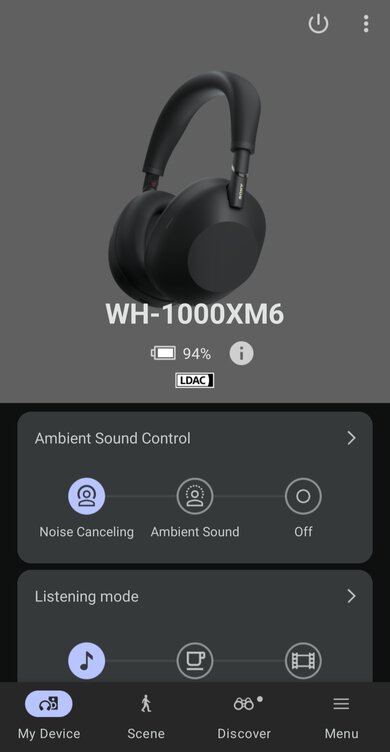
    The Bowers & Wilkins Headphone app is easy to use but somewhat lacking in features. There's no EQ and no audio presets, so there's no way to adjust their sound profile. The app allows you to cycle between the 'Off', 'Low', 'Auto', and 'High' ANC presets and provides you with a slider for their talk-though feature, letting you dial in a little more ambient noise if you want. The app allows you to see paired devices, adjust the standby timer, change auto-connect behavior, and turn the wear sensor on and off, which automatically pauses media when you take them off and resumes it when you put them back on. You can also update their firmware and check their battery status. Unusually, you can also use the app to play 'Soundscapes', which are ambient noises like rain and waterfalls to help you relax or drown out distractions.

    Connectivity
    8.0
    Bluetooth
    Bluetooth Version
    5.0
    Multi-Device Pairing
    2 Devices
    NFC Pairing
    No
    Line Of Sight Range
    158 ft
    PC Latency (SBC)
    226 ms
    PC Latency (aptX)
    219 ms
    PC Latency (aptX HD)
    221 ms
    PC Latency (aptX-LL)
    N/A
    iOS Latency
    126 ms
    Android Latency
    49 ms

    The Bowers & Wilkins PX5 have very good Bluetooth connectivity. They support Bluetooth 5.0 and multi-device pairing, not to mention a wide range of wireless codecs, including SBC, aptX, and aptX HD. While their latency on PC is too high for gaming, they perform much better on mobile devices. iOS latency is low enough to stream movies but might be a little disruptive for some. However, their latency on Android devices is outstanding. That said, it should be noted that apps and devices compensate for latency differently, so your real-world experience may vary.

    0.0
    Non-Bluetooth Wireless
    Non-BT Line Of Sight Range
    N/A
    Non-BT Latency
    N/A

    These headphones can only be used wirelessly with a Bluetooth connection.

    9.8
    Wired
    Analog Audio
    Yes
    USB Audio
    USB Type A
    DetachableYes
    Length3.9 ft
    Connection1/8" TRS
    Analog/USB Audio Latency
    8 ms

    Update 06/11/2021: We have changed USB Audio to 'USB Type A' to reflect the source port instead of the headphones' port. When using their USB cable, the USB-A connector can be connected to any device with a USB-A port. The scoring of this box hasn't changed.

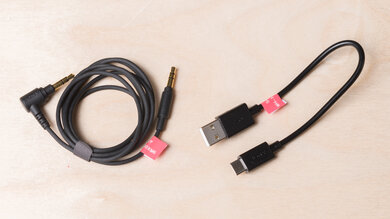
    The Bowers & Wilkins PX5 come with both a 1/8" TRS analog audio cable and a USB-A to USB-C charging cable that can also be used for audio. However, these headphones need power to function, so they can't be used for passive audio playback with these cables when their battery runs out. Neither cable comes with an in-line mic.

    PC / PS4 Compatibility
    PC/PS4 Analog
    Audio Only
    PC/PS4 Wired USB
    Audio Only
    PC/PS4 Non-BT Wireless
    No

    The Bowers & Wilkins PX5 offer audio and microphone compatibility when connected wirelessly to Bluetooth-enabled PCs. Unfortunately, they only receive audio when you use the included 1/8" TRS audio cable and USB cable with either PCs or PS4 consoles.

    Xbox One Compatibility
    Xbox One Analog
    Audio Only
    Xbox One Wired USB
    No
    Xbox One Non-BT Wireless
    No

    The Bowers & Wilkins PX5 only receive audio if you plug the included 1/8" TRS cable into an Xbox One controller.

    0.0
    Base/Dock
    Type
    No Base/Dock
    USB Input
    No
    Line In
    No
    Line Out
    No
    Optical Input
    No
    RCA Input
    No
    Dock Charging
    No
    Power Supply
    No Base/Dock

    The Bowers & Wilkins PX5 don't have a dock.